
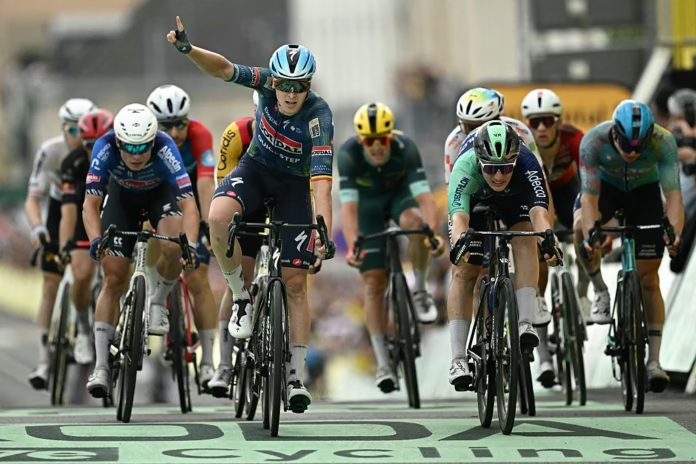
Tour de France Stage 17 takes the riders from Chambéry to Voiron on Wednesday 22 July, offering the remaining sprinters what may be their final realistic opportunity before the race moves decisively into the Alps.
The official classification describes the 174.7km route as flat, but its 2,200 metres of climbing make that label slightly misleading. Much of the harder terrain arrives during an unsettled opening half, creating ideal conditions for a strong breakaway to form before the sprint teams have established control.
The final 35km are considerably easier and should allow an organised peloton to reduce the gap. However, a late rise close to Voiron, accumulated fatigue after more than two weeks of racing and the reduced strength of several lead-out trains mean this is far from a guaranteed bunch finish.
Mads Pedersen, Olav Kooij, Jasper Philipsen and Biniam Girmay should all see an important opportunity. Mathieu van der Poel, Mauro Schmid and Dorian Godon offer different routes to victory, particularly if the final rise proves too difficult for the pure sprinters or the breakaway remains within reach.
Stage 17 was already identified as one of the most complicated opportunities in our guide to the best sprint stages of the 2026 Tour de France.
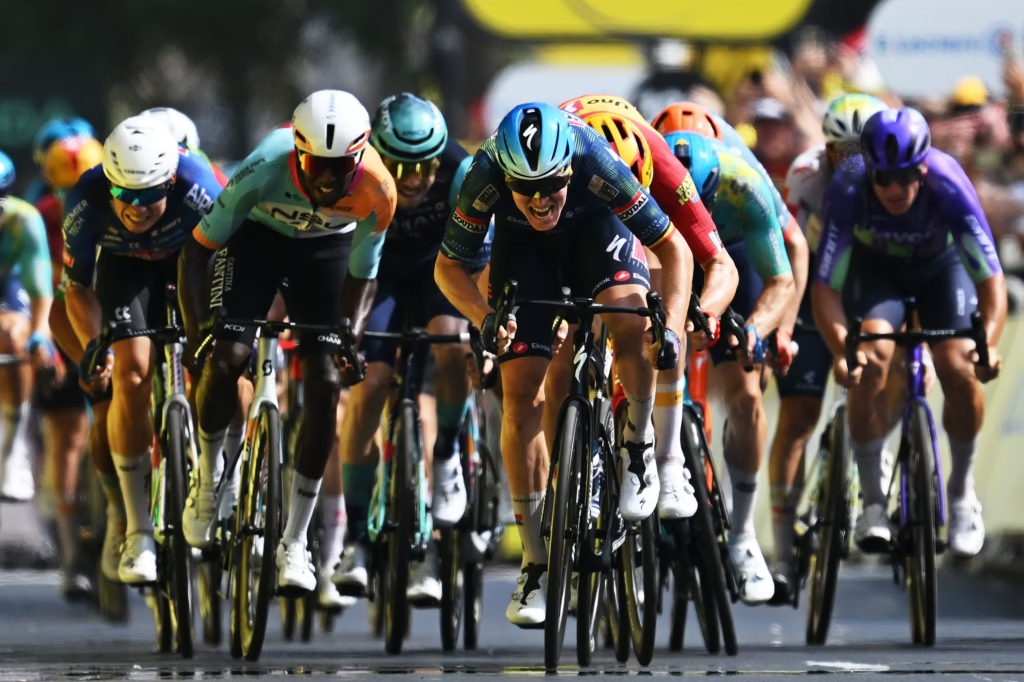
Tour de France 2026 Stage 17 at a glance
| Detail | Information |
|---|---|
| Date | Wednesday 22 July 2026 |
| Start | Chambéry |
| Finish | Voiron |
| Distance | 174.7km |
| Stage type | Flat |
| Total climbing | Approximately 2,200 metres |
| Neutralised start | 13:20 local time |
| UK start time | 12:20 BST |
| Expected finish | Approximately 17:18 local time |
| Expected UK finish | Approximately 16:18 BST |
| Main challenge | Hilly opening and a late uncategorised rise |
| Likely outcome | Reduced bunch sprint or strong breakaway |
Stage 17 is positioned between the individual time trial and the first major Alpine stage to Orcières-Merlette. That should encourage the general classification teams to conserve energy, but it also gives stage hunters one of their final opportunities before the high mountains dominate the race.
The full context of where the stage sits within the final week can be found in our Tour de France 2026 full route guide.
A flat stage with more climbing than expected
The stage begins in Chambéry and immediately heads towards terrain that is far more demanding than the official flat designation suggests.
From around kilometre 15, the road rises repeatedly for approximately 30km. None of the individual climbs is severe enough to eliminate every sprinter, but the succession of gradients provides an excellent launchpad for a large and powerful breakaway.
The Col des Prés is the most significant climb in this opening section. It measures approximately 3.5km at 6.6%, enough to split the peloton if the attacks continue at full speed.
The riders later tackle the Col de Couz, a longer but gentler ascent of roughly 8.6km at 2.8%. Its gradient should be manageable for the sprinters, although its cumulative effect may become important if the pace remains high or the breakaway battle has not settled.
After that, the terrain becomes more favourable to the chase. The final 35km trend largely downhill, giving the sprint teams a chance to organise and use their remaining domestiques.
There is still one final complication. A rise beginning around 6km from the finish lasts approximately 2.5km at 3.5%, before the road flattens for the run into Voiron.
The opening hour could decide the stage
The first 60km are likely to be the most tactically important part of Stage 17.
Teams without a sprinter know they cannot wait until the flat finale. Riders such as Kasper Asgreen, Quinn Simmons, Jasper Stuyven, Matej Mohorič and Mathieu van der Poel can use the early climbs to force their way into a strong escape.
If only three or four riders go clear, the sprinters’ teams should be able to manage the gap. A group containing several powerful Classics riders would create a much more difficult chase.
The Tour is also entering its final five days. Some teams are still without a stage victory, while several riders have no reason to preserve themselves for the general classification. That desperation can produce a long and chaotic fight before the breakaway is established.
The sprint teams must be selective. Chasing every move during the first hour could use the riders they need later, but allowing the wrong combination to gain two or three minutes might make the stage impossible to recover.
Stage 17 was also highlighted in our ranking of the best breakaway stages at the 2026 Tour de France, precisely because the hilly start gives strong attackers a route into the race.
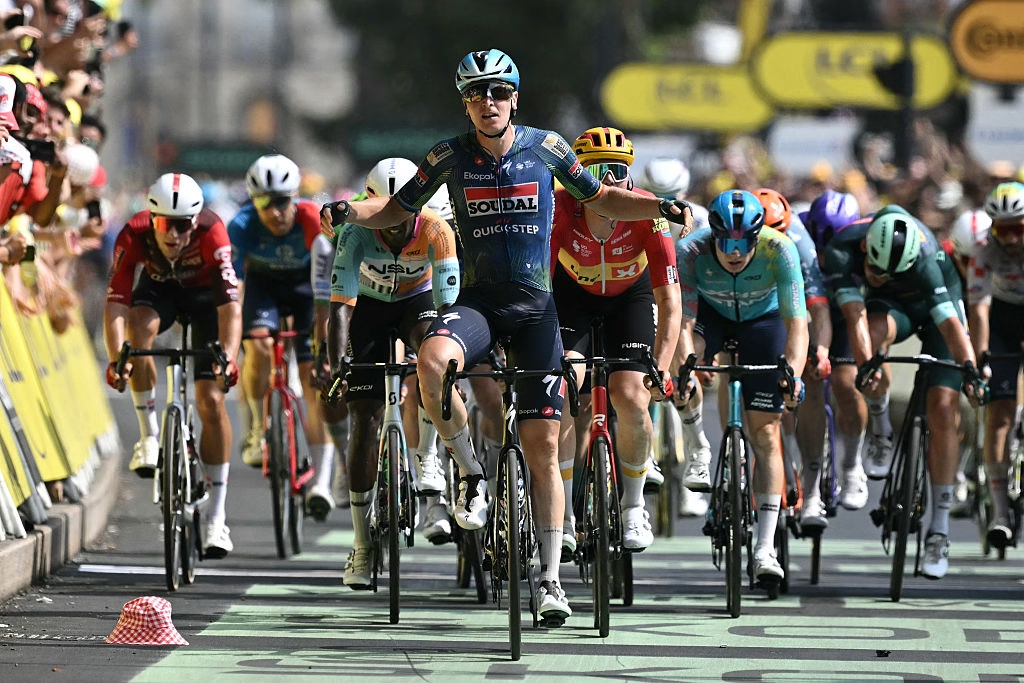
Why the breakaway has a genuine chance
Stage 17 would look like an obvious sprint stage during the opening week of the Tour. Its position in the final week changes the calculation.
Many domestiques are tired, injured or no longer in the race. Teams that began with eight riders have fewer available to chase, while GC squads will already be looking towards Orcières-Merlette and the two finishes on Alpe d’Huez.
The surviving sprint teams may therefore look at one another rather than committing immediately. Lidl-Trek will work for Pedersen, Decathlon CMA CGM for Kooij and Alpecin-Premier Tech for Philipsen, but each will want help from the others.
A large escape containing riders from several of those teams could disrupt the chase completely. If Alpecin places Van der Poel in the move or Lidl-Trek sends Quinn Simmons ahead, their teammates in the peloton gain an excuse not to contribute.
The final roads favour a peloton if the breakaway is small, but a group of ten or more powerful riders could continue sharing the work and preserve enough of its advantage to reach Voiron.
The stage’s place among the most promising attacking days was also examined in our guide to the best Tour de France 2026 route days for breakaways.
The final rise could change the sprint
The last significant rise is not steep enough to be classified, but its position makes it important.
A 2.5km effort at approximately 3.5% should not automatically drop riders such as Pedersen, Kooij, Philipsen or Girmay. The problem is how hard it will be raced.
A puncheur can attack near the bottom and force the sprint teams to chase at close to maximum effort. That may remove lead-out riders, leave the fastest sprinters isolated or create a small group capable of carrying an advantage onto the flat finish.
Pedersen should be particularly comfortable with this type of approach. He can survive a hard tempo, contribute to the chase if necessary and still produce a long sprint.
Philipsen and Kooij will want their teams to control the rise rather than respond to repeated attacks. Girmay may benefit if the climb reduces the field and removes some of the more powerful pure sprinters.
Van der Poel provides Alpecin-Premier Tech with an important alternative. He can attack on the rise, forcing rival teams to chase while Philipsen remains protected behind.
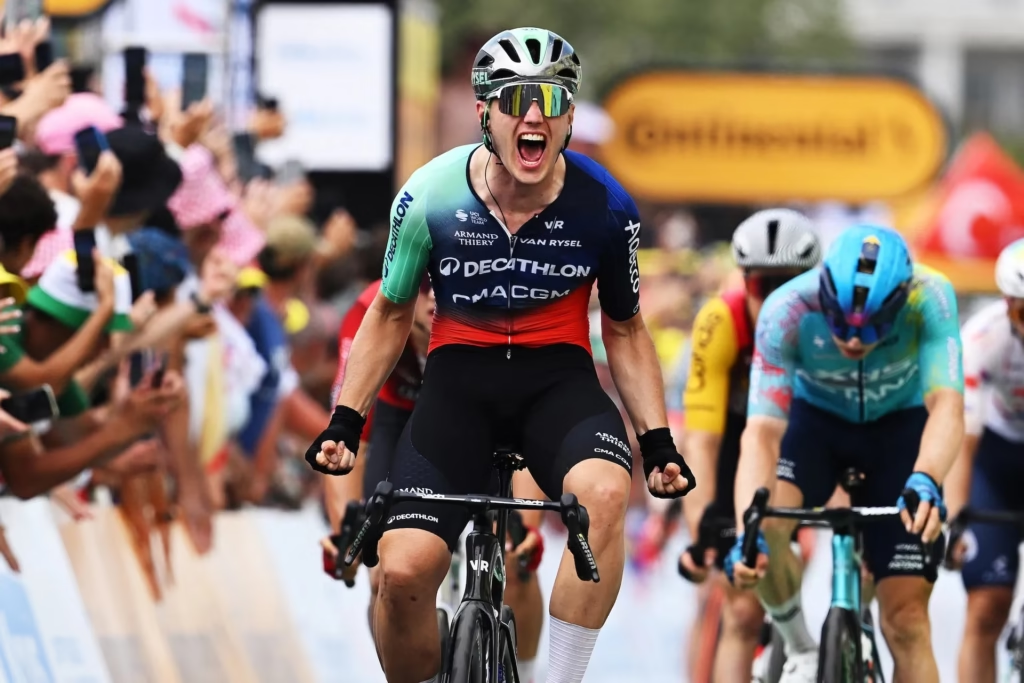 Photo Credit: Getty
Mads Pedersen has another strong opportunity
Pedersen starts as one of the most complete favourites for the stage.
He has the speed to win a conventional bunch sprint but does not require a perfectly flat finale. The early climbing and late rise may reduce the number of rivals without placing him under the same pressure as a heavier sprinter.
Lidl-Trek also has the motivation to control the race. Pedersen’s green jersey campaign gives the team another reason to pursue points, while the position of the intermediate sprint creates an opportunity to strengthen his lead before the final mountain stages.
The main question is whether Lidl-Trek has enough riders available to chase through the entire second half. Juan Ayuso and Mattias Skjelmose have their own general classification objectives, so they are unlikely to be used extensively in support of a sprint.
Pedersen may therefore need cooperation from Decathlon, Alpecin-Premier Tech and NSN Cycling Team.
If the race reaches Voiron together, Pedersen’s durability makes him the safest favourite. He should also cope well if the final kilometre becomes slightly disorganised.
The wider strengths of his points campaign are covered in our analysis of whether Mads Pedersen can win the green jersey at the 2026 Tour de France.
Olav Kooij needs his team to keep the break close
Kooij may be the fastest rider in a clean and conventional sprint.
His challenge is reaching that sprint with sufficient support. Decathlon CMA CGM has Paul Seixas competing near the top of the general classification, meaning the team must balance its resources between protecting its young leader and helping Kooij.
Stage 17 should not create major GC gaps, but Seixas cannot be exposed to crashes, crosswinds or avoidable splits. Several riders may therefore be required to remain around him rather than contributing fully to the chase.
Kooij should survive the final climb if it is ridden at a controlled pace. A series of attacks could make his position more difficult, particularly if he loses lead-out support before the flatter final kilometres.
The Dutchman’s route to victory is straightforward. Decathlon must help establish a manageable breakaway, keep the gap below two minutes entering the final 40km and deliver Kooij near the front over the last rise.
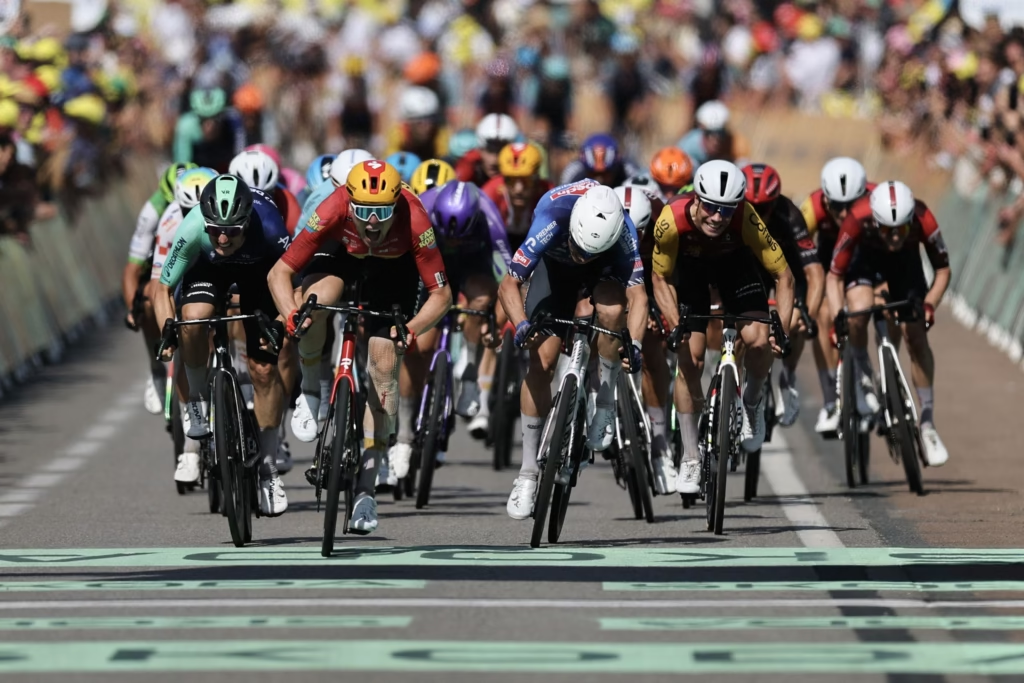
Jasper Philipsen has Van der Poel as an alternative
Alpecin-Premier Tech enters Stage 17 with two credible ways to win.
Philipsen remains one of the strongest pure sprinters in the race and should appreciate another chance after a Tour in which positioning, relegations and difficult finales have repeatedly shaped the sprint results.
Van der Poel gives the team freedom to approach the finale more aggressively. He can join the early break, attack on the final rise or force rival teams to work while Philipsen follows behind.
That dual threat can become particularly valuable if the peloton reaches the final 10km with a small deficit. Alpecin does not necessarily need to spend every rider closing the gap because Van der Poel may already be represented ahead.
Philipsen’s main concern is the condition of his lead-out. After 16 stages, the team is unlikely to possess the same control it had during the opening week.
A slightly reduced and chaotic sprint may still suit him, provided he begins the final kilometre close enough to Pedersen and Kooij.
The strengths of his sprint and lead-out structure were assessed before the race in our guide to Jasper Philipsen’s Tour de France 2026 sprint chances.
Biniam Girmay can benefit from a harder finale
Girmay has not consistently looked like the fastest sprinter in a completely flat drag race, but the Stage 17 route gives him another way into contention.
The repeated climbing should not trouble him, and a hard final rise could improve his relative chances. He is capable of surviving a stronger pace than several conventional sprinters and does not require a full lead-out train to find a useful position.
NSN Cycling Team may also have Lewis Askey available for support or an attacking role. The British rider can help position Girmay, contribute to a late chase or follow dangerous moves if the peloton becomes selective.
Girmay’s best scenario is a reduced group of 40 to 60 riders reaching Voiron without a fully organised lead-out. His strength and positioning can then compensate for any disadvantage in outright speed.
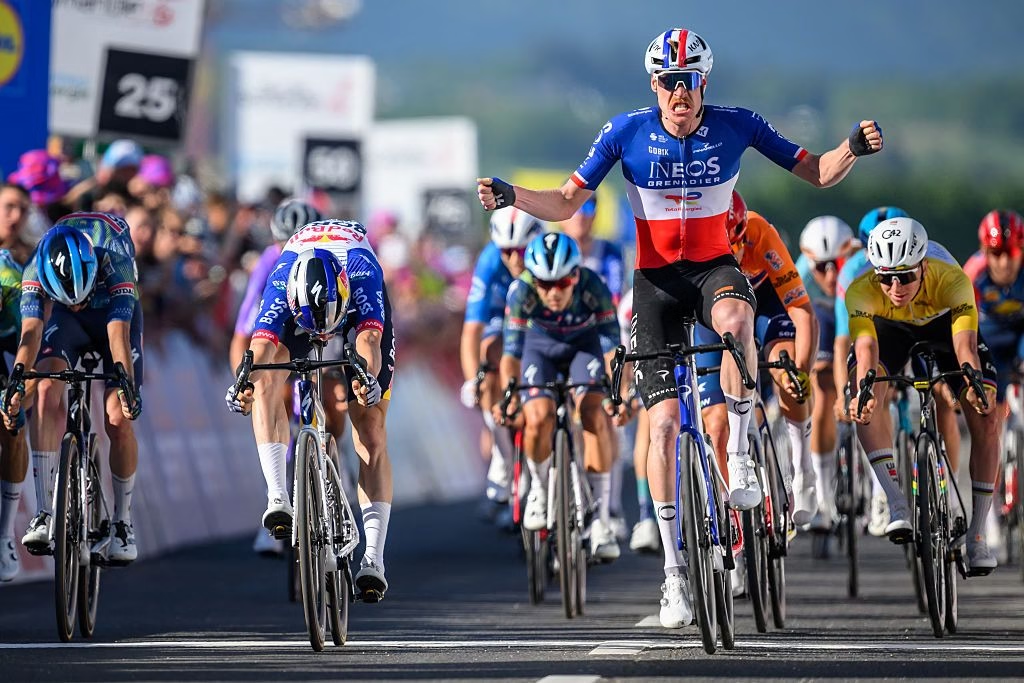 Photo Credit: Getty
Dorian Godon and Mauro Schmid fit the finale
Godon and Schmid are two of the most interesting riders outside the traditional sprint favourites.
Godon has the finishing speed to win from a reduced peloton and should be comfortable on the final rise. If Decathlon decides Kooij has been weakened or isolated, Godon provides a credible second option.
Schmid has already shown his strength during this Tour and can win through several different scenarios. He can join the breakaway, attack late or sprint from a smaller group after the pure fast men have been distanced.
Both riders are less likely to win a full bunch sprint against Kooij, Philipsen and Pedersen. They need the opening terrain or late climb to make the stage harder.
Schmid’s ability to win from an aggressive race was demonstrated when he took Tour de France Stage 13, confirming that he must be treated as more than a secondary breakaway option.
Mathieu van der Poel can attack or sprint
Van der Poel may be the rider who makes the stage hardest to predict.
He has enough power to force the early breakaway, enough climbing ability to attack on the final rise and enough speed to contest a reduced sprint. Few riders have as many possible routes to victory.
The question is whether Alpecin-Premier Tech allows him freedom while Philipsen remains a leading sprint candidate.
The logical approach may be to place Van der Poel in the break. Rival sprint teams would then carry most of the responsibility for chasing, while Alpecin could protect Philipsen in the peloton.
If the race comes back together, Van der Poel can switch into a lead-out or attacking role during the final kilometres.
His form and accumulated fatigue will determine how aggressively he races. With the high mountains ahead and Paris still to come, Stage 17 is one of his clearest remaining opportunities.
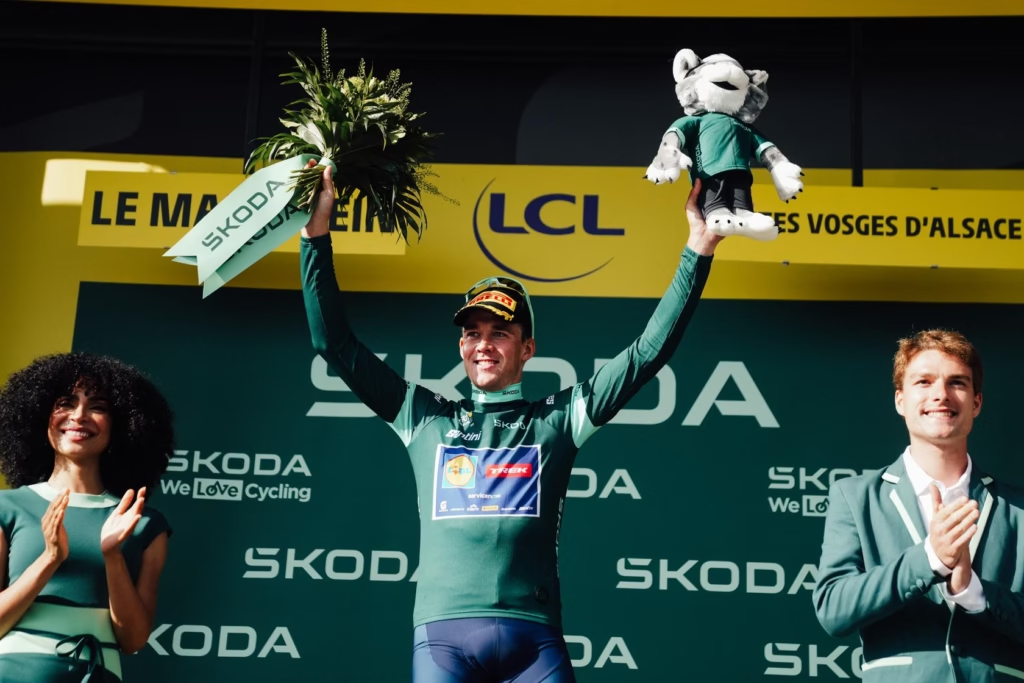
The green jersey shapes the chase
Pedersen’s position in the points classification gives Lidl-Trek an additional incentive to pursue the stage.
A victory offers substantial points, while the intermediate sprint creates another opportunity to strengthen his advantage. Pedersen may therefore be interested in controlling the breakaway even if the eventual stage win remains uncertain.
His rivals face a difficult decision. Allowing Pedersen to collect heavily could make the green jersey secure before Paris, but using too many riders in the chase may reduce their own chances in Voiron.
The intermediate sprint may also influence the breakaway formation. Riders targeting the escape could find themselves competing against green jersey teams during the opening section, increasing the speed and making the first hour more difficult.
Pedersen’s combination of sprinting speed and resilience on harder stages was examined in our feature on Mads Pedersen’s 2026 Tour de France programme and green jersey challenge.
GC teams should welcome a quieter day
Stage 17 should not produce major general classification changes under normal circumstances.
Pogačar remains firmly in control after the Stage 16 time trial, while Evenepoel strengthened second place with another victory against the clock. Florian Lipowitz’s crash and abandonment removed one of the strongest riders from the podium contest, further changing the balance behind the leading pair.
The remaining GC teams will want to reach Voiron safely rather than animate the stage. The following day contains 3,900 metres of climbing on the road to Orcières-Merlette, before consecutive finishes on Alpe d’Huez.
UAE Team Emirates-XRG has no need to chase a harmless breakaway. Red Bull-Bora-Hansgrohe will want to protect Evenepoel after losing Lipowitz, while Decathlon must keep Seixas away from crashes and splits.
The GC riders may still need to remain alert during the opening hills and any exposed roads. A flat classification does not make the stage risk-free, particularly if a large group divides during a fast and nervous opening hour.
Breakaway riders to watch
The opening terrain creates opportunities for powerful riders who can survive repeated attacks and continue working efficiently on the flatter roads.
The most dangerous breakaway candidates include:
- Mathieu van der Poel
- Kasper Asgreen
- Quinn Simmons
- Jasper Stuyven
- Matej Mohorič
- Mauro Schmid
- Victor Campenaerts
- Filippo Ganna
- Søren Wærenskjold
- Maxim Van Gils
- Alex Baudin
- Julian Alaphilippe
- Ben Healy
- Toms Skujiņš
The composition matters more than the individual names. Three riders may be relatively easy to control, while a group of 12 containing several former Classics winners could force the sprint teams into a chase they cannot sustain.
-
 Photo Credit: Getty
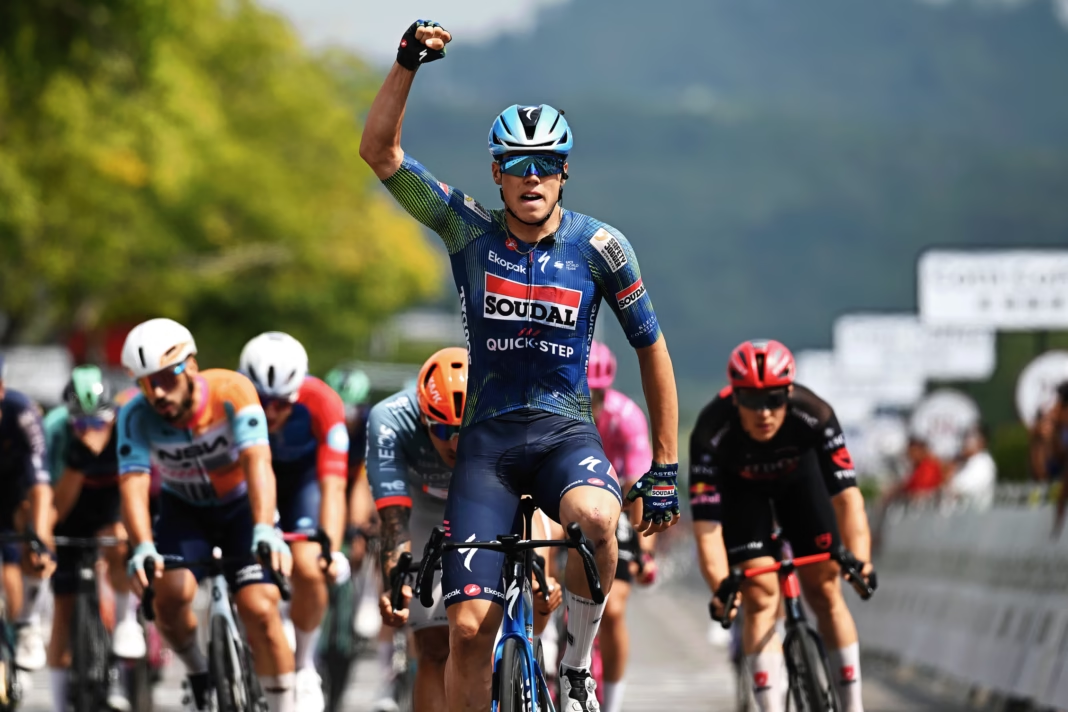
Who are the favourites for Stage 17?
Five-star favourite
Mads Pedersen
Pedersen is the most reliable choice because he can survive the climbing, contribute if the race becomes tactical and still beat most rivals in the sprint.
Four-star favourites
Olav Kooij
Jasper Philipsen
Mathieu van der Poel
Mauro Schmid
Kooij and Philipsen are the fastest conventional sprinters, but both need the breakaway controlled. Van der Poel and Schmid can win through attacks or a reduced finish.
Three-star favourites
Biniam Girmay
Dorian Godon
Kasper Asgreen
Quinn Simmons
Jasper Stuyven
Girmay and Godon should benefit from a harder finale. Asgreen, Simmons and Stuyven need the breakaway to succeed.
Outsiders
Søren Wærenskjold
Victor Campenaerts
Matej Mohorič
Maxim Van Gils
Alex Baudin
Filippo Ganna
Julian Alaphilippe
These riders are more likely to win from the escape or through a late move than by waiting for a full bunch sprint.
Stage 17 prediction
The sprint teams should have enough motivation to bring the race back, but the process will be much more difficult than the official flat classification implies.
A dangerous breakaway is likely to form during the first 60km. Its advantage may remain close to two or three minutes because Lidl-Trek, Decathlon and Alpecin-Premier Tech cannot afford to allow proven Classics riders complete freedom.
The final downhill section favours the chase, while the roads near Voiron should make it difficult for a lone attacker to survive. The late rise may reduce the peloton and disrupt the lead-outs, but it is unlikely to eliminate Pedersen.
A reduced bunch sprint therefore appears slightly more likely than a breakaway victory.

