
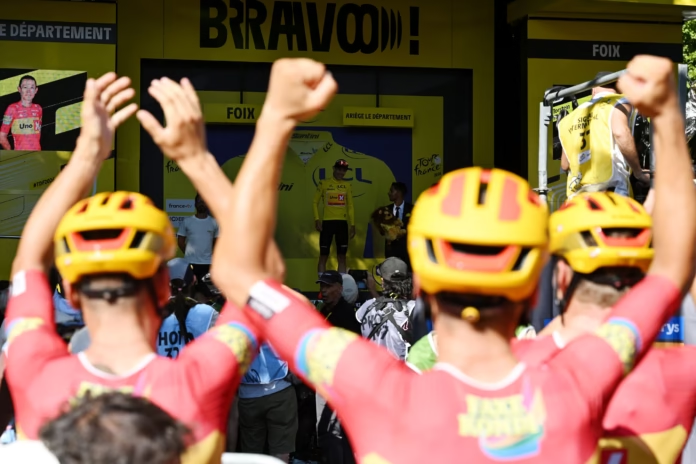
Tour de France penalties are one of the least visible parts of the race, but they can still shape how teams behave, how riders take risks and how the jury controls the peloton.
At the 2026 Tour de France, the topic has already drawn attention because of early yellow cards, sticky bottle fines, feeding infringements, vehicle movement breaches, littering sanctions and a rider missing the time cut. None of those incidents has rewritten the race in the way a mountain attack or crash might, but they matter because they sit at the point where fairness, safety and race management meet.
For the wider race picture, our Tour de France 2026 full route guide explains where the key stages fall, while the latest GC and jerseys after Tour de France 2026 stage 4 update shows how the race has changed on the road rather than through jury sanctions.

Quick answer: what are Tour de France yellow cards?
A yellow card in cycling is a disciplinary warning issued by the race commissaires for conduct that can affect safety or fairness. It is not a physical card shown on the road like in football. It is recorded in the official race communiqué after the stage.
Yellow cards can be given to riders, sports directors, mechanics, team staff, drivers, motorbike pilots and other people involved in the race convoy. They can be issued alongside fines, points deductions or other sanctions. Repeated yellow cards can lead to disqualification and suspension.
| Penalty type | What it usually means |
|---|---|
| Fine | Financial punishment, usually listed in Swiss francs |
| Yellow card | Warning for unsafe or improper conduct, with escalation if repeated |
| Time penalty | Rider loses time on the classification |
| Points deduction | Rider loses points in a race classification or UCI ranking |
| Relegation | Rider is placed lower in a stage result, often after sprint offences |
| Disqualification | Rider or staff member is removed from the race |
| OTL | Rider finishes outside the time limit and is eliminated |
Yellow card does not mean yellow jersey
This is the first point to clear up.
A Tour de France yellow card has nothing to do with the yellow jersey. The yellow jersey is worn by the race leader on general classification. A yellow card is a disciplinary sanction.
That means a rider or staff member can receive a yellow card without affecting the yellow jersey at all. It also means the yellow jersey can change hands for sporting reasons, even when the day’s penalty list is unrelated.
That distinction matters in the 2026 Tour. The biggest early yellow jersey change came when Torstein Træen gained time in the stage 4 breakaway and took the race lead. That situation is explained in our profile on Torstein Træen as the new Tour de France 2026 yellow jersey wearer, and in our explainer on why Pogačar and Vingegaard are 7:53 down.
Why are people searching for Tour de France 2026 yellow cards?
The early 2026 race has brought penalties into focus because the jury reports have included several different types of offence.
There have been yellow cards for irregular assistance and vehicle movement breaches, along with fines for sticky bottles, feeding infringements and littering. There has also been a rider eliminated for finishing outside the time limit.
That mixture is why the search term can be confusing. “Tour de France 2026 penalties” can mean several different things: a yellow card, a fine, a time cut, a points deduction or a disciplinary warning. They are all part of the race’s rulebook, but they do not all have the same sporting effect.
The stage 3 summit finish at Les Angles brought the first major GC battle of the race, covered in our Tour de France 2026 stage 3 report, while the following day’s breakaway to Foix produced a much bigger classification shift. The full stage 4 story is covered in our Tour de France 2026 stage 4 report.
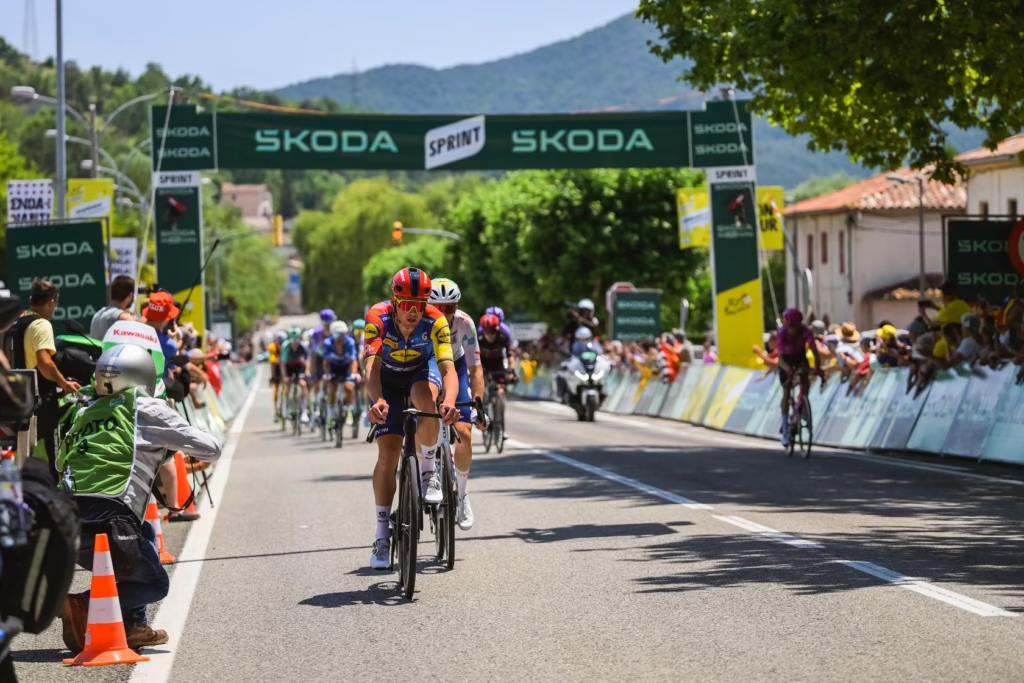 Photo Credit: A.S.O./Charly López
How do yellow cards work in cycling?
The yellow card system is designed to improve safety and make repeated unsafe behaviour easier to punish.
A single yellow card is a warning, but it is not meaningless. Cards can accumulate. Under the current UCI framework, repeated yellow cards can trigger stronger sanctions.
| Yellow card total | Possible consequence |
|---|---|
| 2 in the same race | Disqualification from that race and a short suspension |
| 3 within 30 days | Longer suspension |
| 6 within one year | Longer suspension again |
That is why teams take yellow cards seriously. One card may not change a stage result, but it puts the person sanctioned under pressure for the rest of the event and beyond.
The system is also broader than many fans might expect. It does not only apply to riders. Sports directors, mechanics, drivers, photographers and motorbike pilots can all be sanctioned if their behaviour is judged dangerous or outside the rules.
Are Tour de France yellow cards shown on television?
Usually, no.
Cycling yellow cards are not normally shown live in the way football bookings are. The commissaires do not usually ride alongside a rider and hold up a card for the cameras. Instead, the decision appears later in the official race communiqué.
That can make the system confusing for viewers. A yellow card may become news after the stage rather than during the broadcast. It may also involve someone the television audience barely saw, such as a team car driver, sports director, mechanic or race motorbike pilot.
Do yellow cards affect the Tour de France general classification?
Not automatically.
A yellow card by itself does not add time to a rider’s GC position. It is a disciplinary mark. The classification only changes if the jury also applies a time penalty, relegation, disqualification, points deduction or another sporting sanction.
That is why the early yellow card incidents at the Tour de France 2026 should not be confused with the race’s major GC changes. Tadej Pogačar, Jonas Vingegaard and Remco Evenepoel did not lose time because of those yellow card incidents. The big shift came because the stage 4 breakaway gained enough time for Træen to move into yellow.
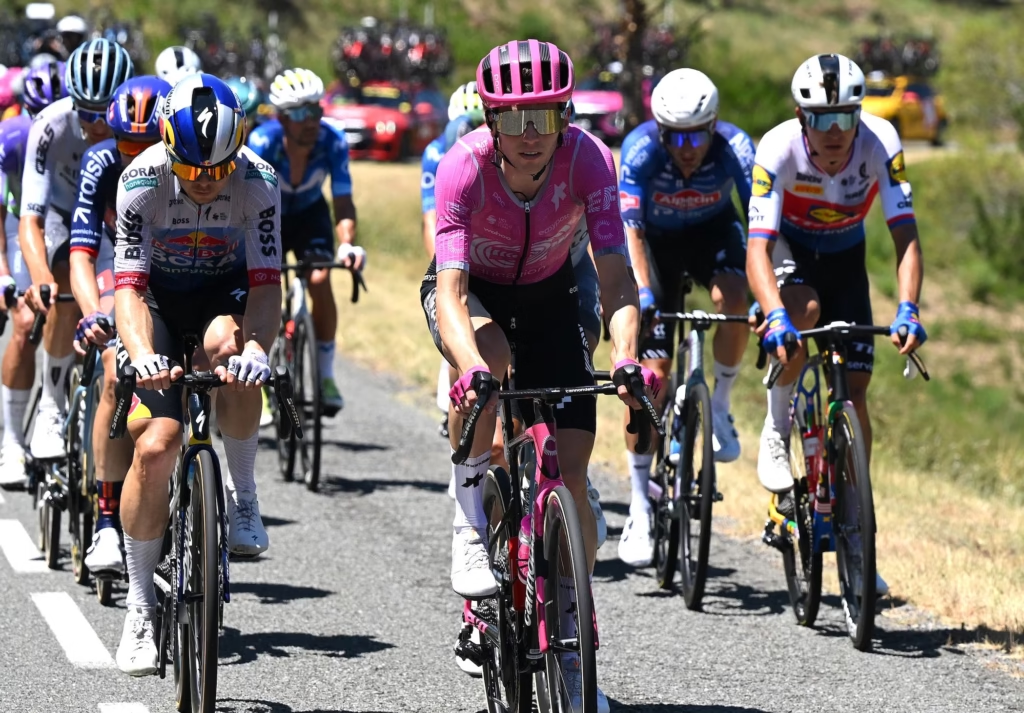
What is a sticky bottle?
A sticky bottle is one of cycling’s most familiar grey-area offences.
Riders are allowed to take bottles from team cars. The problem comes when the rider holds on too long and effectively receives a tow from the car. That can help a rider return after a crash, save energy after a climb, or close a gap to the peloton.
The act can look small, but it matters. A few seconds of help from a car can make a difference in a race where energy, position and time gaps are tightly controlled.
Sticky bottles are usually punished with fines. If the team car is involved, the sports director can be fined too.
Why can a sports director be fined as well as a rider?
Because the offence often involves the team car as well as the rider.
If a rider takes a sticky bottle from a car, the rider may be responsible for holding on. But the sports director or driver in the car is also part of the incident. The car is supplying the assistance, so the team can be sanctioned as well.
That is why sticky bottle penalties often come in pairs: one fine for the rider, and a larger fine for the sports director.
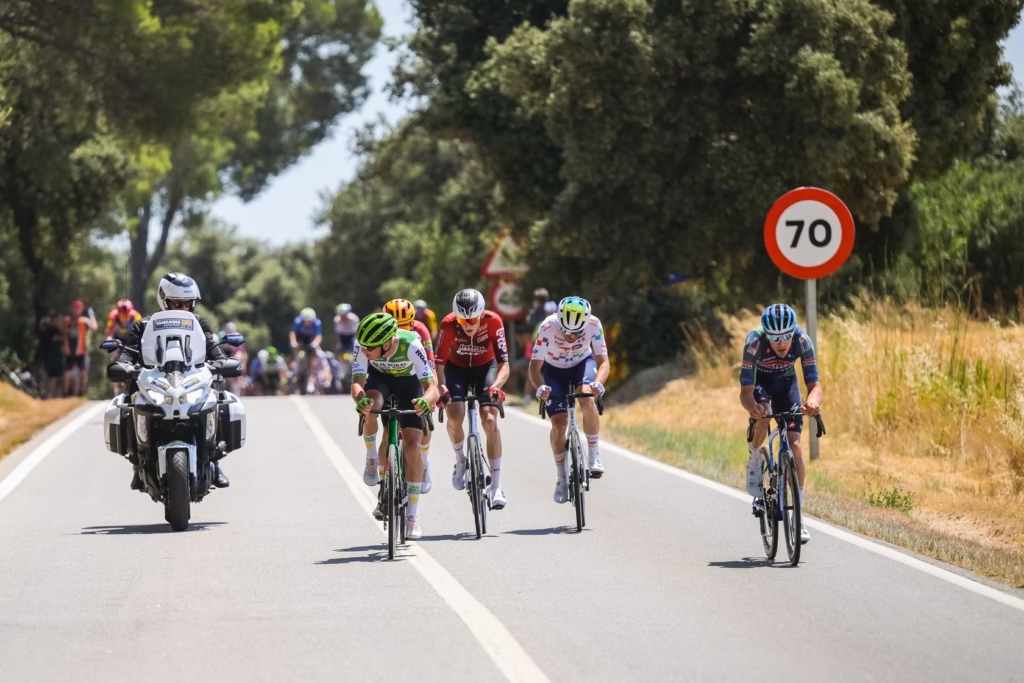 Photo Credit: A.S.O./Charly López
What are feeding infringements?
Feeding infringements happen when riders receive food, bottles or other supplies in a way that breaks race rules.
That can include feeding in the wrong zone, feeding too late in a stage, unsafe roadside behaviour, or actions that create risk for riders around the peloton. In a hot Tour, feeding and cooling become even more important, but the rules still apply.
The challenge for teams is to keep riders supplied without creating danger. Feeding zones, team cars and roadside staff all operate in a crowded environment, especially on narrow roads, climbs and hectic finales.
Why are vehicle movements punished?
Vehicle movement rules are among the most important safety controls in the Tour de France.
The race convoy includes team cars, neutral service vehicles, medical cars, commissaire vehicles, television motorbikes, photo motorbikes and organisational vehicles. They all need to move around a peloton that can be travelling at high speed, spreading across the road or reacting suddenly to attacks, crashes and road furniture.
A badly timed move by a car or motorbike can create danger. It can also affect the sporting fairness of the race if a vehicle gives a rider shelter, blocks a chase, interferes with positioning or passes in an unsafe place.
That is why yellow cards are often linked to convoy behaviour. The Tour is not just about the riders. It is also about controlling the moving race environment around them.
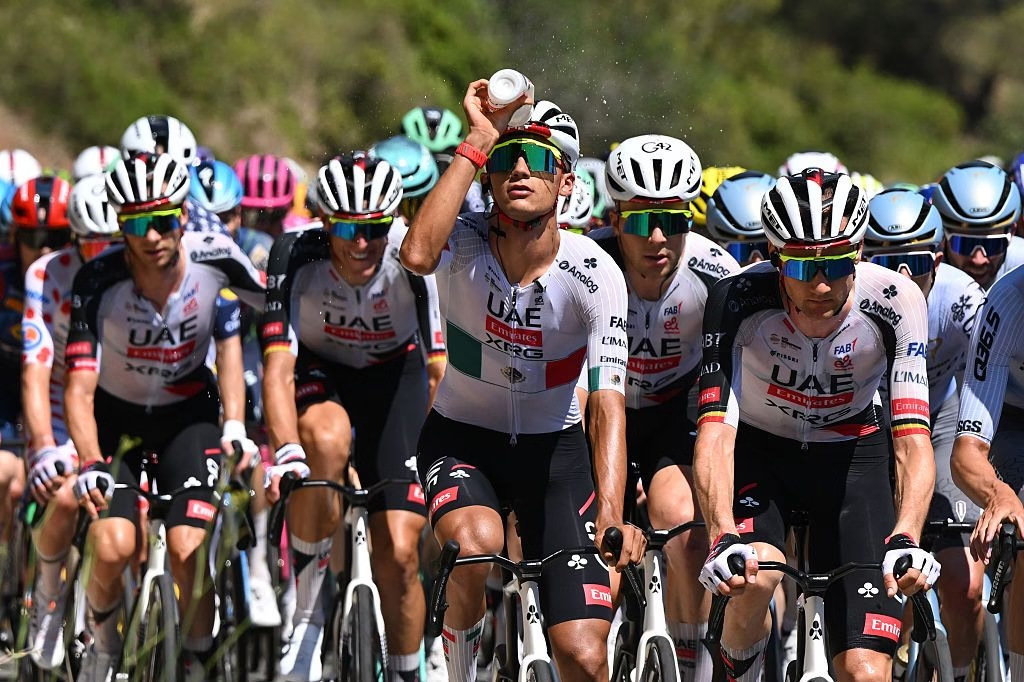
Why are riders fined for littering?
Riders can be fined for throwing bottles, wrappers or other waste outside designated litter zones.
The Tour has marked areas where riders can dispose of waste, and teams also collect bottles and packaging through the race. Throwing items away outside those areas can lead to fines and points deductions.
The rule is partly environmental and partly practical. A discarded bottle or gel wrapper can create hazards for riders, spectators and roadside communities. The Tour passes through towns, villages, farmland and mountain roads, so the race cannot simply leave waste behind.
What is the difference between a fine and a time penalty?
A fine affects the rider or team financially. A time penalty affects the race result.
That is the key distinction.
| Sanction | Main impact |
|---|---|
| Fine | Financial punishment |
| Yellow card | Disciplinary warning that can build towards stronger sanctions |
| Time penalty | Rider loses time on GC |
| Points deduction | Rider loses points in a classification or UCI ranking |
| Relegation | Rider is moved down a stage result |
| Disqualification | Rider is removed from the race |
A rider can be fined without losing time. A team staff member can receive a yellow card without a rider’s GC changing. But if a time penalty is added, then the standings may be affected directly.
Why are Tour de France fines in Swiss francs?
Tour de France fines are listed in Swiss francs because they are issued under UCI regulations, and the UCI is based in Switzerland. That is why the jury communiqué uses CHF rather than euros, even though the Tour is a French race.
Fines are generally handled through the team and race process, often deducted from the team’s prize money balance. The amounts vary depending on the offence.
Minor offences may lead to a few hundred Swiss francs. More serious issues can bring larger fines, points deductions, time penalties, relegation or disqualification.
What is OTL at the Tour de France?
OTL means “outside the time limit”. It applies when a rider finishes too far behind the stage winner.
Every Tour stage has a time cut based on the winner’s time, the stage type and the average speed. Riders who finish beyond that limit can be eliminated from the race.
This is different from a jury fine or yellow card. Missing the time cut is not usually about breaking a conduct rule. It is about failing to finish within the permitted time.
Our guide to Tour de France time cuts explains how riders can be eliminated even when they finish a stage.
Can yellow cards decide the Tour de France?
In theory, yes. In practice, they are more likely to affect behaviour than decide the race directly.
A GC contender receiving one yellow card would not automatically lose time. But if a rider or key sports director received repeated yellow cards, the consequences could become serious. Disqualification or suspension for accumulated cards would be far more than a background issue.
The more immediate effect is behavioural. Teams know they are being watched. Staff know that unsafe vehicle movements, irregular assistance and poor feeding conduct can build into a bigger problem. That can change how aggressively teams use cars, how riders take bottles and how convoy vehicles move around the peloton.
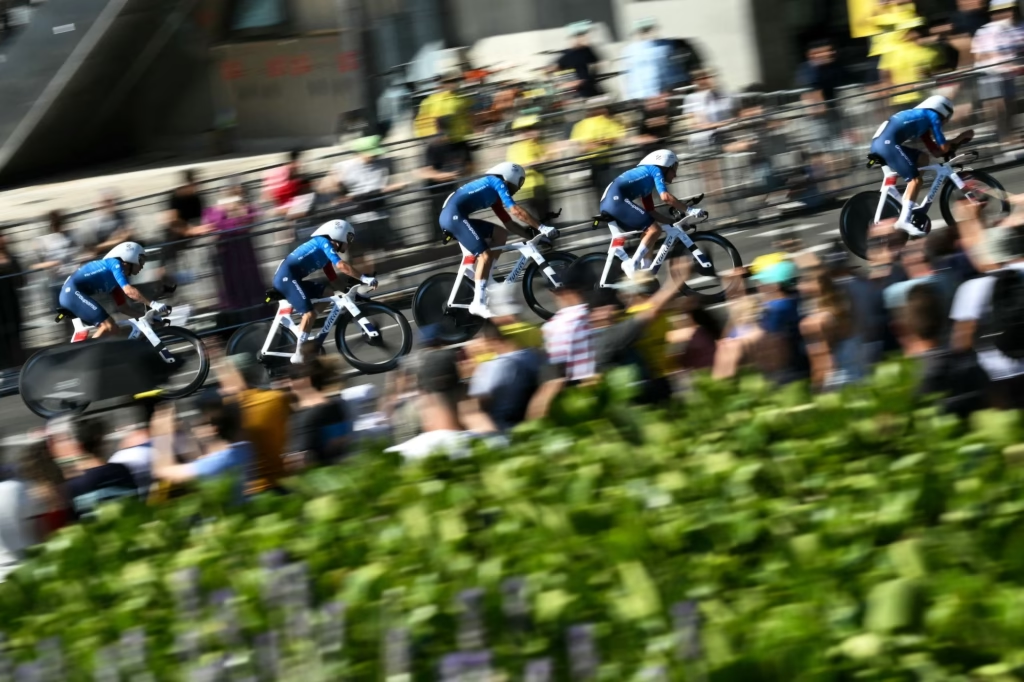
Why the 2026 incidents matter
The early Tour de France 2026 incidents matter because they show the commissaires applying the rules across several areas: team assistance, feeding, convoy movement, littering and time limits.
They also show that the yellow card system is not only aimed at riders. Some of the most important sanctions can involve staff and race vehicles. That makes sense because the Tour is not just a peloton of riders. It is a moving event with hundreds of people around the race, all capable of affecting safety and fairness.
For fans, the key is to separate three things.
First, yellow cards are disciplinary warnings that can build into stronger sanctions. Second, fines do not automatically change the race result. Third, time penalties, relegations, disqualifications and missed time cuts are the sanctions that directly alter the sporting outcome.
What should fans watch for next?
The Tour’s penalty story is not likely to disappear. As the race moves from sprint stages to mountain stages and back again, different kinds of infringements become more likely.
On sprint days, relegations and dangerous sprinting can become the main issue. On mountain days, feeding, sticky bottles and convoy movement are more likely to draw attention. On very hard stages, the time cut becomes a major threat for sprinters and injured riders.
Stage 5 to Pau should be more about the sprint teams, with live timings covered in our Tour de France 2026 stage 5 viewing update and the route previewed in our Lannemezan to Pau stage guide. But once the race returns to the Pyrenees, the disciplinary picture can quickly become more complicated, especially around feeding, convoy order and riders fighting to stay inside the time limit.
-
 Photo Credit: A.S.O./Billy Ceusters

Tour de France 2026 penalties and yellow cards FAQs
What was the Tour de France 2026 yellow card incident?
The early 2026 race featured yellow cards for irregular assistance and vehicle movement breaches, including sanctions involving team staff and race motorbike personnel. These were disciplinary incidents rather than changes to the GC result.
Did the yellow cards change the yellow jersey standings?
No. The early yellow cards did not change the yellow jersey standings. The major GC change came when Torstein Træen gained time from the stage 4 breakaway and took yellow.
Can riders get yellow cards in cycling?
Yes. Riders can receive yellow cards, but so can sports directors, mechanics, drivers, motorbike pilots and other convoy participants.
Are cycling yellow cards like football yellow cards?
Not exactly. Cycling yellow cards are not usually physically shown during the race. They are recorded in the official race communiqué and can lead to stronger penalties if repeated.
What happens if someone gets two yellow cards?
Two yellow cards in the same race can lead to disqualification from that race and a suspension.
What is a sticky bottle in cycling?
A sticky bottle is when a rider holds on to a bottle from a team car for too long and gains assistance from the vehicle.
Why do riders get fined at the Tour de France?
Riders and staff can be fined for offences such as sticky bottles, littering, unsafe feeding, vehicle movement breaches, sprint deviations, irregular assistance or other rule breaches.
Do fines come out of riders’ prize money?
Fines are usually handled through the team and race process, often deducted from the team’s prize money balance.
Why are the fines in CHF?
The fines are listed in Swiss francs because the UCI is based in Switzerland and its regulations use CHF for sanctions.
What is the most serious Tour de France penalty?
The most serious penalties include disqualification, suspension, relegation or time penalties that directly affect the result. In a stage race, missing the time cut can also end a rider’s Tour immediately.

