
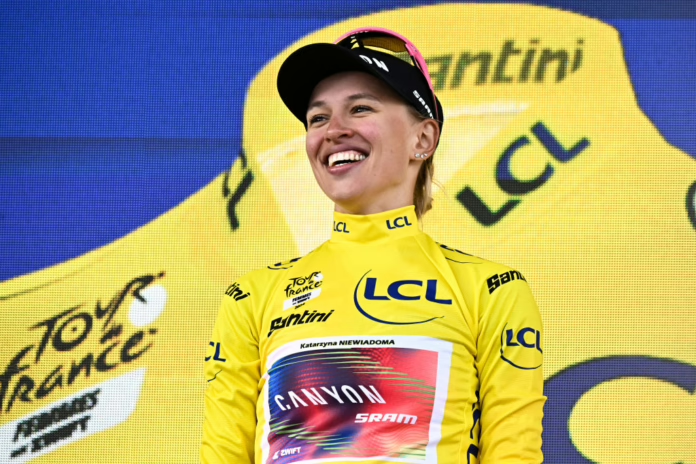
The Tour de France Femmes 2026 has one of the deepest yellow jersey fields of the modern race, but the battle starts with two riders.
Demi Vollering arrives after winning the Giro d’Italia Women and has the climbing strength to make Mont Ventoux and the final stage around Nice decisive. Pauline Ferrand-Prévot returns as defending Tour champion after dominating the decisive mountain stages in 2025 and has shaped her season around trying to repeat that victory.
Behind them, the race becomes much less predictable. Paula Blasi has already won La Vuelta Femenina this season, Marlen Reusser has developed into a genuine Grand Tour contender rather than simply the rider everyone fears in a time trial, and Antonia Niedermaier finished second at the Giro. Anna van der Breggen led that race until the final stage, Elisa Longo Borghini remains one of the most complete riders in the peloton, while Katarzyna Niewiadoma-Phinney returns as a former Tour winner.
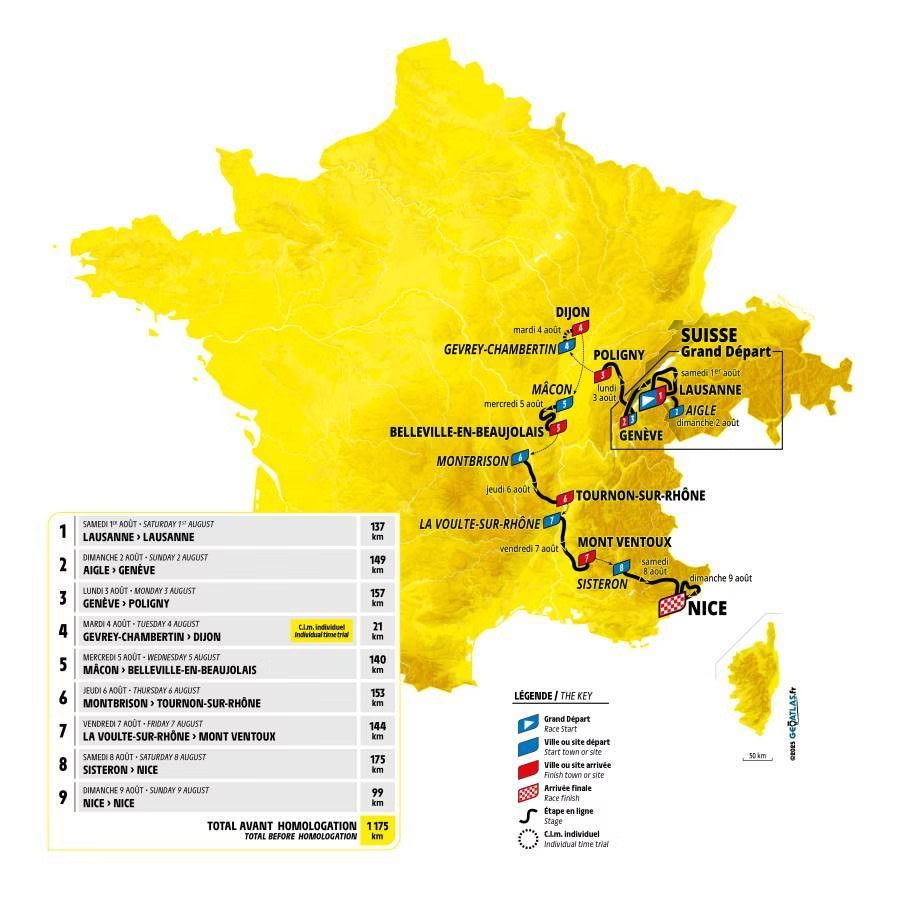
The Tour de France Femmes 2026 route gives each of them a different path towards yellow. There is a 21km individual time trial in Dijon, three difficult hilly stages and two mountain stages, including Mont Ventoux on Stage 7 and a short final GC showdown around Nice. The winner will need to be good almost everywhere.
Why the 2026 Tour could produce a very different GC battle
The Tour covers 1,175km across nine stages, with a record 18,795 metres of climbing. Three flat stages are balanced by three hilly stages, two mountain stages and the individual time trial.
That creates three distinct phases.
The opening three days through Switzerland and into France are primarily about avoiding trouble, although the punchy Lausanne opener and hilly Stage 3 to Poligny can already create small gaps.
Stage 4 in Dijon then gives the strongest time triallists their opportunity. Reusser can potentially take substantial time from the pure climbers, while Longo Borghini, Niedermaier and van der Breggen can also use the stage offensively.
The final five stages reverse the balance. Stages 5 and 6 increase the climbing load before Mont Ventoux on Stage 7, followed by the long transition to Nice and the 99.2km mountain finale on Stage 9.
That means the Tour cannot simply be won in Dijon or on Ventoux.
The strongest rider has to connect both.
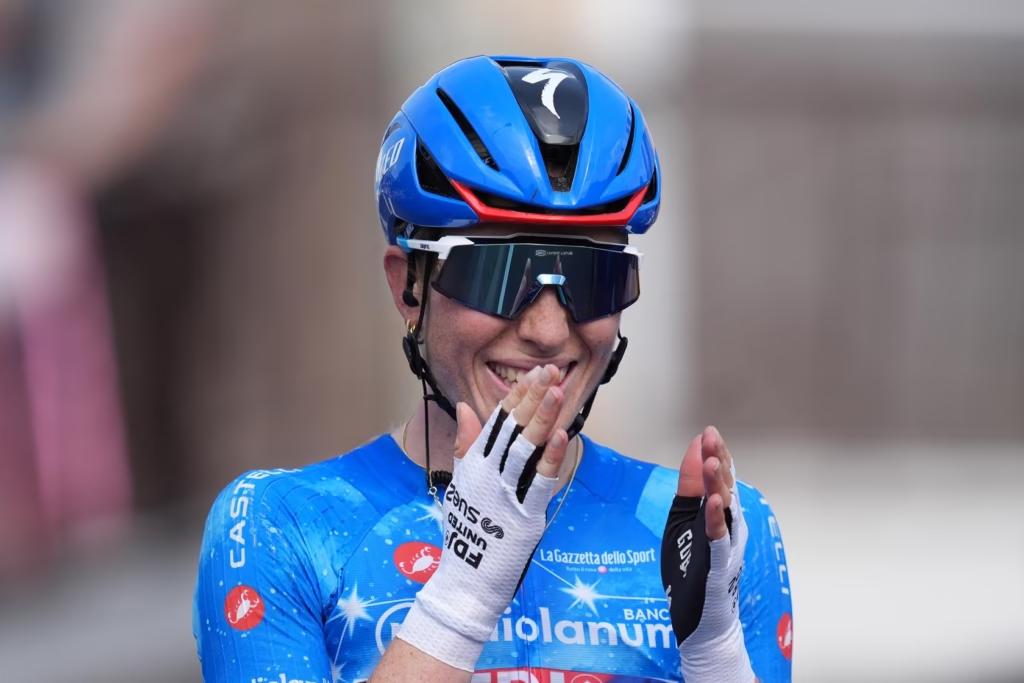 Photo Credit: RCS
Demi Vollering starts as the favourite
Demi Vollering enters the Tour with the strongest combination of current form, climbing ability and stage-racing pedigree.
Her 2026 Giro d’Italia Women victory matters because of how she won it. Vollering went into the final stage behind Anna van der Breggen and overturned the classification on the last possible day, reinforcing something already clear from previous seasons: she rarely needs a perfectly controlled race to win.
The 2026 Tour route gives her several ways to create time.
She can gain seconds through bonuses and difficult finishes on the hilly stages, should limit her losses reasonably well in Dijon, and both Ventoux and Nice give her climbs long enough to turn small differences in form into substantial GC gaps.
The biggest question is tactical.
Vollering is unlikely to be the best time triallist among the leading contenders. If Reusser takes 45 seconds or more from her in Dijon, FDJ United-SUEZ may have to make Stages 5, 6 and 7 significantly harder than they otherwise would.
That is not necessarily bad for Vollering.
The more the race becomes a climbing contest, the stronger her position looks. Her wider build-up and Tour objectives are covered in our Demi Vollering 2026 season guide.
Pauline Ferrand-Prévot has built the year around defending yellow
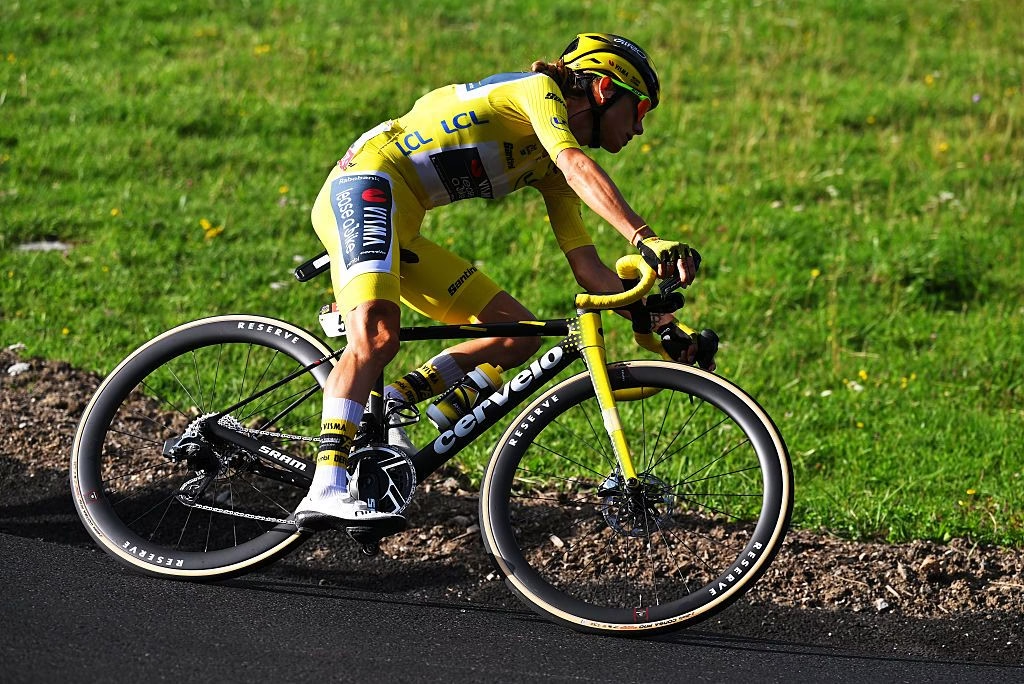
Pauline Ferrand-Prévot returns as defending champion and remains the rider most capable of directly challenging Vollering on the decisive climbs.
Her 2025 Tour victory was emphatic. Once the race reached the decisive mountain terrain, Ferrand-Prévot produced the strongest performance in the field and ultimately took yellow with a substantial margin.
That changes the way rivals treat her in 2026.
There is no surprise factor.
Visma know exactly what their leader can do, but everyone else does too.
Ferrand-Prévot’s advantage is that she has been able to build her season around the Tour rather than needing to chase every major stage race. If she reaches August at the same level as she did in the final weekend of the 2025 Tour, very few riders can match her on Ventoux.
The weakness is Dijon.
Ferrand-Prévot is capable against the clock, but Reusser has the potential to create a significant deficit before the climbing begins. Vollering could also emerge from the time trial ahead of her.
That means Ferrand-Prévot may need to reproduce the aggressive mountain racing that won the Tour last year rather than simply controlling the race from the favourites’ group. Her season and title defence are covered in our Pauline Ferrand-Prévot 2026 season guide.
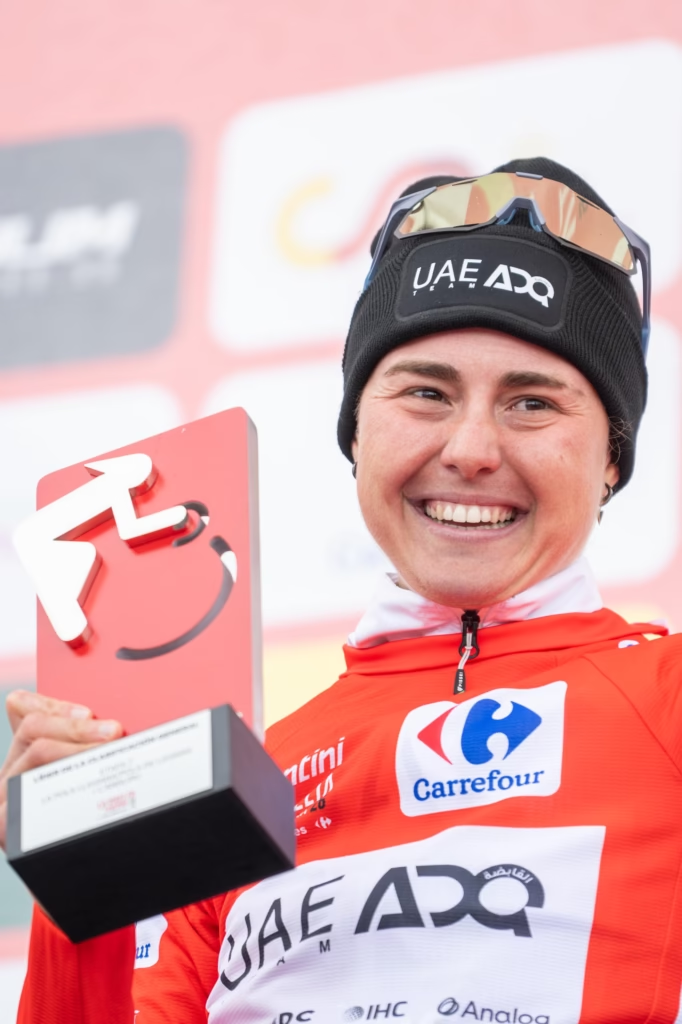 Photo Credit: Naike Erenozaga
Paula Blasi has already won one Grand Tour this season
Paula Blasi deserves to sit among the leading yellow jersey contenders after a season that has changed her status completely.
Her Amstel Gold Race victory initially looked like the breakthrough of a talented young rider who had been given too much freedom. Third at Flèche Wallonne and fifth at Liège-Bastogne-Liège quickly showed it was something more.
Then came La Vuelta Femenina.
Blasi won the overall on the Angliru, not through a fortunate breakaway or accumulated bonuses but by outclimbing Anna van der Breggen on one of the hardest ascents in professional cycling. That was followed by overall victory at the Tour Féminin International des Pyrénées, including a stage win on the Tourmalet, and another overall win at the Volta a Catalunya Femenina.
Her Vuelta breakthrough is explored in what La Vuelta Femenina 2026 means for the season.
The concerns are obvious.
This is her first Tour, the Dijon time trial is unlikely to play to her strengths, and UAE Team L’IMAD also have Elisa Longo Borghini as an experienced Grand Tour leader.
But Blasi has already won a Grand Tour by outclimbing one of the strongest riders in the field.
That makes it impossible to treat her as merely a future contender.
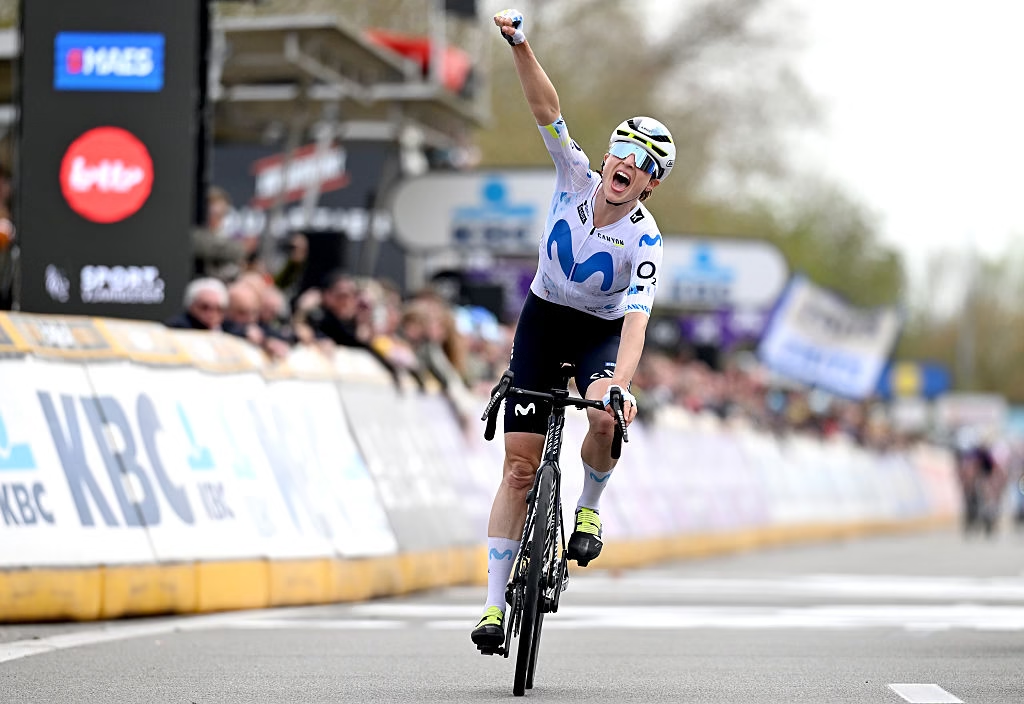 Photo Credit: Getty
Marlen Reusser is now a genuine yellow jersey contender
Marlen Reusser is probably the rider who changes the 2026 Tour most.
A few seasons ago, a route containing Mont Ventoux would have made it difficult to put her alongside the strongest climbers as a genuine favourite.
That is no longer true.
Reusser won the 2026 Tour de Suisse after using the time trial to take control before surviving, and ultimately winning, the final mountain stage. That performance showed that the climbing gap has narrowed enough for her time trial advantage to become a genuine Grand Tour weapon.
The Stage 4 time trial into Dijon is Reusser’s biggest opportunity. If she wins and takes meaningful time from Vollering, Ferrand-Prévot and Blasi, Movistar can enter the mountains with everyone else needing to attack them.
The issue is the scale of the climbing.
Tour de Suisse demonstrated that Reusser can defend against top climbers over a demanding stage. Mont Ventoux is a different test, particularly when followed two days later by another mountain stage around Nice.
Reusser does not need to be the strongest climber.
She needs to be close enough.
If she reaches Ventoux with a minute or more in hand and loses only 30 seconds, the Tour becomes extremely difficult for everyone else.
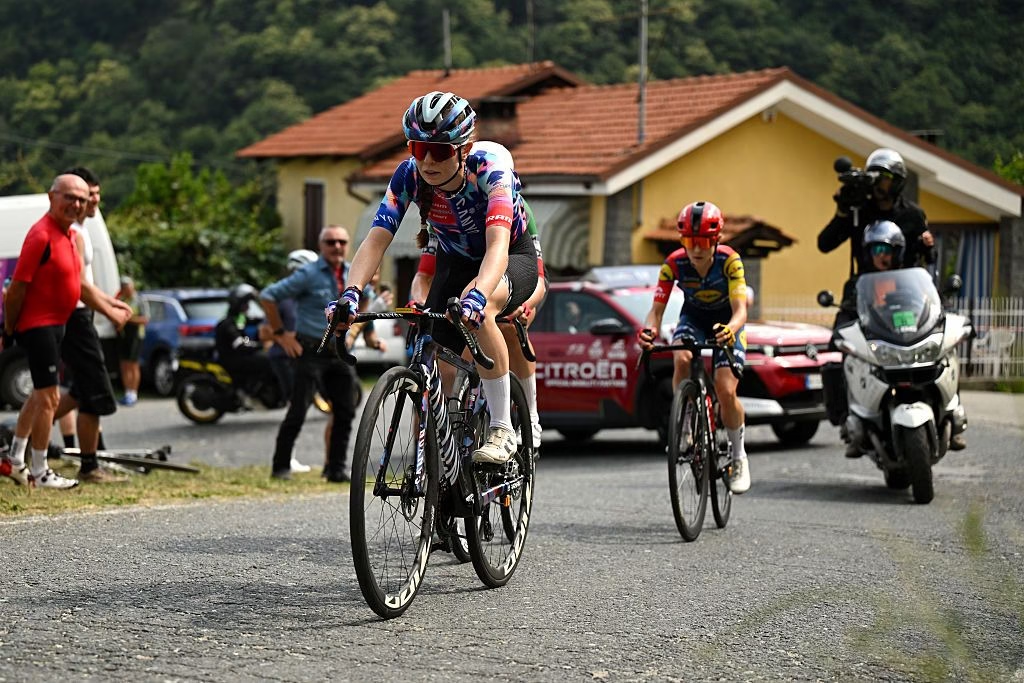
Antonia Niedermaier has moved from outsider to genuine contender
Antonia Niedermaier should not be treated as a developmental GC pick after what she produced at the Giro.
The German finished second overall, only 30 seconds behind Vollering, after playing a central role in the aggressive final stage that overturned the classification.
That result establishes her as a genuine Tour podium contender.
The route suits her exceptionally well because she does not have the usual weakness of a lightweight climber against the clock. Niedermaier can produce a strong Dijon time trial and then take advantage of Ventoux and Nice.
Canyon SRAM also have an unusual tactical advantage because Niedermaier does not arrive as the sole leader.
Niewiadoma-Phinney has already won the Tour and carries far greater attention from rivals. That may allow Niedermaier to race more quietly through the opening stages.
If she emerges from Dijon ahead of Niewiadoma-Phinney and close to the favourites, the team hierarchy may have to change quickly.
Winning the Tour would still require another step beyond her Giro performance.
But she has already demonstrated that the step is plausible.
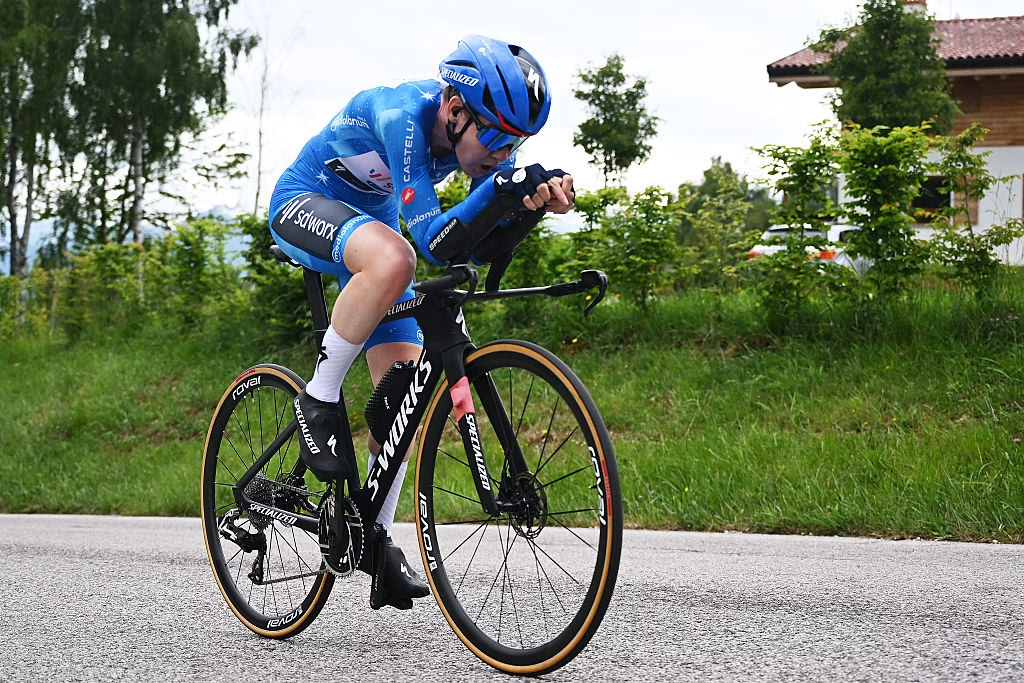 Photo Credit: Getty
Anna van der Breggen can still win a Grand Tour
Anna van der Breggen went remarkably close to winning the Giro.
She entered the final stage wearing the maglia rosa and resisted Vollering until the decisive climbing, eventually slipping to third overall as both Vollering and Niedermaier moved past her.
That performance answered most of the questions about whether van der Breggen could still compete for major stage races after returning to professional racing.
She can.
The Tour route also suits her.
Van der Breggen remains strong against the clock, which should prevent the sort of damage several lighter climbers may suffer in Dijon. She is experienced enough to manage the hilly stages without wasting energy and has spent much of her career winning on sustained climbs.
The problem is that SD Worx-Protime arrive with several competing ambitions.
Lorena Wiebes will need sprint support, Lotte Kopecky remains a major card on selective stages, while Nienke Vinke gives the team another strong climber.
Van der Breggen may be the clearest GC option, but the team is not constructed entirely around her.
If the race becomes leader against leader on Ventoux, however, she belongs in the final group.
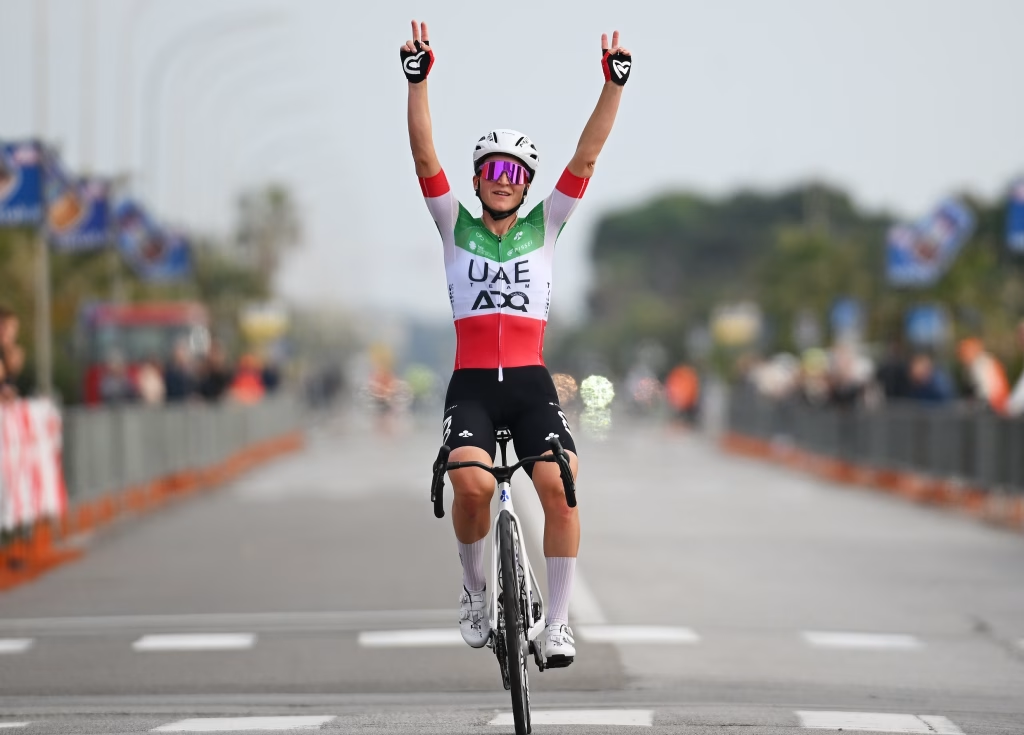
Elisa Longo Borghini remains one of the safest podium picks
Elisa Longo Borghini may not have the single overwhelming weapon of Reusser’s time trial or Vollering’s climbing, but very few riders have fewer weaknesses.
She can time trial, climb and race aggressively over difficult terrain. She rarely needs a stage to unfold in one specific way.
Longo Borghini also finished the Giro strongly, winning the final stage in Saluzzo after the decisive GC battle had already exploded.
That matters heading into the Tour because the route rewards consistency.
A poor time trial can cost a climber a minute.
A weak Ventoux can cost a time triallist several.
Longo Borghini is one of the riders least likely to suffer either catastrophe.
UAE Team L’IMAD also bring substantial climbing support through Mavi García and Silvia Persico, while Maëva Squiban gives them an aggressive option farther up the road. The major complication is that Blasi now gives UAE a second rider with a legitimate claim to leadership rather than simply a support option.
Longo Borghini’s route fit and GC possibilities are explored in our Elisa Longo Borghini Tour de France Femmes 2026 guide.
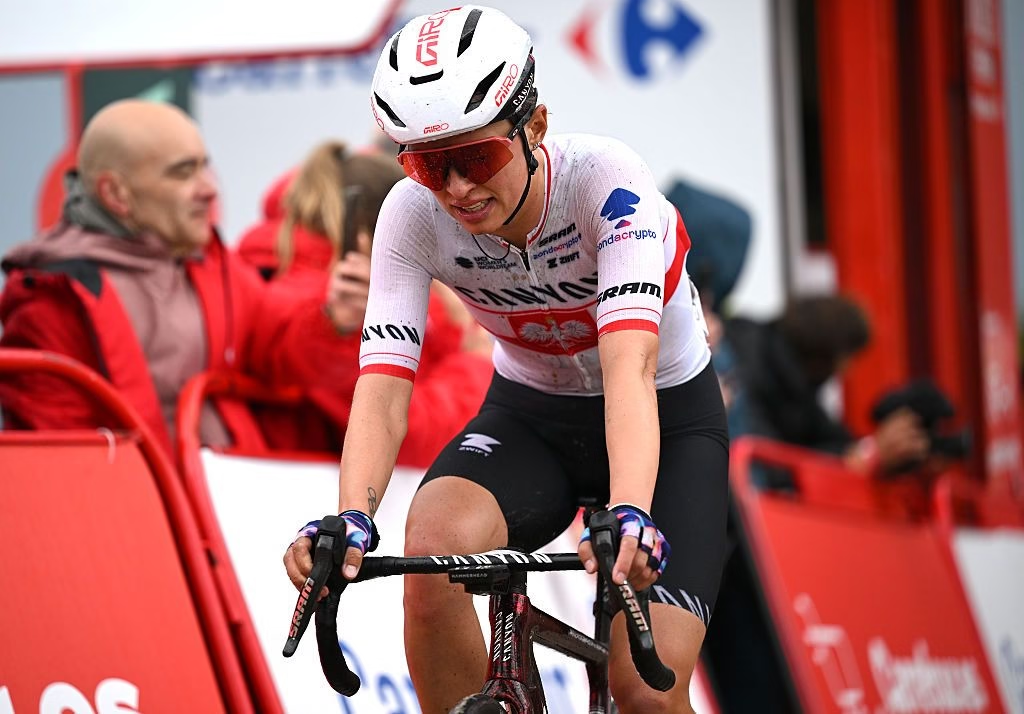
Kasia Niewiadoma-Phinney knows how to win this race
Kasia Niewiadoma-Phinney should never be reduced to an outsider at the Tour.
She won the 2024 edition and remains one of the best riders in the peloton at turning difficult terrain into complicated racing.
Her challenge is that the 2026 route exposes her clearest weakness.
The Dijon time trial.
Reusser can take significant time there, while Vollering, Longo Borghini, Niedermaier and van der Breggen may also emerge ahead of her.
That means Niewiadoma-Phinney probably cannot wait until Ventoux.
Canyon SRAM need to use the hilly stages.
Stages 3, 5 and 6 contain exactly the sort of terrain where Niewiadoma-Phinney can attack, force rivals to work and create gaps through racing rather than pure climbing.
Her third place on the final stage of the Tour de Suisse behind Reusser and Cédrine Kerbaol also showed that she remains competitive when the climbing becomes difficult.
The route does not make her the favourite.
It does give her enough opportunities to change the shape of the race before the stages that suit others better.
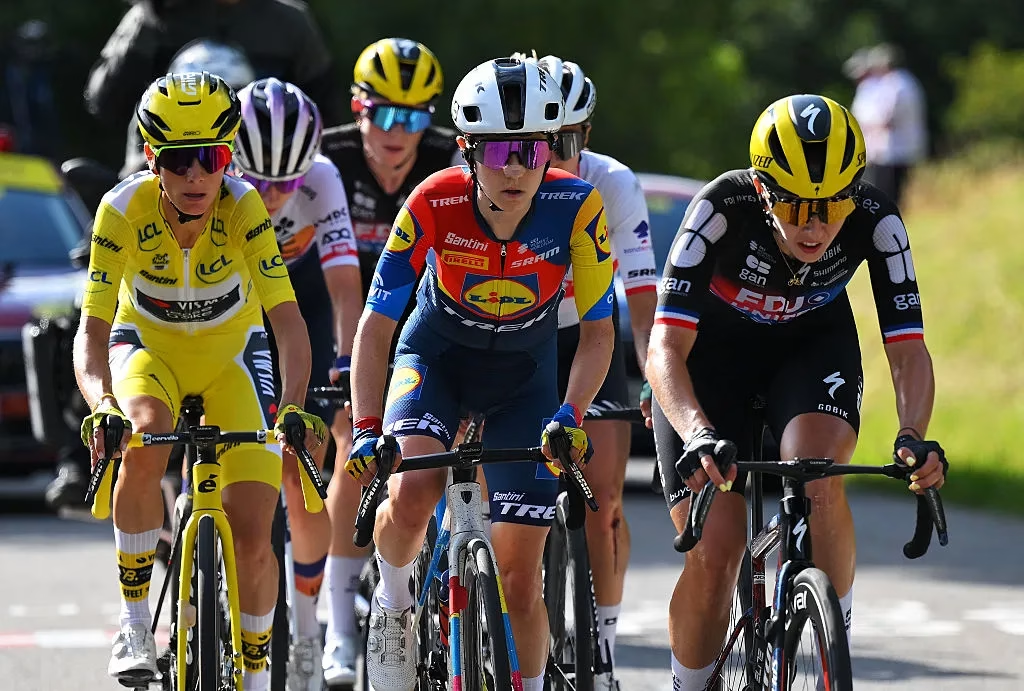 Photo Credit: Getty
Niamh Fisher-Black could produce her biggest Grand Tour yet
Niamh Fisher-Black arrives with a realistic route towards the top five and an outside chance of going considerably higher.
Her Giro ended with second place on the final stage behind Longo Borghini, ahead of Niedermaier and Vollering, another demonstration of her climbing level when the race becomes selective.
The Tour asks whether she can combine that level across nine stages.
Fisher-Black should handle Ventoux well and the final stage around Nice suits her climbing profile. She can also produce a solid time trial without being expected to challenge Reusser.
Lidl-Trek have enough depth to support her without becoming completely dependent on GC.
Amanda Spratt and Riejanne Markus bring stage-racing experience, while Loes Adegeest, Elisa Balsamo and Lucinda Brand give the team alternatives elsewhere.
That can reduce pressure on Fisher-Black.
A podium would be a breakthrough rather than the expected result, but there are few riders outside the headline favourites with a clearer route to one.
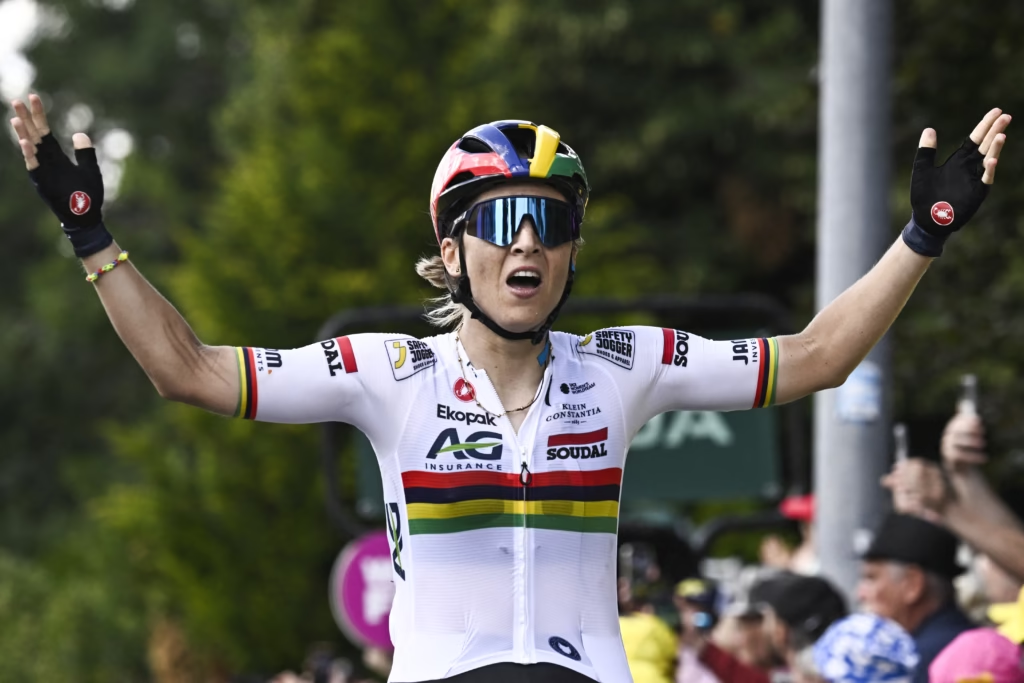 Photo Credit: Getty
Kim Le Court-Pienaar has made the top five the target
Kim Le Court-Pienaar begins the Tour with a very explicit objective.
AG Insurance-Soudal have said stage wins come first, followed by the best possible overall result, with a top-five GC finish the target.
That ambition is much more significant after what Le Court-Pienaar produced at the 2025 Tour.
She took two early podium finishes, won in Guéret and spent four stages in yellow, turning what had been an emerging stage-racing profile into something much more substantial.
Her route towards a top five is built around consistency.
Le Court-Pienaar can score on selective finishes and should be comfortable through the hilly stages. The two major tests are Dijon and Ventoux.
She cannot afford a major time trial loss and then expect to recover everything on a climb where Vollering, Ferrand-Prévot and several more specialised climbers may all be stronger.
If she reaches the summit of Ventoux still within the top five, the target becomes very realistic.
Winning yellow would require another major step.
But she has already shown she can wear it.
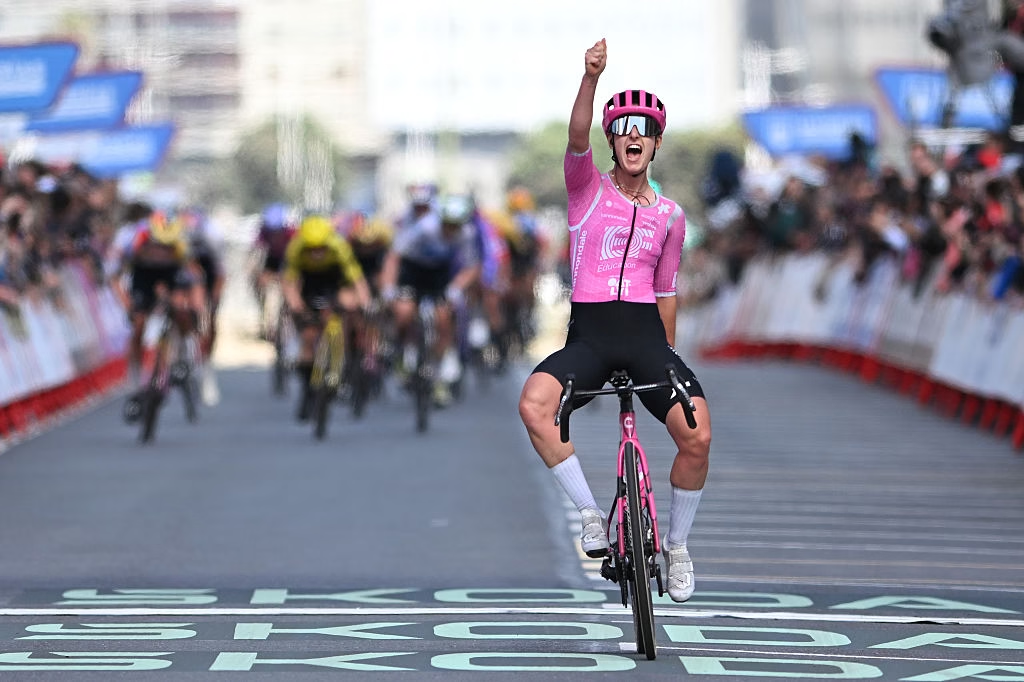
Cédrine Kerbaol could quietly ride into the podium fight
Cédrine Kerbaol is one of the most interesting riders outside the obvious favourites.
She has developed into a rider capable of combining climbing with strong performances against the clock, which is exactly what the 2026 route requires.
Her Tour de Suisse performance is particularly relevant.
Kerbaol finished second behind Reusser on the final mountain stage and also climbed to second overall, showing that she could combine a strong week with a high-level final climbing performance.
EF Education-Oatly do not have another obvious GC leader who requires Kerbaol to sacrifice her own position.
Noemi Rüegg and Magdeleine Vallieres can target different stages, leaving Kerbaol with a clear route towards the overall classification.
She is unlikely to begin with the same expectations as Vollering or Ferrand-Prévot.
That may help.

Evita Muzic is more valuable to Vollering than to her own GC
Evita Muzic has the climbing ability to finish high overall, but FDJ United-SUEZ’s structure changes her role.
Vollering is the clear leader.
That makes Muzic one of the most important mountain domestiques in the Tour, particularly on Ventoux.
If Vollering remains in contention for yellow, Muzic’s own GC position becomes secondary to keeping her leader protected and helping control attacks.
That makes a high overall finish possible but difficult to prioritise.
The scenario changes if Vollering encounters trouble.
Muzic is strong enough to become a fallback GC option, and her presence is one reason FDJ enter the Tour with one of the strongest mountain teams.
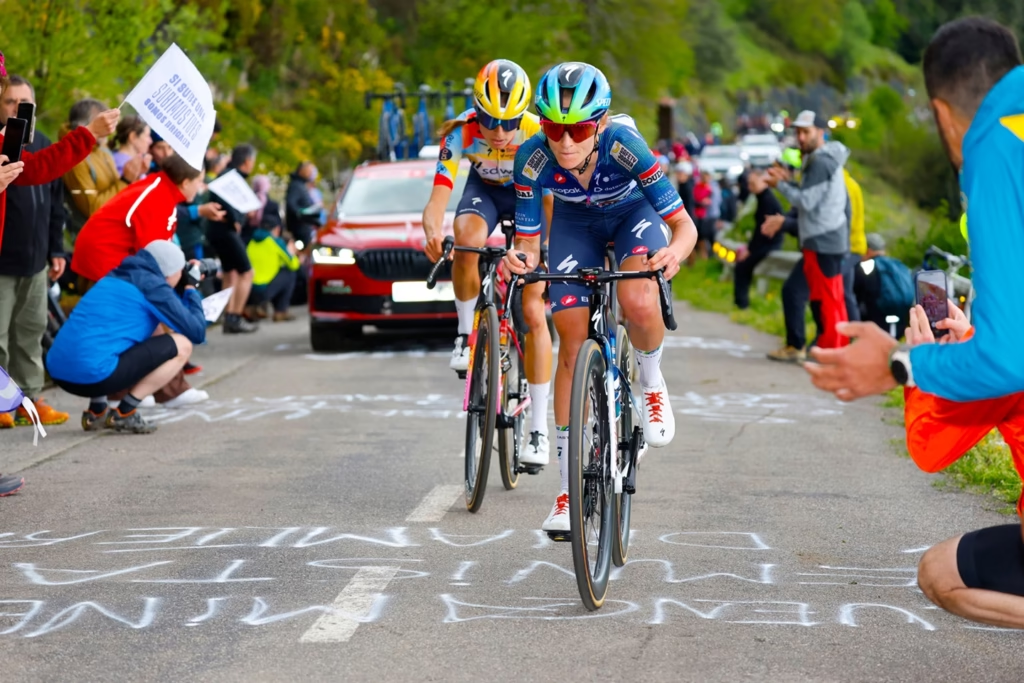 Photo Credit: Getty
Urška Žigart can become another high-GC option
Urška Žigart deserves consideration among the riders capable of finishing high overall.
Her climbing ability makes her an important part of AG Insurance-Soudal’s support around Le Court-Pienaar, particularly when the race reaches Ventoux and Nice.
That likely limits the extent to which she can race entirely for herself if Le Court remains in top-five contention.
But teams rarely finish a nine-day Tour with their original hierarchy completely intact.
If Le Court-Pienaar loses time or Žigart proves stronger than expected on the major climbs, AG Insurance-Soudal have another rider capable of remaining high in the standings.
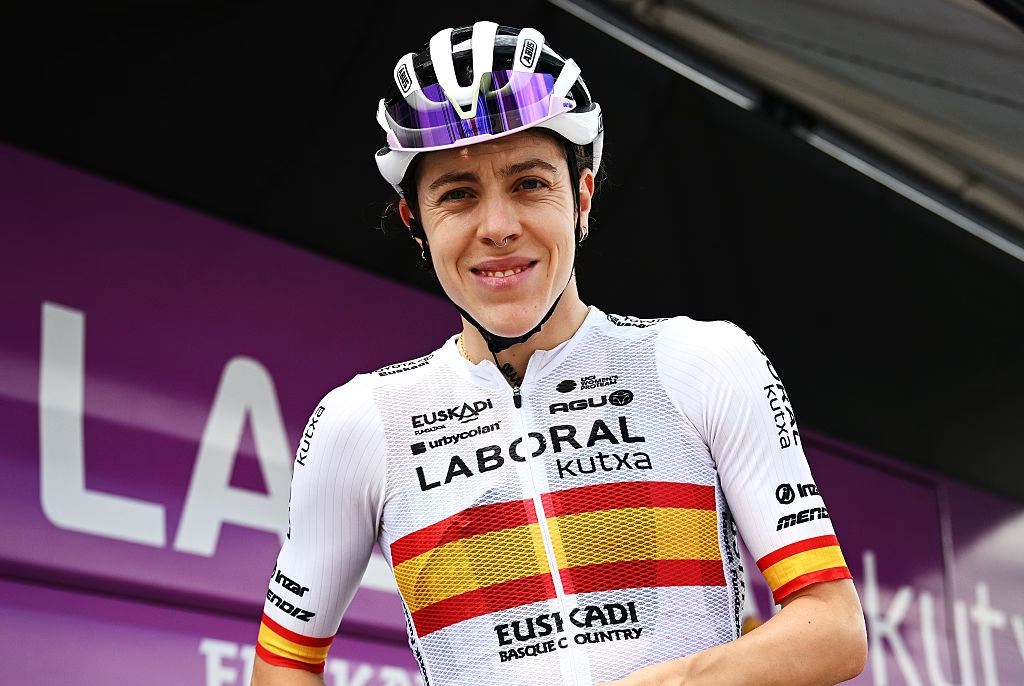
Usoa Ostolaza has freedom the bigger favourites do not
Usoa Ostolaza begins from a different position.
Laboral Kutxa-Euskadi do not have to defend a pre-race favourite, which gives Ostolaza much more freedom to decide how aggressively she wants to pursue GC.
She is climbing well enough to remain competitive on the difficult stages and can use breakaways if the time gaps open.
That makes her particularly interesting after Dijon.
If Ostolaza loses enough time against the clock to fall out of immediate contention, the major teams may allow her freedom on Stages 5 or 6. A successful move could suddenly return her to the GC picture.
She is unlikely to win the Tour through a straightforward leader-against-leader contest.
A more chaotic race gives her greater possibilities.
Who are the main Tour de France Femmes 2026 GC contenders?
Based on the confirmed start list, the hierarchy looks stronger and deeper than it did earlier in the season.
Top favourites: Demi Vollering and Pauline Ferrand-Prévot.
Genuine yellow jersey contenders: Paula Blasi, Marlen Reusser, Elisa Longo Borghini, Antonia Niedermaier, Anna van der Breggen and Katarzyna Niewiadoma-Phinney.
Podium and top-five threats: Niamh Fisher-Black, Kim Le Court-Pienaar and Cédrine Kerbaol.
Riders capable of moving into the GC fight: Urška Žigart, Usoa Ostolaza and Evita Muzic.
Those categories are unlikely to survive the first week unchanged.
Dijon could immediately elevate Reusser.
A difficult Stage 5 or 6 could force a favourite out of contention.
Ventoux can rearrange almost everything.
Our wider Tour de France Femmes 2026 riders to watch guide covers the broader field beyond the riders targeting yellow.
Dijon is where the Tour first becomes serious
Stage 4 is only 21km long, but it may create the tactical framework for everything that follows.
Reusser wants a significant advantage.
Longo Borghini, Niedermaier and van der Breggen want to use their time trialling to build buffers over the lighter climbers.
Vollering wants to stay close enough that Ventoux can overturn the race.
Ferrand-Prévot, Blasi and Niewiadoma-Phinney primarily need to stop the gaps becoming large enough to dictate how they must race later.
That means a 30-second deficit can have different meanings depending on the rider.
Vollering losing 30 seconds to Reusser is manageable.
Blasi or Niewiadoma-Phinney losing more than a minute to Reusser and significant time to several other contenders creates a much more complicated problem.
The time trial does not decide the Tour.
It decides who gets to be patient afterwards.
Stages 5 and 6 could matter more than expected
The obvious temptation is to view the Tour as Dijon followed by Ventoux.
That ignores two hilly stages where teams have enormous tactical freedom.
Stage 5 around Belleville-en-Beaujolais contains repeated climbing and Mont Brouilly close to the finish. Stage 6 to Tournon-sur-Rhône comes immediately before Ventoux and gives teams a choice between conserving resources or exploiting rivals who are already thinking about Friday.
Niewiadoma-Phinney should want these stages to become difficult.
Vollering can use them to recover time bonuses or create pressure.
Reusser may want to make them as controlled as possible if she is already in yellow.
Blasi gives UAE another reason to attack rather than simply defend Longo Borghini’s position.
That conflict could produce more important gaps than the profiles initially suggest.
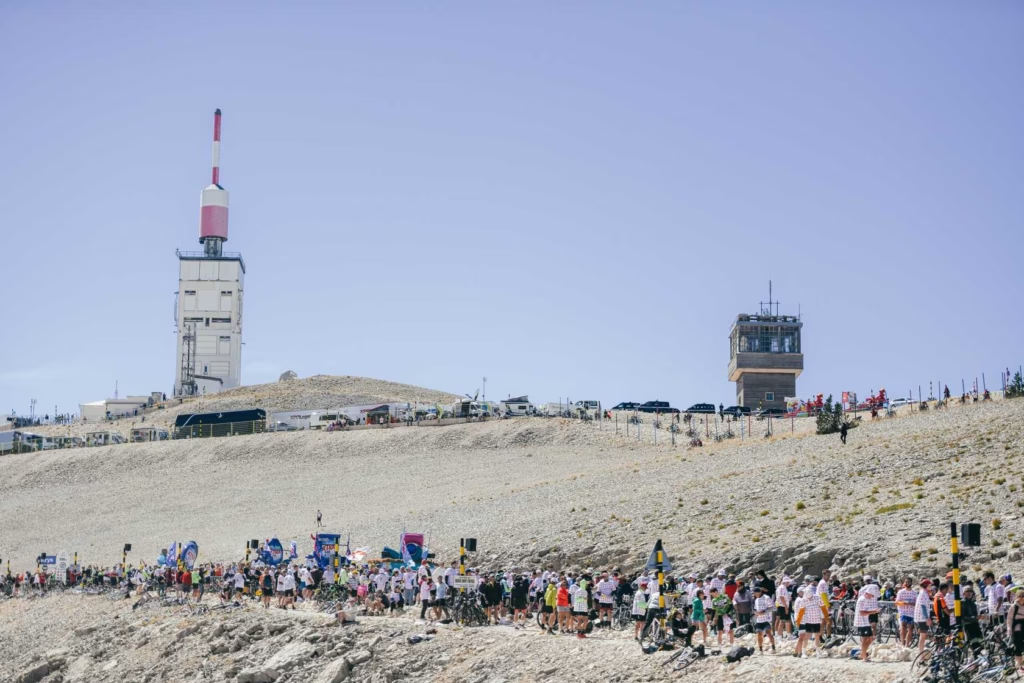
Mont Ventoux is the stage that can expose everyone
Stage 7 is the first point where there is almost nowhere for a weakness to hide.
The officially categorised climb to Mont Ventoux covers 15.7km at 8.8%, with the finish at 1,910 metres after 3,565 metres of climbing across the stage.
For Vollering and Ferrand-Prévot, it is the clearest opportunity to win the Tour through climbing strength.
For Blasi, it is the stage that can confirm whether her Angliru and Tourmalet performances translate directly to the Tour.
For Reusser, it is about calculating how much time she can afford to concede.
For Niedermaier, Longo Borghini and van der Breggen, it may provide the chance to move from podium contenders into the yellow jersey battle.
Our Tour de France Femmes 2026 climbers guide looks more closely at the riders capable of winning the stage itself.
Nice means Ventoux is not the end
The Tour does not finish on Mont Ventoux.
That is crucial.
Stage 8 brings the race from Sisteron to Nice before the final 99.2km mountain stage around Nice on Sunday.
That final day means even a rider leaving Ventoux in yellow cannot simply regard the race as finished.
A narrow Reusser lead remains vulnerable.
A Vollering or Ferrand-Prévot advantage can still be attacked.
A rider sitting fourth overall may have nothing to lose by making a long-range move.
The short distance makes control especially difficult because there is less time to gradually correct a tactical mistake.
If the GC gaps remain inside a minute, Stage 9 could become more chaotic than Ventoux.
-
 Photo Credit: A.S.O./Billy Ceusters
Who has the strongest team?
Team strength may become one of the differences between Vollering and the rest.
FDJ United-SUEZ bring Evita Muzic and Juliette Berthet alongside Vollering, giving her two high-level climbers capable of staying useful late into difficult stages.
Canyon SRAM have two genuine GC cards through Niewiadoma-Phinney and Niedermaier, allowing them to race more aggressively than a team depending entirely on one leader.
UAE Team L’IMAD may have the most intriguing dual-leadership situation of all. Longo Borghini brings Grand Tour experience and all-round consistency, while Blasi has already won La Vuelta Femenina this year. Mavi García and Silvia Persico add further climbing depth.
AG Insurance-Soudal have Ghekiere and Žigart around Le Court-Pienaar.
Movistar’s challenge is more obvious. Reusser has a versatile team, but not the same depth of proven mountain support as Vollering.
If she takes yellow in Dijon, Movistar may spend three stages defending it against teams with more ways to attack.
That could matter almost as much as the time gained in the time trial.
Tour de France Femmes 2026 yellow jersey prediction
Demi Vollering starts as the favourite.
The Giro demonstrated that she can still overturn a major stage race when the pressure is highest, and the Tour contains enough climbing for her to compensate for whatever time she loses to Reusser in Dijon.
Pauline Ferrand-Prévot remains the strongest direct alternative because she has already shown she can dominate this race once it reaches decisive mountain terrain. The uncertainty is whether she can reproduce her 2025 peak after a season specifically constructed around doing exactly that.
Paula Blasi is the rider whose 2026 results make her impossible to ignore. Winning the Vuelta on the Angliru, then continuing to win difficult stage races afterwards, is stronger evidence than an outsider label suggests. Dijon is the problem, but Ventoux is exactly the stage where she can answer it.
Marlen Reusser is the rider most capable of changing the expected climbing contest. Her Tour de Suisse victory showed that the gap uphill has narrowed enough for her time trial advantage to become genuinely dangerous.
Behind them, Antonia Niedermaier may have the highest ceiling. Second at the Giro and already strong against the clock, she has almost the perfect profile for this route.
Elisa Longo Borghini, Anna van der Breggen and Katarzyna Niewiadoma-Phinney all have realistic routes towards yellow, but each probably needs the race to move away from the clean Vollering-versus-Ferrand-Prévot contest suggested on paper.
The Tour may ultimately be decided by one equation.
How much time can Reusser and the other strong time triallists gain in Dijon, and how much of it can Vollering, Ferrand-Prévot and Blasi take back on Ventoux and in Nice?
Nine stages provide plenty of opportunities for the answer to become much more complicated.

