
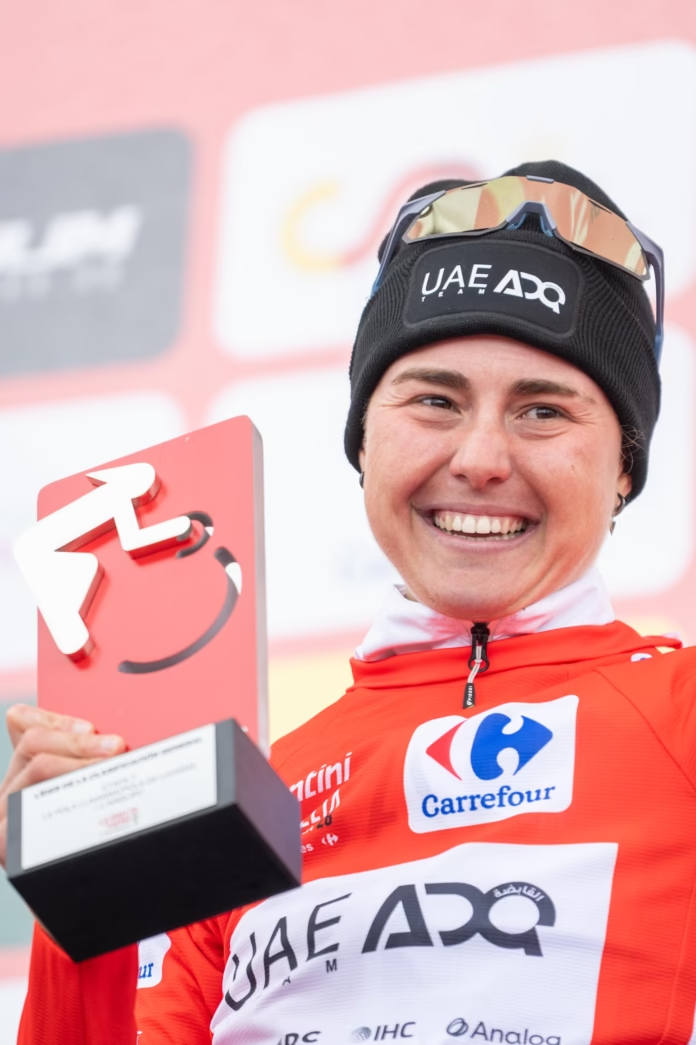
La Vuelta Femenina 2026 did more than produce a surprise winner. It changed the shape of the women’s season.
Paula Blasi’s overall victory on the Angliru was not a small upset built from opportunism or circumstance. It was a proper Grand Tour win, taken on the hardest climb of the race, against Anna van der Breggen, Marion Bunel, Juliette Berthet, Kasia Niewiadoma, Liane Lippert, Évita Muzic, Monica Trinca Colonel and a field that had been squeezed tighter with every stage. By the time Blasi reached the finish on Saturday, 9th May, she had turned a strong spring into something much bigger.
This was the first women’s Grand Tour of the season, and it leaves the rest of 2026 looking different. Blasi is no longer simply a rising Spanish talent with a major one-day win at Amstel Gold Race. She is now a Grand Tour winner. SD Worx-Protime are still the deepest team in the peloton, but they did not leave Spain with the red jersey. Team Visma | Lease a Bike have genuine stage-race depth. Human Powered Health have a landmark climbing win through Petra Stiasny. And the next generation did not just show promise. It took over the race.
For the broader race context, our La Vuelta Femenina 2026 full route guide set out why the final weekend always looked likely to change the GC.
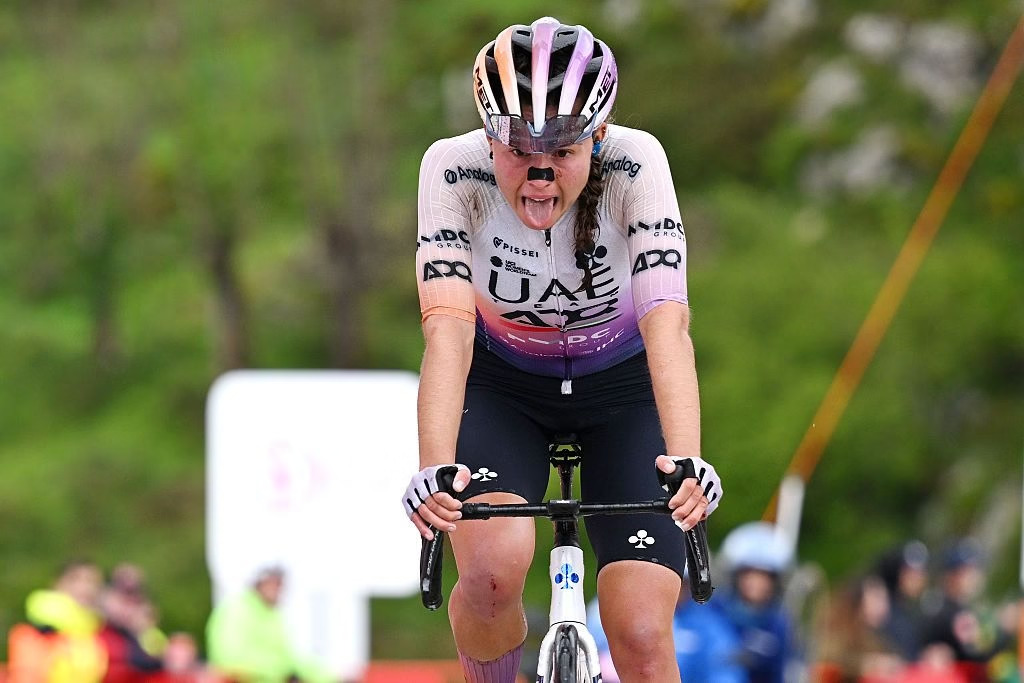 Photo Credit: Getty
Paula Blasi has moved from breakthrough rider to season-defining figure
Blasi’s victory is the central story because it changes how she will be raced against for the rest of the year. Before La Vuelta Femenina, she already looked like one of the breakout riders of 2026. Winning Amstel Gold Race showed her explosiveness, confidence and ability to read a major one-day finale. Winning La Vuelta showed something broader.
This was not one attack on one good day. Blasi had to survive the punchier opening stages, stay close through the chaos of reduced sprints and crash-hit finales, then climb with the best on Les Praeres and the Angliru. The final weekend was the proof. She finished 2nd to Anna van der Breggen on Les Praeres, then returned the next day on the Angliru and rode Van der Breggen out of red.
That changes the rest of 2026 because Blasi is now a threat across different types of races. She can win an Ardennes Classic. She can climb on the steepest summit finishes. She can handle pressure on home roads. That makes her one of the most important riders to watch in every hilly one-day race and every selective stage race that follows.
UAE Team ADQ also leave with a different level of credibility. The team already had depth, but this result gives them a defining Grand Tour success and a rider around whom bigger ambitions can be built. Blasi’s win was individual, but it also strengthens the whole project.
SD Worx-Protime are still powerful, but not untouchable
SD Worx-Protime won stages, controlled large parts of the race and repeatedly placed riders in winning positions. Lotte Kopecky took red after Stage 4, Mischa Bredewold won Stage 5, and Anna van der Breggen looked ready to turn the race her way after winning on Les Praeres.
Yet they did not win the overall.
That is the sharpest takeaway. SD Worx-Protime remain the reference point for collective strength, but La Vuelta Femenina showed that even they can be pulled into difficult tactical choices. Kopecky was the strongest and most consistent rider of the opening half of the race, but the route eventually moved beyond her ideal terrain. Bredewold gave the team another stage-winning card. Van der Breggen then became the obvious GC option once the summit finishes arrived.
For a while, that looked like enough. Van der Breggen’s ride on Les Praeres was controlled, measured and convincing. But the Angliru exposed the risk of assuming that one mountain performance settles a race. When she cracked on the final climb, the team’s earlier dominance could not protect her.
The message for the season is not that SD Worx-Protime are weaker. It is that rivals now have evidence that they can be beaten in a Grand Tour even when they win multiple stages and carry the race lead deep into the week. That will encourage teams such as UAE Team ADQ, Team Visma | Lease a Bike, FDJ-Suez, Canyon SRAM zondacrypto and Movistar to race more aggressively when the opportunity appears.
The Angliru gave the race the ending it needed
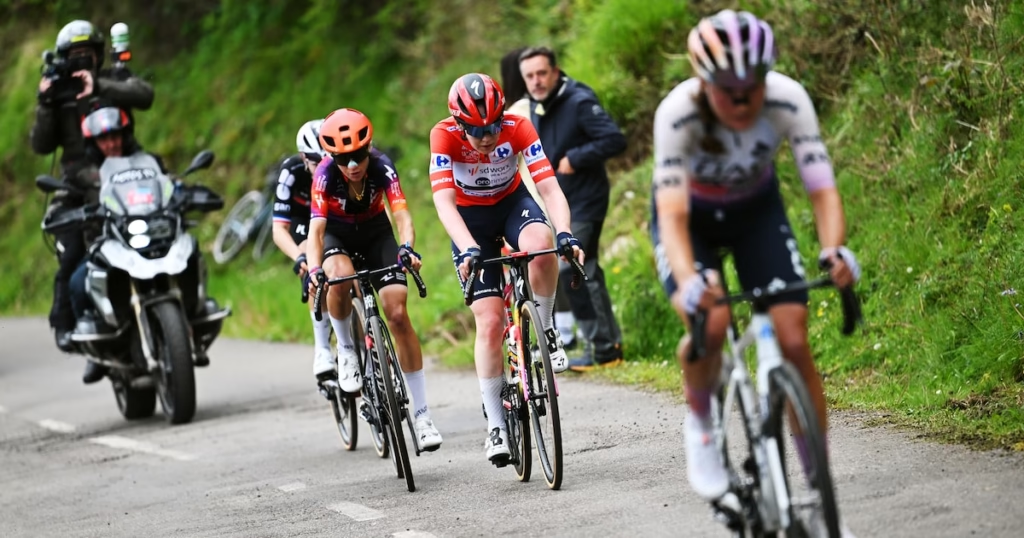
La Vuelta Femenina needed a decisive final stage, and the Angliru delivered exactly that. The early stages had been entertaining, but they were shaped by bonus seconds, positioning, technical finales and reduced sprints. That created tension, but it did not fully reveal the climbing hierarchy.
Les Praeres began the separation. The Angliru finished it.
Petra Stiasny’s stage win was one of the rides of the race because it came from strength rather than timing alone. She climbed past the GC battle, held her rhythm and took the biggest victory of her career on one of the most feared climbs in the sport. For Human Powered Health, that is a result with real weight. It gives the team visibility, credibility and proof that they can win on terrain usually reserved for the biggest GC names.
Blasi’s 2nd place carried the bigger consequence. She did not need to win the stage. She needed to beat Van der Breggen, and she did that decisively. Berthet and Bunel also reinforced how much the race had shifted towards the climbers by the end. The final order was not built from bonus seconds anymore. It was built from who could still turn the pedals properly on the steepest slopes.
That gives the race more authority. A Grand Tour should feel like it has tested different types of riders across different types of stages. This one did. It began with chaos and finishes for faster riders, then ended with two brutal summit finishes that rewrote the standings.
Marion Bunel confirmed her Grand Tour future
Bunel’s 3rd place overall is one of the most significant long-term outcomes of the race. She did not win, but she looked like a rider who belongs in the front group of major stage races for years to come.
Her performance on Les Praeres was mature. Her Angliru ride confirmed it. She handled steep gradients, repeated pressure and a final weekend where many more experienced riders faded. That is a major marker for Team Visma | Lease a Bike, especially in a race where they had already lost Marianne Vos earlier in the week.
Visma leave the race with mixed emotions, but also with evidence of genuine stage-race depth. Pauline Ferrand-Prévot was expected to be central on the steepest finishes, Sarah Van Dam had shown early promise, and Bunel emerged as their most convincing GC presence by the end. That gives the team options for the rest of the season, particularly in stage races where the climbs are hard enough to separate pure power from pure climbing.
Bunel’s result also adds to a wider theme. The next wave of women’s stage-race riders is not waiting politely behind the established names. Blasi won the race. Bunel stood on the podium. Berthet surged up the standings on the final day. The season now has a much younger and more open feel than it had a week earlier.
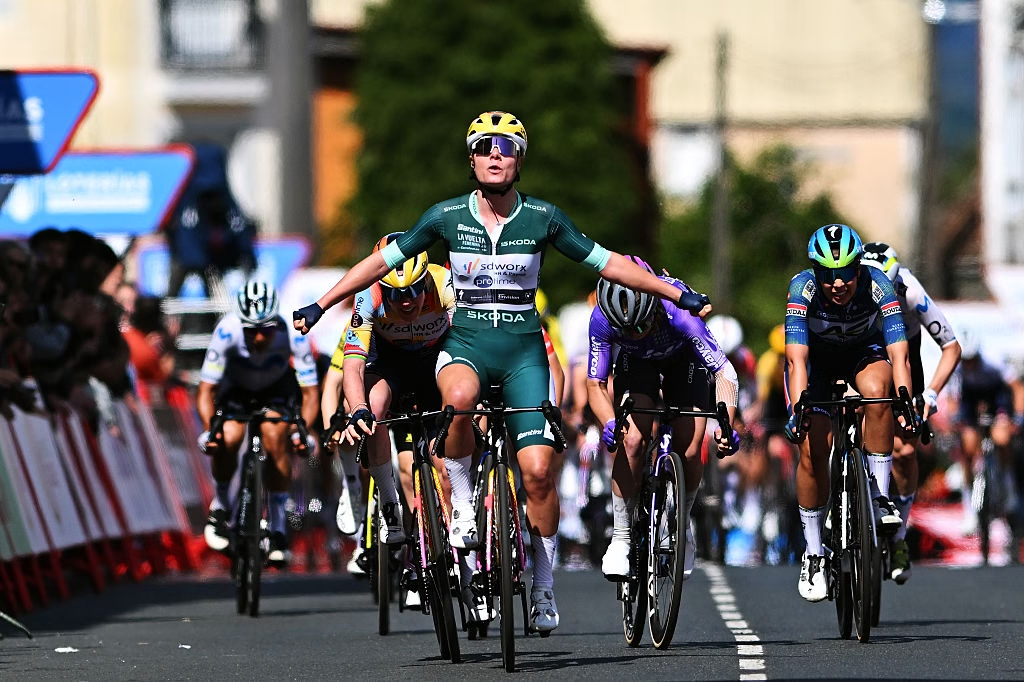 Photo Credit: Getty
Kopecky’s versatility remains one of the season’s biggest weapons
Lotte Kopecky did not win La Vuelta Femenina overall, but her race still said a lot about her 2026 level. She was consistently at the front through the opening half, won Stage 4 in Borja, wore red and took the points classification after repeatedly scoring on days that were too hard for some sprinters and too fast for some climbers.
That versatility remains one of the most valuable weapons in the women’s peloton. Kopecky can shape Classics, control reduced sprints, survive selective days and place herself almost perfectly in chaotic finales. La Vuelta showed again that she is not just a sprinter, not just a Classics rider, and not simply a powerful all-rounder. She is a race-shaping rider.
The final climbs were always likely to be a problem once the race reached Les Praeres and the Angliru. That does not diminish what came before. If anything, it sharpens the point. Kopecky can dominate large parts of a stage race even when the final weekend is beyond her ideal profile. That will make her a major factor in almost every race she starts for the rest of the season.
For SD Worx-Protime, Kopecky’s role remains fascinating. She can win stages and jerseys, but she can also change the tactical environment for Van der Breggen, Bredewold and others. That makes her both a leader and a weapon.
Van der Breggen is back at the sharp end, but the margins are different
Anna van der Breggen’s race should not be reduced to cracking on the Angliru. She won on Les Praeres, moved into red, and looked for 24 hours as though she might complete one of the biggest comeback stories of the season.
But the Angliru showed that the top of the women’s peloton has changed since her first career. Van der Breggen is still elite. She still reads climbs better than almost anyone, and her Stage 6 win was pure control. Yet she is no longer operating in a peloton where the established champions can dictate every final climb.
Blasi went past her in the overall battle. Bunel and Berthet finished ahead of her on the final stage. The race did not reject Van der Breggen’s comeback. It placed it in a new landscape.
That is good for the season. Van der Breggen remains a major contender, but she is now part of a much deeper field rather than a rider standing above it. Every stage race she enters from here will carry that tension. Is she still building? Was the Angliru a bad day after a hard week and the Stage 5 crash? Or is this the new level of the sport, where even a rider of her calibre can be cracked by younger climbers on the steepest climbs?
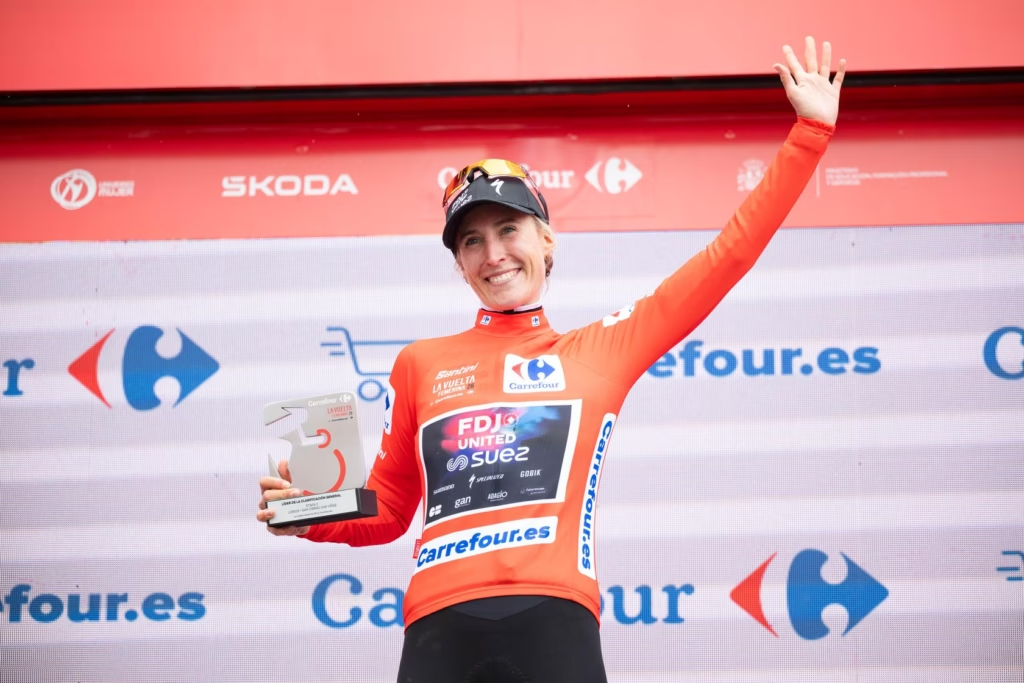 Photo Credit: Unipublic/Cxcling/Aritz Arambarri
FDJ-Suez and Movistar leave with questions
FDJ-Suez had reasons to be encouraged and frustrated. Franziska Koch was excellent in the first half of the race, wearing red and repeatedly staying in the right groups on awkward days. Évita Muzic remained a key climbing option and finished inside the top 10 overall, but the race never fully became the FDJ-Suez GC breakthrough it might have promised earlier in the week.
That will sting slightly because the route looked capable of rewarding their depth. Koch’s consistency was impressive, but once the true summit finishes arrived, the race moved away from her. Muzic was solid, but not decisive enough to shape the podium fight.
Movistar also had a presence without the final reward they might have wanted. Liane Lippert was aggressive on the final stage and briefly put real pressure on the bunch alongside the Markus sisters, but she did not convert that into a top-tier GC result. Mavi García and other Movistar threats were visible, but the team did not control the race narrative in the way UAE Team ADQ, SD Worx-Protime and Team Visma | Lease a Bike eventually did.
That leaves both teams with useful form, but also work to do before the next major stage-race targets.
The race rewarded aggression, not caution
One of the best things about La Vuelta Femenina 2026 was that it repeatedly punished hesitation. Kerbaol won Stage 3 by attacking late when the sprint teams were still trying to organise. Kopecky won Stage 4 after SD Worx-Protime controlled the chase and positioned her perfectly. Bredewold won Stage 5 by turning what looked like a lead-out into a winning sprint. Van der Breggen won Stage 6 by refusing to follow the first move and then imposing her own rhythm. Stiasny won Stage 7 by riding through and beyond the GC battle.
The race did not belong to one formula. That is why it worked.
It also showed how hard women’s stage racing has become to control. Even the strongest teams cannot simply close everything down. The stages were short enough to encourage attacks, technical enough to create stress, and hard enough at the end to punish riders who had spent too much too early.
That should influence the rest of the season. Teams will have seen that waiting for the obvious moment is not always the best option. Kerbaol’s Stage 3 win and Stiasny’s Angliru victory were different types of success, but both came from taking the race away from the most predictable script.
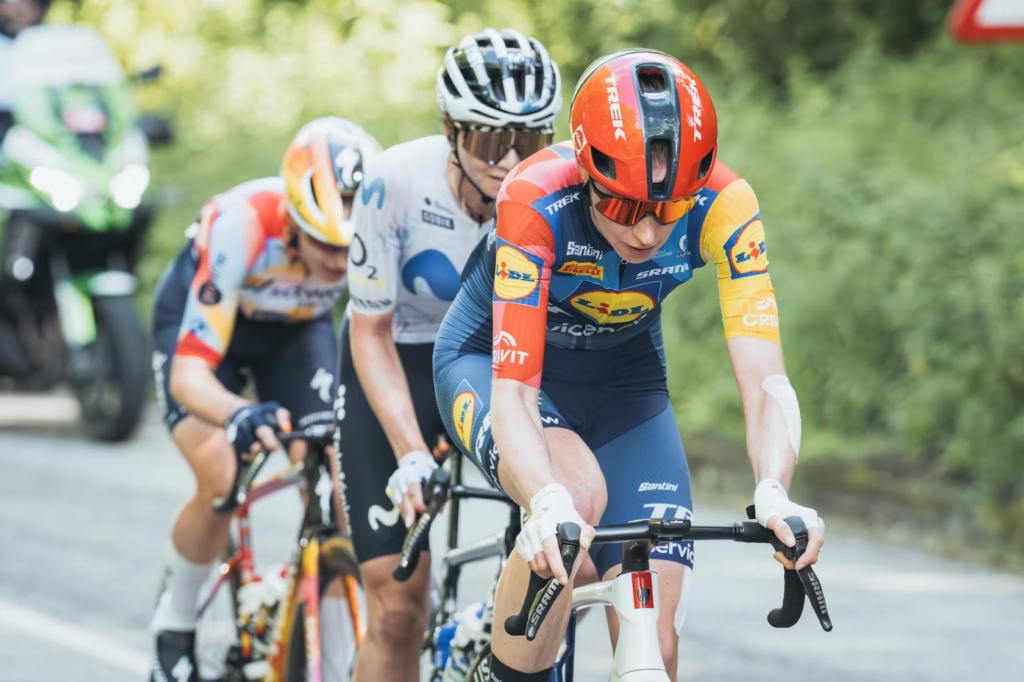 Photo Credit: Toni Baixauli
What it means for the Giro d’Italia Women and Tour de France Femmes
The biggest knock-on effect is for the next two Grand Tours. La Vuelta Femenina has made the Giro d’Italia Women and Tour de France Femmes feel more open.
Blasi now has to be treated as a Grand Tour favourite, not simply a rider on a hot streak. Van der Breggen has proved she can still win on the hardest climbs, but also that she can be beaten. Bunel has moved into the group of riders who need to be watched seriously. Stiasny has shown she can win on the most selective terrain. Berthet, Ostolaza and others leave Spain with increased credibility.
For riders such as Niewiadoma, Muzic, Lippert and Ferrand-Prévot, the race was more complicated. None left with the defining GC statement they would have wanted. That does not remove them from the conversation, but it does mean the pressure shifts. The next Grand Tour becomes a chance to correct the narrative rather than simply continue it.
Kopecky’s performance also raises familiar questions about route design and rider range. On a less mountainous route, she can be a genuine overall threat. On a route with Les Praeres and the Angliru at the end, she can dominate the first half and still be forced into damage limitation. That makes her one of the most route-dependent stars of the season, but also one of the most dangerous whenever the parcours gives her a path.
A better, deeper women’s peloton
The broader meaning of La Vuelta Femenina 2026 is that the women’s peloton now has more layers at the top. It is not just a contest between a small group of established champions. It is a mix of returning greats, current superstars, emerging climbers, Classics winners, stage hunters and teams that are still learning how to win Grand Tours.
That depth changes the rhythm of the season. It makes race previews harder, but the racing better. It means the Giro d’Italia Women and Tour de France Femmes cannot be framed around one or two obvious names. It also means stage wins carry more meaning because more teams now have riders capable of taking them on serious terrain.
La Vuelta Femenina 2026 will be remembered first for Blasi in red and Stiasny on the Angliru. But its wider significance is bigger than one rider or one climb. It showed a women’s peloton in transition, not away from its stars, but towards a deeper and more unpredictable version of itself.
Blasi leaves Spain as the season’s new Grand Tour reference point. SD Worx-Protime leave with strength, but not total control. Team Visma | Lease a Bike leave with proof of stage-race depth. Human Powered Health leave with a career-making mountain win. And the rest of the season now has a new question at its centre.
Who can follow what Blasi has just done?

