
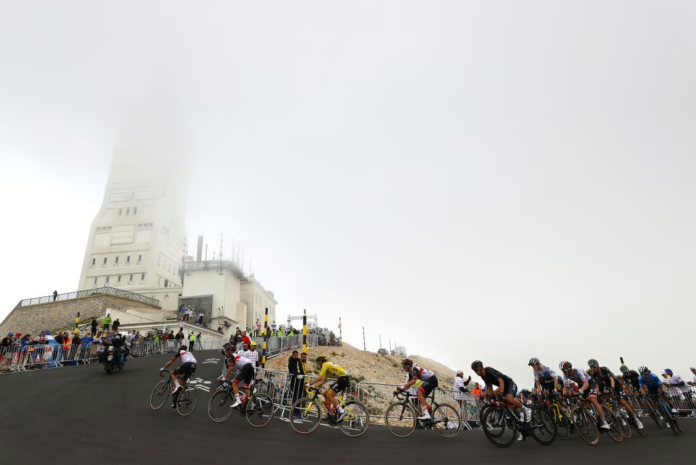
Mont Ventoux provides the defining climbing test of the Tour de France Femmes 2026, with Stage 7 finishing at 1,910 metres after 15.7km of climbing at an average gradient of 8.8%.
It is the sort of ascent where tactics eventually give way to climbing ability. Demi Vollering starts as the obvious reference after winning the Giro d’Italia Women earlier this season, while defending Tour champion Pauline Ferrand-Prévot returns to the terrain most likely to decide whether she can keep yellow for another year. Elisa Longo Borghini, Katarzyna Niewiadoma-Phinney, Marlen Reusser and Anna van der Breggen form another group with legitimate reasons to believe they can still be present deep into the climb.
There are also riders for whom Ventoux represents something different. Justine Ghekiere has already talked about attacking and has a personal connection with the mountain, while Evita Muzic, Niamh Fisher-Black, Antonia Niedermaier, Juliette Berthet and several others could become serious stage threats if the general classification battle gives the breakaway enough freedom.
The wider challenge of the stage, including the Bédoin ascent, weather, viewing times and mountain history, is covered in our Tour de France Femmes 2026 Mont Ventoux guide.
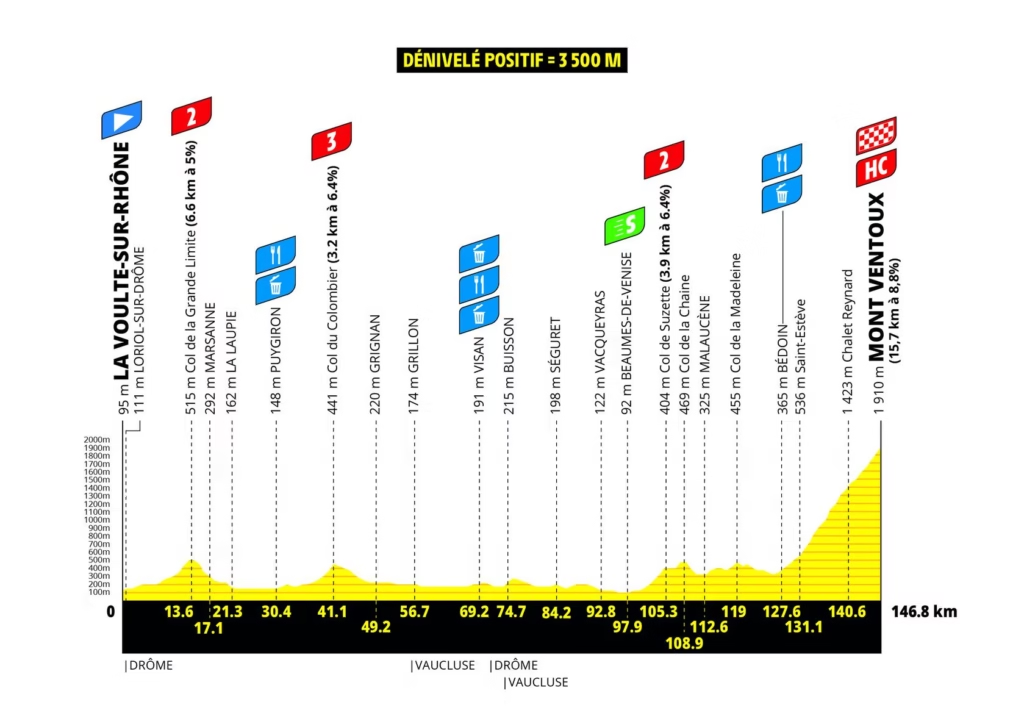
Stage 7: La Voulte-sur-Rhône to Mont Ventoux
Stage 7 covers 146.8km from La Voulte-sur-Rhône to Mont Ventoux and contains approximately 3,565 metres of climbing.
The climbing begins almost immediately with the Col de la Grande Limite, a 6.6km ascent averaging 5% that tops out after only 13.6km. The Col du Colombier follows later, before the Col de Suzette provides the final categorised climb ahead of Ventoux.
None should decide the stage by themselves, but they ensure the riders reach the final ascent with significant fatigue already accumulated. Teams can also use the terrain before Bédoin to remove domestiques, place riders into the breakaway and make life more difficult for rivals who would prefer to save everything for the summit finish.
Then comes Ventoux.
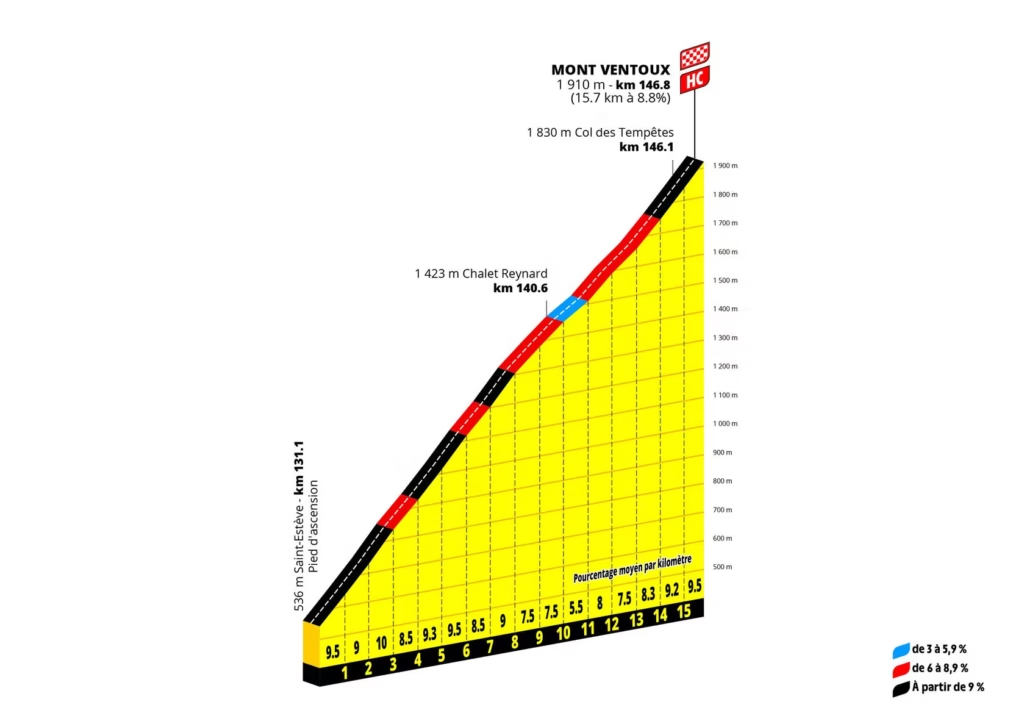
The race approaches through Bédoin before taking on the classic southern ascent. The officially categorised climb is 15.7km at 8.8%, gaining around 1,350 metres before finishing beside the summit observatory at 1,910 metres.
There are few meaningful recovery sections once the serious climbing begins. The forest above Saint-Estève contains long stretches around 9% and 10%, before the road emerges onto the exposed upper slopes above Chalet Reynard.
This is not a climb where a GC rider can disguise a bad day.
Why Mont Ventoux is different from the other climbs
The length is only part of the challenge.
Ventoux combines a sustained steep gradient with altitude, exposure and very little opportunity to recover once the hardest section begins. The forest can feel relentless because the gradient remains high while the road offers few obvious changes of rhythm.
Higher up, the barren landscape changes the character of the climb again.
That makes pacing crucial. An attack with 10km remaining could produce the winning move, but going even slightly too deep at that point can lead to enormous losses later. The strongest riders may instead gradually reduce the group before making the decisive move much closer to the summit.
The Tour context matters too. Stage 7 follows the Dijon time trial and two demanding hilly stages, so everyone reaches Ventoux with six days of accumulated fatigue.
The full 2026 Tour de France Femmes route makes the sequence especially important. Riders who lost time in Dijon may need to attack on Ventoux, while those who gained there can afford to climb more defensively.
 Photo Credit: Getty
Demi Vollering is the benchmark
Demi Vollering should start Stage 7 as the rider everyone else watches.
Her climbing record makes that unavoidable, and her 2026 season has only strengthened the case. Vollering won the Giro d’Italia Women after overturning the race on the final day, adding the Giro to her previous Tour de France Femmes and Vuelta victories.
Ventoux is exactly the sort of climb where she can convert superiority into meaningful time.
The gradient is sustained enough that drafting eventually becomes less useful, while the length gives Vollering several opportunities to test rivals before making a definitive attack. Her finishing speed also means opponents cannot necessarily afford to arrive at the summit with her.
The situation after Dijon will shape how she races.
If Reusser has gained significant time in the Stage 4 time trial, Vollering may have to make the race aggressive much earlier than she otherwise would. If the GC remains tight, she can afford to wait until the group has been reduced.
Either scenario makes her the rider most likely to dictate the final climb.
For a broader look at the season that has led to this point, see our Demi Vollering 2026 season guide.
Pauline Ferrand-Prévot returns as defending champion
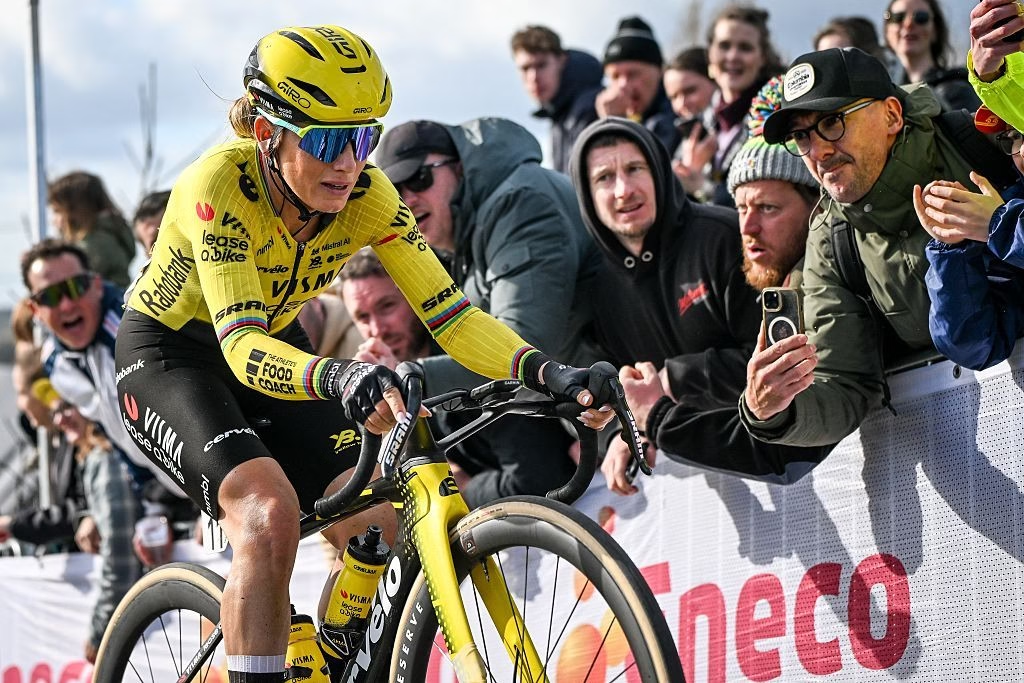
Pauline Ferrand-Prévot arrives at the 2026 Tour with something she did not have twelve months ago: the pressure of defending the yellow jersey.
Her 2025 victory was built on an overwhelming climbing performance once the race reached its decisive mountain terrain. Ventoux now provides the clearest examination of whether she can reproduce that level.
Ferrand-Prévot is particularly dangerous because her climbing does not depend on one explosive acceleration. At her best, she can maintain a pace for long enough to turn a group of favourites into isolated riders.
That should suit Ventoux.
The complication is the race before Stage 7. The Dijon time trial should favour Reusser and several other GC rivals, which may leave Ferrand-Prévot needing to regain time rather than simply follow.
That could make her more dangerous.
A Ferrand-Prévot starting Ventoux with a deficit has every incentive to turn it into a pure climbing contest, which is exactly what several rivals would prefer to avoid.
Her wider build-up is covered in our Pauline Ferrand-Prévot 2026 season guide.
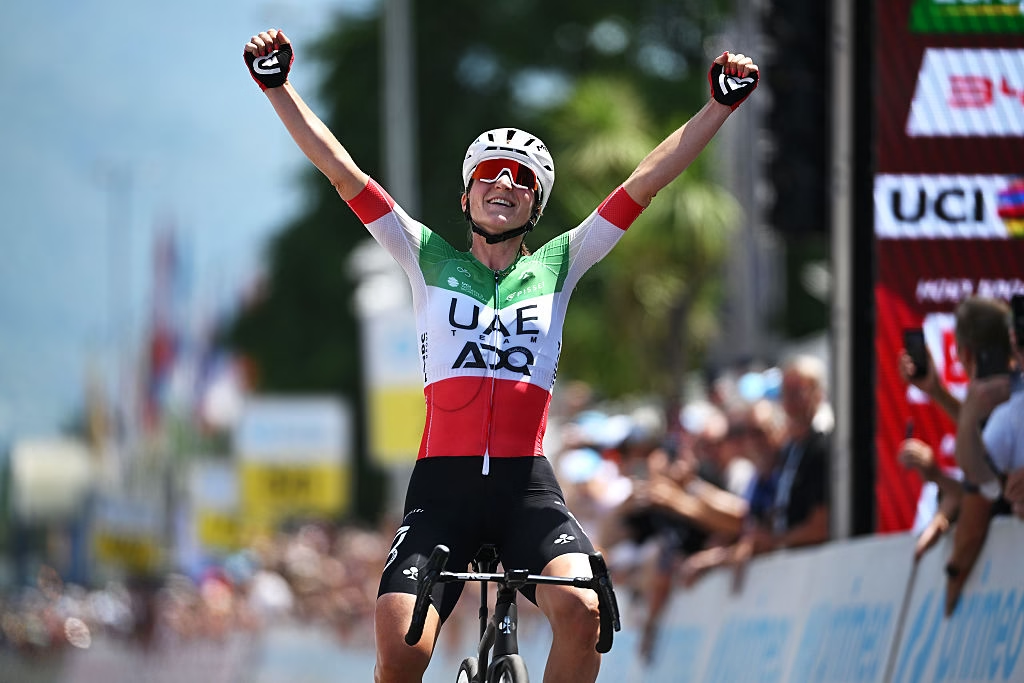 Photo Credit: Getty
Elisa Longo Borghini has the experience for this kind of stage
Elisa Longo Borghini belongs immediately behind the two headline favourites.
The Italian has spent years proving she can survive long, attritional climbing stages while retaining enough strength to race tactically near the finish. She also arrives after winning the final stage of the 2026 Giro, another reminder that she remains capable of winning against the very best when a race becomes hard.
Ventoux should suit that durability.
Her ideal scenario is probably a sustained high pace rather than an explosive sequence of early attacks. If the race gradually removes weaker riders while keeping the strongest contenders together deep into the climb, Longo Borghini becomes increasingly dangerous.
Her position after the time trial matters as well. She is strong enough against the clock to reach Ventoux ahead of several lighter climbers, potentially forcing them to attack while she follows.
If Vollering or Ferrand-Prévot simply ride everyone off the wheel, Longo Borghini may be fighting for the podium rather than the stage. If the favourites remain together late, she has the experience to take advantage.
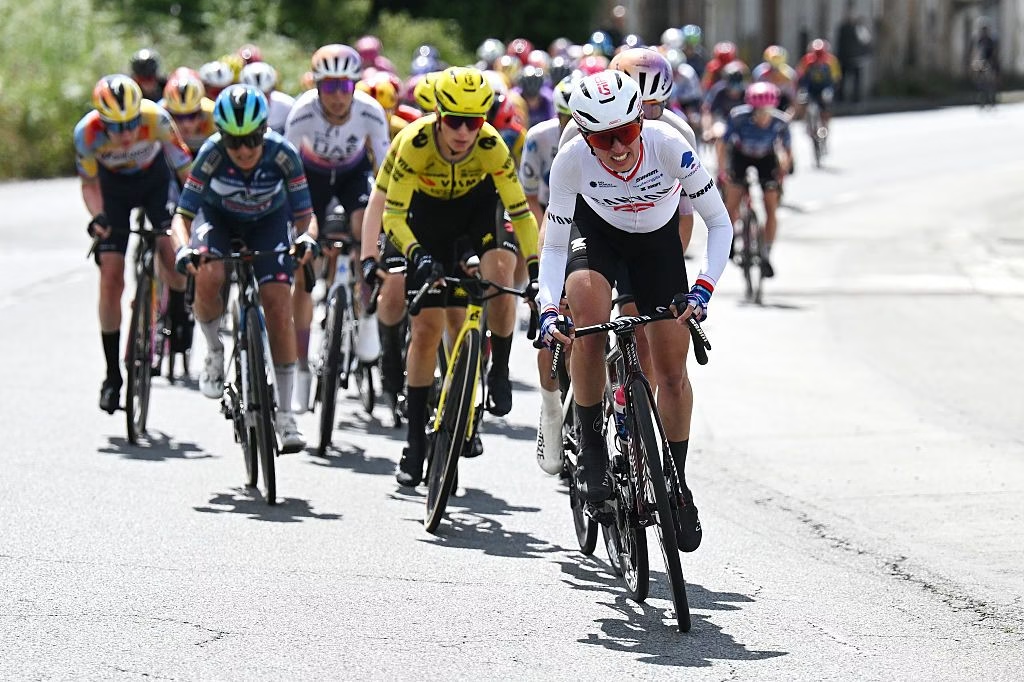 Photo Credit: Getty
Kasia Niewiadoma-Phinney needs the race to become tactical
Katarzyna Niewiadoma-Phinney is capable of an elite climbing performance, but Ventoux is not necessarily the perfect mountain stage for the way she is most dangerous.
Her greatest strength often comes from combining climbing ability with aggression and tactical instinct across an entire difficult stage.
A long, steady final ascent reduces some of that complexity.
If the favourites simply reach Bédoin together and Vollering drives a high tempo for 15km, Niewiadoma-Phinney faces a straightforward climbing contest.
She would rather make the stage difficult before that.
The Col de Suzette and the roads approaching Bédoin give Canyon SRAM opportunities to increase the pressure, isolate rival leaders or put riders ahead before Ventoux begins.
Niewiadoma-Phinney is most dangerous when the race is already chaotic before the decisive climb.
If Canyon SRAM can create that situation, her chances improve considerably.
Marlen Reusser has to prove Ventoux is no longer a limit
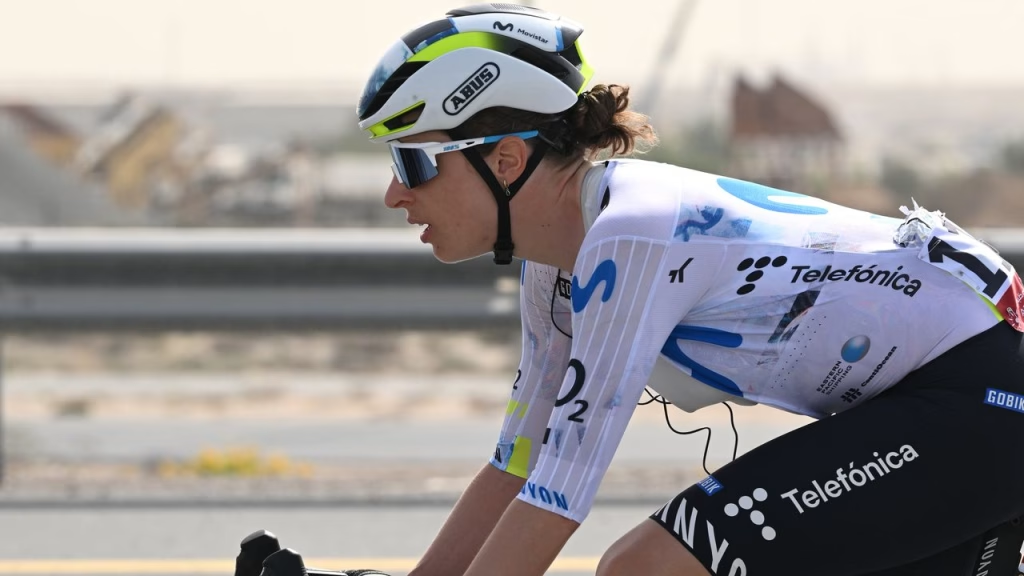
Marlen Reusser may be the most important rider on Ventoux even if she is not the strongest pure climber.
Her Tour de Suisse victory showed how far her stage-racing ability has developed. Reusser used the time trial to take control and then defended her advantage through the climbing that followed.
The Tour asks a much harder version of the same question.
Can she do it on Mont Ventoux?
If Reusser produces the expected performance in Dijon, she could start Stage 7 with a meaningful buffer over several rivals. That changes how she needs to ride.
She does not necessarily have to follow every Vollering acceleration.
If she has a minute in hand, she can settle into her own pace and decide how much she can afford to lose.
That can make Reusser difficult to race against because the strongest climber on the stage may still fail to take enough time.
Her entire Tour strategy is explored in our Marlen Reusser Tour de France Femmes 2026 guide.
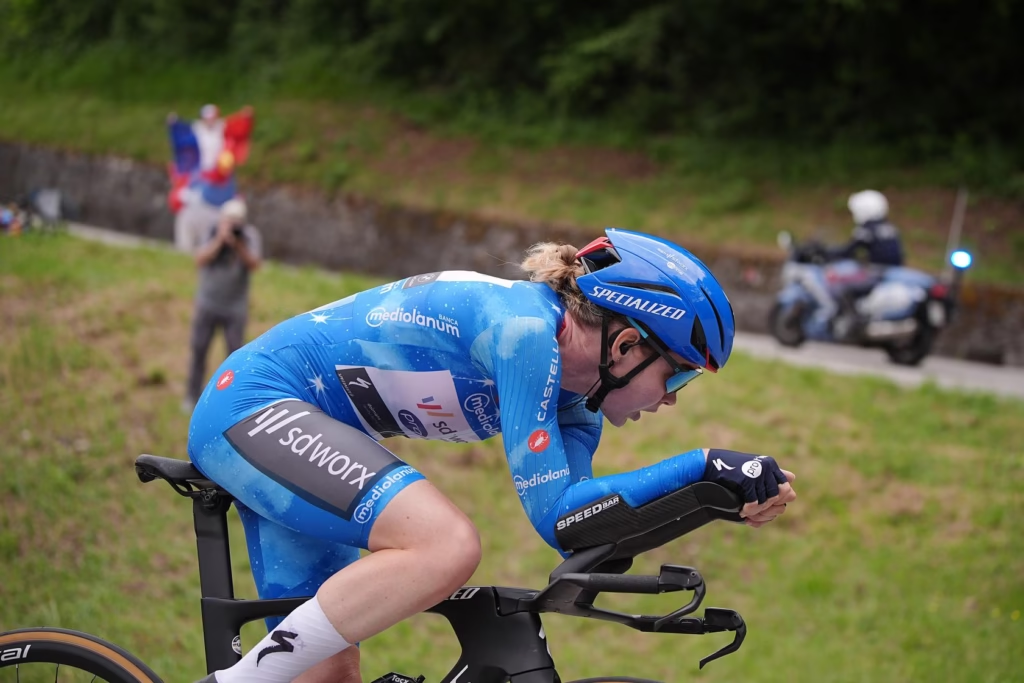
Anna van der Breggen knows how to race a climb like Ventoux
Anna van der Breggen is another rider who cannot be overlooked.
The Dutch rider’s best seasons were built around exactly the combination Ventoux rewards: sustained climbing power, controlled pacing and the ability to remain calm while the race disintegrates around her.
The question in 2026 is whether she can reproduce that level against the current generation after six previous Tour stages.
Her Giro provides encouraging evidence. Van der Breggen led the race into the final stage before Vollering overturned the classification, eventually finishing third overall.
That places her firmly among the riders who should still be present when the Ventoux group becomes very small.
She does not need to attack early. If she can remain with Vollering, Ferrand-Prévot and Longo Borghini into the final kilometres, experience becomes increasingly useful because everyone will already be riding near their limit.
A stage victory would be a major result, but a podium on Ventoux is entirely realistic.
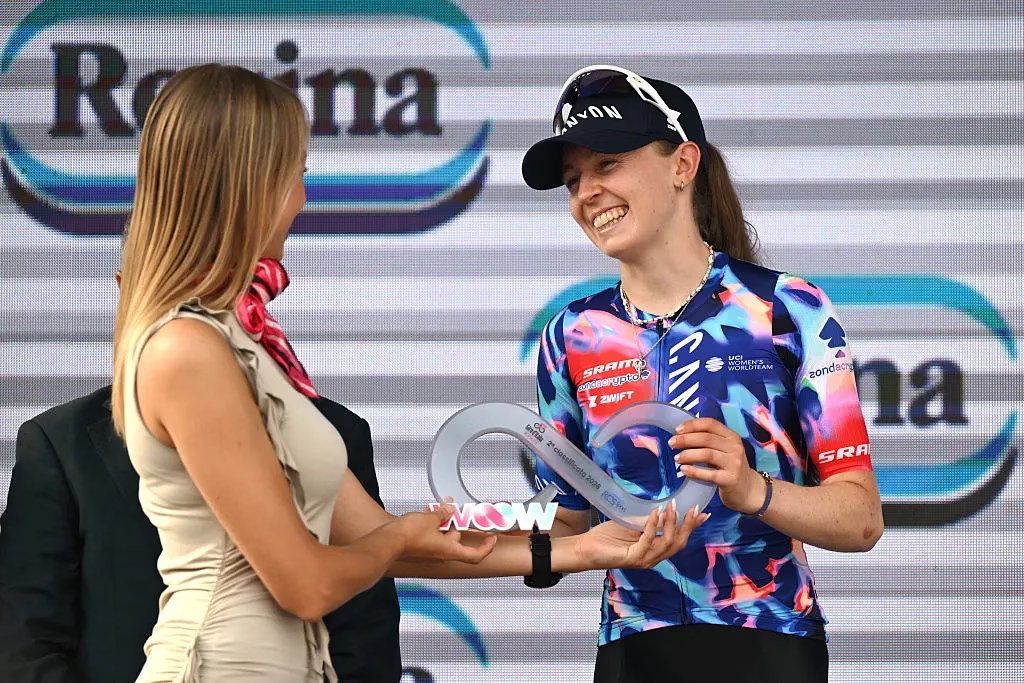
Antonia Niedermaier has already shown she can challenge the best climbers
Antonia Niedermaier deserves to sit much closer to the leading contenders than a conventional outsider label suggests.
Her second place at the Giro d’Italia Women was one of the strongest stage-racing performances of the season. Niedermaier finished only 30 seconds behind Vollering after playing a central role in the aggressive final stage that overturned the classification.
That matters for Ventoux.
Unlike many lightweight mountain specialists, Niedermaier can gain rather than simply limit losses against the clock. A strong ride in Dijon could therefore put her into Stage 7 already sitting very high overall.
The climb itself suits her.
A sustained ascent rewards a rider capable of holding a high climbing power for a long period rather than relying on repeated short accelerations.
Canyon SRAM’s challenge will be balancing Niedermaier against Niewiadoma-Phinney. If both remain high on GC, the team have two riders who can race Ventoux very differently.
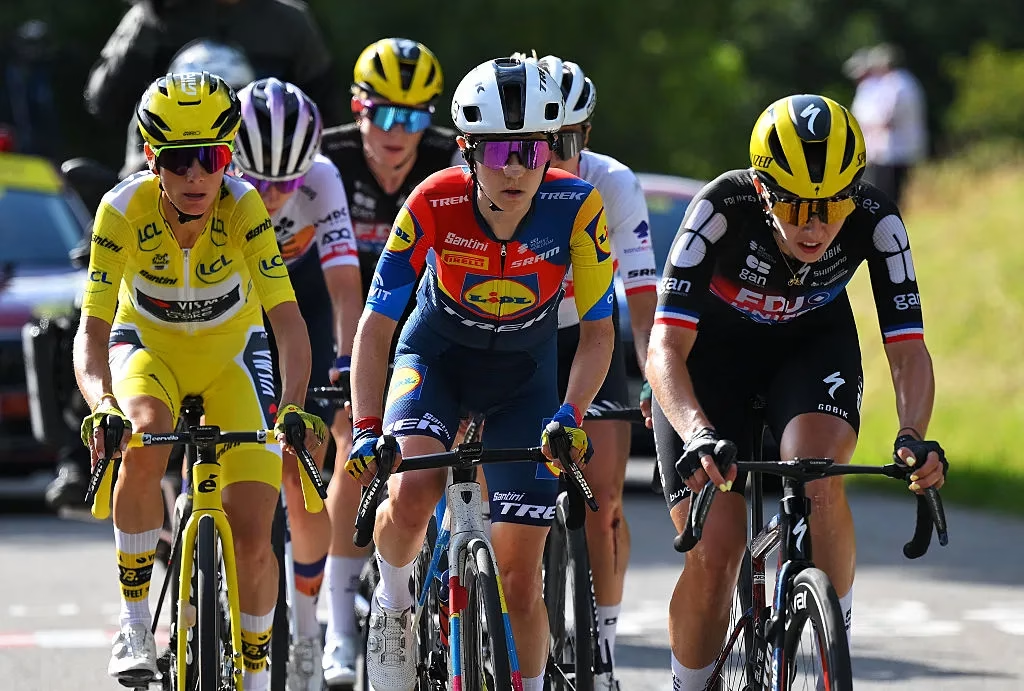 Photo Credit: Getty
Niamh Fisher-Black has the climb for a breakthrough result
Niamh Fisher-Black is another rider capable of turning Ventoux into one of the biggest results of her Tour.
The Lidl-Trek rider has the physical profile of a high-level mountain racer, while her second place on the final stage of the Giro reinforced how competitive she can be when the race reaches its hardest terrain.
A climb as long and sustained as Ventoux also removes much of the tactical noise that can work against lighter riders on less selective terrain.
Her challenge is converting that ability into a result against riders with deeper records at this level.
If her GC remains strong, Fisher-Black can ride the climb conservatively and concentrate on staying with the favourites. If she loses time earlier, Lidl-Trek have the freedom to use her more aggressively.
A top five on Ventoux would not be surprising.
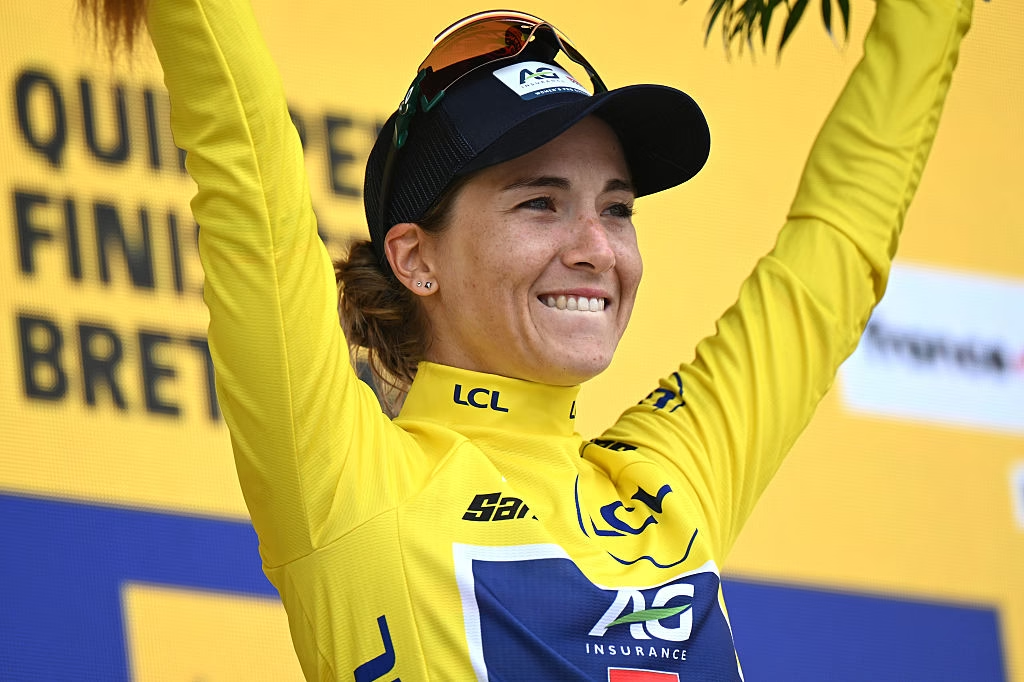 Photo Credit: Getty
Kim Le Court faces the biggest climbing test of her GC campaign
Kim Le Court should be considered among the GC contenders on Ventoux even if she is not one of the obvious favourites for the stage victory.
AG Insurance-Soudal have publicly set a top-five overall finish as their target, and this is the stage most likely to determine whether that ambition survives into Nice.
Le Court’s development has made her increasingly effective across difficult stage races, but Ventoux asks a more specialised question than the hilly terrain where her versatility is usually most valuable.
There is nowhere to compensate for a weak climbing day with positioning or finishing speed.
She simply has to climb.
If Le Court reaches the final five kilometres with the main GC group, a top-five Tour becomes much more credible. If she loses several minutes, the overall objective becomes considerably harder regardless of what happens elsewhere.

Evita Muzic gives FDJ United-SUEZ another mountain weapon
Evita Muzic arrives primarily as part of Vollering’s support structure, but that does not remove her from the stage conversation.
Muzic is a proven climber and one of the riders FDJ United-SUEZ can use to control the approach to Ventoux or remain alongside Vollering once the final ascent begins.
Her own opportunity depends heavily on the race situation.
If Vollering is fighting directly for yellow, Muzic’s job is straightforward: stay with her leader for as long as possible.
If a tactical opening appears, particularly through a breakaway, Muzic is strong enough to convert freedom into a serious stage challenge.
There is also value in putting her ahead of the favourites. Vollering would then have a teammate available farther up the road if she attacks.
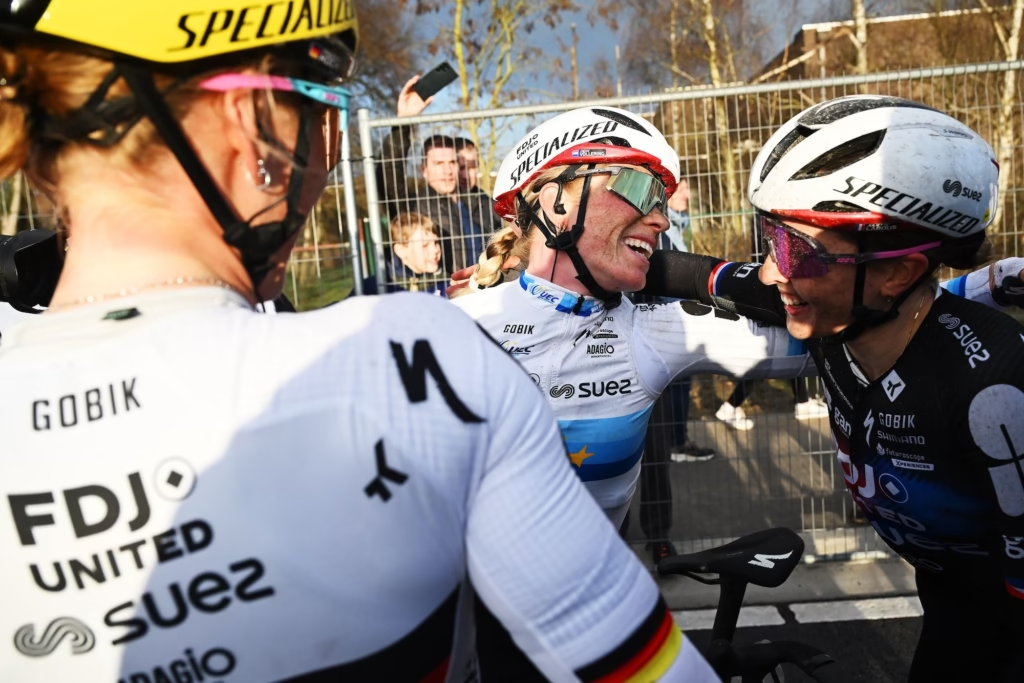
Juliette Berthet can play a similar role
Juliette Berthet gives FDJ United-SUEZ another climbing option.
Like Muzic, her primary responsibility is likely to revolve around Vollering, but a team with the strongest GC favourite can use mountain domestiques offensively as well as defensively.
Berthet could be sent into a move before the final climb, allowing FDJ United-SUEZ to avoid contributing to the chase while retaining support for Vollering later.
If the break receives enough freedom, the role changes.
A rider sent up the road to support a leader can quickly become a stage contender when the advantage remains large enough at the foot of Ventoux.
That tactical possibility matters because Stage 7 is not simply 15.7km of climbing. The first 130km can decide who is still allowed to race for victory when the favourites begin attacking.
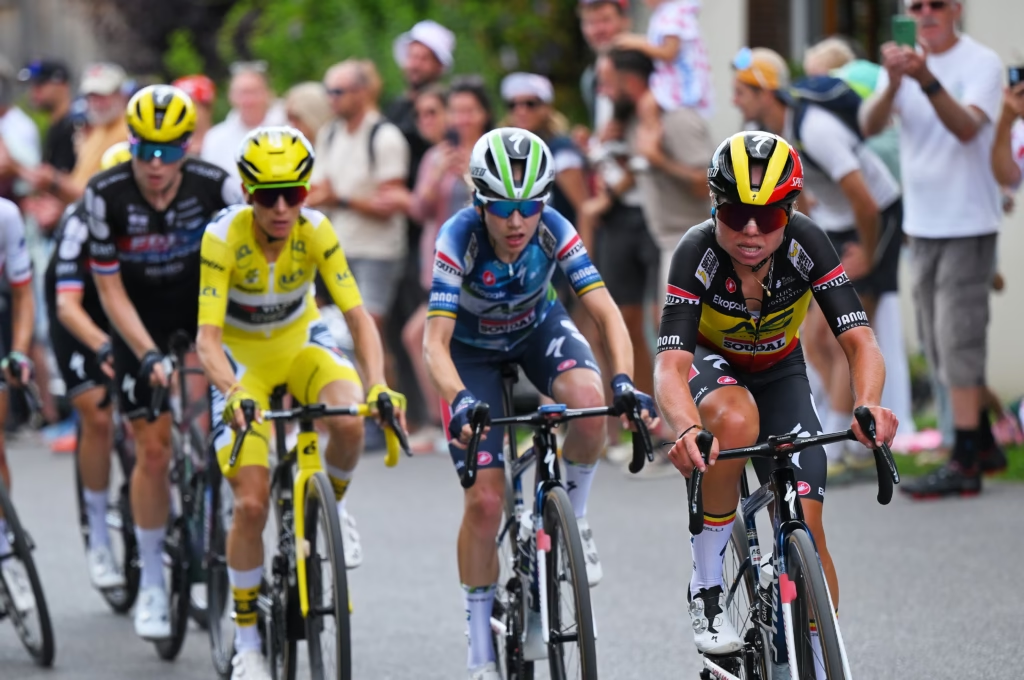 Photo Credit: Getty
Justine Ghekiere has already marked the stage
Justine Ghekiere is perhaps the most obvious breakaway candidate for Ventoux.
AG Insurance-Soudal have given her a free role and asked her to race aggressively, with Ghekiere specifically identifying Stage 7 after reconnoitring the mountain.
There is also a personal reason she wants the stage. Ghekiere proposed to her girlfriend at the summit and has said winning there would be particularly special, while acknowledging that the final climb is not necessarily the perfect fit for her.
Her route to victory is therefore clear.
She needs the breakaway.
Ghekiere has already shown how effective that approach can be at the Tour, winning at Le Grand-Bornand from the break in 2024 before taking the mountains classification.
Trying to follow Vollering from the bottom of Ventoux is unlikely to produce the same result.
Starting the climb several minutes ahead might.
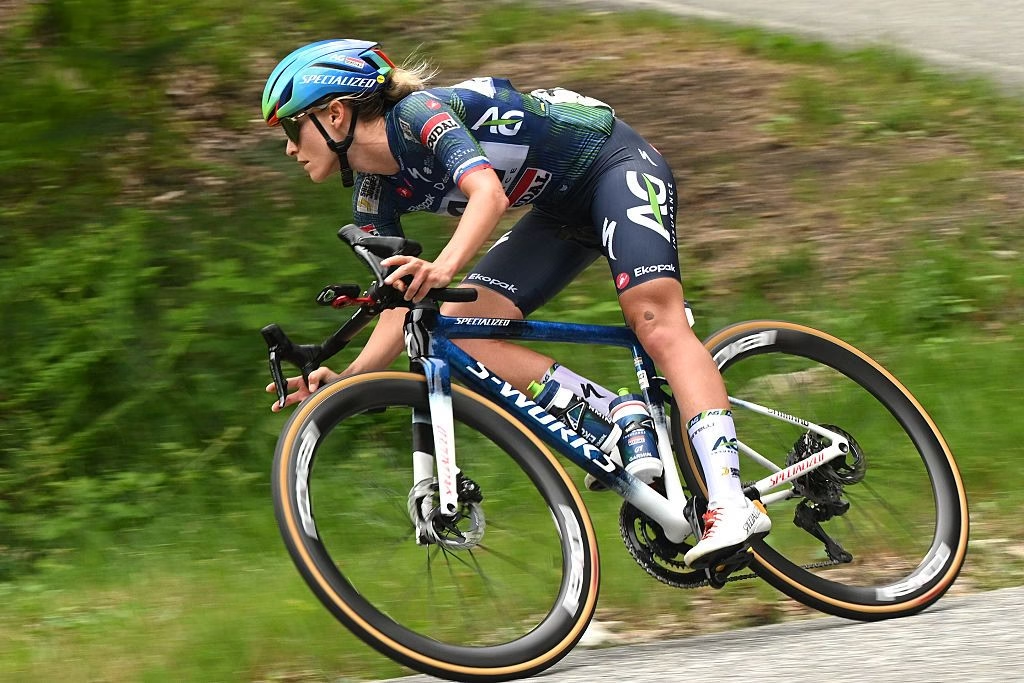
Urška Žigart adds climbing depth around Le Court
Urška Žigart gives AG Insurance-Soudal another rider capable of influencing the final climb.
Her natural climbing ability makes her valuable to Le Court’s top-five campaign, particularly once the favourites’ group has been reduced.
That probably limits her own freedom if Le Court remains well placed overall.
Ventoux is long enough, however, that teams need more than one rider capable of surviving deep into the stage.
Žigart can help position Le Court, ride tempo and respond to moves before the race becomes leader against leader.
If AG Insurance-Soudal use Ghekiere in the break and Žigart around Le Court, they have two very different ways of affecting the stage.
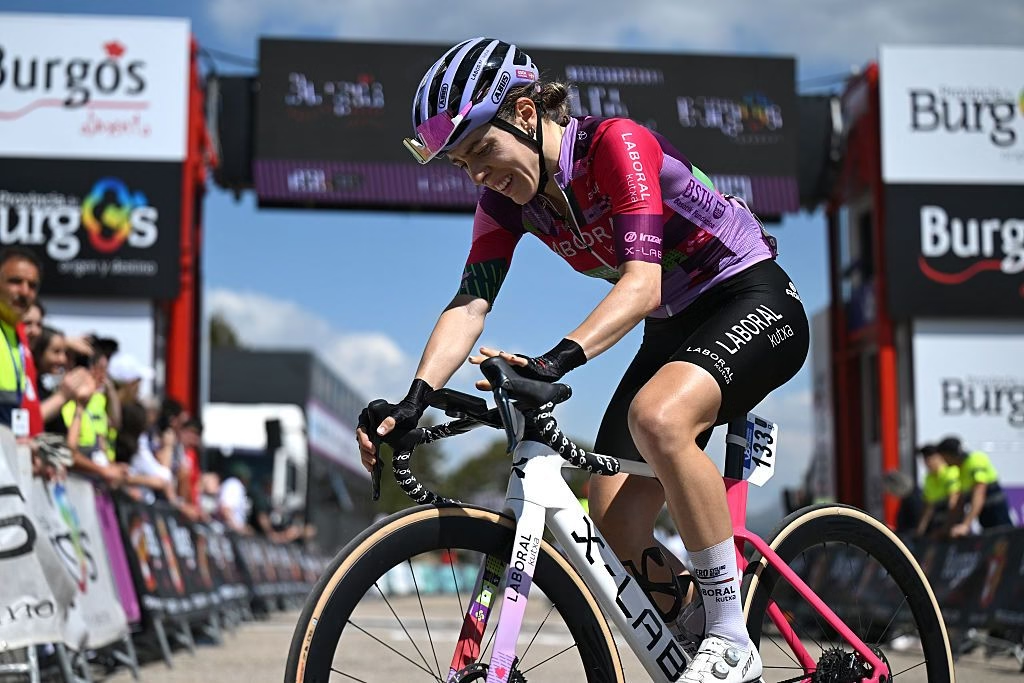
Usoa Ostolaza becomes more dangerous if she loses GC time
Usoa Ostolaza is another rider who becomes more relevant as the gradient increases.
Laboral Kutxa-Euskadi do not carry the same yellow jersey expectations as the major WorldTour favourites, giving Ostolaza more freedom to decide whether protecting an overall placing is worth sacrificing a stage opportunity.
That makes Ventoux interesting.
If she has already lost enough time to stop being a threat to the leading GC riders, she becomes exactly the sort of climber teams may allow into an early break.
The harder the final ascent becomes, the more valuable that head start is.
She is unlikely to beat Vollering by starting Ventoux alongside her.
Starting three or four minutes ahead is a different proposition.
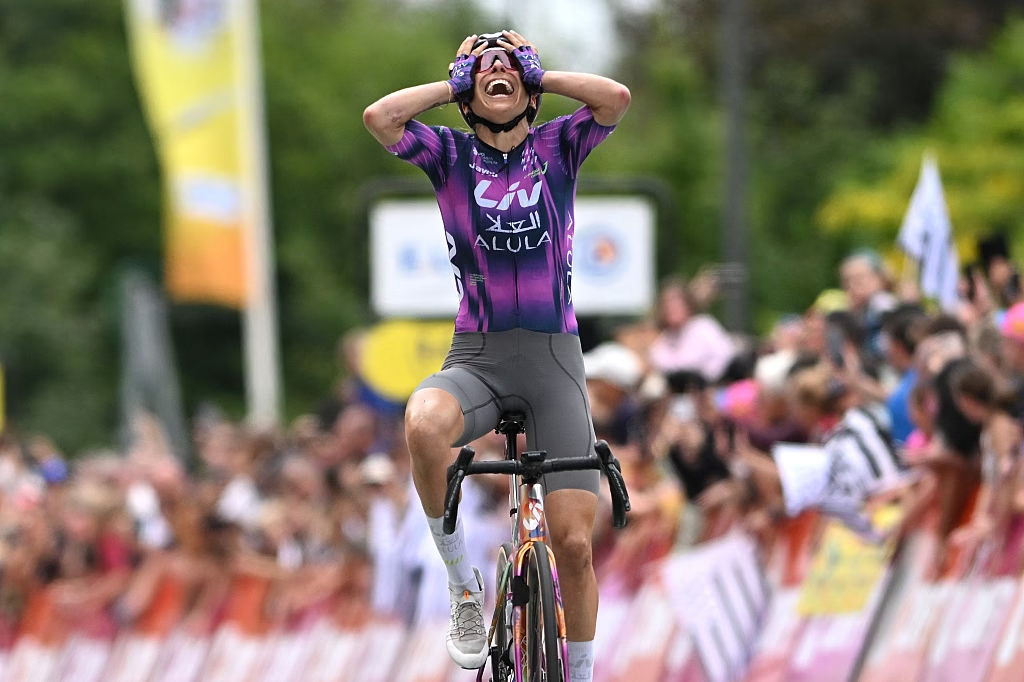 Photo Credit: Getty
Mavi Garcia remains dangerous from the break
Mavi Garcia is another experienced climber worth watching.
UAE Team L’IMAD will naturally prioritise Longo Borghini if the Italian remains in GC contention, but Garcia gives them a rider who can be used ahead of the race.
That is useful because Longo Borghini may eventually become isolated against teams with deeper mountain support.
Sending Garcia into the break gives UAE an option on both sides of the race.
If Longo Borghini attacks, Garcia can wait.
If the favourites hesitate, Garcia can continue racing for the stage.
Her chances are greater from that position than by attempting to outclimb Vollering directly.
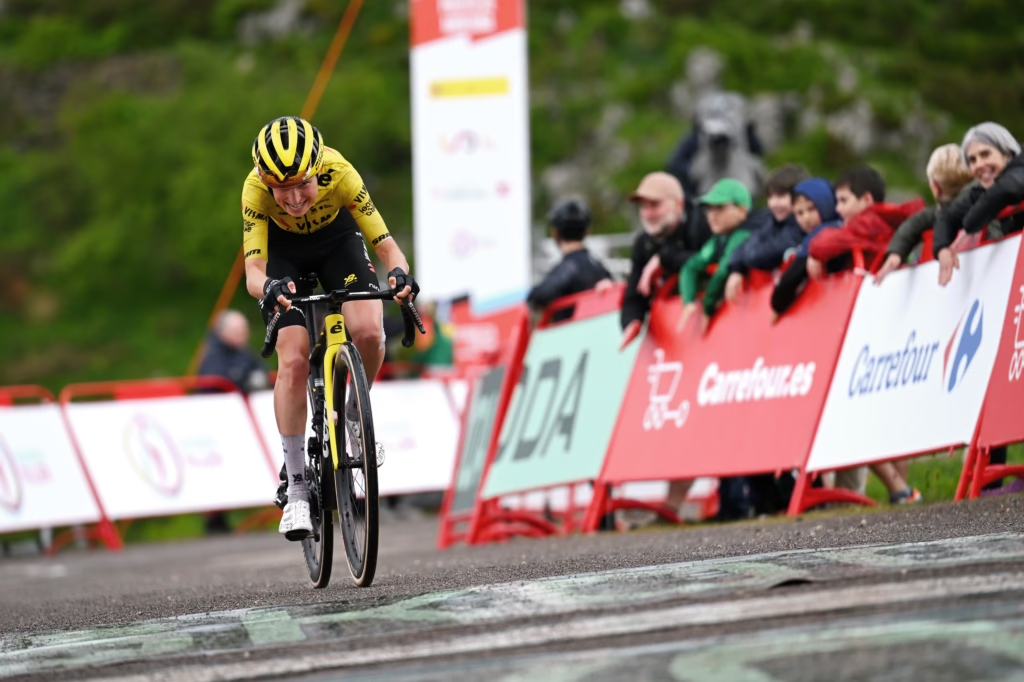 Photo Credit: Getty
Marion Bunel can become a satellite rider for Ferrand-Prévot
Marion Bunel adds another possibility for Team Visma | Lease a Bike.
Ferrand-Prévot is clearly the central figure in their Tour, which restricts Bunel’s freedom whenever the yellow jersey battle is active.
Her climbing ability still makes her useful in an attacking role.
Visma can send Bunel into a move before Ventoux, particularly if they expect Ferrand-Prévot to attack later. She then becomes a satellite rider available to help her leader after the move is caught.
If the break reaches Bédoin with a much larger advantage than expected, Bunel can become a stage contender in her own right.
The distinction between support rider and stage hunter may only become clear during the stage.
The breakaway needs a substantial advantage
Ventoux gives strong climbers in the breakaway a chance, but it demands a serious head start.
The problem is the speed of the GC favourites.
A rider climbing Ventoux at a very high professional level can still lose several minutes to Vollering or Ferrand-Prévot if the yellow jersey group rides the mountain at full intensity.
Two minutes at Bédoin probably will not be enough.
Four minutes makes the calculation more interesting.
Six minutes could force the GC teams to begin thinking seriously about the stage victory before the climb.
The identity of the escape matters too. Ghekiere, Muzic, Berthet, Ostolaza or Garcia will receive less freedom than a rider who poses no obvious threat once the road points upwards.
The wider pool of riders likely to use that strategy is covered in our Tour de France Femmes 2026 breakaway specialists guide.
The Col de Suzette can start the GC battle early
The final categorised climb before Ventoux may be more important than it initially appears.
The Col de Suzette, 3.9km at 6.4%, tops out with roughly 40km remaining.
It is not difficult enough to produce decisive gaps among the favourites on its own, but its position gives teams a chance to increase the pressure before the long approach to Bédoin.
Canyon SRAM can use it to make Reusser work.
FDJ United-SUEZ can use their mountain depth to remove rival domestiques.
Visma can raise the pace if Ferrand-Prévot wants Ventoux to become as selective as possible.
The most important consequence may simply be fatigue.
Every rider forced to respond before Ventoux carries that effort into the hardest climb of the Tour.
Wind can change the upper mountain
Mont Ventoux’s exposed final kilometres give the weather an unusually important role.
Once the riders emerge from the forest above Chalet Reynard, there is little protection.
A strong headwind would discourage long solo attacks and reward riders who can remain in a small group until late. That could help Reusser, Longo Borghini or van der Breggen by making drafting more valuable.
A tailwind changes the calculation.
It increases the reward for attacking and makes it harder for the riders behind to use one another to close the gap. Vollering or Ferrand-Prévot could turn a small separation into a much larger one.
Crosswinds create their own problems on a mountain with so little shelter.
The conditions on the day could therefore influence when the decisive attack comes as much as the gradient itself.
-
 Photo Credit: A.S.O./Billy Ceusters
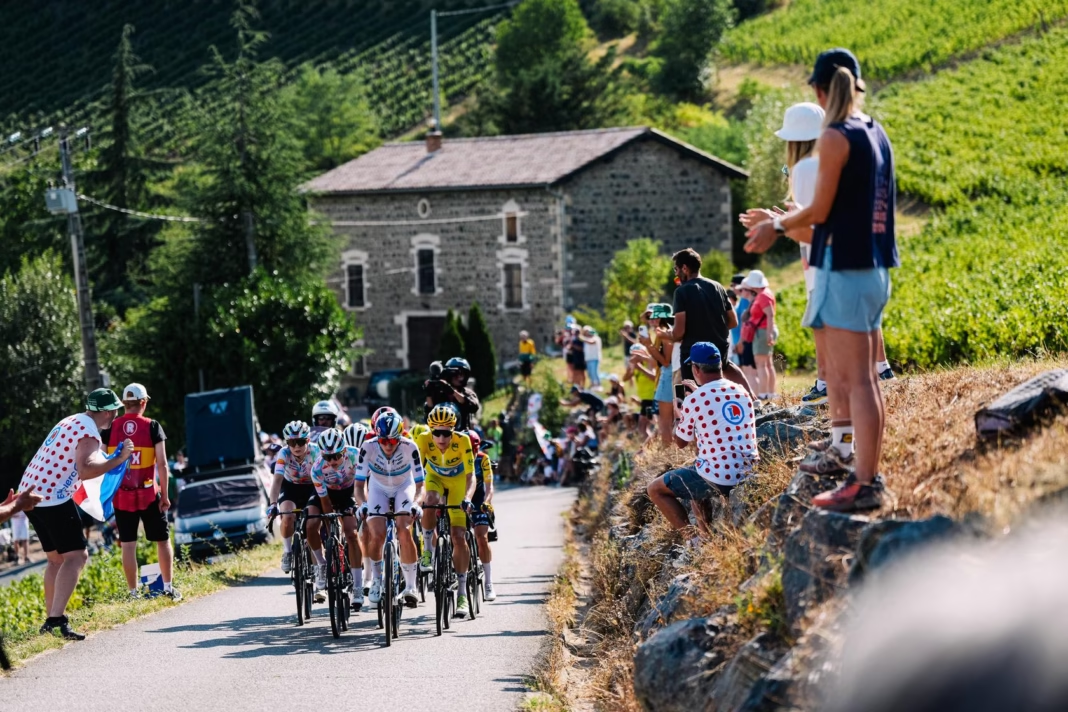

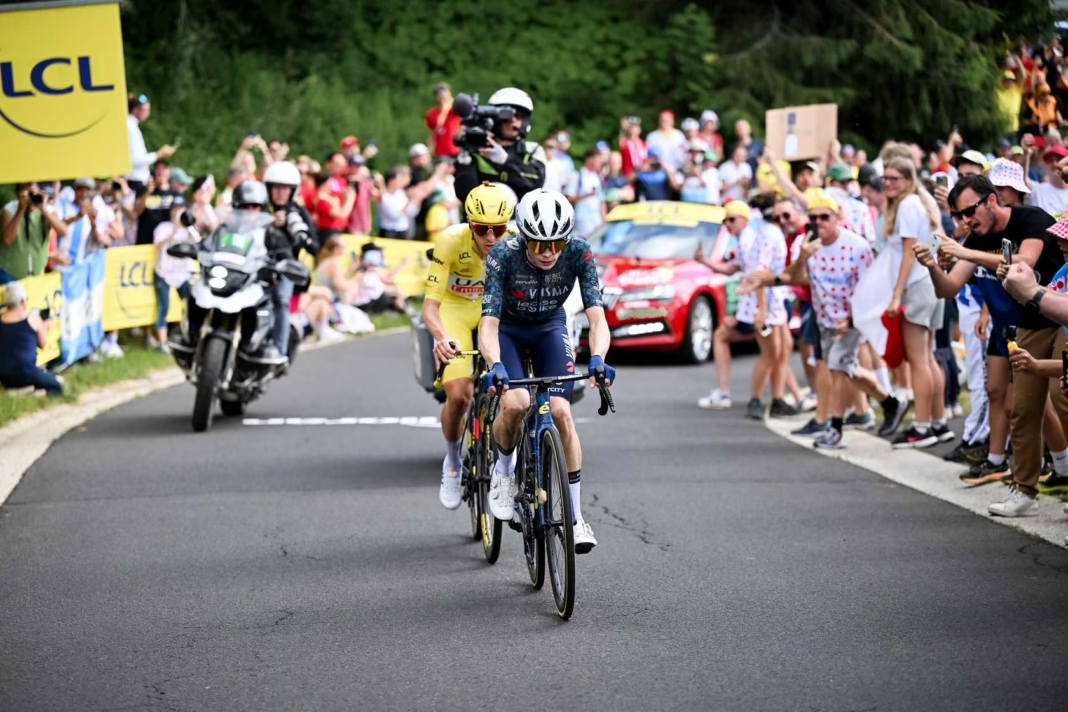
Who are the main Mont Ventoux contenders?
The confirmed Tour de France Femmes start list produces several distinct groups.
Stage and GC favourites: Demi Vollering and Pauline Ferrand-Prévot.
Major GC contenders capable of winning: Elisa Longo Borghini, Katarzyna Niewiadoma-Phinney, Marlen Reusser and Anna van der Breggen.
Climbers capable of a podium or breakthrough result: Antonia Niedermaier, Niamh Fisher-Black and Kim Le Court.
Strong mountain support riders who could gain freedom: Evita Muzic, Juliette Berthet, Urška Žigart and Marion Bunel.
Breakaway stage threats: Justine Ghekiere, Usoa Ostolaza and Mavi Garcia.
The hierarchy can still change substantially during the opening six stages. Someone expected to defend GC may lose time in Dijon and become a stage hunter, while a rider expected to attack from distance may reach Ventoux sitting fifth overall and have to race much more conservatively.
Our broader Tour de France Femmes 2026 riders to watch guide covers the wider GC field beyond the pure climbing question.
Mont Ventoux prediction
Demi Vollering starts as the rider to beat.
Few climbs in the 2026 Tour suit her strengths as clearly as Ventoux. It is long, steep and sustained, with enough distance for the strongest climber to make repeated attacks and enough gradient for the benefit of drafting eventually to diminish.
Pauline Ferrand-Prévot is the most obvious direct challenger. Her 2025 Tour victory demonstrated what happens when she reaches the decisive mountain stages in peak condition, and defending yellow may depend on reproducing that level.
Elisa Longo Borghini is the strongest alternative if the two favourites begin marking one another, while Niewiadoma-Phinney, Reusser, van der Breggen and Niedermaier all have credible routes towards remaining in contention deep into the climb.
The wild card is the breakaway.
Ghekiere has already marked the stage, Ostolaza has the climbing ability to exploit freedom, and several mountain domestiques could find themselves ahead as part of a wider tactical plan.
But if Stage 7 becomes the full GC showdown expected of it, there is little ambiguity about where the pressure will come from.
Ventoux is the climb where Vollering and Ferrand-Prévot can turn the Tour into a direct contest between the strongest climbers.
Unlike the earlier stages, there will be very few places to hide.

