
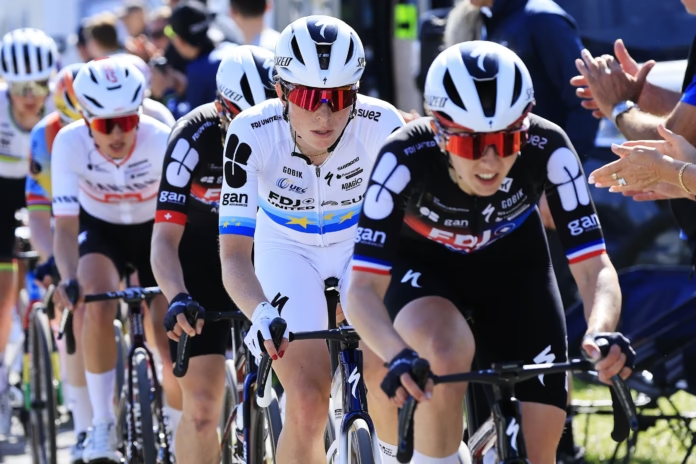
The Tour de France Femmes 2026 route is designed to test almost every kind of rider.
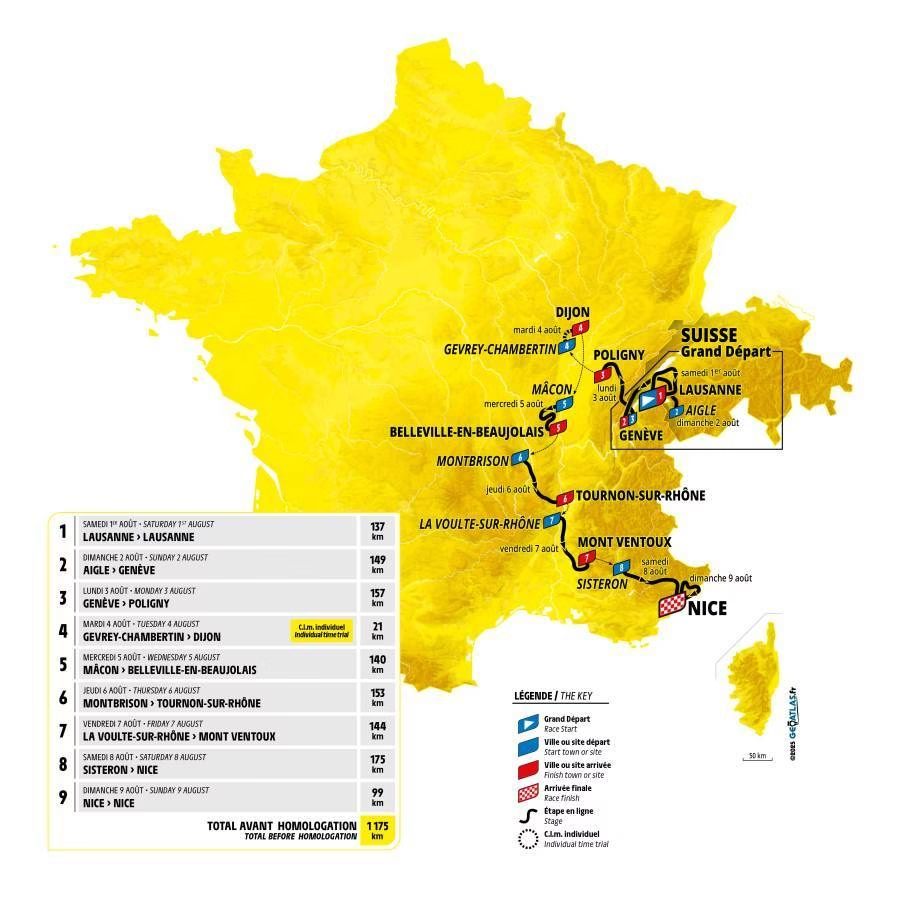
Across nine stages from Lausanne to Nice, the race includes three flat stages, three hilly stages, two mountain stages and one individual time trial. That gives sprinters genuine chances, creates several days where breakaways and puncheurs can thrive, and still leaves the yellow jersey battle centred on the strongest all-round stage racers.
Those labels are useful, but they can also be misleading. A stage described as “flat” is not necessarily easy, while a hilly day can sometimes produce more general classification damage than a mountain stage if the climbs are positioned aggressively. The official profile is only the starting point. Gradient, timing, wind, road width and fatigue all change how a stage actually races.
For the full day-by-day breakdown, see our Tour de France Femmes 2026 route guide.
What does a flat stage mean at the Tour de France Femmes?
A flat stage is the closest thing the Tour offers to a traditional sprint day. The route may still contain climbs, rolling roads and technical sections, but the overall terrain gives the peloton a realistic chance of reaching the finish together.
Sprint teams can control the breakaway, keep the gap manageable and organise their lead-outs in the final kilometres. Lorena Wiebes is the obvious benchmark whenever the race looks likely to finish with a full peloton, while Elisa Balsamo, Marianne Vos and other fast riders will also target these stages.
The 2026 race has three officially flat stages, but even those are not identical. Stage 1 in Lausanne is classified as flat despite a late sting, while Stage 2 to Geneva is much closer to the conventional sprint template. The Swiss Grand Départ guide explains why the opening weekend should still create tension despite the apparently gentle classifications.
For GC riders, the objective on these stages is usually straightforward: stay near the front, avoid crashes and finish on the same time as their rivals.
Why a flat stage can still change the GC
Flat does not mean harmless.
Crosswinds can split the peloton into echelons, narrow roads can create positioning problems and a crash at the wrong moment can cost far more time than a modest climb.
The first stages of a Grand Tour are particularly stressful because every team is fresh and every rider still has something to protect. Sprint trains are trying to dominate the same road space as GC teams, while riders fighting for early yellow may also be chasing bonus seconds.
That means the supposedly easiest stages can sometimes be among the most nervous.
The difference is that time gaps are more likely to come from circumstance than climbing strength.
What is a hilly stage?
Hilly stages sit between the sprint days and the genuine high-mountain stages.
They usually contain repeated climbs that are too difficult for some pure sprinters but not long enough to automatically favour the elite GC climbers. That makes them tactically much less predictable.
A breakaway can survive. Puncheurs can attack. Reduced bunch sprints become possible. GC riders may also become involved if the final climb is hard enough or close enough to the finish.
The middle of the 2026 race uses these stages particularly well. Stage 5 through Beaujolais and Stage 6 towards Tournon-sur-Rhône both create terrain where no single team has an obvious reason to control everything from start to finish.
That should suit versatile riders and aggressive teams.
Our Tour de France Femmes 2026 riders to watch guide looks at the riders most likely to benefit from those less predictable days.
Why hilly stages are often the most unpredictable
Mountain stages usually have a clearer hierarchy. The strongest climbers eventually emerge.
Hilly stages can be much messier.
A breakaway might include a rider close enough on GC to force a chase. A short steep climb may eliminate the pure sprinters but leave enough faster riders in the group to discourage attacks. Teams can also spend long periods waiting for someone else to take responsibility.
That uncertainty is often what creates the best racing.
A hilly stage can end with a solo move, a small-group sprint or a reduced peloton of 40 or 50 riders. It can also quietly become a major GC day if someone is caught badly positioned or has a poor moment on the wrong climb.
For a rider such as Kasia Niewiadoma, this is exactly the kind of terrain where time can sometimes be gained without waiting for the headline mountain stage.
What is a mountain stage?
Mountain stages are built around long, sustained climbs and significant elevation gain. They are normally where the biggest differences emerge between the yellow jersey contenders.
Unlike a short climb on a hilly day, a major mountain can take 20, 30 or even 60 minutes to climb. That changes the type of effort required.
Explosive acceleration still matters, but pacing, fuelling, endurance and sustained climbing power become much more important.
Domestiques also have a larger tactical role. Teams with several strong climbers can set a hard tempo, discourage attacks and strip away rival support before the leaders eventually have to race one another.
Once the group becomes small enough, there is nowhere left to hide.
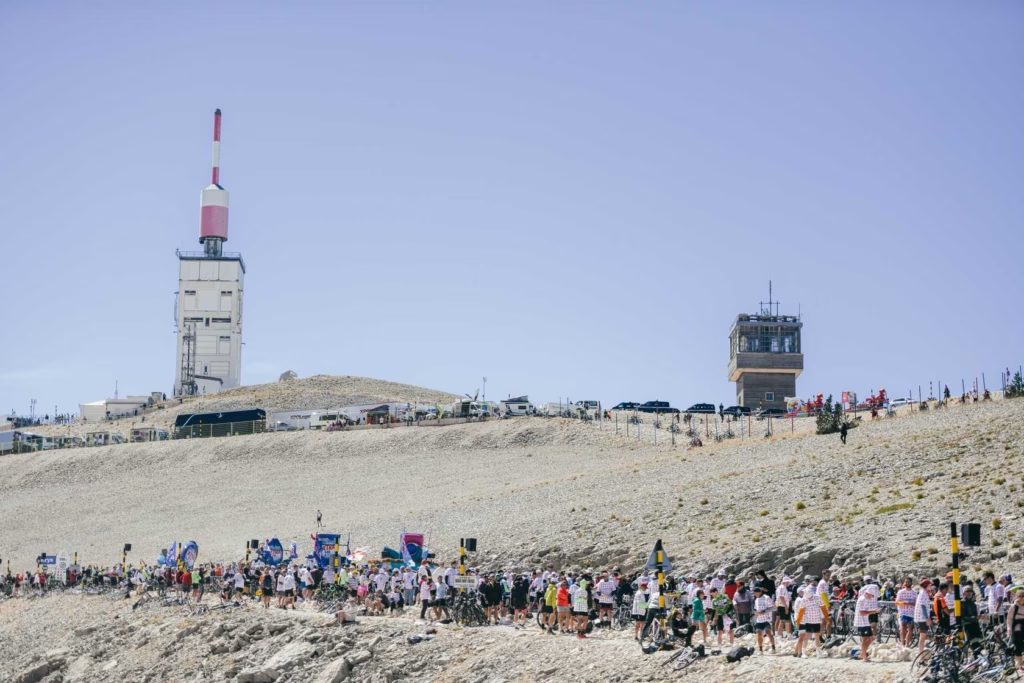
Mont Ventoux is the headline mountain stage of 2026
Stage 7 is the obvious headline climbing day of the race.
The Tour finishes on Mont Ventoux, one of the most famous mountains in professional cycling, and it is the stage most likely to produce the first genuinely large GC gaps.
Ventoux is difficult because of its combination of length, gradient and exposure. Once the road reaches the upper mountain, shelter disappears and wind can become a major factor.
That makes it an obvious test for Demi Vollering, Pauline Ferrand-Prévot, Paula Blasi, Marlen Reusser, Anna van der Breggen and the rest of the GC field.
The wider hierarchy is covered in our Tour de France Femmes 2026 riders to watch guide, where Vollering and Ferrand-Prévot remain the leading reference points.
The final day in Nice matters just as much
Mont Ventoux is not the end of the GC race.
Stage 9 around Nice is another genuine mountain stage, and that sequencing matters.
A rider can survive one difficult climb without being the strongest woman in the Tour. Doing it again two days later, with the time trial and all the previous climbing already in the legs, is much harder.
The strongest Grand Tour riders are not simply the best climbers on one day. They recover better, manage effort more effectively and can reproduce their level late in the race.
That is why the final Nice stage is so important. A rider who loses time on Ventoux still has one last opportunity. A rider in yellow cannot simply defend passively and assume the race is finished.
The full Tour de France Femmes 2026 route guide explains why the combination of Dijon, Ventoux and Nice should shape the entire GC battle.
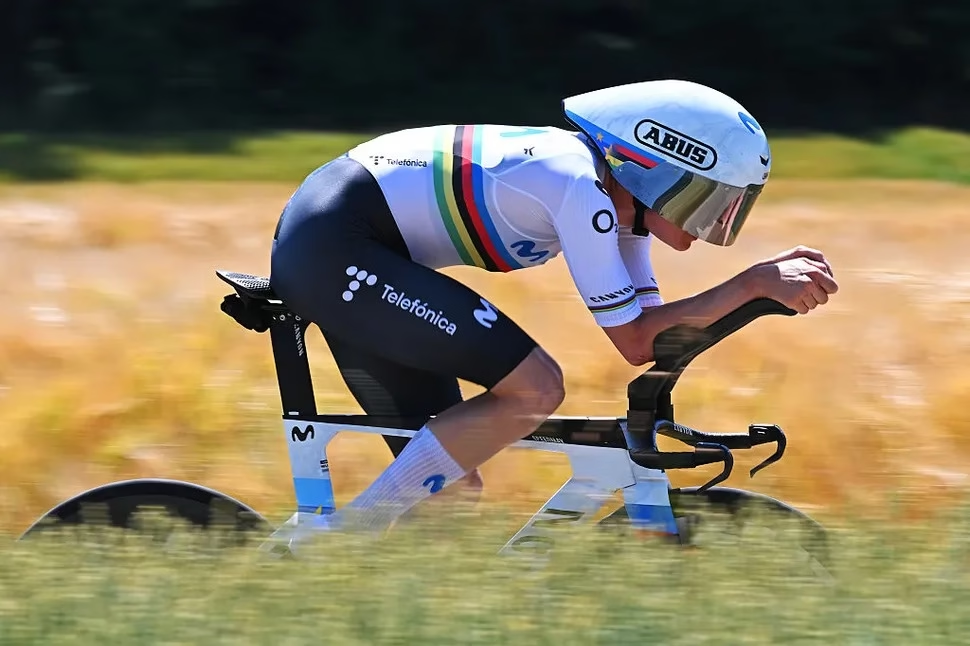 Photo Credit: Getty
What is an individual time trial?
An individual time trial is completely different from a normal road stage.
Instead of starting together, riders leave one at a time and race directly against the clock. There is no peloton to shelter inside and no teammate can provide a slipstream.
Every rider has to manage her own effort from start to finish.
Stage 4 of the 2026 Tour de France Femmes is a 21km individual time trial from Gevrey-Chambertin to Dijon, providing the first major opportunity for GC riders to create meaningful gaps without attacking on a climb.
Time trials reward a combination of aerodynamics, sustained power, pacing and technical ability.
A rider can lose 30 seconds or a minute without ever being visibly dropped.
That is why the discipline matters so much in a race where the final margins may be small.
Who benefits from the Stage 4 time trial?
Marlen Reusser is the obvious reference point among the major GC riders because of her strength against the clock.
Demi Vollering should also be highly competitive, while Anna van der Breggen has the profile to limit losses or gain time on more climbing-focused rivals.
The more interesting question is what happens to riders such as Niewiadoma and Blasi.
They do not necessarily need to win the time trial. They need to prevent Reusser and Vollering from creating a gap large enough to control the rest of the race.
That is why Stage 4 could change the tactical picture before the Tour reaches its hardest mountains.
A strong time trial can put a rider into yellow and force everyone else to attack on Ventoux.
A weaker one can leave a climber with no choice but to race aggressively later.
Why stage profiles matter tactically
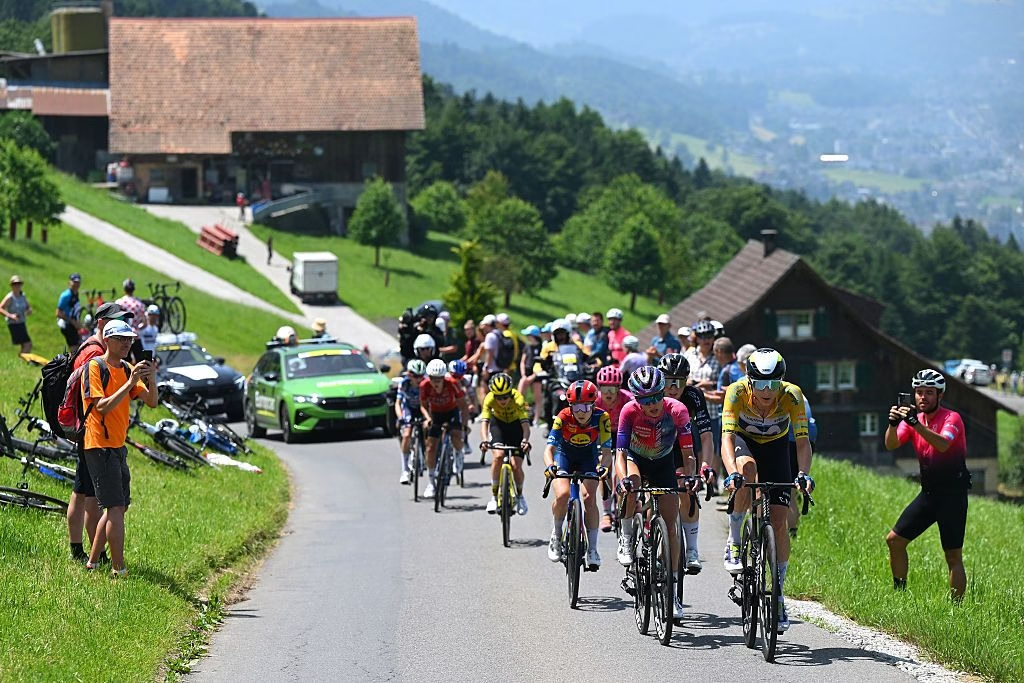
The profile does much more than tell you whether the road goes uphill.
It determines who is expected to work.
On a flat stage, sprint teams take responsibility because they want a bunch finish. On hilly days, nobody may have an obvious reason to control the race, giving breakaways a better chance.
On mountain stages, GC teams often dictate the pace.
In a time trial, the team structure disappears almost entirely and the rider has to produce the result herself.
That changes the hierarchy from one day to the next.
A rider who looks anonymous on Stage 2 may become one of the favourites 24 hours later.
That is why route analysis matters so much in stage racing. The women’s cycling route guide hub brings together similar route breakdowns across the major races on the calendar.
Tour de France Femmes 2026 stage types at a glance
| Stage type | What it usually means | Riders most likely to benefit |
|---|---|---|
| Flat | High-speed stage with a likely bunch finish | Sprinters and lead-out teams |
| Hilly | Repeated shorter climbs and tactical racing | Puncheurs, breakaway riders and versatile GC contenders |
| Mountain | Long sustained climbs and major GC gaps | Elite climbers and overall contenders |
| Individual time trial | Solo race against the clock | Strong time triallists and powerful GC riders |
The important word is “usually”.
A flat stage can split in crosswinds. A hilly stage can finish in a sprint. A mountain stage can go to the breakaway while the GC riders mark one another.
The profile describes the terrain.
The riders decide what kind of race it becomes.
Which stages should sprinters target in 2026?
The flatter stages are the obvious opportunities, particularly early in the race before the climbing starts to accumulate.
But sprint teams need to look beyond the official classification.
A stage labelled flat can still include a late rise or technical run-in that changes which riders can realistically win.
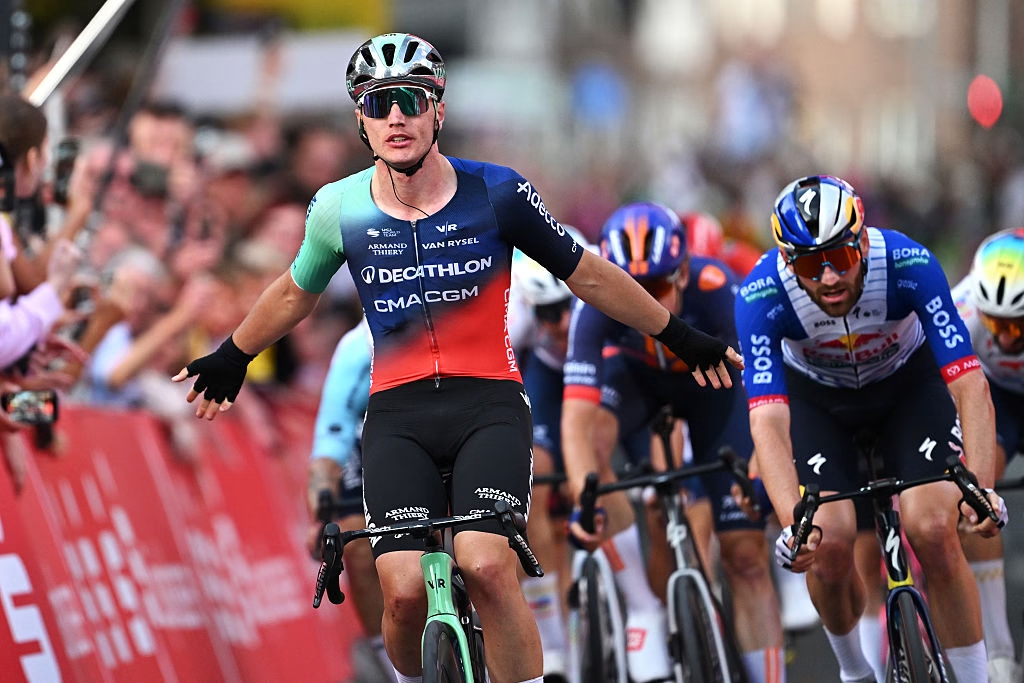
That is why Wiebes is such a strong favourite across this route. She has enough climbing ability to remain competitive on stages that eliminate more conventional sprinters.
Balsamo is probably the most direct rival in a normal bunch finish, while Vos, Lotte Kopecky and Kim Le Court-Pienaar become more dangerous as the terrain gets harder.
For the full sprint hierarchy, see our Tour de France Femmes 2026 riders to watch guide.


Which stages matter most for the yellow jersey?
The Stage 4 time trial and the two mountain stages are the obvious answers.
But the Tour will not necessarily be won only there.
A badly timed crash or split on a flat stage can cost more time than a small attack on Ventoux. A hilly stage can expose a rider having a bad day. Bonus seconds can also accumulate across several finishes.
The strongest GC performance is therefore not simply about being the best climber.
It is about avoiding losses on the stages that supposedly do not matter and then gaining time when the terrain finally offers an opportunity.
That is why riders such as Vollering remain so difficult to beat. She combines climbing with time trialling and consistency across the less obvious GC days.
Why the 2026 route is more balanced than it first looks
The 2026 Tour de France Femmes contains enough climbing to make the strongest mountain riders central to the race, but it is not a route where they can ignore everything else.
The Dijon time trial rewards power and aerodynamics. The hilly stages create tactical uncertainty. The flatter days force GC contenders to survive positioning battles around sprint trains.
Then Mont Ventoux and Nice decide who still has the legs to finish the job.
That balance is what makes the 2026 edition so interesting.
A Tour de France Femmes route is not simply nine separate races. Each stage changes what riders have available for the next one.
By the time the race reaches Ventoux and the final stage around Nice, everything that happened on the supposedly easier days will already have shaped the yellow jersey battle.

