

The Tour de France can survive racing in July heat, but not by treating modern heat as just another form of suffering.
That distinction matters. The Tour has always sold itself as a test of endurance, resilience and discomfort. Heat has been part of that mythology for more than a century. Riders baking on open roads, emptying bidons over their backs and crawling through mountain stages in full sun are part of the race’s visual language.
But the modern problem is different. This is no longer only about whether riders can suffer. It is about whether the race can be run safely, fairly and credibly when temperatures push towards 40°C, when local authorities may have to prioritise emergency services, when spectators are exposed for hours on roadside verges, and when teams need ever more elaborate cooling systems simply to get riders through the day.
The 2026 Tour has already made that clear. Feeding rules have been relaxed in response to extreme heat, with teams given more flexibility to get bottles, ice and supplies to riders in dangerous conditions.
That is the immediate answer. The bigger answer is harder: if the Tour keeps getting hotter, the race will have to change.
Our earlier guide to the Tour de France heat protocol explains what the current rules allow. This piece looks at the bigger question: whether the Tour’s July identity can survive the climate it now faces.
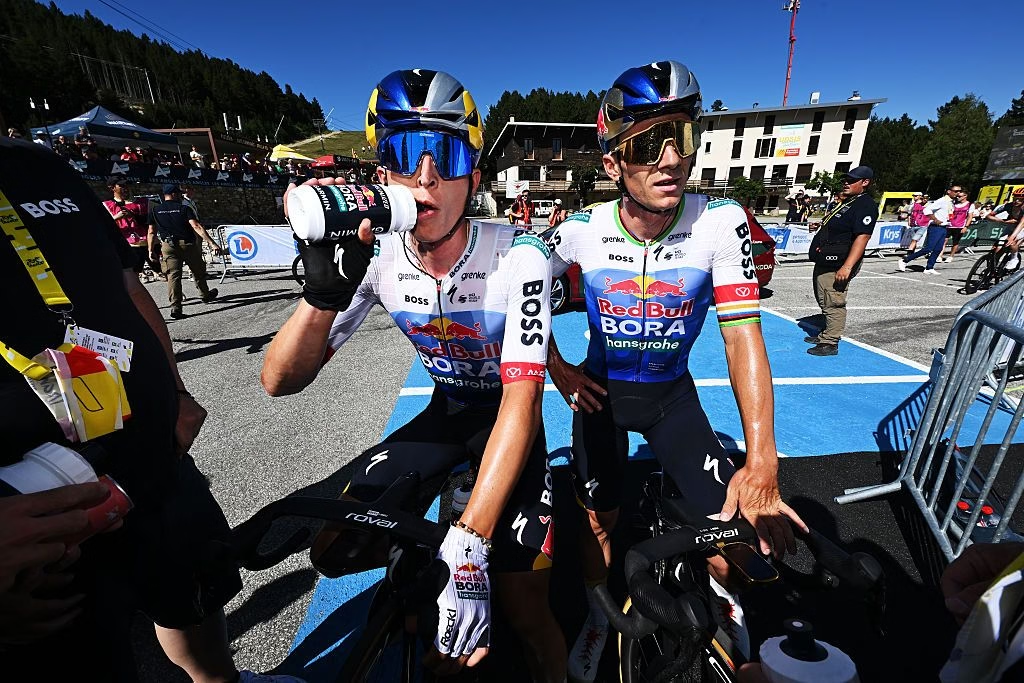
Is it possible for the Tour de France to survive racing in July heat?
Yes, the Tour de France can survive racing in July heat, but only if the race keeps adapting. The most likely changes are not an immediate move away from July, but more flexible start times, extra feeding, stronger cooling rules, better spectator protection, route changes, shorter stages in extreme conditions and a greater willingness to neutralise or cancel stages. If heatwaves become more frequent and severe, the Tour’s traditional July slot may eventually become part of the debate.
| Question | Current answer |
|---|---|
| Can the Tour continue in July? | Yes, but with more adaptation |
| Is heat already changing the race? | Yes, through feeding, safety and cooling measures |
| Could stages be changed or cancelled? | Yes, especially under extreme heat alerts |
| Could the Tour move away from July? | Possible long term, but difficult |
| What is most likely first? | Earlier starts, extra feeds, route changes, spectator measures |
| Is this only a rider issue? | No, it also affects staff, fans, host towns and emergency services |
| Is climate change relevant? | Yes, European heat extremes are becoming more frequent and intense |
Why this is bigger than rider suffering
Cycling has a complicated relationship with suffering.
The sport has always turned discomfort into spectacle. Rain, snow, heat, wind and hunger have all been part of the story. The Tour de France was built around the idea that riders must overcome more than each other. They must overcome the road, the weather and themselves.
But there is a point where suffering stops being sporting texture and becomes a safety problem.
Heat affects core body temperature, hydration, reaction time, judgement, recovery and sleep. It can change how riders handle descents, how fast they can process technical finishes, how quickly they recover between stages and how safely they can keep eating and drinking. It also affects motorbike crews, race staff, police, volunteers, media and fans.
That is why the Tour heat question cannot be reduced to “the riders are tough enough”. Of course they are tough enough to suffer. The question is whether the race environment remains safe enough to justify asking them to.
The Tour’s old language of heroic endurance is now meeting a modern language of risk management.
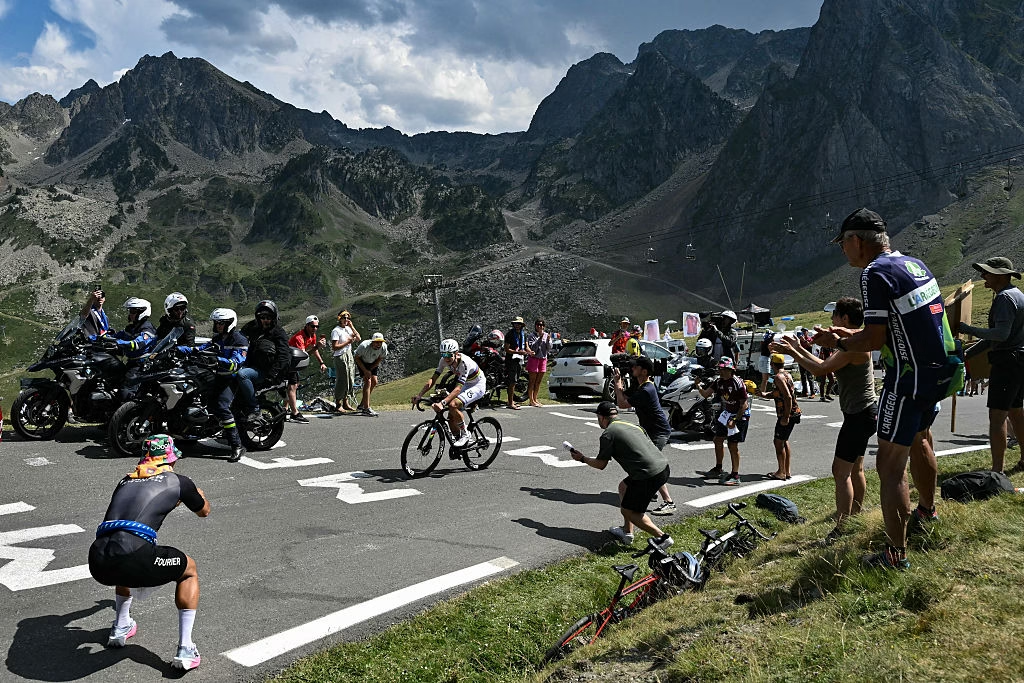
What changed at the 2026 Tour?
The 2026 race has made heat impossible to treat as background noise.
Before the race, French regional officials were warned that stages could be cancelled if a red heatwave alert made it impossible to protect spectators, staff, emergency services and the race caravan at the same time. That is a major shift in how the Tour has to be understood.
A Tour stage is not just a sporting event. It is a moving city. It requires closed roads, police, medical services, helicopters, publicity vehicles, team cars, race staff, crowds and host towns. Extreme heat does not only affect the peloton. It affects the whole operation.
The race has also seen feeding rules adjusted during the event, with more flexibility around bottles and musettes in response to the heat. That matters because it shows heat is now affecting the rules of the Tour while the Tour is happening.
The race is not just coping with weather. It is being reshaped by it.
Why July is becoming a problem
July is central to the Tour de France.
It sits in the school-holiday imagination, the French summer calendar, the television rhythm of afternoons on the road and the tourism economy of host towns. Moving the Tour away from July would not be a small administrative change. It would be a structural break with more than a century of habit.
But July is also becoming more difficult.
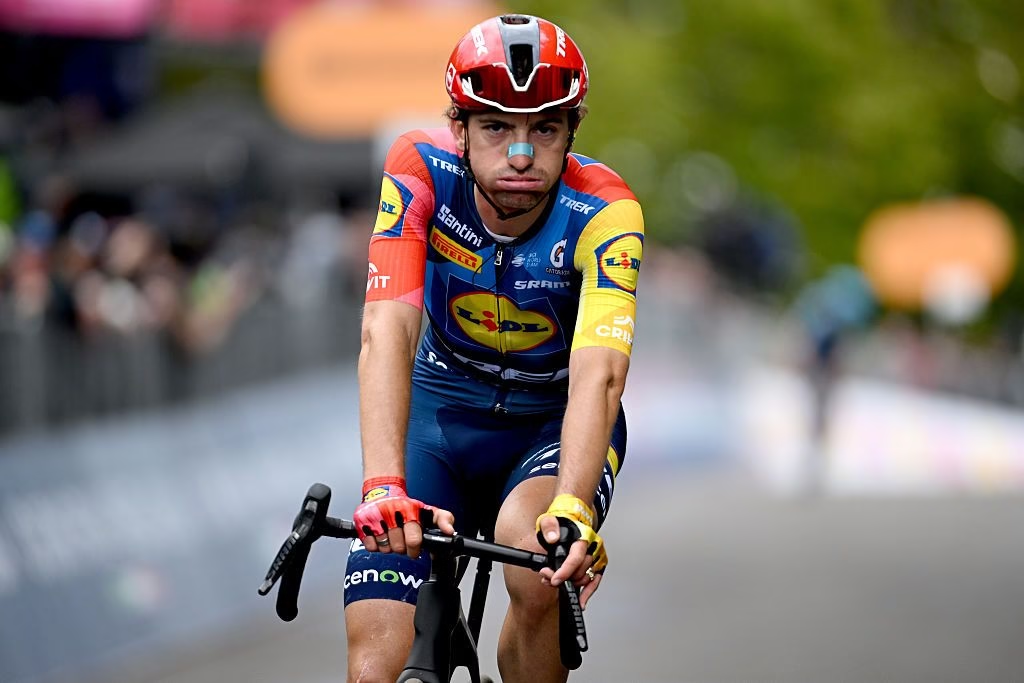
The Tour spends three weeks exposed to roads, concrete, mountainsides, valleys, city centres and open agricultural landscapes. The riders are not exercising in controlled stadium conditions. They are moving through real heat, at high intensity, for hours.
The issue is not that July is hot. July has always been hot. The issue is that the baseline is shifting, and the extreme days are becoming harder to absorb.
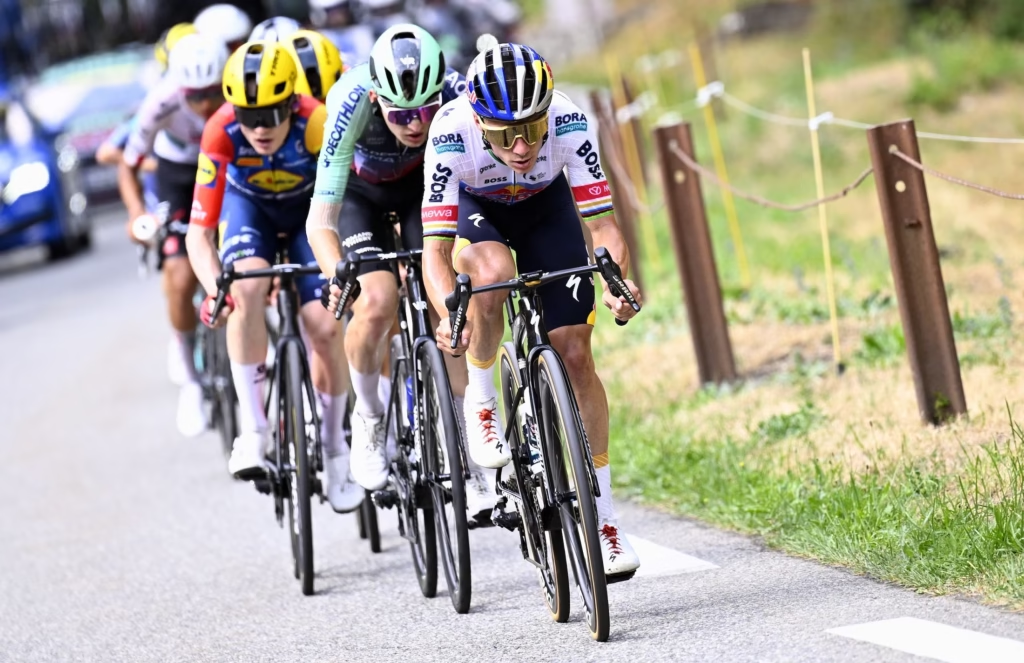 Photo Credit: Getty
Climate change is now part of the Tour story
It is no longer overreach to talk about climate change in a Tour de France article.
European summers are becoming hotter, and extreme heat is becoming a more frequent part of the sporting calendar. That matters for cycling because road racing is unusually exposed. Football can add drinks breaks. Tennis can close roofs or suspend play. Athletics can move evening sessions. Cycling has a 180km route, fixed road closures, remote climbs, convoys, host towns and thousands of spectators already in place.
The Tour is therefore not just a sporting event affected by climate change. It is one of the clearest sporting examples of climate change meeting logistics.
That is why route planning, start times, medical protocols and spectator safety now matter as much as the old language of suffering.
How riders cope with extreme heat
Modern riders are far better protected than riders of the past.
They use ice vests before stages, ice socks during stages, chilled drinks, sodium-heavy hydration plans, cooling towels, shaded warm-up zones, carefully monitored body mass changes, team nutrition strategies and bus-based recovery routines. Some teams now operate almost like mobile heat-management units.
That progress matters. It means modern riders are safer than previous generations. It also means racing can continue in conditions that would once have been dealt with by guesswork and bravado.
But there is a limit. Cooling strategies reduce risk. They do not remove it. Once air temperature, road temperature, humidity, radiant heat and race intensity combine, even the best-prepared riders can be pushed towards dangerous territory.
Our guide to how Tour de France riders recover between stages explains why hydration, sleep and cooling are not side details. They are now central to surviving a three-week race.
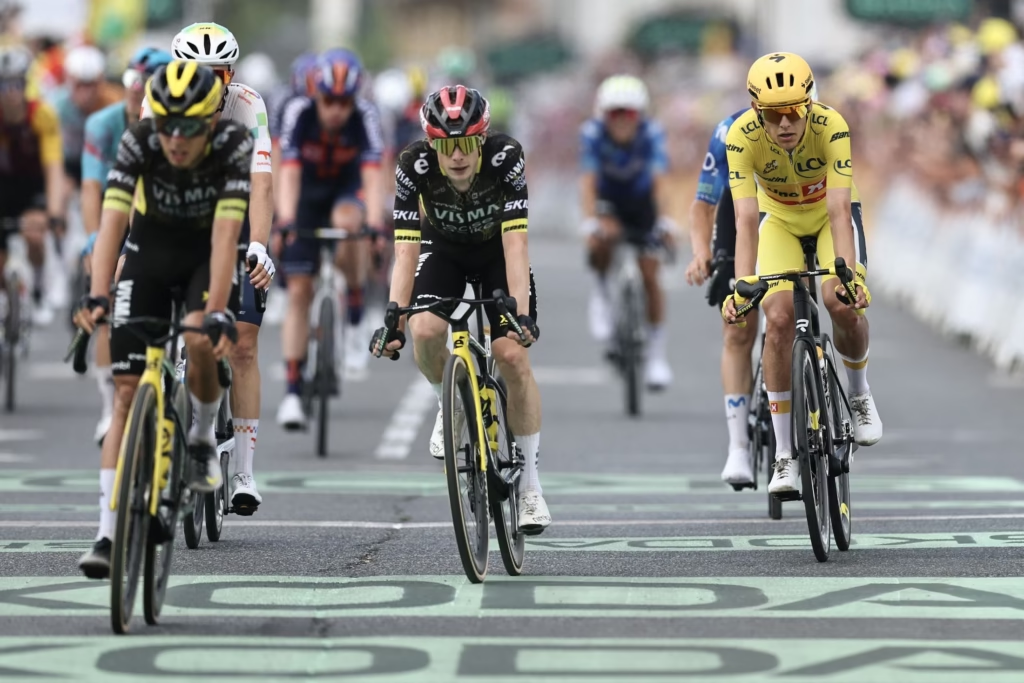 Photo Credit: Getty
What heat does to the racing
Extreme heat does not just make the Tour uncomfortable. It changes the tactics.
On very hot days, riders may avoid unnecessary early attacks. Teams may ride more conservatively to protect leaders. Breakaways may be allowed more time if the bunch is unwilling to chase hard for hours. Sprint teams may struggle to keep enough riders organised late in the day. Climbers may cope better than heavier riders, but only if they manage hydration and cooling properly.
Heat can also change the final hour. A rider who looks comfortable after two hours may fade badly after four. A lead-out that works in normal conditions may fall apart if two helpers are already close to empty. A GC rider who normally follows attacks may choose survival instead of aggression.
That matters because the Tour’s sporting balance depends on riders being able to race, not just endure. If heat turns stages into controlled energy-saving exercises, the race may become less open rather than more heroic.
The impact is especially clear after mountain days. Our piece on why Tour de France sprinters struggle the day after a mountain stage explains how accumulated fatigue, heat and recovery can blunt riders even on stages that look easier on paper.
The spectator problem
The Tour’s heat problem is also a fan problem.
A roadside spectator may stand for hours with limited shade, limited water and no easy escape once roads are closed. A finish town can become a heat trap, especially on tarmac-heavy boulevards, barriers and exposed waiting areas. Older fans, children and people with health issues are at particular risk.
This matters because the Tour is not only a race. It is a public event sold to host towns. If conditions become dangerous enough that crowds are discouraged, reduced or moved away from finish areas, then the economics and atmosphere of the Tour begin to shift.
That is not a small point. The Tour’s value comes partly from television, but also from public presence. A stage finish without crowds is still a race. It is not quite the same Tour.
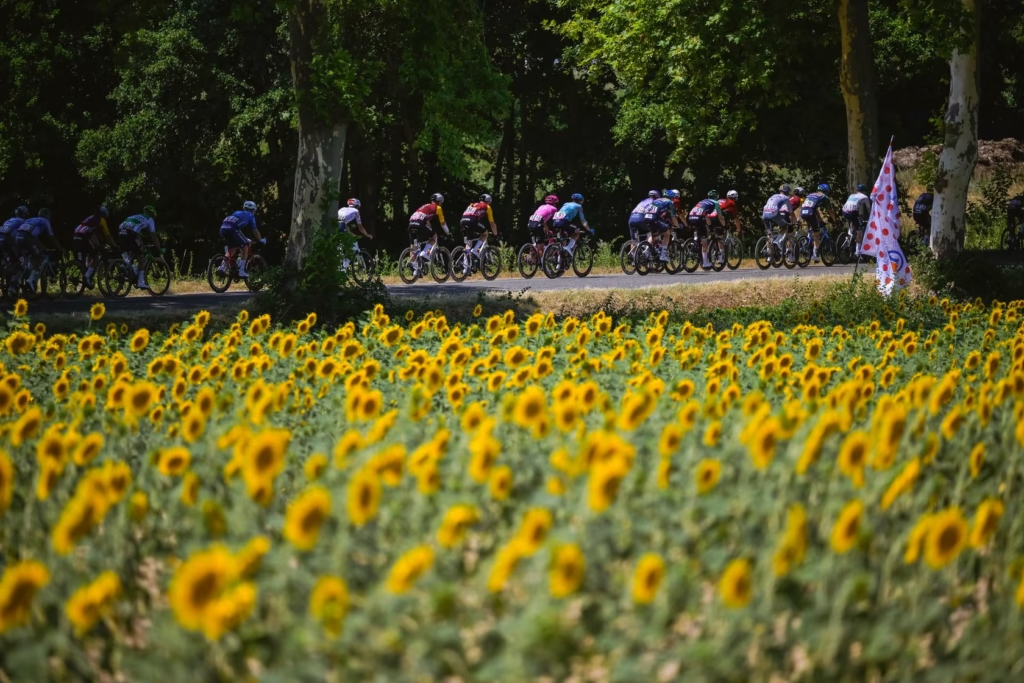
What can organisers do before moving the race?
The Tour does not have to jump straight from “race as normal” to “move out of July”.
There is a middle ground, and that is where the likely changes sit.
| Possible adaptation | What it would change |
|---|---|
| Earlier stage starts | Reduces late-afternoon heat exposure |
| Shortened stages | Cuts time spent in the most dangerous conditions |
| Extra feed zones | Improves hydration and cooling access |
| More bottle and musette flexibility | Allows teams to respond to conditions |
| Neutralised sections | Reduces danger in extreme heat or fire-risk areas |
| Route changes | Avoids exposed roads, wildfire zones or unsafe climbs |
| Shaded start and finish areas | Protects riders, staff and spectators |
| More medical screening | Helps detect dehydration and heat stress earlier |
| Spectator cooling zones | Reduces public health risk in host towns |
| Stronger cancellation thresholds | Makes safety decisions clearer |
Some of this is already happening. Feeding flexibility has been expanded during the 2026 race. Local authorities have been told they can act if a stage cannot be safely supported. The heat protocol exists because the sport already knows this is not normal race discomfort.
The next step is making these adaptations feel routine rather than exceptional.
Could the Tour de France be moved from July?
Yes, but it would be extremely difficult.
Moving the Tour would create problems across the entire cycling calendar. It would affect the Giro d’Italia, Vuelta a España, Tour de France Femmes, World Championships, national championships, Olympic cycles, sponsor plans, television schedules, host-town contracts and rider preparation.
It would also challenge the Tour’s identity. July is part of how the race is consumed. A move into June or September might reduce some heat exposure, but it would not automatically solve everything. June heatwaves are already a problem. September can still be hot in southern France, and it would create new conflicts with other races and sports.
So the realistic answer is this: the Tour is more likely to adapt within July before it moves away from July.
That means earlier starts, more flexible rules, more safety interventions and possibly different route design. But if extreme heat keeps escalating, the July slot will become harder to defend as untouchable.
The race does not need to move tomorrow. It does need to stop assuming that tomorrow will look like yesterday.
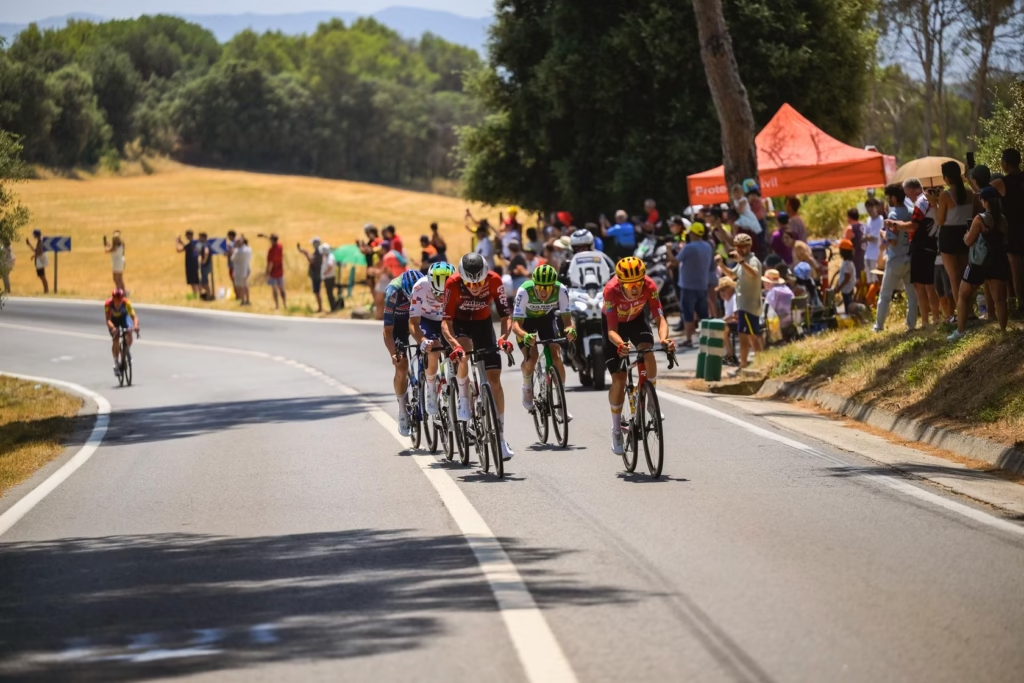
Stage design will become more important
Future Tour routes may need to be judged not only by sporting difficulty, but by heat exposure.
A stage through open farmland in 39°C heat can be more dangerous than a mountain stage at altitude. A long flat day with little shade can become brutal if it is ridden in full sun. A late-afternoon finish in a heat-trapping city centre may be harder to manage than a climb with better airflow.
That does not mean the Tour should avoid the south of France, mountains or classic summer landscapes. It does mean that organisers may need to think differently about where the race is at what time of day.
The Tour de France 2026 full route guide shows how varied a modern route already is, with early Pyrenees, flat stages, hilly days, time trialling and a heavy Alpine finale. In future, that kind of planning may also need a climate layer: where is the race most exposed, when is it hottest, where can emergency services cope, and how can fans be protected?
Route design used to be about spectacle, difficulty and geography. It is now also about heat resilience.
TV schedules may become part of the debate
One reason the Tour likes afternoon finishes is simple: television.
The final hour lands neatly into prime viewing windows across Europe. Broadcasters know when the decisive action is likely to happen. Fans know when to tune in. Host towns know when they will be seen. Sponsors know when exposure peaks.
But heat does not care about television logic.
If the hottest part of the day increasingly overlaps with the Tour’s preferred racing window, organisers may face a difficult choice. Earlier starts and earlier finishes could reduce heat exposure, but might affect audiences. Later finishes could reduce peak sun exposure in some cases, but create new issues around road closures, recovery, transfers and local logistics.
The Tour’s traditional rhythm is powerful. But if conditions keep worsening, even the daily timetable may become negotiable.
Our Tour de France 2026 TV schedule and daily start times shows how fixed the viewing rhythm currently feels. Future heatwaves may make that rhythm harder to protect.
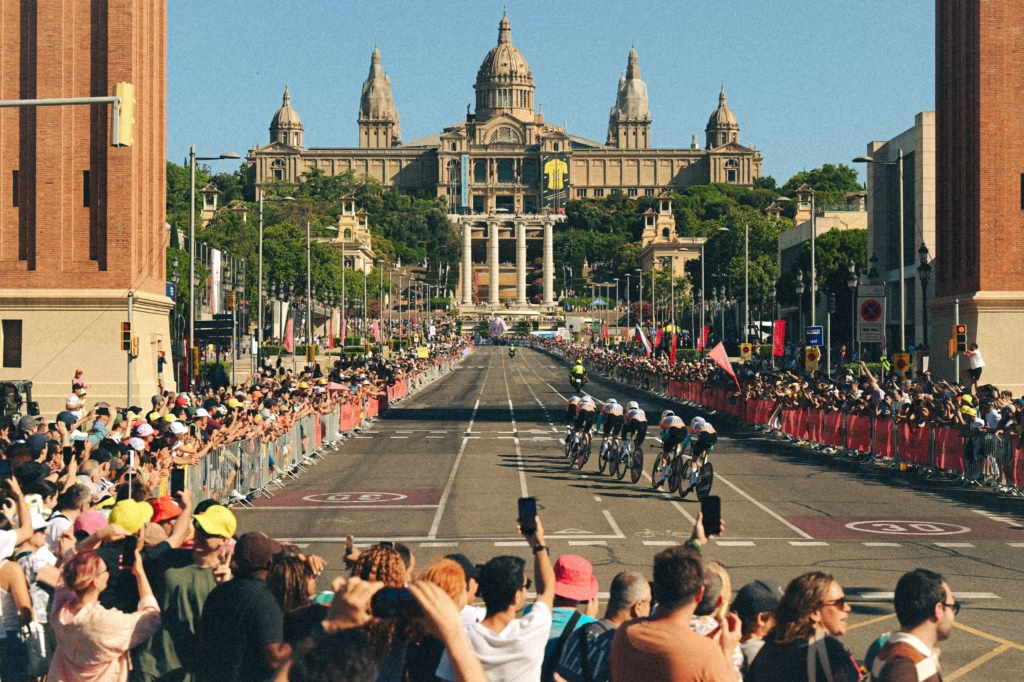
What heat means for fairness
Extreme heat can also affect fairness.
Different riders tolerate heat differently. Some are naturally better in hot conditions. Some teams have bigger budgets for cooling equipment, staff, nutrition planning and recovery infrastructure. A wealthy team can manage heat with more precision than a smaller one. That creates a performance gap that is not just about legs.
The Tour already has inequalities, of course. Team budgets, equipment, staff and depth are never equal. But heat can widen those gaps. If extreme conditions become a regular feature, heat management becomes a decisive performance area in its own right.
That is not necessarily wrong. Preparation is part of sport. But it does mean the race needs clear rules so that safety measures do not become an arms race that only the richest teams can win.
Extra feeds, neutral cooling access, clear protocols and predictable thresholds can help. Vague improvisation favours those with the most resources.
What heat means for riders lower down the race
The heat story is often told through favourites and stage winners, but the biggest risk may sit lower down the peloton.
GC contenders are surrounded by helpers. Star sprinters have teams built around them. Domestiques, lead-out riders, breakaway riders and riders fighting the time cut can be exposed in more complicated ways. They may be working hardest when the cameras are elsewhere.
This is especially true in the mountains. A heavier rider fighting to survive the Tourmalet or Alpe d’Huez in extreme heat is not simply “having a bad day”. They may be close to the physical limit needed to remain in the race.
That matters because the Tour is not only won at the front. It is also sustained by the riders who make the race function.
If heat makes their job significantly more dangerous, the race has a duty to respond.
Our guide to Tour de France time cuts explains why survival at the back of the race can be as stressful as attacking at the front.
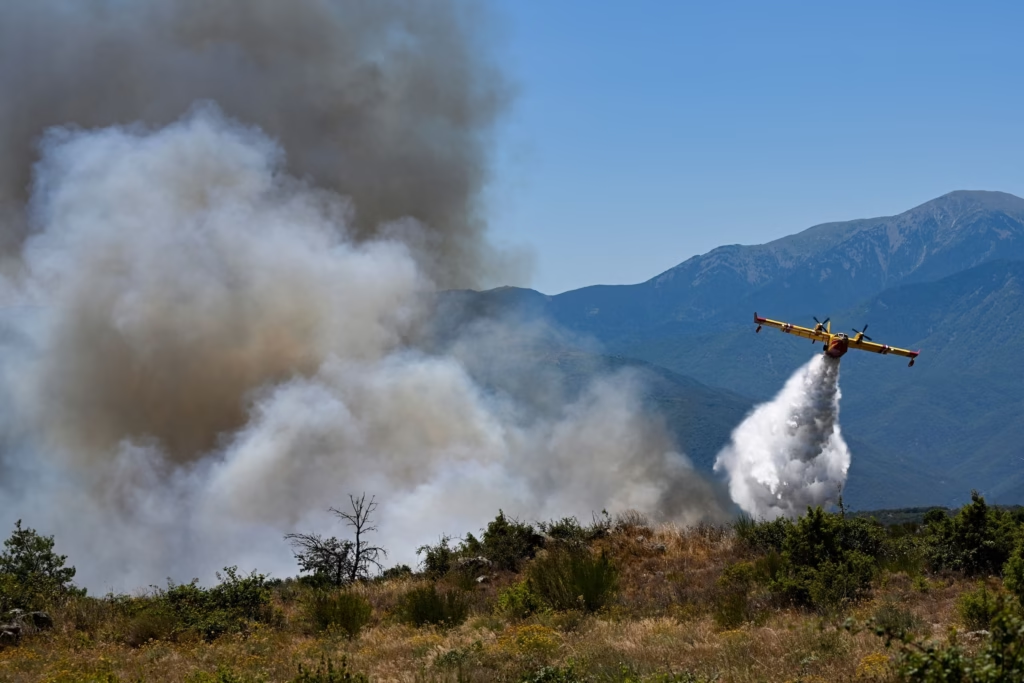
Can technology solve it?
Technology helps, but it will not solve everything.
Better cooling, smarter hydration, core-temperature monitoring, wearable sensors, heat-adapted training camps and nutrition planning will all become more important. Teams will keep improving how they manage riders before, during and after stages.
But technology cannot make 40°C road racing normal. It can only push the risk line further away.
There is also a danger that the Tour becomes too comfortable with technical fixes. Ice socks and extra bidons are useful, but they do not answer the bigger question of whether a stage should be run in the same way, at the same time, over the same distance, in the same conditions.
The future cannot be “more ice forever”. It has to include better decision-making.
What a heat-resilient Tour could look like
A heat-resilient Tour would still look like the Tour. It would still have mountains, attacks, breakaways, sprints, crowds, drama and heat. But it would be more flexible.
| Area | Current pressure | Future direction |
|---|---|---|
| Calendar | July tradition | July retained, but no longer treated as untouchable |
| Stage times | Afternoon TV rhythm | Earlier or more flexible starts on high-risk days |
| Feeding | Fixed zones | More heat-triggered flexibility |
| Route | Sporting and scenic logic | Climate risk added to route planning |
| Spectators | Roadside freedom | More cooling zones, warnings and shade planning |
| Medical | Rider-focused | Wider event safety approach |
| Teams | Individual cooling systems | Clearer shared rules and safety standards |
| Authorities | Local emergency management | Stronger cancellation and adaptation thresholds |
The Tour does not need to become cautious to survive. It needs to become smarter.
The race has changed many times before. It has changed bikes, roads, team structures, doping controls, broadcast models, time trials, safety rules and equipment. Adapting to heat would not be a betrayal of the Tour. It would be another version of the Tour doing what it has always done: surviving.
The women’s races will face the same question
This is not only a men’s Tour de France problem.
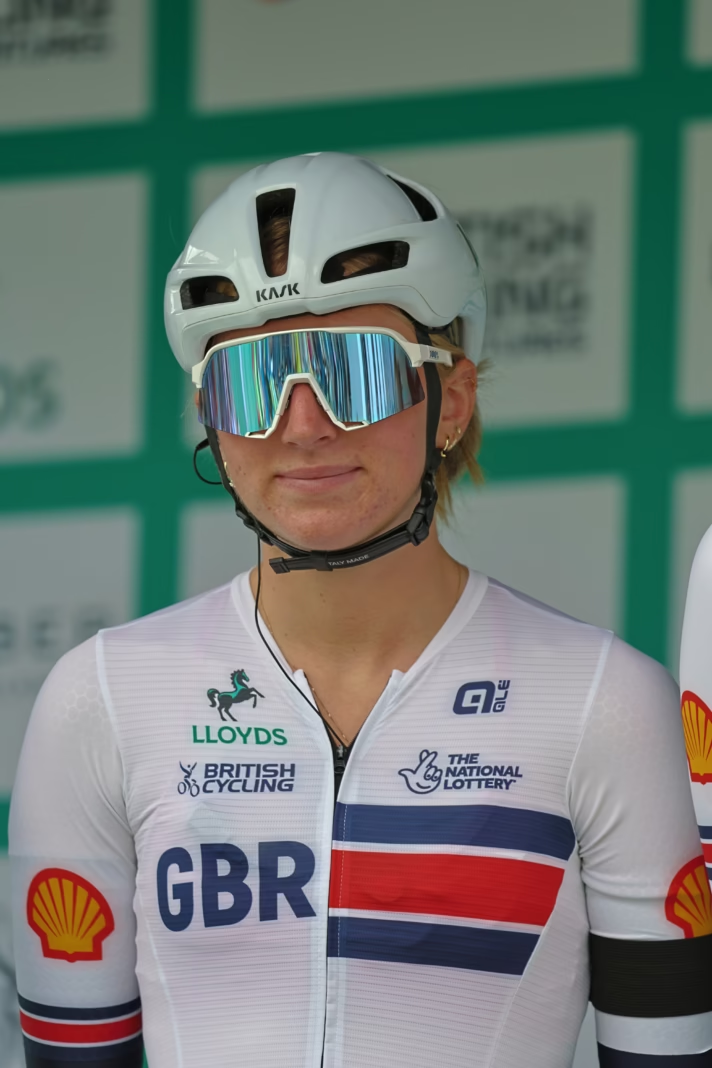
The Tour de France Femmes also races in summer, with its own heat exposure, transfer pressures, fan demands and broadcast windows. The women’s peloton may face the same issues with smaller support structures and less historical margin for disruption.
The Tour de France Femmes 2026 calendar runs from 1-9 August, with stages across Switzerland and France. That timing brings its own heat risks, especially as the route moves south towards Mont Ventoux and Nice.
The wider lesson is that elite road cycling cannot treat heat as one race’s problem. It is a calendar problem.
-
 Photo Credit: Getty
 -
 Photo Credit: Cs-wolves / Wikimedia Commons, CC BY-SA 4.0

Why the Tour probably survives
The Tour de France is too valuable, too adaptable and too culturally embedded to be broken by heat in the short term.
It has the institutional weight to change rules. It has the media power to justify new procedures. It has enough public attention to make safety measures visible rather than hidden. It also has organisers, teams and authorities who now know that extreme weather planning is not optional.
That is why the race will almost certainly survive.
But survival does not mean continuity without change. The Tour that survives July heat may not look exactly like the Tour of 10 or 20 years ago. It may start earlier more often. It may shorten stages. It may alter routes. It may neutralise more sections. It may protect spectators differently. It may eventually have to ask whether July is still the only possible home.
That is not weakness. It is adaptation.
Verdict: the Tour can survive, but July can no longer be treated as sacred
The Tour de France can survive racing in July heat, but only if it accepts that the heat is no longer just scenery.
It is a sporting factor, a safety issue, a medical risk, a spectator problem, a route-design challenge and a future-calendar question. The 2026 race has already shown that the rules may need to bend in real time, whether through extra feeds, local authority powers or heat protocol measures.
The Tour does not need to abandon July immediately. But it does need to stop treating July as untouchable. Extreme heat is not a passing inconvenience. It is becoming part of the race environment.
The Tour’s great strength has always been its ability to absorb change while still feeling like itself. That is what it needs to do again.
Not because heat makes the Tour less heroic, but because the race only remains heroic if it remains safe enough to race properly.

