
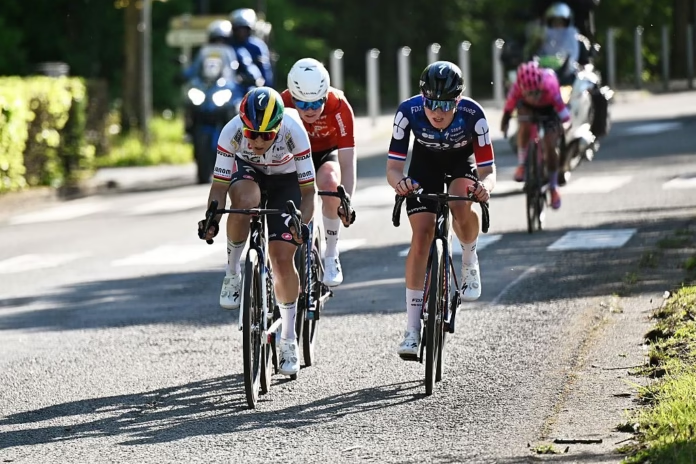
Finishing a stage of the Tour de France Femmes does not mean the day’s work is over. In many ways, preparation for the next stage begins almost immediately.
Across nine consecutive days of racing, riders have only a limited window to replace the energy they have used, rehydrate, repair muscle damage, travel to the hotel, eat properly and get enough sleep before doing it all again. The individual stages matter, but the accumulation of those efforts is what makes the Tour de France Femmes 2026 route so demanding.
Recovery therefore becomes part of performance. A rider can have enough fitness to climb with the leaders one afternoon and still struggle 48 hours later if she has under-fuelled, slept badly or carried too much fatigue from previous stages. Professional teams use nutritionists, chefs, doctors, physiotherapists and soigneurs to make that process as consistent as possible.
Recovery begins before the stage has finished
Professional riders do not wait until they cross the finish line before thinking about tomorrow.
Eating and drinking during the stage is already part of recovery. The more carbohydrate, fluid and electrolytes a rider can take on while racing, the smaller the deficit she has to correct during the evening.
This is particularly important on long or mountainous stages. A rider finishing completely depleted may struggle to consume enough food before bed to fully replenish glycogen stores, even with several hours of recovery available.
Modern race nutrition is therefore designed to prevent that situation rather than solve it afterwards. Riders regularly consume carbohydrate through rice cakes, bars, gels and drinks, with the amount adjusted to the expected demands of the stage.
Our full guide to what Tour de France Femmes riders eat covers how those on-bike fuelling plans work across flat, hilly, mountain and time trial stages.
The first priority after the finish is fuel
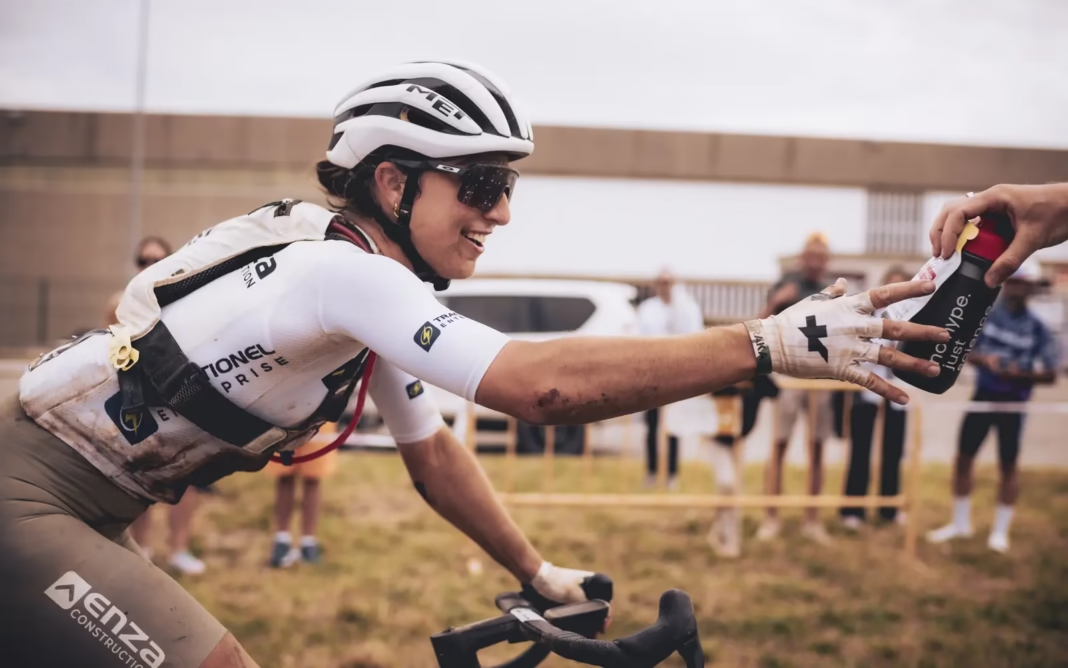
Within minutes of crossing the line, riders will normally be given food, a recovery drink or both.
Carbohydrate is central because the body needs to replace the glycogen used during the stage, while protein supports muscle repair. Fluid and electrolytes also begin replacing what has been lost through sweating.
The exact recovery plan depends on what the rider has actually done. A protected leader who spent much of a relatively controlled stage inside the peloton may have different requirements from a domestique who spent hours riding in the wind or a stage hunter who attacked repeatedly in the breakaway.
Professional teams increasingly treat recovery as an individual process rather than handing every rider exactly the same bottle and meal.
Riders keep eating long after the recovery shake
The drink handed to a rider at the finish is only the beginning.
Once she reaches the team bus, eating continues. Rice, sandwiches, pasta, bread, fruit and other carbohydrate-rich foods can all be used during the transfer from the finish towards the hotel.
The objective is to spread the required intake across several opportunities rather than expecting a rider to replace an enormous energy deficit with one dinner several hours later.
That becomes especially important as the Tour progresses because appetite does not always match energy demand. Hard racing, heat and repeated consumption of sweet sports nutrition can leave riders tired of eating at exactly the point when maintaining energy intake becomes most important.
Teams remove as much of the decision-making as possible. Food is prepared and available so riders can begin refuelling before they have had time to think about whether they feel hungry.
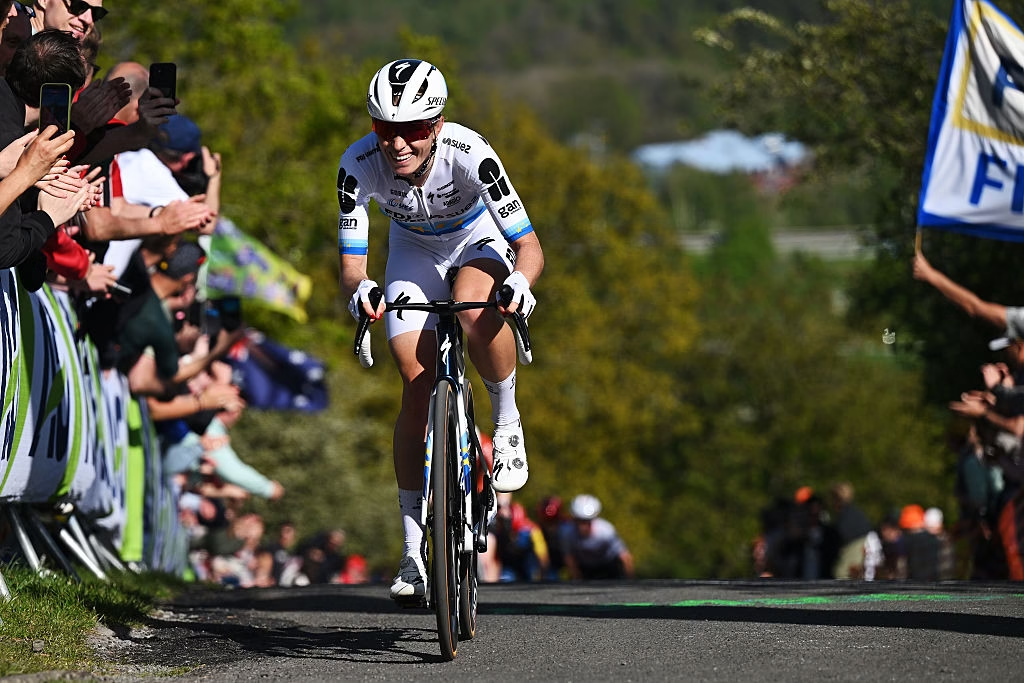 Photo Credit: Getty
Hydration is more complicated than drinking lots of water
Fluid replacement is another immediate priority, particularly during hot stages.
Water alone does not necessarily replace everything lost through sweat. Riders also lose sodium, while the amount of fluid required varies significantly with temperature, humidity, body size, intensity and individual sweat rate.
Teams can build hydration plans around those differences. One rider may need substantially more fluid and electrolytes than a teammate despite completing the same stage.
The objective is not necessarily to replace every millilitre immediately. Riders continue drinking through the transfer and evening while food provides additional fluid and sodium.
For recreational cyclists, the same basic principles apply at a less extreme scale. Our guide to how to fuel your rides covers hydration and recovery without the quantities required by professional stage racers.
Cooling matters after hot stages
On particularly hot days, teams also need to bring body temperature down.
Riders may use cold drinks, ice, cooling vests, cold towels or showers after finishing. That is partly about comfort, but it can also help the recovery routine begin more effectively.
A rider who remains overheated continues sweating and losing fluid after the stage has ended. Heat can also suppress appetite or cause nausea, making it harder to eat enough carbohydrate during the most valuable early recovery period.
That makes temperature management part of the broader fuelling and hydration plan rather than an isolated recovery trick.
Post-stage spinning is usually brief
Television coverage sometimes shows riders getting onto turbo trainers immediately after a finish.
Short cool-down rides do happen, particularly following high-intensity stages or time trials, but riders are not adding another training session after several hours of racing.
An easy spin may help gradually reduce intensity after a very hard finish, but the usefulness depends on what the rider has just completed. After a long mountain stage, getting off the bike, eating and travelling to the hotel may be a much higher priority.
Recovery is not about doing every possible recovery technique.
It is about choosing what matters without adding unnecessary work.
Massage helps manage nine days of accumulated stress
Massage remains one of the most recognisable parts of professional stage-race recovery.
Once riders reach the hotel, soigneurs or physiotherapists work on their legs while they rest, eat or prepare for the following day. The objective is less dramatic than the old idea of somehow flushing fatigue out of the muscles.
Massage can reduce the feeling of stiffness and help riders relax, but it also gives staff a regular opportunity to notice problems. A sore calf, tight hip or unusual tenderness can be assessed before it develops into something more serious.
Across nine days, that daily monitoring matters. A minor problem after Stage 2 can become race-ending by the final weekend if it continually worsens.
Compression and recovery devices are secondary tools
Some riders will also use compression socks, tights or pneumatic compression boots during the evening.
Different athletes have different preferences, and the evidence for recovery technologies is not equally strong across every device. Teams therefore tend to use them as part of a wider routine rather than treating any one tool as essential.
If compression makes a rider’s legs feel better and helps her relax, that may be worthwhile. What it cannot do is compensate for poor fundamentals.
No recovery boot fixes inadequate carbohydrate intake, dehydration or five hours of sleep.
Food, fluid and rest remain much more important.
Sleep may be the most valuable recovery tool
Good sleep is one of the most powerful things available to a rider during a stage race, but Grand Tours do not necessarily make it easy.
After finishing, riders may have podium ceremonies, doping control, media obligations and transfers before reaching the hotel. They still need to eat dinner, receive treatment, prepare for the next day and eventually switch off mentally after hours of racing.
Hard exercise itself can interfere with sleep. Body temperature may remain elevated, while adrenaline from a mountain finish or crash can make it surprisingly difficult to relax.
Teams therefore try to make evenings predictable. The less unnecessary stress between finish and bedtime, the more time the rider can actually spend recovering.
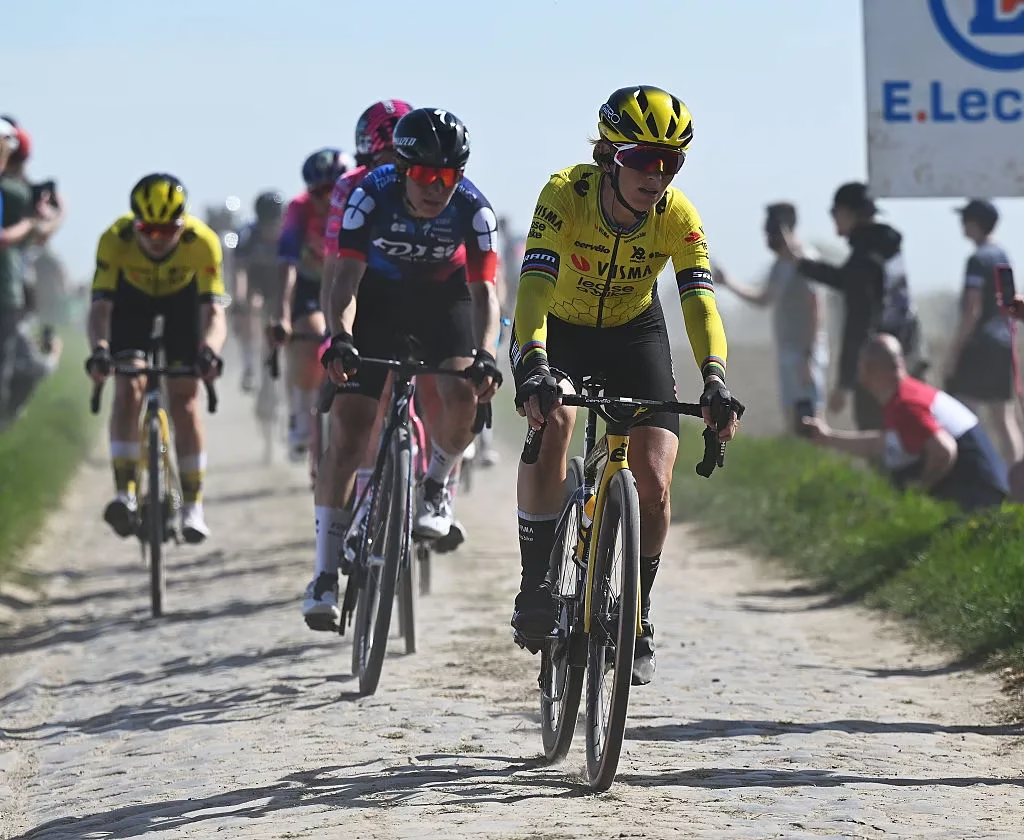
Transfers are a hidden part of Tour fatigue
The stage profile does not show what happens after the finish.
Some days include substantial transfers from the race to the hotel, meaning riders can spend another hour or two sitting in the team bus when ideally they would already be eating, receiving treatment and preparing for sleep.
Traffic around a major Tour finish can make those journeys even longer.
Teams respond by moving the recovery routine onto the bus. Riders change into comfortable clothing, eat, drink and begin relaxing before reaching the hotel rather than waiting for the formal evening routine to start.
The scientifically ideal recovery plan is useless if it ignores the practical reality of travelling across France every afternoon.
Dinner is really preparation for tomorrow
The evening meal is another major refuelling opportunity.
Riders need carbohydrate to continue restoring glycogen stores, protein to support repair and enough total energy to compensate for the demands of the race. Team chefs can prepare meals specifically around those requirements rather than relying on whatever happens to be available at the hotel.
The food itself can look surprisingly ordinary. Rice, pasta, potatoes and bread may be combined with lean proteins, vegetables and familiar foods the rider knows she can digest.
What makes a Grand Tour dinner different is not necessarily the ingredients.
It is the quantity, timing and reason for eating it.
The rider is not simply having dinner after work. She is fuelling tomorrow’s stage.
Some riders need another meal before bed
Dinner may still not be enough after an especially demanding day.
A later snack can add more carbohydrate and protein without requiring the rider to consume an uncomfortably large meal at once. This is particularly useful after mountain stages, where total energy expenditure can be enormous.
Splitting intake throughout the afternoon and evening also makes the process easier when appetite starts fading during a long race.
By the later stages, eating enough can become another part of the job.
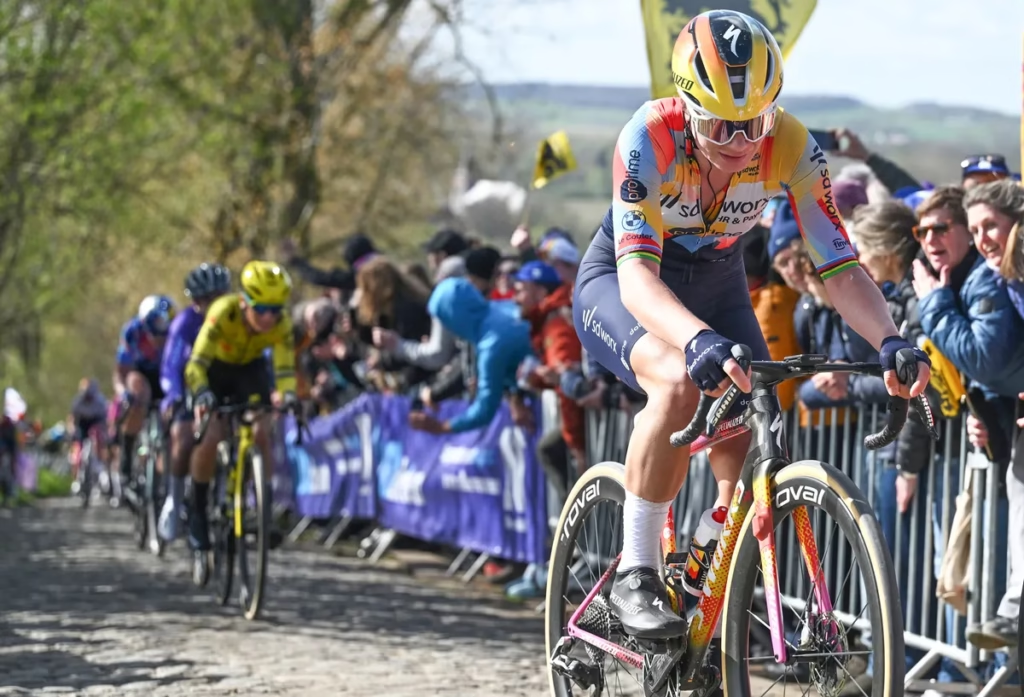
Mountain stages create the biggest recovery challenge
Not every Tour stage produces the same sort of fatigue.
A major mountain day combines high energy expenditure with sustained periods of climbing near the rider’s limit. Descents add a different load because riders must stay physically engaged and mentally concentrated while travelling at high speed.
Stage 7 of the 2026 Tour is the clearest example. The Mont Ventoux summit finish ends with 15.7km at 8.8%, meaning the GC contenders could spend a substantial part of the final hour riding close to maximum sustainable climbing intensity.
There is no recovery protocol capable of making those legs completely fresh the next morning.
The objective is to limit how much of that fatigue carries into the next stage.
Flat stages create a different kind of stress
Sprint days can look easier on a profile, but they are not necessarily recovery days.
Riders still spend hours holding aerodynamic positions, fighting for wheels and repeatedly accelerating out of corners or through changes in pace. The final 20km of a sprint stage can be physically and mentally intense even if the previous three hours were comparatively controlled.
Sprinters may then produce repeated maximal efforts in the finale, while their domestiques can finish equally exhausted after spending kilometres working at the front.
A flat stage only becomes a relatively easy day if the race actually allows it.
The Dijon time trial changes the routine again
Stage 4 of the 2026 Tour is a 21km individual time trial from Gevrey-Chambertin to Dijon.
The total race duration is far shorter than a normal road stage, but the effort is highly concentrated. Riders also complete a structured warm-up before racing, meaning the physical workload begins well before they leave the start ramp.
GC riders will then spend the time trial close to their maximum sustainable effort before immediately needing to recover for the hilly Stage 5.
The likely contenders and GC implications are covered in our Tour de France Femmes 2026 Dijon time trial guide.
A rider such as Marlen Reusser could gain significant time in Dijon. She still has to wake up the following morning ready to defend it.
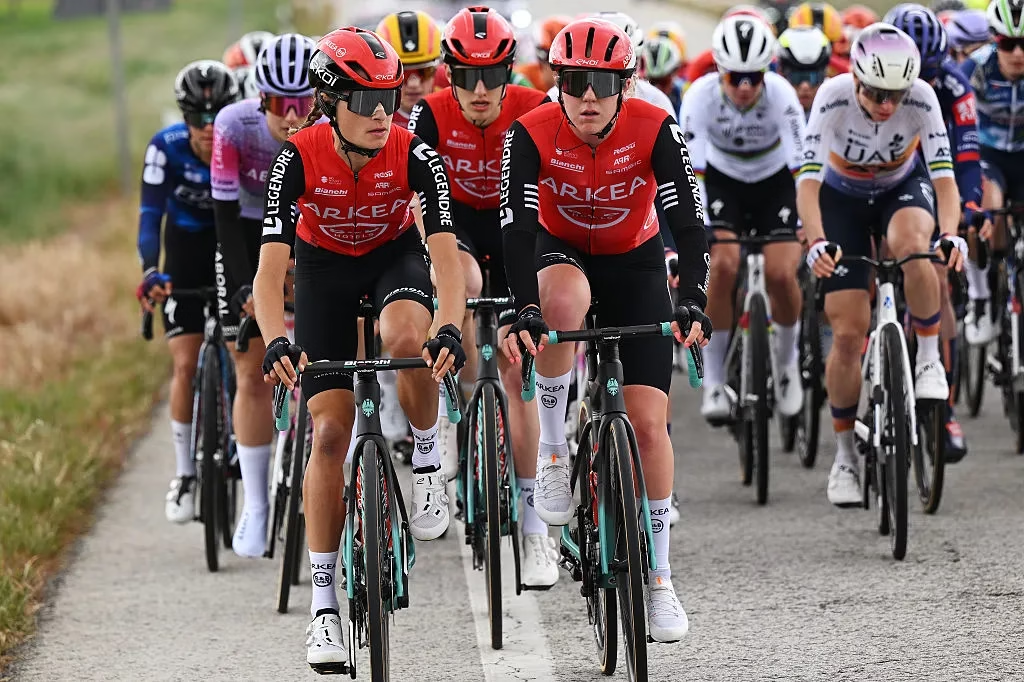
A crash changes everything
If a rider hits the ground, ordinary recovery priorities can be pushed aside by medical treatment.
Road rash needs cleaning and dressing, while bruising, joint pain or impact injuries may require further assessment. Team doctors need to decide whether imaging is necessary and whether the rider can safely continue.
Even relatively minor crashes can create problems that extend into later stages.
Road rash can make sleeping difficult. Bruising can change a rider’s position on the bike. A sore shoulder can become increasingly uncomfortable after several more hours gripping the handlebars.
That is why the consequences of a crash are not always obvious on the day it happens. The true cost can appear over the following 48 hours.
Recovery gets harder as fatigue accumulates
No rider returns to her Stage 1 condition each morning.
That is not the objective.
Fatigue accumulates throughout the race, and the purpose of recovery is to slow that process enough that performance remains high into the final weekend.
By the time the Tour reaches Ventoux and Nice, every rider is carrying the effects of the preceding stages. Those who appear freshest are often the athletes who have avoided crashes and illness, fuelled consistently and spent the least unnecessary energy.
That is one reason experienced stage racers become so effective. They understand not only when to ride hard, but when not to.
GC riders cannot really take a day off
A yellow jersey contender faces a different recovery problem from a stage hunter.
Even on a day where she has no intention of attacking, she still needs to stay near the front, avoid crashes, respond to dangerous splits and keep track of the riders around her. That constant positioning creates physical and mental stress.
A stage hunter can sometimes treat an unsuitable day differently. Once she knows the stage is not one of her targets, she can conserve energy, avoid unnecessary moves and prepare for another opportunity later.
The GC leader has much less freedom.
Every stage matters because time can be lost almost anywhere.
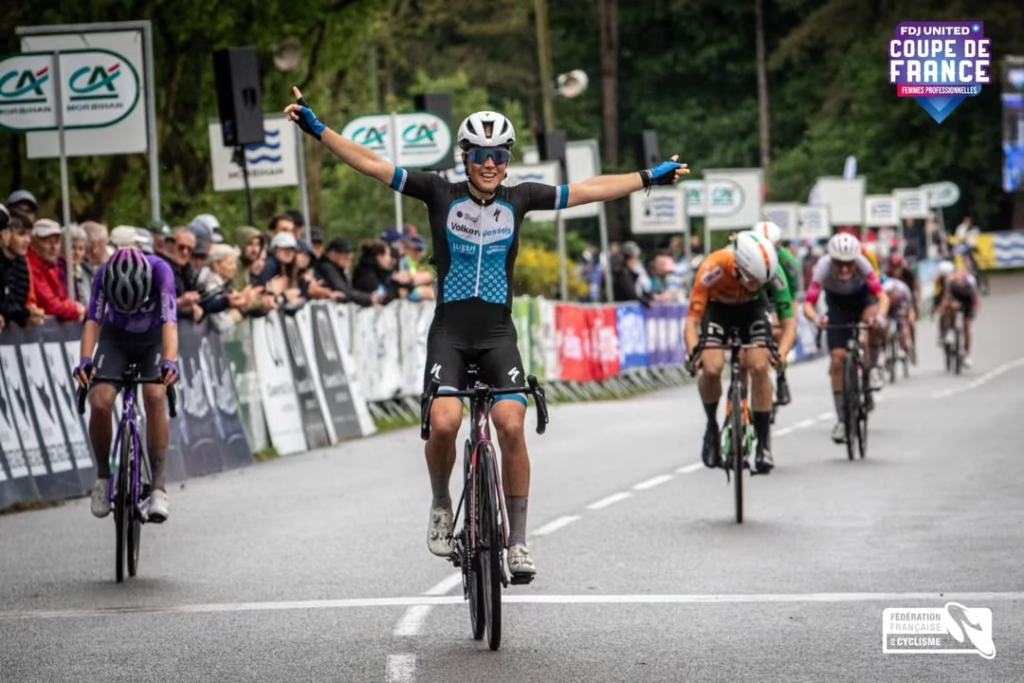
Smart racing is one of the best recovery strategies
The most effective recovery sometimes happens before the finish.
A GC contender does not chase a harmless breakaway herself if a teammate can do the work. A domestique who has completed her job can ease back instead of fighting unnecessarily for position. A stage hunter can save energy on terrain that does not suit her.
Those tactical decisions reduce the amount of recovery required afterwards.
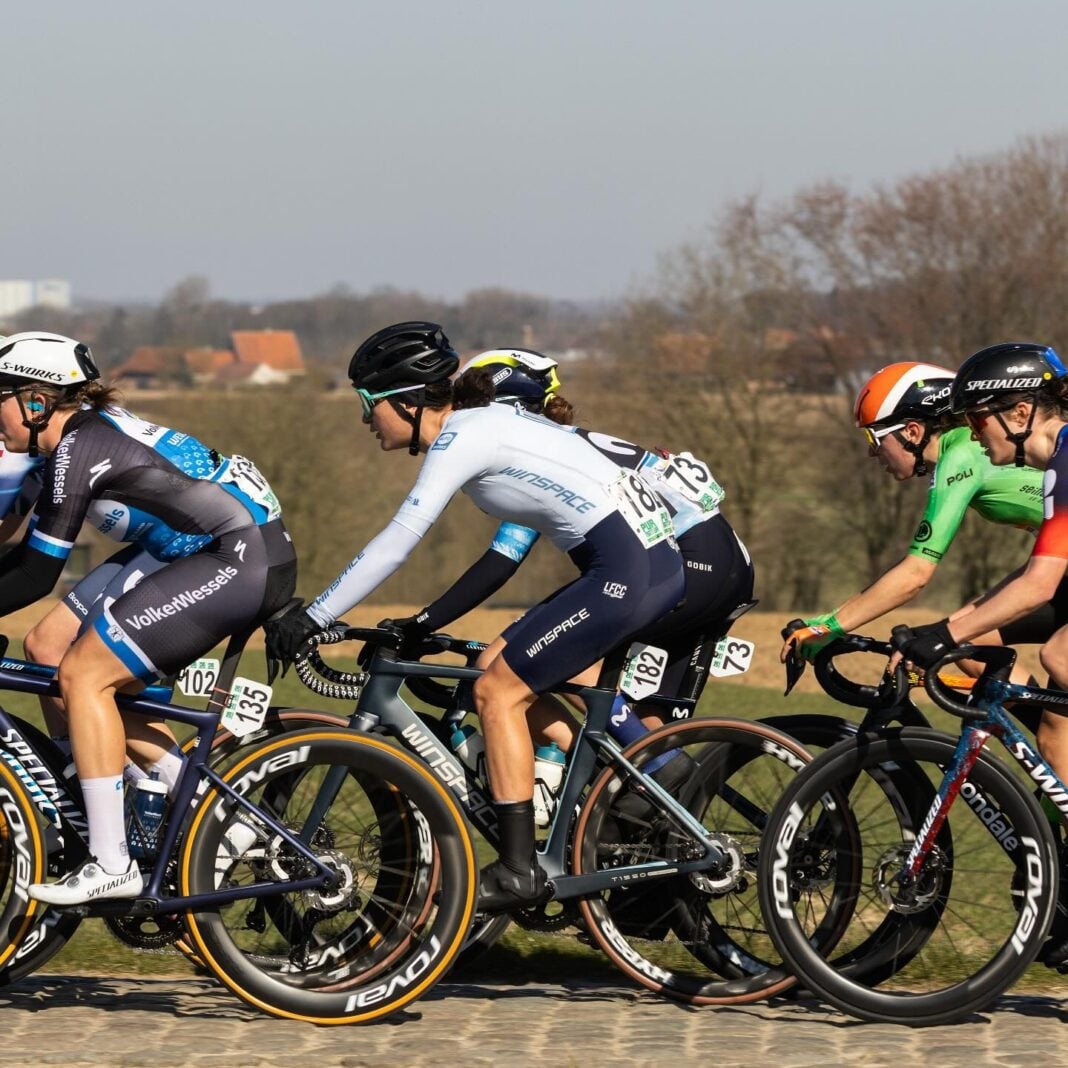
The Tour de France Femmes 2026 route contains flat, hilly, mountain and time trial stages, so riders rarely need to treat every day with the same intensity. Knowing which stages matter to their own objectives is a major part of managing the whole race.
Women’s recovery is increasingly individualised
Professional cycling historically built much of its performance knowledge around male athletes. Women’s teams have increasingly moved towards recovery and nutrition systems designed around the individual rider rather than simply scaling down approaches developed elsewhere.
Energy availability, iron status and menstrual health can all be relevant parts of long-term performance management, alongside the more obvious variables such as body size, sweat rate, sleep and workload.
That does not mean there is one separate recovery formula for women. It means the opposite.
Two riders completing the same stage may require different food, fluid and recovery strategies because their physiology and roles in the race are different.
Individualisation is increasingly one of the advantages available to well-resourced teams.
-
 Photo Credit: quentinphotographiebe
 -
 Photo Credit: Getty

The next morning completes one cycle and starts another
By breakfast, yesterday’s stage is already history.
Riders wake up, assess how their bodies feel and begin another carbohydrate-focused meal. Any injuries are checked again, wounds may be redressed and staff can identify problems that appeared overnight.
Some riders use light mobility or activation work before leaving for the start, but the priority is getting the body ready to race rather than adding meaningful training.
Breakfast is therefore doing two jobs at once. It continues the recovery process from yesterday and becomes the pre-race fuelling for today.
There is no obvious point where recovery stops and preparation begins.
During a stage race, they are part of the same cycle.
Nobody reaches Nice completely fresh
Professional Grand Tour recovery can look complicated because teams use chefs, massage, cooling equipment, nutrition plans and detailed monitoring.
The basic objective is much simpler: replace what can be replaced, repair what can be repaired and avoid wasting energy before the next stage begins.
The riders who recover best are not necessarily those using the most elaborate equipment. They are the ones whose teams combine food, hydration, sleep, treatment and intelligent racing well enough that yesterday’s effort interferes with today as little as possible.
Nobody reaches the final stage in Nice feeling like they did on the start line in Lausanne.
The goal is to arrive there less tired than the riders you still need to beat.

