
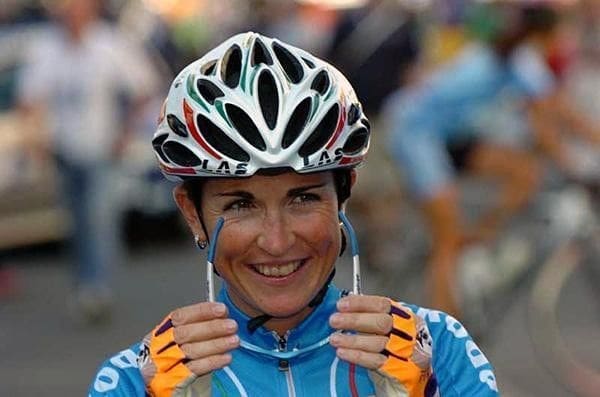
Fabiana Luperini was the purest kind of climbing racer: light, relentless, and utterly unembarrassed by the suffering her métier demanded. In an era when women’s stage racing was still fighting for space, she turned the Giro d’Italia Femminile into her own steep private kingdom. Day after day, on long Alpine pulls and sharp Tuscan ramps alike, she rode with the same cold efficiency. There was rarely any theatre in the way she won. She simply went uphill faster than everyone else.
For a generation of Italian cycling fans, Luperini became the reference point for mountain dominance. She won the Giro Donne five times, took three consecutive Tour de France Feminin victories in the 1990s, and built a palmarès that still keeps her near the summit of women’s cycling history. She mattered not just because she won, but because she did so with a style that made climbing look stripped down to its essentials: rhythm, pain tolerance, and the refusal to flinch when the road tilted upwards.
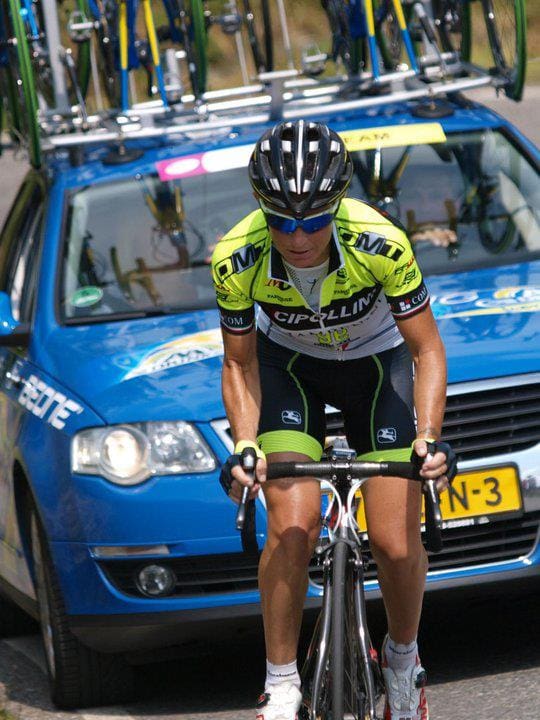
The climber who made the Giro her terrain
Luperini was born in Pontedera, in Tuscany, and the landscape around her offered the kind of training ground that rewards patience rather than brute force. The region is all rolling insistence and abrupt rises, the sort of terrain that teaches a rider how to pace effort before she ever sees a high mountain. That education suited her perfectly. On long stage-race climbs she did not dance on the pedals. She settled into a hard, measured cadence and made others respond to her speed rather than the other way around.
Her first Giro Donne overall victory came in 1995, and it set the tone for what followed. She won again in 1996, 1997, 1998 and 2008. The four straight wins in the 1990s were especially brutal in their logic. Stage races can be won in many ways, but Luperini often settled them where the road narrowed, the air thinned and the group broke apart into pre-determined truths. On those days, she was the strongest climber in the race, and there was little anyone could do once she had put a minute into the field on a mountain finish.
How she won
Luperini’s victories were not usually built on chaos. They came from control. She rode a steady tempo, conserved where others surged, and waited until the gradient did the damage. Her teams understood her profile and built around it, protecting her on flatter roads and positioning her before decisive climbs. Once the race reached altitude or a long final ascent, the arithmetic became simple. She could keep producing where rival legs began to sharpen and empty.
That made her especially effective in the Giro, where the course often twisted through hard, selective terrain and rewarded riders who could repeat high-intensity climbing day after day. This was not one-day opportunism. It was attrition, delivered with precision.
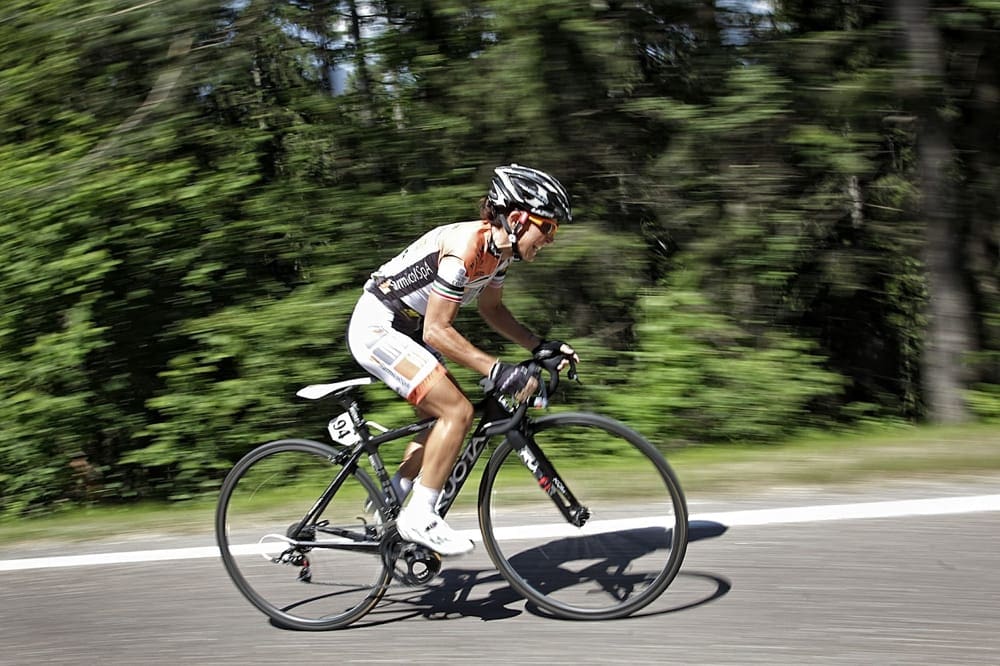
The palmarès that put her among the greats
Fabiana Luperini’s record stands out because it stretches beyond one race and one golden spell. She won the Tour de France Feminin in 1995, 1996 and 1997, a remarkable three-year run that established her as one of the defining stage racers of her era. She also claimed the Giro d’Italia Femminile five times and added further major victories across the European calendar.
Her career was built on repeated excellence rather than isolated peaks. That matters in women’s cycling history because it places her among the riders who gave the sport a competitive shape before the current professional era had fully arrived. She was part of a generation that raced hard on inconsistent calendars, with less certainty, less money and less structural support than today’s stars. Against that backdrop, the scale of her dominance is even more striking.
One of the most important things about Luperini is that she was not a specialist who accidentally won elsewhere. Her climbing strength translated into stage-race control, and her results reflected that. She was a general classification rider with a climber’s instincts and a racer’s stubbornness.
Key victories and results
- Giro d’Italia Femminile overall winner: 1995, 1996, 1997, 1998, 2008
- Tour de France Feminin overall winner: 1995, 1996, 1997
- Multiple stage wins and mountain-determined victories across the European women’s calendar
Racing style, character and psychology
Luperini’s reputation was shaped by the kind of racing she preferred. She liked hills because they did not lie. On a climb, form is exposed in a more honest way than on flat roads where drafting, timing and team organisation can blur the picture. She raced with an economy that could look almost severe from the roadside. There was little wasted movement, little visible panic. The face said as much as the legs: this is what I am here for.
That composure became part of her authority. Rivals knew what was coming, which may be one reason it felt so difficult to stop her when she was in top condition. She had the psychological advantage of certainty. A rider who believes the mountain belongs to her starts halfway up it already.
Italian cycling has long celebrated climbing, but Luperini gave women’s racing a version of that tradition that felt both classical and exacting. She was not a flamboyant descender or a desperate attacker from distance. She was a rider who turned the simplest truth into a weapon: the steepest road was her office.
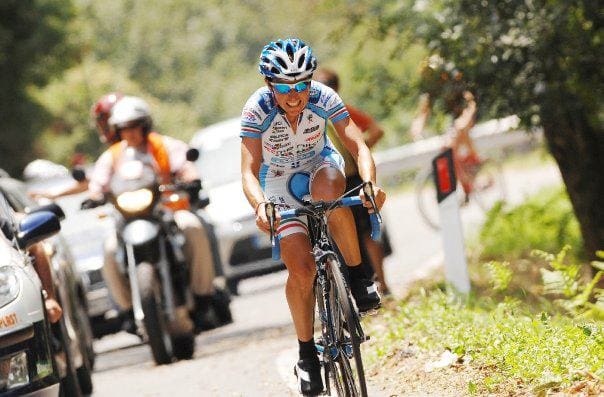
Teams, era and place in the sport
Her career unfolded across a changing period for the sport, when women’s racing was becoming more structured yet still lacked the depth and visibility of the men’s calendar. Luperini raced for several teams during her career and was a familiar presence in the major stage races of the 1990s and 2000s. In a time when equipment, support and media coverage were all evolving, her success helped define what a high-level women’s GC rider could look like.
She emerged from a particularly strong Italian tradition, but her results travelled beyond national borders. The Tour de France Feminin victories gave her a continental profile, while her repeated Giro wins tied her identity to the home roads, the Italian mountains and the rhythm of a race that always seemed to suit her temperament. For fans who want to understand the shape of women’s stage racing before the modern WorldTour era, Luperini is essential viewing.
What she is doing now
After retiring from professional racing, Luperini has remained connected to cycling, particularly in Italy, where former champions often carry real cultural weight. She has worked in roles close to the sport and has continued to be associated with cycling events and the wider community around the bike. Like many riders from her generation, she has shifted from being the one attacking on the climb to being part of the ecosystem that supports the next wave.
That post-career presence matters. Riders like Luperini help keep the sport’s memory alive, especially for younger fans who may arrive at women’s cycling through the current stars and calendars without always seeing the line back through the 1990s. She remains one of those figures whose palmarès still speaks clearly, even if the races around it have changed beyond recognition.
-
 Photo Credit: quentinphotographiebe
 -
 Photo Credit: Getty
Why Fabiana Luperini is worth remembering
Luperini is worth note because she represents a very high standard of climbing excellence at a formative moment for women’s road racing. She was not just successful. She was a repeated, unavoidable force in stage races where hills decided the outcome and where consistency mattered more than spectacle. Her five Giro victories and three Tour de France Feminin wins place her in any serious conversation about the great women stage racers of all time.
She also carries historical importance because her career sits in the gap between eras. Before the current depth, structure and global attention of elite women’s cycling, riders like Luperini established the benchmarks. They built the reference points. Her wins were hard-earned, often on routes that asked for patience and pain in equal measure. That is why she still reads as more than a record-holder. She is part of the sport’s architecture.
There are riders who dominate with personality. Luperini dominated with gravity. On the steepest roads, that was enough.
For a broader look at the riders and races that shaped the sport, see the women’s cycling history hub.

