
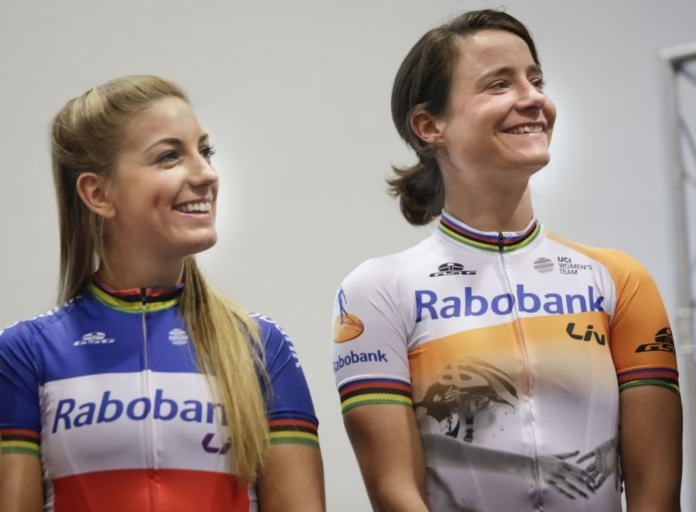
Rabo Liv existed in its best-known form for only five seasons, but its influence stretches across modern women’s cycling.
Between 2012 and 2016, the Dutch team brought Marianne Vos, Anna van der Breggen, Pauline Ferrand-Prévot, Annemiek van Vleuten, Kasia Niewiadoma and Lucinda Brand into the same structure. It won Olympic and world titles, dominated the Giro Rosa, collected major Classics and helped establish several riders who would define the following decade.
At its peak, Rabo Liv was not simply built around the greatest rider of its generation. It became a complete results machine capable of winning sprints, cobbled Classics, Ardennes races, stage races and championships.
The team was also an important bridge between eras. It emerged when elite women’s squads still operated with limited resources and uncertain sponsorship, but anticipated the deeper, more specialised super-teams that now dominate the Women’s WorldTour.
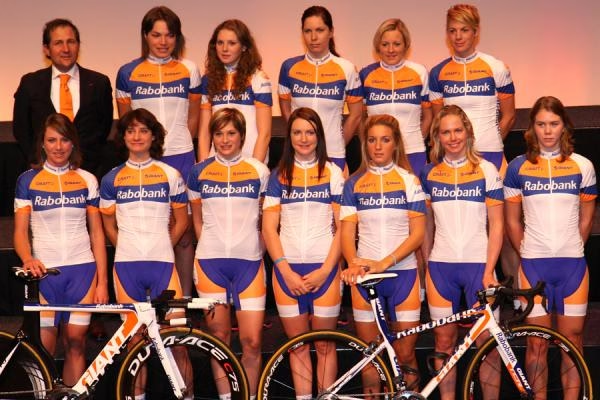
Rabo Liv team history at a glance
- Origins: DSB Bank and Nederland Bloeit structure
- Rabobank sponsorship began: 2012
- Best-known name: Rabo Liv Women Cycling Team
- Final Rabobank season: 2016
- Team base: Netherlands
- Leading rider: Marianne Vos
- Other major riders: Anna van der Breggen, Pauline Ferrand-Prévot, Annemiek van Vleuten, Kasia Niewiadoma and Lucinda Brand
- Defining season: 2014
- Major strengths: Classics, stage races, sprints and rider development
- Successor structure: WM3, WaowDeals, CCC-Liv and later Liv Racing
The team existed before Rabobank arrived
The Rabo Liv story did not begin with Rabobank.
Its roots can be traced to the DSB Bank team formed in 2005. The structure later raced as Nederland Bloeit and developed around Marianne Vos, who was already emerging as the defining talent of her generation.
Vos had won the elite road world title as a 19-year-old in 2006. She could sprint, climb and attack, while also winning at the highest level in cyclocross and on the track.
Building a team around her was an obvious sporting decision. Finding the long-term financial support to match that ambition was less straightforward.
Women’s professional cycling remained commercially fragile. Teams could disappear when a sponsor withdrew, contracts were often short and even the strongest riders operated without the security associated with leading men’s squads.
The Nederland Bloeit team was successful, but its future was uncertain.
Rabobank changed the scale of the project.
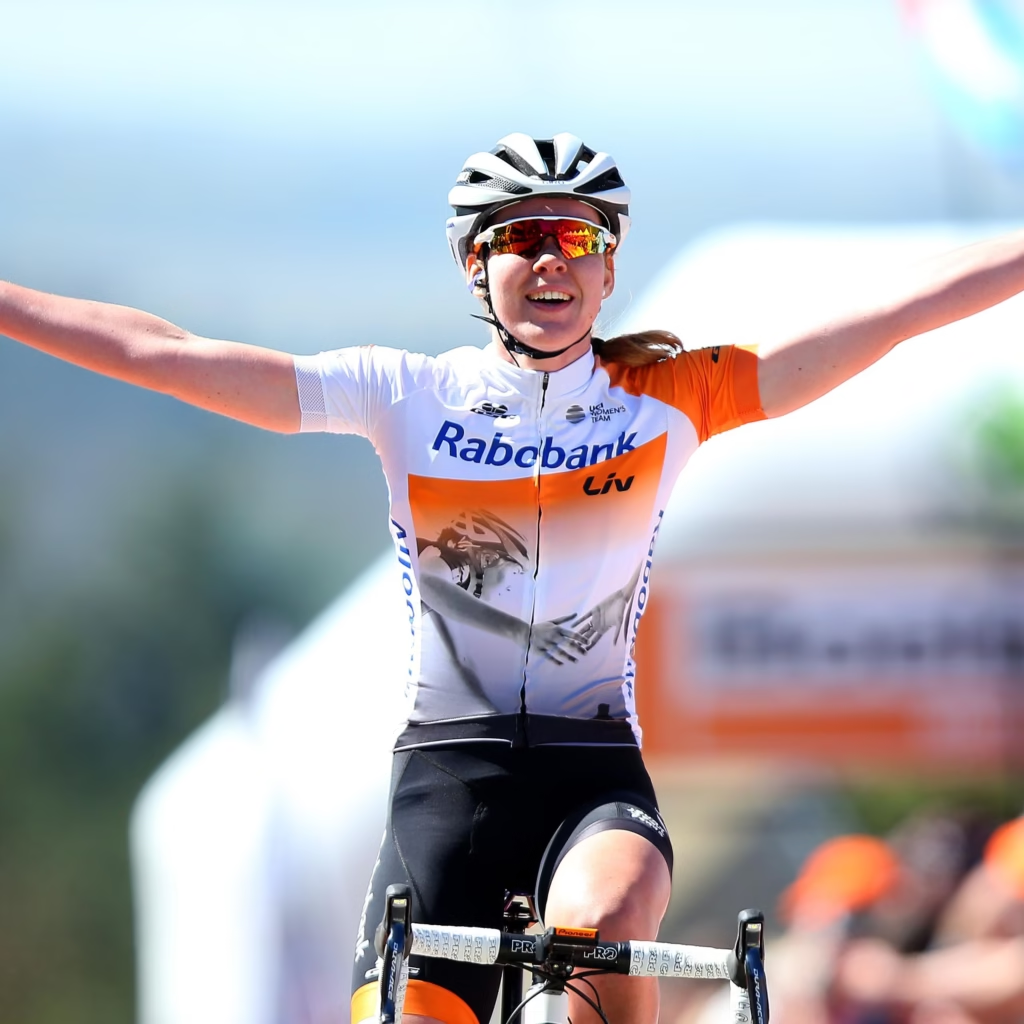 Photo Credit: Getty
Rabobank enters women’s cycling
Rabobank announced in September 2011 that it would take over the Nederland Bloeit team for the 2012 season.
The Dutch bank already had a deep presence in cycling. It sponsored a men’s professional team, a development programme, off-road riders and the Dutch cycling federation.
Adding an elite women’s squad brought Vos and her teammates into that wider system.
This was not a completely new team assembled from nothing. Rabobank preserved much of the existing structure and placed greater financial and organisational strength behind it.
The project offered immediate competitive credibility because Vos was already the world’s leading all-round rider. It also gave Rabobank an opportunity to support one of the Netherlands’ most prominent athletes ahead of the London Olympics.
The original squad included Vos, Van Vleuten, Ferrand-Prévot, Iris Slappendel, Liesbet De Vocht, Roxane Knetemann and Thalita de Jong.
There was experience, developing talent and a clear central leader.
The first season immediately justified the investment.
The perfect launch in 2012
Rabobank Women Cycling Team finished its first season as the leading team in the UCI world ranking.
Vos provided the headline results.
She won the Ronde van Drenthe, Trofeo Alfredo Binda and GP de Plouay, as well as the overall World Cup. She also dominated the Giro d’Italia Femminile, winning the general classification and five stages.
Her summer became even more significant in London.
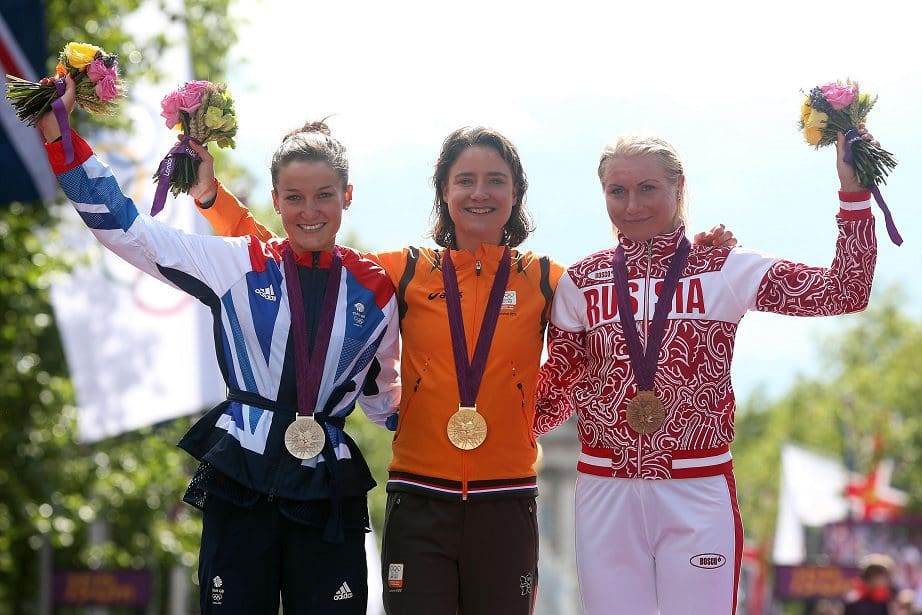
Vos won the Olympic road race after making the decisive breakaway and beating Lizzie Armitstead in the sprint on The Mall. It was one of the defining victories of her career and provided Dutch cycling with the Olympic success around which the Rabobank project had partly been built.
She then won the road world championship in Valkenburg.
The rainbow jersey was particularly meaningful. Vos had repeatedly finished second at the World Championships since taking her first elite title in 2006. Winning on home roads completed an extraordinary season and gave Rabobank both Olympic and world champions in its first year.
The team had arrived with the sport’s best rider and immediately converted that strength into the biggest results available. The scale and longevity of Vos’s career are explored in our profile of Marianne Vos as one of women’s cycling’s defining champions.
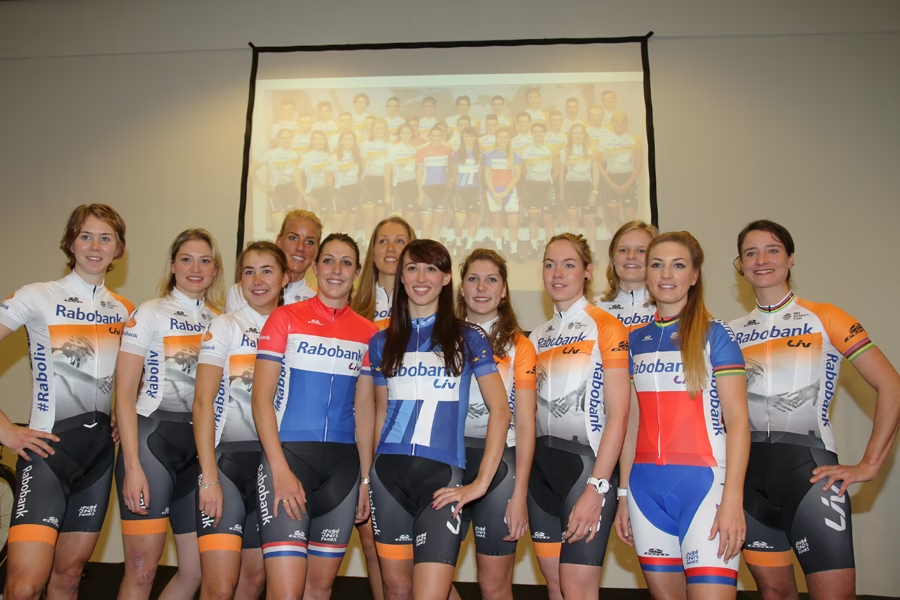
More than the Marianne Vos team
Rabo Liv was inevitably associated with Vos, but its importance came from becoming more than her personal support squad.
Van Vleuten was already an established winner when Rabobank arrived. She had won the Tour of Flanders and the World Cup in 2011 and provided the team with another aggressive option in one-day races.
Ferrand-Prévot represented a different type of potential. She was young, technically gifted and capable across road racing, cyclocross and mountain biking.
Brand developed into a versatile Classics rider, stage winner and national champion. De Jong became another multi-discipline prospect.
The team’s strength allowed these riders to learn inside a winning environment.
They were expected to support Vos, but they were also given opportunities when the route, race situation or calendar created the right opening.
That distinction mattered.
A conventional team built around one dominant leader can become weaker whenever that rider is absent. Rabo Liv gradually created enough depth to remain successful even when Vos could not win.
Liv becomes part of the identity
Liv, the women-focused cycling brand owned by Giant, became an increasingly visible partner within the team.
The relationship extended beyond simply supplying bicycles. Liv presented itself as a brand designed specifically around women riders and used the partnership to strengthen its place within elite competition.
The team raced under variations of the Rabobank-Liv and Rabo Liv name, with the Liv branding becoming central to its identity from 2013 onwards.
That partnership was particularly well matched to the wider purpose of the squad.
Rabobank provided the Dutch institutional backing. Liv supplied equipment and a commercial identity explicitly connected to women’s cycling. Vos provided global sporting recognition.
Together, they created one of the most recognisable teams in the peloton.
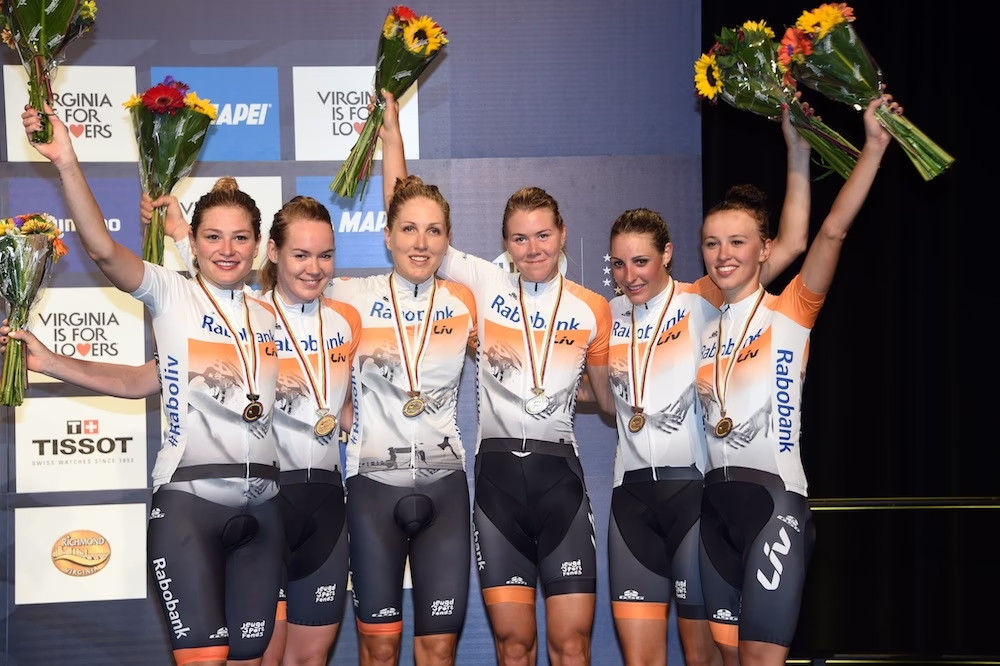
Vos dominates the 2013 Classics
Vos began 2013 wearing the rainbow jersey and delivered another remarkable spring.
She won the Tour of Flanders for the first time, attacking with Ellen van Dijk before beating her in the sprint. She also won La Flèche Wallonne Féminine and continued her extraordinary record across the major one-day races.
Her versatility made the team difficult to race against.
Rivals could not rely on dropping Vos on short climbs, beating her tactically in a breakaway or waiting for a sprint. She could win through almost every scenario.
The team could also place riders such as Van Vleuten and Ferrand-Prévot into attacks. Opponents faced a choice between chasing dangerous moves and preserving energy for Vos.
Vos completed the season by successfully defending her road world title in Florence.
The result reinforced her position at the top of the sport, but the team was already building towards something even more formidable.
Vos’s 2013 victory also placed Rabo Liv within the wider development of the Flemish Monument, covered in our history of the Women’s Tour of Flanders.
Anna van der Breggen completes the super-team
Anna van der Breggen joined Rabo Liv for 2014 after impressing with Sengers Ladies Cycling Team.
She had already demonstrated her climbing strength, time-trial ability and tactical intelligence. Her arrival gave the team another rider capable of winning major stage races and hilly Classics.
The roster now included Vos, Van der Breggen, Van Vleuten, Ferrand-Prévot, Brand and De Jong.
Kasia Niewiadoma also joined the senior setup during this period, initially as one of the most promising young climbers in European cycling.
Looking back, the collection of talent is remarkable.
Vos and Van der Breggen would become Olympic road champions. Vos, Van der Breggen, Ferrand-Prévot and Van Vleuten would all win elite road world titles during their careers. Niewiadoma would become a Tour de France Femmes winner and one of the strongest stage racers of her generation.
Rabo Liv did not merely sign riders who were already proven champions. It assembled future champions before all of them had reached their peak.
Van der Breggen’s subsequent Olympic, world championship, Giro and Classics record is covered in our full profile of one of the defining champions of modern women’s cycling.
The extraordinary 2014 season
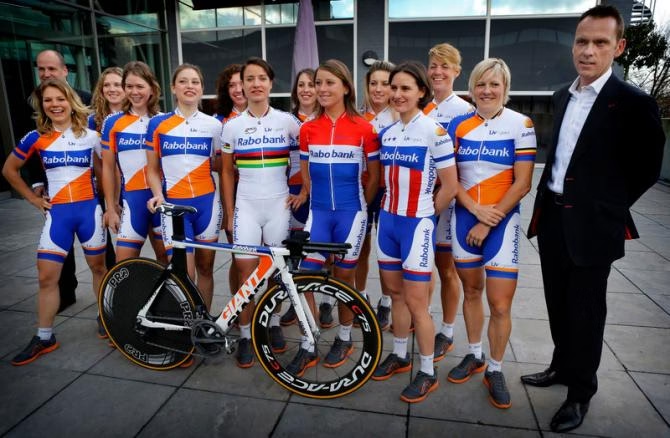
The 2014 Rabo Liv team has a strong claim to being one of the greatest women’s cycling squads ever assembled.
It recorded 47 road victories across the season.
The results came from different riders and across almost every type of race, but the Giro Rosa provided the clearest demonstration of its superiority.
Vos won the overall classification. Ferrand-Prévot finished second. Van der Breggen completed an all-Rabo Liv podium in third.
The team also won six stages.
It was not merely a victory built around one protected leader. Rabo Liv controlled the race with several riders capable of winning and occupied every step of the final podium.
Vos added the inaugural La Course by Le Tour de France on the Champs-Élysées, beating Kirsten Wild in the sprint. The event carried symbolic importance as women’s cycling returned to the Tour de France platform through a one-day race in Paris.
Ferrand-Prévot won La Flèche Wallonne and later became road world champion in Ponferrada while representing France.
Brand won the GP de Plouay. Van der Breggen continued collecting results that confirmed she was developing into a future Grand Tour and championship leader.
The team could win regardless of whether a race ended in a sprint, a steep uphill finish, a reduced group or a multi-day general classification contest.
That was what separated Rabo Liv from a team merely enjoying one exceptional rider.
The team’s remarkable concentration of talent also earned it a place in our assessment of the greatest women’s cycling team rosters.
A roster that created tactical problems everywhere
Rabo Liv’s dominance was based on overlapping strengths.
Vos was the best finisher and most adaptable leader. Van der Breggen offered climbing, time trialling and endurance. Van Vleuten could attack from distance and force rivals to chase. Ferrand-Prévot brought explosive climbing and off-road technical strength. Brand could win from breaks, reduced sprints and difficult Classics.
Niewiadoma added another aggressive climber to the structure.
The team did not always need to dictate one fixed plan.
It could place a dangerous rider into an early move and force opponents to work. If the break returned, Vos remained ready for the finish. If Vos was marked, another leader could attack.
This is now a familiar approach among the strongest Women’s WorldTour teams. Rabo Liv used it before the financial and tactical depth of modern super-teams became normal.
Its roster created a permanent numbers problem.
Chasing one Rabo Liv rider often meant preparing the race for another.
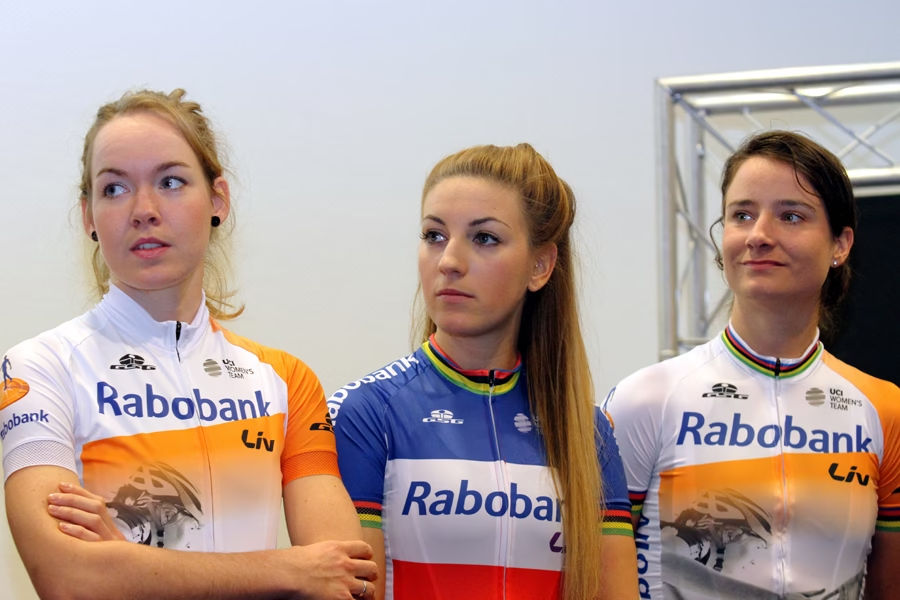
The costs of constant winning
The team’s success also created pressure, particularly around Vos.
Vos had raced across road, cyclocross and track for much of her career. Her ability to win throughout the year became part of her reputation, but it also produced an enormous physical and mental load.
After struggling during 2015, she stepped away from competition because of fatigue and overtraining.
Her absence changed the team.
For years, Rabo Liv had relied on the certainty that Vos could turn almost any race into a winning opportunity. It now had to operate without her for much of the season.
The response demonstrated how far the project had developed.
Van der Breggen takes control in 2015
Van der Breggen became the team’s central road leader during Vos’s absence.
She won La Flèche Wallonne Féminine, beginning a run of seven consecutive victories in the race. She also won the Giro Rosa and La Course, establishing herself as one of the world’s most complete stage racers.
Her success represented more than a replacement leader collecting results.
It showed that Rabo Liv had developed another rider capable of becoming the best in the world.
Van der Breggen could win uphill finishes, time trials and long stage races. She was tactically patient, exceptionally consistent and rarely needed a race to unfold in only one way.
Niewiadoma continued developing, while Brand and the team’s other riders ensured the squad remained competitive across the calendar.
Rabo Liv had lost its defining rider temporarily and still produced one of the strongest seasons of any team.
That was the clearest evidence that it had become a system rather than simply a collection of talent around Vos.

Vos returns and the team enters its final Rabobank season
Vos returned to racing in 2016.
Her comeback was managed more carefully than the relentless schedule that had preceded her absence. She quickly began winning again, including the Pajot Hills Classic early in the season.
The team remained one of the strongest in the new UCI Women’s WorldTour.
Van der Breggen won La Flèche Wallonne again. Niewiadoma collected important stage-race and one-day victories, confirming that she was ready to become a leader in her own right.
The Dutch riders also carried their form into the Rio Olympic Games.
Van der Breggen won the road race after Van Vleuten suffered a frightening crash while leading on the final descent. Vos played an important tactical role for the Netherlands before Van der Breggen secured gold from the chasing group.
The medal did not officially belong to Rabo Liv because riders competed for their national teams, but it reflected the concentration of talent and experience within the squad.
The Rio crash became one of the defining moments within Van Vleuten’s remarkable reinvention. Her development from attacking one-day rider into a dominant stage racer is explored in our full Annemiek van Vleuten career profile.
The team remained successful. Its financial future was less secure.
Why did Rabobank end its sponsorship?
Rabobank announced that it would withdraw from professional sports sponsorship after the 2016 season.
The decision was broader than the women’s team. It reflected a change in the bank’s sponsorship strategy rather than a lack of results from Rabo Liv.
Rabobank had already ended its title sponsorship of the men’s WorldTour team after 2012, although it continued supporting other parts of Dutch cycling for several more years.
The women’s squad now faced the same basic uncertainty that had existed before Rabobank arrived.
It possessed one of the most successful rosters in cycling, but its future still depended on finding commercial backing.
That contrast captured the condition of women’s cycling at the time.
Sporting excellence did not automatically provide financial security. Even a team containing Vos, Van der Breggen, Ferrand-Prévot, Niewiadoma and Brand could reach the end of a sponsorship cycle without a comparable replacement ready to take over.
The super-team begins to break apart
The end of Rabobank’s sponsorship coincided with the departure of several leading riders.
Van der Breggen moved to Boels-Dolmans for 2017. Niewiadoma joined WM3 initially but later moved to Canyon-SRAM. Ferrand-Prévot increasingly focused on mountain biking and later followed a different career path.
The remaining structure continued as WM3 Pro Cycling in 2017, with Vos still at its centre.
It subsequently became WaowDeals Pro Cycling and then CCC-Liv. Liv remained involved, allowing a line of continuity to survive even after Rabobank had disappeared from the jersey.
The team could still win major races, but the unique concentration of talent from the Rabo Liv years was gone.
The wider sport was also changing.
Boels-Dolmans had become the leading force, with Van der Breggen, Lizzie Deignan, Chantal van den Broek-Blaak and later Annemiek van Vleuten among its leaders. New teams entered with larger budgets and increasingly professional structures.
Rabo Liv had helped establish the model others were now refining.
Was Rabo Liv the greatest women’s cycling team ever?
There is no definitive answer because different eras are difficult to compare.
Later teams accumulated longer periods of dominance, benefited from larger calendars and operated in a fully established Women’s WorldTour. Boels-Dolmans and SD Worx produced sustained success with a succession of world-class leaders.
However, the 2014 Rabo Liv roster remains almost unmatched for the future achievements of its riders.
A team containing Vos, Van der Breggen, Van Vleuten, Ferrand-Prévot, Brand and Niewiadoma brought together champions across road, cyclocross and mountain biking.
Several were still developing. The full scale of their careers only became clear later.
Rabo Liv’s greatest claim is therefore not based solely on the number of victories it collected. It comes from the concentration of talent, the range of races it could control and the number of future leaders who passed through the same environment.
Why Rabo Liv mattered beyond its results
Rabo Liv helped show what was possible when a major sponsor backed an elite women’s programme seriously.
The team provided a recognisable identity, high-level equipment and a stable structure around some of the sport’s best riders.
Its success also brought visibility.
Vos’s Olympic victory, world titles and La Course win reached audiences beyond regular followers of women’s cycling. The orange, blue and white Rabobank colours became closely associated with the strongest rider in the sport.
La Course itself helped connect that generation with the eventual return of a full women’s Tour. That journey is covered in our complete history of the Tour de France Femmes and its earlier versions.
The team was not responsible for the later professionalisation of women’s cycling on its own. Salaries, race coverage and team standards remained inconsistent throughout its existence.
It nevertheless provided an important example.
Investment produced results. Results created stars. Those stars brought attention to the wider sport.
The development record may be its greatest legacy
Vos was already a champion when Rabobank arrived.
The more revealing measure of the team is what happened to the riders developing around her.
Van der Breggen became an Olympic champion, road world champion and multiple Giro winner. Van Vleuten developed into one of the greatest stage racers in history. Ferrand-Prévot became a world champion across several disciplines. Niewiadoma became a leading Classics and Grand Tour rider. Brand built an elite career on both road and cyclocross.
Not every one of those achievements came in Rabo Liv colours.
That is precisely why the team’s development role matters. It brought exceptional riders together early in their careers and exposed them to a culture in which winning the biggest races was normal.
They learned how Vos prepared, positioned herself and made decisions under pressure. They also competed with one another for opportunities, creating a standard that demanded constant improvement.
The team produced immediate victories while preparing the champions who would shape its rivals after they left.
Niewiadoma’s later development into a Tour de France Femmes winner and established stage-race leader is reflected in our Kasia Niewiadoma 2026 season guide.
Ferrand-Prévot followed an even more unusual path, moving across disciplines before returning to full-time road racing and winning the 2025 Tour de France Femmes. Her return and ambitions were examined in our Pauline Ferrand-Prévot Tour de France Femmes profile.
Marianne Vos remained the thread connecting every era
Vos was the foundation of the project before Rabobank, its central figure during the Rabo Liv years and the leader who remained when the sponsorship ended.
Her relationship with the structure continued through WM3, WaowDeals and CCC-Liv before she moved to the newly established Jumbo-Visma women’s team in 2021.
That departure effectively closed the longest line of continuity from the original DSB Bank and Nederland Bloeit years.
Vos’s career cannot be reduced to one team. She won before Rabobank arrived and continued winning after she left the Liv structure.
However, Rabo Liv provided the platform for many of her most important years.
She won Olympic gold, world titles, the Giro, the Tour of Flanders, La Flèche Wallonne and La Course while representing the project.
The team’s identity and Vos’s dominance became almost impossible to separate.
Rabo Liv’s place in women’s cycling history
Rabo Liv arrived as a Dutch project built around Marianne Vos and became a team capable of controlling the entire international calendar.
It combined established excellence with exceptional recruitment. Vos provided immediate victories, but the additions of Van der Breggen, Ferrand-Prévot, Niewiadoma and others made the squad progressively harder to contain.
The 2014 Giro Rosa podium sweep remains its defining image.
Vos stood first, Ferrand-Prévot second and Van der Breggen third. Three teammates occupied the full podium of the most important stage race in women’s cycling.
That result captured the team at its peak: one superstar still winning, two future champions beside her and a structure powerful enough to turn individual talent into collective domination.
Rabobank’s withdrawal ended the name after 2016, but it did not erase the project’s influence.
Its riders went on to define Olympic Games, World Championships, Classics and Grand Tours. Its multi-leader approach became standard among modern super-teams. Its success demonstrated the return available when elite women riders received meaningful backing.
Rabo Liv lasted for a relatively short period.
Its results and its riders shaped women’s cycling for far longer.

