
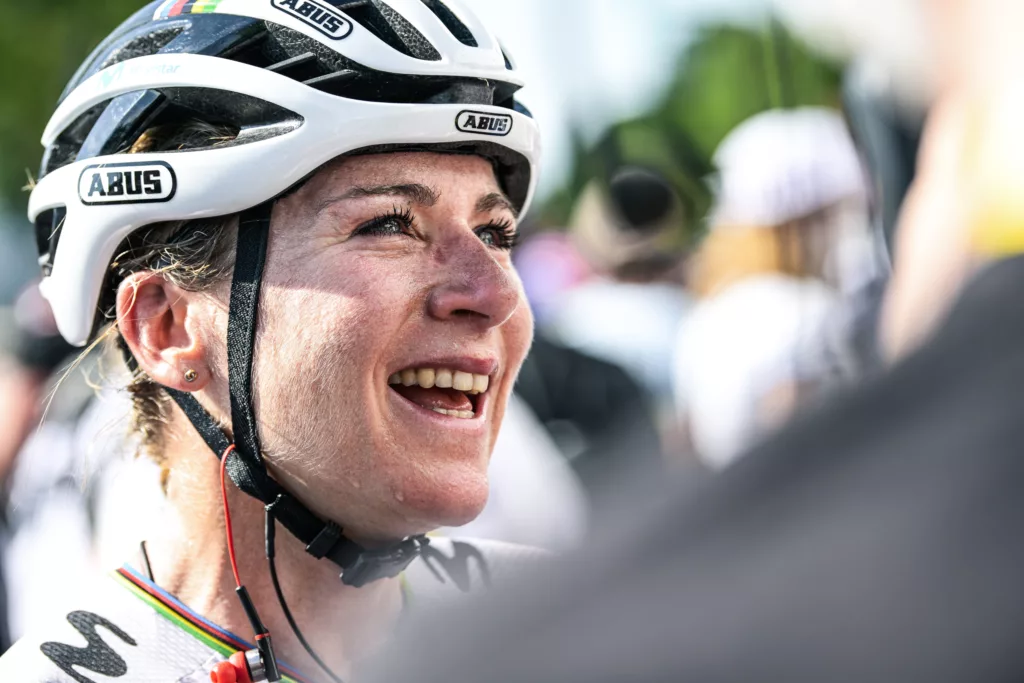
Annemiek van Vleuten is one of the few riders whose career can be divided clearly into distinct versions of herself. There was the early attacker, powerful and aggressive but not yet fully formed. There was the rider whose name became tied to one of the hardest images in Olympic cycling history after the crash in Rio. Then there was the transformed champion, the rider who came back stronger, climbed better, raced longer, and eventually turned what should have been the back half of a career into the most dominant phase of it.
That is what makes Van Vleuten so compelling as a historical figure. Her career was not the simple story of a prodigy who arrived early, ruled for a decade and faded gradually. It was a story of reinvention. She kept changing, kept finding more, and kept refusing the idea that a rider’s ceiling should be fixed by the age at which she first reached the top level.
By the time she retired at the end of 2023, Van Vleuten had won the Tour de France Femmes, the Giro Donne, La Vuelta Femenina, Liège-Bastogne-Liège Femmes, Strade Bianche Donne, the Olympic time trial, road world titles and enough stage races to make her one of the defining riders of modern women’s cycling. But the most interesting part of her story is not simply the scale of the palmarès. It is how much of it came late.
She did not just stay good for a long time. She became better than almost everyone else when most athletes are supposed to be holding on to what they once were. Van Vleuten turned her thirties into the years that mattered most, and in doing so changed how women’s cycling thought about longevity, development and peak performance.
A rider who arrived differently
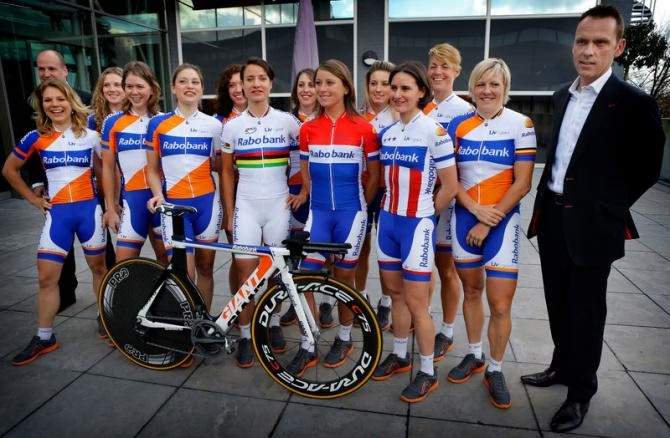
Van Vleuten was not shaped like the classic cycling prodigy. Born in 1982 in Vleuten, in the Netherlands, she came into elite cycling later than many rivals and did not have the immediate aura of an inevitable superstar. She studied veterinary science, moved through the Dutch domestic system, and gradually emerged as a rider with a very obvious engine and a willingness to race aggressively.
That slower beginning matters because it framed the rest of the career. Van Vleuten was never simply handed the identity of a generational champion. She had to build it. Her early years in the peloton showed clear strengths – time trial ability, endurance, the capacity to attack from distance – but they did not yet suggest the complete stage-race ruler she would become later.
She was a serious rider early, but not yet a finished one. That unfinished quality became one of the most important features of her whole story. Van Vleuten never seemed to accept that the current version of herself was the final version.
 Photo Credit: Tim de Waele
The first great phase: engine, aggression and time trials
The first major phase of Van Vleuten’s career was built on power and aggression. She became known as a rider willing to attack from range, to stretch races through sustained effort rather than wait for a neat finish. Her time trialling gave her an obvious platform, and her climbing improved steadily enough that she could start shaping bigger races rather than simply surviving them.
There were already important results in this period. She won the Dutch national road title in 2007, took major time trial results, and began building the kind of palmarès that marked her as more than a useful all-rounder. Her 2011 victory at the Tour of Flanders for women was especially important because it showed how well her aggression could translate into one-day racing at the highest level.
Even then, though, she still felt like a rider with more to become. The raw materials were obvious. The complete hierarchy of women’s cycling had not yet bent fully around her. Riders such as Marianne Vos, Anna van der Breggen and later others still occupied much of the sport’s centre. Van Vleuten was already elite. She was not yet the dominant reference point.
That early phase also revealed a trait that would become central later: she was willing to race in a way that carried risk. Van Vleuten did not hide in races. She was often visible before it was comfortable to be visible. That made her exciting, but it also meant her career would carry harder edges than that of a more conservative rider.
 Photo Credit: ProCyclingUK
Rio changed the story, but not in the way people expected
For many people outside cycling, Van Vleuten first became unforgettable during the women’s road race at the Rio Olympics in 2016. She attacked, built a clear lead and looked certain to win gold before crashing heavily on the descent. The images were brutal and immediate. For a while, they threatened to become the defining image of her career.
That would have been deeply unfair, but sport often works like that. One image can trap a whole career inside its own drama. Van Vleuten could easily have been remembered primarily as the rider who almost won Olympic gold and instead suffered one of the sport’s most shocking crashes.
What makes her career remarkable is that she refused to let that be the final reading. Rio did not end her, and it did not turn her into a softer, more cautious rider. If anything, it became the point after which her determination hardened even further. She came back, won the Olympic time trial silver shortly after, and gradually built the most powerful phase of her entire career.
That is where the reinvention begins to matter most. Many riders return from crashes. Fewer return and then spend the next several years becoming better than before. Van Vleuten did not only recover from Rio. She transformed the meaning of it.
Reinvention was physical, tactical and mental
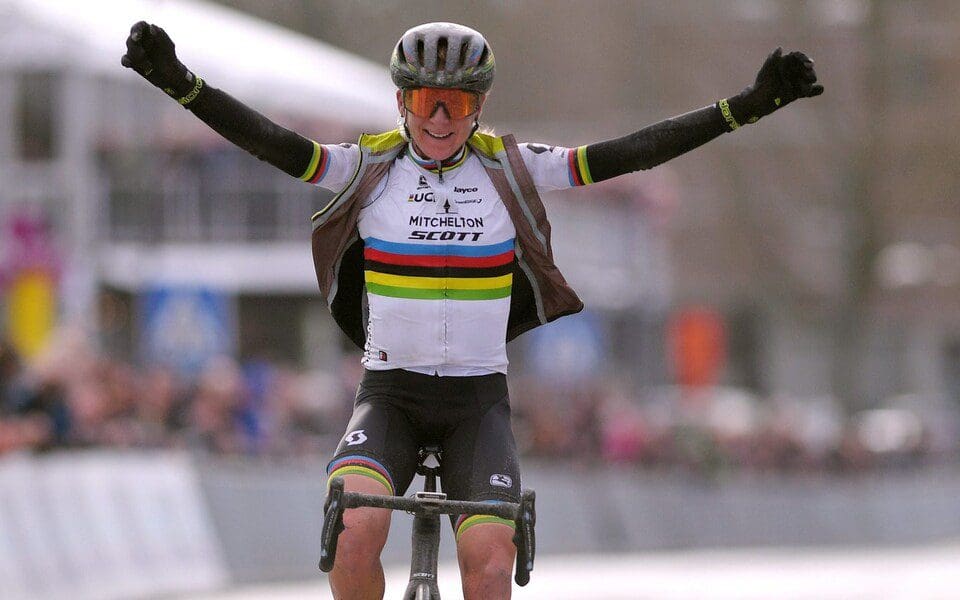
Calling Van Vleuten’s later career a reinvention is not just a dramatic phrase. It describes something real. She became a more complete climber, a more disciplined stage racer and, in some ways, a more patient rider. The old aggression remained, but it was now supported by a deeper sense of where and how to use it.
Her physical development was central. Van Vleuten always had a strong engine, but the rider who dominated the late 2010s and early 2020s looked more efficient uphill, more resilient across stage races, and more capable of repeating hard efforts across a full week than the earlier version. She was no longer only dangerous because she could attack. She was dangerous because she could control races too.
Tactically, she also evolved. The younger Van Vleuten could sometimes look almost impatient, as though the race had to be forced open immediately if she was to make sense of it. The later version still attacked brutally, but with more sense of sequence. She knew when a race needed long pressure and when it needed a shorter, sharper move.
Mentality was the thread through all of it. Van Vleuten had always been hard on herself and relentlessly analytical. In the late-dominant phase of her career, that became a weapon. She treated improvement as a continuous obligation. There was little sense that she believed she had already reached her finished form. That mindset is one reason she aged so unusually well as an athlete.
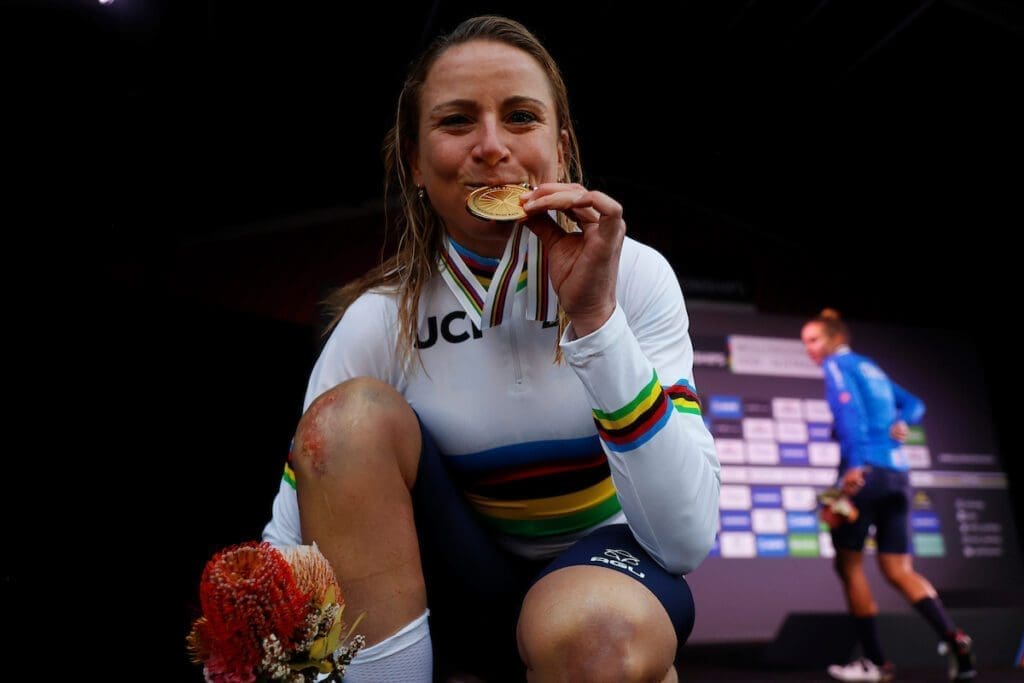 Photo Credit: UCI
The late-career peak was one of the greatest in the sport
Van Vleuten’s late-career peak was not merely impressive for an older rider. It was one of the greatest peaks women’s cycling has seen. She won the Giro Rosa repeatedly, took the world time trial title, won Liège-Bastogne-Liège Femmes twice, dominated major one-day races and became the rider most feared whenever the road started to climb in earnest.
Her 2019 season was particularly significant. She won Strade Bianche, Liège-Bastogne-Liège, the Giro Rosa, the Dutch time trial title, the world time trial championship and a string of other major results. More than the quantity, it was the manner of the victories that stood out. Van Vleuten often won by riding away from elite rivals with a level of force that made the race look suddenly simple.
That ability to make the complex look straightforward became one of her signatures. The best stage-race riders do that. They take a week full of tactical possibilities and reduce it to a single truth: they are stronger. Van Vleuten did it through climbing, time trialling and sheer accumulation of fatigue. Rivals could survive near her for a while. They often could not survive her for a whole race.
She was no longer just a major rider in women’s cycling. She had become one of the era’s decisive forces, the reference point around whom teams had to plan their whole races.
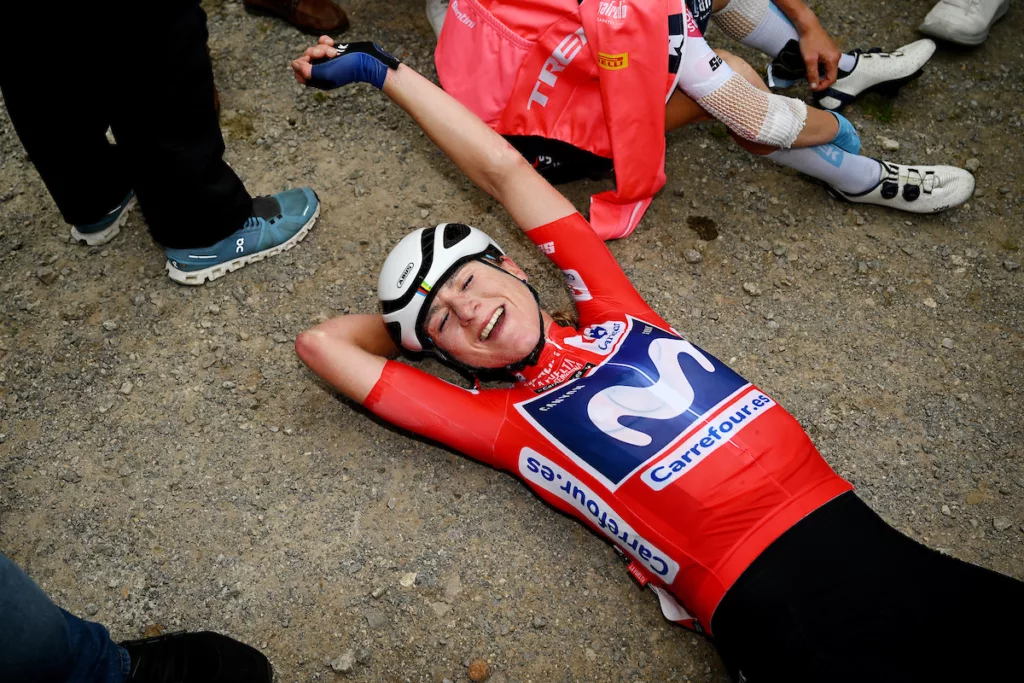 Photo Credit: Getty
Stage racing became her truest expression
Although Van Vleuten won major one-day races, stage racing became the purest expression of her greatness. It suited everything she had become: physically prepared, tactically experienced, mentally relentless and strong enough to impose herself over several different race situations.
The Giro Donne was perhaps the clearest example. It asks for climbing, endurance, recovery and the ability to handle repeated pressure. Van Vleuten won it again and again because she could dominate in more than one way. She could take time in a time trial, destroy the field on a summit finish, or simply wear everyone down until the hierarchy became obvious.
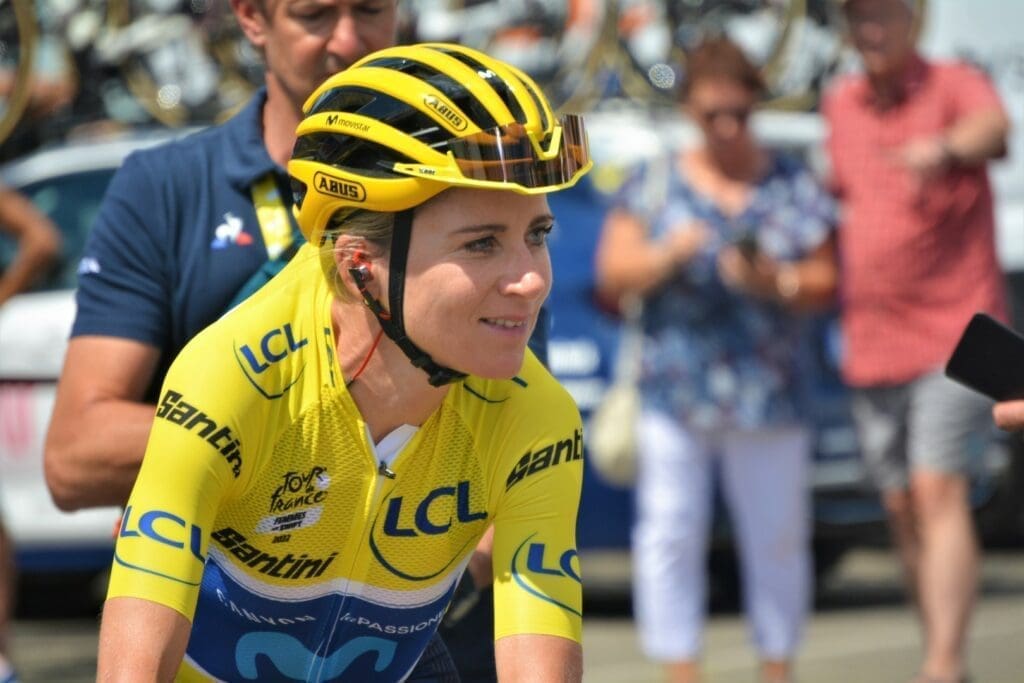
Her 2022 season pushed that stage-race dominance into a different historical category. She won the Giro Donne, then won the inaugural modern Tour de France Femmes, then added the road race and time trial titles at the World Championships. It was the kind of year that would define most riders’ entire careers. For Van Vleuten, it became part of a wider late-career body of work.
That same season also showed how broad her stage-race power had become. She could handle the pressure of carrying leadership, absorb the expectations of being favourite, and still find another level when the race reached the mountains. By then, she had become the rider others were measured against whenever a week-long race tilted upwards.
The 2023 triple sealed the scale of it
If anyone still needed proof that Van Vleuten’s late-career dominance belonged among the most remarkable feats in the sport, 2023 provided it. She won the Giro Donne, La Vuelta Femenina and Tour de France Femmes in the same season, completing a modern Grand Tour triple in women’s cycling.
That achievement mattered on several levels. It was historically important because the modern women’s calendar had finally reached a point where three major stage races could sit together as a coherent test of greatness. It was personally important because Van Vleuten did it in the final season of her career. And it was symbolically important because it confirmed the essential truth of her story: the later years were not a graceful epilogue. They were the main event.
By then, her dominance no longer needed defending. It had become part of the structure of the sport. Van Vleuten did not retire as a great rider who had once peaked brilliantly. She retired as the reigning standard for modern stage-race excellence.
 Photo Credit: LaPresse
Aggression never left her racing
One of the reasons Van Vleuten remained so compelling even during her most dominant years is that she never became a merely defensive champion. Some great stage racers eventually start winning by minimising risk and controlling margins. Van Vleuten could do that, but she never seemed fully satisfied by it.
The attacking instinct stayed with her. It just became more efficient. She still wanted to break races open. She still preferred clarity to hesitation. If she believed she was strongest, she usually raced in a way that made rivals answer the question directly.
That is part of why she was so watchable. Van Vleuten’s dominance did not always feel sterile. It could be overwhelming, certainly, but it was usually active rather than passive. She won by doing things, not merely by waiting for others to fail.
That quality also linked the older and younger versions of herself. The early attacker never disappeared. She simply learned how to use that instinct more effectively.
Movistar gave her the final stage, but she built the rider herself
Van Vleuten’s final great years came in Movistar colours, and that partnership mattered. The team gave her a structure, a platform and a place at the centre of major stage-race plans. In the modern women’s peloton, that kind of support is increasingly important.
Yet her story never feels like one of simple team creation. Movistar helped stage the late-career masterpiece, but Van Vleuten built the rider who stood at its centre. The obsession with training, the constant search for improvement, the willingness to analyse herself unsparingly – those things were hers long before the most decorated part of the palmarès arrived.
That distinction matters historically. Some riders look inseparable from one system. Van Vleuten looked inseparable from her own drive. Teams mattered, coaches mattered, support mattered, but the central force was still her refusal to stop searching for a better version of herself.
She changed what late careers could look like
Perhaps Van Vleuten’s deepest legacy is the way she changed the conversation around age and development in women’s cycling. She was not simply good for an older rider. She was the best rider in the world deep into her thirties, in a sport that is often quick to assume the most important development happens much earlier.
That matters for riders who came after her. Van Vleuten showed that physical peak, tactical maturity and mental resilience can align later than people expect. She made it harder to treat athletes in their thirties as if they are merely managing decline. In her case, those were the years when everything finally lined up.
She also widened the historical imagination of the sport. Women’s cycling has had great champions across many eras, from Jeannie Longo and Leontien van Moorsel to Marianne Vos and Anna van der Breggen. Van Vleuten belongs in that line, but with a very particular twist. Her greatness was not only about how much she won. It was about when she won it.
How Annemiek van Vleuten should be remembered
Annemiek van Vleuten should be remembered as one of the most relentless improvers elite cycling has seen. Not the neatest prodigy, not the easiest champion, not the smoothest career arc. Instead, she was the rider who kept building, kept adjusting and kept finding more long after others might have assumed the main work was done.
She should also be remembered as one of the sport’s great late dominators. The rider who crashed in Rio could easily have become a tragic what-if. Instead, she became the rider who won almost everything that mattered afterwards. The champion who was strong before 30 became almost unbeatable after it.
And she should be remembered as a rider who never lost the instinct to race forward. Even at her most dominant, Van Vleuten still seemed driven by the next improvement, the next attack, the next harder answer. That is what made her career more than a list of titles. It made it a study in reinvention, persistence and the rare kind of athlete who seems able to outgrow her own limits.
In the end, that may be the simplest and best reading of her career. Annemiek van Vleuten did not just win late. She turned late into the point of the whole story.

