
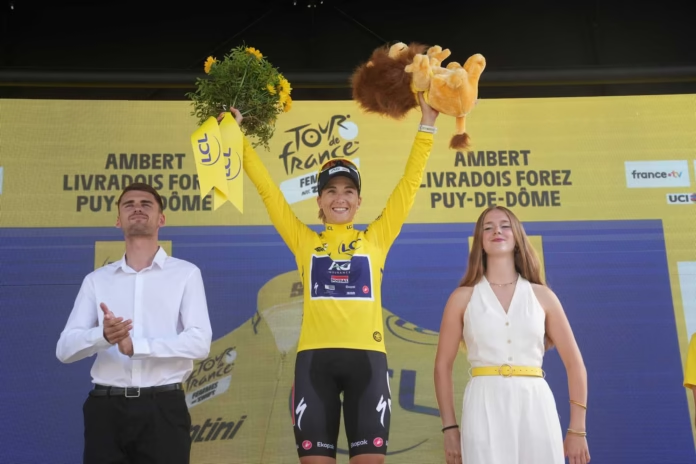
The history of the Tour de France Femmes is not a straight line. It is a story of beginnings, disappearances, legal arguments, underfunded survival, campaigning, compromise and, eventually, rebirth. The modern Tour de France Femmes avec Zwift may have arrived in 2022, but women had been trying to claim a proper place alongside the Tour de France for far longer than that.
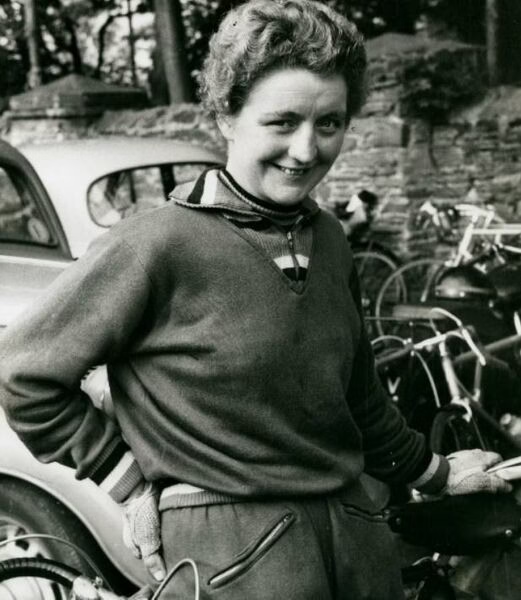
The first important point is that the one-off precursor did not come in the 1960s. It came earlier, in 1955, with a five-stage race in Normandy won by Millie Robinson from the Isle of Man. It was not organised by the Tour de France itself, but it remains the first meaningful attempt to create a women’s version of the race. After that, the idea disappeared for almost 30 years.
The first official women’s Tour de France came in 1984, when the Société du Tour de France launched the Tour de France Féminin. Marianne Martin won the first edition, with the women racing shortened versions of the men’s stages and using the same finish towns. That ASO-linked version lasted until 1989, before the women’s race was dropped from the Tour structure.
What followed was not nothing. The 1990s and 2000s produced a complicated chain of successor races: the Tour of the EEC Women, the Tour Cycliste Féminin, and later the Grande Boucle Féminine Internationale. These races were not the same as the official Tour de France, but they carried the idea through a period when the sport lacked the institutional will to support a true women’s Tour.
For more context on the modern race, our Tour de France Femmes hub brings together previews, route guides, stage reports and race updates, while our women’s cycling history hub covers the riders, teams and races that shaped the sport before the modern WorldTour era.
The 1955 race that began the story
The first women’s Tour de France-style race was held in 1955. It is easy to lose this chapter because it sits outside the modern Tour structure, and because it was never followed up the next year. But it matters because it showed the ambition existed long before the sport was ready to support it.
The race was organised by Jean Leulliot and took place in Normandy. It was a multi-day event, not a one-day exhibition, and it was won by Millie Robinson. Around 40 riders took part, and the race proved that women could contest a stage race on French roads long before the later arguments about whether such a thing was viable.
Its disappearance after one edition says just as much as its existence. The issue was not whether women could race. They had already done that. The problem was structural. There was no stable backing, no long-term commitment from the Tour organisation, and no media or commercial ecosystem willing to treat women’s stage racing as a serious recurring product.
That pattern would repeat for decades. The riders were there. The appetite was there. The missing element was the institution willing to keep the race alive.
Why there was no continuous women’s Tour after 1955
The gap between 1955 and 1984 is one of the most revealing parts of the story. In men’s cycling, the Tour de France had already become the sport’s central annual event. For women, there was no equivalent platform.
Women’s racing existed, and strong riders emerged across Europe and beyond, but the sport remained structurally marginalised. Race distances were limited, media coverage was light, and the calendar did not give women the same stage-race ladder that men used to build careers and reputations.
That meant the 1955 race became a historical marker rather than the start of a tradition. It proved the concept, then vanished. By the time the Tour organisation returned to the idea in the 1980s, women’s cycling had lost almost three decades in which a Tour-linked stage race could have grown.
The original ASO-linked Tour de France Féminin
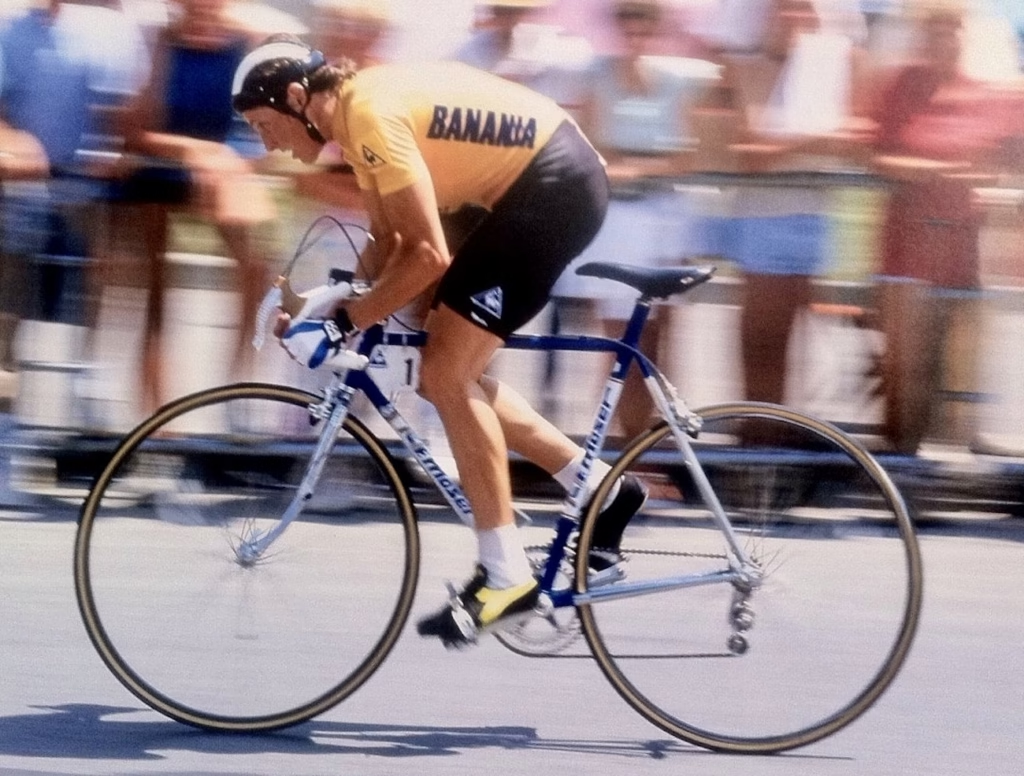
The Tour de France Féminin launched in 1984 and remains one of the most important moments in the history of women’s cycling. For the first time, the women’s peloton had an official race attached to the Tour de France structure.
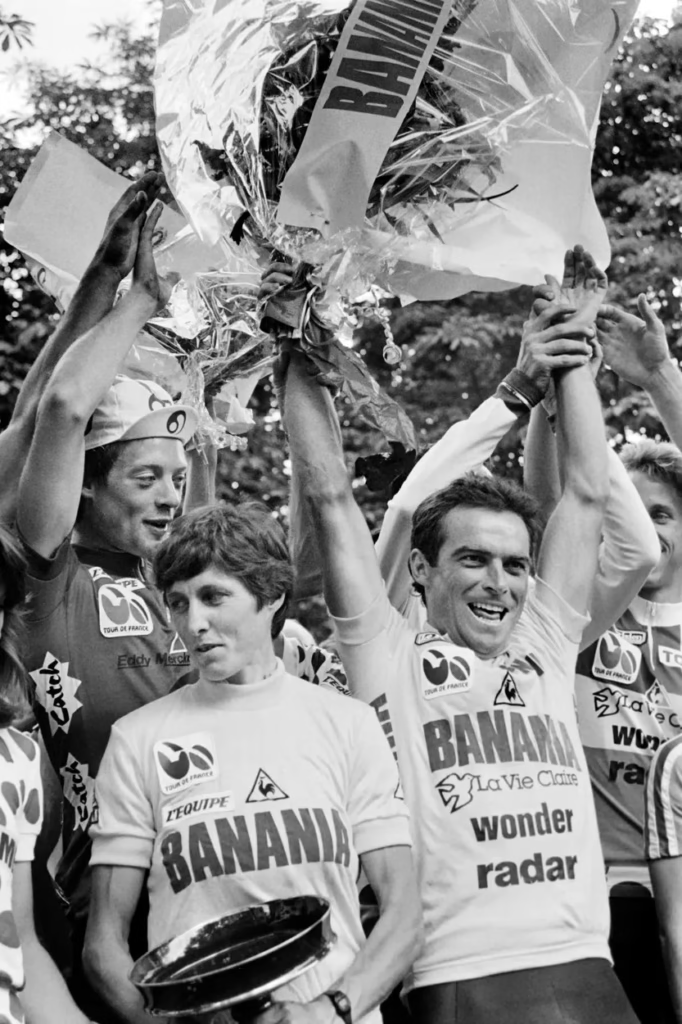
The 1984 race was held alongside the men’s Tour. The women rode shortened versions of the same stages and finished in the same towns, often before the men. It was a full multi-stage race, not a symbolic side event, and it gave the riders a route, a yellow jersey, mountain stages and the visibility of the Tour’s travelling infrastructure. Marianne Martin won the first edition, joining Laurent Fignon on the Paris podium in one of the most striking images of that era.
The winners list from this original Tour de France Féminin era was short but significant:
| Year | Winner |
|---|---|
| 1984 | Marianne Martin |
| 1985 | Maria Canins |
| 1986 | Maria Canins |
| 1987 | Jeannie Longo |
| 1988 | Jeannie Longo |
| 1989 | Jeannie Longo |
Martin’s 1984 win gave the race an American pioneer. Maria Canins then brought Italian dominance, winning in 1985 and 1986. Jeannie Longo, already becoming one of the defining riders in the history of women’s cycling, won the final three editions from 1987 to 1989.
Why the 1980s race mattered
The 1984-1989 Tour de France Féminin mattered because it was the closest women’s cycling came, for decades, to having a true Tour de France. It was not perfect. The women’s stages were shorter, the coverage was limited, and the race was still treated by many as an appendage to the men’s event rather than an equal pillar of the sport.
But it had something later races often lacked: proximity to the Tour itself. The riders were on the Tour roads, in the Tour towns, under the Tour’s public gaze. That symbolic value was enormous. A women’s yellow jersey being fought for during the Tour de France changed what was imaginable.
It also produced serious racing. These were not novelty events. The riders climbed, suffered, defended leads and built reputations. The race had a sporting legitimacy that later generations would point back to whenever organisers claimed a women’s Tour was logistically impossible or commercially unrealistic.
The uncomfortable question is why it was allowed to disappear. The answer sits in the same old mixture of limited media attention, sponsor pressure, organisational cost and lack of institutional commitment. The race had proven that women could do it. It had not persuaded the organisers to keep funding and promoting it.
The end of the ASO-era women’s Tour
The women’s race was removed from the Tour de France structure after 1989. That decision created the rupture at the heart of the race’s history.
From the organiser’s perspective, the women’s race was considered difficult to sustain economically. From the riders’ perspective, it was a devastating loss. The sport had briefly had an official women’s Tour de France, and then it was taken away.
This is why the history of the Tour de France Femmes cannot simply jump from 1989 to 2022. The space in between was filled by races trying to preserve the idea, even when they lacked the name, money and institutional protection of the Tour de France.
The Tour of the EEC Women: the first remnant
After the end of the official Tour de France Féminin, the race continued in altered form as the Tour of the EEC Women. This was one of the first remnants of the abandoned Tour structure. It ran outside the direct Tour de France identity and no longer carried the same status as the 1980s race.
The change in name and format mattered. It showed how quickly the women’s race could be separated from the Tour brand once the main organisation stepped away. The riders still raced, and the event still offered a significant stage-race challenge, but the connection to the Tour de France had weakened.
The winners in this phase included Catherine Marsal, Leontien van Moorsel and other leading riders of the period. But the wider issue was identity. Without the Tour de France name and machinery, the race became easier to overlook. It was still important, but it no longer had the same public power.

The Tour Cycliste Féminin and the 1990s survival years
In 1992, Pierre Boué created the Tour Cycliste Féminin. It was not an ASO race and it was not officially the women’s Tour de France, but it became the most important French women’s stage race of the 1990s. It began at nine stages and later grew into a larger event, giving the peloton a demanding race at a time when there was no official Tour equivalent.
The winners list from the Tour Cycliste Féminin era shows how strong the race became:
| Year | Winner |
|---|---|
| 1992 | Leontien van Moorsel |
| 1993 | Leontien van Moorsel |
| 1994 | Leontien van Moorsel |
| 1995 | Fabiana Luperini |
| 1996 | Fabiana Luperini |
| 1997 | Fabiana Luperini |
Leontien van Moorsel and Fabiana Luperini gave the race real prestige. Van Moorsel’s dominance in the early 1990s and Luperini’s hat-trick from 1995 to 1997 meant the event was being won by riders who belonged at the top of the sport.
But even at its strongest, the race faced the same problems that had undermined women’s stage racing for years: limited sponsorship, small budgets, inconsistent media attention and the difficulty of building a national route without the backing enjoyed by the men’s Tour.
Why the name became a battleground
The Tour Cycliste Féminin eventually ran into a problem that says everything about women’s cycling’s place in the sport’s hierarchy. It was widely understood as a kind of women’s Tour, but it did not have the right to use the Tour de France name.
The Société du Tour de France, later part of ASO, objected to the way the race’s identity overlapped with the men’s Tour brand. That pushed the organisers towards a new name: Grande Boucle Féminine Internationale.
The change mattered because it exposed the contradiction. The women’s peloton was being denied a stable Tour de France, while independent organisers were also constrained in how closely they could associate their races with the Tour name. The sport wanted the prestige of women racing in France, but would not consistently provide the structure needed to make it flourish.
The Grande Boucle Féminine Internationale
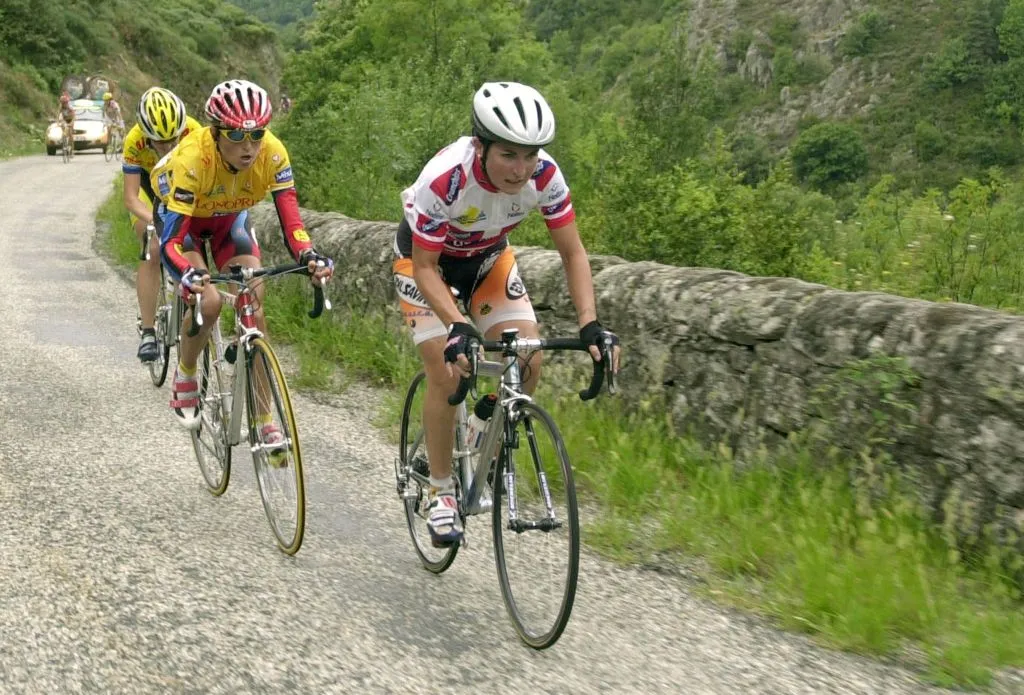
From 1998, the race became the Grande Boucle Féminine Internationale. The name avoided the Tour de France trademark issue, but it also made the event feel one step removed from the race it was trying, in spirit, to replace.
At its best, the Grande Boucle was a serious race. It was long, difficult and won by major names. Edita Pučinskaitė won in 1998, Diana Žiliūtė in 1999, Joane Somarriba three times in the early 2000s, and later Nicole Cooke and Emma Pooley added British success.
The winners list shows the race’s sporting weight:
| Year | Winner |
|---|---|
| 1998 | Edita Pučinskaitė |
| 1999 | Diana Žiliūtė |
| 2000 | Joane Somarriba |
| 2001 | Joane Somarriba |
| 2002 | Zinaida Stahurskaia |
| 2003 | Joane Somarriba |
| 2004 | Race not held |
| 2005 | Priska Doppmann |
| 2006 | Nicole Cooke |
| 2007 | Nicole Cooke |
| 2008 | Christiane Soeder |
| 2009 | Emma Pooley |
The names are strong. The infrastructure was not. That is the story of the Grande Boucle. It had champions worthy of a grand stage, but never the stability to become a true women’s Tour de France.
For more on two riders who helped define that era of women’s racing, our features on Nicole Cooke and Emma Pooley place their Grande Boucle successes in wider career context.
The decline of the Grande Boucle
The Grande Boucle began to shrink. Earlier editions could run across many stages, but later versions became smaller, shorter and more geographically limited. The 2004 edition was not held, and by the end the race had lost much of its previous scale.
The final edition in 2009 was won by Emma Pooley. By then, the event was a shadow of what a women’s Tour could have been. It still mattered, especially because there were so few comparable platforms, but it had been worn down by the very problems that had defined the previous half-century: money, visibility, organisation and lack of long-term institutional backing.
The end of the Grande Boucle did not mean the end of women’s stage racing in France. But it did mean the end of the most direct surviving line from the post-1989 attempt to keep a French women’s Grand Tour alive.
Tour de l’Aude and Route de France: the other French stage-race pillars
A complete history also needs to include the races that carried women’s stage racing in France when the Tour-linked identity was absent or collapsing.
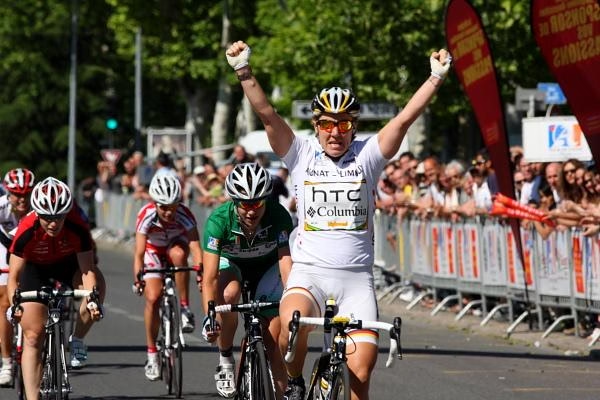
The Tour de l’Aude Cycliste Féminin was one of the most important women’s stage races in the world for many years. It was not the Tour de France Femmes, but it offered a level of competition and difficulty that made it a major target. Its loss in 2010 was another blow to the calendar.
The Route de France Féminine also helped fill the gap. Again, it was not the official Tour, but it gave riders another French stage-race objective before it too disappeared, ending after 2016.
These races matter because they challenge the idea that there was no audience or no sporting basis for women’s stage racing. The problem was never a lack of riders. The problem was that the races were repeatedly left to survive without the commercial protection and broadcast weight needed to make them durable.
The long absence of an official women’s Tour de France
Between 1989 and 2022, there was no official women’s Tour de France stage race. That 33-year gap is the central injustice of the story.
During that period, women’s cycling produced extraordinary champions: Jeannie Longo, Leontien van Moorsel, Fabiana Luperini, Joane Somarriba, Nicole Cooke, Judith Arndt, Marianne Vos, Emma Pooley and many more. They won world titles, Olympic medals, Classics and stage races. What they lacked was the consistent platform of a Tour de France that the men’s peloton had always used as its defining annual stage.
This is why the modern Tour de France Femmes carries so much emotional weight. It is not just a new race. It is the return of something that should never have been allowed to disappear.
La Course by Le Tour de France: progress and compromise
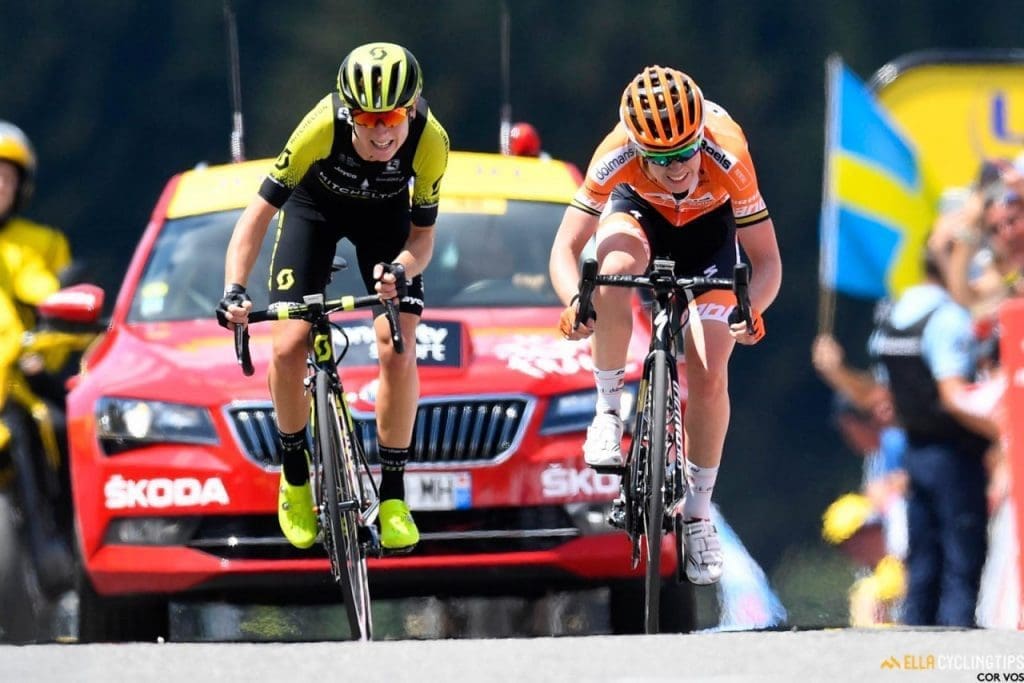
In 2014, ASO launched La Course by Le Tour de France. It was created after sustained campaigning for a women’s Tour de France, most visibly through Le Tour Entier, led by Kathryn Bertine, Marianne Vos, Emma Pooley and Chrissie Wellington. Their petition drew huge support and forced the issue back into public view.
La Course began as a one-day race on the Champs-Élysées, held before the final stage of the men’s Tour. Marianne Vos won the inaugural edition in 2014. Over the following years it moved through several formats and locations, including mountain-linked editions, but it never became the full stage race that many riders wanted.
The winners list reflects how high the level was:
| Year | Winner |
|---|---|
| 2014 | Marianne Vos |
| 2015 | Anna van der Breggen |
| 2016 | Chloe Hosking |
| 2017 | Annemiek van Vleuten |
| 2018 | Annemiek van Vleuten |
| 2019 | Marianne Vos |
| 2020 | Lizzie Deignan |
| 2021 | Demi Vollering |
La Course was both important and insufficient. It brought women’s racing back under the Tour de France umbrella, gave the peloton a prime platform, and created memorable winners. But it also became a symbol of compromise. A one-day race, however prestigious, could not replace the missing stage race.
Why La Course was not enough
La Course helped create visibility, but it also sharpened the argument for more. Every successful edition proved that women’s racing could attract attention. Every limited format showed that ASO was still holding back from a full Tour de France Femmes.
The 2017 edition, linked to the Col d’Izoard and a later pursuit-style event in Marseille, was particularly revealing. It showed ambition, but also awkwardness. The format was experimental rather than settled, as if women’s racing still had to justify its existence through novelty rather than simply being given a proper stage race.
By 2021, the pressure had become impossible to ignore. Women’s cycling was growing quickly. The Women’s WorldTour had more depth. Major teams were becoming stronger. Broadcast coverage was improving. The idea that a women’s Tour de France was logistically or commercially unrealistic was becoming harder to defend.
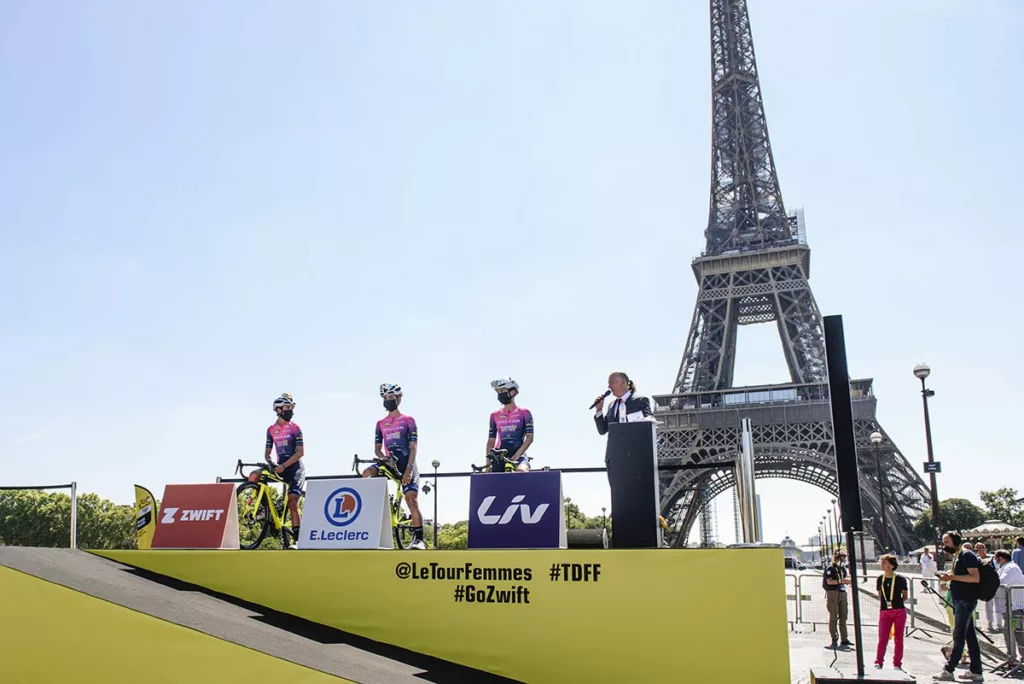 Photo Credit: Twila Muzzi
The 2022 rebirth of the Tour de France Femmes
The Tour de France Femmes avec Zwift launched in 2022, beginning on the Champs-Élysées on the same day the men’s Tour finished and ending eight stages later on La Super Planche des Belles Filles. Annemiek van Vleuten won the overall title after transforming the race in the mountains.
That first modern edition mattered because it felt like a real stage race from the start. It had sprint stages, punchy terrain, gravel sectors, mountain stages, live coverage, the yellow jersey and the Tour de France name. It was not a token add-on. It was recognisably the beginning of a proper modern Tour.
Van Vleuten’s victory also gave the race a fitting first modern champion. She had been one of the defining riders of her generation and brought both authority and symbolism to the yellow jersey. The race immediately looked like something the sport had needed for years.
2023: the Tourmalet raises the standard
The 2023 edition began in Clermont-Ferrand and finished in Pau, with the Col du Tourmalet as the defining mountain. Demi Vollering won the overall title, using the race’s biggest climbing test to establish herself as the strongest rider.
This edition was important because it showed the Tour de France Femmes was not a one-year novelty. The route raised the difficulty, the crowds remained strong, and the Tourmalet gave the race one of the most recognisable climbs in Tour history.
Vollering’s win also marked a shift from Van Vleuten’s era towards a new hierarchy. The Tour was already becoming the place where the sport’s biggest stage-race questions were settled.

2024: Rotterdam, Alpe d’Huez and four seconds
The 2024 Tour de France Femmes started outside France for the first time in its modern form, with a Grand Départ in Rotterdam. It also produced the closest and most dramatic overall finish yet, as Kasia Niewiadoma won the race by just four seconds over Demi Vollering after the final stage to Alpe d’Huez.
That final stage gave the race an instant classic. Vollering won on Alpe d’Huez, but Niewiadoma fought through the climb to save yellow by the narrowest of margins. It was the kind of finish that major races need: emotionally clear, tactically complex and easy for new fans to understand.
The 2024 edition also proved the race could use the sport’s most famous climbs without being overwhelmed by them. Alpe d’Huez did not just lend the Tour de France Femmes prestige. The women’s race created its own Alpe d’Huez story.
2025: Pauline Ferrand-Prévot and a French breakthrough
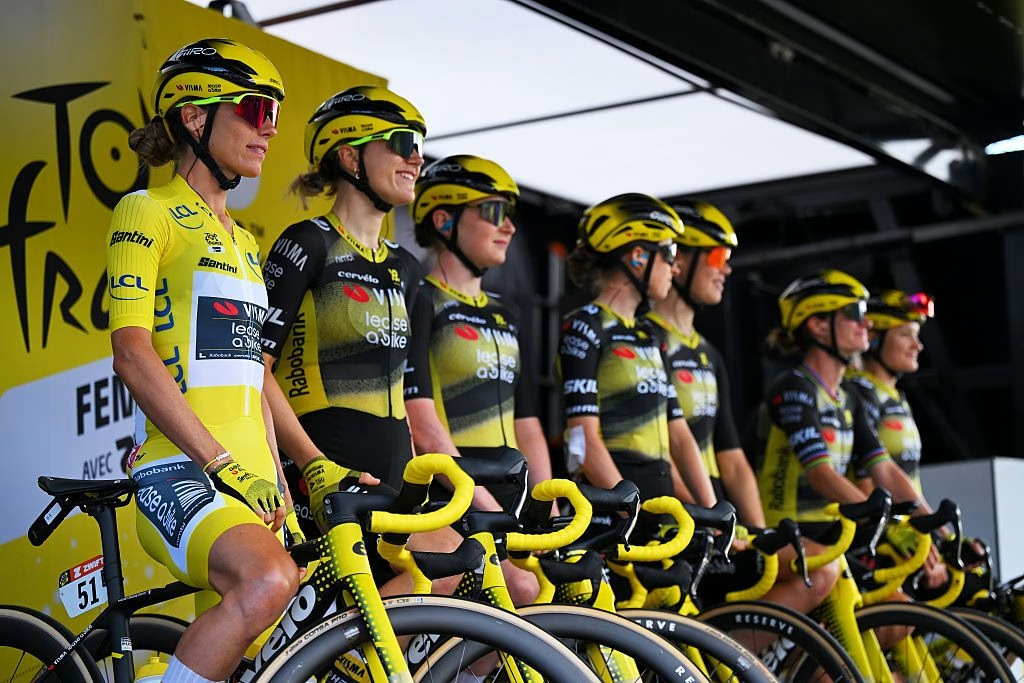
The 2025 edition brought another major milestone when Pauline Ferrand-Prévot became the first French winner of the modern Tour de France Femmes. She took control in the mountains and sealed overall victory with back-to-back mountain stage wins, ending the race in Châtel.
Ferrand-Prévot’s win mattered because of who she is and what the race represents. A French winner in the yellow jersey gave the modern Tour a powerful home storyline, especially after decades in which French women had been denied a consistent Tour platform.
The 2025 edition also expanded the modern race to nine stages, showing that the event was still growing. It was no longer simply proving it could exist. It was beginning to establish its own rhythm, records and mythology.
2026: the fifth modern edition and another step forward
The 2026 Tour de France Femmes is the fifth edition of the modern race. It will run from 1st to 9th August, starting in Switzerland with a Lausanne loop before stage 2 from Aigle to Geneva. It will be the second modern Grand Départ outside France after Rotterdam in 2024.
The route has nine stages, split into three flat stages, three hilly stages, two mountain stages and one individual time trial. The race will pass through Switzerland and France, with the official route highlighting the Jura, Massif Central and Alps as the three mountain ranges on the parcours. The total distance is listed at 1,175km, a record for the modern Tour de France Femmes.
Our Tour de France Femmes 2026 route guide looks at how the Swiss start and French mountain stages shape the race, while the Tour de France Femmes 2026 start list will track the confirmed riders as teams are announced.
That matters because the race is still expanding carefully. It is not yet a three-week Tour, but it is becoming longer, harder and more distinct. The women’s Tour is no longer just a restoration project. It is now building its own modern history.
The winners of the modern Tour de France Femmes
The modern winners list already gives the race a strong identity:
| Year | Winner |
|---|---|
| 2022 | Annemiek van Vleuten |
| 2023 | Demi Vollering |
| 2024 | Kasia Niewiadoma |
| 2025 | Pauline Ferrand-Prévot |
Each winner has added something different. Van Vleuten gave the reborn race authority. Vollering confirmed its status as the key stage-race test. Niewiadoma gave it a finish for the ages. Ferrand-Prévot gave France a home champion.
That is how race history forms. Not just through continuity, but through moments that can be retold.
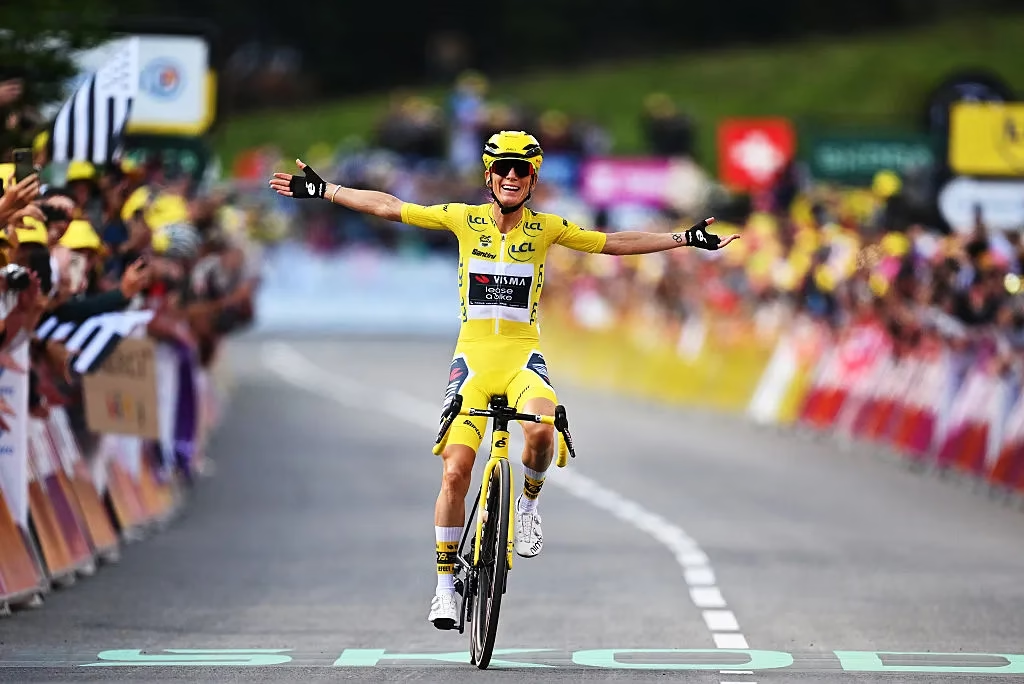 Photo Credit: Getty
Why the modern race is not just a revival
It is tempting to describe the Tour de France Femmes simply as the revival of the women’s Tour de France, but that undersells what has happened.
The modern race is linked to the past, but it is not a copy of the 1984-1989 race. It has its own place in the Women’s WorldTour, its own route choices, its own broadcast strategy and its own commercial structure. It exists in a very different women’s peloton, with deeper teams, stronger lead-outs, more specialist climbers, better equipment and far greater visibility.
The connection to history is still essential. Without 1955, the 1980s Tour, the Tour Cycliste Féminin, the Grande Boucle and La Course, the modern race has no proper context. But the Tour de France Femmes is now doing something new: creating a stable, annual, ASO-backed women’s stage race with the Tour name and global reach.
That combination had been missing for far too long.
What a complete history really shows
A complete history of the Tour de France Femmes shows that the race has never been a simple case of women finally being given something new. It is more accurate to say that women’s cycling repeatedly built, lost, rebuilt and defended the idea of a French Grand Tour until the sport finally caught up.
The 1955 race proved women could race a multi-day Tour-style event. The 1984-1989 Tour de France Féminin proved an official women’s Tour could exist alongside the men’s race. The Tour of the EEC Women, Tour Cycliste Féminin and Grande Boucle proved the peloton would keep racing even without the Tour’s full backing. La Course proved visibility mattered, but also that one day was not enough. The Tour de France Femmes proved that a modern women’s Tour could be commercially credible, tactically rich and emotionally central to the season.
That is the full arc. Not a clean pause between 1989 and 2022, but a long struggle over name, structure, value and legitimacy.
-
 Photo Credit: Getty

Why the Tour de France Femmes matters now
The Tour de France Femmes matters now because it has become the race women’s cycling was always told it could not sustain. It brings mainstream attention, sponsor value, live coverage, route prestige and sporting stakes into one place.
It also matters because it changes how riders’ careers are understood. Winning the Tour de France Femmes now carries a weight that shapes legacies. A rider can be a world champion, Olympic champion or Classics great, but the yellow jersey gives a different kind of recognition.
That was always the power of the Tour de France. The problem was that women were denied access to that power for too long. The modern race does not erase that history, but it does finally give the peloton the platform it should have had all along.
A complete history of Tour de France Femmes summary
The complete history of the Tour de France Femmes begins with Millie Robinson’s 1955 win in Normandy, continues through the official Tour de France Féminin of 1984-1989, passes through the Tour of the EEC Women, Tour Cycliste Féminin and Grande Boucle Féminine Internationale, and then moves through La Course before the modern race launched in 2022.
The modern Tour de France Femmes has already produced four different winners: Annemiek van Vleuten, Demi Vollering, Kasia Niewiadoma and Pauline Ferrand-Prévot. The 2026 edition will take the race into its fifth modern year, with a Swiss Grand Départ, nine stages and the longest route yet.
The story is not only about a race being reborn. It is about the persistence of an idea. For decades, women’s cycling had the riders, the rivalries and the ability to carry a Tour. What it lacked was the backing. The Tour de France Femmes is the result of that long fight finally becoming visible in yellow.

