
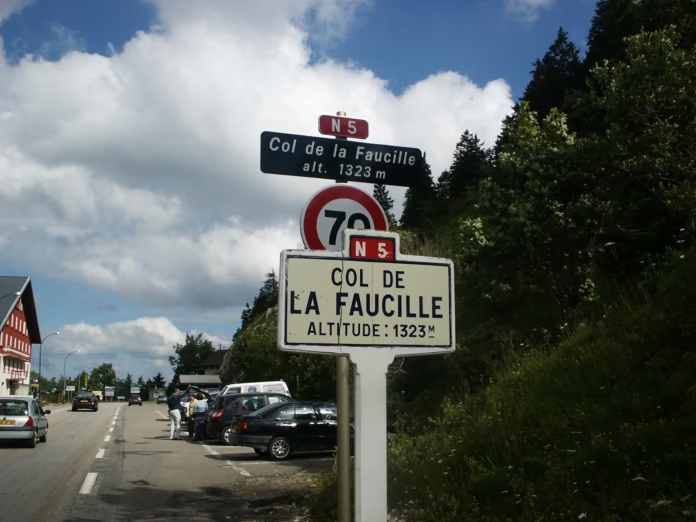
The Col de la Faucille introduces the 2026 Tour de France Femmes to sustained mountain climbing almost as soon as Stage 3 leaves Geneva.
The ascent begins shortly after the race crosses from Switzerland into France and measures 11.4km at an average of 6.3%. Its summit comes after only 23.9km, giving the riders almost no conventional opening phase before the road begins rising through the Jura.
It is not the steepest climb of the Tour or the ascent most likely to decide the final general classification. Its importance comes from its position.
A climb of this length at the start of a stage can determine the breakaway, remove Lorena Wiebes from the yellow jersey group and force the leading teams to make tactical decisions before the race has settled. By the time the first rider reaches the summit, the structure of the entire stage to Poligny may already be clear.
Where is the Col de la Faucille?
The Col de la Faucille is a mountain pass in the Ain department of eastern France, within the Jura Mountains and close to the Swiss border.
The pass rises to approximately 1,323 metres and connects the Pays de Gex with the roads towards Mijoux, Les Rousses and Saint-Claude. Its location above Lake Geneva offers extensive views towards the Alps and Mont Blanc when conditions are clear.
For Stage 3, the riders approach from the Gex side after leaving Geneva and crossing into France. This is the best-known cycling ascent, with the road climbing steadily away from the lower ground beside the border.
The pass also forms part of the Mijoux-Col de la Faucille winter-sports area. Its name translates as the “Pass of the Sickle”, generally associated with the curved shape of the ridge through which the road passes.
Stage 3 is the first day of the 2026 Tour de France Femmes route to use the Jura as more than a backdrop. The climb immediately changes the type of riders capable of controlling the race.
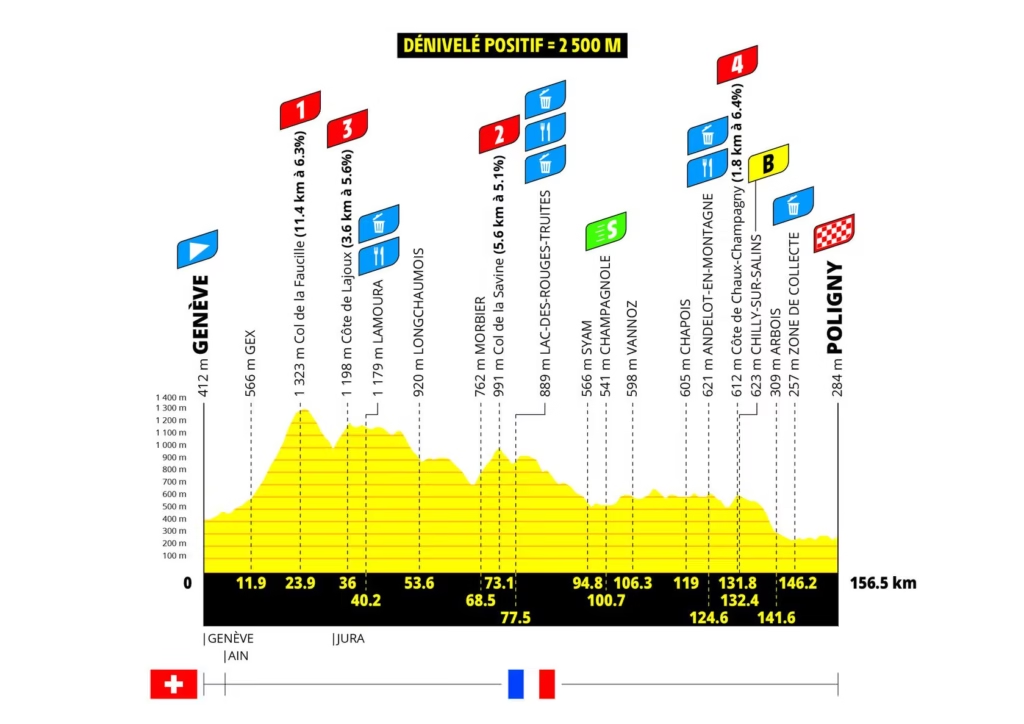
Col de la Faucille Stage 3 profile
The official Tour de France Femmes profile lists the climb as:
Distance: 11.4km
Average gradient: 6.3%
Classification: Category one
Summit altitude: approximately 1,323 metres
Summit position: 23.9km into Stage 3
Mountains points: Ten for the first rider over the summit
The numbers describe a sustained climb rather than an especially irregular or explosive one.
An average gradient above six per cent for more than 11km is enough to produce a clear selection if the pace is high. The road allows organised teams to maintain a hard tempo for a prolonged period while remaining steep enough to punish riders who begin poorly positioned or attempt to follow an unsustainable acceleration.
There are harder sections, but the central difficulty is the limited opportunity for recovery. Riders cannot depend on repeated flat sections to lower their effort before the summit.
For pure sprinters, it is too long to manage through one short burst of climbing strength. For the main GC favourites, it should be controllable without requiring an all-out attack.
That difference gives the climb its tactical importance.
Has the Col de la Faucille featured in the Tour de France before?
The Col de la Faucille has a long history in the men’s Tour de France.
It was first crossed in 1911, placing it among the early mountain passes used as the Tour expanded beyond its original flatter routes. The climb became a recurring feature during the following decades and has been crossed by the men’s race more than 40 times.
Its most recent Tour de France appearance came in 2004. The pass was again used during the first half of a stage rather than as a summit finish, helping shape the race before a long journey through the Jura.
Names associated with previous Tour passages include Ottavio Bottecchia, Gino Bartali and Federico Bahamontes, riders from very different generations who helped establish the climb’s place in the race’s mountain history.
Its return in the 2026 Tour de France Femmes therefore brings a historic Tour road into the modern women’s race rather than introducing a previously unknown ascent.
The Faucille has not retained the contemporary fame of climbs such as Alpe d’Huez, the Tourmalet or Mont Ventoux because it has rarely been used as a decisive summit finish. Its role has usually been to create selection and tactical uncertainty earlier in a stage.
Stage 3 follows that tradition.
Why is the Col de la Faucille category one?
Tour climb classifications are not determined by gradient alone.
Organisers consider the length, steepness, elevation gained, altitude, road position and wider difficulty of the stage. The same ascent can receive a different category depending on how it is used.
At 11.4km and 6.3%, the Col de la Faucille sits towards the less severe end of what viewers may expect from a category-one climb, particularly when compared with Mont Ventoux later in the race.
Its length still creates a significant physical test. The riders gain more than 700 metres of elevation during the ascent and reach the summit before completing 25km of racing.
The category also carries major consequences for the mountains classification. Ten points are available to the first rider across the summit, enough to transform the early polka-dot standings immediately.
Océane Mahé starts Stage 3 with only a narrow advantage over Anouska Koster and Ema Comte. Whoever wins the climb can take control of the classification before the stage is an hour old.
The jersey rules and points system are explained in the Tour de France Femmes 2026 jerseys guide.
Why its position at the start changes the race
A mountain at the finish normally produces a familiar structure.
Teams control the early breakaway, protect their leaders and gradually raise the pace before the main contenders attack near the summit. The strongest riders can spend most of the day conserving energy for one decisive effort.
The Col de la Faucille creates almost the opposite situation.
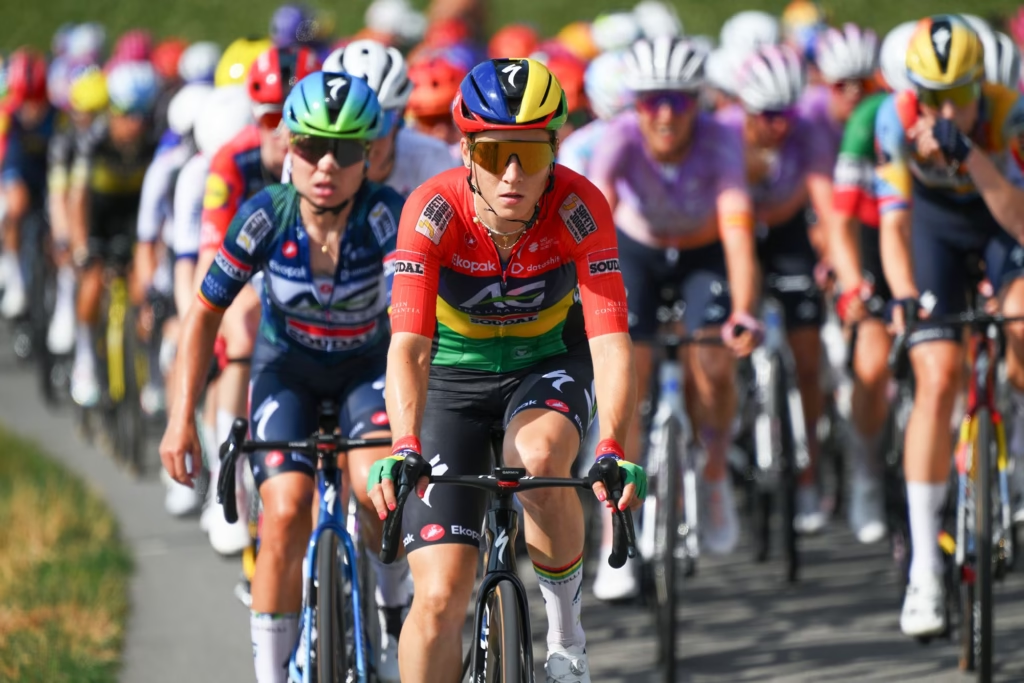
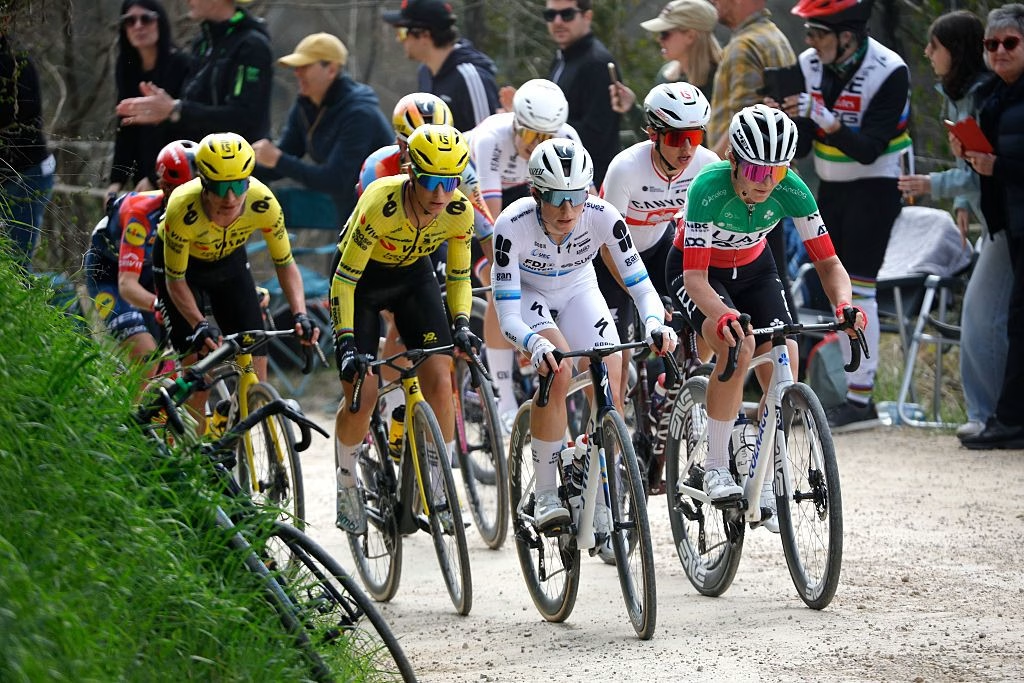
It arrives before a stable breakaway has necessarily formed, meaning attacks for the stage, mountains jersey and tactical positioning can overlap on the lower slopes. Strong climbers may use the ascent to bridge across to riders who attacked before it, while others may deliberately wait for the gradient before making their move.
There is also no long flat approach on which teams can establish an orderly rhythm. Riders must be positioned and ready almost immediately after the neutralised start.
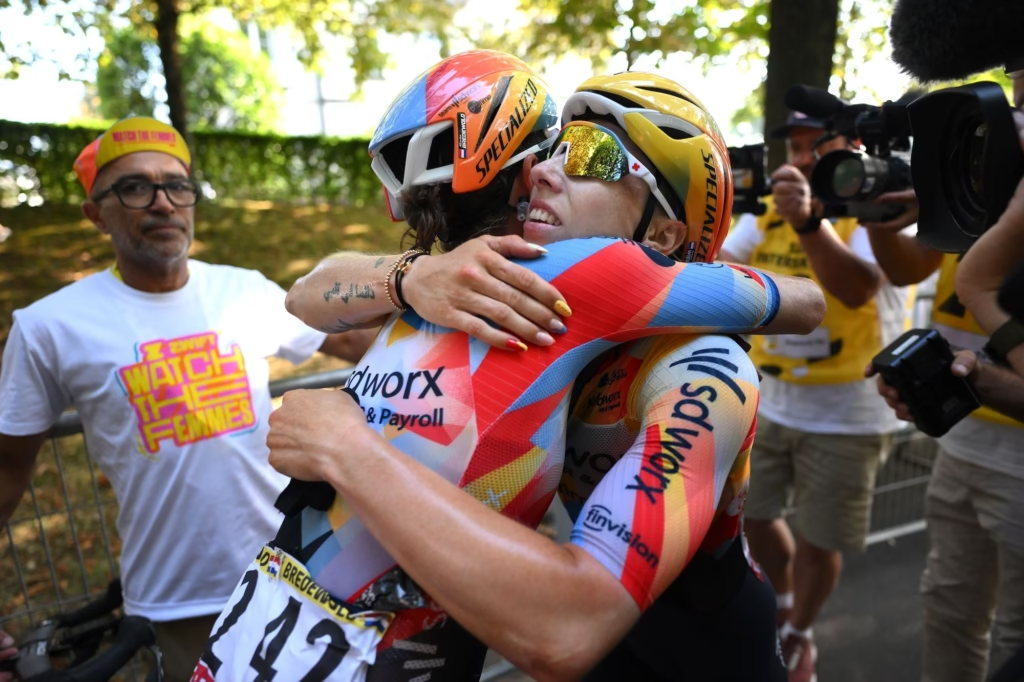
A GC team increasing the pace does not need to attack for time. It can use the climb simply to remove Wiebes, Charlotte Kool, Elisa Balsamo and other fast riders from the front group.
Once those riders are behind, the race becomes a long tactical argument over whether they should be allowed to return.
Could the Col de la Faucille decide Stage 3?
The climb is unlikely to decide the stage winner directly because more than 130km remain after the summit.
It can still decide the kind of race that follows.
A strong breakaway formed on the ascent may contain riders capable of surviving the Côte de Lajoux, Col de la Savine and the rolling approach to Poligny. If the GC teams are unwilling to chase hard one day before the Dijon time trial, that group could build enough of an advantage to contest the victory.
The climb can also create several separate races.
A leading breakaway may form ahead, followed by a group containing the GC favourites and another group organised around Wiebes and the dropped sprinters. Each will have different reasons to cooperate, attack or hesitate.
The first ascent therefore establishes the tactical structure even if the winning move comes much later on the Côte de Chaux-Champagny.
The full range of likely scenarios is examined in the Tour de France Femmes 2026 Stage 3 preview.
What does the climb mean for Lorena Wiebes?
Wiebes enters Stage 3 with two victories and a 14-second lead over Kim Le Court-Pienaar.
The Col de la Faucille is the first climb where she should expect to lose contact with the strongest GC riders if their teams commit to a sustained pace.
That does not automatically mean losing yellow.
Wiebes can climb at her own rhythm, use teammates for support and attempt to return during the long section after the summit. SD Worx-Protime possess enough strength to organise a chase if the initial difference remains manageable.
The decision is as tactical as it is physical.
Defending yellow across more than 100km of Jura roads could require Lotte Kopecky, Anna van der Breggen and several other riders to work extensively. The team must decide whether retaining the jersey for another day is worth that cost immediately before the Dijon time trial.
Wiebes may therefore be dropped even if SD Worx-Protime never intended to defend her lead at all costs.
The standings before the climb are detailed in the GC and jerseys after Tour de France Femmes Stage 2.
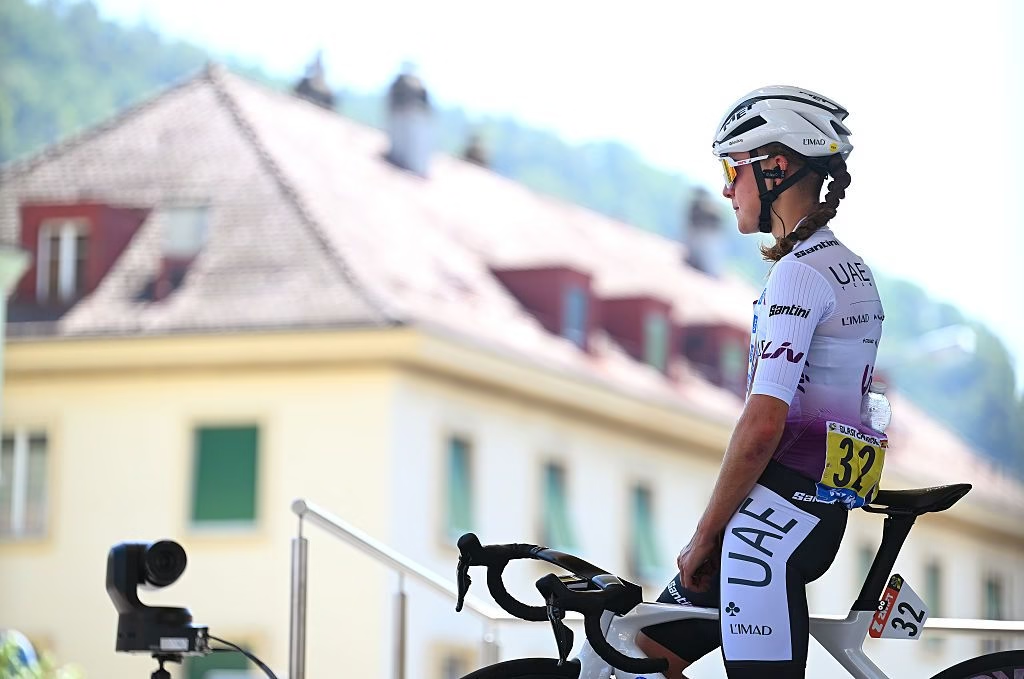 Photo Credit: Getty
What does it mean for the GC favourites?
The main contenders do not need to attack one another on the Col de la Faucille.
Demi Vollering, Pauline Ferrand-Prévot, Kasia Niewiadoma-Phinney, Marlen Reusser, Elisa Longo Borghini and Paula Blasi can allow their teams to maintain a hard pace without turning the opening mountain into a direct GC battle.
That would remove the sprinters while limiting the energy spent by the leaders themselves.
The proximity of the Dijon time trial encourages caution. Vollering and Reusser in particular have little reason to produce a maximal effort on the first climb of Stage 3 when one of their strongest opportunities arrives the following afternoon.
The more likely outcome is a controlled selection followed by a tactical race in which the favourites monitor one another and allow stage hunters to move ahead.
Le Court-Pienaar has the clearest immediate incentive. She begins only 14 seconds behind yellow and has the climbing strength to remain near the front. If Wiebes is distanced, the Mauritian becomes one of the strongest candidates to lead the Tour in Poligny.
Which riders could attack on the Col de la Faucille?
The early position makes the climb ideal for strong breakaway riders who do not want to wait for the final 25km.
Riejanne Markus has already demonstrated her willingness to attack after nearly winning Stage 2 through a long solo move. Kristen Faulkner, Justine Ghekiere, Juliette Berthet, Maëva Squiban and Sarah van Dam also possess the climbing strength and endurance required for a powerful early group.
Riders targeting the mountains jersey have an even clearer reason to move.
Mahé, Koster and Comte cannot assume the peloton will cross the summit together. Ten points are too valuable to surrender, and anyone waiting until halfway up the ascent may find the decisive break already established.
Puck Pieterse and Noemi Rüegg may prefer to remain with the principal contenders before using the shorter final climb. Both possess the speed to win from a reduced group and may not want to spend more than 100km in an early move.
Extreme heat adds another layer of difficulty
The Col de la Faucille is expected to be climbed in temperatures close to or above 30°C.
That increases the cardiovascular cost of a sustained effort and makes pacing especially important. Riders begin climbing before they have had many opportunities to collect fresh bottles or settle into a regular hydration routine.
Lower climbing speeds also reduce the cooling effect of airflow. A rider producing high power on the ascent generates substantial metabolic heat while travelling much more slowly than she would on the flat.
The opening kilometres may therefore punish anyone who attacks emotionally rather than measuring the effort against the distance still to race.
With more than three hours remaining after the summit, the strongest move on the Col de la Faucille is not necessarily the one most likely to survive to Poligny.
The impact of the forecast conditions is covered in our analysis of what extreme heat means for Tour de France Femmes Stage 3.
The climb matters long after the summit
The Col de la Faucille will disappear from the stage profile long before the Tour reaches its decisive final hour.
Its influence should remain visible throughout the day.
It can determine whether Wiebes keeps yellow, decide who takes the polka-dot jersey, establish the successful breakaway and leave several sprint teams chasing across the Jura.
That is why television commentators will focus on it from the moment Stage 3 begins.
The Col de la Faucille is not a summit finish and should not produce the direct GC battle expected on Mont Ventoux. Its role is subtler and potentially more chaotic.
It forces the Tour to reveal its tactical shape almost immediately. By the time the first rider reaches the summit, the most important decision of Stage 3 may already have been made.

