
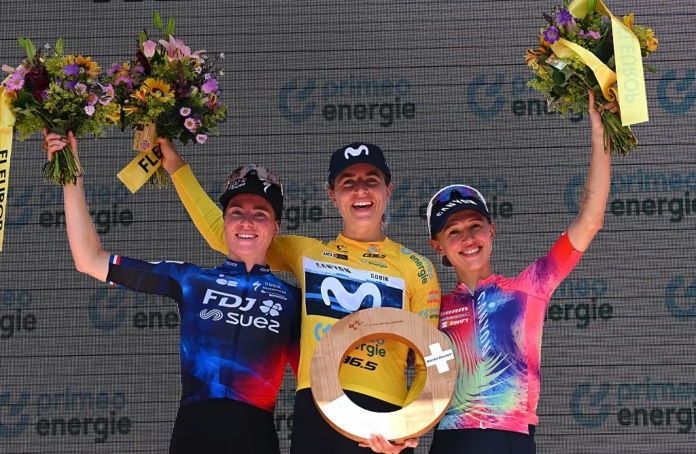
Tour de Suisse Women 2026 takes place from Wednesday, 17th June to Sunday, 21st June, with the race stepping into a new five-day format as part of the wider Tour de Suisse redesign. For the first time, the women’s and men’s races are built around largely parallel route designs, using the same host towns across the same week. That gives the women’s race a stronger platform, but it also creates a tougher sporting test.
The route starts in Sondrio, moves through Locarno, Bad Ragaz and Aarburg, then finishes with a queen stage in Villars-sur-Ollon. That structure gives the start list real importance. This is not a race that can be managed slowly. The opening days are already hilly, stage 4 brings a 23.8km individual time trial, and stage 5 gives the climbers their final chance to shape the general classification.
For wider race context, the Tour de Suisse Women 2026 full route guide explains how the five stages are structured, while the beginner’s guide to Tour de Suisse Women 2026 sets out why the race is becoming one of the most important June markers in the Women’s WorldTour.
Who is on the Tour de Suisse Women 2026 start list?
The Tour de Suisse Women 2026 start list is expected to include the leading Women’s WorldTour squads alongside invited teams, with six riders per team. The live start list is embedded below and will update if teams make final changes before the opening stage in Sondrio.
Data powered by FirstCycling.com
The provisional list points towards a high-quality GC race. It includes proven stage-race leaders, Swiss contenders, developing climbers and riders sharpening form before the Tour de France Femmes. That mix should give the race a strong balance between overall ambition and stage-hunting opportunity.
That balance matters because the Tour de Suisse Women rarely rewards passive racing. The repeated climbing, technical roads and stage 4 time trial should make it difficult for a rider to hide. Teams with genuine GC ambitions will need to be switched on from the opening day, while those without a clear overall leader may have to chase stage wins before the race narrows towards Villars-sur-Ollon.
Why the 2026 start list matters
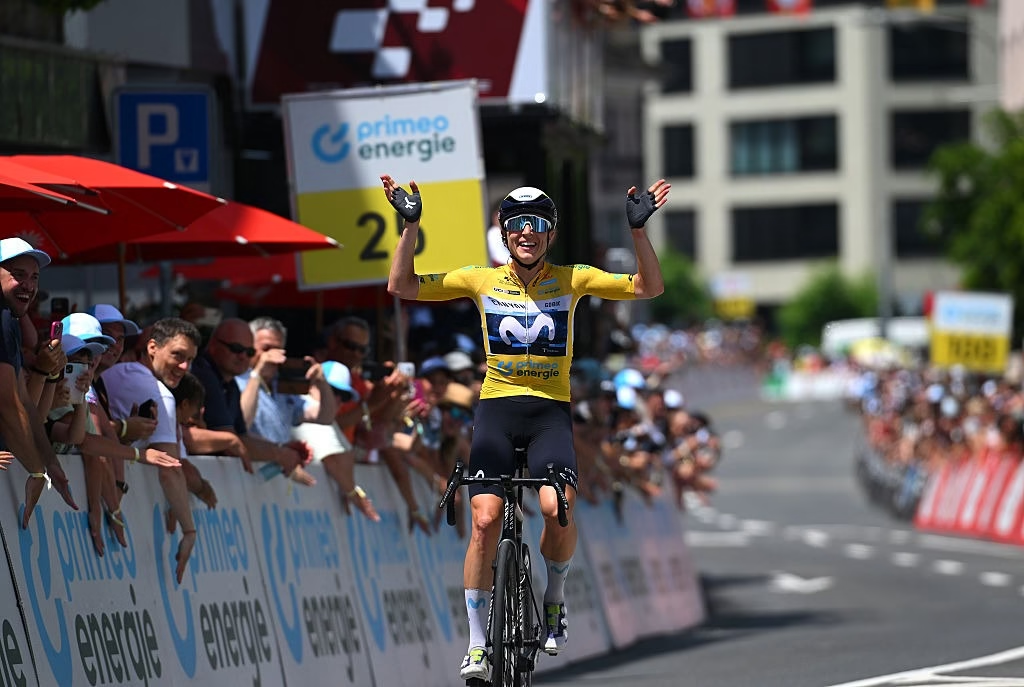
The 2026 edition is not simply a slightly longer version of the recent four-day race. Adding a fifth stage and aligning the women’s and men’s races around the same host towns changes the feel of the event. It gives the women’s race more room to develop, but it also increases the demand on squad depth.
Stage 1 in Sondrio is hilly enough to make an immediate selection if the strongest teams want to race aggressively. Stage 2 in Locarno again offers climbing and rolling terrain, while stage 3 in Bad Ragaz is the flattest stage on paper. Stage 4 in Aarburg is a 23.8km individual time trial, and stage 5 around Villars-sur-Ollon is the obvious queen stage.
That sequence means the start list has to be read through several categories. The climbers need to survive the time trial. The time triallists need to limit losses in the mountains. The puncheurs and fast finishers may only have one or two realistic opportunities, which should make the first half of the race more aggressive.
The brief history of Tour de Suisse Women is a useful reminder of how quickly the modern race has grown since returning to the calendar. The 2026 format feels like the next step in that development: compact, visible and difficult enough to carry real stage-race weight.
GC contenders on the start list
The general classification should be shaped by riders who can combine climbing depth with time-trial strength. The Aarburg time trial is long enough to create meaningful gaps, but the final stage to Villars-sur-Ollon means the race should not be decided by one discipline alone.
Demi Vollering is the obvious stage-race benchmark if she takes the start. After winning the Giro d’Italia Women, she comes into this part of the season with the strongest recent GC evidence in the peloton. A route with hilly stages, a long time trial and a final mountain day should suit her range, especially if FDJ United-SUEZ arrive with enough support to manage the key moments.
Marlen Reusser gives the race its strongest home storyline. She won Tour de Suisse Women in 2025 and has the kind of skill set that fits the 2026 route neatly. The Aarburg time trial should be an obvious target, but her value goes beyond one stage. Reusser can turn rolling terrain into pressure, force teams to chase, and use the Swiss roads with the confidence of a rider who understands the demands of this race.
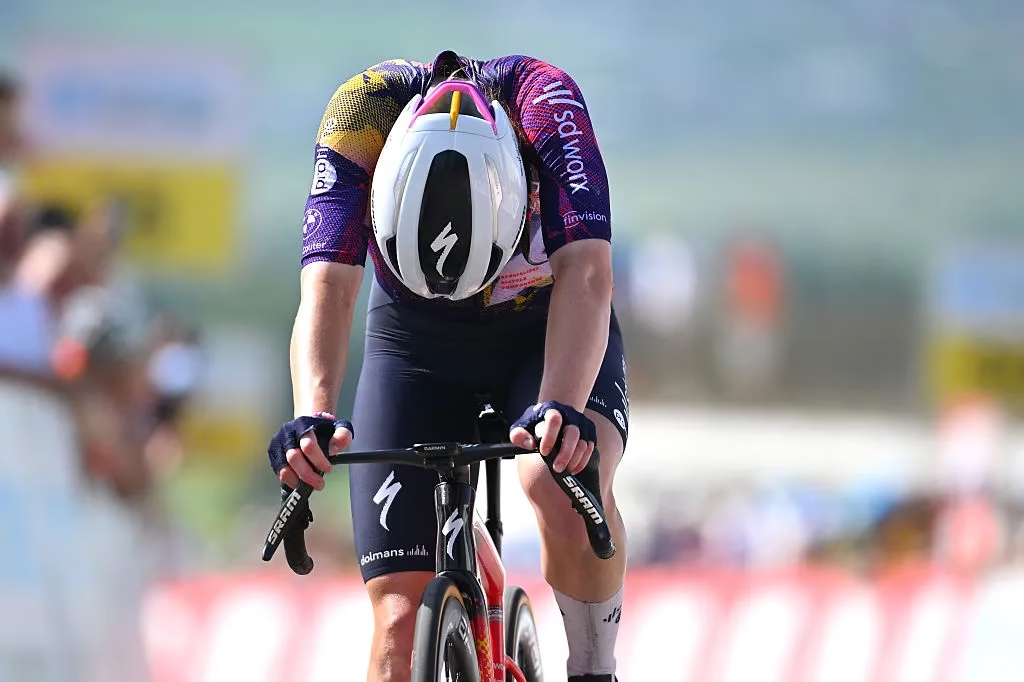
Lotte Kopecky adds a different layer to the start list. She is not a pure mountain climber in the same mould as Vollering, but her ability to survive hard days, take time bonuses, sprint from reduced groups and make tactical moments count keeps her relevant across a five-day race. If Team SD Worx-Protime use her aggressively, she could shape the opening half of the race even before the time trial and queen stage.
Valentina Cavallar and Nienke Vinke give Team SD Worx-Protime additional climbing depth, while Sarah Van Dam gives Team Visma | Lease a Bike an interesting developing option if the route becomes selective. Ruby Roseman-Gannon offers Liv AlUla Jayco a rider who can profit from rolling and reduced-group days, while Noemi Rüegg gives EF Education-Oatly a fast and versatile card if the flatter stages or reduced finishes open up.
The GC picture should not be treated as one-dimensional. Vollering may be the strongest overall reference point, but the format gives several riders a way into the race. The time trial will matter, but the hilly road stages can create early gaps, and Villars-sur-Ollon gives the climbers a final platform.
Swiss interest and home pressure
Tour de Suisse Women always carries extra weight for Swiss riders, but the 2026 edition makes that even clearer. Reusser starts as the obvious home reference point, both because of her 2025 overall victory and because the route offers several places where her strengths can count.
Rüegg also gives the Swiss audience another major rider to follow. Her profile is different from Reusser’s, but that is part of the appeal. Where Reusser brings time-trial power and GC range, Rüegg brings punch, speed and tactical versatility. On a route where not every stage is a mountain stage, that matters.
The home dynamic can change the race. Swiss riders will be expected to show themselves, while Swiss roads often encourage aggressive racing through repeated climbs, technical descents and roads that rarely feel completely settled. A home rider does not need to win the overall for the week to be successful. A stage, a jersey, or repeated visibility can carry real value.
Stage hunters and fast finishers
The start list also contains riders who may not be targeting the overall classification but could still shape the race. Stage 3 in Bad Ragaz is the clearest opportunity for faster riders, though the opening two hilly days could also produce reduced sprints if the race stays together.
Rüegg is one of the most obvious riders in that category. Roseman-Gannon also fits the profile of a rider who can survive a harder day and still finish quickly. Kopecky’s versatility makes her relevant here too, especially if Team SD Worx-Protime decide the best route is to collect time bonuses and apply pressure before the final mountain stage.
The challenge for sprinters is that Tour de Suisse Women does not offer much easy terrain. Even the flatter stage sits inside a five-day race where fatigue will build quickly. Teams with fast riders need to be realistic. They may have to chase one clear opportunity rather than wait for several.
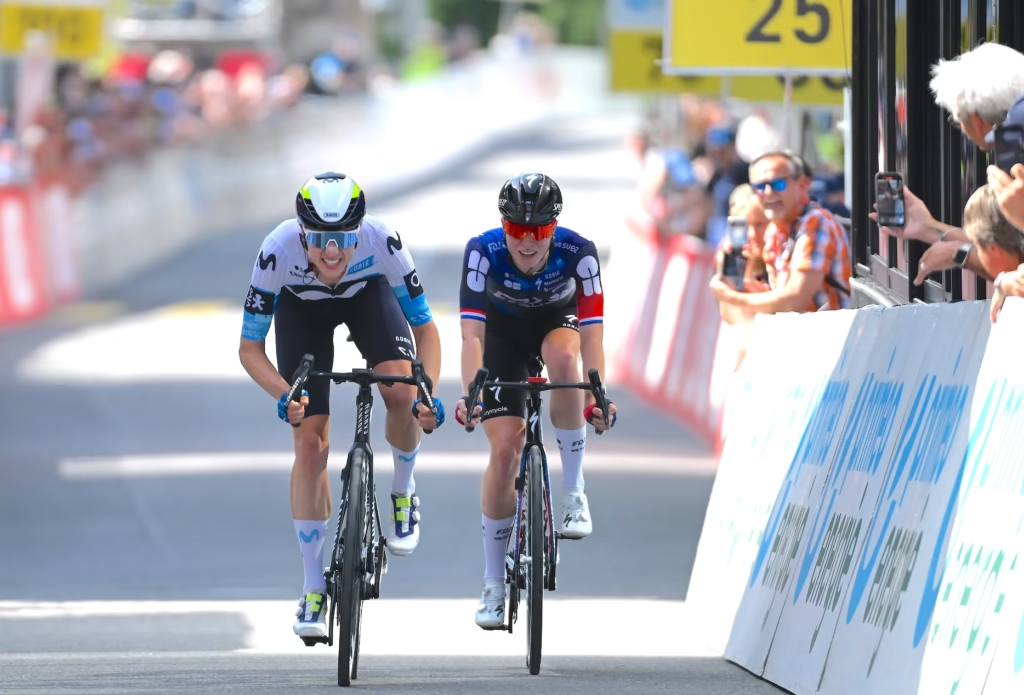 Photo Credit: Getty
How the start list shapes the race
The Tour de Suisse Women 2026 start list suggests a race pulled between two forces: the GC leaders who will want structure, and the opportunists who need the first three stages to matter.
If Vollering and FDJ United-SUEZ are strong, the race could become controlled around the time trial and final mountain stage. That would make Aarburg and Villars-sur-Ollon the obvious decisive points. Reusser, however, is not a rider who has to wait for the final day. She can attack earlier, especially on rolling terrain where hesitation from rivals can quickly become costly.
Team SD Worx-Protime have enough variety to make the race awkward. Kopecky can force attention on hilly finishes, Cavallar can be used deeper into climbing stages, and Vinke gives them another rider who can stay relevant when the race becomes harder. That kind of structure is valuable in a short race because it creates more than one tactical route.
The shorter, sharper format should also help riders willing to race early. A five-day race leaves little time to correct mistakes. If a team misses the move on stage 1 or stage 2, it may already be chasing the race rather than shaping it.
-
 Photo Credit: SWPix.com

How to follow the race
The live start list above should be the easiest way to track final team changes once selections are confirmed. As with any stage race, provisional entries can shift before the first stage because of illness, injury, recovery after the Giro d’Italia Women, or changes to Tour de France Femmes preparation plans.
For live coverage and broadcast context, the women’s cycling TV guide hub is the best place to follow UK viewing information as the race approaches. The women’s cycling race hub also brings together route guides, race previews and wider Women’s WorldTour context.
Tour de Suisse Women 2026 start list verdict
The Tour de Suisse Women 2026 start list gives the race what it needs in its expanded format: a strong GC core, major Swiss interest, enough fast finishers for stage tension, and several teams with more than one tactical option.
Vollering is the natural stage-race benchmark after the Giro d’Italia Women, but Reusser gives the race a powerful home storyline and a very real route to victory. Kopecky and Team SD Worx-Protime add tactical complexity, while riders such as Rüegg, Roseman-Gannon, Van Dam, Cavallar and Vinke help give the race depth beyond the obvious favourites.
The five-day structure should make the racing sharper. There is no room for a quiet opening half and no easy route to the final stage. From Sondrio to Villars-sur-Ollon, the Tour de Suisse Women should reward riders who understand quickly whether they are racing for the overall, a stage win, a jersey, or one final major performance before the Tour de France Femmes.

