
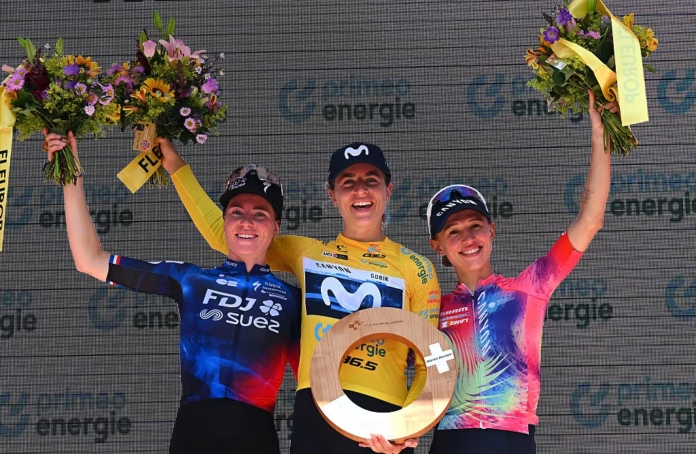
The Tour de Suisse Women 2026 is one of the most important stage races on the Women’s WorldTour calendar, and this year it takes on extra significance. The race runs from Wednesday, 17th June to Sunday, 21st June, covering five stages across Switzerland and, on the opening day, northern Italy.
For newer fans, the Tour de Suisse Women is best understood as a compact but demanding stage race. It is not a Grand Tour, but it asks many of the same questions in a shorter space of time. Riders have to climb, recover, handle technical roads, stay safe in the bunch, produce a time trial effort and then survive a hard final mountain stage.
The 2026 edition has been built around variety. There are hilly stages in Sondrio and Locarno, a flatter day into Bad Ragaz, an individual time trial in Aarburg and a decisive mountain stage to Villars-sur-Ollon. That makes it a race for complete stage racers rather than pure climbers alone.
For wider context on the top level of the sport, our guide to the 2026 Women’s WorldTour explains how races like the Tour de Suisse Women fit into the season.
What is the Tour de Suisse Women?
The Tour de Suisse Women is a multi-day women’s stage race held in Switzerland. It sits on the Women’s WorldTour calendar, which means it attracts top teams, leading general classification riders and strong all-rounders.
The race is relatively young compared with some of cycling’s oldest events, but it has quickly become an important part of the women’s calendar. Switzerland gives organisers the kind of terrain that can create real stage-race separation: rolling roads, technical descents, steep climbs, Alpine scenery and time trial opportunities.
It is also a useful race because it sits in the middle of the season. By June, riders have already been through the spring Classics and the early stage-race block. The Tour de Suisse Women then gives GC riders another major opportunity before attention begins to shift towards the biggest summer goals.
When is the Tour de Suisse Women 2026?
The Tour de Suisse Women 2026 takes place from Wednesday, 17th June to Sunday, 21st June.
The race lasts five days and runs alongside the men’s Tour de Suisse, with both races using largely parallel route designs in 2026. That is important because it gives the women’s race a stronger place within the wider event and helps create a clearer shared identity between the two races.
The five stages are:
- Stage 1, Wednesday, 17th June: Sondrio, 109.3km
- Stage 2, Thursday, 18th June: Locarno, 105.3km
- Stage 3, Friday, 19th June: Bad Ragaz, 120.3km
- Stage 4, Saturday, 20th June: Aarburg individual time trial, 23.8km
- Stage 5, Sunday, 21st June: Villars-sur-Ollon, 100.3km
That structure is easy to follow. The race begins with hilly terrain, gives faster riders one likely opportunity, then shifts into a time trial and a mountain finale.
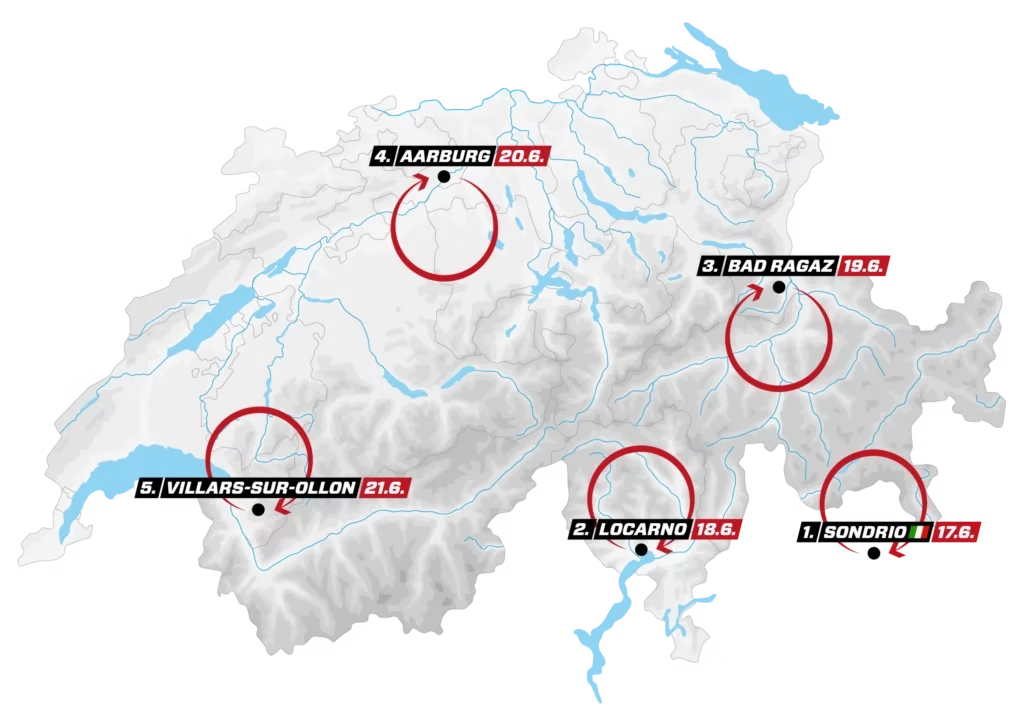
What is the 2026 route like?
The 2026 Tour de Suisse Women route is designed to offer very little room to hide. The opening two days are hilly rather than mountainous, Stage 3 is the flattest stage, Stage 4 is a time trial, and Stage 5 is the queen stage.
Stage 1 in Sondrio covers 109.3km with 1,642 metres of climbing. It is classed as hilly and has a difficulty rating of 4 out of 5. That makes it a demanding start, especially because the roads around Sondrio can create pressure even before the final selection.
Stage 2 in Locarno is 105.3km with 1,242 metres of climbing. It is also hilly, but slightly less severe on paper. Puncheurs and versatile GC riders should like this stage, especially if the finale rewards positioning and repeated accelerations.
Stage 3 in Bad Ragaz is 120.3km and officially classed as flat, with 1,330 metres of climbing. That should make it the best chance for the faster riders, although Swiss flat stages are rarely completely effortless.
Stage 4 is a 23.8km individual time trial in Aarburg. That is long enough to matter properly in the general classification. Riders who can climb but struggle against the clock could lose significant time before the final mountain stage.
Stage 5 finishes in Villars-sur-Ollon after 100.3km and 2,795 metres of climbing. It is the hardest stage of the race and should decide the overall winner. The stage is short, but the climbing load is serious.
Why does the time trial matter?
The Aarburg time trial is one of the most important parts of the race. At 23.8km, it is not a short prologue or a token test. It is long enough for genuine time gaps, especially between strong time triallists and lighter climbers.
That changes the tactical shape of the whole race. A rider who gains time in Aarburg can defend more calmly on the final mountain stage. A pure climber who loses time will have to attack on the road to Villars-sur-Ollon. That creates a better race because different rider types are forced into different strategies.
The time trial also rewards complete stage racers. Modern women’s stage racing increasingly asks riders to be more rounded. It is not enough to climb well if a race includes a serious test against the clock. The Tour de Suisse Women 2026 should underline that clearly.
Where will the race be decided?
The race is likely to be decided across Stages 4 and 5. The first two hilly stages can create early gaps, and Stage 3 may still be stressful, but the time trial and the mountain finale should carry the most weight.
Stage 4 will show which GC riders have the engine to match their climbing. A poor time trial could leave even a strong climber needing a major comeback on the final day.
Stage 5 to Villars-sur-Ollon then gives the race its most obvious selection point. With 2,795 metres of climbing in only 100.3km, it should be relentless. The official route description points towards a stage with little flat road and a final-day test that can still change everything.
That is ideal for a five-day stage race. The leader after the time trial may not be safe, and the best climber may still need to take back time. It should make the final stage more than a procession.
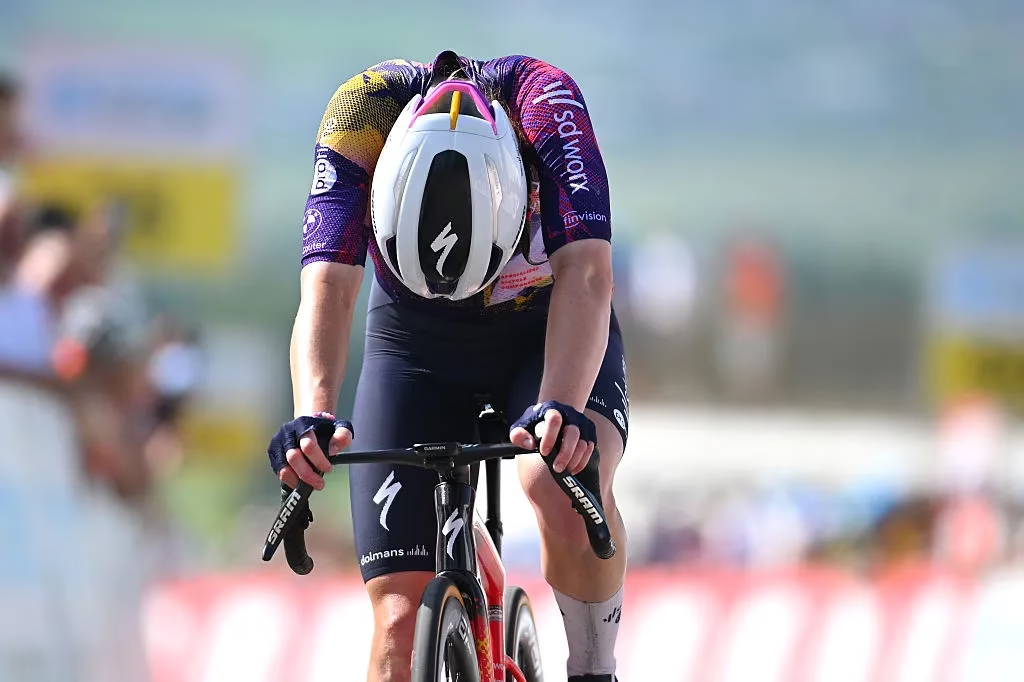
What kind of rider can win the Tour de Suisse Women?
The ideal winner is a complete stage racer: strong on hilly terrain, capable in a time trial and good enough in the mountains to survive or attack on the final day.
A pure sprinter is unlikely to win the overall because the race is too hard. A pure climber can win if they limit time trial losses, but the Aarburg test makes that difficult. A punchy all-rounder with a strong time trial may have the best balance, provided they can handle the Villars-sur-Ollon mountain stage.
That is why the Tour de Suisse Women often suits riders who are difficult to label. The best contenders are not just climbers or time triallists. They are riders who can handle several different types of pressure in the same week.
Which teams and riders should beginners watch?
The final start list will decide the exact hierarchy, but the rider types are already clear. Watch the GC leaders, the time triallists and the climbers who can survive a hard final stage.
Teams such as SD Worx-Protime, FDJ-Suez, Canyon SRAM zondacrypto, Lidl-Trek, UAE Team ADQ, Team Visma | Lease a Bike, Movistar and Liv AlUla Jayco are usually relevant in races of this shape. The strongest squads will try to keep their leaders safe through the opening stages before using the time trial and mountain finale to make the difference.
Swiss interest will also be high. Marlen Reusser won the 2025 edition and has the kind of time trial strength that always matters in this race. Whether she returns or not, the Tour de Suisse Women usually carries extra significance for Swiss riders because it is one of the few home opportunities at the very top level of women’s cycling.
For a wider view of the riders who shape the biggest stage races, our women’s cycling race guides follow the main contenders across the season.
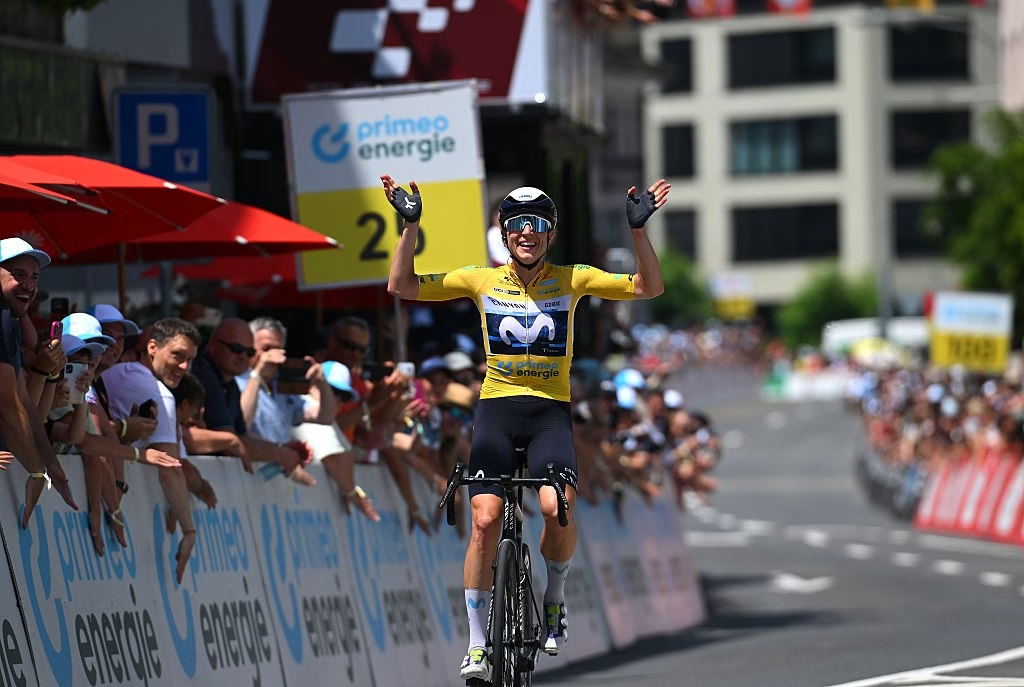
How does it compare with the Tour de France Femmes?
The Tour de Suisse Women is shorter than the Tour de France Femmes, but it can be just as revealing in a different way. The Swiss race compresses a lot of difficulty into five days, while the Tour de France Femmes gives riders a longer and more varied test.
The timing also matters. In 2026, the Tour de France Femmes starts in Switzerland in August, with its Grand Départ in Lausanne and early racing around Swiss roads. That gives the Tour de Suisse Women extra relevance because it takes place in the same country only a few weeks earlier and offers another chance to see who is building towards the summer.
The two races are not identical. The Tour de France Femmes carries more pressure and prestige, while the Tour de Suisse Women is more compact. But both reward riders who can climb, recover and handle tactical variety.
Our Tour de France Femmes coverage follows the race build-up, route guides and contenders as the summer approaches.
-
 Photo Credit: quentinphotographiebe
 -
 Photo Credit: Getty


How should new fans watch the race?
New fans should watch the Tour de Suisse Women in three phases.
First, use the opening hilly stages to spot who looks sharp. The strongest riders may not go all-in immediately, but positioning, team support and confidence are often visible from the start.
Second, treat the Aarburg time trial as the race’s first major checkpoint. Look at which climbers lose time, which all-rounders gain time and whether the race leader has enough of a buffer before the final day.
Third, watch the Villars-sur-Ollon mountain stage as the decisive test. This is where the race should become most direct. If a climber needs time, they cannot wait forever. If a time triallist is defending the lead, their team will have to control the stage carefully.
That is the strength of the race. It is short enough to follow easily, but varied enough to show how modern stage racing works.
Why the Tour de Suisse Women matters
The Tour de Suisse Women matters because it gives the women’s peloton a high-level mountain and time trial stage race in one of cycling’s most naturally selective countries. Switzerland offers terrain that exposes weaknesses quickly, and the 2026 route uses that terrain well.
The race also matters because of its growing status. With the women’s and men’s races using largely parallel route designs in 2026, the event is making a clear statement about visibility and alignment. That should help the women’s race feel less like an add-on and more like a central part of the Tour de Suisse identity.
For riders, it is a chance to win a major Women’s WorldTour stage race. For teams, it is a test of climbing depth, time trial preparation and tactical control. For fans, it is one of the best races for understanding the modern women’s peloton because it brings several disciplines together in a short, watchable format.
The simplest summary is this: the Tour de Suisse Women 2026 is a five-day WorldTour stage race for complete riders. It starts hard, includes a meaningful time trial, and finishes in the mountains. That makes it one of the most useful and revealing races of the women’s cycling season.

