
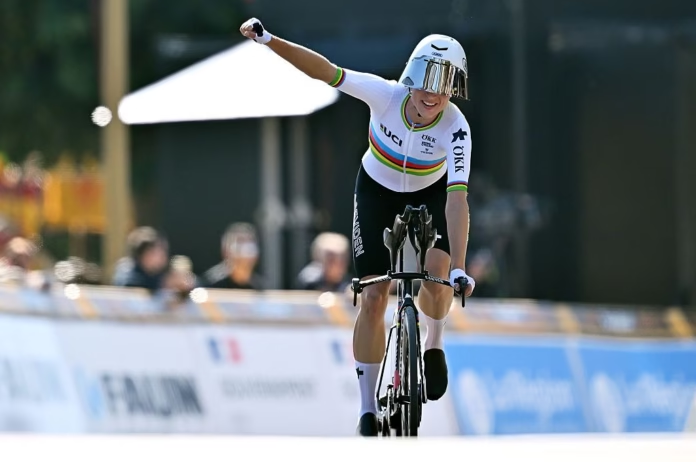
The Tour de Suisse Women 2026 reaches its most controlled and most measurable test on Saturday, 20th June, with the stage 4 individual time-trial in Aarburg. After three road stages that rewarded aggression, breakaways and opportunism, this is the day where the strongest riders against the clock can take control.
Aarburg to Aarburg is a 23.8km individual time-trial and the clearest stage of the race for Marlen Reusser. The Swiss rider came into the Tour de Suisse as the obvious favourite because the route gave her this platform. Now, after Femke de Vries won from the breakaway in Sondrio, Elisa Longo Borghini took control in Locarno and Zoe Backstedt won in Bad Ragaz, the general classification reaches its most predictable but still decisive day.
Stage 4 should not just decide who wins the time-trial. It should decide who starts the final mountain stage in Villars-sur-Ollon with control, who is forced to attack, and who has already run out of route. In a five-day race, a 23.8km time-trial is not a detail. It is one of the main pillars of the overall battle.
For wider race context, see our Tour de Suisse Women 2026 full route guide, the full start list for Tour de Suisse Women 2026, our Tour de Suisse Women 2026 contenders preview and our Tour de Suisse Women 2026 stage 3 preview.

Tour de Suisse Women 2026 stage 4 route
Stage 4 starts and finishes in Aarburg, with the riders taking on a 23.8km individual time-trial. The official host programme has the women’s time-trial beginning at 10:45 local time, with the final rider expected to finish around 12:45 local time.
The course is not a mountain time-trial, but it is long enough to create meaningful gaps. That is the most important point. A short prologue would reward explosive specialists and keep the overall race tight. Aarburg is different. At nearly 24km, it gives the strongest time-triallists enough road to build a proper advantage.
The route around Aarburg should suit riders who can settle into rhythm, hold an aerodynamic position and avoid fading late. There is not enough climbing to turn it into a climber’s course, but it is also not so short that pure freshness alone will decide it. Pacing, position and power will matter.
The setting also adds a distinct Swiss character. Aarburg sits along the Aare, with the town’s historic fortress above the route. For the riders, though, the scenery will barely matter. This is a day of numbers, lines, speed and damage limitation.
Why stage 4 matters
Stage 4 matters because the Tour de Suisse Women 2026 has reached the point where the strongest time-triallists can reshape the race. The opening stages were shaped by tactical racing. Stage 1 rewarded the breakaway. Stage 2 gave Longo Borghini a major result in Locarno. Stage 3 offered the sprinters and fast finishers a route into the race, with Backstedt taking the win in Bad Ragaz.
Aarburg is different. There is no breakaway to miss. There is no chase to misjudge. There is no teammate who can drag a rider through the final kilometre. The time-trial strips the race back to individual execution.
That should suit Reusser more than anyone, but it also opens the door for riders such as Backstedt, Riejanne Markus, Karlijn Swinkels, Loes Adegeest, Steffi Häberlin, Cédrine Kerbaol and Franziska Koch. Some are racing for the stage. Some are racing for GC position. All of them have the power, technical skill or time-trial pedigree to make Aarburg one of their best days of the week.
The stage also sets up the final day. Villars-sur-Ollon will give the climbers and attackers one final chance, but the shape of that stage depends heavily on the Aarburg gaps. If Reusser gains significant time, everyone else has to attack. If Longo Borghini limits the damage, the race becomes a direct duel. If Niewiadoma-Phinney, Kerbaol or Le Court lose more than expected, they may need to gamble on stage 5.
What kind of rider can win in Aarburg?
Stage 4 should favour a specialist time-triallist with the power to sustain a high speed for nearly 24km. This is not a stage for a short explosive effort. It is long enough to reward pacing discipline and punish riders who go too hard early.
The ideal rider needs three things. First, a strong aerodynamic position. Second, the ability to hold consistent power across the full course. Third, enough technical confidence to carry speed through the corners without burning energy through repeated accelerations.
That points strongly towards Reusser. She is the standout time-trial rider in this field, she is racing at home, and she came into the week with this stage as the clearest route to yellow. The question is not whether the course suits her. It does. The question is how much time she can gain.
Behind her, the stage should reward riders with genuine time-trial ability rather than simply those high on GC. Backstedt has the power and technical skill to threaten the podium. Markus and Adegeest give Lidl-Trek two riders who can perform strongly against the clock. Swinkels can be important for UAE Team ADQ, while Häberlin, Kerbaol and Koch all have a case for strong rides if they pace the course cleanly.
 Photo Credit: Getty
Marlen Reusser
Marlen Reusser is the obvious stage 4 favourite. This is the day the route has been pointing towards since the race began. If she is going to take full control of the Tour de Suisse Women, Aarburg is the most natural place to do it.
The distance is in her favour. A 23.8km time-trial gives her enough room to use her biggest strength: sustained, high-speed power. Shorter time-trials can stay close because small errors or fast starts matter more. This one gives Reusser time to settle, build momentum and create gaps through consistency.
The home element also adds weight. Reusser has already won this race overall before, and Swiss roads have often brought the best out of her. That does not guarantee victory, but it does mean she arrives at the stage with confidence, clarity and expectation.
The tactical question is how much risk she takes. If she starts the day within reach of yellow, she may not need to overextend. But if she wants to put the race beyond the climbers before Villars-sur-Ollon, she has to use the full course. A narrow win would help. A dominant performance could decide the race.
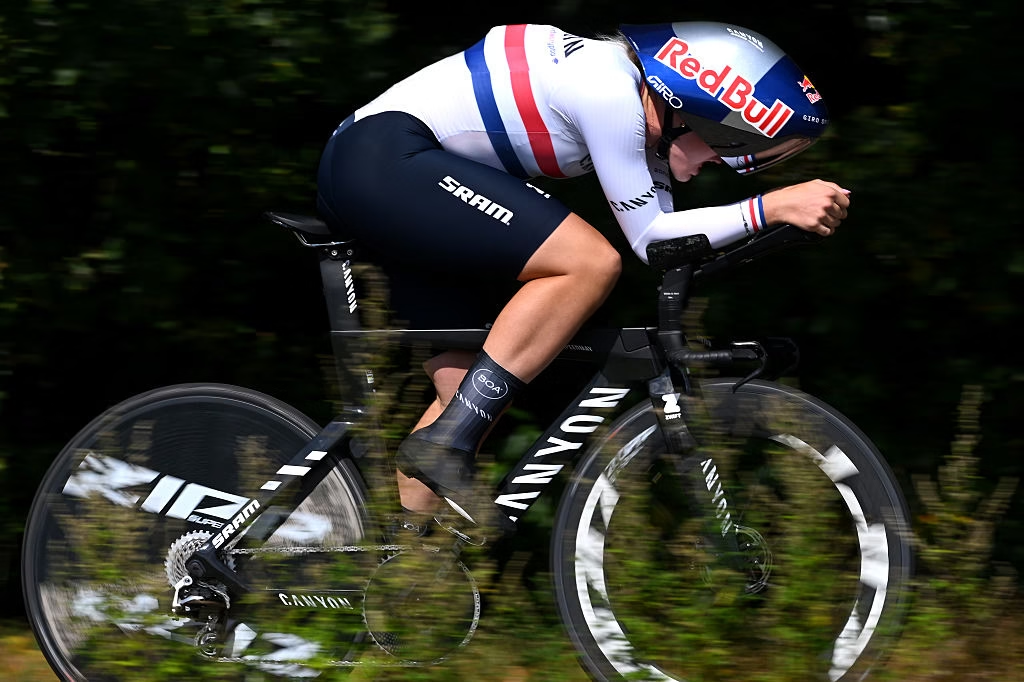 Photo Credit: Getty
Zoe Backstedt
Zoe Backstedt’s stage 3 victory gives Canyon SRAM a major result before the decisive weekend, and Aarburg is another stage where her strengths should transfer well. She has the power, technical skill and time-trial background to be more than just a rider carrying momentum from Bad Ragaz.
Backstedt is not under the same GC pressure as Reusser, Longo Borghini or Kasia Niewiadoma-Phinney, and that may help. She can ride the time-trial as a stage opportunity and a performance marker rather than a defensive calculation. On a fast course with several corners, that freedom could make her dangerous.
The question is recovery. Winning stage 3 will have taken energy, and there is always a difference between having the profile for a strong time-trial and producing it after three days of racing. If she has recovered well, Backstedt has a clear chance of a top result on the stage.
For Canyon SRAM, her ride also matters tactically. Niewiadoma-Phinney remains the GC focus, but Backstedt gives the team a much stronger time-trial card on a day where stage honours and overall movement can overlap.

Riejanne Markus
Riejanne Markus is one of the most interesting time-trial names in the field. Lidl-Trek have several riders who can be useful across the week, but Markus gives them a clear route into the Aarburg stage itself.
This is a course where sustained effort and pacing should matter more than climbing acceleration. That suits Markus. She has the engine to hold speed, the experience to ride within herself early and the ability to avoid giving away time through inefficient pacing.
Her stage 4 ride is also important for Lidl-Trek’s overall position. If Markus can finish close to the fastest riders, she can move the team back into the picture before Villars-sur-Ollon. She may not start as the outright favourite against Reusser, but she is one of the riders most capable of turning Aarburg into a very strong GC and stage result.

Karlijn Swinkels
Karlijn Swinkels is an important rider for UAE Team ADQ on this stage. Longo Borghini carries the team’s main GC ambitions, but Swinkels gives UAE another rider with the profile to handle a fast, sustained time-trial well.
Aarburg suits riders who can stay composed and technically tidy. Swinkels has enough power to be competitive and enough experience to pace a course like this without chasing every split. She may not have the same headline status as Reusser, but she can still deliver a significant ride for UAE.
Her performance also feeds into the team dynamic. If Swinkels sets an early benchmark or finishes strongly, it gives UAE valuable information for Longo Borghini’s ride. If she places well herself, it strengthens the team’s position before the final mountain stage.
This is the kind of day where support riders with strong time-trial skill can become central to the story, even if the GC spotlight sits elsewhere.

Loes Adegeest
Loes Adegeest is another rider who should be better suited to Aarburg than many of the more climbing-focused names. Lidl-Trek have a strong time-trial pair in Markus and Adegeest, and that gives the team a real chance to feature prominently on the stage.
Adegeest’s strength is her ability to produce sustained power across flat and rolling terrain. On a 23.8km course, that matters. She does not need the route to be mountainous or selective. She needs clean pacing, a good aero position and enough rhythm to keep speed high through the middle part of the course.
Her GC situation may not define the race, but her stage result could. In a field where Reusser is the standout favourite, riders like Adegeest are important because they can make the podium fight much more competitive.
If Lidl-Trek get both Markus and Adegeest right, they could be one of the strongest teams on the day.

Steffi Häberlin
Steffi Häberlin has been one of the stronger Swiss stories of the race, and Aarburg gives her a very different kind of home opportunity. This is not a day for punchy attacks or road-race instinct. It is about execution.
Häberlin’s case is built on form, confidence and familiarity with the demands of Swiss racing. The time-trial is long enough to favour specialists, but it is not so extreme that only the obvious names can feature. A clean, disciplined ride could put her well inside the top 10.
She also has a useful position psychologically. Reusser carries the biggest Swiss expectation, while Häberlin can ride with slightly less pressure. That can matter in a time-trial. Riders who settle early and avoid chasing a result too aggressively can often finish stronger than those who start too hard.
For Team SD Worx-Protime, Häberlin’s ride is one of the clearest chances to turn the team’s race into something more than survival around the GC battle.

Cédrine Kerbaol
Cédrine Kerbaol is not simply a GC rider trying to limit damage. She has the engine to be genuinely competitive on a stage like this. Her profile makes sense for a longer time-trial: she can climb, handle rolling terrain and produce sustained efforts rather than relying only on short accelerations.
EF Education-Oatly will see stage 4 as a chance to reinforce her overall position, but there is a stage result angle too. Kerbaol may not start as the outright favourite, yet she has enough power and race sharpness to finish close to the strongest riders if she gets the pacing right.
Her time-trial also matters tactically for the final stage. If she moves up in Aarburg, she becomes harder to ignore in Villars-sur-Ollon. If she loses time, EF may need to race more aggressively on the final day.
Kerbaol’s race so far has been built on alert riding and consistency. Stage 4 rewards exactly that, just in a different format.
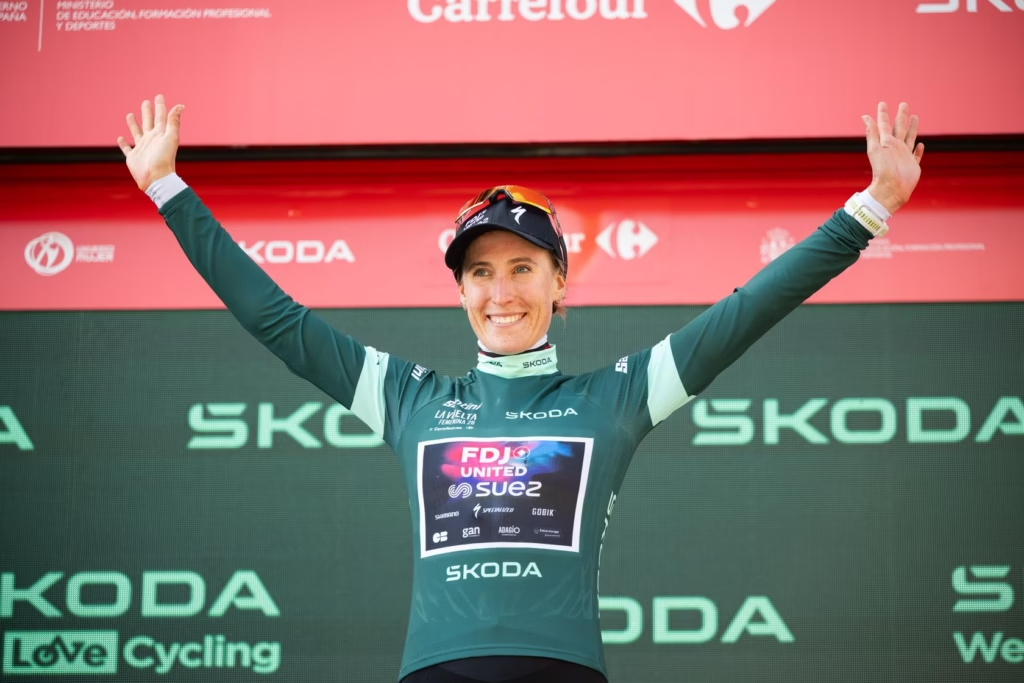 Photo Credit: Aritz Arambarri
Franziska Koch
Franziska Koch is one of the less obvious but still credible riders to watch against the clock. FDJ United-SUEZ do not have the biggest GC favourite in this race, but Koch gives them a rider with the power profile to suit a flatter, faster time-trial.
Aarburg should reward riders who can hold speed and avoid rhythm-breaking mistakes. Koch’s strength on rolling roads and her ability to sustain effort make her a reasonable outside contender for a strong stage placing.
The question is whether she can match the pure specialists over nearly 24km. Against Reusser, Backstedt, Markus and Adegeest, the bar is high. But if she rides cleanly and uses the fast sections well, she could be one of the riders who finishes higher than the GC-only reading of the race might suggest.
For FDJ United-SUEZ, this is a useful stage to chase a top result rather than simply ride through the day.
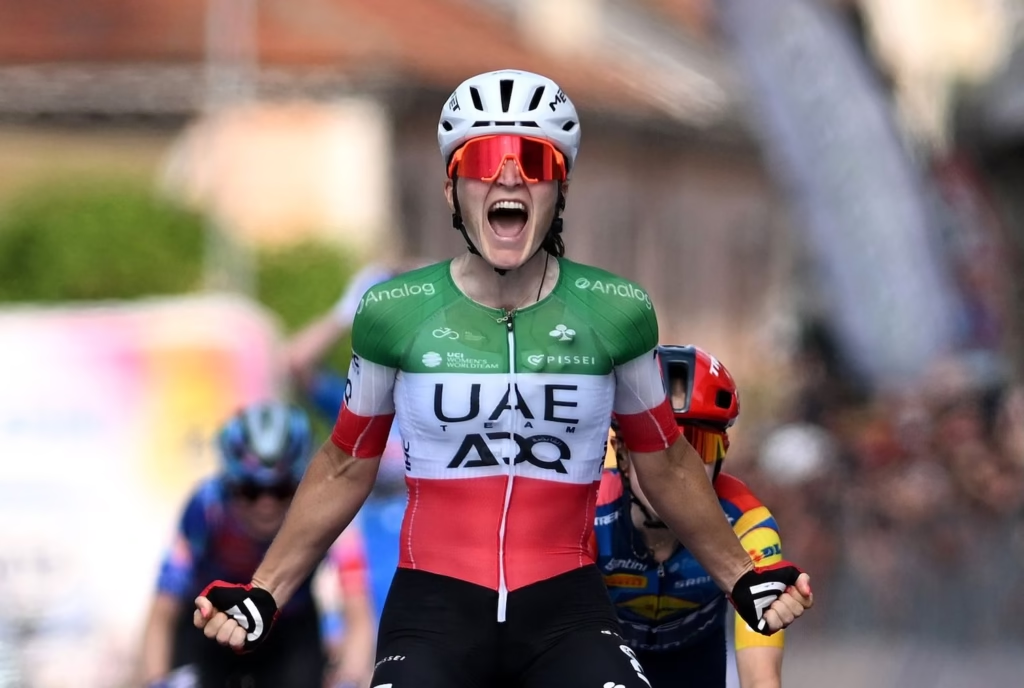
Elisa Longo Borghini
Elisa Longo Borghini’s stage 2 victory changed her Tour de Suisse completely. She is no longer simply one of the strongest challengers. She is the rider who has already landed a major blow before the time-trial.
Aarburg is still a difficult test. Longo Borghini can time-trial, but Reusser is the specialist. The Italian’s job is likely to be less about beating Reusser outright and more about keeping the margin within range before the final mountain stage.
That makes pacing crucial. Longo Borghini cannot afford a collapse in the final kilometres. She needs to ride hard enough to defend her GC position, but not so hard that she compromises recovery for Villars-sur-Ollon. Her strength is range, not just time-trial speed. If she can limit the damage in Aarburg, the final stage gives her a real chance to fight back.
UAE Team ADQ will know the equation. A solid time-trial keeps the race alive. A poor one leaves her chasing Reusser with only one mountain day left. After the Locarno win, this is the day that shows whether Longo Borghini can turn stage success into overall victory.
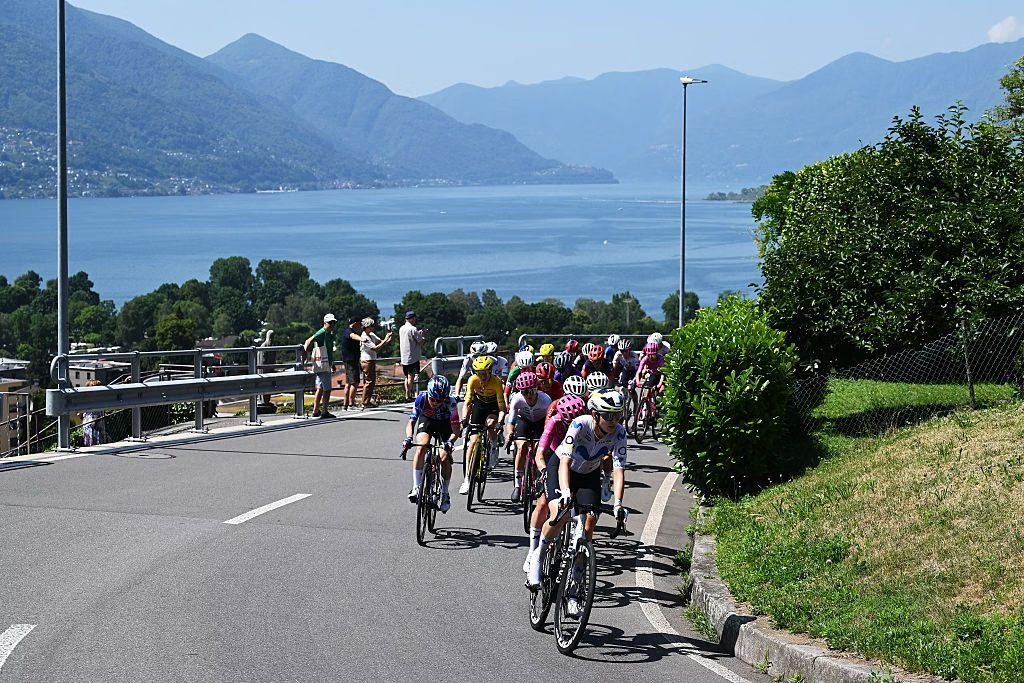
GC riders trying to limit the damage
Kasia Niewiadoma-Phinney faces one of the most important stages of her race, but her job is different from Reusser’s. The time-trial is not where she is expected to win the Tour de Suisse, but it could decide whether she still has a realistic route to the overall title on the final day.
Kim Le Court has enough power and race discipline to limit losses if she finds the right rhythm. For AG Insurance-Soudal, the broader context is complicated by Urška Žigart’s crash on stage 2, so Le Court and Justine Ghekiere carry more of the team’s stage-race responsibility.
Sarah Van Dam has already made herself a serious part of this race after her ride in Locarno. Her test is whether she can convert that road-stage momentum into a strong ride against the clock. If she limits the damage, she remains one of the most interesting riders going into the final mountain stage.
Liane Lippert is unlikely to be Movistar’s main time-trial card, but her ride still matters. Movistar’s ideal scenario is clear: Reusser gains time, Lippert limits losses, and the team enters Villars-sur-Ollon with both a race leader and a strong support option.
Other riders to watch
Shari Bossuyt’s podium finish in Bad Ragaz gives AG Insurance-Soudal another rider to watch, though the time-trial will be a very different kind of test. Lily Williams also arrives with momentum after finishing second on stage 3, but Aarburg should suit the pure specialists more than the sprint-finish contenders.
Lauretta Hanson, Babette van der Wolf, Marie Le Net, Justyna Czapla and Sara Martín are all capable of solid rides if they pace the course well, but the stage win should still sit with the riders who have the strongest time-trial pedigree and best fit for the route.
The most important benchmarks should come from Reusser, Backstedt, Markus, Swinkels, Adegeest, Häberlin, Kerbaol, Koch and Longo Borghini. They give the stage a stronger time-trial shape than a simple GC preview would suggest.
-
 Photo Credit: quentinphotographiebe
 -
 Photo Credit: Getty
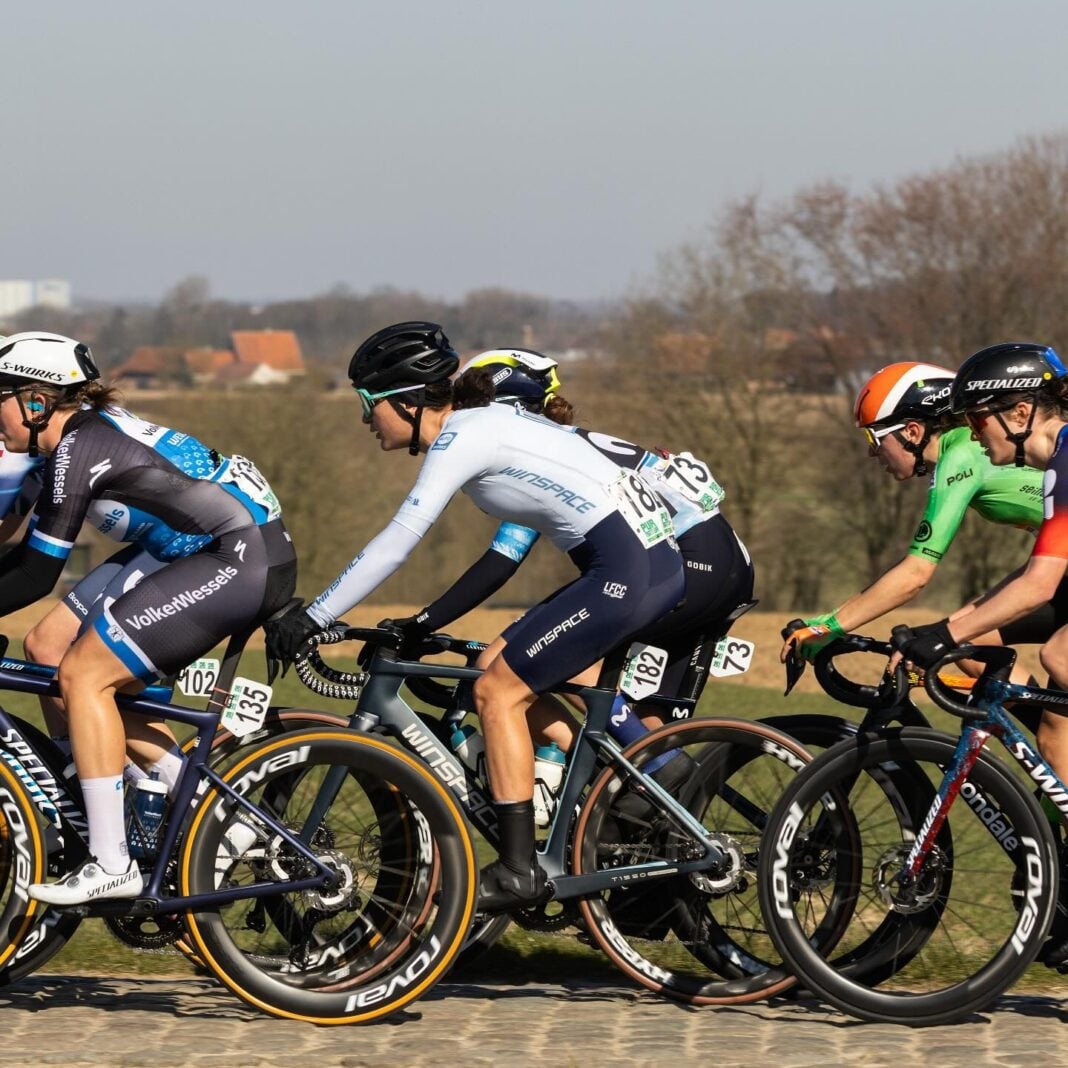
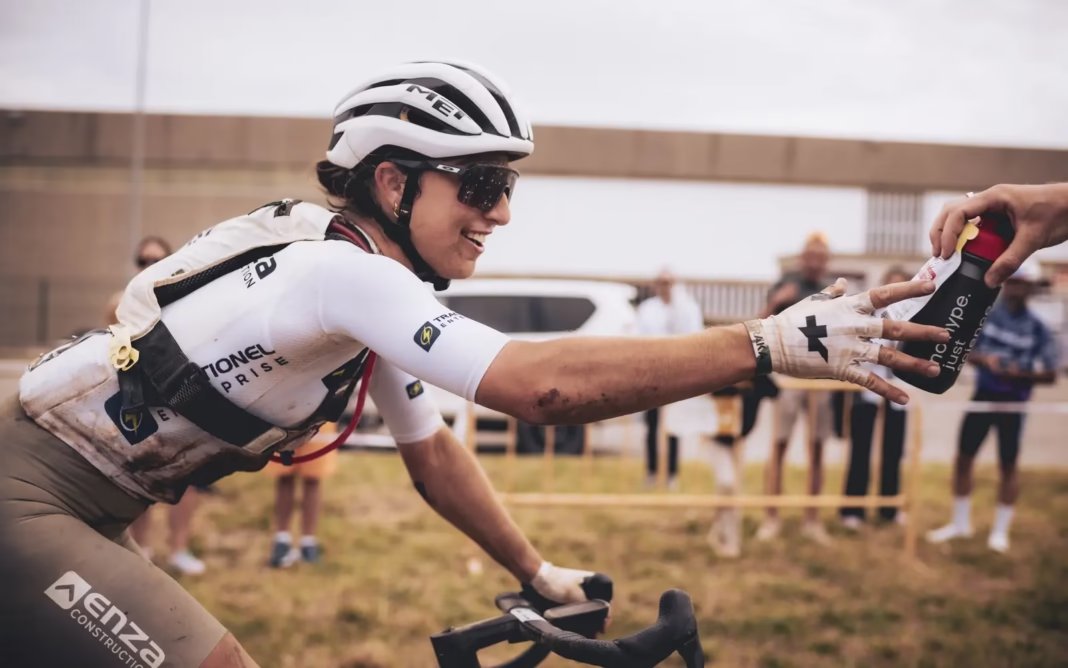
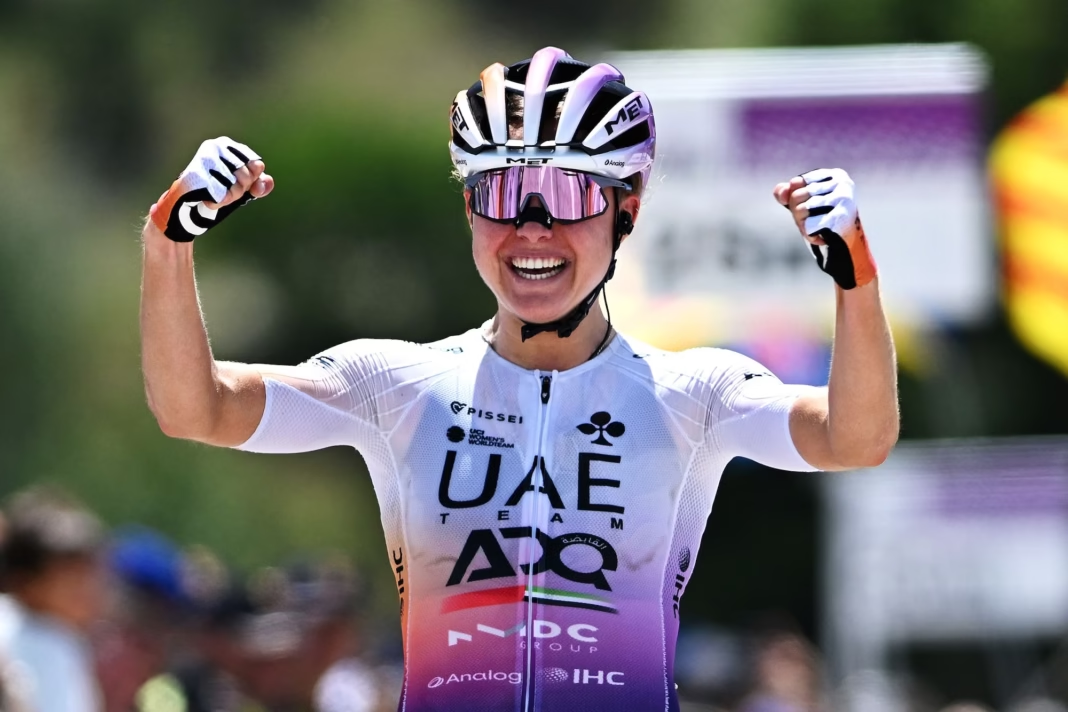
Race tactics
There are no normal road-race tactics in a time-trial, but the stage still has a tactical shape. It is about pacing, risk, equipment and how each rider balances stage ambition with final-day recovery.
Reusser is the only rider who can realistically treat this as a stage she is expected to dominate. Her goal should be to take time from every GC rival and create a buffer before Villars-sur-Ollon. The risk is going too hard early and fading late, but her experience should reduce that danger.
Backstedt, Markus, Adegeest, Swinkels, Häberlin and Koch can ride with a slightly different target. They do not all need to think about the GC in the same way. That can make them dangerous for the stage result because they can focus on the course itself rather than the final mountain stage.
Longo Borghini needs a measured ride. She does not need to match Reusser kilometre for kilometre if she can stay close enough to attack or defend on the final stage. Her pacing should be aggressive but not desperate.
The order of starters will also shape the drama. Early benchmarks can give the specialists a target, but the GC race will only become clear once the final wave hits the course. By the end of Aarburg, the Tour de Suisse Women should have a much sharper hierarchy.
Prediction
Stage 4 is the clearest Marlen Reusser day of the 2026 Tour de Suisse Women. The distance, the format and the position in the race all suit her. She has the home-road motivation, the time-trial pedigree and the route profile needed to take control before the final mountain stage.
Backstedt may be the most interesting stage challenger if she has recovered from her Bad Ragaz win. Markus and Adegeest both give Lidl-Trek strong options, while Swinkels, Häberlin, Kerbaol and Koch all have the profile to produce strong rides.
Longo Borghini should remain central to the overall picture if she carries the same form from Locarno into the time-trial. She may not beat Reusser on a course like this, but she can keep the race alive if she limits the gap.
Reusser is the clear pick. If she rides to her level, Aarburg should put her back at the centre of the race.

