
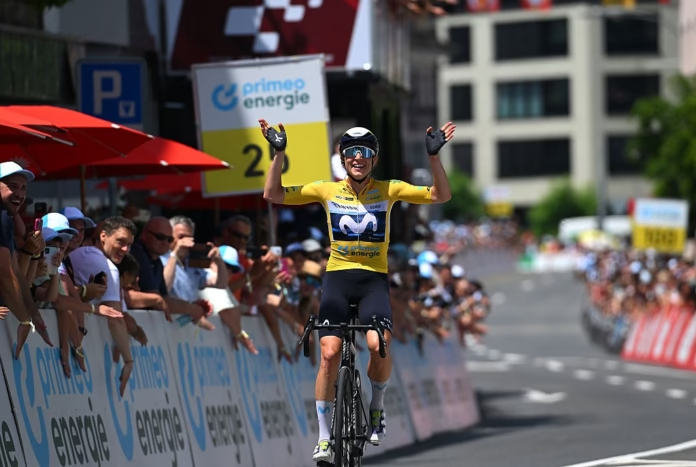
The Tour de Suisse Women 2026 has the look of a compact but revealing WorldTour stage race, with five days that should reward complete riders rather than pure climbers alone. There is no long, gradual build-up. The race starts on hilly ground in Sondrio, moves through Locarno and Bad Ragaz, adds a 23.8km individual time trial in Aarburg, then finishes with a mountain stage around Villars-sur-Ollon.
That balance makes the start list especially strong. The climbers will have a chance to make the race hard, but the time trial means they cannot rely only on the final day. The all-rounders and time triallists have a proper opening, but they still need to survive the climbing. It is the kind of route where a rider can lose the race through one bad day rather than win it through one single attack.
The race also comes soon after the Giro d’Italia Women, which gives several contender cases a sharper edge. Elisa Longo Borghini ended that race with a stage victory and now gives UAE Team ADQ a proven GC and stage-winning option, while Marlen Reusser has recent Tour de Suisse history on her side and arrives with a Movistar squad that also includes Liane Lippert. Kasia Niewiadoma-Phinney gives Canyon SRAM an obvious contender for the hillier stages and overall picture, while Kim Le Court, Justine Ghekiere and Urška Žigart give AG Insurance-Soudal several routes into the race. Elsewhere, Juliette Berthet, Cédrine Kerbaol, Ricarda Bauernfeind, Riejanne Markus, Yara Kastelijn, Thalita de Jong and Sarah Van Dam all help make this a start list where the strongest route to success may come through selective stages rather than a simple GC hierarchy.
For more detail on the route, see our Tour de Suisse Women 2026 full route guide. The full start list for Tour de Suisse Women 2026 also gives the full team-by-team line-up, while our beginner’s guide to Tour de Suisse Women 2026 explains why this race has become an important part of the Women’s WorldTour calendar.
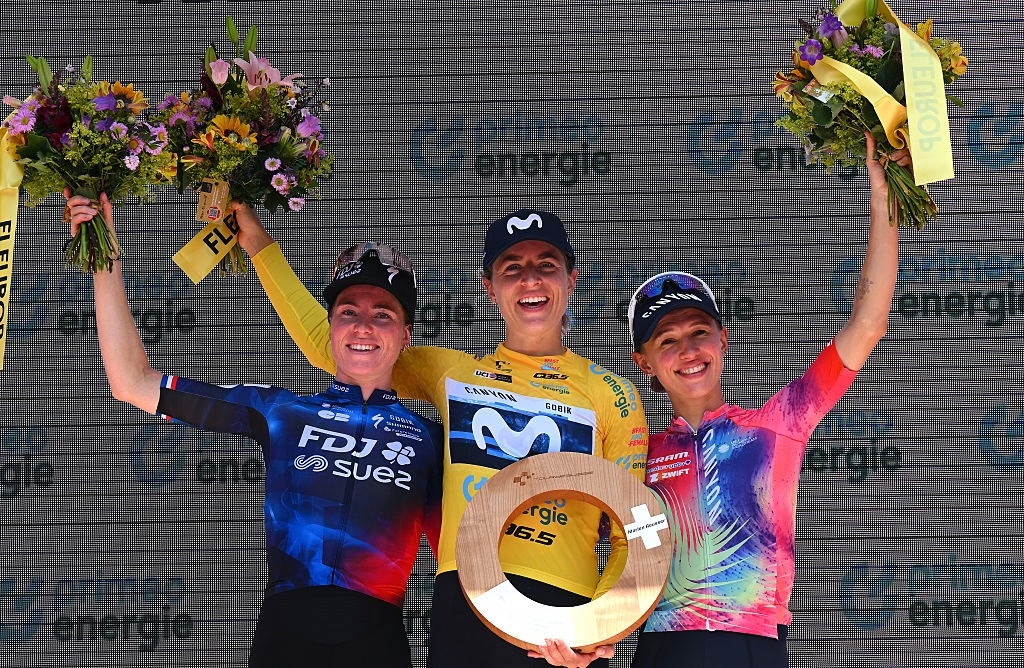 Photo Credit: Getty
What kind of rider does the 2026 route favour?
The Tour de Suisse Women 2026 route favours a complete GC rider. The opening stage in Sondrio is hilly enough to punish poor positioning and weak climbing legs. Stage 2 in Locarno keeps the race rolling, while stage 3 in Bad Ragaz should prevent teams from switching off before the weekend. Stage 4 is the obvious separator, with a 23.8km individual time trial in Aarburg. Stage 5 then takes the race to Villars-sur-Ollon for the final mountain test.
The ideal contender needs:
- Climbing strength for the final stage
- Time trial ability for Aarburg
- Positioning on hilly and technical roads
- Recovery across five consecutive days
- A team strong enough to protect them before stage 5
- The confidence to race aggressively if the time trial creates gaps
That makes the route awkward for one-dimensional riders. A pure climber may need to limit losses against the clock. A time trial specialist may need to defend on the climbs. A punchy all-rounder may stay close for several days but still be exposed on the final mountain stage.
The recent Giro also showed how quickly a race can change when the final mountain stage is hard enough. Elisa Longo Borghini turned late form into a stage victory there and now arrives in Switzerland as one of the clearest riders capable of shaping the GC, while Juliette Berthet, Cédrine Kerbaol, Ricarda Bauernfeind, Riejanne Markus and Yara Kastelijn all bring different climbing or stage-race credentials into the week. Switzerland has a similar question at its centre: who can still make the difference after several demanding days, with a time-trial already in the legs?
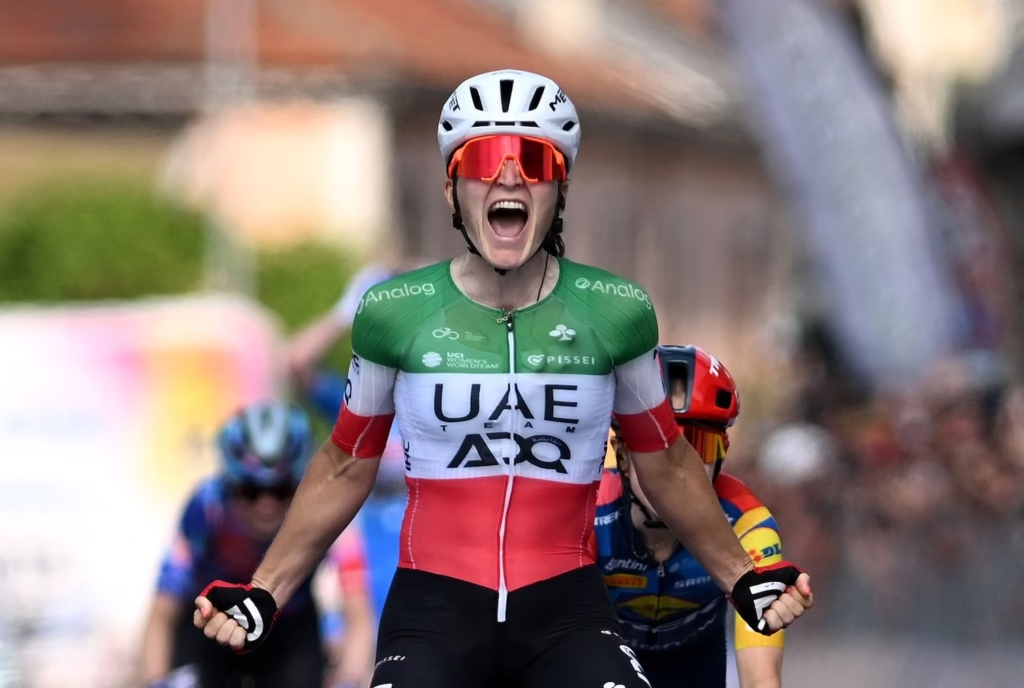
Elisa Longo Borghini
Elisa Longo Borghini is one of the few riders in the race who can challenge across all parts of the route. She can climb, time trial, descend, read a race and turn difficult terrain into an advantage. That makes her a major threat in Switzerland.
Her Giro d’Italia Women ended with a final-stage victory in Saluzzo, which is one of the clearest form signals in the field. It suggested that her late-race sharpness was returning at the right time, and the way she was able to finish off the move also matters here. The Tour de Suisse is short, but it is not simple. It should reward riders who can make decisions under pressure as much as those who arrive with the best numbers.
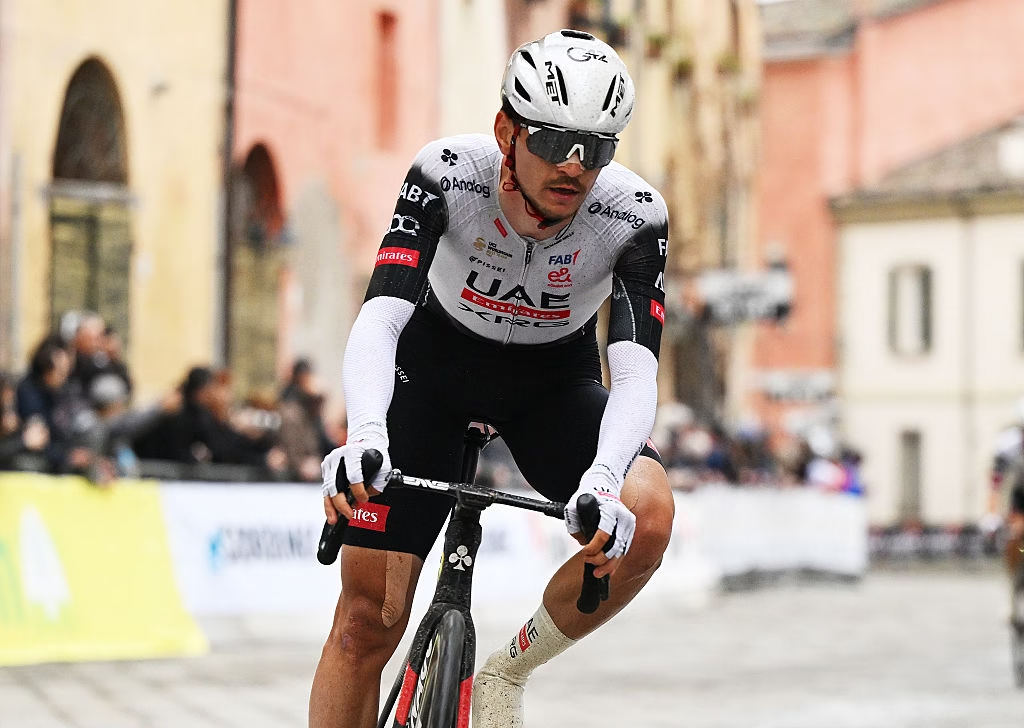
UAE Team ADQ have also selected a line-up that can do more than simply protect one leader. UAE Team ADQ have also selected a line-up that can do more than simply protect one leader. Brodie Chapman gives them experience and a strong support option on hard terrain, while Karlijn Swinkels and Maëva Squiban can be useful if the race opens through breakaways or selective stages. Greta Marturano and Febe Jooris complete a squad that should be able to keep Longo Borghini protected before the decisive GC days.
Longo Borghini’s route to victory may depend on the time trial. If she can gain or limit time there, she can force the climbers to chase on the final day. She is not the obvious favourite, but she is one of the most complete riders in the field and her Giro finish gives UAE Team ADQ a strong reason to believe the form is there.
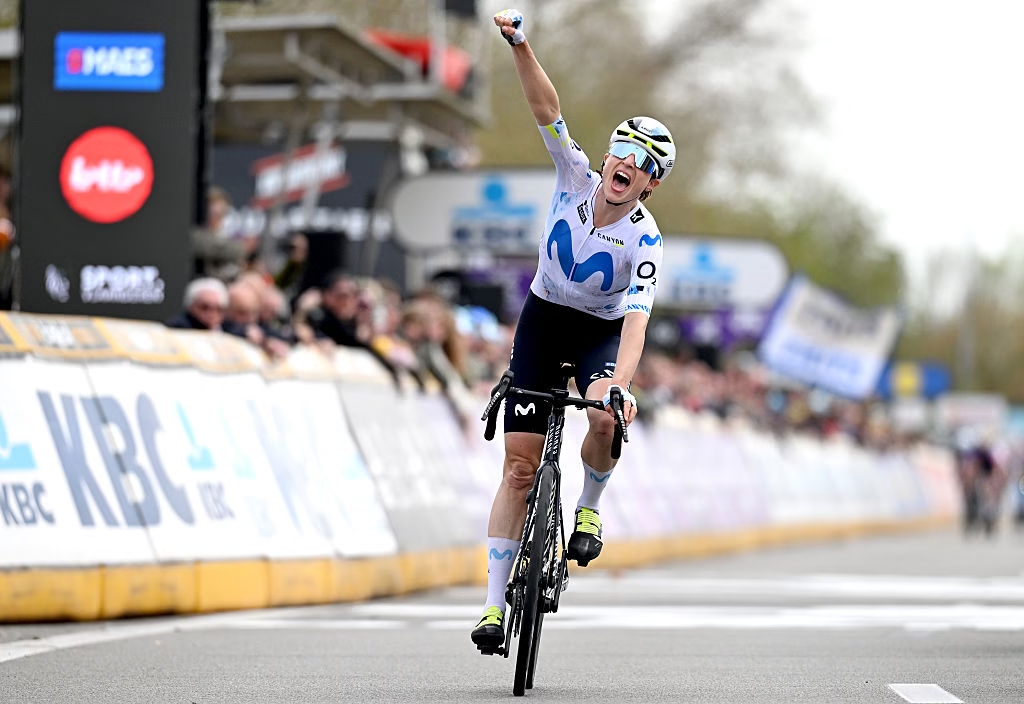 Photo Credit: Getty
Marlen Reusser
Marlen Reusser gives the race a major home contender and one of the most interesting tactical questions. The Aarburg time trial should be one of her biggest opportunities, and in a five-day race a strong ride there could reshape the whole GC.
Reusser also has recent race history on her side. She won the Tour de Suisse Women overall in 2025 after attacking late on the final stage, finishing ahead of Vollering and Niewiadoma-Phinney. That matters because this race often rewards riders who know when to use Swiss roads aggressively rather than simply waiting for the obvious summit finish.
Movistar bring a strong support group around her. Liane Lippert gives them a serious hilly-stage and climbing option, while Francesca Barale, Sara Martín, Lucía Ruiz Perez and Tota Magalhães give the team useful depth across stages where positioning, late attacks or climbing support could matter.
The question is whether the final climb asks too much. Reusser can climb well enough to win stage races, but Longo Borghini and others, may all look at stage 5 as the place to test her. If she comes out of the time trial with a meaningful advantage, the race changes. If she is only level with the climbers, the final day becomes much harder.
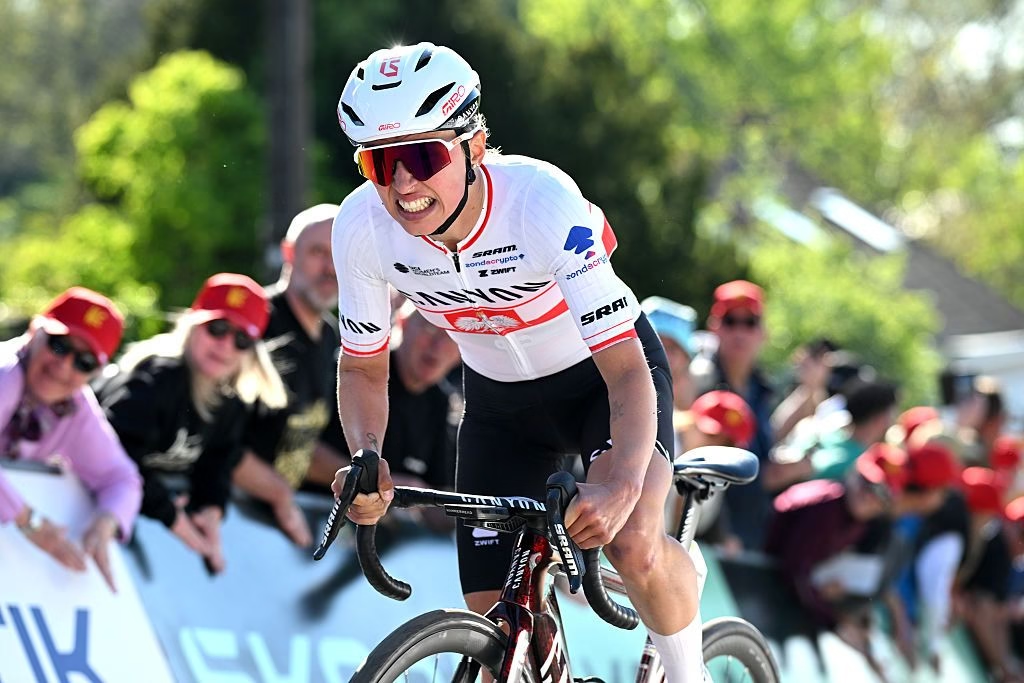 Photo Credit: Getty
Kasia Niewiadoma-Phinney
Kasia Niewiadoma-Phinney should suit the general shape of the race. The opening hilly stages, technical roads and repeated pressure all play to her strengths, while the final mountain stage gives her a chance to race on instinct if the GC is still close.
Her 2026 season has already shown a strong baseline. Second at Omloop Het Nieuwsblad and second at Strade Bianche Women underlined that she has been sharp in races that reward aggression, positioning and repeated accelerations. That does not make her the safest pick for a race with a long time trial, but it does make her hard to ignore on a route where the opening stages can be raced assertively.
Niewiadoma-Phinney’s challenge is the time trial. She does not need to win stage 4, but she cannot afford to lose too much to Reusser or Longo Borghini. If she keeps herself within range, the final day gives her room to attack.
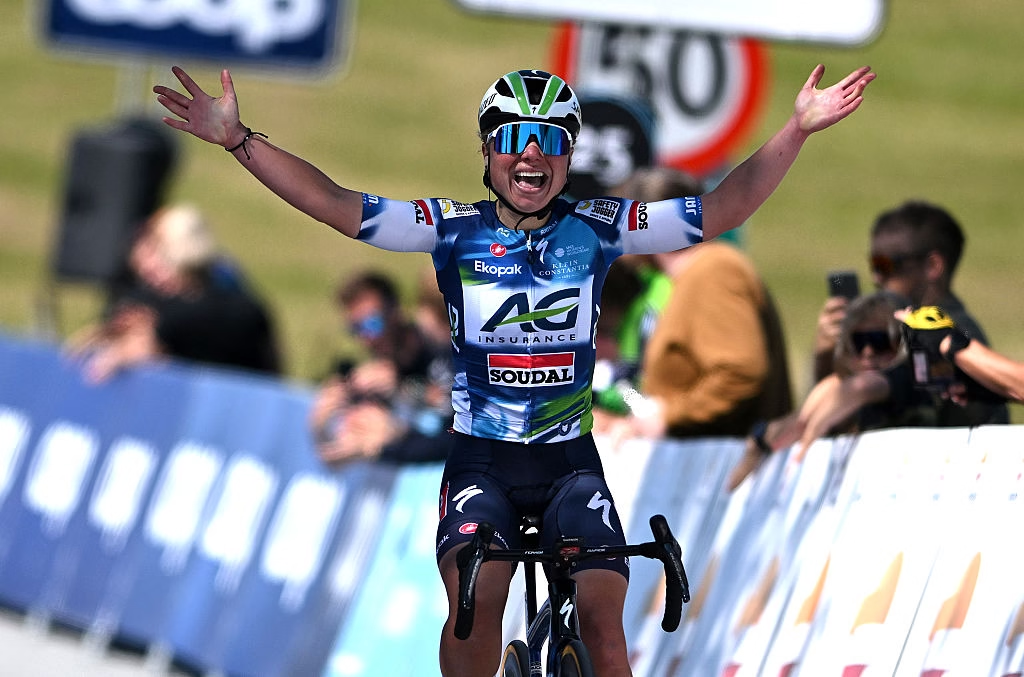
Justine Ghekiere
Justine Ghekiere gives AG Insurance-Soudal Team a serious climbing card. The route’s final stage should suit her, and the hilly opening days may also give her space if the race becomes aggressive rather than controlled.
Her challenge is straightforward: stage 4. The time-trial may make it difficult to win overall unless she is already close and then produces a major ride at Villars-sur-Ollon. But as a mountain-stage contender, she is one of the obvious names.
Ghekiere’s strongest argument is her climbing profile. On a route without the Aarburg time trial, she would be much easier to place among the top GC picks. Here, she probably needs the final stage to become very selective, with enough climbing pressure to outweigh any time lost against the clock.
AG Insurance-Soudal have a strong and varied line-up. Kim Le Court brings punch and stage-winning potential, Urška Žigart gives them another climbing option, and Letizia Borghesi, Shari Bossuyt and Tess Moerman give the team enough depth to race more than one way.
Ghekiere’s best chance may come if the final stage turns into a hard climbing race from distance. If she reaches that day close enough, she can still threaten the podium.
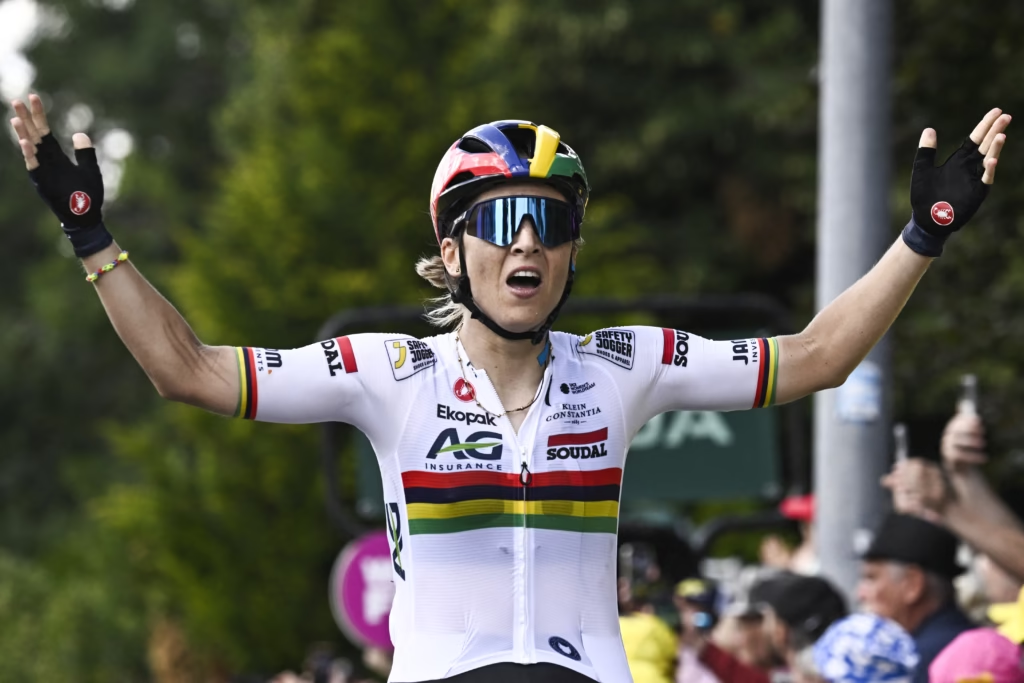 Photo Credit: Getty
Kim Le Court
Kim Le Court is not the obvious pure GC pick on a route with a mountain finale and long individual time trial, but she is too dangerous to treat only as a stage hunter. She has shown enough quality across different terrain to make her a real factor in the first half of the race.
The opening hilly stages could suit her particularly well. If the race becomes selective without turning into a pure climbing test, Le Court has the punch and race craft to take time, bonuses or even a stage win. That could put AG Insurance-Soudal in a strong position before the GC becomes more predictable.
Her season has already shown that she can be more than a one-day threat when the terrain is awkward. The question is whether she can extend that into a five-day GC race that includes both a time trial and a mountain finish. Against the most complete contenders, that may be a stretch. But if the race is messy, she is one of the riders who can make the classification move early.
Le Court may be more likely to win a stage than the overall, but she is still a contender worth taking seriously.
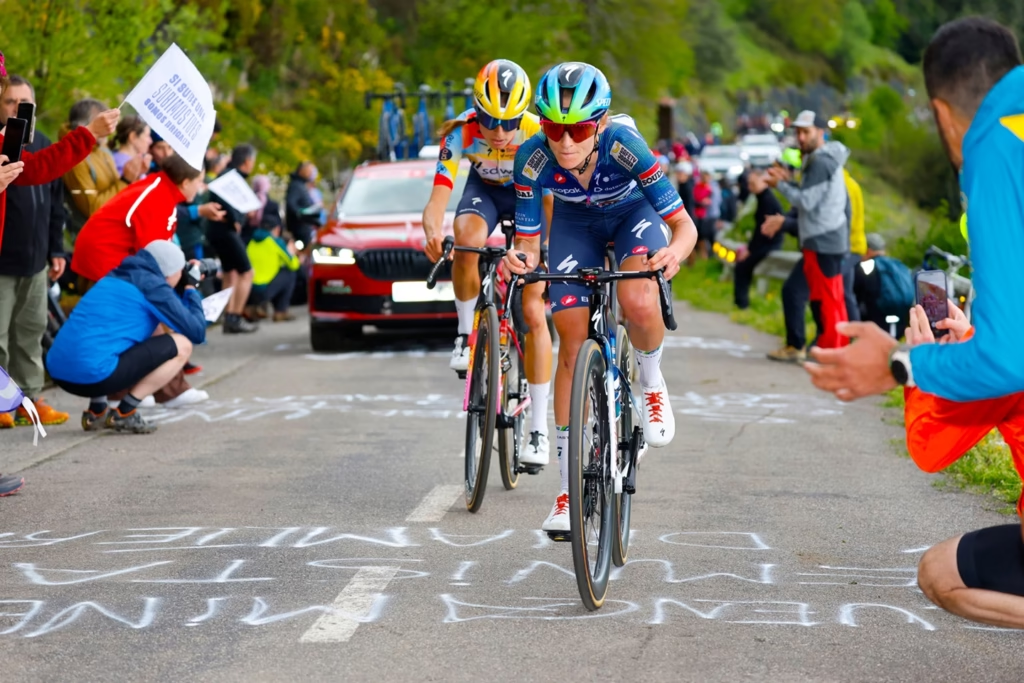 Photo Credit: Getty
Urška Žigart
Urška Žigart adds another climbing option for AG Insurance-Soudal Team. The final stage is her best opportunity, and she could become especially useful if Ghekiere or Le Court are still close on GC and the team wants to make the race hard.
A top-10 overall at the Giro d’Italia Women gives her a decent form line without making her a top-tier favourite here. The Tour de Suisse time trial means she still needs to limit losses before the final day, but her climbing can keep her in the conversation if the race becomes hard enough.
Žigart’s role may also depend on how AG Insurance-Soudal choose to use their depth. They could protect one leader, or they could race with multiple climbers and force other teams to chase. In a short race, that can be enough to unsettle the favourites.
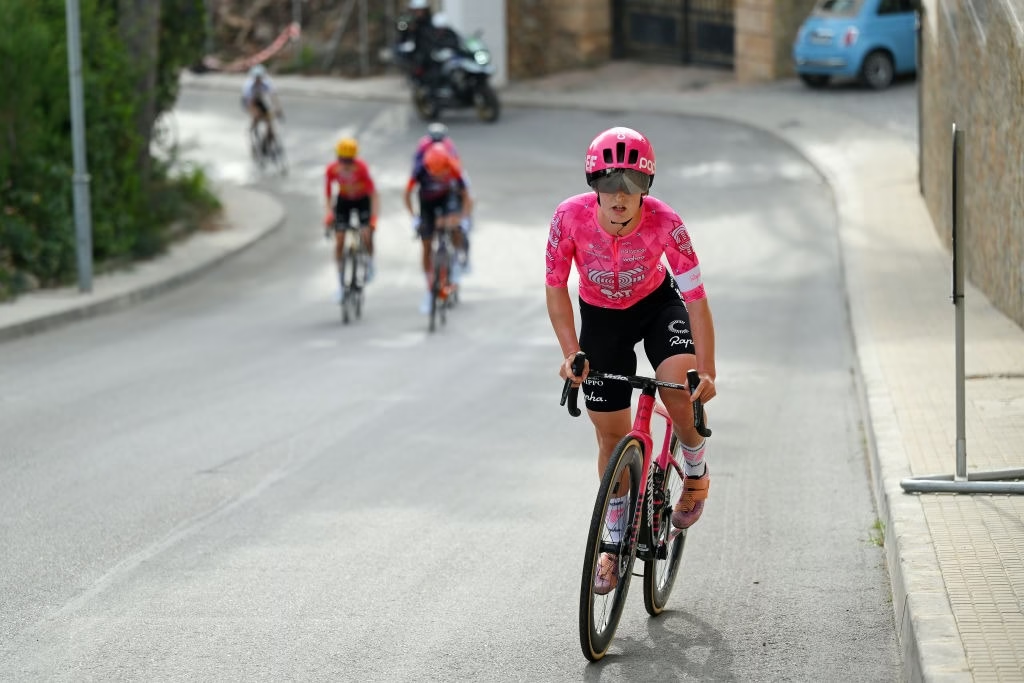
Cédrine Kerbaol
Cédrine Kerbaol is one of the most intriguing riders on the start list. The route gives her enough variety to matter, and EF Education-Oatly have selected a team that can support a serious GC bid if she is in form.
Kerbaol’s best stage-race performances have often come when the terrain is hard but not completely predictable. She can climb, descend and handle aggressive racing. The time trial is also important for her overall chances, because a good ride in Aarburg could keep her within striking distance before the final mountain day.
Her appeal here is freshness and race fit. While some of the most obvious favourites come from a hard Giro d’Italia Women, Kerbaol may arrive with a cleaner build-up and enough all-round skill to exploit a more open race. If the opening stages are chaotic or the time trial produces unexpected gaps, she is exactly the kind of rider who can move into the podium conversation.
EF Education-Oatly bring Solbjørk Minke Anderson, Henrietta Christie, Axelle Dubau-Prévôt, Alice Towers and Babette van der Wolf, giving Kerbaol support across different types of racing. Christie and Towers in particular add useful depth if the race becomes attritional or if EF want numbers around Kerbaol before the decisive climbs.
Kerbaol is not the headline favourite, but she has the profile to finish high overall if the time trial goes well.
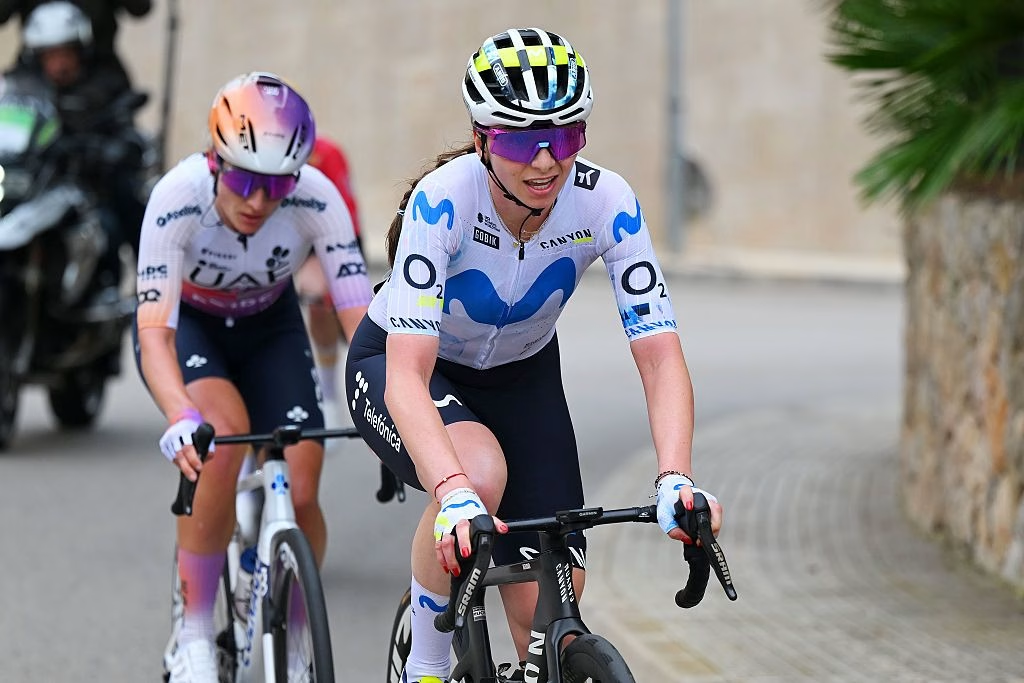 Photo Credit: Getty
Liane Lippert
Liane Lippert may be Movistar’s best stage-winning option, even if Reusser is the clearer GC card. The opening stages should suit her punch, and she is dangerous whenever the race becomes hilly, technical and attritional rather than purely mountainous.
Lippert’s appeal is route fit. Stage 1 and stage 2 could suit her better than the final GC stages, especially if Movistar want to put pressure on teams who are waiting for the time trial. She has the punch to make the most of harder finishes and the race craft to turn a selective day into more than just a reduced sprint.
Her GC path is more complicated because of the time trial and final climb, but she could still be close if she takes time or bonuses early. She is also the kind of rider who can make life easier for Reusser by forcing other teams to chase before the decisive stages.
A stage win looks more likely than overall victory, but Lippert could still shape the GC through pressure, attacks and selective racing.
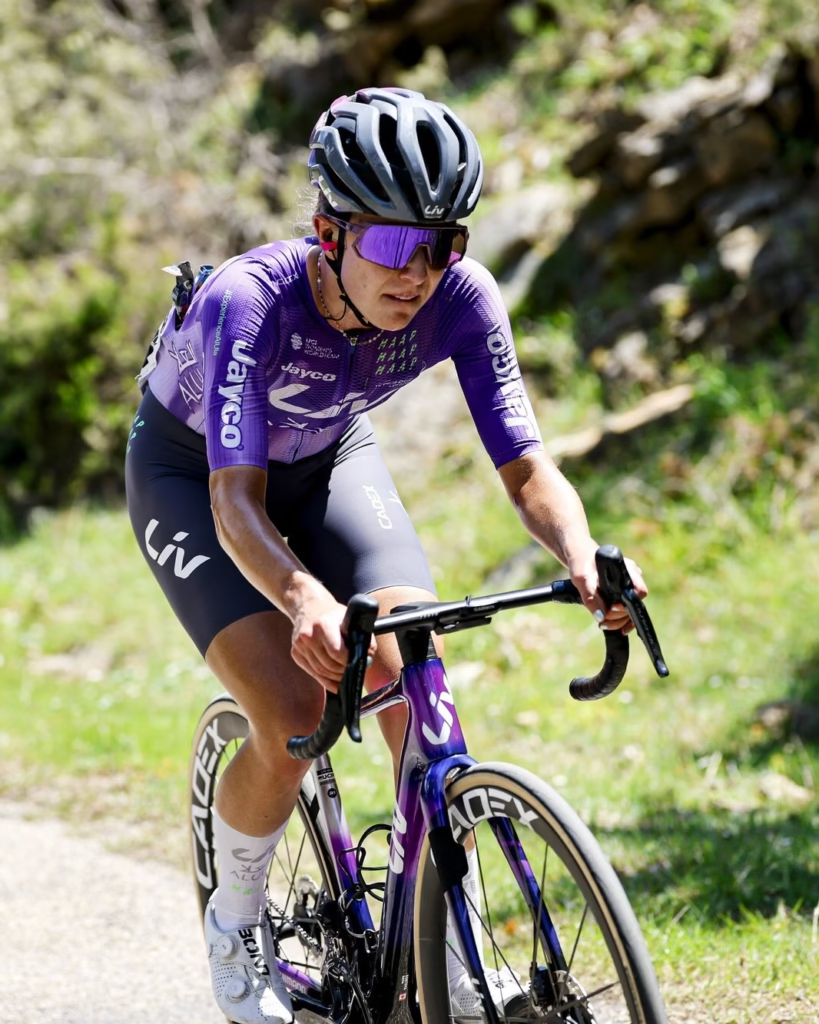
Nadia Gontova
Nadia Gontova gives Liv AlUla Jayco a genuine climbing option. The route may be difficult for the team to control, but Gontova’s strength on longer climbs makes her relevant for the final stage.
A top-15 ride at the Giro d’Italia Women was a useful marker. She was not at the very front of the overall battle, but it showed enough climbing condition to take seriously in Switzerland. The issue is whether she can turn that into a higher placing against a field that still contains some big names.
Liv AlUla Jayco also bring Ruby Roseman-Gannon, Letizia Paternoster, Talia Appleton, Mackenzie Coupland and Josie Talbot. That gives them stage options, but Gontova looks like the most obvious overall rider if the race becomes selective in the mountains.
A top-10 overall is a realistic target. A podium would probably require a strong time trial and a very aggressive final day.
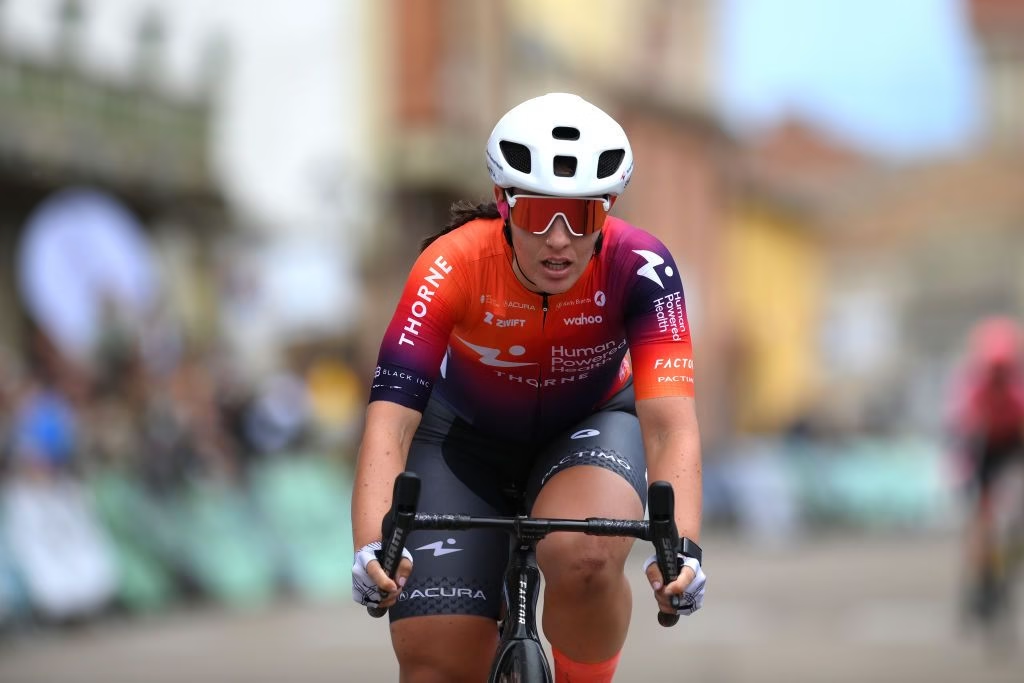
Linda Zanetti
Linda Zanetti gives the Switzerland national team a home rider with real relevance. She has had a strong 2026 and should be one of the most closely watched Swiss riders across the five days.
Zanetti’s route to a high GC placing is not straightforward, but she can be dangerous on hilly stages and in reduced groups. She also has the advantage of a clear home-race focus, which can matter in a five-day event where motivation, road knowledge and tactical freedom can all help smaller teams punch above their weight.
The national team also includes Ginia Caluori, Lea Fuchs, Jasmin Liechti, Lorena Leu and Annika Liehner, giving Switzerland a line-up that should be motivated to animate the race.
Zanetti may be more of a stage threat than an overall contender, but home roads can often make this race more open than the team hierarchy suggests.
Outside contenders and stage hunters
The depth of the start list means several riders sit just outside the main GC picture but can still shape the race.
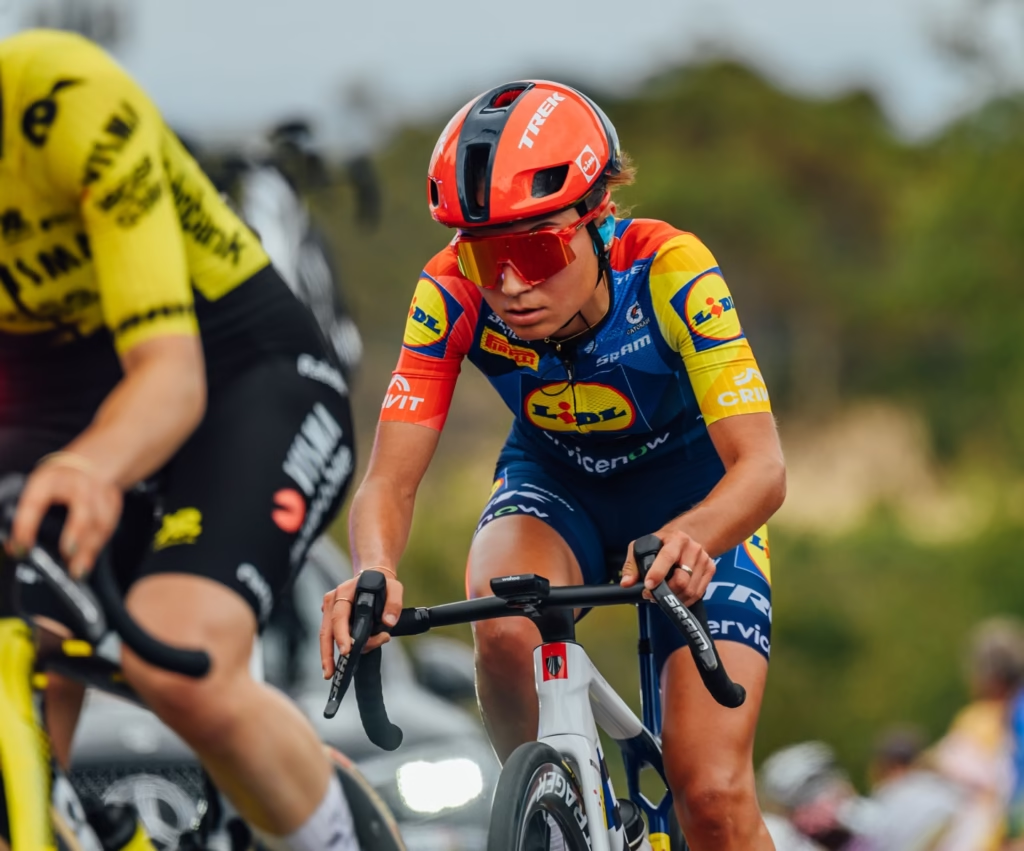
Ricarda Bauernfeind and Margot Vanpachtenbeke add further strength for Lidl-Trek, with Riejanne Markus, Lucinda Brand and Loes Adegeest also giving the team experienced options for harder terrain. Yara Kastelijn offers Fenix-Premier Tech a rider who can attack hard terrain, while Julie De Wilde gives them a different kind of stage threat.
Human Powered Health bring Marta Jaskulska, Thalita de Jong, Nina Buijsman, Titia Ryo, Lily Williams and Carlotta Cipressi. Jaskulska looks like the best fit for the harder stages, while De Jong can be dangerous if the racing becomes selective before the final climb. Ryo and Williams also give the team options if the race opens up through breakaways or reduced groups.
Team Picnic PostNL bring a group with useful upside, including Megan Arens, Becky Storrie, Juliana Londono, Daniela Hezinova, Ella Heremans and Audrey De Keersmaeker. Storrie and Arens are both riders who could use the race to test themselves against deeper WorldTour opposition, while Londono gives the team another interesting option if the climbing stages become attritional rather than controlled.
 Photo Credit: Getty
Top 3 prediction
Marlen Reusser
Reusser is the favourite because the route gives her the clearest pathway to overall victory. The Aarburg time-trial is the obvious platform, and in a five-day race any advantage gained there becomes difficult to claw back. She has recent Tour de Suisse history on her side, a powerful engine for the flatter and rolling stages, and enough climbing ability to defend on the final mountain stage if she starts it with time in hand. With Liane Lippert also in the Movistar line-up, the team has more than one way to put pressure on the race before the final climb.
Elisa Longo Borghini
Longo Borghini is the strongest challenger because she can win the race in more than one way. She can climb strongly, handle the time-trial, read selective stages well and use UAE Team ADQ’s depth to stay protected through the decisive moments. Her final-stage Giro d’Italia Women victory showed that her form is moving in the right direction again, and the time-trial-final-climb combination suits a rider with her range.
Kasia Niewiadoma-Phinney
Niewiadoma-Phinney completes the podium because the repeated hilly stages and final mountain test suit her aggressive racing style. The time-trial is the risk compared with Reusser and Longo Borghini, but if she limits the damage there, she has the consistency, climbing strength and tactical sharpness to stay in contention. Canyon SRAM may not have the deepest climbing squad in the race, but Niewiadoma-Phinney is one of the most reliable riders in the field when the race becomes selective.
-
 Photo Credit: David Magalhães / Unsplash

Tour de Suisse Women 2026 contenders verdict
The route makes Marlen Reusser the obvious favourite. She has recent Tour de Suisse history on her side, the Aarburg time-trial gives her the clearest route into the GC lead, and the shorter five-day format increases the value of any advantage she can build against the clock. The final mountain stage is the main risk, but Reusser has enough climbing strength, race craft and home-road motivation to make her the rider everyone else has to dislodge.
Elisa Longo Borghini and Kasia Niewiadoma-Phinney look like the two most compelling challengers. Longo Borghini’s final-stage Giro d’Italia Women victory showed sharpness at the right moment, while the Tour de Suisse combination of hilly stages, a time-trial and a final climb suits a rider with her range. Niewiadoma-Phinney gives Canyon SRAM a proven rider for selective terrain, repeated accelerations and aggressive racing, even if the time-trial is the section she will need to manage carefully.
Behind them, Movistar, Lidl-Trek, AG Insurance-Soudal and UAE Team ADQ bring some of the strongest tactical depth. Movistar can use Reusser and Liane Lippert in different ways, giving them both the time-trial favourite and a dangerous second card for the hillier stages. Lidl-Trek have Ricarda Bauernfeind, Riejanne Markus and Lucinda Brand for harder days, while AG Insurance-Soudal can look to Kim Le Court, Justine Ghekiere and Urška Žigart depending on how selective the race becomes. UAE Team ADQ may have Longo Borghini as the clear leader, but Brodie Chapman, Karlijn Swinkels and Maëva Squiban give the team useful support and stage-racing options.
Tour de Suisse Women rarely rewards passive racing. The 2026 route should do the same. The time-trial gives structure, the final climb gives a clear target, and the start list gives the race a hierarchy built around Reusser’s race against the clock. She is the favourite, but Longo Borghini, Niewiadoma-Phinney, Lippert and the deeper WorldTour squads should make this much more than a controlled home-road procession.

