
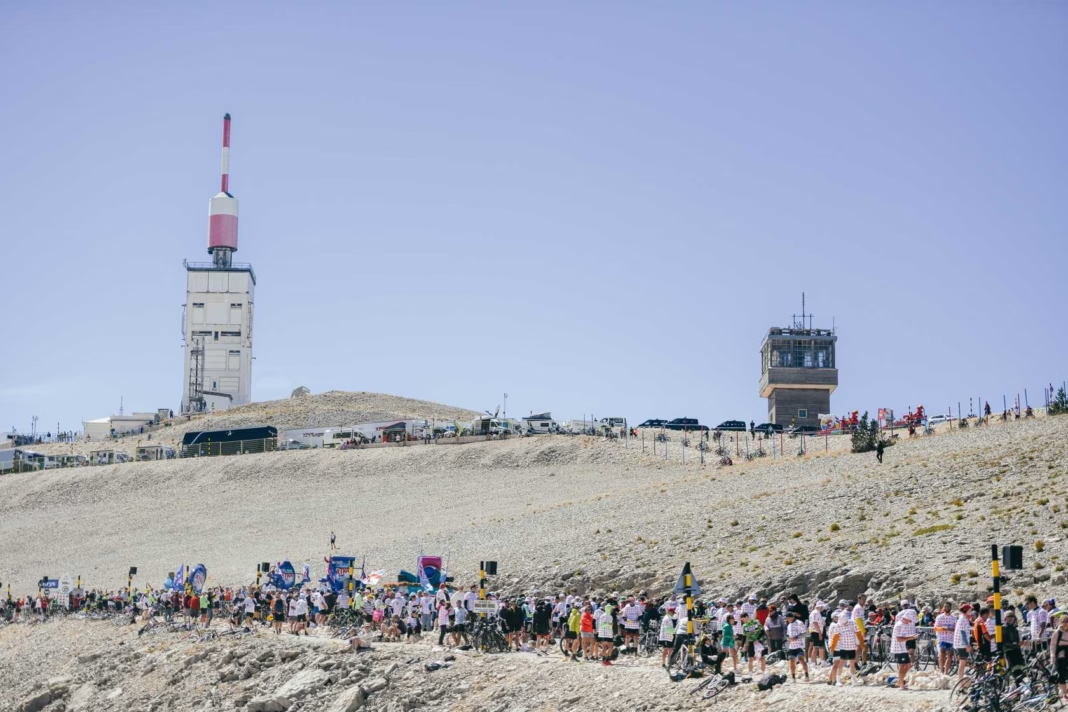
Sections of the Tour de France Femmes queen stage to Mont Ventoux will be raced without roadside spectators after organisers introduced access restrictions because of the heightened wildfire risk in Vaucluse.
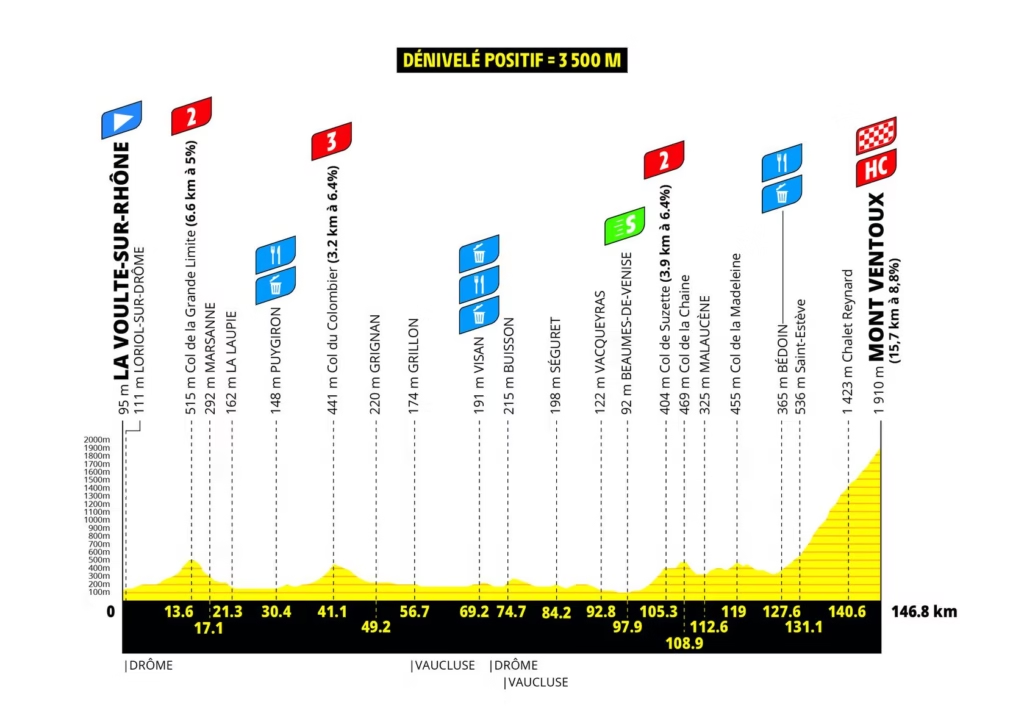
The Stage 7 route itself remains unchanged. The riders are still scheduled to cover 146.8 kilometres from La Voulte-sur-Rhône to the summit of Mont Ventoux on Friday 7 August, including the Col de Suzette and the full 15.7-kilometre ascent from Bédoin.
However, spectators and hikers will not be permitted inside the Dentelles de Montmirail massif or along part of the D90 used by the race between Suzette and the descent from the Col de la Chaîne.
The final climb of Mont Ventoux is not included in the newly announced exclusion zones. The summit finish remains scheduled to take place as planned.
The climb, its history and its likely impact on the yellow jersey contest are covered in our Tour de France Femmes Mont Ventoux guide.
Which parts of Stage 7 are closed to spectators?
The restrictions affect two areas around the approach to Mont Ventoux.
No spectators or hikers will be admitted:
- Inside the Dentelles de Montmirail massif, including the area between Caromb, Crillon-le-Brave and Bédoin
- Along the D90 from the exit of Suzette to the descent from the Col de la Chaîne in the municipality of Malaucène
Pedestrian access along the D19 is due to remain permitted, but supporters should still follow local instructions and avoid attempting to enter the wider restricted massif from footpaths or minor roads.
The section used directly by the race begins as the riders leave Suzette and continues across the Col de la Chaîne before the descent towards Malaucène.
That places the exclusion zone at an important point of the stage, between the Col de Suzette and the transition towards Bédoin. It will be visibly quieter than would normally be expected during the defining mountain stage of the Tour.
Anyone who had planned to watch from the Col de Suzette, Col de la Chaîne or surrounding Dentelles roads will need to choose a permitted alternative.
Why have the restrictions been introduced?
The measures are preventative rather than a response to a fire burning directly beside the race route.
Vaucluse’s forest massifs are tightly controlled during the summer because high temperatures, dry vegetation and wind can allow a wildfire to spread rapidly. Access levels are reviewed regularly and can be tightened when the risk becomes severe.
Large roadside crowds create additional pressure during those conditions.
Parked vehicles can obstruct emergency routes, while spectators entering woodland make evacuation more complicated. Smoking, open flames and vehicles parked over dry vegetation also introduce potential ignition sources.
The Dentelles de Montmirail contain narrow roads and limited access points. Preventing spectators from entering reduces the number of people who might need to be evacuated and keeps routes available for firefighters, police and other emergency services.
The restrictions also apply around Thursday’s Étape du Tour de France Femmes amateur event, which uses much of the same terrain before finishing on Mont Ventoux.
Is the Mont Ventoux stage still going ahead?
Yes. The Tour de France Femmes Stage 7 route remains unchanged at the time of publication.
The riders will leave La Voulte-sur-Rhône before travelling south through the Ardèche and Drôme towards Vaucluse. They then approach the Dentelles de Montmirail, cross the Col de Suzette and continue towards Malaucène before turning towards Bédoin.
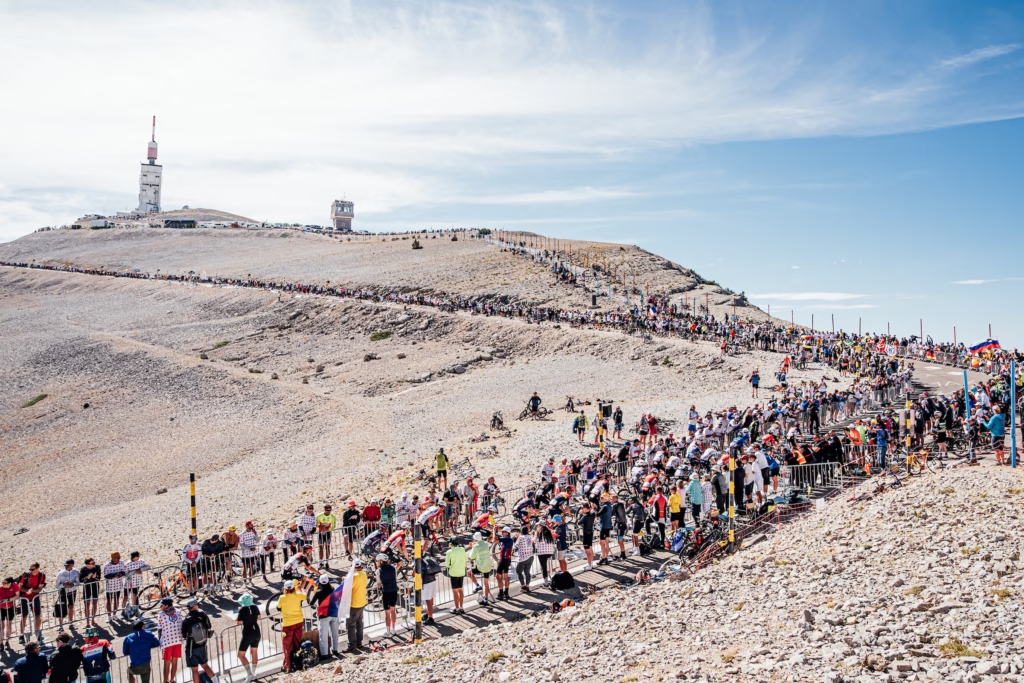
The final climb remains the classic southern ascent of Mont Ventoux:
- Length: 15.7km
- Average gradient: 8.8%
- Finish altitude: 1,910 metres
- Classification: Hors catégorie
The summit finish is the defining climbing test of the 2026 race and is expected to produce the largest gaps between the yellow jersey contenders.
Race director Marion Rousse had previously confirmed that contingency plans were being considered because of the wildfire danger while maintaining that Mont Ventoux would remain part of the stage.
The latest decision preserves the complete route while restricting public access to areas considered especially vulnerable.
Could the restrictions affect the race itself?
The direct sporting effect should be limited because the route, distance and climbs have not changed.
The absence of spectators through the Col de Suzette and Col de la Chaîne will alter the atmosphere. Television pictures are likely to show an unusually empty section of road during a crucial part of the queen stage.
Tactically, however, the riders still face the same challenge.
The Col de Suzette measures 3.9 kilometres at 6.4% and comes before the descent towards Malaucène. It could be used to increase the pace, isolate team leaders or send a satellite rider ahead before Mont Ventoux.
The transition towards Bédoin remains intact, as does the full summit finish. The general classification contenders therefore face the same physical test that was originally announced.
The restrictions may have a greater effect on race operations. Authorities must protect emergency access, manage spectators displaced from the prohibited areas and prevent people entering the massif by unofficial routes.
Supporters moving towards other parts of the stage could also increase congestion in the remaining accessible areas.
Where can supporters watch Stage 7?
Spectators should not attempt to watch from the restricted sections around the Dentelles de Montmirail, Suzette or the Col de la Chaîne.
Other areas before the exclusion zone and beyond Malaucène may remain accessible, subject to the wider traffic and road-closure arrangements introduced for the Tour.
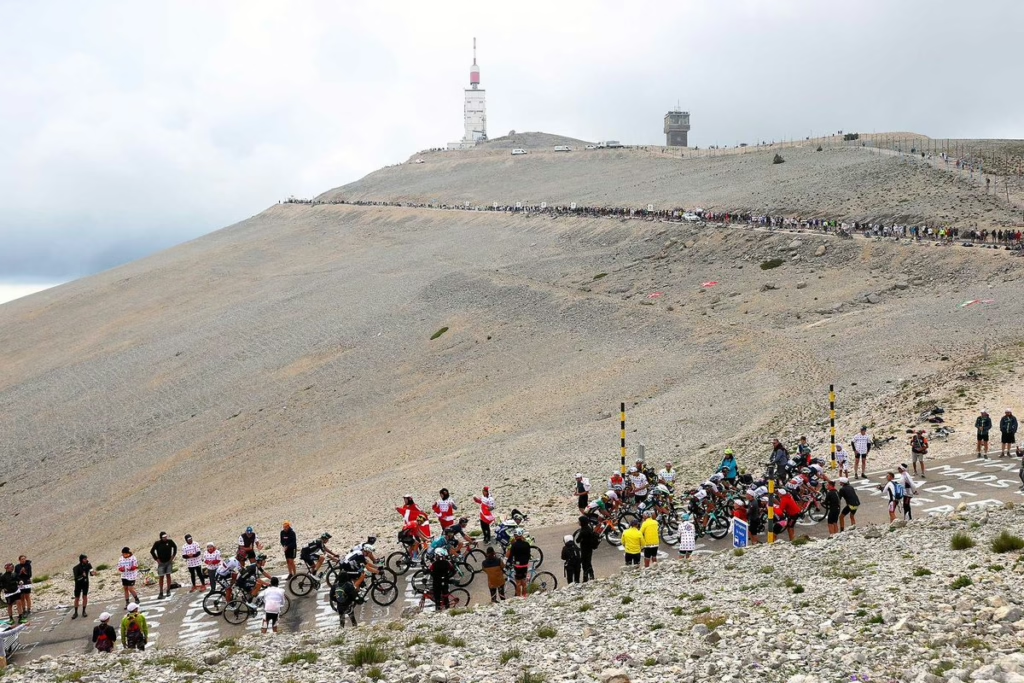
The Mont Ventoux ascent itself is not part of the newly announced spectator ban, but access will still be heavily controlled. Supporters should not assume they can drive close to the mountain or park near their preferred viewing point on Friday morning.
Anyone planning to attend should:
- Check the latest local access and road-closure information before travelling
- Avoid the Col de Suzette and Col de la Chaîne
- Stay out of the Dentelles de Montmirail massif
- Never park on emergency access tracks or dry vegetation
- Avoid smoking or lighting any form of fire
- Follow instructions from police, marshals and fire services
- Be prepared for further restrictions if conditions worsen
Those unable to attend can follow the complete stage through the options listed in our guide to watching the Tour de France Femmes in the UK.
-
 Photo Credit: Getty


How does this compare with the men’s Tour de France wildfire changes?
Wildfires also forced a major alteration to the men’s 2026 Tour de France.
Stage 21 was shortened from its original 133 kilometres to 89 kilometres after security personnel assigned to the Paris finale were redeployed to support the national response to fires elsewhere in France.
The planned competitive start from Thoiry was removed. Riders still attended the team presentation there but travelled to Paris by bus before the stage began on the Champs-Élysées.
The full circumstances are detailed in our report on how the France wildfires changed the Tour de France 2026 final stage.
The situation before the Tour de France Femmes Ventoux stage is different.
The men’s finale was shortened because the authorities needed to redeploy security resources. The restrictions in Vaucluse are focused more directly on reducing wildfire danger and protecting access for emergency services within a vulnerable forest massif.
For now, the women’s stage has not been shortened, rerouted or stripped of its defining climb. Instead, selected areas will be raced without spectators so that the original route can remain in place.
Could further Mont Ventoux restrictions still be introduced?
Further changes cannot be completely ruled out because wildfire conditions can shift quickly.
Stronger winds, rising temperatures, a new fire or a change in the local risk classification could lead authorities to tighten access again. Restrictions could also be expanded if spectators ignore the existing exclusion zones or create unsafe congestion elsewhere on the route.
The race organisation has already prepared alternative options and shown that it is willing to adapt when required.
At present, however, the central message is clear. The Tour de France Femmes will still race to the summit of Mont Ventoux on Friday, but parts of the approach through the Dentelles de Montmirail will take place without spectators.
The sporting centrepiece remains intact. The empty roadside in the kilometres before the final climb will still provide a visible reminder that the queen stage is taking place under exceptional wildfire precautions.

