
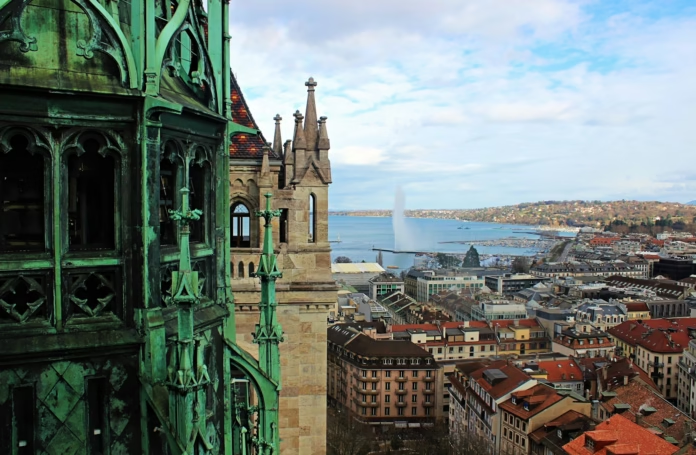
Geneva hosts the finish of stage 2 of the 2026 Tour de France Femmes on Sunday 2 August, with the riders completing a 147.9km journey from Aigle before racing along the Quai du Mont-Blanc towards the Jet d’Eau.
The stage is officially classed as flat, but the route is considerably more demanding than that label suggests. Five categorised climbs are packed into the middle of the day, including the short and steep Côte de Bougy-Villars, before the final 47km trend towards Geneva.
The neutralised start in Aigle is scheduled for 14:20, with the finish expected at approximately 17:47. The publicity caravan leaves at 12:20, while the organisers’ projected arrival window in Geneva stretches from around 16:51 to 18:06 depending on the speed of the stage.
For spectators, Geneva offers one of the most accessible finishes of the opening weekend. The line is close to the railway station, the waterfront is easy to reach on foot and the Jet d’Eau should provide one of the defining images of the 2026 race.
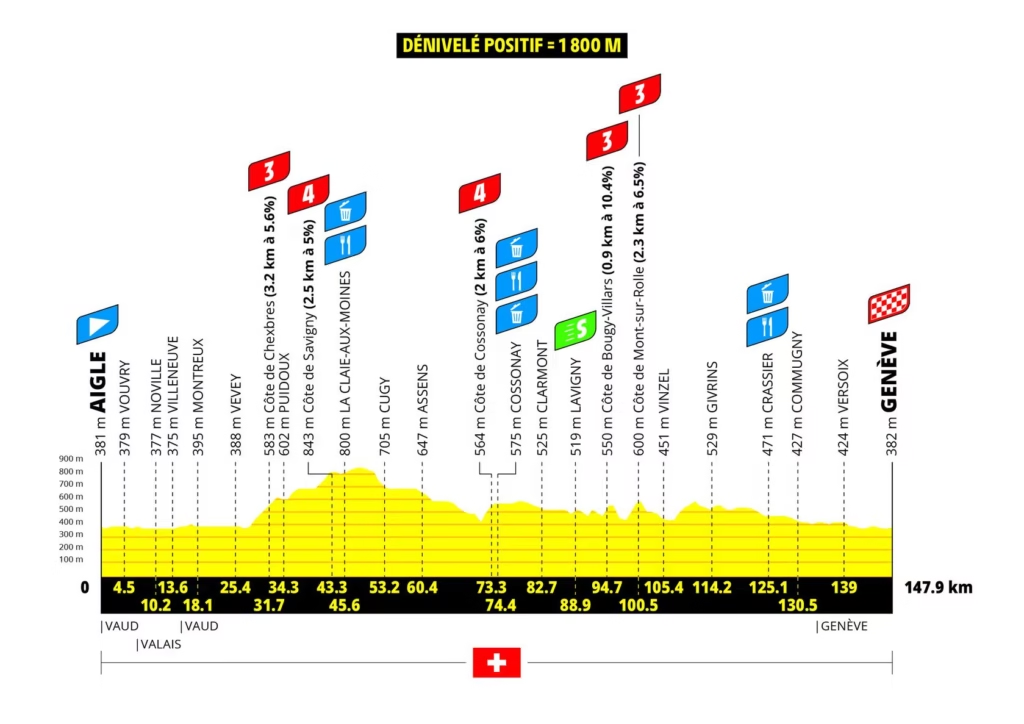
Tour de France Femmes 2026 stage 2 details
| Detail | Information |
|---|---|
| Date | Sunday 2 August 2026 |
| Route | Aigle to Geneva |
| Distance | 147.9km |
| Stage type | Flat |
| Publicity caravan | 12:20 |
| Neutralised start | 14:20 |
| Expected finish | 17:47 |
| Finish location | Quai du Mont-Blanc |
| Final categorised climb | Côte de Mont-sur-Rolle |
| Distance from final climb to finish | 47.4km |
The route leaves Aigle and passes close to the headquarters of the UCI and the World Cycling Centre before heading west through Montreux and Vevey. It then climbs away from Lake Geneva, skirts the northern side of Lausanne and crosses rolling roads through Cossonay, Aubonne, Mont-sur-Rolle and the countryside above Nyon.
The final approach passes through Chéserex, Crassier, Chavannes-de-Bogis, Commugny, Tannay, Mies and Versoix before entering Geneva for the run towards Quai du Mont-Blanc.
The full shape of the race, including the later time trial and mountain stages, is covered in the Tour de France Femmes 2026 route guide.
Where does stage 2 finish in Geneva?
The finish line will be on Quai du Mont-Blanc, on the northern shore of Lake Geneva.
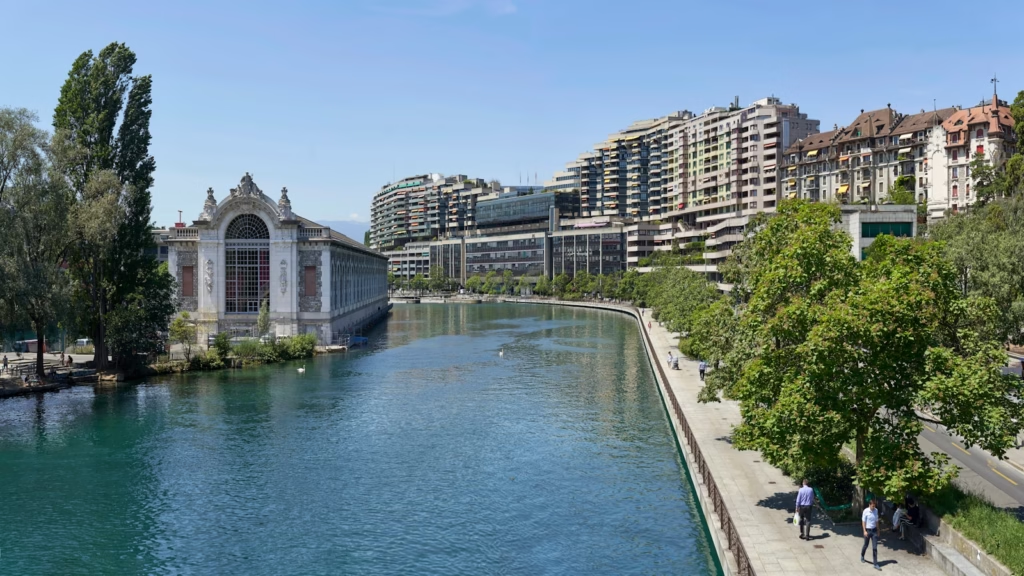
This is one of the city’s best-known waterfront roads. It runs between the area around Geneva Cornavin railway station and the lake, with views across the water towards the Jet d’Eau and the city’s southern bank.
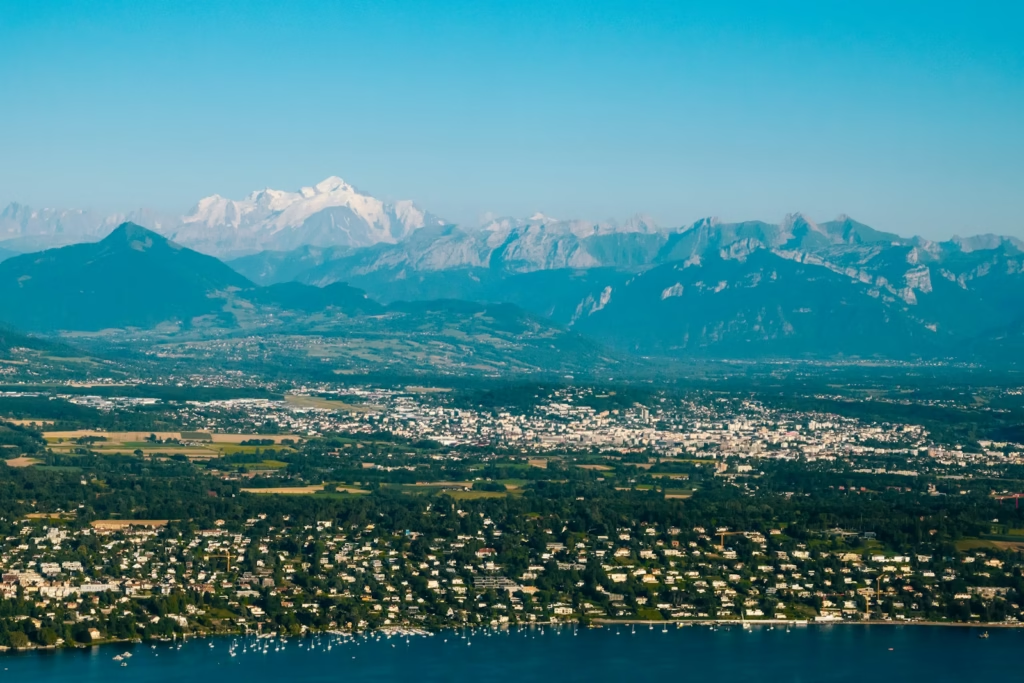
The finish is expected to be positioned beside the lake, with the fountain, waterfront and surrounding mountains forming the backdrop to the final sprint.
The finishing infrastructure is likely to occupy a substantial part of Quai du Mont-Blanc. Barriers, hospitality areas, television platforms, team vehicles and race organisation compounds will reduce the amount of public roadside space available close to the line.
What time should spectators arrive at the Geneva finish?
Spectators aiming for a place close to the finish should arrive by 13:00 or 14:00.
The riders are not expected until late afternoon, but the public event area opens at midday and the best positions should fill long before the peloton reaches Geneva. Arriving early also gives visitors time to understand the barrier layout, identify course crossings and choose between the finish line and a position further back on the approach.
Anyone arriving after 16:00 should expect the waterfront to be crowded. At that point, the publicity caravan and race convoy may also begin restricting pedestrian movement across the course.
The official middle estimate places the finish at 17:47, but the fastest schedule brings the peloton to Quai du Mont-Blanc at approximately 16:51. Being in position by 16:15 is therefore essential, even for spectators who are not trying to stand near the line.
The best places to watch stage 2 in Geneva
Quai du Mont-Blanc for the stage winner
The finish line is the obvious choice for spectators who want to see the sprint, podium ceremonies and the race leader after stage 2.
The final straight should be extremely fast. The last categorised climb comes almost 48km from the finish, giving the sprint teams time to reorganise and chase any surviving breakaway.
The main drawback is visibility. Finish areas are crowded, and spectators several rows back may see little more than helmets and raised phones as the peloton arrives.
A front-row position will require patience and an early arrival.
Best for: the result, podium atmosphere and the closest view of the stage winner.
Quai Wilson for the speed of the approach
Quai Wilson continues along the northern lakefront beyond Quai du Mont-Blanc and may offer more roadside room away from the most congested finish structures.
The exact course alignment through central Geneva will determine how much of this area is used, but the northern waterfront should provide several possible viewing points before the race reaches the final straight.
Standing slightly further from the line usually gives a better impression of the peloton’s speed. The teams will be fully organised here, with sprint trains fighting for position and riders using almost the entire width of the road.
Best for: speed, team positioning and potentially lighter crowds than the finish line.
Versoix for a quieter final approach
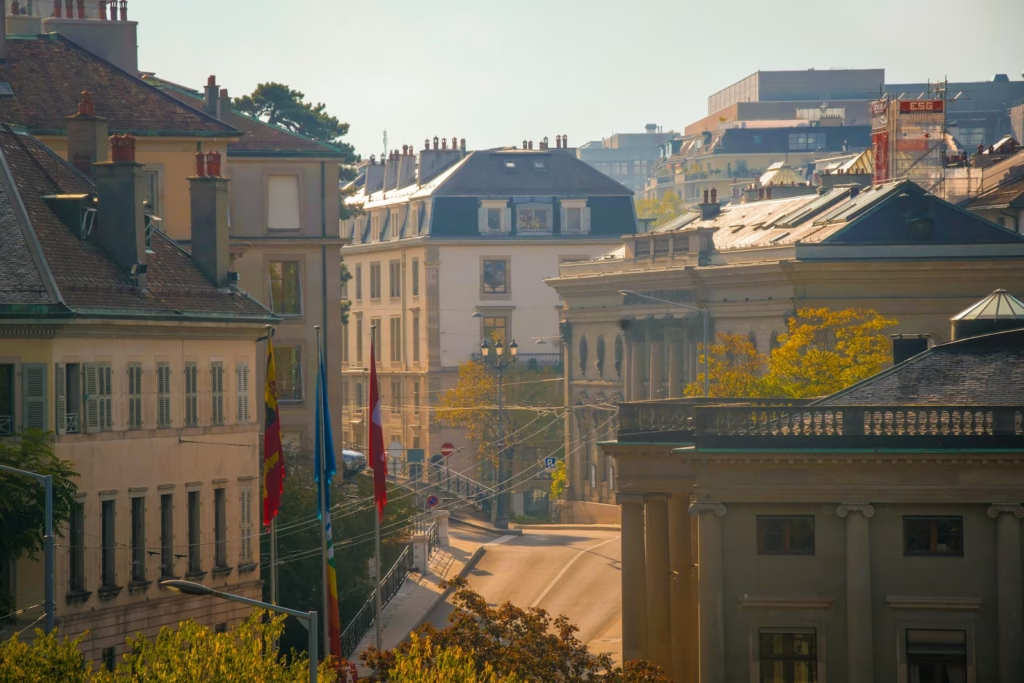
Versoix sits roughly nine kilometres from the finish and is scheduled to see the race between approximately 17:35 and 17:53 under the official projections.
The road towards Geneva should be fast and increasingly controlled by the sprint teams. Any remaining attackers will be under severe pressure, while the main contenders will already be moving towards the front.
Versoix has its own railway station and is considerably quieter than central Geneva. It is therefore a strong option for families or spectators who want a clear roadside view without spending several hours behind the finish barriers.
It will not be possible to watch in Versoix and then reach Quai du Mont-Blanc before the riders. The peloton should cover the final kilometres in around 12 minutes.
Best for: easier access, lower crowd levels and watching the sprint trains form.
Mies and Tannay for a village setting
Mies and Tannay are around 16km from the finish and should see the peloton shortly after 17:25 under the middle schedule.
These communities sit close to the lake and have railway stations on the line between Lausanne, Nyon and Geneva. That makes them practical places to watch without needing a car.
The race should already be moving at high speed, but the peloton may still be stretched rather than arranged into fully formed lead-out trains. A breakaway could also remain visible at this point.
Best for: rail access, smaller crowds and a more relaxed Swiss roadside experience.
Chéserex and Crassier for late tactical racing
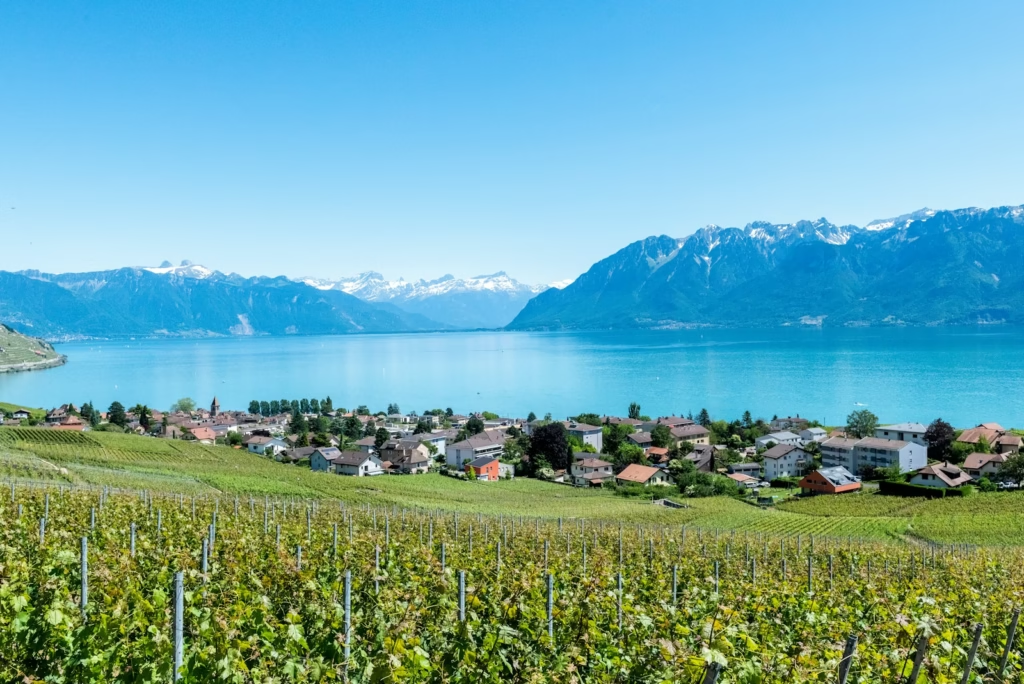
Chéserex and Crassier are reached with around 24km to 28km remaining. These roads come after the final climbs but before the race settles onto the final approach towards the lake.
This is a potentially useful area for spectators who want to see the tactical transition between the rolling middle section and the flat finish. Breakaway riders may still believe they can survive, while the sprint teams will be calculating how quickly to close the gap.
The roads around these villages may have less public transport than the lakeside communities, so travel planning is more important.
Best for: breakaway tension and quieter countryside roads.
Côte de Mont-sur-Rolle for the final climb
The Côte de Mont-sur-Rolle is the last categorised climb of the stage. It measures 2.3km at 6.5% and is crested after 100.5km, leaving 47.4km to the finish.
The climb is not close enough to Geneva to decide the stage on its own, but it could expose tired sprinters or encourage an aggressive group to attack. Teams without a leading fast finisher may try to make the race difficult here before the terrain becomes more favourable to a chase.
Spectators choosing the climb should remain there for the day. Reaching Geneva before the finish will be unrealistic once the peloton has passed.
Best for: climbing action, attacks and seeing whether the sprinters are under pressure.
Bougy-Villars for the steepest gradient
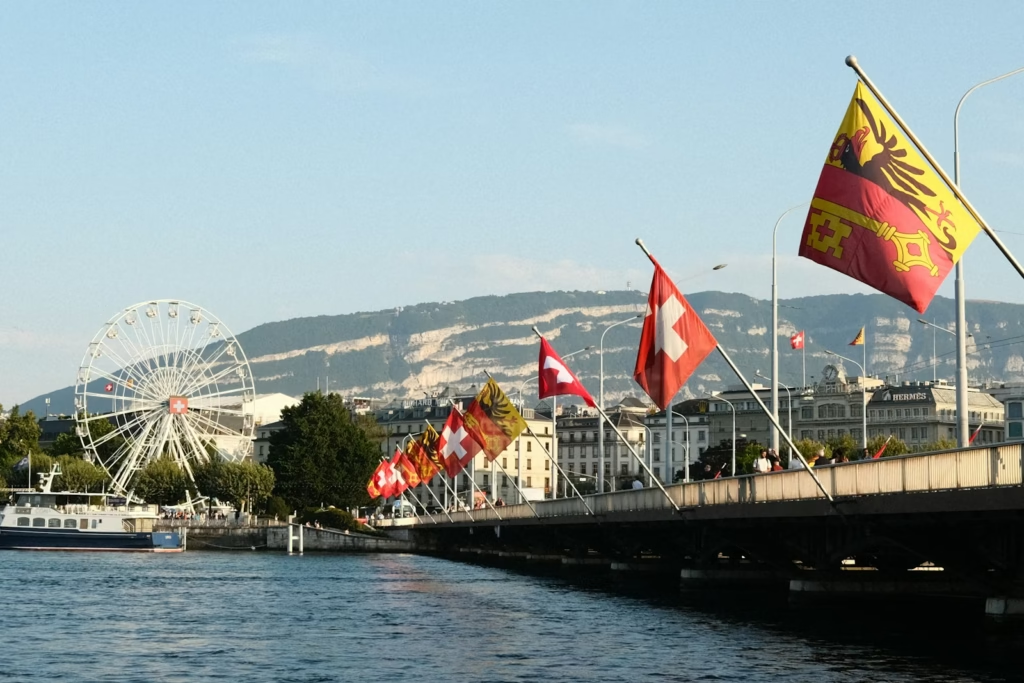
The Côte de Bougy-Villars is only 900 metres long but averages 10.4%, making it the steepest categorised climb of stage 2.
It comes shortly before Mont-sur-Rolle and could provide the sharpest racing of the day. A sudden acceleration may split the peloton, force sprinters out of position or create a strong attacking group.
Short, steep climbs are often easier to watch than longer ascents because the riders remain visible for longer while moving at a lower speed.
Best for: steep gradients, attacks and a more selective passage.
Can you watch the start in Aigle and finish in Geneva?
Watching both should be possible, but it requires a disciplined travel plan.
The neutralised start leaves Aigle at 14:20, while the expected finish in Geneva is 17:47. Aigle and Geneva are connected by rail along the northern side of Lake Geneva, and the race itself takes a much longer inland route after passing Montreux and Vevey.
A spectator could watch the rollout in Aigle, walk promptly to the railway station and travel directly to Geneva Cornavin. The finish on Quai du Mont-Blanc is within walking distance of Cornavin station, although event barriers may lengthen the final approach.
This plan leaves little margin for delays. Anyone prioritising a good finish-line position should skip the Aigle start and travel directly to Geneva.
A recommended Geneva finish itinerary
12:00: event area opens
Geneva’s official Tour programme is scheduled to begin at midday. This should include the fan zone, food stalls and additional activities connected to the stage finish.
13:00: explore the waterfront
Walk around Quai du Mont-Blanc and the surrounding lakefront before the largest crowds arrive. Identify the finish line, fan zone and available crossing points.
14:00: choose a viewing position
Commit to either the finish area or a position further back on the approach. Moving later may become difficult once barriers are closed.
16:15: be ready for the race
The fastest official schedule places the finish shortly before 17:00. The race can run ahead of the central estimate, particularly if there is a strong tailwind or an aggressive opening half.
17:47: expected finish
The middle schedule has the stage ending at 17:47. A bunch sprint is the most likely outcome, although the climbs create more uncertainty than the official flat classification suggests.
After the finish: allow the crowds to clear
Quai du Mont-Blanc and Cornavin station are likely to become very busy immediately after the stage. Remaining by the lake for food or a walk may be more comfortable than joining the first rush towards trains and trams.
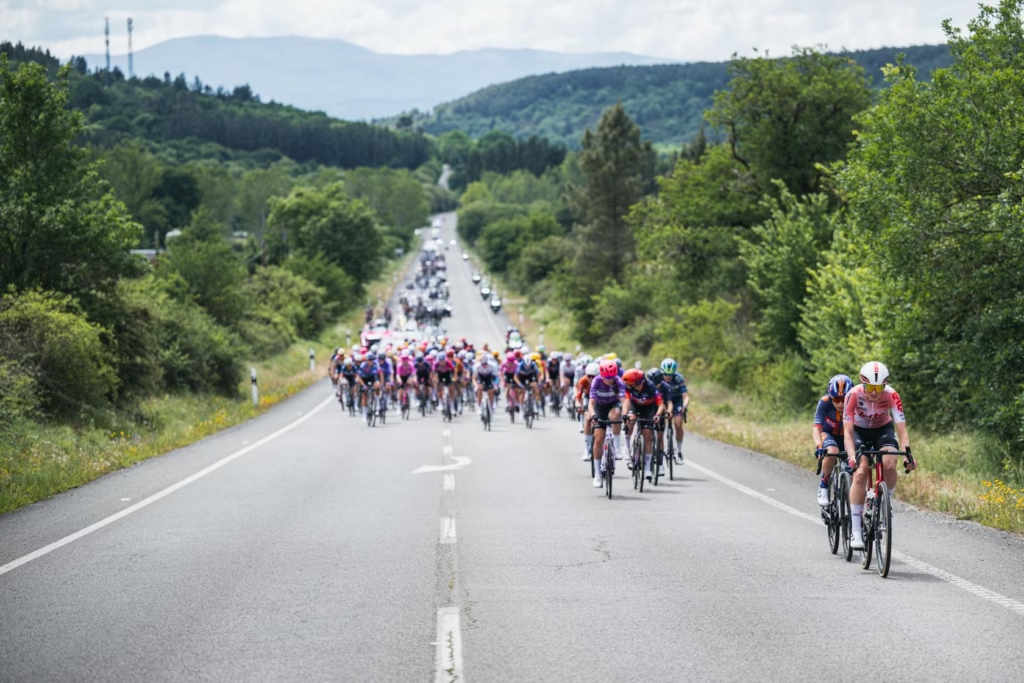
How hard is stage 2?
Stage 2 includes five categorised climbs:
| Climb | Length | Average gradient | Category |
|---|---|---|---|
| Côte de Chexbres | 3.2km | 5.6% | Category 3 |
| Côte de Savigny | 2.5km | 5% | Category 4 |
| Côte de Cossonay | 2km | 6% | Category 4 |
| Côte de Bougy-Villars | 0.9km | 10.4% | Category 3 |
| Côte de Mont-sur-Rolle | 2.3km | 6.5% | Category 3 |
The climbs are difficult enough to reduce the peloton, but their location favours the sprint teams. Mont-sur-Rolle is followed by a long run towards Geneva, giving dropped riders and domestiques time to return.
The greatest risk for the sprinters may be repeated fatigue rather than one decisive ascent. The route climbs through several sections around Lake Bret and then continues across rolling roads north of Lausanne. Riders who repeatedly lose position could spend significant energy returning to the front.
A strong team may also try to use Bougy-Villars and Mont-sur-Rolle as a combined attacking point. The two climbs come close together, creating an opportunity to isolate sprint leaders before the long descent towards Geneva.
What kind of finish should Geneva expect?
A bunch sprint remains the most probable result.
The final kilometres from Versoix into Geneva are largely suited to organised teams. After more than 100km of climbing and rolling terrain, however, the sprint may include fewer riders than a conventional flat stage.
Positioning will matter long before Quai du Mont-Blanc. The roads entering Geneva can include urban furniture, roundabouts, bends and changes in road width. Teams will want their sprinters near the front before the city centre rather than attempting to move up in the final kilometre.
The visual setting may be elegant, but the sporting contest should be intense. The Jet d’Eau will sit behind a sprint fought at close to maximum speed.
Readers unfamiliar with how the race works can find more context in the beginner’s guide to the Tour de France Femmes 2026.
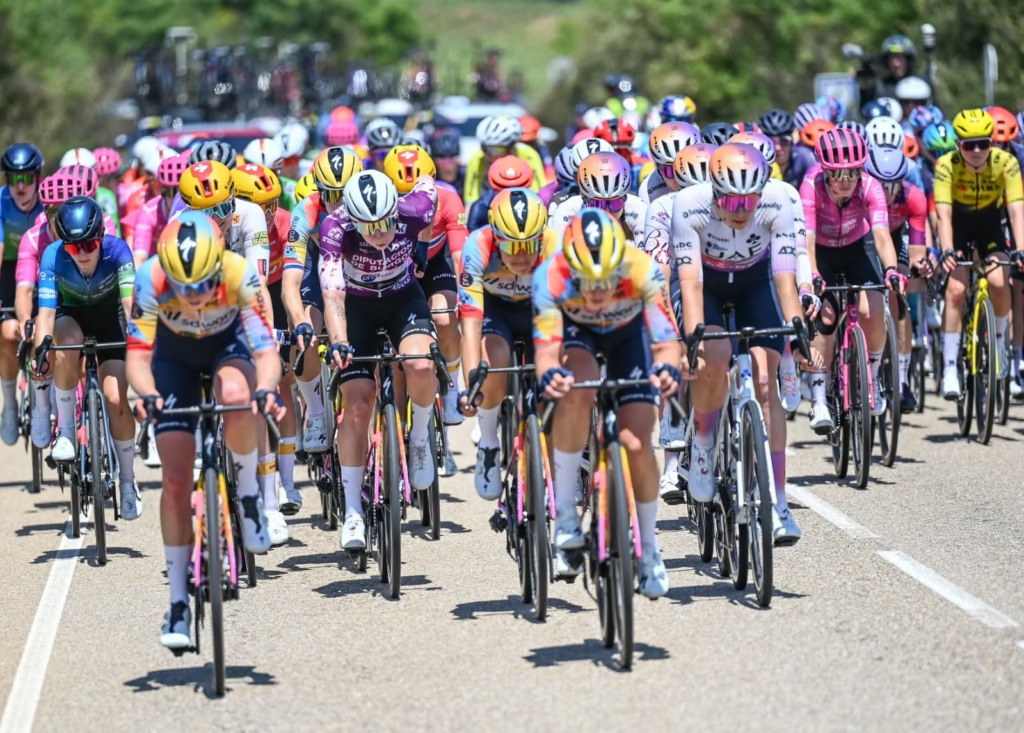 Photo Credit: Vuelta Burgos
Getting to the finish by train
Geneva Cornavin is the main railway station and the most practical arrival point for the stage finish.
The station is a short walk from Quai du Mont-Blanc under normal conditions. Race barriers and pedestrian diversions may make the journey longer, so allow at least 20 to 30 minutes.
Direct or connecting trains serve Geneva from Lausanne, Nyon, Montreux, Aigle, Bern and Geneva Airport. Visitors should check live times on the day because the Tour, summer travel and normal Sunday demand may increase crowding.
Cornavin is also the central interchange for Geneva’s wider public transport network.
Arriving through Geneva Airport
Geneva Airport has its own railway station, with trains continuing directly into Geneva Cornavin.
This makes the city one of the easier Tour de France Femmes finish locations for international visitors. A spectator arriving in the morning can travel into central Geneva without hiring a car.
Allow extra time for luggage, ticket purchase and crowded services. Travelling directly to the waterfront with large bags may also be awkward once the event area becomes busy.
Should you drive into Geneva?
Driving is the least attractive option.
The finish infrastructure will occupy a major waterfront road, while surrounding streets may be closed or redirected. Parking close to Quai du Mont-Blanc is likely to be limited, expensive or inaccessible.
A better approach is to park outside central Geneva and continue by train, tram or bus. Visitors staying in Switzerland should use the national rail network, while those approaching from nearby France should check cross-border public transport options in advance.
Do not rely on being able to cross the race route by car once the convoy approaches.
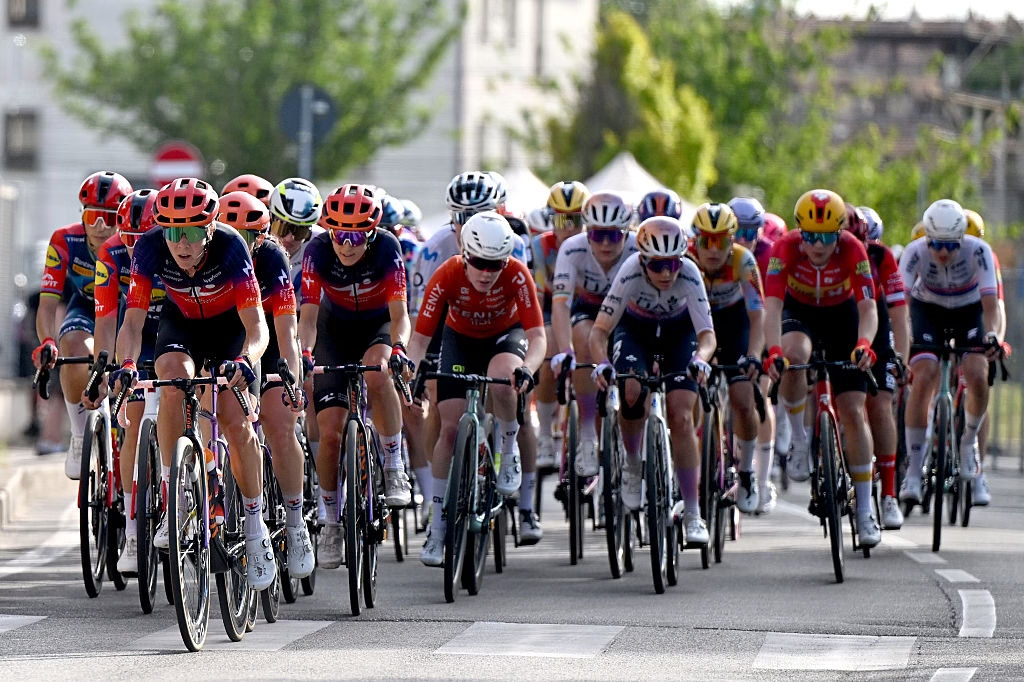 Photo Credit: Getty
Geneva public transport on race day
Geneva has a network of trams, buses, trains and lake boats, but services close to the finish may be diverted.
Cornavin station remains the best reference point. From there, the finish can normally be reached on foot, avoiding the need to understand temporary route changes.
Spectators staying further from the centre should check local transport updates on the morning of the race. Stops beside the lake may close, move or operate on altered routes.
Walking is likely to be the most reliable method within the central finish area.
Swiss viewing tips for stage 2
Use the railway rather than following the race by car
The stage passes several towns with good rail links, including Montreux, Vevey, Morges, Nyon, Versoix and Geneva.
However, the race does not simply follow the railway line. It climbs inland and loops north of Lausanne, so spectators should select one viewing location rather than attempt to chase the peloton repeatedly.
Check both the caravan and race times
The publicity caravan travels roughly two hours ahead of the riders. Arriving for the caravan provides entertainment and confirms that the road is fully closed, but it also means a longer wait.
Use the three official race schedules rather than relying only on the expected time. A fast stage can arrive almost an hour earlier than the slowest estimate.
Bring both sun protection and rain clothing
August can produce hot conditions beside Lake Geneva, but showers and thunderstorms are also possible.
Many roadside locations offer little shelter. A light waterproof layer, sun cream, water and a hat cover most likely conditions without requiring a large bag.
Expect prices to be higher in central Geneva
Geneva is one of Switzerland’s more expensive cities. Buying food and drinks before entering the most crowded part of the finish area may reduce both cost and waiting time.
Supermarkets and takeaway shops around Cornavin station offer practical options before walking to the lake.
Carry some Swiss francs, but cards are widely used
Switzerland uses the Swiss franc rather than the euro. Cards are accepted in most urban businesses, although smaller temporary vendors may have different payment arrangements.
Do not stand in cycle lanes or access routes
Geneva’s waterfront contains cycle infrastructure, pedestrian paths and emergency access routes. Police and race staff may require these spaces to remain clear even where there is no obvious barrier.
Choose an established spectator area rather than assuming any open pavement is available.
Respect closed vineyard and agricultural land
Several of the best rural viewing points pass through vineyard country. Remain on public roads, paths and verges, and do not enter private land to gain a better view.
Where to stay in Geneva for the Tour
Around Cornavin station
The station district is the most practical base for stage 2.
It provides straightforward access to the finish and easy onward travel after the race. It is also well placed for spectators attending the stage 3 start from Plainpalais the following morning.
Quai du Mont-Blanc and the lakefront
Lakeside hotels offer the closest access to the finish, but they are likely to be expensive and may face road restrictions.
This area suits visitors prioritising atmosphere and convenience over value.
Plainpalais
Plainpalais is a strong choice for spectators staying for both days in Geneva.
Stage 3 begins from the Plaine de Plainpalais on Monday 3 August, so staying nearby makes the following morning considerably easier.
The Old Town
Geneva’s Old Town provides more character and remains within walking distance of the waterfront.
Its steep and cobbled streets are less convenient with luggage, while hotel prices can still be high.
Outside the centre
Staying near Nyon, Versoix or Geneva Airport may offer better value. Rail connections make these areas viable, provided spectators allow enough time to reach the finish before the crowds peak.
What else is happening in Geneva?
A fan zone is planned for the two days of Tour activity, accompanied by entertainment and food stalls. The stage 2 event runs from midday into the evening on Sunday, while Geneva hosts the start of stage 3 from Plainpalais on Monday.
Visitors staying overnight can therefore experience both sides of a Tour stage. Sunday provides the speed and tension of a finish, while Monday offers the slower build-up around the team buses, sign-on area and neutralised rollout.
Beyond the race, the waterfront, Jet d’Eau, Old Town and Parc des Bastions are all reachable from the central districts without a car.
Is it worth staying for the stage 3 start?
Yes, particularly for spectators travelling from outside Switzerland.
Stage 3 begins from the Plaine de Plainpalais on Monday 3 August before heading towards Poligny in France. The stage is classified as hilly and marks the point at which the Tour leaves Switzerland.
A stage start offers a different experience from the Geneva finish. Riders arrive gradually, teams prepare beside their buses and spectators can spend longer watching the race organisation before the rollout.
Staying overnight also avoids joining the busiest trains immediately after stage 2.
The Geneva departure forms part of a nine-day race without a break. The full schedule is listed in the Tour de France Femmes 2026 calendar.
-
 Photo Credit: Getty



Is Geneva worth visiting beyond the race?
Geneva works particularly well for a short Tour weekend because its main attractions are concentrated around the lake and historic centre.
The Jet d’Eau is the most recognisable landmark, but the lakeside parks, Old Town, Saint Pierre Cathedral and international district provide enough for a full day away from the race.
The city is also compact by major-city standards. Cornavin station, Quai du Mont-Blanc, the Old Town and Plainpalais can all be connected on foot or by short public transport journeys.
For cycling supporters, the finish provides a rare combination of an elite sprint and a setting that is immediately recognisable on television.
Those unable to travel can follow every stage through the Tour de France Femmes 2026 UK television and streaming guide.
Frequently asked questions
Where does stage 2 finish in Geneva?
The finish line will be on Quai du Mont-Blanc beside Lake Geneva, with the Jet d’Eau providing the main visual backdrop.
What time will the riders arrive?
The expected finish time is 17:47 on Sunday 2 August 2026. The official arrival window runs from approximately 16:51 to 18:06.
Is the Geneva finish free to watch?
Roadside access and the main public event are expected to be free, although hospitality areas may have controlled access.
What is the nearest railway station?
Geneva Cornavin is the nearest main station and is within walking distance of Quai du Mont-Blanc.
Where is the best place to watch?
Choose Quai du Mont-Blanc for the finish and podium. Versoix is better for lower crowds, while Bougy-Villars and Mont-sur-Rolle offer the strongest climbing action.
Will stage 2 end in a bunch sprint?
A bunch sprint is the most likely outcome. Five categorised climbs may reduce the peloton, but the final climb comes almost 48km from Geneva.
Can I watch in Versoix and then reach the finish?
No. Versoix is only around nine kilometres from the line, and the riders should cover that distance too quickly for spectators to travel into central Geneva.
Can I watch the Aigle start and Geneva finish?
It should be possible by train, but leave Aigle immediately after the rollout. Spectators wanting a prime finish-line position should travel directly to Geneva instead.
Where does stage 3 start?
Stage 3 starts from the Plaine de Plainpalais in Geneva on Monday 3 August before heading to Poligny in France.

