
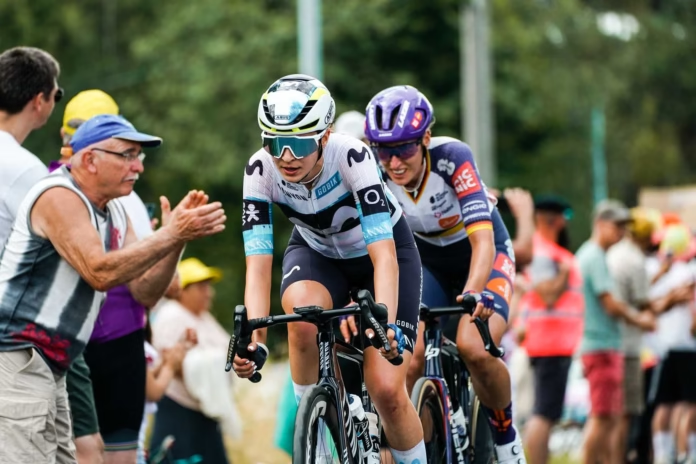
Every rider starting the Tour de France Femmes must do more than complete each stage. She must also reach the finish within a set percentage of the stage winner’s time.
That deadline is known as the time cut, time limit or elimination limit. A rider who finishes too late is officially classed as outside the time limit and can be removed from the race, even if she has completed every kilometre of the stage.
The rule matters most to sprinters and domestiques on the hardest mountain days. Stage 7 finishes on Mont Ventoux after 3,565 metres of climbing, while the short final stage around Nice contains repeated ascents of the Col d’Èze. The general classification favourites will be attacking at the front, but another race will be taking place much further down the road as groups of tired riders calculate whether they are moving quickly enough to survive.
The 2026 regulations use four fixed time limits. Riders can finish 12% behind the winner on Stages 1, 2 and 8, 15% behind on Stages 3, 5 and 6, 20% behind on the two very difficult mountain stages and 25% behind in the Dijon individual time trial.
The full sequence of stage types and difficulties can be found in our Tour de France Femmes 2026 route guide.

Tour de France Femmes 2026 time limits at a glance
| Stages | Stage type | Time limit |
|---|---|---|
| Stages 1, 2 and 8 | Road stages without significant difficulty | 12% of the winner’s time |
| Stages 3, 5 and 6 | Hilly road stages | 15% of the winner’s time |
| Stages 7 and 9 | Very difficult mountain stages | 20% of the winner’s time |
| Stage 4 | Individual time trial | 25% of the winner’s time |
The percentage is added to the winner’s recorded stage time. Any rider arriving after that calculated deadline is outside the limit unless the commissaires decide that exceptional circumstances justify keeping her in the race.
What is a time cut in cycling?
A time cut is the latest permitted finishing time for a stage.
It prevents riders from deliberately taking an extremely easy day once they have no interest in the stage result or general classification. Without a limit, a sprinter could ride a mountain stage at little more than training pace, conserve energy and return the following day with a major advantage over riders who had completed the stage competitively.
The time cut keeps every rider involved in the race. Even those who have been dropped by the main peloton must continue working hard enough to remain within the permitted margin.
It also creates an important distinction between completing the route and completing it as part of the competition. A rider may physically cross the finish line but still be eliminated because she arrived after the deadline.
Newer viewers can find the wider race structure and terminology in our beginner’s guide to the Tour de France Femmes 2026.
How is the Tour de France Femmes time cut calculated?
The calculation begins with the winner’s stage time.
The relevant percentage is then added to that time. The result becomes the final permitted finishing time.
For example, suppose a rider wins a hilly stage in four hours.
Four hours equals 240 minutes. The time limit on Stages 3, 5 and 6 is 15%.
Fifteen per cent of 240 minutes is 36 minutes, meaning the final deadline would be 4 hours and 36 minutes. A rider finishing in 4:35 would remain in the race, while one recorded at 4:37 would be outside the time limit.
The formula is:
Winner’s time + the permitted percentage = time cut
The actual calculation is made using the precise recorded finishing time, including seconds.
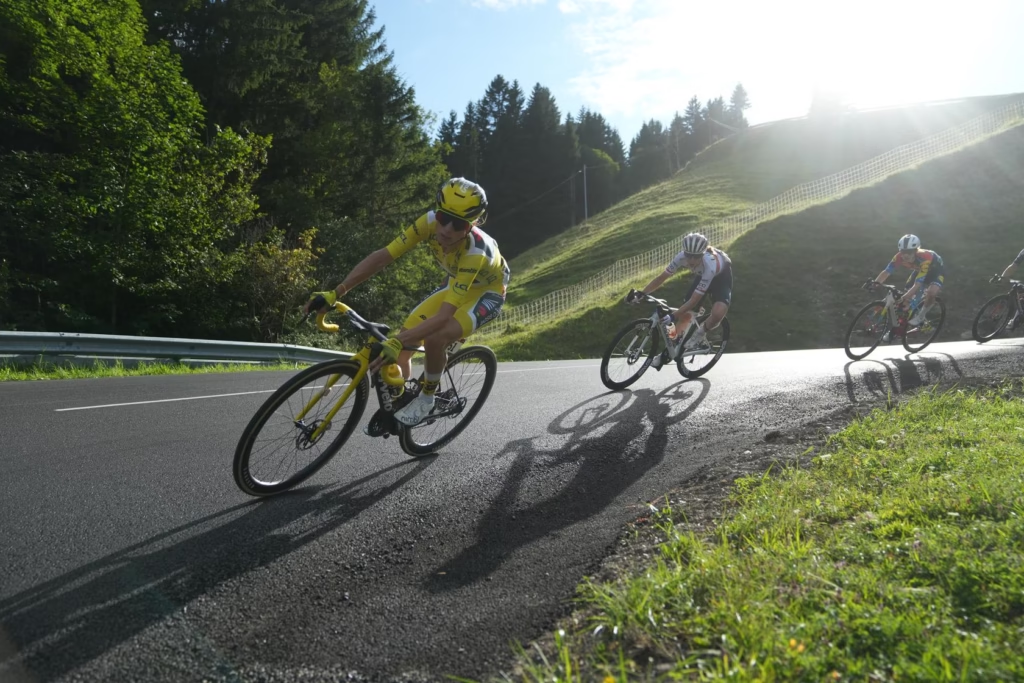 Photo Credit: A.S.O./Thomas Maheux
Time cut calculation examples
| Winner’s time | Stage limit | Additional time allowed | Final deadline |
|---|---|---|---|
| 3 hours | 12% | 21 minutes 36 seconds | 3:21:36 |
| 4 hours | 15% | 36 minutes | 4:36:00 |
| 4 hours 30 minutes | 20% | 54 minutes | 5:24:00 |
| 30 minutes | 25% | 7 minutes 30 seconds | 37:30 |
These examples show why the winning time matters as much as the percentage. A 20% allowance sounds generous, but it can still create pressure when the leaders complete a short mountain stage unusually quickly.
The same basic principle is used in the men’s race, as explained in our guide to Tour de France time cuts and how riders stay in the race.
Why does the race use different time limits?
Not every stage places the same demands on the riders.
A flat or relatively straightforward stage should allow most of the peloton to finish close to the winner. The 12% limit on Stages 1, 2 and 8 therefore provides less additional time.
Hilly stages receive a 15% allowance because riders may be dropped earlier and spend longer riding in smaller groups. The repeated climbing on Stages 3, 5 and 6 should create more separation without being as severe as the main mountain stages.
Mont Ventoux and the final stage around Nice receive the largest road-stage allowance of 20%. Those days are expected to produce substantial gaps between the leading climbers and the riders least suited to steep, sustained climbing.
The Stage 4 individual time trial has a 25% limit. Every rider competes alone against the clock, so weaker time triallists cannot use a group to share the work or shelter from the wind.
The race’s combination of nine stages, 1,175km and no rest day is covered in our guide to how long the Tour de France Femmes 2026 is.
Which stages are most dangerous for the time cut?
Stages 7 and 9 present the clearest risks, although riders can miss the limit on any day.
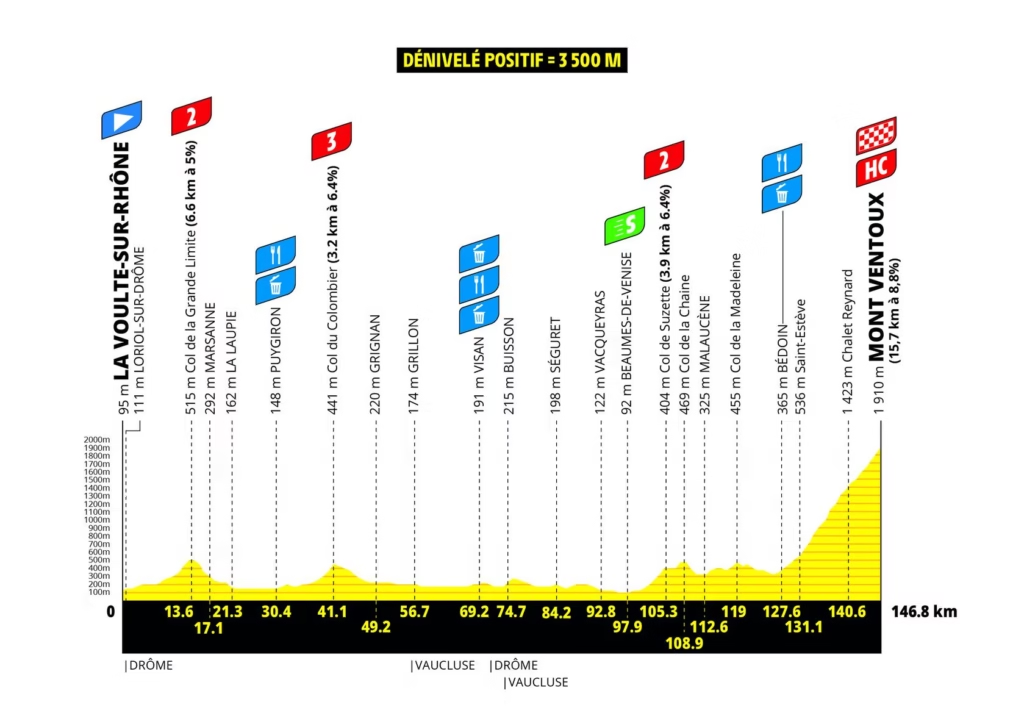
Stage 7 to Mont Ventoux
The Mont Ventoux stage covers 146.8km and includes approximately 3,565 metres of climbing. The final ascent from Bédoin measures 15.7km at an average of 8.8%, with the finish at an altitude of 1,910 metres.
Sprinters may lose contact well before the final climb, particularly if the race begins aggressively over the Col de la Grande Limite. They must then reach Bédoin with enough energy to complete almost an hour of steep climbing while the favourites are racing at full intensity ahead.
The 20% allowance provides a substantial buffer, but Ventoux can still produce enormous gaps. A rider who reaches the foot of the climb already exhausted may lose time continuously from Saint-Estève to the summit.
The climb, its approach and likely tactical battle are examined in our Tour de France Femmes 2026 Mont Ventoux guide.
Stage 9 around Nice
The final stage is only 99.2km, but its short distance may make the time cut more dangerous rather than less.
The route includes repeated climbing and four ascents of the Col d’Èze. Riders attacking the yellow jersey have little reason to wait, so the race could be fast from the beginning.
A short winning time also means 20% represents fewer actual minutes than it would on a five-hour stage. If the winner finishes in 2 hours and 45 minutes, the additional allowance is only 33 minutes.
A rider dropped early has less road on which to organise a large group and stabilise the gap.
The decisive roads and finish area are covered in our Tour de France Femmes 2026 Nice guide.
Stage 4 time trial
The 21km Dijon time trial offers a 25% allowance, but weaker riders still need to pace it properly.
If the winner records 27 minutes, the time cut would be 33 minutes and 45 seconds. That gives a rider only 6 minutes and 45 seconds of extra time.
A mechanical problem, crash or serious pacing error could make that margin uncomfortable.
The riders expected to set the quickest times are assessed in our Tour de France Femmes 2026 time-trial contenders guide.
The hilly stages
Stages 3, 5 and 6 have a 15% limit. These may appear less threatening than Ventoux, but hard racing over repeated short climbs can scatter the peloton.
A sprinter dropped a long way from the finish may struggle to find enough riders to form an effective group. The risk increases if the winning breakaway or reduced favourites group rides the stage faster than expected.
The riders most likely to make those stages aggressive are included in our guide to the Tour de France Femmes 2026 breakaway specialists.
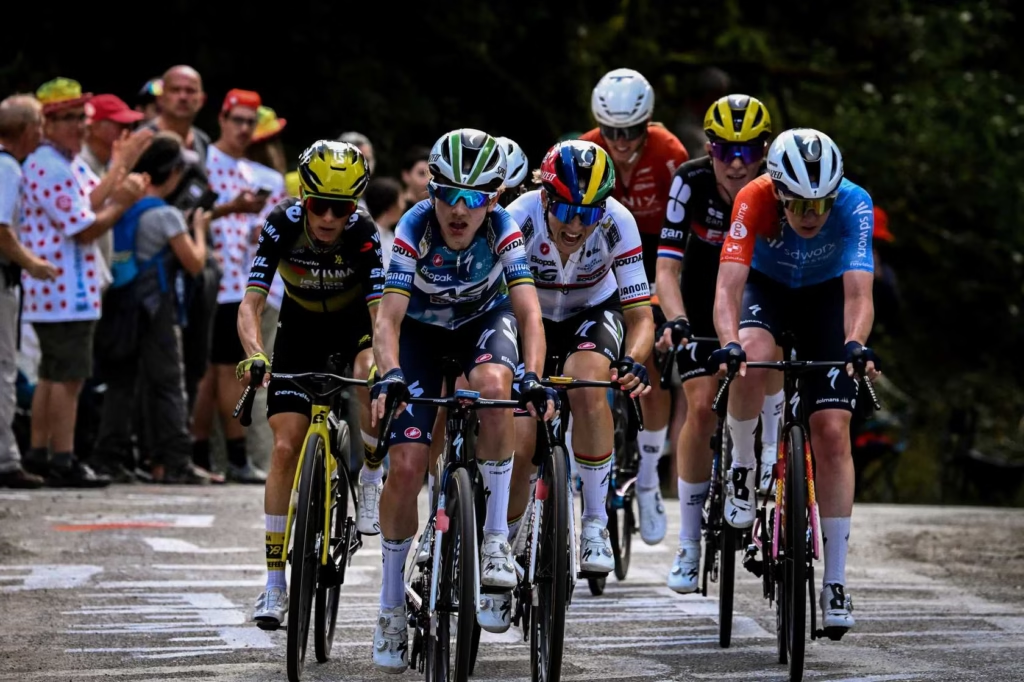 Photo Credit: A.S.O./Pauline Ballet
Why a fast stage can make the time cut harder
The time limit is calculated from the winner’s actual time rather than the organisers’ expected schedule.
That means a particularly fast stage can create a demanding deadline.
Suppose the winner completes a hilly stage in 3 hours and 30 minutes. A 15% time limit allows an extra 31 minutes and 30 seconds.
If difficult weather or a cautious race produces a winning time of 4 hours and 15 minutes, the same percentage allows 38 minutes and 15 seconds.
The slower stage gives dropped riders almost seven additional minutes.
This is why the situation can become worrying when the favourites or breakaway riders race at a very high average speed. The riders behind may be working hard, yet still see the permitted gap shrinking because the front of the race is moving so quickly.
What is the gruppetto?
The gruppetto is the group of riders that forms behind the main peloton on difficult stages.
It is often called the autobus, particularly in French cycling. The group usually contains sprinters, lead-out riders, larger domestiques and anyone conserving enough energy to support a teammate on later stages.
Its purpose is not simply to ride slowly together. The gruppetto must judge the pace required to finish inside the time cut while avoiding unnecessary effort.
Experienced road captains often organise the group. They estimate the winner’s likely time, follow updates from team cars and calculate how much time can safely be lost.
The riders share the work on flatter roads, remain together over climbs and use their combined strength to maintain a manageable speed. A large, organised gruppetto is much more efficient than several riders trying to survive alone.
Why riders do not simply follow the fastest person in the gruppetto
The ideal gruppetto pace is a compromise.
Riding too slowly risks missing the time cut. Riding too quickly wastes energy that riders may need for the next stage, particularly if a bunch sprint follows the mountain day.
The strongest riders in the group could often go faster, but doing so might split the group and leave important teammates behind. They may therefore reduce their effort once calculations show that the current pace should be sufficient.
This can look relaxed on television, but the margin is often carefully managed. Riders may descend rapidly, work hard on flatter sections and then climb at a controlled tempo.
The objective is to arrive safely inside the deadline rather than finish as high as possible.
 Photo Credit: A.S.O./Pauline Ballet
How do riders know whether they are inside the time limit?
Team cars provide information throughout the stage.
Staff monitor the leader’s average speed, current time gaps and likely finishing time. They can then estimate the deadline and tell riders whether the gruppetto needs to increase its pace.
Race radio may also provide official gaps, although the eventual time cut cannot be confirmed until the winner has finished.
The calculation becomes more accurate as the stage progresses. Early in the day, teams must work with projected finishing times. Once the winner crosses the line, the exact deadline is known and riders still on the course can be given a precise target.
On a long summit finish, the situation can change quickly. A group that appears safe at the foot of the climb may begin losing time faster than expected on the steepest kilometres.
Viewers following the race can use our Tour de France Femmes 2026 TV schedule to see when each stage and its expected finish will be shown.
What happens when a rider finishes outside the time limit?
The normal consequence is elimination.
The rider is removed from the race and cannot start the following stage. She also disappears from the general classification and all secondary competitions.
This can have a major effect on her team. A sprinter eliminated on Mont Ventoux cannot contest Stage 8 in Nice, even if that stage would otherwise have suited her perfectly. A domestique lost on Stage 7 also leaves her GC leader with one fewer teammate for the final weekend.
Missing the time cut is therefore not only an individual problem. Teams may commit riders to the gruppetto specifically to protect an important sprinter or road captain.
Can riders be reinstated after missing the cut?
Yes, but reinstatement is not automatic.
The commissaires’ jury can consider exceptional circumstances after consulting the race director. This gives officials discretion when an unusually large group finishes outside the limit or when the stage has been affected by incidents beyond the riders’ reasonable control.
Possible factors include:
- A major crash involving many riders
- Extreme weather
- Road obstructions
- Exceptional race conditions
- An unusually large proportion of the peloton finishing late
- Evidence that the affected riders continued making a genuine competitive effort
Officials are not required to keep riders in the race simply because several have missed the deadline. The decision depends on the circumstances and the sporting consequences.
A rider should therefore never assume that arriving with a large group guarantees reinstatement.
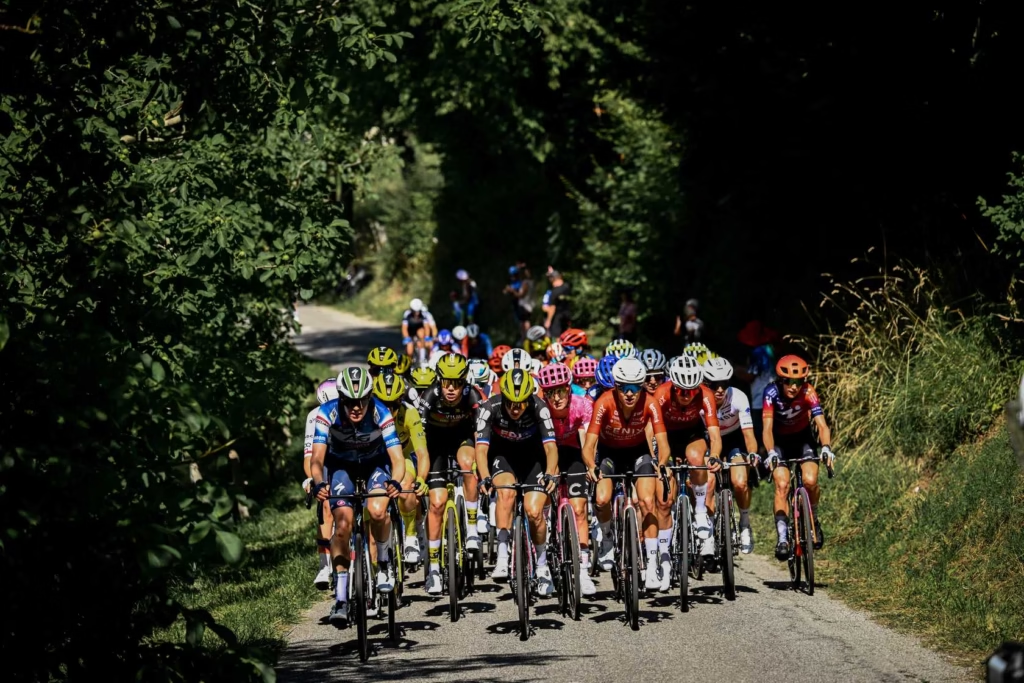 Photo Credit: A.S.O./Pauline Ballet
What penalty applies to reinstated riders?
A reinstated rider loses all points previously earned in the points classification.
That rule is especially important for sprinters.
A rider could begin the Mont Ventoux stage leading the green jersey competition, finish outside the time limit and then be allowed to continue because of exceptional circumstances. She would remain in the Tour, but her accumulated points would be removed.
The regulation prevents a rider from preserving a points-classification campaign after failing to meet the normal sporting requirement for completing the stage in time.
The same principle makes avoiding elimination central to the green jersey contest. A sprinter must survive every mountain stage, not merely dominate the flat finishes.
The green jersey scoring system and classification hierarchy are explained in our guide to the Tour de France Femmes 2026 jerseys.
Does reinstatement protect mountains points?
The 2026 regulations explicitly state that a rider reinstated after finishing outside the limit forfeits all points accumulated in the individual points classification.
The green jersey is therefore directly affected.
A reinstated rider remains eligible to continue racing, but the precise penalties and any additional decisions are confirmed by the commissaires in the official race communiqué. Riders and teams must wait for that decision rather than assuming their classifications remain unchanged.
Can the green jersey miss the time cut?
Yes.
Wearing a leader’s jersey does not provide immunity.
The green jersey leader must finish every stage within the same time limit as every other rider. If she misses the cut and is not reinstated, she is eliminated from the race and cannot win the classification.
This is one reason the points competition cannot be judged only by sprint victories. The strongest pure sprinter may collect heavily on Stages 1, 2 and 8, but she must also survive Mont Ventoux and the final stage around Nice.
A more versatile rider may score fewer points on the flat stages while facing less risk in the mountains.
The main sprinters and more versatile green jersey options are covered in our Tour de France Femmes 2026 riders to watch.

Can the yellow jersey miss the time cut?
In theory, yes, although it is extremely unlikely.
The yellow jersey is normally one of the strongest riders in the race and should finish close to the stage winner on difficult terrain.
A crash, illness or major mechanical problem could still leave the race leader far behind. The same elimination rules apply unless the commissaires decide exceptional circumstances justify another outcome.
The more realistic concern is a rider who began the Tour as a GC contender but has become ill or injured. Once unable to follow the peloton, she may lose enough time to be eliminated even if she is determined to complete the stage.
Why sprinters are most vulnerable
Sprinters tend to be heavier and produce their best power over short periods.
Those qualities are valuable on flat finishes but become a disadvantage on long climbs, where a rider’s sustainable power relative to body weight matters more.
A pure sprinter may be dropped early on Mont Ventoux and climb several minutes slower than the best GC riders. The preceding climbs also consume energy before the main ascent begins.
Sprinters cannot simply save themselves completely. They still need to ride hard enough to remain within 20% of an elite climber racing for the Tour de France Femmes title.
The following day may present another sprint opportunity, which creates a difficult balance between survival and recovery.
Domestiques can face the cut after doing their job
A rider does not need to be a poor climber to become vulnerable.
Domestiques may spend the early part of a stage collecting bottles, chasing attacks or setting a hard pace for their leader. Once their work is complete, they can be dropped with far less energy remaining than riders who have conserved themselves in the bunch.
A teammate may also wait for a protected leader after a crash or mechanical problem. That sacrifice can move both riders closer to the elimination limit.
Teams must decide when a domestique should stop working and begin protecting her own place in the race. Continuing for another ten minutes at the front may help the leader immediately but cost the team an important rider for the remaining stages.
What happens when a rider has a mechanical problem?
A mechanical problem does not automatically extend the time limit.
The rider must return to the race, complete the stage and finish before the deadline. Team cars and teammates may help her regain contact within the normal rules, but the clock continues running.
A late puncture on a flat stage is unlikely to create a time-cut problem because the rider may receive support and the gap to the winner remains relatively small.
A mechanical near the foot of Mont Ventoux could be much more serious. The rider may lose her gruppetto, expend significant energy trying to return and then face the climb alone.
Officials can consider exceptional circumstances afterwards, but an ordinary puncture is part of racing and does not guarantee reinstatement.
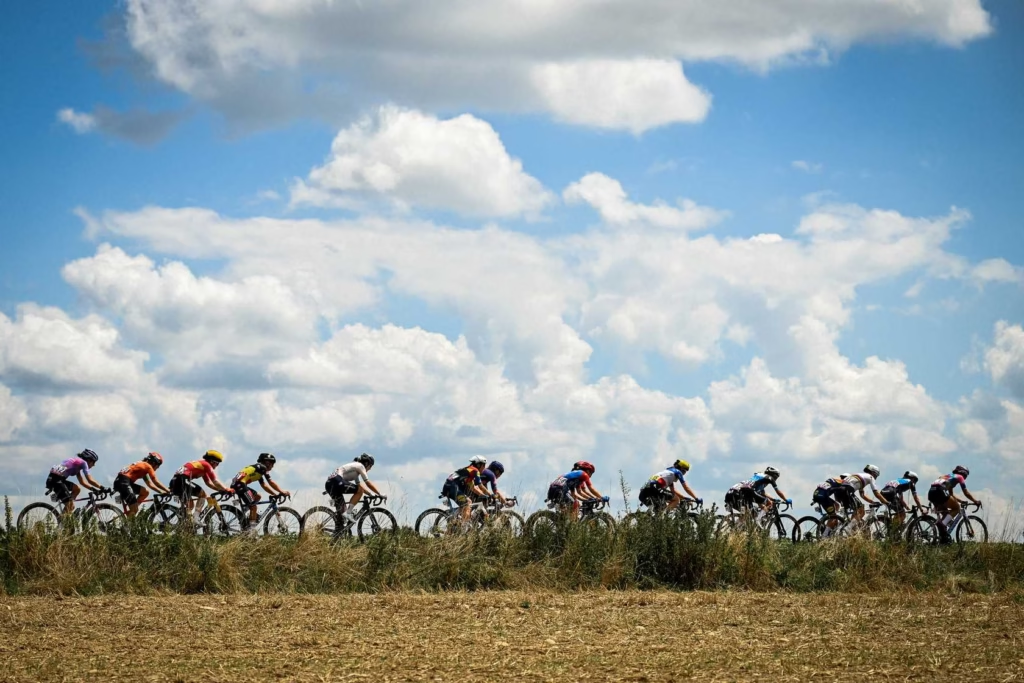 Photo Credit: A.S.O./Pauline Ballet
What happens after a crash?
A rider involved in a crash still needs to reach the finish within the permitted time.
Medical treatment, a bike change and the effort needed to return can consume a large part of the available margin. The risk becomes particularly serious when a crash happens early on a mountain stage and the rider spends several hours chasing.
The final-kilometre rules that can protect GC times after crashes do not remove the requirement to complete the stage inside the overall time limit.
Stages 1 and 7 finish uphill, so the usual final three-kilometre protection does not apply there. Stages designated as bunch-sprint finishes use their own extended sprint-zone protocol, but this concerns the recording of finishing gaps rather than permission to arrive outside the elimination deadline.
Can riders abandon before reaching the finish?
Yes.
A rider who knows she cannot continue safely may stop during the stage and enter the team car or medical vehicle. She is recorded as abandoning and cannot return the next day.
Riders may choose to abandon because of injury, illness or exhaustion rather than forcing themselves to finish when elimination is already inevitable.
Teams also consider the rider’s health and future programme. Completing another hour of racing while injured may have little sporting value once the time cut is clearly out of reach.
Others continue because they hope the jury may exercise discretion or because finishing the stage remains personally important.
Why a large group sometimes appears safe
Commissaires are more likely to face a difficult decision when a substantial part of the peloton finishes outside the limit.
Eliminating one or two isolated riders is relatively straightforward. Removing 30 or 40 riders could drastically reduce the field, affect every team and damage the competition on subsequent stages.
That does not mean a large gruppetto has immunity. Its riders are still expected to manage the stage and remain inside the published percentage.
However, the size of the group can form part of the exceptional context considered by officials, particularly if weather, crashes or an unusually fast winning performance caused the problem.
The gruppetto’s safety is therefore partly statistical, but never guaranteed.
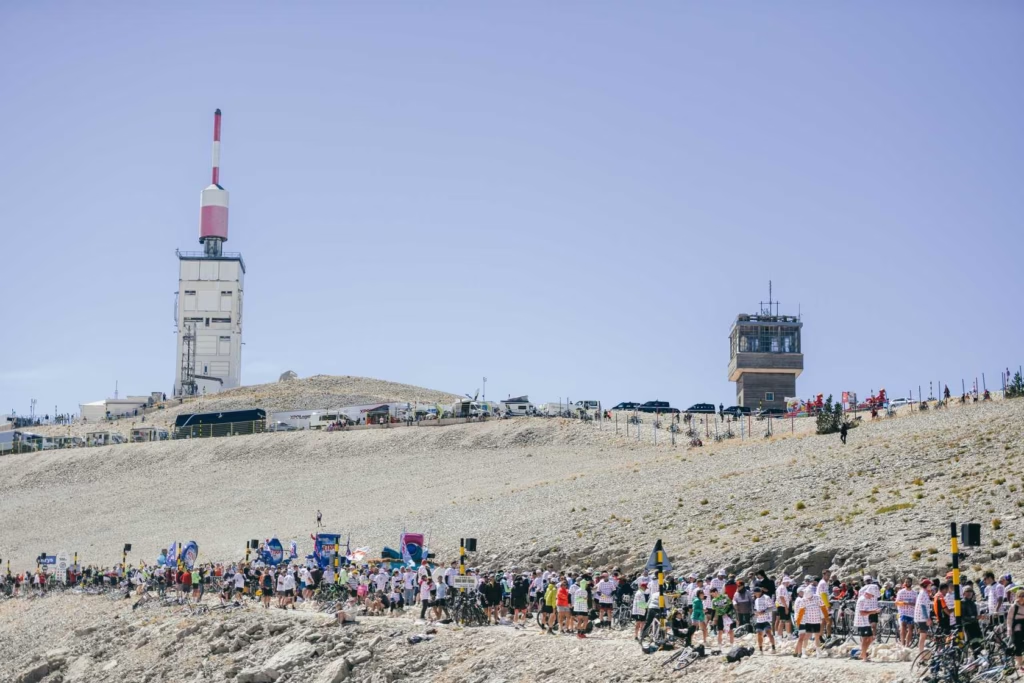
Could the Mont Ventoux winner make the cut harder?
Yes.
The faster the stage winner completes the route, the earlier the deadline.
Suppose the winner of Stage 7 finishes in 4 hours and 20 minutes. Twenty per cent adds 52 minutes, creating a deadline of 5 hours and 12 minutes.
If the winner finishes in 4 hours and 40 minutes, the allowance becomes 56 minutes and the deadline moves to 5 hours and 36 minutes.
The slower winning time creates 24 additional minutes between the two final deadlines, even though the percentage remains unchanged.
An exceptionally aggressive race among the favourites can therefore put the gruppetto under unexpected pressure.
Why Stage 9 may be more dangerous than it looks
The final stage’s 20% allowance recognises its difficulty, but the short route reduces the number of minutes available.
Suppose the winner completes the 99.2km stage in 2 hours and 40 minutes. Twenty per cent is 32 minutes, producing a deadline of 3 hours and 12 minutes.
If a sprinter is dropped during the first ascent and spends most of the stage riding in a small group, 32 minutes can disappear quickly.
The repeated climbs also make organisation difficult. Riders may not have a long flat valley in which a gruppetto can work efficiently and stabilise the gap.
There is no following stage to save energy for, but that does not make survival easy. Everyone ahead can race without restraint because the Tour finishes in Nice that afternoon.
How teams plan for the time cut
Teams identify the most dangerous stages before the race begins.
Sports directors calculate likely winning times, estimate the required climbing pace and decide which riders should remain together if the peloton splits.
The plan may include:
- Assigning an experienced rider to organise the gruppetto
- Ensuring sprinters begin the stage well fuelled
- Avoiding unnecessary work before the main climbs
- Sending teammates back after crashes or mechanicals
- Monitoring the projected deadline from the team car
- Increasing the pace before the margin becomes critical
- Keeping a key lead-out rider with the sprinter
- Deciding when a domestique must stop working for the GC leader
The objective is to prevent panic late in the stage. Once a group learns it is several minutes behind the projected cut on the final climb, recovering that time may be impossible.
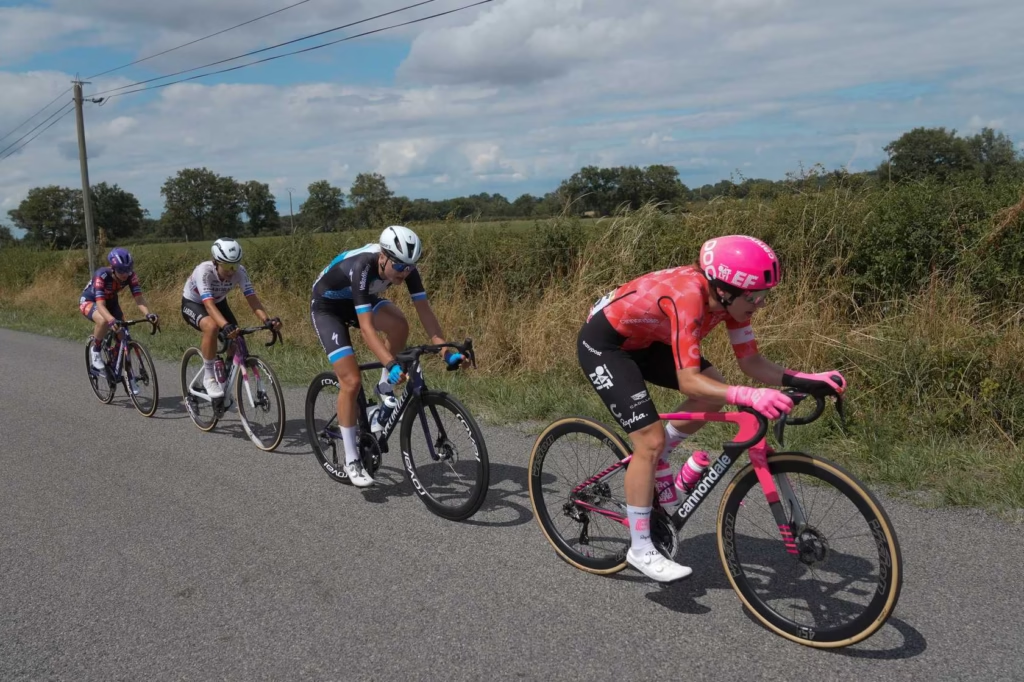 Photo Credit: A.S.O./Thomas Maheux
Why time cuts influence the stage at the front
The elimination limit is not only a story about the last riders on the road.
A team with a leading sprinter may ask its GC domestiques to conserve energy so they can help that rider through the mountains. Another team may deliberately make the race hard because eliminating rival sprinters improves its own chances on a later flat stage.
The yellow jersey teams can also affect the gruppetto simply by racing aggressively. A long-range attack on Ventoux increases the winner’s average speed and can tighten the deadline behind.
The front and back of the race are therefore connected. Tactical decisions made in the GC group can determine whether dozens of riders survive.
Does finishing just inside the cut affect general classification?
Yes.
The rider’s full recorded stage time is added to her general classification total.
The time cut does not cap the amount she can lose. A rider finishing 40 minutes behind the winner keeps all 40 minutes in her overall time, provided she remains inside the deadline.
For sprinters and domestiques, that usually does not matter because they are not targeting GC.
Their only objective is to survive and start the next stage.
A rider already far down the standings may intentionally remain with the gruppetto rather than spend extra energy finishing five minutes earlier.
The difference between stage time and the general classification is explained in more detail in our guide to what GC means in the Tour de France Femmes.
Can a rider deliberately lose time?
Yes, provided she remains inside the limit.
Stage hunters sometimes lose time intentionally so they are no longer considered a threat to the general classification. That can make it easier to join breakaways later in the race.
Sprinters and domestiques also conserve energy once they have been dropped, riding only as quickly as necessary to beat the deadline.
The time cut sets the boundary between sensible energy management and elimination. Riders can lose as much time as they wish until they cross that line.
What spectators should watch for during a mountain stage
Television coverage naturally concentrates on the leaders, but several clues reveal the battle behind.
Race graphics may show a large group 15 or 20 minutes down. Commentators then compare that gap with the projected winning time and calculated limit.
The important figure is not simply the gap at that moment. Viewers need to consider how much climbing remains and whether the group is losing time faster than the leaders are approaching the finish.
A gruppetto 25 minutes behind with 40km remaining may be comfortable on one stage and in serious danger on another.
Once the winner finishes, the exact deadline can be calculated. Every subsequent group crossing the line is then either safely inside, close to the margin or officially late.
-
 Photo Credit: quentinphotographiebe
 -
 Photo Credit: Getty


Frequently asked questions about Tour de France Femmes time cuts
What is the time cut?
It is the latest time by which a rider must complete a stage to remain in the race.
How is it calculated?
A fixed percentage is added to the stage winner’s finishing time.
What is the limit on flat stages?
Stages 1, 2 and 8 use a 12% limit.
What is the limit on hilly stages?
Stages 3, 5 and 6 use a 15% limit.
What is the limit on Mont Ventoux?
Stage 7 has a 20% limit.
What is the limit on the final stage around Nice?
Stage 9 also has a 20% limit.
What is the time-trial limit?
Stage 4 uses a 25% limit.
What happens if a rider misses the cut?
She is normally eliminated and cannot start the following stage.
Can the commissaires reinstate a rider?
Yes, when exceptional circumstances justify it, but reinstatement is not guaranteed.
What happens to a reinstated rider’s green jersey points?
All points she had accumulated in the points classification are forfeited.
What is the gruppetto?
It is the organised group of dropped riders working together to finish within the time cut.
Can a race leader miss the limit?
Yes. No jersey gives automatic protection from elimination.
Does a crash extend the time cut?
Not automatically. The jury can consider exceptional circumstances after the stage.
Is the time cut based on the expected schedule?
No. It is calculated from the winner’s actual finishing time.
The race to survive behind the race for yellow
The time cut turns every Tour de France Femmes stage into more than one competition.
At the front, riders fight for the stage victory, yellow jersey and bonus seconds. Further back, sprinters and domestiques form groups, share the work and calculate how many minutes they can afford to lose.
The 2026 rules give riders 12% on the flatter stages, 15% on the hilly stages, 20% on Mont Ventoux and the Nice finale, and 25% in the individual time trial.
Those margins are designed to reflect the different demands of the route, but none guarantees safety.
Mont Ventoux is likely to produce the most visible gruppetto battle. The repeated climbs around Nice may create an even less predictable final test because the short stage allows little time to recover from an early split.
A rider can win sprints, lead the points classification and perform her team role perfectly for most of the Tour. One late arrival can still end her race.
That is why the last group crossing the line can matter almost as much as the first.

