
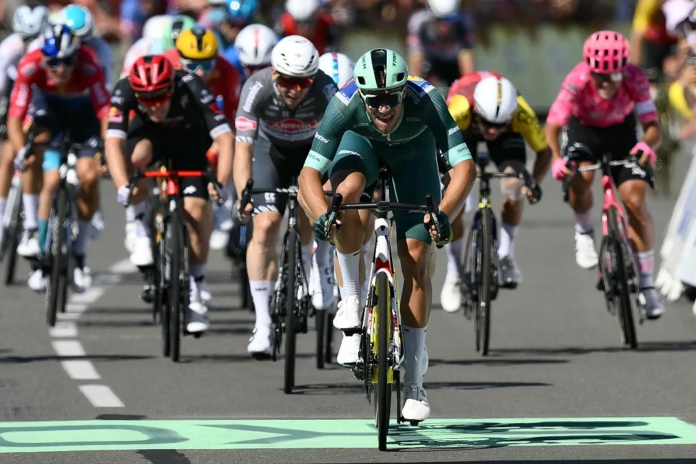
Tour de France riders are fast in almost every race situation. The overall average speed of a modern Tour is usually above 40km/h, flat stages can be raced at more than 45km/h, bunch sprints can reach around 65-75km/h, descents can go above 90km/h, and time-trial specialists can average more than 50km/h on fast courses.
But the simple answer does not tell the full story. Tour de France speed changes constantly. Riders may roll along in the peloton at 40km/h, sprint at more than 70km/h, climb at 20km/h, descend at motorway speeds, then do it again the next day with fatigue in their legs.
That is why average speed can be misleading. A flat stage with a tailwind might look incredibly fast on paper, while a mountain stage with repeated climbs might have a lower average speed but be much harder physically. Speed in the Tour is not only about kilometres per hour. It is about where that speed happens, who is setting it, how tired the riders are, and what the terrain is doing.
The 2026 Tour de France should show that clearly. It starts with a 19.6km team time-trial in Barcelona, includes flat sprint stages, hilly breakaway days, 8 mountain stages, 5 summit finishes and a 26.1km individual time-trial. The race covers 3,333km, so riders have to be fast in every possible context, not just in a sprint. For the wider race picture, see our Tour de France 2026 full route guide and our beginner’s guide to Men’s Tour de France 2026.
Tour de France speed at a glance
| Race situation | Typical speed range |
|---|---|
| Overall Tour average | Around 40-43km/h |
| Flat stage average | Around 43-50km/h |
| Hilly stage average | Around 38-45km/h |
| Mountain stage average | Around 30-38km/h |
| Final sprint speed | Around 65-75km/h |
| Fast descent | Around 80-100km/h or more |
| Individual time-trial | Around 48-55km/h on fast courses |
| Team time-trial | Often above 50km/h on fast courses |
| Long climb | Around 18-25km/h, depending on gradient |
| Steep climb | Often below 15-18km/h |
These numbers vary with wind, gradient, stage length, road surface, weather, tactics and fatigue. A slow-looking mountain stage can be far harder than a fast flat stage, and a fast flat stage can be made easier by drafting in the peloton.
What is the average speed of the Tour de France?
The overall average speed of the Tour de France is usually just above 40km/h in the modern era. The 2025 Tour was reported as the fastest edition on record, with an overall average of 42.8491km/h.
That figure is calculated across the whole race, not just one stage. It includes flat days, mountain stages, time-trials, hilly stages, neutralised sections excluded from race timing, weather changes and three weeks of accumulated fatigue.
That is what makes the number so impressive. A strong amateur might ride at 30km/h for a few hours on a good day. Tour riders can average above 40km/h across an entire three-week race, including major climbs and summit finishes.
The 2026 Tour route is unlikely to make that easy. With 8 mountain stages, 5 summit finishes and around 54,450m of climbing, the overall speed will depend heavily on how aggressively the race is ridden and how fast the flat stages become. Our guide on how hard the Tour de France is explains why those numbers only tell part of the story.
How fast is the peloton on flat stages?
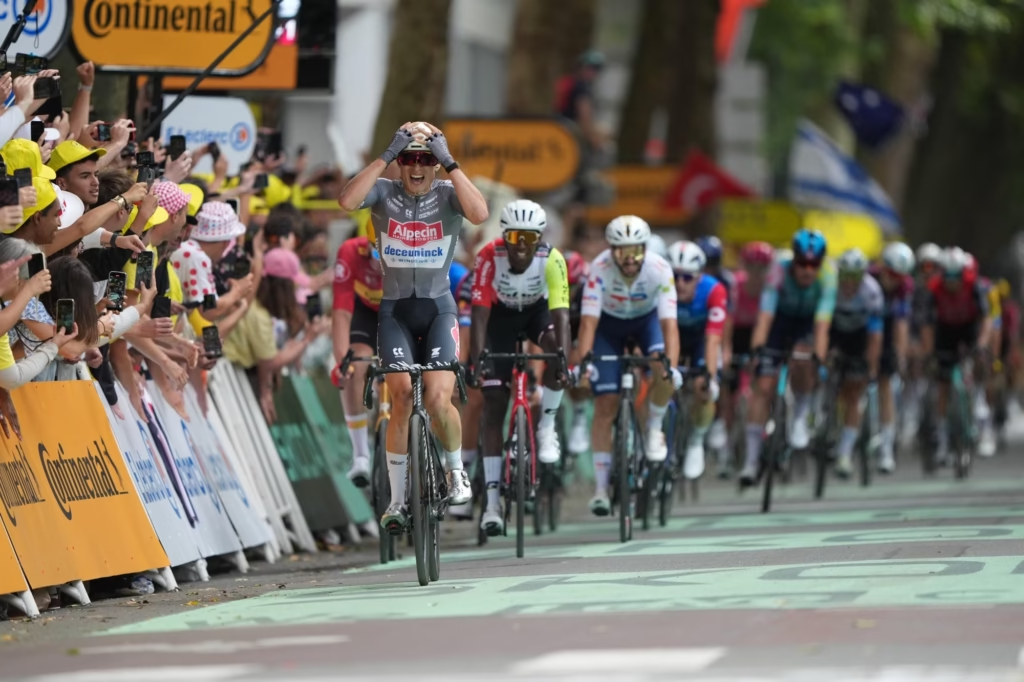
On flat stages, the peloton can often average between 43km/h and 50km/h. With a tailwind, a motivated sprint chase or a nervous stage, the speed can go even higher for long periods.
The peloton is so fast because of drafting. Riders sitting inside the bunch use less energy than riders riding alone in the wind. That allows the group to travel at a speed that would be almost impossible for one rider to hold for hours.
Flat stages are not always easy, though. A stage averaging 47km/h can still feel controlled if the peloton is sheltered and organised. But if there are crosswinds, narrow roads or a hard fight for position before a sprint, the same speed can feel brutal.
For sprinters, these are the days that matter most. But to contest the sprint, they first need to survive 150km or more at high speed, stay in position, avoid crashes and still have enough power left for the final 200 metres.
Our Tour de France 2026 route’s best days for sprinters guide looks at the stages where those fast finishes are most likely, while our Tour de France 2026 sprint stages ranked puts those opportunities into order.
How fast do Tour de France riders sprint?
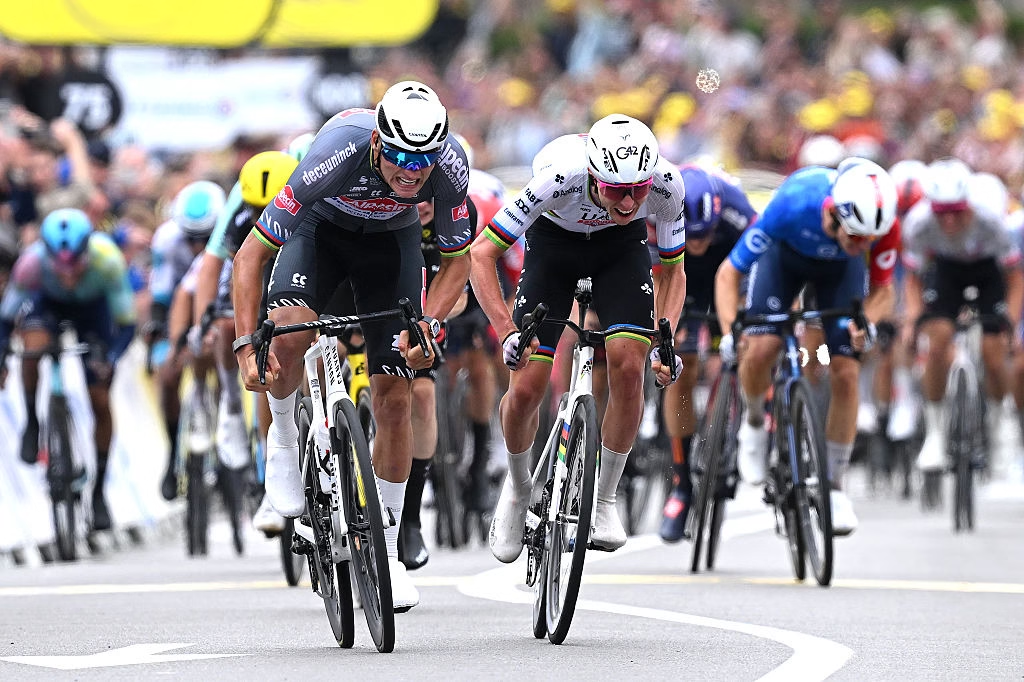
Tour de France bunch sprints often reach around 65-75km/h in the final metres, depending on the road, wind direction and lead-out. On downhill or tailwind finishes, peak speeds can be even higher.
A sprint is not just a rider suddenly going fast at the end. It is a whole sequence. The peloton may already be travelling at 55-60km/h in the final kilometres. Lead-out riders then increase the speed to stop attacks, control position and launch their sprinter at the right moment.
That means the final sprint is not only about peak speed. It is about timing, positioning, aerodynamics, bravery and the ability to produce maximum power after hours of racing.
The fastest sprinter does not always win. A rider boxed in against the barriers, launched too early or forced into the wind too soon can lose despite having the best top speed. The best Tour sprinters combine speed with judgement.
For the 2026 race, riders such as Jonathan Milan, Jasper Philipsen, Tim Merlier, Olav Kooij, Biniam Girmay and Kaden Groves could all shape the sprint days if they are on the start line. Our Tour de France 2026 sprinters guide looks at the fast men most likely to chase stage wins and the green jersey.
How fast do riders climb in the Tour de France?
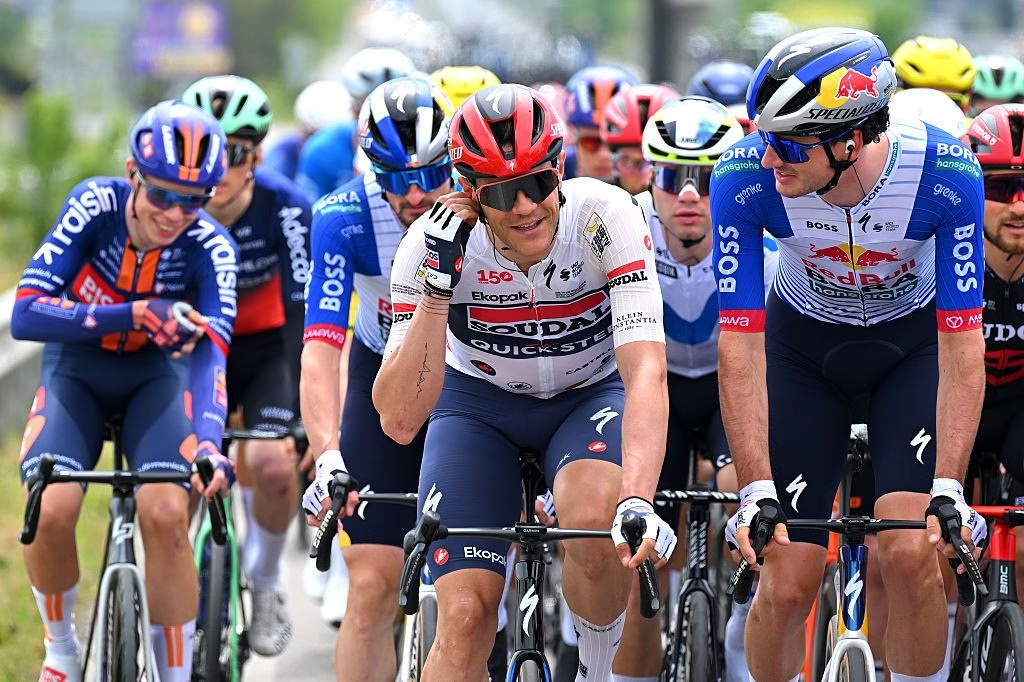
Climbing speed depends heavily on gradient. On a long Alpine or Pyrenean climb, Tour riders may average around 18-25km/h on moderate gradients. On steeper sections, the speed can drop below 15km/h. On shallower climbs, especially in a group, they can go much faster.
The key is power-to-weight. On the flat, aerodynamics and raw power matter hugely. On climbs, lighter riders with high sustained power have the advantage. That is why GC contenders and specialist climbers come forward when the road rises.
Climbing speeds can look modest compared with a flat sprint, but the effort is far harder. A rider climbing at 22km/h on a long mountain pass may be riding close to threshold for 30, 40 or 50 minutes. If the best climbers attack, others can lose contact almost immediately.
The 2026 Tour has major climbing across the Pyrenees, Massif Central, Vosges, Jura and Alps. Our Tour de France 2026 mountain stages ranked by difficulty guide identifies the days where climbing speed will matter most, while our Tour de France 2026 climbers guide looks at the riders who may turn those climbs into a points battle.
How fast do riders descend?
Tour de France riders can descend at 80-100km/h, and sometimes more on long, straight, open descents. Speeds vary depending on gradient, corners, weather, road surface and risk level.
Descending is one of the most underrated skills in the Tour. It is not just about being brave. Riders need to read corners, choose lines, brake at the right time, judge grip, avoid road furniture and manage fatigue. A mistake at 90km/h can end a race.
The best descenders can gain time without pedalling harder than rivals. They carry speed through corners, stay relaxed and use the road efficiently. Others may lose time simply because they cannot descend as confidently.
Descending can also affect the way mountain stages are raced. A rider who is weaker uphill but excellent downhill may be able to return to a group after a climb. A nervous descender may be forced to chase repeatedly. That costs energy before the next climb even starts.
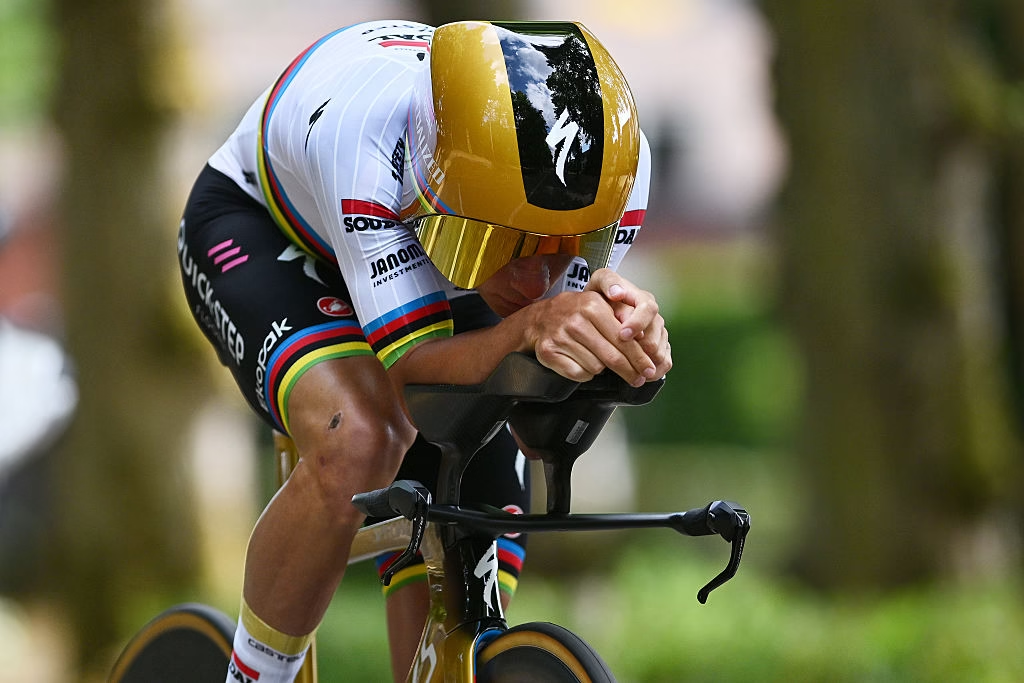
How fast are Tour de France time-trials?
Individual time-trials in the Tour can be won at average speeds above 50km/h on fast courses. On hillier or more technical time-trials, the average speed is lower, but the effort can be just as hard.
A time-trial is different from a road stage because riders race alone. There is no peloton to draft behind. The rider must hold an aerodynamic position, pace the effort, handle corners and keep power high from start to finish.
Team time-trials can be even faster because riders share the work. A strong team on a fast route can average well above 50km/h, with riders rotating at the front and recovering briefly in the line.
The 2026 Tour opens with a 19.6km team time-trial in Barcelona. That means the race starts at high speed, but also with a technical team challenge where pacing, organisation and rider strength all matter. Later, the 26.1km individual time-trial between Évian-les-Bains and Thonon-les-Bains should test the GC contenders directly.
Our Tour de France 2026 team time-trial explained guide breaks down why the Barcelona opener is more than a ceremonial start, while our feature on how the stage 1 team time-trial could change the Tour de France 2026 explains why the format could shape the first week immediately.
Why average speed can be misleading
Average speed is useful, but it can hide the real difficulty of a stage.
A flat stage averaging 46km/h may include long periods where riders in the bunch are sheltered and saving energy. A mountain stage averaging 34km/h may include repeated climbs where riders are at their limit, descents where they recover little, and valleys where teams chase hard.
The average also depends on tactics. If the peloton allows a breakaway to gain a large lead, the stage may be steadier for a while. If crosswinds split the race, the speed can be high from the start. If GC teams attack early in the mountains, even a stage with a lower average speed can become savage.
This is why “fast” and “hard” are not always the same thing. Some of the hardest Tour stages have lower average speeds because the route is so mountainous. Some of the fastest stages are easier for riders who can sit in the peloton and draft.
Our Tour de France 2026 route analysis goes deeper into why the same route can produce very different kinds of pressure from day to day.
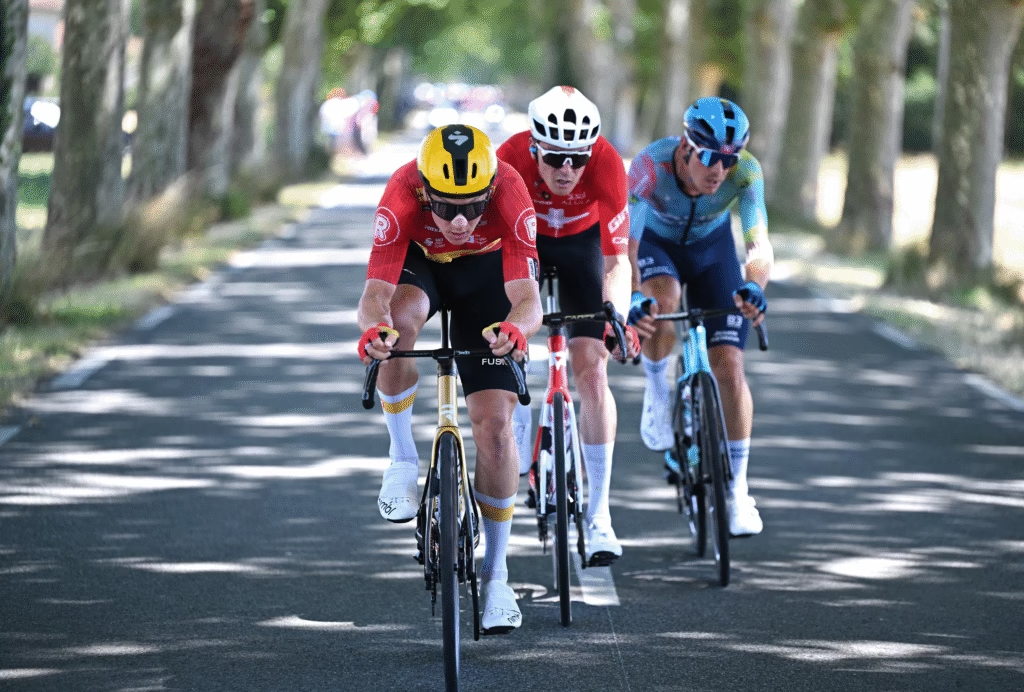
How fast is a breakaway?
A breakaway can ride at 40-50km/h on flat terrain, depending on the size and quality of the group. In the mountains, the speed drops, but the effort can remain extremely high.
A small breakaway has less drafting benefit than the peloton. That means each rider must spend more time in the wind. A group of five riders riding at 45km/h for hours is working much harder than most riders sitting inside the main bunch at the same speed.
Breakaways are not just fast. They are unstable. Riders may cooperate for most of the day, then attack each other near the finish. If the peloton begins chasing hard, the breakaway must decide whether to increase speed, save energy or start attacking early.
That is why breakaway wins are so respected. The winning rider has usually spent hours ahead of the race, used more energy than the peloton, then still had enough left to finish the job.
For the 2026 route, our Tour de France 2026 breakaway stages ranked guide looks at the days where breakaways are most likely to survive, and our Tour de France 2026 stage hunters to watch highlights the riders who could benefit from those chances.
How fast do riders go in the final kilometre?
The final kilometre of a sprint stage can be raced at around 55-70km/h, depending on the finish. The speed is already high before the sprinters launch.
In the final 1,000 metres, teams fight to keep their sprinter near the front. Lead-out riders take turns at maximum effort, often pulling off after a short turn. The aim is to deliver the sprinter into the final 150-250 metres at the right speed and in the right position.
A good lead-out can make a sprinter look unbeatable. A poor lead-out can leave even the fastest rider trapped. That is why sprint stages are team efforts, even if only one rider crosses the line first.
The final kilometre is also dangerous because the whole race compresses. Riders are tired, speeds are high, and everyone wants the same piece of road. A small movement can cause a crash.

How fast do riders go in the mountains compared with amateurs?
The difference is huge.
A strong amateur might climb Alpe d’Huez in around an hour, depending on fitness. Tour riders can climb famous ascents far faster, but the comparison is not entirely fair because pros are racing after hours of hard riding and after many previous stages.
The bigger difference is repeatability. A good amateur might ride one famous climb well on a fresh day. A Tour rider has to climb at high speed after 150km of racing, then recover and do it again the next day.
That is what makes professional speed so difficult to grasp. It is not just the single effort. It is the repeated effort under race conditions.
For riders wanting a taste of Tour-style roads without the professional race context, our L’Étape du Tour 2026 complete guide for UK riders explains the amateur challenge linked to the 2026 route.
Why does the peloton go so fast?
The peloton goes fast because of drafting, team tactics and rider depth.
Drafting is the biggest factor. A rider sitting behind another rider uses less energy because the rider in front blocks the wind. In a large peloton, that saving can be enormous. This allows the group to travel at speeds that one rider could not hold alone.
Team tactics also keep speed high. Sprint teams chase breakaways. GC teams ride hard before climbs to position leaders. Teams with crosswind ambitions accelerate in exposed sections. Domestiques control the front for hours.
The depth of the Tour field matters too. These are some of the best riders in the world. Even the riders doing support work are strong enough to drive the peloton at a pace that would drop most professionals outside the top level.
That is why the Tour can look calm while still being fast. The peloton is efficient, but the speed is still extreme.
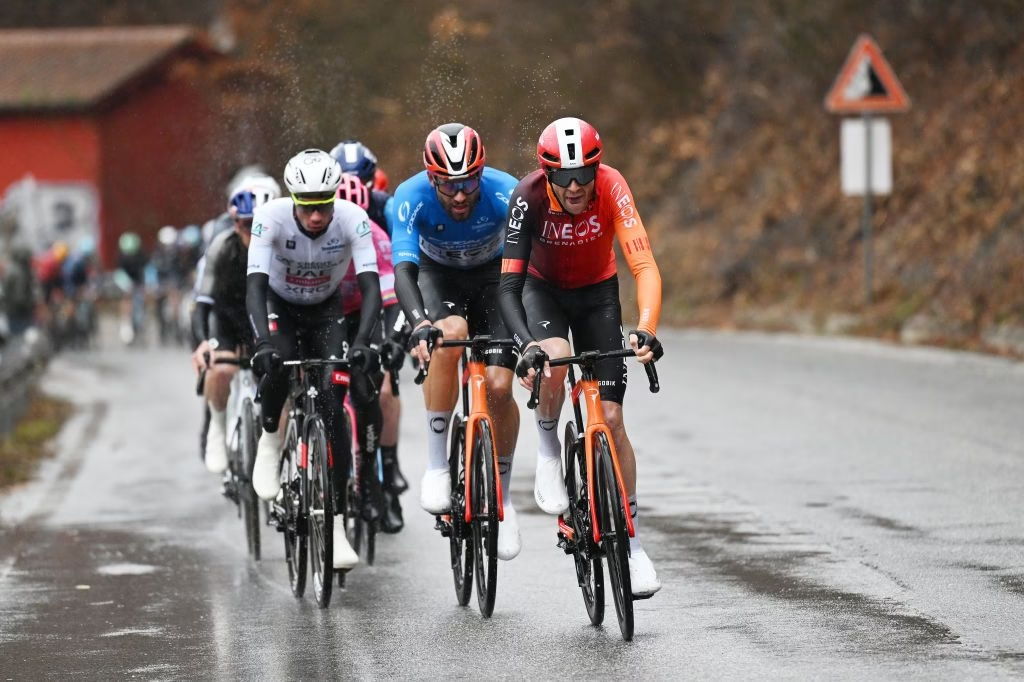
How wind changes Tour speeds
Wind can make the Tour much faster or much harder.
A tailwind can push the peloton to very high average speeds, especially on flat stages. A headwind can slow the race, discourage attacks and make riders hide in the bunch. A crosswind is the most dangerous because it can split the peloton into echelons.
When crosswinds hit, speed becomes tactical. Teams accelerate not just to go faster, but to break the race apart. Riders caught on the wrong side of a split may lose time even on a flat stage.
That is why flat stages are not always easy. The profile may look simple, but if the wind is right, the peloton can turn a sprint day into a GC trap.
How fast do riders go on cobbles or rough roads?
On cobbles, gravel or rough roads, speed can drop compared with smooth tarmac, but the effort and risk rise sharply. Riders must absorb vibrations, hold position, avoid punctures and keep control while the bike moves underneath them.
The Tour does not include cobbles every year, but rough surfaces and technical roads can still affect speed. Even small road changes matter when riders are packed together at 50km/h.
The 2026 Tour finishes in Paris with the Montmartre circuit, bringing a different kind of technical challenge to the final stage. The climbs and corners there should make the last day more than a simple procession.
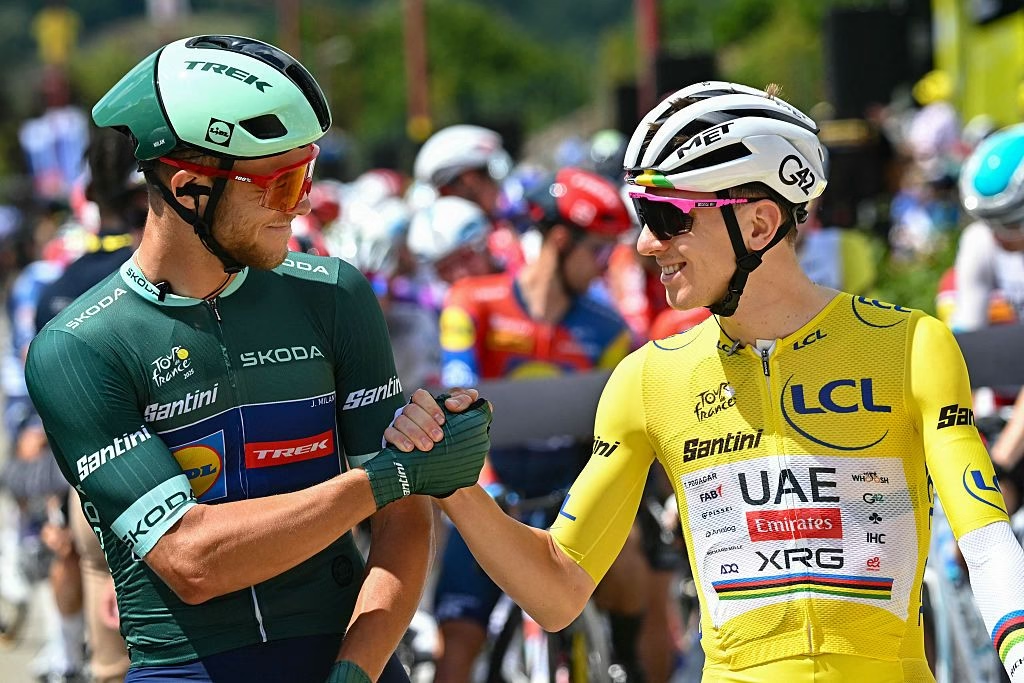
Does the yellow jersey rider go faster than everyone else?
Not every day. The yellow jersey is the rider with the lowest total time, not necessarily the rider who rides fastest on every stage.
A GC contender may finish safely in the bunch on sprint stages, follow rivals in the mountains, and only attack when necessary. The yellow jersey battle is about time across three weeks, not constant stage winning.
That said, the best GC riders are usually among the fastest in the hardest parts of the race. They climb faster than almost everyone, time-trial strongly, recover better and avoid losing time when the race is under pressure.
That combination is what makes a Tour winner. Not the highest top speed, but the ability to be fast enough in every race situation.
Our Tour de France 2026 GC favourites ranked guide looks at the riders most likely to manage that complete challenge, while our Tour de France 2026 dark horses for the general classification guide covers the outsiders who could use speed, climbing and consistency to move higher than expected.
How fast do sprinters accelerate?
Top sprinters produce enormous acceleration in the final seconds of a stage. They may already be travelling at more than 60km/h when they launch, then increase speed while fighting for position.
The effort is short, usually around 10-20 seconds for the final full sprint, but it comes after hours of racing. That is why sprinting at the Tour is so different from a fresh sprint in training. The rider must still produce peak power after fatigue, stress and repeated accelerations.
Acceleration also depends on timing. Launch too early and the rider fades before the line. Launch too late and there may be no space. Launch from too far back and the speed is wasted.
The best sprinters are fast, but they are also ruthless judges of space and timing. Our Jonathan Milan at the Tour de France 2026 feature looks at one of the clearest examples of a rider whose sprint speed and green jersey ambitions overlap.
How fast does the Tour start each day?
The start of a Tour stage can be surprisingly fast, especially if many riders want to join the breakaway. The first hour is sometimes one of the hardest parts of the day.
When the breakaway has not yet gone, riders attack repeatedly. The peloton chases, counters go, teams block or react, and the speed stays high. Once the breakaway is established, the race may settle.
On some stages, especially hilly or windy ones, it may take a long time for the break to form. That can make the opening phase brutal. A stage may look controlled on television later, but riders may already have spent an hour at near full intensity.
This is one reason average speed does not show the whole story. A stage can include violent racing early, calm control in the middle and another full-speed battle at the end.
How fast is the Tour de France compared with normal cycling?
Compared with normal cycling, Tour speeds are extraordinary.
| Ride type | Typical average speed |
|---|---|
| Casual cyclist | 15-22km/h |
| Club rider | 25-32km/h |
| Strong amateur | 32-38km/h |
| Elite amateur race | 38-45km/h |
| Tour de France overall | Around 40-43km/h |
| Tour flat stage | Often 43-50km/h |
| Tour sprint finish | Around 65-75km/h |
These comparisons are only approximate, but they show the scale. A Tour rider’s three-week average can be similar to or faster than a strong amateur’s best short ride, even though the Tour includes mountains, fatigue and repeated race days.
Why Tour speeds have increased
Tour speeds have increased over time for several reasons. Bikes are more aerodynamic. Clothing is faster. Helmets are better designed. Tyres, wheels and drivetrains have improved. Nutrition is more precise. Training is more scientific. Teams understand pacing, recovery and race control better.
Modern riders are also specialists in marginal gains. They know how to hold aero positions, fuel high carbohydrate intakes, manage heat, prepare for altitude and recover between stages.
Route design can also affect speed. Shorter stages can be raced harder. Better roads can increase average speeds. More controlled team tactics can keep the peloton moving efficiently.
That does not mean the Tour has become easier. In many ways, it has become faster and more intense. Riders may spend less time on the bike than in the early Tours, but the speed and depth of competition are much higher.
How speed affects time cuts
Speed at the front of the race can make life harder for riders at the back. Time cuts are based on the stage winner’s time and the stage type. If the winner rides very fast, the riders behind may have less room for error.
This is especially important on mountain stages. If the GC favourites or breakaway riders set a fast pace, sprinters in the gruppetto must also ride quickly enough to survive. They are not racing for the stage win, but they are still racing the clock.
That is why a fast Tour is not just hard for the leaders. It is hard for everyone. The faster the front goes, the more pressure there is on the back.
Our guide to how Tour de France time cuts work explains why the winner’s speed can shape who stays in the race, and our explainer on what the broom wagon is at the Tour de France covers what happens when a rider can no longer continue.
How fast will the 2026 Tour de France be?
The 2026 Tour de France could be very fast, but the route will make the overall average difficult to predict.
The race has 7 flat stages, which should keep speeds high on sprint days. It also has 4 hilly stages, which can be fast if breakaways are chased hard. The opening team time-trial in Barcelona will be raced at high speed, and the individual time-trial should add another fast day.
But the route also has 8 mountain stages and 5 summit finishes. The Pyrenees, Massif Central, Vosges, Jura and Alps will reduce average speed, even as they increase difficulty. Stage 20, with the Galibier, Sarenne and Alpe d’Huez, should be one of the hardest stages of the race, not one of the fastest.
So the answer is likely this: the flat stages and time-trials will be extremely fast, the mountain stages will be slower but harder, and the overall average will depend on wind, tactics and how aggressively the GC battle is raced.
Our Tour de France 2026 queen stage guide explains why the final Alpine block may pull the race towards difficulty rather than pure speed, while our feature on why back-to-back Alpe d’Huez finishes could define the Tour de France 2026 explains why the final mountain weekend is about recovery as much as climbing speed.
-
 Photo Credit: Getty

Tour de France speed FAQ
What is the average speed of the Tour de France?
The overall average speed of the modern Tour de France is usually above 40km/h. The 2025 edition was reported as the fastest Tour on record, averaging 42.8491km/h.
How fast do Tour de France riders sprint?
Tour de France bunch sprints often reach around 65-75km/h in the final metres, depending on the finish, wind direction and lead-out.
How fast do Tour de France riders descend?
Riders can descend at 80-100km/h or more on fast mountain descents, depending on the road, corners, weather and risk level.
How fast do Tour de France riders climb?
On long climbs, Tour riders may average around 18-25km/h, depending on gradient, altitude, fatigue and race situation. On steep sections, speeds can drop much lower.
How fast is a Tour de France time-trial?
Fast individual time-trials can be won above 50km/h, while team time-trials can also average more than 50km/h on suitable courses.
Why are Tour de France riders so fast?
They are fast because of elite fitness, drafting in the peloton, aerodynamic equipment, team tactics, precise training, advanced nutrition and years of racing experience.
Is a fast stage always a hard stage?
No. A fast flat stage can be easier for riders sheltered in the bunch than a slower mountain stage where they are climbing at their limit. Speed and difficulty are related, but not the same.
How fast is the Tour de France compared with amateur cycling?
A strong amateur might average 30-35km/h on a good ride. Tour riders can average above 40km/h across three weeks, including mountains and repeated race days.
Why Tour de France speed is so impressive
Tour de France speed is impressive because it is not just a single number. It is speed repeated under pressure, across terrain that constantly changes, in a race where every day adds fatigue.
A sprinter hitting 70km/h is impressive. A time-triallist averaging more than 50km/h is impressive. A climber riding up an Alpine pass at 22km/h is impressive. But the real Tour de France standard is doing all of it across three weeks, with only two rest days, while racing against the best riders in the world.
That is what separates Tour speed from normal cycling speed. It is not only how fast riders go. It is how often they can go fast, how quickly they recover, and how little margin they have when the race changes around them.
For more beginner-friendly explainers, route guides and race analysis, visit our Tour de France hub.

