
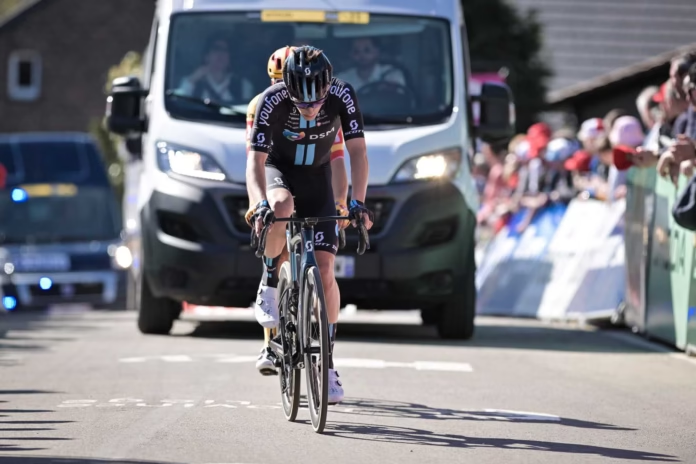
The broom wagon at the Tour de France is the vehicle that follows at the back of the race and collects riders who abandon or can no longer continue. In French, it is called the voiture balai, which literally means “broom car”. The idea is simple: it metaphorically sweeps up the riders who have been dropped, exhausted, injured or eliminated from the race.
For most of the peloton, the broom wagon is something to avoid. Climbing into it means the rider’s Tour is over. It is not just a lift to the finish. It is a public, symbolic end to weeks or months of preparation.
That is why the broom wagon has become such a powerful image in Tour de France history. The yellow jersey represents victory. The green jersey represents consistency and speed. The polka-dot jersey represents climbing. The broom wagon represents the other side of the Tour: survival, suffering and the fact that not everyone who starts in July reaches Paris.
For newer fans, the broom wagon is best understood alongside time cuts, abandonments and the gruppetto. It sits at the very back of the Tour’s moving world, behind the leaders, the peloton, the dropped riders and the support cars. When a rider has nothing left, the broom wagon is there. Our beginner’s guide to Men’s Tour de France 2026 explains the wider race structure, while this guide focuses on the vehicle that symbolises the end of a rider’s race.
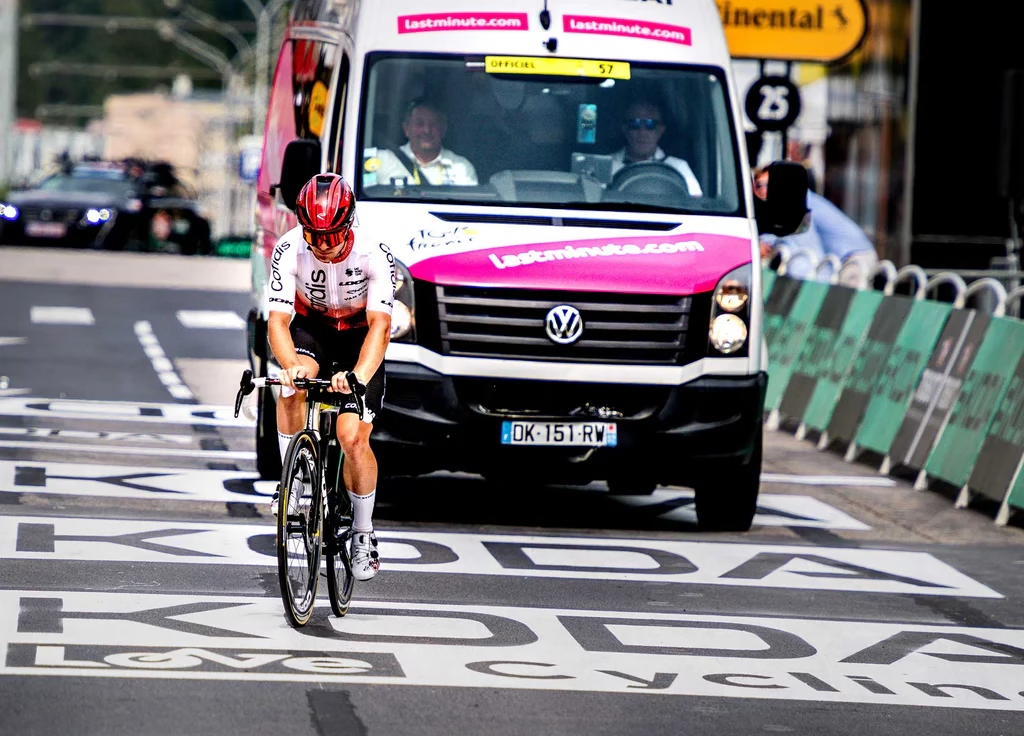
The broom wagon at a glance
| Question | Answer |
|---|---|
| What is the broom wagon? | The vehicle at the back of the Tour that collects riders who abandon |
| What is it called in French? | Voiture balai |
| What does voiture balai mean? | Broom car |
| Does getting in mean your Tour is over? | Yes, if a rider abandons and enters the broom wagon, they are out |
| Is it the same as missing the time cut? | Not exactly, but both can end a rider’s Tour |
| Does it still exist? | Yes, though its modern role is more practical than theatrical |
| Why is it famous? | It symbolises the harshness of the Tour and the end of a rider’s race |
| Who uses it? | Riders who abandon, are injured, are exhausted or cannot continue safely |
Why is it called the broom wagon?
The name comes from the French voiture balai, meaning broom car. The image is easy to understand: the vehicle follows the race and sweeps up riders who have been left behind.
Historically, the Tour’s broom wagon really did carry a broom, making the metaphor visible. That gave it a slightly theatrical quality, but also a brutal one. To see the broom wagon was to see the line between continuing and stopping.
Cycling is full of romantic language, but the broom wagon is unusually direct. It is not about glory or tactical subtlety. It is about being unable to carry on.
The term has since spread beyond the Tour de France and is used in other road races and sportives. But in the Tour, it carries extra weight because the race is so hard, so public and so closely tied to cycling’s idea of endurance.
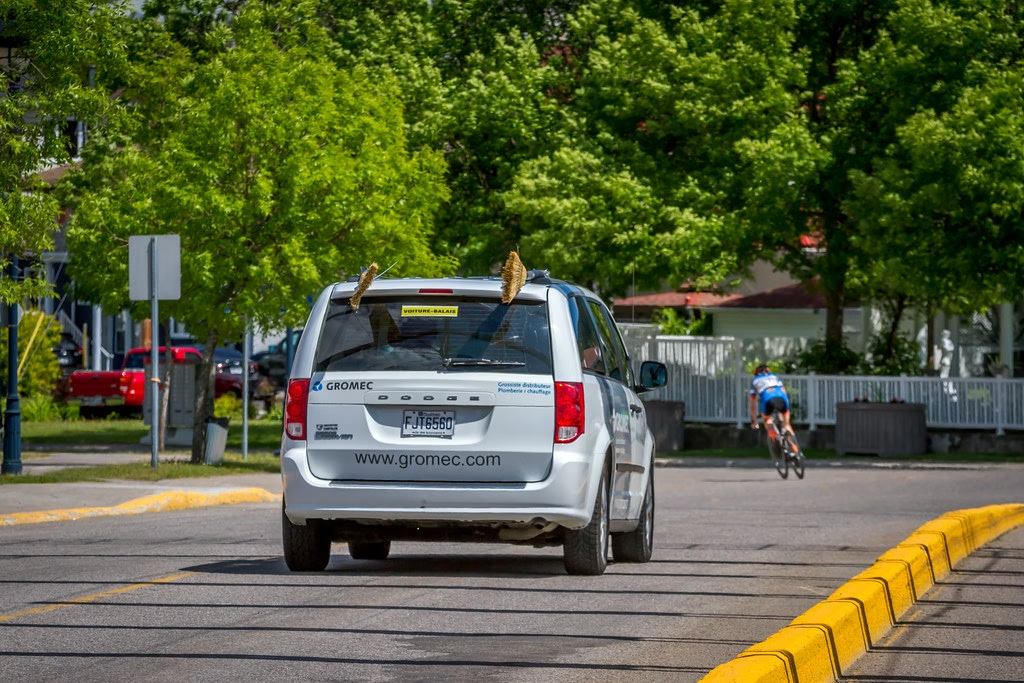
What does the broom wagon actually do?
The broom wagon follows behind the last riders on the road. If a rider abandons, the vehicle can collect them and take them towards the finish or onward to team support, medical care or transport.
Its role is partly practical. The Tour de France is a huge moving operation, and riders cannot simply stop anywhere and be left behind on open roads, mountain passes or remote sections of the route. The broom wagon helps make sure riders who have abandoned are accounted for and moved safely.
It is also part of race control. A rider who abandons is no longer part of the race. Once they get into the broom wagon or otherwise formally stop, their Tour is over. They cannot restart the next day.
That makes the moment decisive. A rider may fight for kilometres to avoid it, even if they know they are close to the end. The broom wagon is not just transport. It is a line.
Is the broom wagon still used at the Tour de France?
Yes, the broom wagon still exists, but the modern Tour is much more structured than the early editions. Riders now have team cars, neutral service, medical vehicles, race radio, television motorbikes, commissaire vehicles and detailed race-control systems around them.
That means the broom wagon is not the only vehicle involved when a rider abandons. A rider may first speak to a team car, receive medical attention, stop with team staff or be collected by another race vehicle depending on the situation. But the broom wagon remains part of the race convoy and part of the Tour’s language.
Its symbolic role is almost as important as its practical one. Cycling fans know what it means. Commentators know what it means. Riders definitely know what it means. To be behind the race and close to the broom wagon is to be close to leaving the Tour.
That is why the phrase still matters, even in a race with modern logistics.
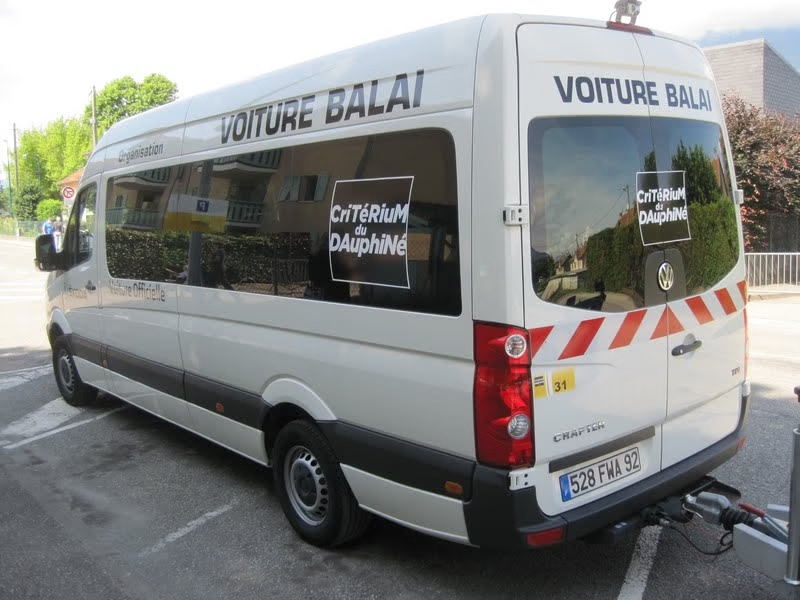
Does the broom wagon eliminate riders?
The broom wagon itself does not usually “eliminate” riders in the way a referee might disqualify someone. It collects riders who have already abandoned or cannot continue.
Elimination usually comes through other mechanisms. A rider may miss the time cut. A rider may be withdrawn by their team. A doctor may rule that they cannot continue safely. A rider may be disqualified for breaking rules. Or the rider may choose to abandon because of injury, illness, exhaustion or mechanical problems that cannot be solved in time.
The broom wagon is the vehicle that represents the end of that process. It is the visible outcome.
That distinction matters. Missing the time cut means a rider has finished the stage too late and is not allowed to start the next day, unless the commissaires apply an exception. Climbing into the broom wagon means the rider has stopped before finishing. Both can end a Tour, but they are not the same thing.
Our guide to how Tour de France time cuts work explains the difference in more detail.
Broom wagon vs time cut
The broom wagon and the time cut are linked, but they are not identical.
| Situation | What happens |
|---|---|
| Rider abandons during the stage | They may be collected by the broom wagon and are out of the race |
| Rider finishes outside the time cut | They are usually eliminated after the stage |
| Rider crashes and cannot continue | They may receive medical help and be taken away from the race |
| Rider is dropped but still riding | They try to reach the finish inside the time cut |
| Gruppetto is behind schedule | Riders continue racing against the clock, not necessarily against the broom wagon |
The time cut is a rule. The broom wagon is a vehicle. But emotionally, they belong to the same part of the Tour: the fight to survive.
On hard mountain stages, the difference can become very clear. Some riders continue in the gruppetto, calculating the time limit and trying to reach the finish. Others may crack completely, stop, and climb into the broom wagon. One group is still alive in the race. The other is not.
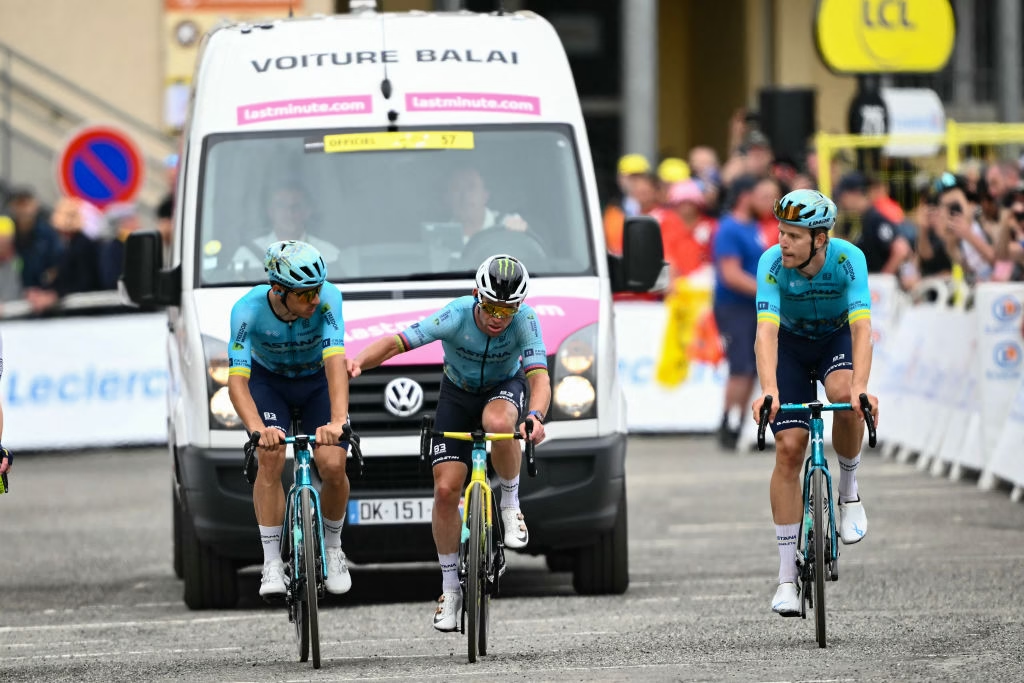 Photo Credit: Getty
What is the gruppetto, and how does it relate to the broom wagon?
The gruppetto is the group of dropped riders, usually sprinters, lead-out riders, rouleurs and tired domestiques, who work together on mountain stages to finish inside the time cut.
The gruppetto is still racing, even if it is not racing for the stage win. Its goal is survival. Riders cooperate, pace themselves and try to manage the gap to the stage winner. They know the broom wagon is behind them, but they are not finished unless they abandon or miss the cut.
That makes the gruppetto one of the most important parts of the Tour to understand. It is where sprinters save their race in the Alps and Pyrenees. It is where domestiques who have done their work try to live another day. It is where injured riders fight to keep their Tour alive.
The broom wagon sits behind that world. It is the reminder of what happens if the gruppetto fails, if a rider cannot hold the pace, or if the body simply says no.
Why riders fear the broom wagon
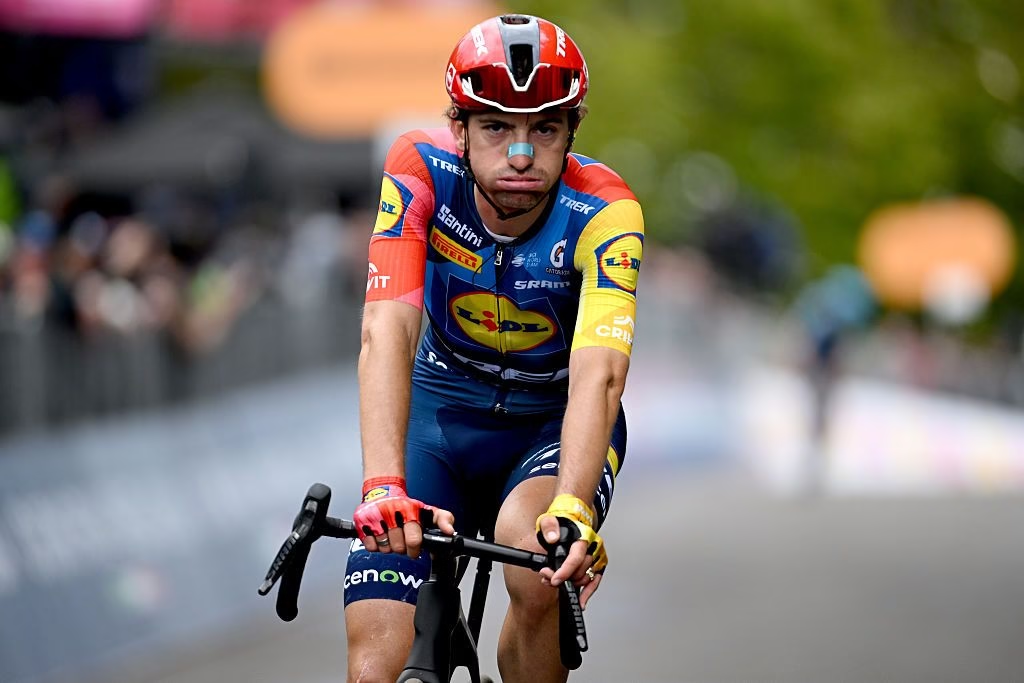
Riders fear the broom wagon because it marks the end of the Tour. It is not embarrassing in a simple sense, because every professional understands how hard the race is. But it is painful, public and final.
A rider may have trained for months, fought for selection, built a season around the Tour and survived crashes, bad weather and repeated mountain stages. To abandon can feel devastating, even when it is the only sensible decision.
The Tour is also a race of status. Reaching Paris matters. Finishing the Tour is an achievement in itself, even for riders far from the general classification. Domestiques, sprinters, debutants and veterans all understand the meaning of completing three weeks.
The broom wagon interrupts that story. It says the race continues without you.
That is why riders often push themselves far beyond normal limits before stopping. The decision to get in the broom wagon is rarely casual. It usually comes after a long internal argument between pride, pain and reality.
Why the broom wagon matters more in the mountains
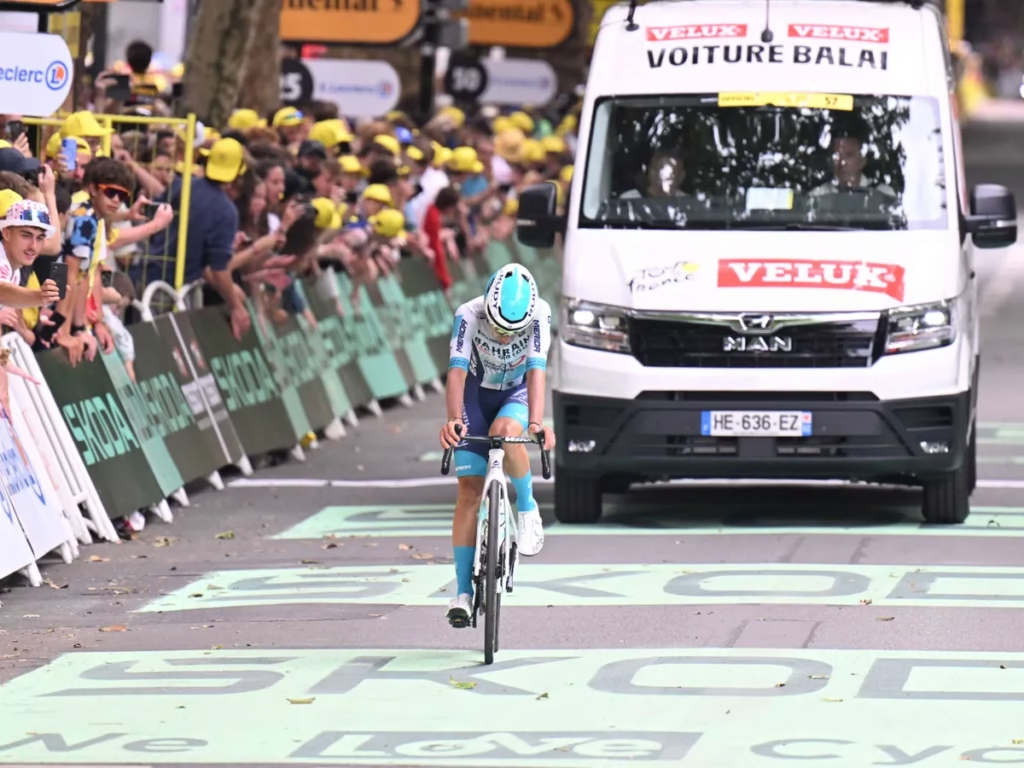
The broom wagon can appear on any stage, but it has the strongest emotional presence in the mountains.
Flat stages are usually fast and stressful, but most riders can stay in the bunch unless they crash, fall ill or suffer a mechanical problem at the wrong time. Mountain stages split the race more brutally. Climbers go forward. Sprinters and heavier riders go backwards. Injured or exhausted riders are exposed quickly.
The 2026 Tour de France route includes 8 mountain stages and 5 summit finishes, with major climbing blocks in the Pyrenees and Alps. That means the broom wagon, the gruppetto and the time cut will all be part of the race’s hidden storyline. Our Tour de France 2026 mountain stages ranked by difficulty guide shows where those survival days could bite hardest, while the Tour de France 2026 summit finishes guide highlights the uphill finishes most likely to stretch the race from front to back.
Mountain stages also make abandonment more visible. A rider dropped early may spend hours alone or in a small group, losing time and energy. The team car may offer help, but there comes a point where the question changes from “can I get back?” to “can I finish?” and finally to “should I stop?”
That is the territory of the broom wagon.
What happens when a rider gets in the broom wagon?
Once a rider gets in the broom wagon after abandoning, they are out of the Tour. Their race number is removed from the active field, they disappear from the general classification, and the team starts the next stage with one fewer rider.
For the rider, the immediate priority may be medical assessment, recovery, warmth, food or simply getting away from the roadside. For the team, the consequences depend on the rider’s role.
If the rider is a domestique, the leader loses support. If it is a sprinter, the team may lose its main stage-win option. If it is a GC contender, the entire team strategy can collapse. If it is a lead-out rider, the sprint train may be weakened. If it is a road captain, the team loses experience and in-race organisation.
That is why abandonments matter beyond the individual. One rider in the broom wagon can change a team’s race.
Our explainer on what a domestique is at the Tour de France shows why losing support riders can affect the whole structure of a team.
Is getting in the broom wagon a sign of failure?
Not really. It can feel like failure to the rider, but from the outside it is better understood as part of the Tour’s brutality.
The Tour de France is not designed to be merely completed. It is designed to test riders across three weeks, different terrains, changing weather, crashes, illness, pressure and fatigue. Even elite professionals can reach the point where continuing is impossible or unsafe.
Sometimes abandoning is the sensible decision. A rider with concussion symptoms, a broken bone, heat illness or severe sickness should not continue just to avoid the symbolism of the broom wagon. The modern sport is much better at recognising that than it once was.
There is still honour in fighting to continue, but there is also professionalism in knowing when the race is over.
The broom wagon is therefore not a moral judgement. It is a hard part of a hard race.
The history of the broom wagon
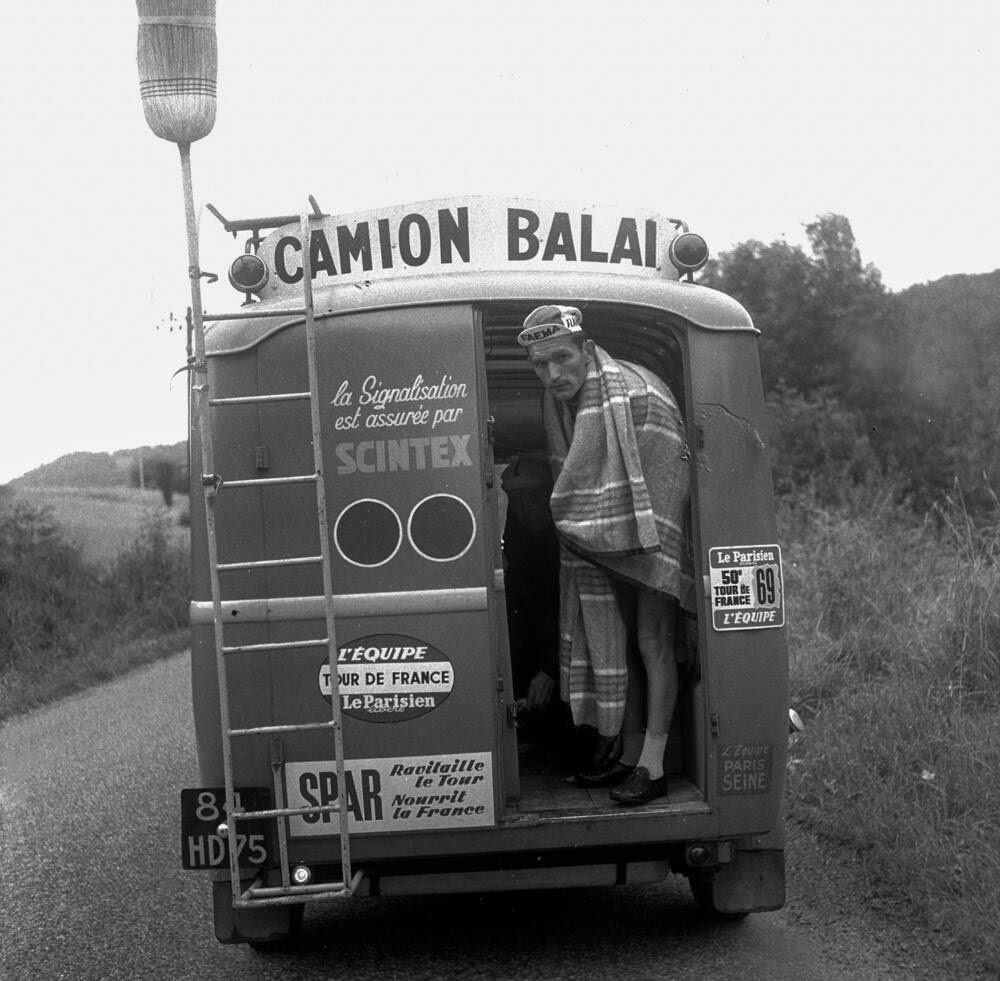
The broom wagon is usually traced back to the early history of the Tour de France, with the voiture balai appearing in the race in the 1910s. That era of the Tour was far rougher than the modern version: longer stages, poorer roads, heavier bikes, limited support and much less controlled race infrastructure.
In that context, the broom wagon had an obvious practical purpose. Riders could be scattered across huge distances, sometimes in remote terrain, and organisers needed a way of ensuring nobody was simply left behind.
The broom itself made the idea visible. The car at the back was sweeping the road clean of riders who could not continue. It was almost comic in image, but severe in meaning.
Over time, the Tour became more professional, more regulated and more heavily supported. But the broom wagon remained because the race still needed a final vehicle and because the image had become part of cycling’s language.
It is one of those old Tour traditions that survives because it still says something true.
Why the broom wagon is part of Tour folklore
The broom wagon is part of Tour folklore because it captures the race’s cruelty in one image. Most sports have a scoreboard, a bench or a dressing room. Cycling has a vehicle at the back of the race that carries the defeated away from the road.
That sounds dramatic, but the Tour has always been dramatic. Its legends are built on collapse as well as victory: riders cracking on climbs, champions losing minutes, sprinters fighting the mountains, domestiques emptying themselves for leaders, and injured riders trying to survive one more day.
The broom wagon belongs to that world. It is not glamorous, but it is honest. It reminds fans that the Tour is not only about who wins. It is also about who cannot go on.
For that reason, the broom wagon often appears in writing and commentary as a symbol rather than just a vehicle. To “avoid the broom wagon” means to survive. To “be swept up” means the race has beaten you.
The broom wagon and sprinters
Sprinters have a complicated relationship with the broom wagon. They are among the fastest riders in the world, but the Tour’s hardest mountain stages can turn them into survival specialists.
A sprinter chasing stage wins or the green jersey must survive the climbs to reach the next flat stage. That means sitting in the gruppetto, pacing carefully, eating enough, avoiding panic and staying inside the time cut. The broom wagon is the thing behind them that represents the end of that mission.
This is why the green jersey is not just a sprint competition. It requires repeated survival. A sprinter can win on flat stages, score intermediate sprint points and still lose everything if they are eliminated in the mountains.
Our Tour de France 2026 green jersey guide explains why climbing survival can be as important as finishing speed in the points competition. For the stages where sprinters will hope that survival pays off, see our guide to the Tour de France 2026 route’s best days for sprinters.
The broom wagon and injured riders
Injured riders often face the hardest decision. A sprinter dropped because of the mountains may still be physically intact, just suffering. An injured rider may be dealing with pain, instability or risk.
The Tour has a long culture of riders continuing through injury, but the modern race is more aware of rider safety. Concussion, fractures, deep wounds, illness and heat stress are not just tests of toughness. They can be medical problems that require withdrawal.
For an injured rider, the broom wagon can be both defeat and relief. It ends the race, but it also ends the immediate demand to keep forcing the body through something it cannot safely handle.
This is where the romantic image of suffering needs limits. The Tour is hard, but riders are not machines. Sometimes the broom wagon is the right place to be.
The broom wagon and domestiques
Domestiques often ride close to the limit because they spend energy for others. A mountain domestique may set pace for a leader early in a climb, chase attacks, fetch bottles, or position the team before a dangerous section. Once that work is done, they may be dropped and have to fight for survival.
That makes their relationship with the broom wagon different from a rider who is dropped simply because they lack form. A domestique may reach the back of the race because they have already done exactly what the team asked.
If they then abandon, the team loses a worker. If they survive, they can do it again the next day. That is why teams care deeply about keeping support riders inside the race, even when those riders have no personal ambitions left.
The best teams do not just protect their leaders. They manage the survival of the whole squad. A Tour is easier to control with eight riders than with six.
Our guide to the Tour de France 2026 domestiques who could decide the race looks at the kind of support riders who may be crucial on this route, especially once the race reaches the hardest mountain stages.
Does the broom wagon follow the last rider all day?
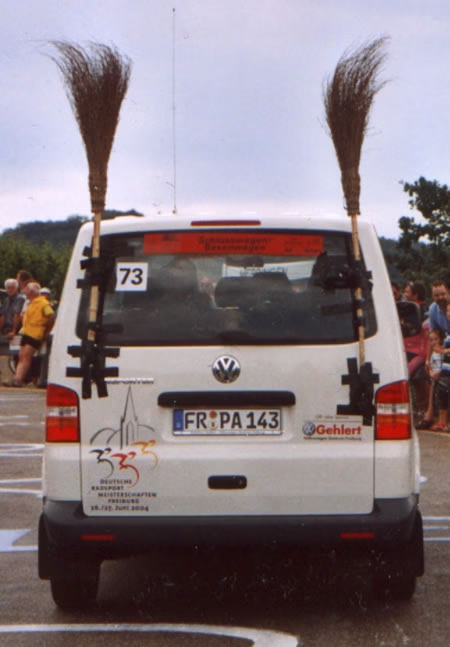
The broom wagon sits at the back of the race convoy, behind the last riders still officially in the race. Its exact position can change depending on the road, the race situation and safety needs, but its function is to mark the rear of the moving Tour.
That position matters because the Tour is not just the peloton. It is a long caravan of vehicles: race officials, team cars, neutral service, medical support, police, television motorbikes, photographers and organisation vehicles. The broom wagon belongs at the end of that structure.
For spectators on the roadside, seeing it pass often means the race has gone. The riders have passed, the convoy has passed, and the road will eventually reopen.
For riders, seeing it too close behind is much less comforting.
Can a rider refuse the broom wagon and keep going?
A rider can try to continue if they are still officially racing, safe to ride and not instructed to stop. Being behind does not automatically mean they must get in the broom wagon.
However, if a rider has abandoned, been eliminated, is medically unable to continue, or is told by officials they must stop, then they cannot simply keep racing. Safety, race rules and road-management requirements come first.
There is a difference between being dropped and being done. Dropped riders can keep fighting. Abandoned riders cannot.
This is why the decision matters so much. Until a rider stops, there is still a chance, however small, of reaching the finish. Once they abandon, the Tour is over.
How the broom wagon fits into the Tour convoy
The Tour convoy is one of the biggest moving operations in sport. The broom wagon is a small but symbolically important part of it.
| Convoy element | Role |
|---|---|
| Race director and officials | Control the race |
| Lead vehicles | Open the road ahead of the race |
| Breakaway cars | Support riders at the front |
| Team cars | Provide tactical support, bottles, food and mechanical help |
| Neutral service | Helps riders when team cars are unavailable |
| Medical cars | Provide race medical support |
| Television and media motorbikes | Cover the race |
| Gruppetto and dropped riders | Fight to stay inside the race |
| Broom wagon | Follows the back and collects riders who abandon |
The broom wagon is not where the Tour wants riders to end up. But without it, the race would be less safe and less organised.
Why fans should understand the broom wagon
Understanding the broom wagon helps fans understand the full Tour de France. It shifts attention from only the winners to the riders fighting simply to continue.
That matters because the Tour is not one race. It is many races layered together. There is the race for yellow, the race for green, the race for stage wins, the race for mountain points, the race for team survival, and the race against elimination.
The broom wagon sits at the edge of all of them. It is not part of the glory, but it defines the stakes.
Once you understand it, a mountain stage looks different. The leader attacking near the front is one story. The sprinter trying not to be swept up is another. The domestique dropped after doing his job is another. The injured rider deciding whether to continue is another.
The broom wagon makes those quieter stories visible. It is also part of why the 2026 race will be so demanding, with a route that moves from the Barcelona Grand Départ through the Pyrenees, Massif Central, Vosges, Jura and Alps. Our Tour de France 2026 full route guide gives the full picture of that three-week route.
-
 Photo Credit: Getty

Broom wagon FAQ
What is the broom wagon in the Tour de France?
The broom wagon is the vehicle at the back of the Tour de France that collects riders who abandon or can no longer continue. In French, it is called the voiture balai.
Why is it called the broom wagon?
It is called the broom wagon because it “sweeps up” riders who have been dropped from the race or have abandoned. The French term voiture balai means broom car.
Does getting in the broom wagon mean you are out of the Tour?
Yes. If a rider abandons and gets in the broom wagon, their Tour is over. They cannot restart the next stage.
Is the broom wagon the same as missing the time cut?
No. Missing the time cut means a rider finishes the stage too late and is usually eliminated. The broom wagon collects riders who abandon before finishing or cannot continue.
Does the broom wagon still exist?
Yes. The broom wagon still exists as part of the Tour convoy, although modern race logistics mean riders may also be supported by team cars, medical vehicles and other race vehicles.
Who usually ends up in the broom wagon?
Riders who are injured, ill, exhausted, outside the race situation or unable to continue safely may end up in the broom wagon.
What is the gruppetto?
The gruppetto is the group of dropped riders, often sprinters and domestiques, who work together on mountain stages to finish inside the time cut and avoid elimination.
Why the broom wagon still matters
The broom wagon still matters because it tells the hardest truth about the Tour de France: the race is not only about winning. It is also about lasting.
Every July, the Tour begins with hope. Leaders think about yellow. Sprinters think about stages and green. Climbers think about mountain points. Domestiques think about doing their jobs. Debutants think about reaching Paris. But the broom wagon follows them all, quietly marking the fact that the Tour can end at any moment.
That is why it remains such a powerful symbol. It belongs to the race’s old world, but its meaning has not disappeared. Riders still crack. Riders still crash. Riders still get sick. Riders still fight the time cut in the mountains. Riders still have to decide whether they can continue.
The broom wagon is the Tour’s final vehicle, but it is also one of its clearest images. At the front of the race is ambition. At the back is survival. The Tour de France needs both.
For more beginner-friendly explainers, route guides and race analysis, visit our Tour de France hub.

