

The Tour de France is brutally hard. It is not just hard because the riders cover more than 3,000km, or because they climb mountains, or because they race for three weeks. It is hard because they do all of that at elite speed, under pressure, with crashes, heat, wind, tactics, time cuts, recovery stress, team duties and constant media attention layered on top.
For fans watching on television, a Tour stage can sometimes look controlled. The peloton rolls along, commentators talk about tactics, and the real attacks may not come until the final hour. But inside the race, nothing is easy. Even a “quiet” day can mean five hours at high speed, fighting for position, eating on the bike, avoiding crashes and saving just enough energy to do it all again tomorrow.
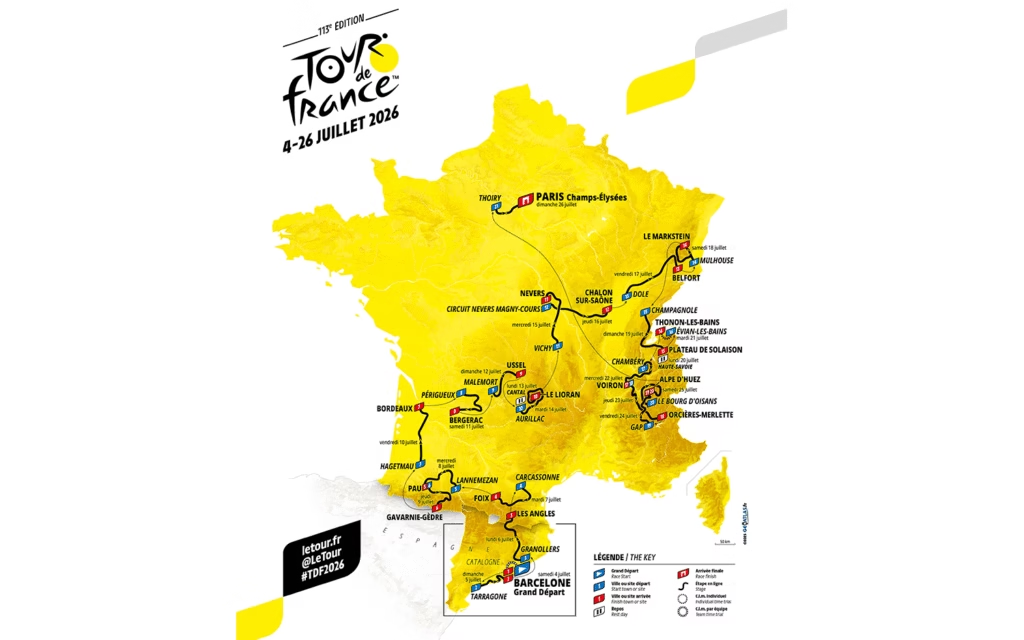
The 2026 Tour de France is a good example of why the race remains the hardest annual event in cycling. It starts with a team time-trial in Barcelona, moves quickly into the Pyrenees, passes through the Massif Central, Vosges and Jura, then finishes with a final Alpine block that includes back-to-back days on Alpe d’Huez. The race covers 3,333km and around 54,450m of climbing across 21 stages.
That is the Tour’s challenge in one line: riders must survive almost a month of physical and mental pressure before they can even think about reaching Paris. For the full stage-by-stage context, see our Tour de France 2026 full route guide and our beginner’s guide to Men’s Tour de France 2026.
Tour de France difficulty at a glance
| Factor | Why it makes the Tour hard |
|---|---|
| Distance | Around 3,300km of racing in three weeks |
| Climbing | More than 50,000m of elevation gain in mountain-heavy editions |
| Duration | 21 stages with only two rest days |
| Speed | Stages are raced at professional peloton pace, often over 40km/h |
| Mountains | Pyrenees, Alps and other ranges split the race repeatedly |
| Heat | July conditions can be extreme, especially in southern France |
| Crashes | Nervous bunch racing, road furniture and fatigue increase risk |
| Time cuts | Riders must finish inside the daily limit to stay in the race |
| Recovery | Riders must refuel, sleep and reset every day |
| Pressure | The Tour is the biggest race in cycling, with huge media attention |
How long is the Tour de France?
The Tour de France lasts 21 stages across 23 days, with two rest days. Modern editions usually cover around 3,300km to 3,500km, depending on the route.
The 2026 race covers 3,333km from Barcelona to Paris. That figure already sounds large, but the real difficulty is not only the total distance. It is how that distance is arranged. Riders do not get to complete it at a comfortable pace. They race it, stage after stage, with every day adding fatigue.
A single 180km ride is hard for most people. A single 180km mountain stage is extremely hard. The Tour asks riders to recover from one day and then do another, and another, and another.
That repetition is what separates the Tour from a one-day race. A rider can survive one terrible day through adrenaline and form. Surviving three weeks requires a different level of durability.
How much climbing is in the Tour de France?
The amount of climbing changes every year, but a modern Tour often includes more than 50,000m of elevation gain. The 2026 route has around 54,450m of climbing, which makes it a very demanding edition.
To put that in perspective, Mount Everest is 8,849m high. The 2026 Tour includes the equivalent of climbing Everest more than six times, while also racing thousands of kilometres between those climbs.
The official 2026 route includes 8 mountain stages and 5 summit finishes. That means the climbers and general classification riders will have repeated opportunities to attack, but it also means sprinters, lead-out riders and domestiques must repeatedly fight to survive.
The climbing is not only about the famous mountains. The Tour can be hard in the Pyrenees and Alps, but also in the Massif Central, Vosges and Jura. Medium mountains can be just as draining because they create constant changes in pace, repeated accelerations and fewer easy kilometres than the profile may suggest.
Our Tour de France 2026 mountain stages ranked by difficulty guide breaks down the stages where the climbing load should be most severe, while our Tour de France 2026 Massif Central guide explains why the middle of the race is more awkward than it may first look.
 Photo Credit: A.S.O./Charly López
Why the Tour is harder than the distance suggests
The Tour is not a long bike ride. It is a race. That is the key difference.
Riders are not just covering kilometres. They are fighting for position, following attacks, chasing breakaways, responding to crosswinds, protecting leaders, contesting sprints, climbing at threshold and descending at high speed. Even when they are not attacking, they are making decisions constantly.
Drafting helps. A rider in the peloton uses less energy than a rider alone in the wind. But that also creates its own pressure. To save energy, you need position. To keep position, you need concentration. To stay safe, you need awareness. The bunch can be nervous, especially in the first week, near sprint finishes and before climbs.
That means the Tour is hard even before the road goes uphill. Our Tour de France 2026 route analysis looks at the points where that pressure is most likely to become race-shaping.
How fast do Tour de France riders go?
Tour riders often average more than 40km/h on road stages, with flat stages sometimes much faster. Mountain stages are slower in average speed, but harder physiologically because the climbs force long periods of sustained high effort.
This is one of the most misleading things for newer fans. A mountain stage may look slower on paper, but it can be far more damaging than a flat stage. A flat day might finish in a sprint after hours of controlled racing. A mountain day can put riders at their limit for repeated climbs, with no hiding once the gradient rises.
Time-trials are different again. Riders race alone or in teams against the clock, with no drafting from the peloton. The 2026 Tour opens with a 19.6km team time-trial in Barcelona and later includes a 26.1km individual time-trial between Évian-les-Bains and Thonon-les-Bains. Those efforts are short compared with road stages, but brutally intense.
Our Tour de France 2026 team time-trial explained guide explains why the Barcelona opener is already a serious physical and tactical test. For a closer look at the race-shaping potential of stage 1, see our feature on how the stage 1 team time-trial could change the Tour de France 2026.
What makes the mountains so hard?
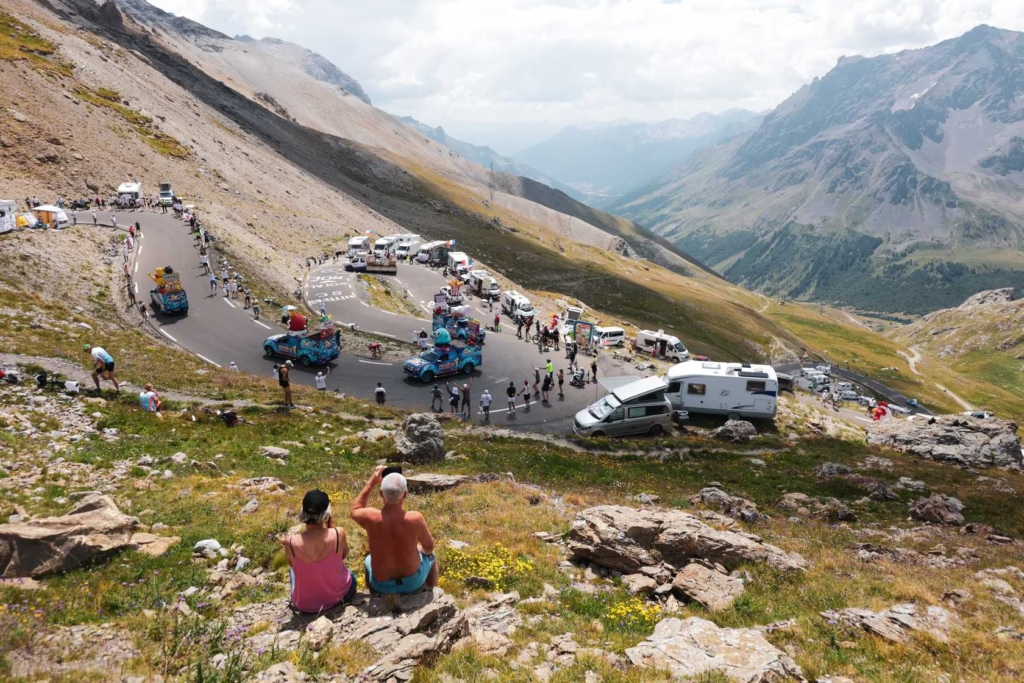
The mountains are hard because they remove the peloton’s protection. On flat roads, riders can draft and hide. On long climbs, power-to-weight becomes decisive. If a rider cannot match the pace, they are dropped.
Climbs also magnify fatigue. A rider who is slightly tired can still sit in on the flat. On a steep climb, that weakness becomes visible immediately. If the best climbers accelerate, the damage can be severe within minutes.
The Tour’s most famous mountains also carry mental weight. Alpe d’Huez, the Tourmalet, the Galibier and other major climbs are not just roads. They are places where Tour history has been made and lost. Riders know that one bad climb can undo weeks of work.
The 2026 route is especially difficult because it puts major mountains across different phases of the race. The Pyrenees arrive early, the Massif Central and Vosges keep the pressure on, and the Alps dominate the final week. Our Tour de France 2026 Pyrenees guide explains why the first mountain block comes soon enough to put riders under pressure before the race has settled.
Why summit finishes hurt so much
A summit finish is a stage that ends at the top of a climb. These are among the hardest days in the Tour because riders cannot rely on a descent or flat run-in after the final climb. The finish line is uphill, so any weakness is punished all the way to the end.
On a normal mountain stage, a dropped rider may regain time on a descent or in a valley. On a summit finish, the gaps usually keep growing until the line. That is why summit finishes are so important for the yellow jersey battle.
The 2026 Tour has 5 summit finishes. That is a lot of direct climbing pressure. It gives GC riders repeated chances to attack, but it also makes the race harder for everyone else. Sprinters and heavier riders are not just trying to finish the climb. They are trying to do it fast enough to stay inside the time cut.
Our Tour de France 2026 summit finishes full guide looks at the uphill finishes most likely to shape the race.
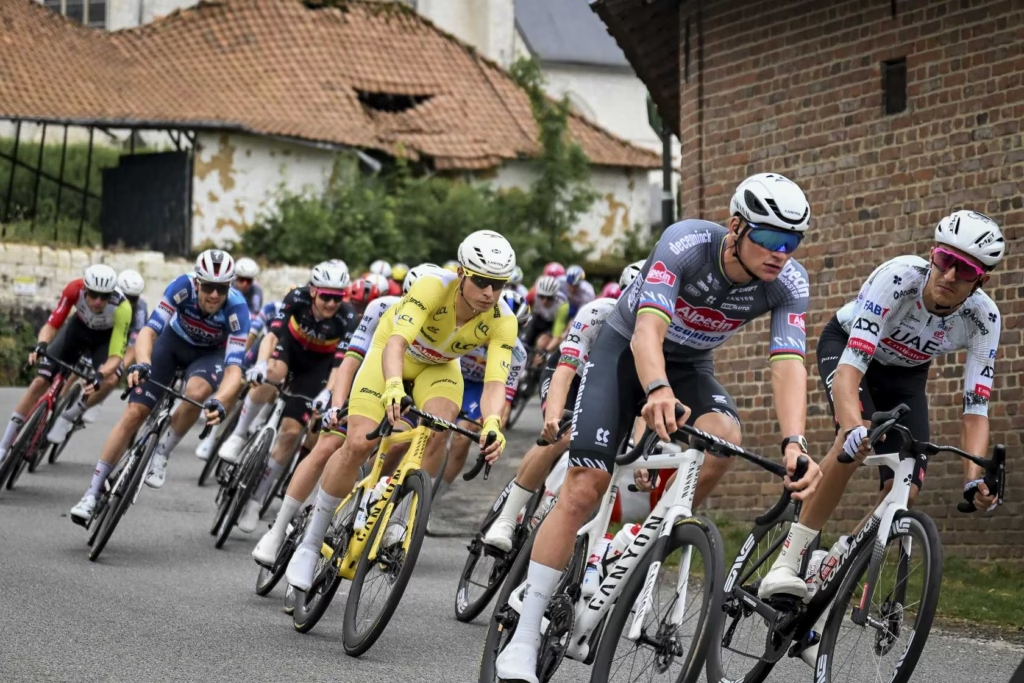 Photo Credit: A.S.O./Billy Ceusters
Is the Tour hard for sprinters?
Yes. The Tour is extremely hard for sprinters, even though they are not trying to win the mountain stages.
Sprinters are built for explosive speed, positioning and power on flatter roads. The problem is that the Tour forces them to survive the same mountains as everyone else. On the hardest stages, they may be dropped early and spend hours in the gruppetto trying to finish inside the time cut.
That is one of the hidden challenges of the green jersey. A sprinter cannot win the points competition if they are eliminated in the mountains. They must score on flat stages, survive hilly days, avoid crashes and recover enough to sprint again.
A rider can be the fastest in the race and still have a miserable Tour if the mountains break them. That is why Tour sprinting is about endurance as well as speed.
Our Tour de France 2026 route’s best days for sprinters guide shows where the fast men may get their chances, while our Tour de France 2026 sprint stages ranked puts those opportunities into order. For the points-classification picture, see our Jonathan Milan at the Tour de France 2026 green jersey contender feature.
What is the gruppetto?
The gruppetto is the group of dropped riders that forms on mountain stages, usually made up of sprinters, lead-out riders, domestiques and heavier rouleurs. Their aim is not to win the stage. Their aim is to finish inside the time cut.
This is one of the clearest examples of how hard the Tour is. At the front, GC riders may be fighting for yellow. Behind, another race is happening. Riders in the gruppetto are calculating gaps, pacing climbs and trying to avoid elimination.
The gruppetto can look slow compared with the leaders, but it is still full of elite professionals riding hard after days of fatigue. For many riders, surviving in that group is a successful day.
How do time cuts make the Tour harder?
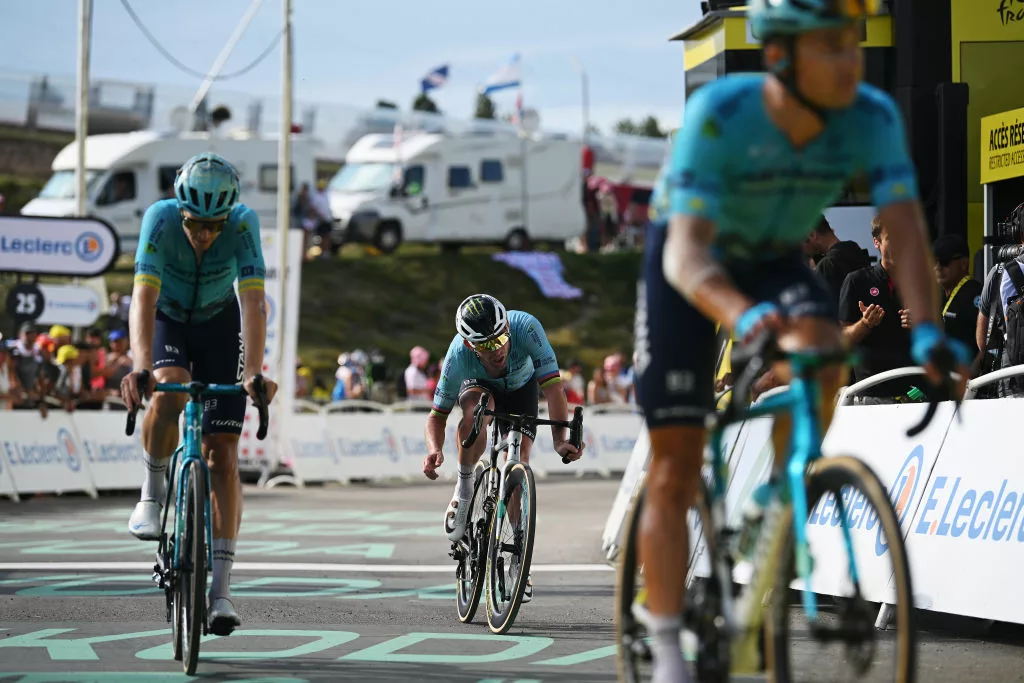
Time cuts are daily limits that riders must finish inside to stay in the race. If a rider finishes too far behind the stage winner, they can be eliminated.
This matters because riders cannot simply ride slowly through bad days. Even if a sprinter has no chance on a mountain stage, they must still go fast enough to survive. Even if a domestique has finished their work early, they still need to reach the finish in time.
The exact time cut depends on the stage type, winner’s speed and race regulations. Mountain stages usually have more generous limits than flat stages, but if the front of the race goes very fast, the back can still be in danger.
Time cuts add a survival layer to the Tour. The race does not only test who can win. It tests who can keep going.
Our explainer on how Tour de France time cuts work goes into the calculation and why the cut can become a major storyline.
What is the broom wagon?
The broom wagon is the vehicle at the back of the race that collects riders who abandon or can no longer continue. In French, it is called the voiture balai.
It is one of the Tour’s strongest symbols because getting in usually means the rider’s race is over. A rider may abandon because of injury, illness, exhaustion, crashes or simply because they cannot continue safely.
The broom wagon shows the Tour’s harshest truth: not everyone reaches Paris. Even elite professionals can be beaten by the race.
Our guide to what the broom wagon is at the Tour de France explains why it remains such a powerful part of Tour culture.
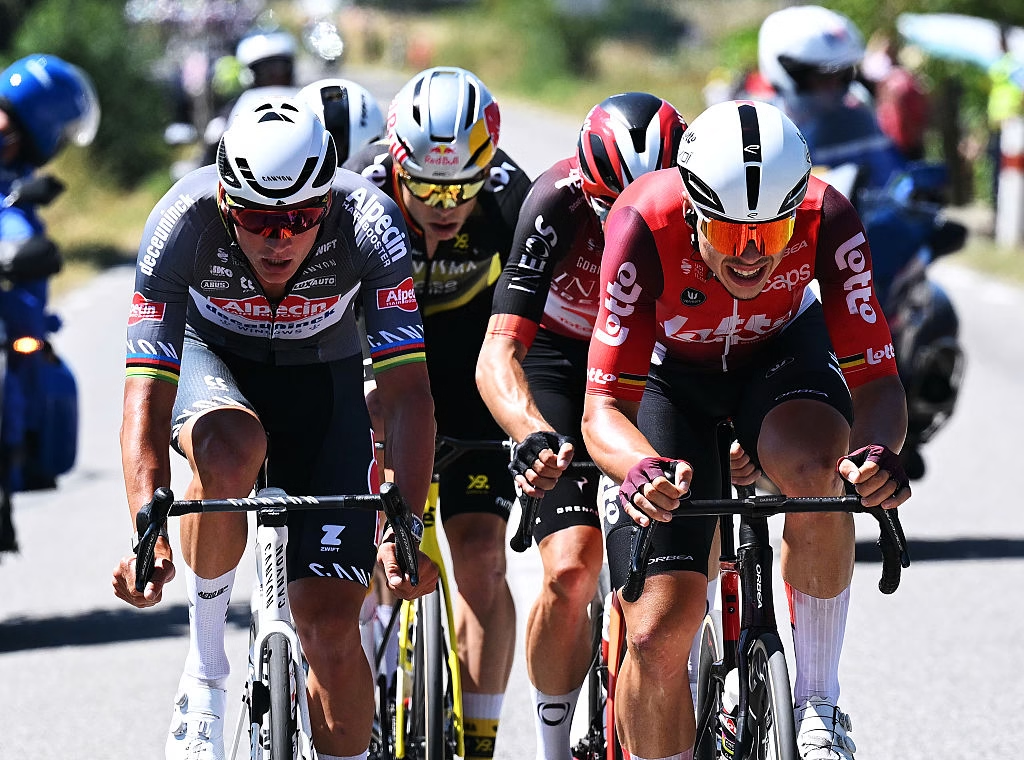 Photo Credit: Getty
How hard is the Tour mentally?
The mental difficulty of the Tour is enormous. Riders must stay focused for hours every day, often while tired, hungry, hot, sore or under tactical pressure.
Crashes are a constant fear. The first week can be especially nervous because every team wants to protect its leaders and sprinters. Positioning before climbs and sprints can be as stressful as the climbs themselves. One lapse can mean a crash, a split or a lost race.
Then there is the emotional pressure. GC contenders live with expectation. Domestiques know their work may decide someone else’s result. Sprinters get only a few chances and must survive days that do not suit them. Injured riders must decide whether to continue. Teams must manage setbacks without falling apart.
The Tour is also relentless because there is almost no privacy. Media, fans, transfers, hotel routines, anti-doping controls and team meetings all sit around the racing. Recovery is a job in itself.
How hard is the Tour for domestiques?
The Tour is often hardest for domestiques because they spend energy for others. A domestique may chase breakaways, protect a leader from wind, fetch bottles, set pace on climbs or ride on the front for hours to control the race.
Once that work is done, they still have to finish the stage. On mountain days, a domestique might empty themselves for a leader before being dropped, then fight to make the time cut.
That makes domestique work physically and mentally demanding. The rider may sacrifice their own result, lose time deliberately and still need to recover enough to do the same thing the next day.
For beginners, watching domestiques is one of the best ways to understand the Tour. The strongest leader often wins because teammates have kept them safe, fed, positioned and protected.
Our guide to what a domestique is at the Tour de France explains these roles in more detail, while our Tour de France 2026 domestiques who could decide the race feature looks at the support riders who may shape this year’s yellow jersey battle.
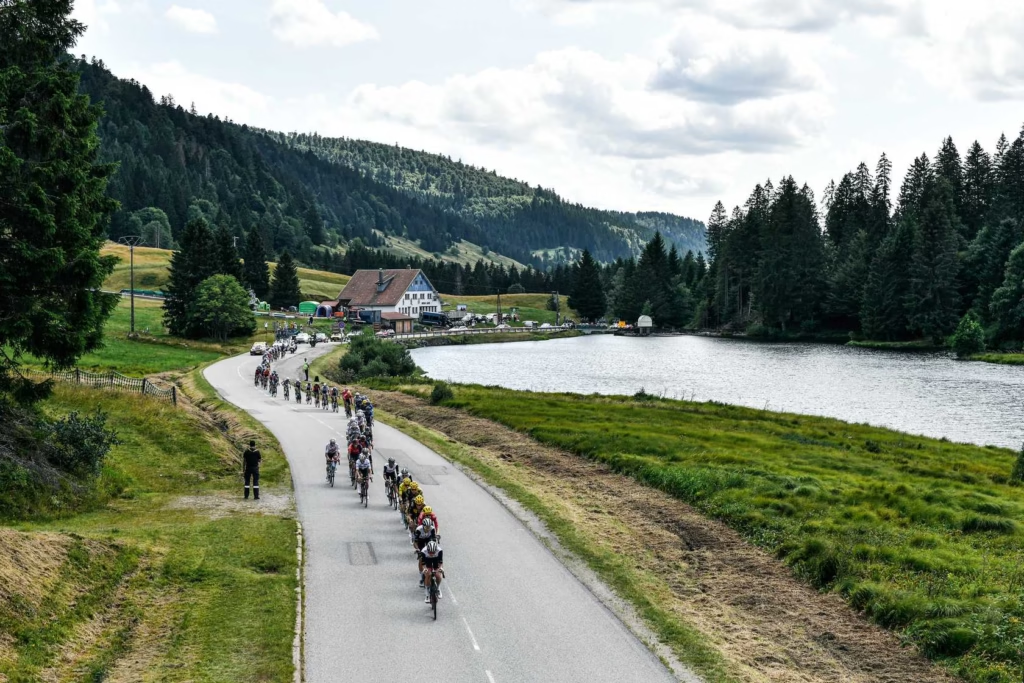
Is the Tour harder than other races?
The Tour is not always the hardest race in every single physical metric. Some one-day races are more chaotic. Some mountain stages in other Grand Tours are steeper or longer. The Giro d’Italia can have harsher weather. La Vuelta can have more brutally steep climbs.
But the Tour is usually the hardest race to win because it combines difficulty with pressure. It has the strongest field, the most media attention, the most intense team preparation and the least room for error. Every team arrives with its best riders and biggest ambitions.
The Tour also magnifies mistakes. Lose time in another race and it may be a setback. Lose time at the Tour and it becomes a global story. Crash at another race and it may be bad luck. Crash at the Tour and a season can change.
So the answer depends on the question. The Tour may not always be the most savage route on paper, but as a sporting challenge, it is cycling’s hardest overall test.
How many calories do riders burn?
Tour riders can burn thousands of calories per stage, with mountain days among the most demanding. Exact numbers vary by rider size, stage length, weather, role and intensity, but the basic point is simple: eating enough is part of the race.
Riders eat before, during and after stages. They take energy gels, bars, rice cakes, bottles and recovery food. Team staff plan nutrition carefully because a poorly fuelled rider can crack suddenly.
This is called a hunger flat or bonk. It happens when a rider runs out of available energy. At Tour level, even a small fuelling mistake can cost minutes.
That is another reason the Tour is so hard. Riders are not only racing. They are constantly managing energy intake while riding at high speed.
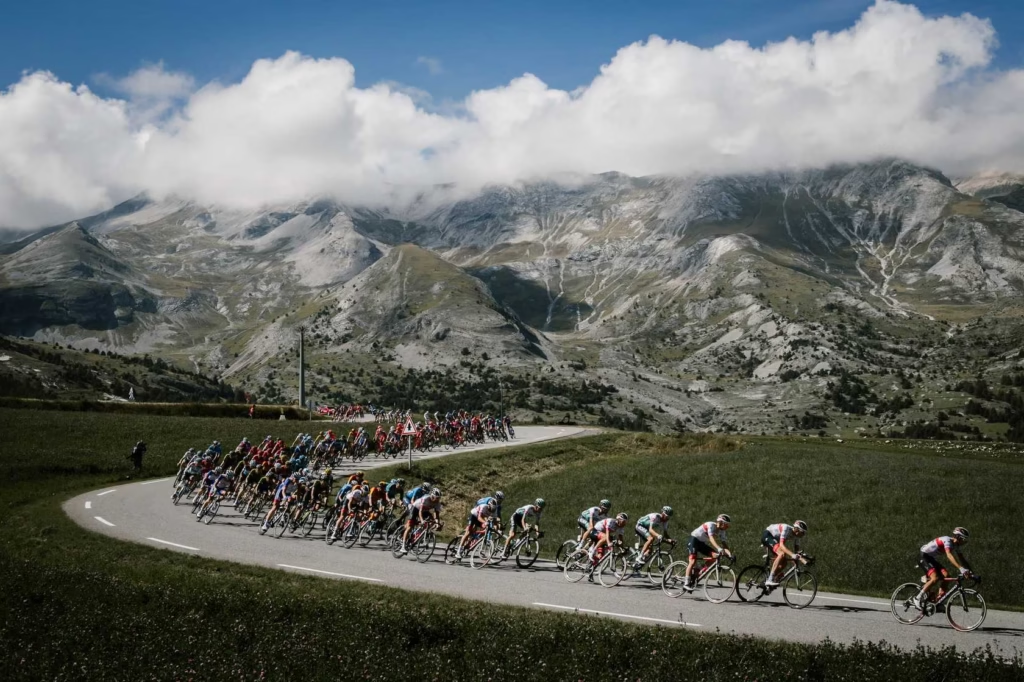 Photo Credit: A.S.O./Pauline Ballet
How much do riders recover between stages?
Not as much as they would like. Recovery starts immediately after the finish: warm down, food, drinks, media duties, transfer to the hotel, massage, dinner, team meeting and sleep. Then they wake up and do it again.
The two rest days help, but they are not full holidays. Riders often do an easy ride to keep the body moving, meet media obligations and stay in routine.
The Tour is difficult because fatigue accumulates. A rider may feel good in week one, manageable in week two and then suddenly suffer in week three. Recovery is not just about legs. It is about sleep, digestion, immune function, mood, stress and mental sharpness.
The winner is rarely just the rider with the biggest single-day performance. It is the rider who can keep producing high-level efforts after everyone is tired.
Why week three is different
Week three is where the Tour becomes especially hard. By then, everyone is fatigued. Teams have lost riders. Injuries have accumulated. Sleep debt may be building. Riders who looked comfortable earlier can suddenly crack.
The 2026 Tour makes that even more important because the final week includes the Alps and two finishes on Alpe d’Huez. Stage 20, with the Galibier, Sarenne and Alpe d’Huez, looks like the queen stage and one of the hardest days of the race.
A final-week mountain stage is not just hard because of its profile. It is hard because of everything that came before it. The same climb ridden fresh would be one challenge. The same climb after nearly three weeks of racing is another thing entirely.
Our Tour de France 2026 queen stage guide explains why stage 20 could become the final decisive test.
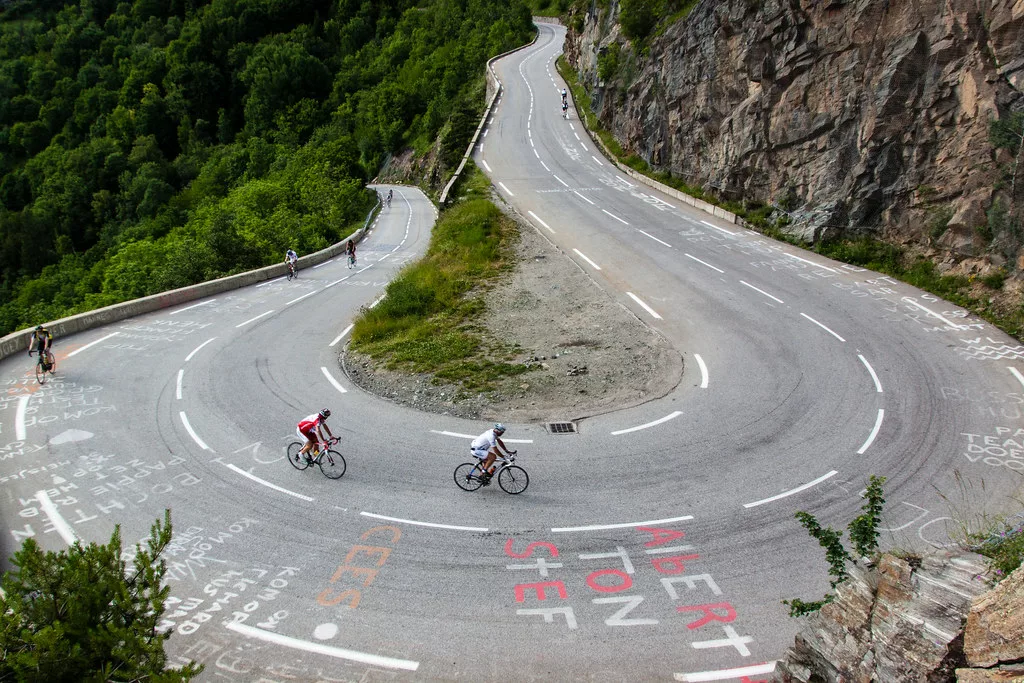
How hard is Alpe d’Huez?
Alpe d’Huez is one of the Tour’s most famous climbs. It is not the longest or highest climb in cycling, but it is steep, exposed, crowded and emotionally loaded. Its 21 hairpins make it instantly recognisable, and its history makes every ascent feel significant.
The climb is hard for amateurs because it is long and steep enough to punish poor pacing. It is hard for professionals because it usually comes at the end of a demanding stage, when the race is already split and the pressure is at its peak.
In 2026, Alpe d’Huez appears on back-to-back stages. That makes it even more unusual. Riders will face it in different race contexts, with the second day forming part of the queen stage. For GC contenders, that means repeated exposure to one of the Tour’s most famous pressure points.
For fans, Alpe d’Huez is spectacle. For riders, it is a place where the race can unravel. Our feature on why back-to-back Alpe d’Huez finishes could define the Tour de France 2026 explains why that final-week pairing is so unusual.
How hard is the Tour for the yellow jersey contender?
The yellow jersey contender has the hardest mental burden. Every stage matters. A sprinter can save energy on mountain days and target flat stages. A breakaway rider can choose days. A GC rider must be alert every day.
They must avoid crashes on flat stages, stay with rivals on climbs, manage time-trials, respond to attacks, eat properly, recover well and handle media pressure. They also have to trust the team around them.
The physical effort is huge, but the concentration may be just as hard. A yellow jersey contender cannot switch off. Even a flat stage can become dangerous because of wind, crashes or splits.
This is why the Tour is so difficult to win. The champion is not only the best climber or time-triallist. They are the rider who survives every trap.
Our Tour de France 2026 GC favourites ranked guide looks at the riders most likely to handle that complete challenge.
How hard is it just to finish the Tour?
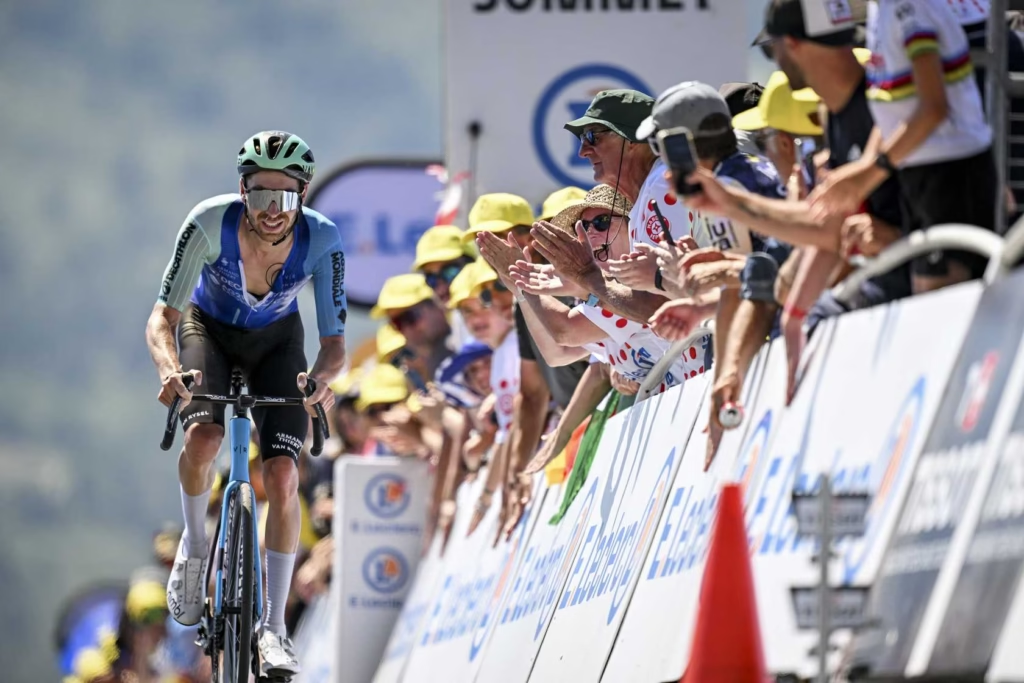
Finishing the Tour de France is a major achievement. Even riders who finish hours down on the yellow jersey have survived a race most professionals never get to start.
To finish, a rider must avoid elimination, crashes, illness and exhaustion. They must make the time cut every day. They must keep contributing to the team. They must recover enough to keep going.
For domestiques and sprinters, finishing can be a serious target in itself. For debutants, reaching Paris is often a career milestone. For veterans, it still matters because the Tour never becomes easy.
That is why riders often look emotional in Paris. They have not simply completed a race. They have survived three weeks of pressure that strips the peloton down day by day.
How hard is the Tour compared with amateur cycling?
The Tour is almost impossible to compare directly with amateur cycling because the speed is so different.
An amateur may ride a famous climb like Alpe d’Huez or the Tourmalet and feel how hard the road is. But professionals ride those climbs after hours of racing, surrounded by team tactics, crowds, heat, fatigue and pressure. They are also riding much faster.
A strong amateur might complete a Tour mountain stage route in a day. A professional races it after already completing several stages and with another stage waiting tomorrow.
That is the real gap. It is not only that professionals are faster. It is that they can repeat huge efforts day after day under conditions that would break most riders. For an amateur version of the Tour experience, our L’Étape du Tour 2026 complete guide for UK riders explains what it takes to ride a Tour-style stage without the professional race context.
-
 Photo Credit: Getty

Tour de France difficulty FAQ
How hard is the Tour de France?
The Tour de France is one of the hardest sporting events in the world. Riders race for 21 stages across three weeks, covering around 3,300km with mountains, time-trials, sprints, crashes, heat, fatigue and constant pressure.
How many kilometres is the Tour de France?
The distance changes each year, but modern editions are usually around 3,300km to 3,500km. The 2026 Tour de France covers 3,333km.
How much climbing is in the Tour de France?
It depends on the route. The 2026 Tour de France includes around 54,450m of elevation gain, with 8 mountain stages and 5 summit finishes.
Is the Tour de France harder than the Giro d’Italia?
It depends on the edition. The Giro can have harsher weather and very difficult climbs, but the Tour has the strongest field, biggest pressure and most intense global attention. Winning the Tour is usually considered cycling’s hardest overall challenge.
Is the Tour de France hard for sprinters?
Yes. Sprinters may target flat stages, but they still have to survive the mountains, finish inside time cuts and recover across three weeks.
What is the hardest part of the Tour de France?
For GC riders, the hardest part is usually the high mountains and final week. For sprinters, it is surviving mountain stages. For domestiques, it is working for leaders and still making the time cut.
Can normal cyclists ride Tour de France climbs?
Yes, many Tour climbs are open to amateurs outside the race. Climbs such as Alpe d’Huez and the Tourmalet are popular cycling challenges. But riding them at amateur pace is very different from racing them during the Tour.
Why the Tour is cycling’s ultimate test
The Tour de France is hard because it demands everything. It asks riders to climb, sprint, descend, time-trial, recover, concentrate, suffer and repeat. It rewards talent, but talent is not enough. It also rewards durability, intelligence, team strength and the ability to avoid disaster.
The hardest thing about the Tour is not one mountain or one stage. It is the accumulation. Every day leaves a mark. Every crash, missed meal, poor night’s sleep, hard chase and late climb adds to the next day’s burden. By the final week, the race is testing what riders have left as much as what they had at the start.
That is why the Tour remains cycling’s ultimate test. It is not only about who can produce the biggest performance. It is about who can keep performing when the race has taken almost everything else away.
For more beginner-friendly explainers, route guides and race analysis, visit our Tour de France hub.

