
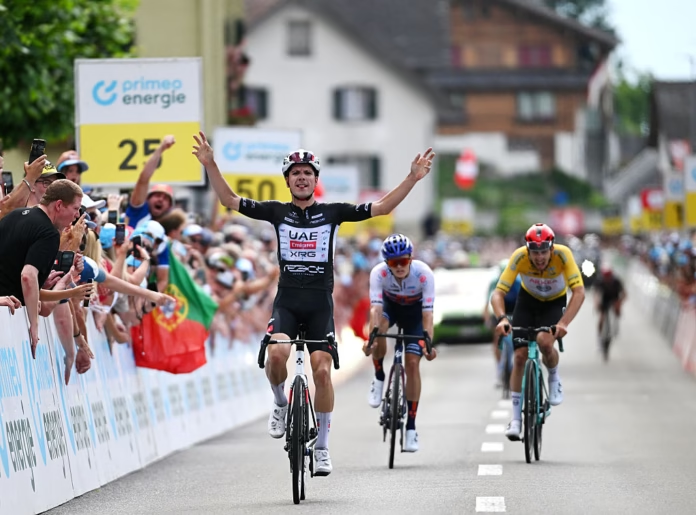
The Men’s Tour de Suisse 2026 has been reshaped into a shorter, sharper and more concentrated race. Instead of the traditional eight-day format, the 89th edition will run across five stages from Wednesday, 17th June to Sunday, 21st June, with the men’s and women’s races using the same host towns and largely parallel route designs.
That new structure changes the feel of the race immediately. There is no long settling-in period, no sequence of gentle transition days and no room for riders to hide poor form before the decisive weekend. The route begins with a demanding hilly circuit in Sondrio, moves through Locarno and Bad Ragaz, adds a fast individual time trial in Aarburg, then finishes with a proper mountain stage in Villars-sur-Ollon.
It is still a Tour de France preparation race, but the 2026 edition looks less like a controlled tune-up and more like a compressed general classification test. ProCyclingUK’s beginner’s guide to the Men’s Tour de Suisse 2026 explains the wider context of the race, while this guide focuses on how the five stages are likely to shape the overall battle.
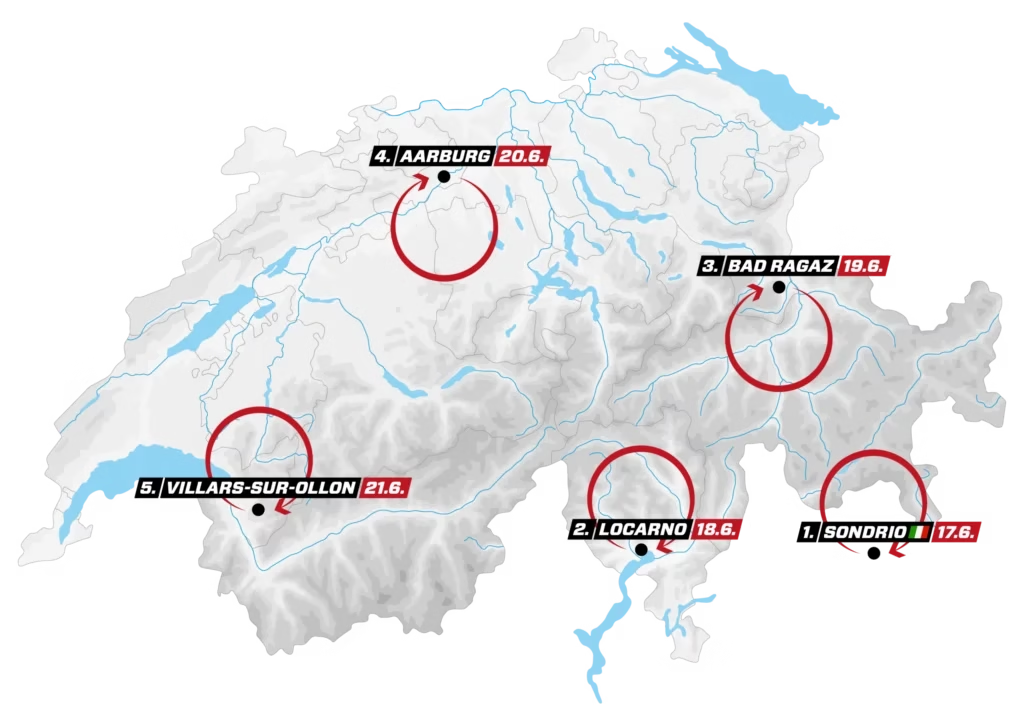
Men’s Tour de Suisse 2026 route overview
The Men’s Tour de Suisse 2026 covers five stages, beginning in Italy and finishing in the Vaud Alps. The race opens in Sondrio, crosses into Switzerland for stages in Locarno, Bad Ragaz and Aarburg, then closes with a demanding mountain circuit around Villars-sur-Ollon.
- Stage 1: Wednesday, 17th June – Sondrio to Sondrio, 144.0km
- Stage 2: Thursday, 18th June – Locarno to Locarno, 157.7km
- Stage 3: Friday, 19th June – Bad Ragaz to Bad Ragaz, 157.9km
- Stage 4: Saturday, 20th June – Aarburg to Aarburg, 23.8km individual time trial
- Stage 5: Sunday, 21st June – Villars-sur-Ollon to Villars-sur-Ollon, 151.1km
The race totals 634.5km, but the distance only tells part of the story. The opening three road stages are all hilly in different ways, the fourth day gives time trial specialists a direct chance to create gaps, and the final stage adds more than 4,000 metres of climbing. For a five-day race, that is a serious concentration of difficulty.
The men’s race also mirrors the wider Tour de Suisse redesign. For the first time, the men’s and women’s races are built around the same host towns across the same five-day window. ProCyclingUK’s Tour de Suisse Women 2026 full route guide looks at the women’s version of that parallel route concept.
Why the 2026 format changes the race
The reduction from eight stages to five is not only a calendar adjustment. It changes the sporting identity of the Tour de Suisse. In the past, the race often had time to develop gradually, with sprint days, transitional terrain, mountain stages and a time trial spread across more than a week. In 2026, almost every stage has a clear role in the general classification picture.
That should make the race more intense from the start. A rider who loses time on stage 1 will not have a long week to repair the damage. A time trial specialist who gains on stage 4 still has to survive the queen stage the following day. A climber who waits only for Villars-sur-Ollon may discover that the race has already moved away from them.
The Tour de Suisse has always been one of the sport’s most important pre-Tour de France tests, and its long history is explored in ProCyclingUK’s brief history of the Men’s Tour de Suisse. The 2026 edition keeps that prestige, but presents it through a more compact and modern format.

Stage 1: Sondrio to Sondrio, 144.0km
The race opens in Italy with a demanding circuit around Sondrio, and it should set the tone immediately. This is not a ceremonial opening day or a stage designed simply to ease the peloton into the week. The route includes 2,455 metres of elevation gain and is classified as hilly, with a difficulty rating that makes it one of the more demanding starts to a major stage race.
The character of the stage is important. The roads around Sondrio and the Valtellina are not built for a flat, predictable bunch sprint. They are rolling, technical and rhythm-breaking, with enough climbing to encourage attacks and enough descending to keep positioning important.
A bunch sprint looks unlikely. Instead, the opening stage should suit punchy climbers, all-rounders and general classification riders who are already sharp. It could also tempt a strong breakaway if the favourites hesitate, but given the compressed five-day format, teams with GC ambitions cannot afford to give too much away on day one.
The most important effect may not be the stage result itself, but the first selection. Riders who arrive short of form could lose contact earlier than expected, while those who handle repeated climbs and technical roads well may already put themselves into the front of the race.

Stage 2: Locarno to Locarno, 157.7km
Stage 2 keeps the race in hilly territory, but changes the flavour. The route starts and finishes in Locarno, with 2,110 metres of elevation gain and a course that should suit explosive riders. The men’s stage follows Lake Maggiore and crosses Monte Ceneri before returning towards a finale shaped by short, steep climbs.
This is a day for puncheurs and all-rounders rather than pure sprinters. The climbs are not long enough to make it a full mountain stage, but they are hard enough and placed well enough to create a late selection. Riders who can accelerate on short climbs and still finish quickly from a reduced group should see this as a major opportunity.
The second stage could also create small GC differences. The gaps may not be enormous, but bonus seconds and late splits can matter in a five-day race. A rider who gains even a handful of seconds in Locarno could carry that advantage into the time trial and final mountain day.
For teams, the question will be control. If a strong group goes clear late, it may be difficult to bring back. The route invites aggression, and the lack of easy recovery across the week means riders may feel pressure to take chances early.

Stage 3: Bad Ragaz to Bad Ragaz, 157.9km
Stage 3 around Bad Ragaz is the closest thing the 2026 route has to a tactical swing day. It is still hilly, with 2,690 metres of elevation gain, but the structure gives sprinters and stronger fast finishers a possible route back into the race.
The stage starts without much easing-in. The St. Luzisteig comes early, giving the day an immediate climbing edge before the route heads through Liechtenstein and then towards the Appenzell region. The key challenge is the Schwägalp, which should test the sprinters and create a major tactical decision.
If the climbing is raced hard, the pure fast men may struggle to stay in contention. If the sprinters’ teams manage the pace and bring their leaders back into the front group after the climb, this could become their only realistic chance of the race. That pressure should shape the entire day.
The long run back towards Bad Ragaz after the climbing gives the stage its uncertainty. A reduced front group may cooperate well enough to stay away, or the sprinters’ teams may use the flatter section to reorganise. It is the kind of route where the outcome can depend as much on team commitment as on terrain.

Stage 4: Aarburg to Aarburg, 23.8km individual time trial
The fourth stage is a 23.8km individual time trial around Aarburg, and it could be the most controlled but decisive test of the race. After three hilly road stages, the GC contenders will be forced into a direct comparison against the clock.
The course is relatively flat, with 270 metres of elevation gain, but it is not entirely simple. Fast sections should reward pure time trial power, while technical corners and rhythm changes will give strong bike handlers a chance to take time. It is a classic specialist’s time trial rather than a climbing test.
For time trial specialists with GC ambitions, this is the obvious day to move. A rider who has survived the opening three stages in the front group can use Aarburg to create the kind of gap that may force climbers into riskier racing on the final stage.
For climbers, the task is damage limitation. They do not need to win the time trial, but they cannot afford to lose so much time that Villars-sur-Ollon becomes a rescue mission rather than a final opportunity. The stage is also significant because the men and women will use the same course, reinforcing the shared structure of the 2026 event.
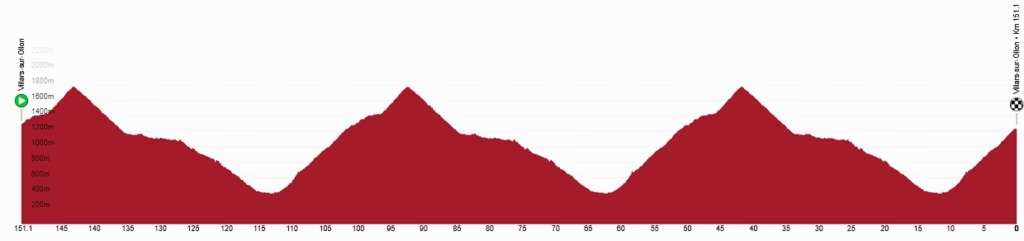
Stage 5: Villars-sur-Ollon to Villars-sur-Ollon, 151.1km
The final stage is the queen stage, and it is where the Tour de Suisse 2026 should be decided. Starting and finishing in Villars-sur-Ollon, the men’s route covers 151.1km and includes 4,226 metres of elevation gain. For a final day in a five-stage race, that is a major test.
The stage is built around the Col de la Croix circuit, with the men completing three demanding laps. The route is almost constantly climbing or descending, with very few sections where the peloton can settle. That makes it difficult to control and even harder for riders already on the limit.
This is the stage where pure climbing strength should matter most. Riders who have been waiting for long climbs and repeated altitude changes will finally get the terrain they need. But because it comes after the time trial, the tactical picture may be complicated. Climbers could be chasing time, while stronger time triallists may be trying to defend.
The final day also leaves room for the race to be turned around. With more than 4,000 metres of climbing, a rider who cracks can lose minutes rather than seconds. That gives the stage genuine final-day weight and prevents the time trial from becoming the only decisive point of the race.
Where will the Men’s Tour de Suisse 2026 be won?
The obvious answer is Villars-sur-Ollon, because the queen stage is the hardest day and comes at the end of the race. Yet the more accurate answer is that the race will be won by managing every test. The 2026 route does not offer a single isolated GC day. It asks different questions on each stage.
Stage 1 can punish poor positioning or weak climbing legs immediately. Stage 2 gives puncheurs a chance to take time and bonus seconds. Stage 3 may offer sprinters a rare opportunity, but only if they survive the climbing. Stage 4 is a direct time trial test. Stage 5 is the high-mountain decider.
That mix should favour riders with complete stage-race skill sets. The ideal Tour de Suisse contender in 2026 needs to climb well, time trial strongly, handle technical roads, race aggressively when required and recover quickly across five compressed days.
What type of rider does the route favour?
The route is difficult enough for climbers, but not designed only for pure mountain specialists. The time trial in Aarburg gives a major advantage to riders who can produce controlled power against the clock, while the opening stages reward explosiveness and tactical alertness.
That makes the race especially attractive for Tour de France contenders who are strong across multiple disciplines. A rider with a good time trial and solid climbing base could build a lead before the queen stage, then defend in Villars-sur-Ollon. A more explosive climber might need to attack repeatedly to offset losses against the clock.
For sprinters, the race is much less inviting. Stage 3 looks like the only realistic opportunity, and even that depends on surviving the Schwägalp and the earlier climbing. The 2026 Tour de Suisse is not designed around bunch finishes. It is designed around pressure.
Why the parallel men’s and women’s routes matter
The 2026 Tour de Suisse is also important because of its shared structure. The men’s and women’s races take place across the same five days, using the same host towns and largely parallel route designs. That gives the event a clearer identity and creates a rare WorldTour week where both races are part of the same daily rhythm.
The women’s stages are not simply shorter copies in every detail, but the shared host towns and route concepts make the two races feel connected. Sondrio, Locarno, Bad Ragaz, Aarburg and Villars-sur-Ollon will each host both events, creating a more complete race-day experience for spectators.
That is a significant step for the Tour de Suisse. It turns the event from two related races into something closer to one integrated cycling festival, while still allowing each race to have its own sporting identity.
-
 Photo Credit: A.S.O./Billy Ceusters
How the route fits into Tour de France preparation
The Tour de Suisse has long been one of the most important final preparation races before the Tour de France. Its position in June gives riders a chance to test form, sharpen race rhythm and assess climbing condition before the biggest race of the season.
The 2026 route should make that test more revealing. The race is shorter than before, but the concentration of difficulty means there is little room for passive riding. A Tour de France contender who performs strongly across Sondrio, Aarburg and Villars-sur-Ollon will leave with useful confirmation. A rider who struggles may have less time to correct course before July.
The route is particularly valuable because it tests different parts of a Tour rider’s toolkit. There are technical hilly stages, a meaningful time trial and a demanding mountain finale. That is exactly the kind of mix that can expose weaknesses before the Tour de France does.
Men’s Tour de Suisse 2026 route verdict
The Men’s Tour de Suisse 2026 may be shorter, but it does not look lighter. Across five days, the route packs in hilly circuits, punchy finales, a tactical sprint possibility, a fast individual time trial and a queen stage with more than 4,000 metres of climbing.
The format should make the race sharper from the opening day. There is no obvious transition stage, no long build-up and no easy route to the overall title. Riders will need to be ready from Sondrio and still have enough left for Villars-sur-Ollon.
As a Tour de France preparation race, it should be highly revealing. As a standalone WorldTour stage race, it has a clear identity: short, selective, technical and difficult to control. The 2026 Tour de Suisse may only last five days, but the route gives it more than enough substance to decide a worthy winner.

