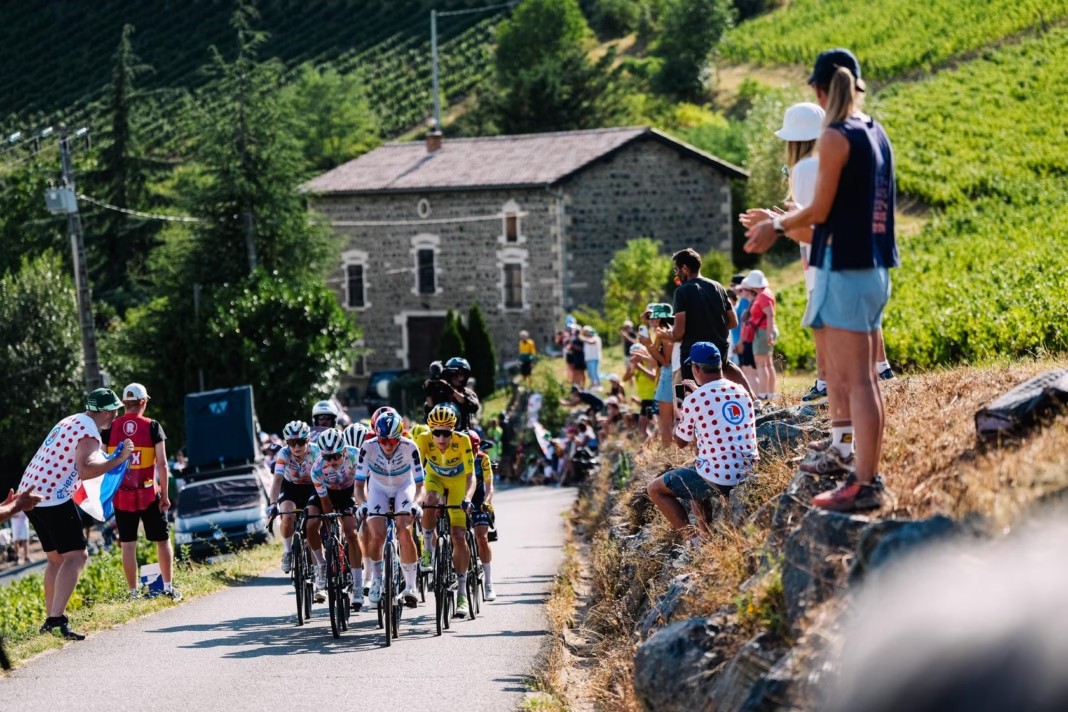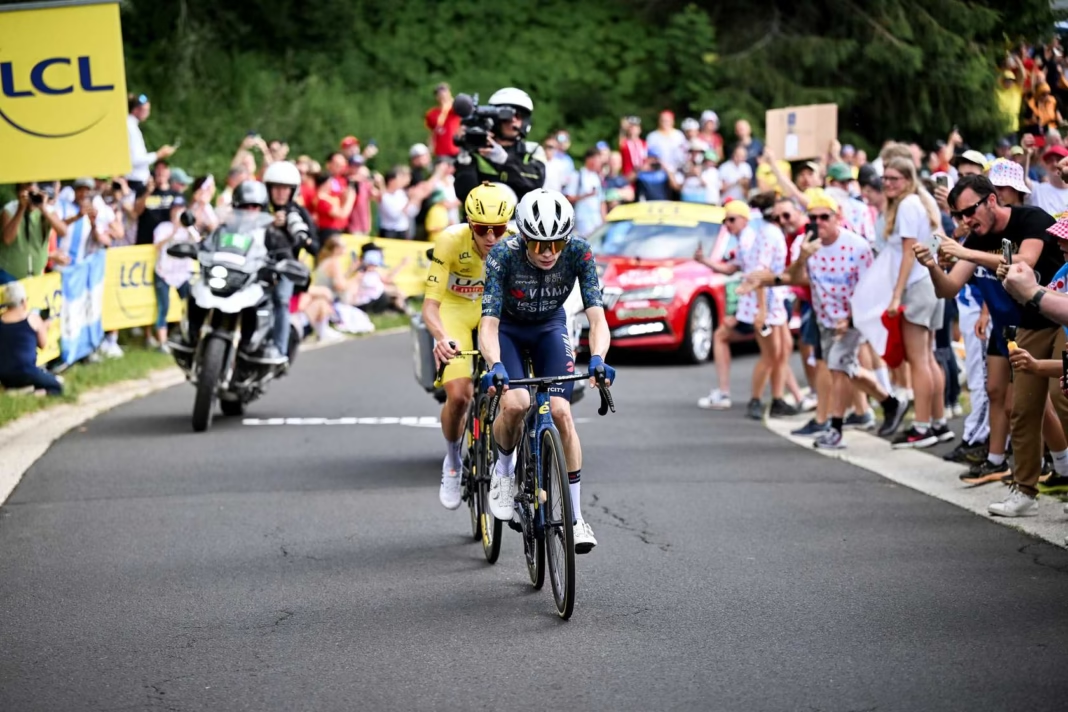
Men’s Ronde Van Brugge – Tour of Bruges 2026 looks set to come down to the sprinters. The race’s new Bruges-based identity and flatter design point strongly towards a fast finish, with the men rolling out at 12:45 and due in at 17:15. This is no longer a race to analyse purely through the old Brugge-De Panne lens. The route is cleaner, more obviously sprint-oriented, and more dependent on which team can stay organised deepest into the final kilometres.
That does not make it straightforward. A flat WorldTour race still needs control, and the strongest lead-out structure often matters as much as the quickest finishing speed. If you want the wider context first, the men’s Ronde Van Brugge – Tour of Bruges 2026 route guide explains why this edition looks more like a pure sprint examination than the old coastal survival test.
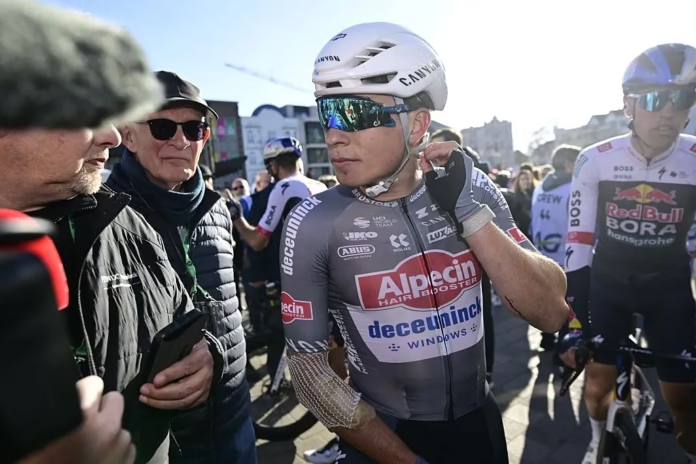
Jasper Philipsen is the clearest favourite
Jasper Philipsen remains the obvious reference point. Alpecin-Premier Tech bring him here with a support cast that includes Jonas Rickaert, Simon Dehairs and Florian Senechal, which gives him one of the strongest sprint structures in the race.
That matters because this finish looks built for a rider who can rely on both speed and organisation. Philipsen does not just have the strongest individual case on paper, he also has one of the clearest team setups around him. On this kind of route, that combination is usually enough to make a rider the man everyone else has to beat.
There is also the simple fit of rider to race. Philipsen is one of the best in the world at handling nervous, attritional sprint days and still producing a clean finishing effort when the road opens up. If the race comes in the way the organisers want, he should be at the centre of it.
Juan Sebastián Molano is one of the strongest alternatives
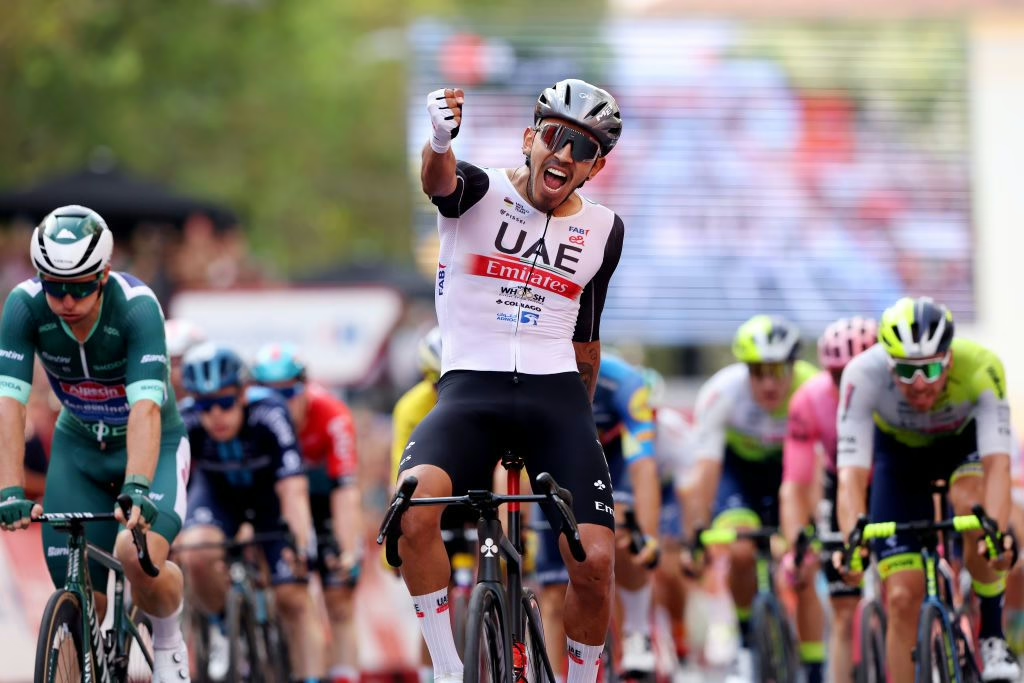
Juan Sebastián Molano should be right near the top of the conversation. UAE Team Emirates XRG have enough power around him to keep him protected through a nervous Belgian one-day race, even if the route is flatter and more obviously sprint-focused than older versions of this event.
Molano is especially dangerous because he does not need a perfectly clean sprint to win. He is one of the riders in this field most capable of surviving a harder, more awkward run-in and still producing a top-level finish. If the race turns more stressful than the route map suggests, that may help him rather than hurt him.
That makes him one of the most credible alternatives to Philipsen. On a perfectly controlled day he is still a threat. On a messy day he may become even more dangerous.
Sam Welsford is a real threat if INEOS delivers him well
Sam Welsford is another rider who stands out strongly once you focus on the current field rather than older assumptions about the race. INEOS Grenadiers bring him here with enough support to believe they can position him well into the final kilometres.
What makes Welsford interesting is that he has the speed to win a straightforward bunch sprint, but he is also strong enough to handle a harder race than some of the more fragile pure sprinters prefer. On a route that still looks likely to produce a large-group finish, that combination makes him one of the most serious dangers to the main favourite.
The question is not whether he is quick enough. It is whether INEOS can give him the sort of structured sprint platform that more specialist sprint teams build almost by instinct.
 Photo Credit: Team Picnic PostNL
Fabio Jakobsen just about still belongs in the top group
Fabio Jakobsen remains one of the major names in the field and Team Picnic PostNL also bring Pavel Bittner, which gives them a clear sprint focus and enough support to believe they can shape the finale rather than merely survive it.
The route itself suits Jakobsen very well. On pure fit, he absolutely belongs among the leading contenders. The bigger question is whether he can hit the final with exactly the right positioning and timing against a field this strong.
That uncertainty keeps him just slightly below the clearest favourite, but not out of the top group. In a cleaner sprint than some of the more chaotic Belgian finishes, he has every right to be taken seriously.
Phil Bauhaus and Søren Wærenskjold look like strong podium candidates
Phil Bauhaus is one of the steadier options in the race. He may not attract the same level of attention as Philipsen or Jakobsen, but races like this are often won or lost by riders who consistently place themselves well rather than those who simply look fastest on paper.
He feels like one of the safer names for a high finish. If the race becomes a pure test of sprint positioning and patience, Bauhaus is exactly the sort of rider who can quietly move into the top three while bigger teams overplay their hand.
Søren Wærenskjold is dangerous in a slightly different way. If the race turns into a harder sprint than expected, with more fatigue and more disruption in the final kilometres, he becomes more relevant rather than less. He may not be the purest drag-race finisher here, but he is one of the riders most likely to thrive if the day becomes messy.
Luke Lamperti is one of the best outsider picks
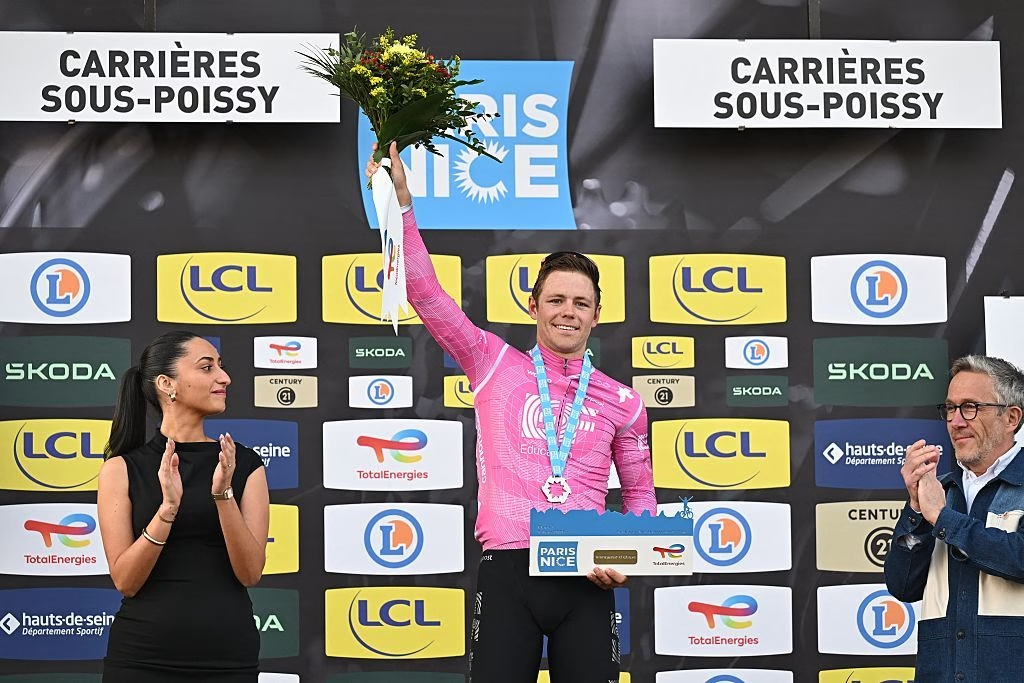
Luke Lamperti suits this kind of race well. He is quick enough to contest a big finish and still young enough to be slightly overlooked when the build-up focuses on the biggest established sprint names.
That is what makes him a good outsider rather than a headline favourite. He does not need to be the most feared rider in the field to make the podium. He just needs the bigger trains to lose shape at the right moment, and he has the speed to take advantage.
In a race that looks likely to be controlled for long stretches, that sort of opportunistic finishing ability can be very valuable.
Milan Menten, Cees Bol and Hugo Hofstetter are the names just below the main line
Once you move beyond the biggest headline sprinters, the field still has real depth. Milan Menten gives Lotto Intermarché a genuine finishing option, Cees Bol is the clear sprint card for Decathlon CMA CGM, and Hugo Hofstetter brings experience and speed that can still matter in this kind of race.
They may start a rung below the main favourites, but this is exactly the type of event where that second tier can become very relevant. One mistimed lead-out, one blocked wheel, or one hesitant final kilometre can quickly turn a likely top-10 rider into a genuine podium threat.
That is especially true in a race finding its first identity under a new name and slightly different structure. The flatter design points towards a sprint, but how clean that sprint really becomes is still something the race itself has to prove.
Matteo Milan and Simone Consonni are interesting if the finale gets unusual
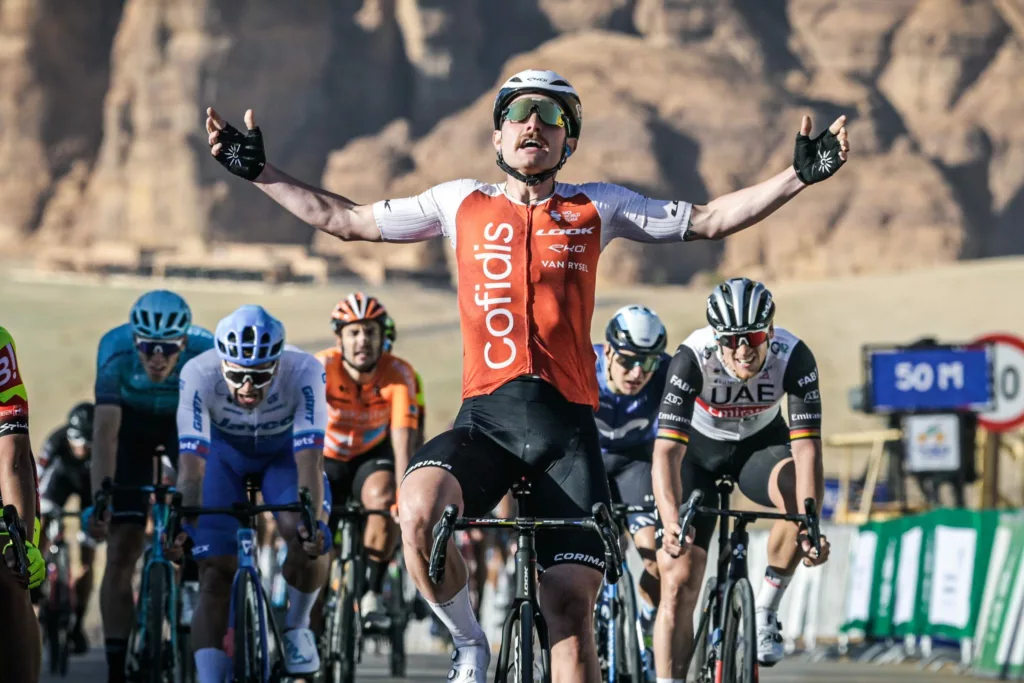
Matteo Milan and Simone Consonni are both worth keeping in mind if the race does not play out in the neatest possible way.
Neither starts as the clearest top favourite, but both are the type of riders who can exploit hesitation if the bigger sprint teams cancel one another out. That matters because the organisers have created a route that should lead to a bunch finish, yet the first edition under a new identity often carries a little uncertainty in how the peloton actually races it.
If the run-in becomes more fractured or the sprint trains do not line up as expected, these are exactly the kind of riders who can move from outside mention to serious result.
The race still looks likely to reward the best-organised sprint train
The route points strongly towards a bunch finish, but that does not mean the strongest individual sprinter automatically wins. On a flat Belgian WorldTour day, the team that saves riders longest and controls the final kilometres most calmly often shapes the whole result.
That is why Philipsen still edges the preview. He has the strongest individual case and one of the best support groups. But Molano, Welsford and Jakobsen are all close enough to make this far from a one-man race.
If you are reading this race as part of the wider spring rather than in isolation, it also sits neatly alongside your how to watch Ronde Van Brugge – Tour of Bruges 2026 in the UK coverage and the broader build-up into the next major Belgian one-day races.
Main contenders
Top tier
- Jasper Philipsen
- Juan Sebastián Molano
- Sam Welsford
- Fabio Jakobsen
Next line
- Phil Bauhaus
- Søren Wærenskjold
- Luke Lamperti
Outside podium threats
- Milan Menten
- Cees Bol
- Hugo Hofstetter
- Matteo Milan
- Simone Consonni