Liège-Bastogne-Liège Femmes stands as the deepest endurance test of the women’s Ardennes week, the race where the repeated climbing of Amstel Gold Race Women and the explosive finality of La Flèche Wallonne Femmes are stretched into something more attritional and more complete. This is the women’s Monument of the Ardennes, a race that asks for far more than one decisive effort and instead rewards riders who can absorb pressure for hours before still having the clarity and strength to make the right move late on.
Its identity comes from accumulation rather than one iconic finish. The decisive climbs are famous, especially La Redoute and Roche-aux-Faucons, but Liège-Bastogne-Liège Femmes is usually won by a rider who understands the full rhythm of the day. Positioning, patience and restraint all matter because the race does not always break cleanly in one moment. Small groups can survive, favourites can hesitate, and a rider with the confidence to commit at the right time can still turn the finale in her favour.
 Photo Credit: Getty
The recent editions show just how open that final phase can be. Kim Le Court won in 2025 after a sharp and intelligent ride in a selective front group, while Grace Brown claimed the 2024 edition with the kind of sustained strength that this race consistently rewards. Demi Vollering’s 2023 victory came during her Ardennes treble, but even that success needed careful judgement rather than a simple show of superiority. Liège-Bastogne-Liège Femmes rarely allows a winner to bluff her way through the finale.
For 2026, the race again runs from Bastogne to Liège and should once more build towards a hard selective finish rather than an immediate knockout blow. The route gives the race its usual long-burn quality, with the decisive climbs coming after a great deal of earlier fatigue has already accumulated. That structure is what makes Liège-Bastogne-Liège Femmes such a compelling endpoint to the Ardennes block, because it tends to expose not only who is strongest, but who can still think clearly after a full day of pressure.
Previous Winners
2025
Kim Le Court
2024
Grace Brown
2023
Demi Vollering
2026 Liège-Bastogne-Liège Femmes route

The 2026 Liège-Bastogne-Liège Femmes route covers 156 kilometres from Bastogne to Liège, using the second half of the men’s Monument route and again giving the race a proper long-form shape. The opening part of the day is less about immediate selection and more about rhythm and energy management, but that should not be mistaken for calm. Teams still need to protect their leaders, manage positioning and avoid wasting matches before the climbing becomes more continuous.
The race sharpens significantly in its final third, where the climbs begin to arrive with much less recovery between them. La Redoute remains one of the obvious pressure points, not simply because of its gradient but because of where it sits in the day, forcing moves from riders who want to avoid a more hesitant finish. From there, the road towards Liège tends to reward whoever still has both legs and initiative. Roche-aux-Faucons is usually the last great separator, but even after that, the race is rarely straightforward. A solo winner, a small group sprint or a late counter can all still emerge from the same route design, which is part of what gives Liège-Bastogne-Liège Femmes its enduring tactical depth.
2026 Liège-Bastogne-Liège Femmes live TV coverage
Race Date: Sunday 26th April 2026
United Kingdom
Live coverage is available via TNT Sports and HBO Max.
International broadcasters
Across much of Europe, coverage is available via HBO Max, with linear coverage also carried on Warner Bros. Discovery channels in some markets. In Belgium, the race is available via RTBF and Auvio in Wallonia, and via VRT1, VRT Max and Sporza in Flanders. In the United States, coverage is available via Peacock. In Canada, coverage is available via FloBikes.
2026 Liège-Bastogne-Liège Femmes startlist

2026 Liège-Bastogne-Liège Femmes Contenders
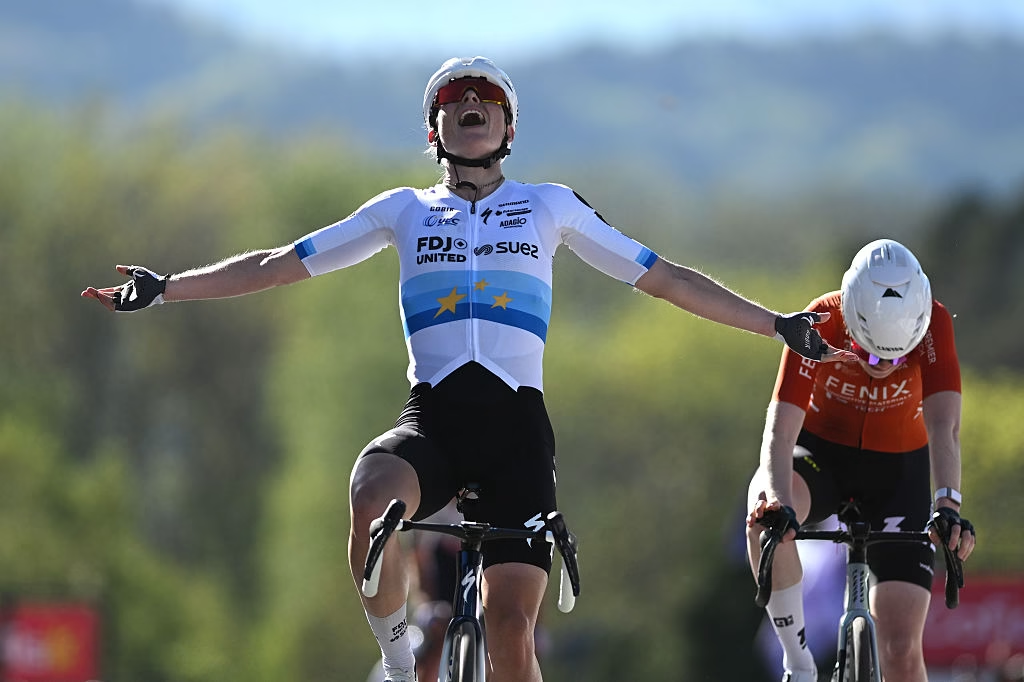
A race that strips everything back to climbing depth and timing is exactly where Demi Vollering has made Liège-Bastogne-Liège Femmes her own in recent seasons. Two wins, six podiums and six top 10s from seven starts is an outrageous strike rate in a Monument that punishes any weakness, and it matches what this course asks for: repeated climbs ridden at threshold, then one decisive acceleration when the group is thin enough that hesitation becomes fatal. The 2026 indicators still point in the same direction. Winning Omloop het Nieuwsblad showed she is already sharp, while the Strade Bianche placing was distorted by bad luck rather than a lack of legs. FDJ United-SUEZ also have the exact support profile you want for Liège, riders who can make it hard early so the finale is contested by fewer, stronger riders. Elise Chabbey is the rider who can keep the pressure high on the run-in climbs, prevent the race resetting and is high on confidence after her Strade Bianche win this year. While Juliette Berthet and Evita Muzic give the team depth if the race fractures across multiple climbs rather than one decisive move.
Consistency at Liège is usually the cleanest indicator of who can handle the rhythm of the day, and Katarzyna Niewiadoma-Phinney has that in abundance. One podium and six top 10s from nine starts is a record built on surviving every version of this race, from tactical editions to full gas wars, and she becomes more dangerous the more chaotic the finale is. Canyon SRAM also arrive with a line-up that can keep her relevant deep into the race. Cecilie Uttrup Ludwig has three top 10s from seven starts, which signals she can cope with the repeated climbing and still deliver late even if her recent form isn’t great, while Soraya Paladin has two top 10s and can still be there if the final selection is slightly larger than expected. With Antonia Niedermaier also in the mix, Canyon have the sort of climbing depth that matters when the race is decided by who can keep responding on the Roche-aux-Faucons and the final ramps back towards Liège.
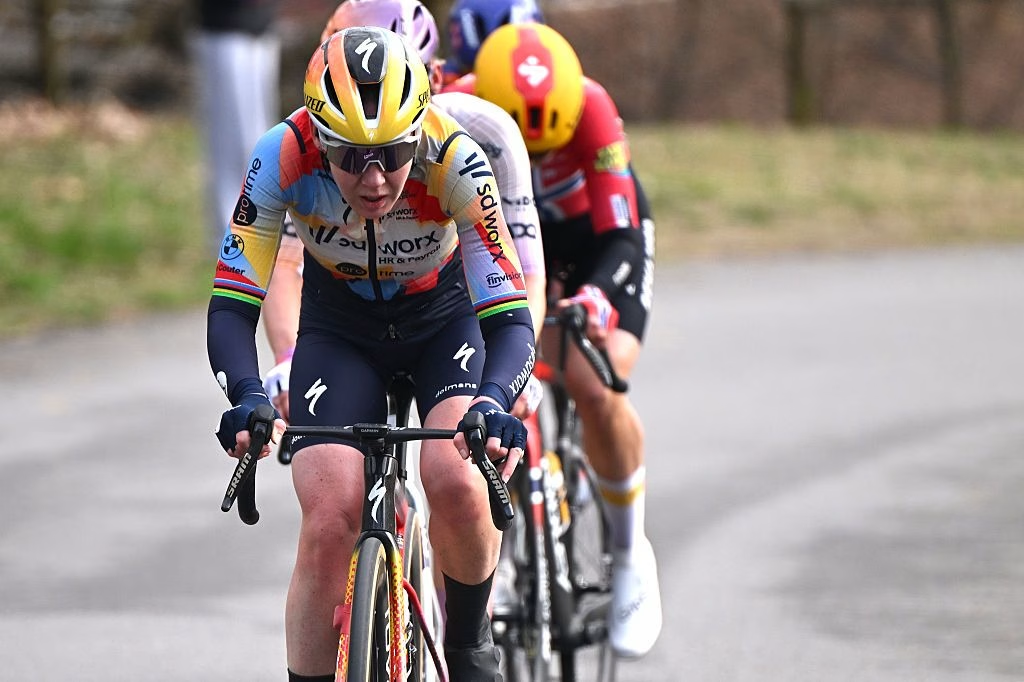 Photo Credit: Getty
If you are looking for a rider who can win Liège through climb-by-climb superiority rather than one explosive punch, Anna van der Breggen remains a clear contender, and her record backs it up. Two wins, two podiums and three top 10s from six starts reflects how well she paces these long, attritional Monuments. Team SD Worx-Protime also give her options in how the race is shaped. Mischa Bredewold can make the finale uncomfortable by attacking before the key selection, while Femke Gerritse and Mikayla Harvey help keep the team positioned through the frantic run-ins where this race is often lost long before the decisive climb. The other name to factor is Lotte Kopecky, because even with the limited Liège history so far, she has the engine to survive a hard day and the finishing speed to punish a slightly larger front group if the race does not fully split. 5th last year is a sign of what she can do.
A proven Liège profile sits with Ashleigh Moolman-Pasio, because four top 10s from nine starts is the sort of record that suggests she understands how to manage the day even when the pace is brutal, and the gaps are made gradually rather than in one blow. This race often rewards riders who can climb consistently across multiple efforts rather than relying on one sharp acceleration, and that has always been Moolman-Pasio’s strength. Her best days are probably in the past but the South African can still be wily. The other key rider in that AG Insurance-Soudal line-up is Urška Žigart, because she fits the same endurance-climber mould and can be relevant if the race becomes a pure attrition test rather than a punchy showdown.
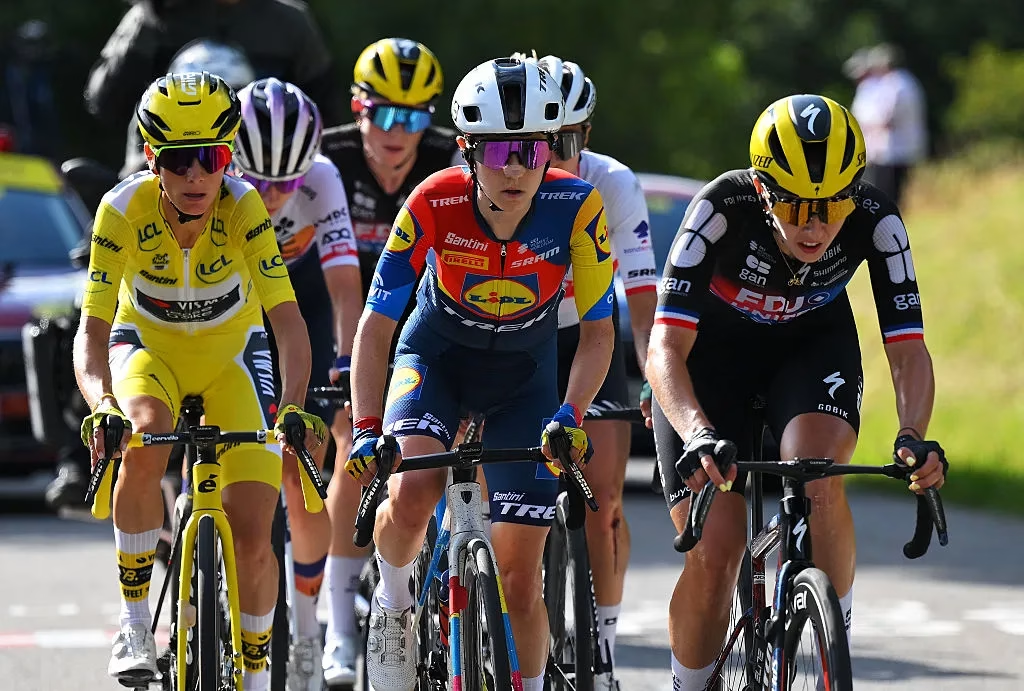 Photo Credit: Getty
The most convincing Lidl-Trek route comes through riders who can handle long climbs and still cope when the race becomes a sequence of selections rather than one decisive moment. Niamh Fisher-Black has three top 10s from six starts, which is a solid strike rate in a race that is rarely forgiving, and she is exactly the type of rider who can keep responding until the final group is thin. Amanda Spratt has a Liège podium and three top 10s from eight starts, a strong sign of experience and pacing on this terrain. Shirin van Anrooij adds another solid option because she can handle repeated efforts and still be relevant if the race is raced aggressively and turns into a smaller, more tactical group late on.
A more understated but still credible Liège threat comes from Movistar, because they bring riders who suit long, repeated climbing and can still be present when the favourites start forcing each other into the red. Liane Lippert has three top 10s from six starts, which suggests she can handle the rhythm of this race even when it is raced hard. Her Spring Classics season has been very iffy though, with no top 10 result in 2026.
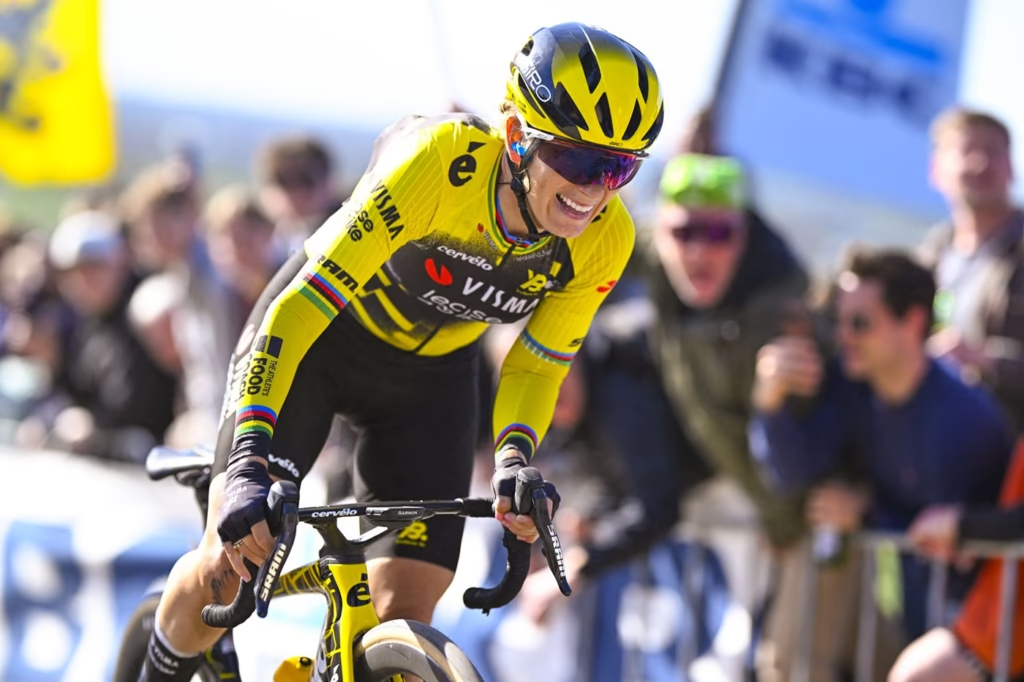
A team that becomes more relevant the more the race turns into a pure climbing test is Team Visma | Lease a Bike, because Pauline Ferrand-Prevot already has a top 10 from her limited Liège history and has the profile to go long when others are trying to wait for a final acceleration. If the race is raced aggressively on the Roche-aux-Faucons and the group splits into small units, Ferrand-Prevot is the kind of rider who can commit to the effort rather than look for a sprint that might never come. She could also win a sprint from a small group here after near misses at the Tour of Flanders and Paris-Roubaix (albeit doing a job at the latter) in 2026.
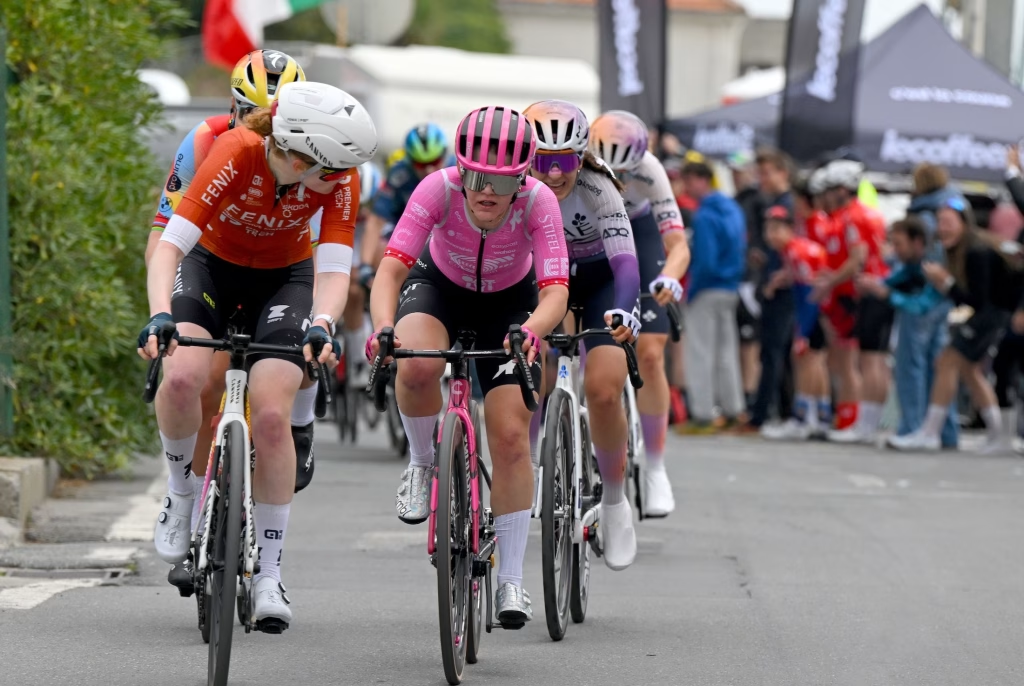
A first-time Liège contender often needs something tangible to hang onto, and Puck Pieterse already has it, a Liège podium from her only start. That matters because it shows immediate course fit, and in Liège, that is rare. 2nd at Fleche Wallonnes this week shows her form, she just needs a final little bit extra to turn strong results into wins. Fenix-Premier Tech also have support riders who can help her stay present through the crucial run-ins, and Yara Kastelijn has a top 10 history here too, which gives the team another rider who can survive the attritional shape of this Monument if the race splits across multiple climbs rather than one decisive move.
If the race is hard enough to reward pure endurance and the ability to keep responding after the favourites have already attacked, EF Education-Oatly have a rider who can become relevant in exactly that scenario. Cédrine Kerbaol has a Liège top 10 from her previous starts, which is a strong indicator that she can handle the rhythm of this course and still deliver late. She’s not shown much this spring but could still yet be a threat. Teammate Noemi Rüegg is the other strong option. 5th at Amstel Gold is repeatable, and 2nd at Milan San Remo was the peak of her Spring Classic season. She can climb well and has a good kick at the end to get the results.
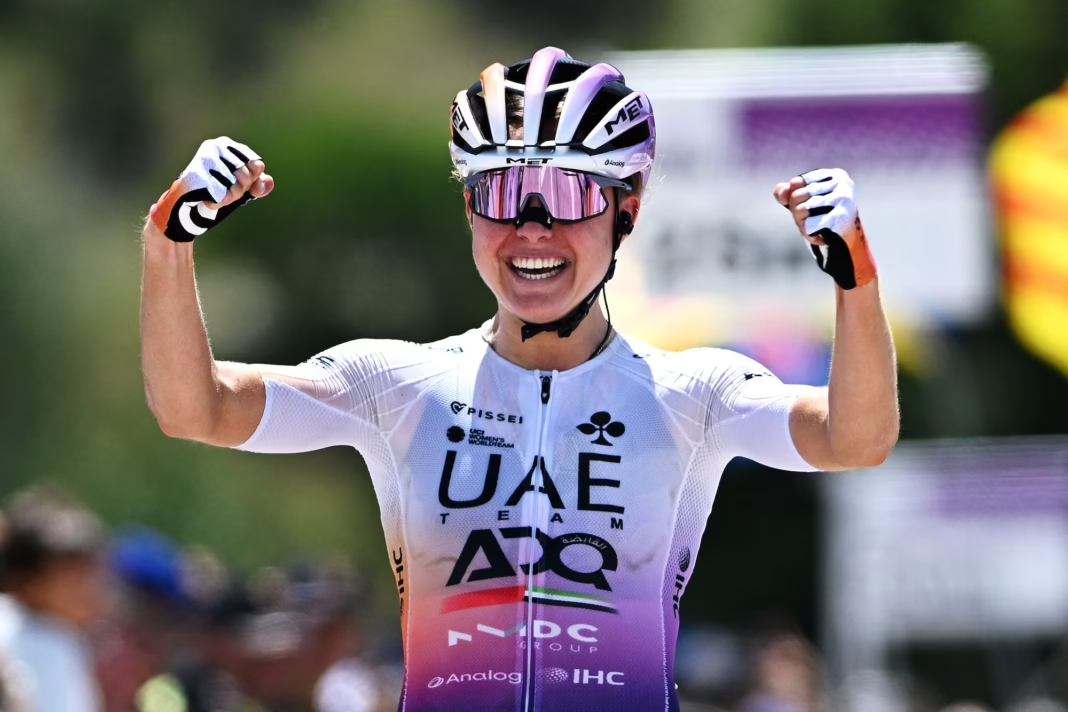
A team that can influence the race without having to match the pure GC climbers on every acceleration is UAE Team ADQ, largely because Paula Blasi has already shown in 2026 that she is riding with the kind of form that translates to a hard Monument after her Amstel Gold win. When she is climbing well and still has the confidence to race proactively, she becomes a rider who can go before the favourites want to move, either on the earlier climbs or in the transitions where groups hesitate, and gaps suddenly become real. The other reason she matters here is tactical, because she gives UAE Team ADQ a way to race aggressively even if the biggest names are marking each other. If the race is reduced enough for opportunism to matter, Maeva Squiban is another rider who can profit from a committed move, while Karlijn Swinkels adds a steady presence for the long, attritional build-up into the Roche-aux-Faucons. Swinkels has some good recent results: 1st at Trofeo Alfredo Binda, 3rd at In Flanders Fields, 6th at both Amstel Gold and Tour of Flanders, and 9th in Dwars door Vlaanderen is a very strong Spring for the Dutch rider.
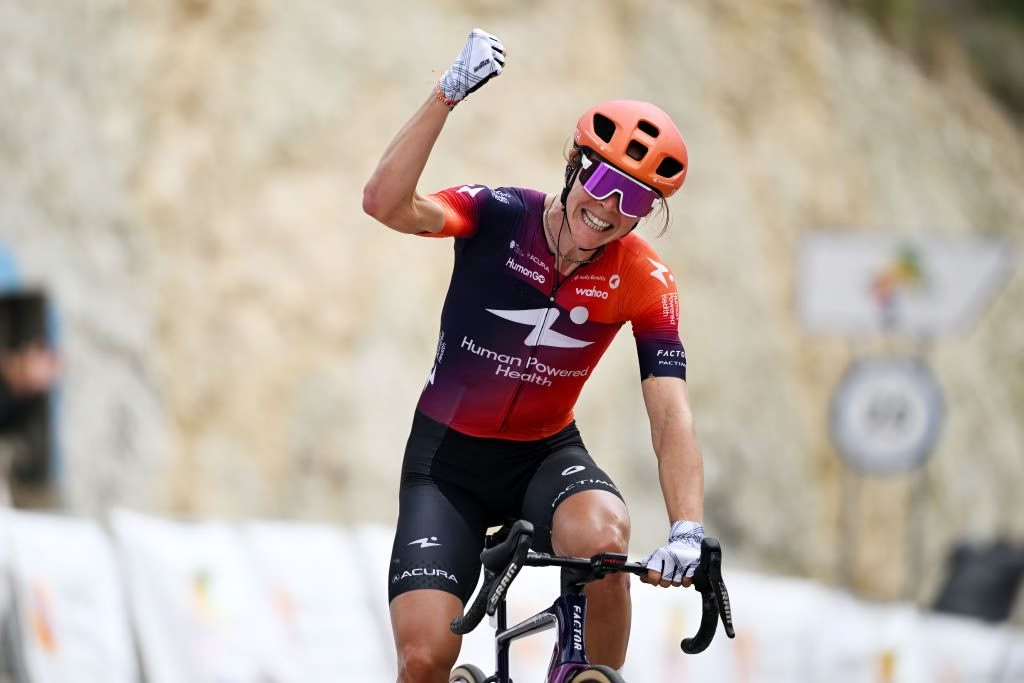
Human Powered Health are the kind of team that often becomes more relevant the harder the day gets, because they bring riders who can survive long climbs and still keep delivering effort after effort. Thalita de Jong is the clearest Liège type in the squad, experienced enough to manage the rhythm and durable enough to stay relevant deep into the finale when others are fading. The more interesting 2026 angle is Mona Mitterwallner, because if she is climbing well enough to hang on through the key selections, she can turn this race into a pure endurance test rather than a punchy acceleration contest. Liège often rewards riders who can keep riding at a high level after the decisive move is made, not just riders who can produce one explosive surge, and that is exactly the kind of scenario where de Jong and Mitterwallner can move from outsiders to genuine factors.
Home-region confidence is often more than a narrative in Liège, because riders who have been winning recently tend to race the climbs with less hesitation, and that is why Usoa Ostolaza is worth including. Winning GP de Eibar this spring is the kind of result that signals she is arriving with real climbing form and the belief to race aggressively rather than simply survive. Laboral Kutxa-Fundacion Euskadi are not obliged to sit and wait for the favourites. If Ostolaza is strong, she can force the pace on the climbs where others want to reset, or commit to a move in the phase where the race is splitting into small groups. In a Monument where the decisive moment can come on a transition as much as on a climb, that willingness to commit can be enough to turn form into a result.
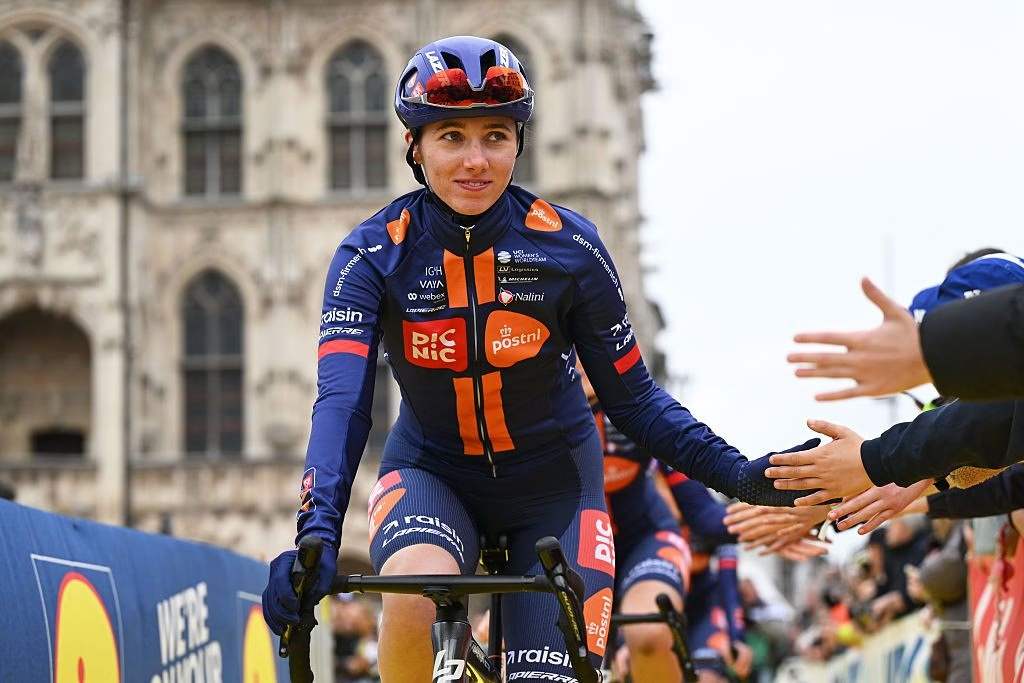 Photo Credit: Getty
There is also a very credible “nearly, nearly, nearly” story on this start list in Pfeiffer Georgi, and it is one that fits Liège perfectly. She has not been top 10 yet this year, but when your spring reads 11th, 12th, 13th and 14th, it tells you the level is there and the missing piece is usually one moment, one selection made, one small gap closed at the right time. That matters in Liège, because the race often rewards riders who can keep responding across the entire day and still be there when the final selection forms on the Roche-aux-Faucons. Team Picnic PostNL do not need Georgi to produce one spectacular acceleration. They need her to be steady, positioned, and ready to commit when the race fractures, because that is often how a string of near-misses turns into a Monument result.
Another rider who deserves real attention on current form is Eline Jansen, because her 2026 results point to a rider arriving at Liège with both confidence and the ability to survive hard racing. Seventh at Brabantse Pijl and fifth at Dwars door Vlaanderen is exactly the kind of sequence that suggests she is not just hanging on, she is racing with intent and finishing strongly after selective days. For VolkerWessels Cycling Team, the pathway is straightforward: survive long enough that you are in the group that matters, then profit when the race turns tactical and the chasing is disorganised. Jansen’s spring form suggests she is capable of doing exactly that, and in a race where small groups often form and then hesitate, having a rider who can keep pushing and still finish can turn an outsider into a genuine top-10 threat.
A final Liège card worth noting is Monica Trinca Colonel, because even with only one start on her record so far, she fits the GC-style climber profile that can suddenly matter if the race becomes a steady attrition test rather than an explosive showdown. On a day where the pace is high for hours and the decisive moment is simply who cracks last, that kind of rider can turn survival into a major result.
Top 3 Prediction
⦿ Demi Vollering
⦿ Puck Pieterse
⦿ Kasia Niewiadoma-Phinney
-
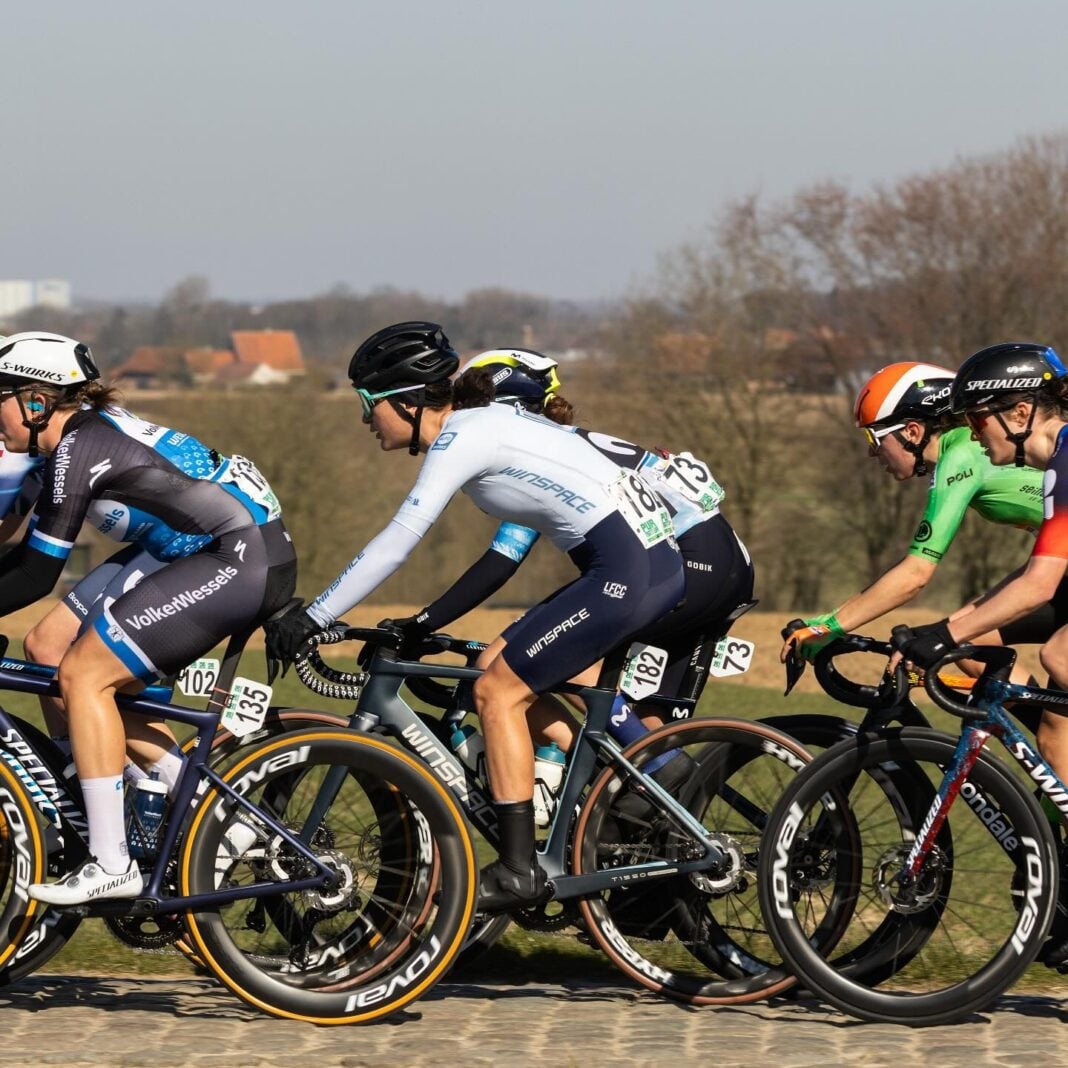
 Photo Credit: quentinphotographiebe
 -
 Photo Credit: Getty