
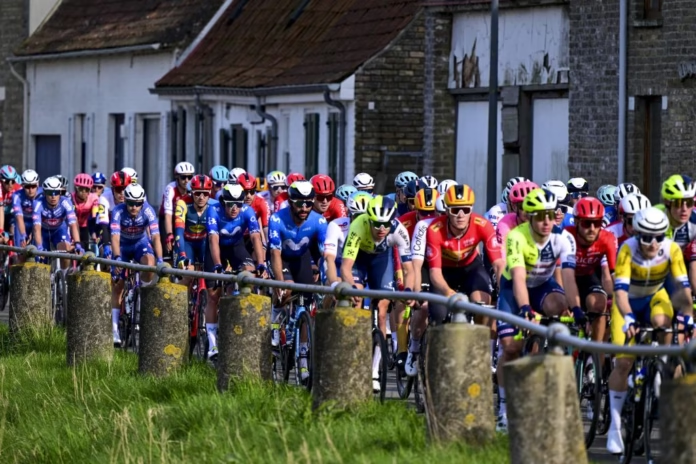
Men’s Ronde Van Brugge – Tour of Bruges 2026 looks set to reward the sprinters, but the race is still hard enough for team structure to matter. On a flat WorldTour day like this, the winner is often not just the fastest rider, but the sprinter whose team keeps the race under control longest and delivers him cleanest into the final kilometres.
That is especially true here because the route points strongly towards a bunch finish, yet Belgian one-day racing rarely stays as tidy as the profile first suggests. If you want the route context first, the men’s Ronde Van Brugge – Tour of Bruges 2026 route guide explains why this edition looks more like a pure sprint test than the old Brugge-De Panne version.
UAE Team Emirates XRG
Juan Sebastián Molano is the clear headline name here, and he arrives with a support group that includes Florian Vermeersch, Rune Herregodts, Vegard Stake Laengen, Julius Johansen and Rui Oliveira. That is a powerful setup for a flat Belgian race, especially if the day becomes harder and more nervous than the route profile suggests.
Molano is one of the sprinters who can still thrive if the final becomes slightly messy. That makes UAE one of the teams most capable of handling both versions of the race, the clean bunch sprint the organisers want, and the more chaotic run-in Belgian roads often produce anyway.
Alpecin-Premier Tech
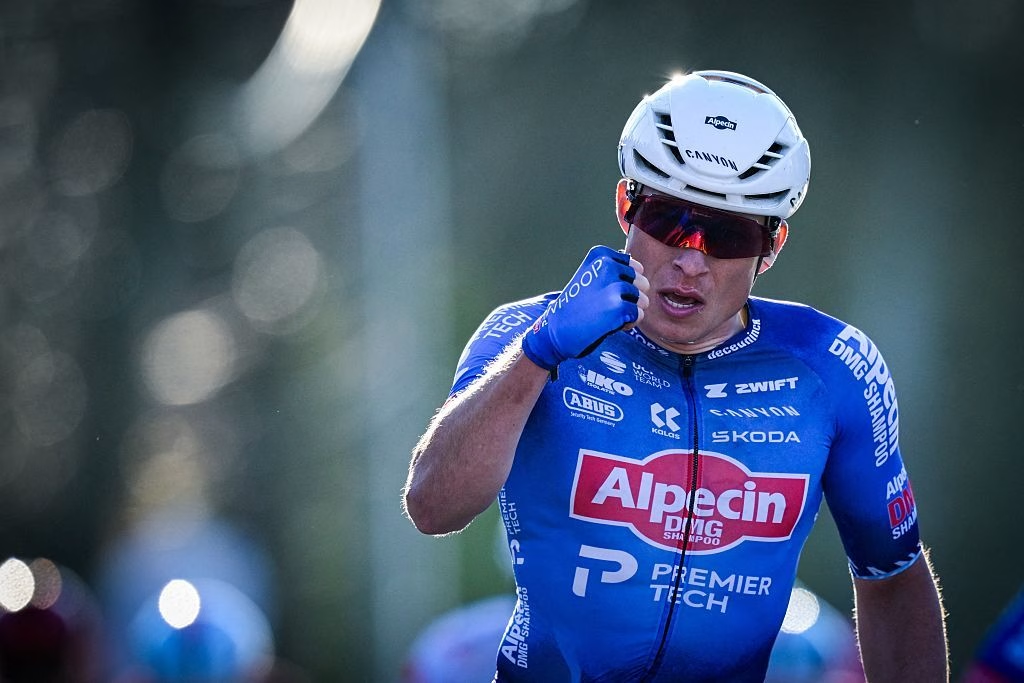
Jasper Philipsen is the obvious focal point, but what makes Alpecin so strong is the shape of the full team around him. Simon Dehairs, Jonas Rickaert and Florian Senechal in particular give Philipsen one of the most reliable sprint structures in the race.
On paper, this is the team most naturally built for the finish. Philipsen is already one of the standout names in the men’s Ronde Van Brugge – Tour of Bruges 2026 contenders preview, and the team around him only strengthens that case. If the race comes down to control, timing and speed, Alpecin should be at the centre of it.
Bahrain Victorious
Phil Bauhaus is Bahrain’s best card for the day, and he is backed by a group that includes Kamil Gradek, Alberto Bruttomesso, Zak Erzen, Daniel Skerl, Thomas Oliver Stockwell and Attila Valter.
This is not the deepest pure lead-out train in the race, but it is solid enough to keep Bauhaus in contention and gives the team some flexibility if the race gets slightly more selective. Bauhaus often shines in races where positioning and patience matter just as much as top-end speed, which makes him a very plausible podium rider even if Bahrain are not the team most likely to dominate the final.
Decathlon CMA CGM Team
Cees Bol is the most obvious finisher here, though Tord Gudmestad gives Decathlon a second fast option if the day becomes awkward. Robbe Ghys, Sander De Pestel, Stan Dewulf, Pierre Gautherat and Gianluca Pollefliet give the team enough depth to stay involved.
This feels more like a squad chasing a result than one expected to control the whole sprint setup. Still, Bol is exactly the sort of rider who can turn a slightly disorganised finale into a top-five, and races like this are often shaped by riders just below the main favourites rather than only the biggest names.
EF Education-EasyPost
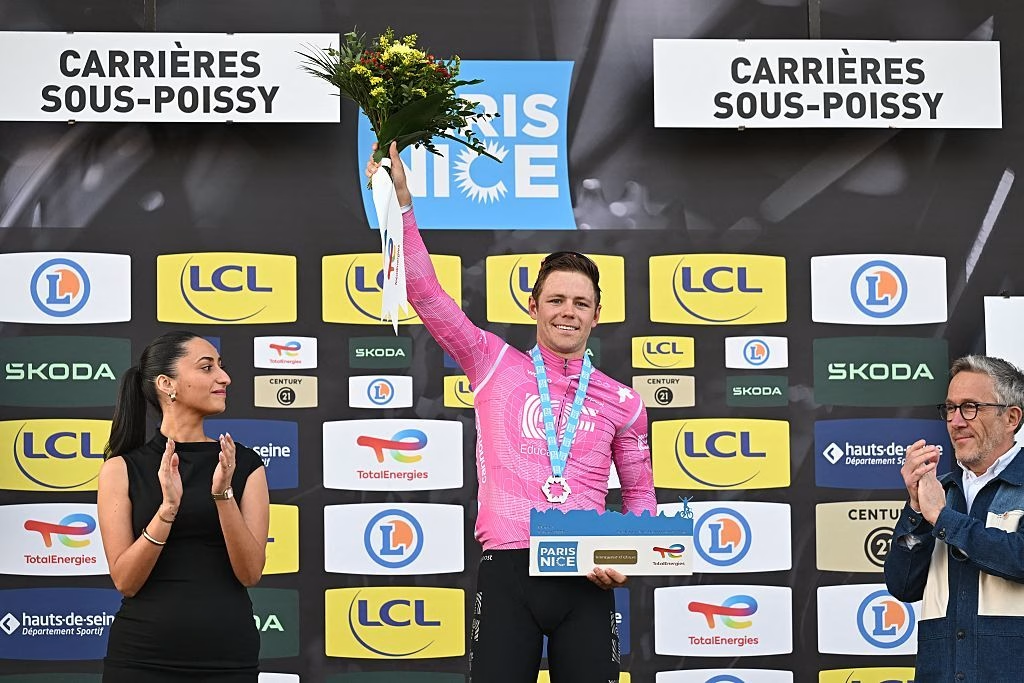
Luke Lamperti is the rider most likely to get the final opportunity, while Vincenzo Albanese gives EF another useful option if the race becomes harder than expected. Alastair Mackellar, Matthias Schwarzbacher, Colby Simmons, Michael Valgren and Marijn van den Berg make this a useful team for a chaotic race, even if it is not the most obvious sprint train in the field.
Lamperti stands out because he does not need the race to be perfect. He just needs the bigger teams to lose shape at the right moment. That makes EF an interesting team to watch late on, especially if the finale becomes more nervous than the clean route design suggests.
Groupama-FDJ United
Matteo Milan is the best finishing option here, and the team around him includes Lewis Bower, Titouan Fontaine, Axel Huens, Johan Jacobs, Cyril Barthe and Paul Penhoet.
There is enough speed and enough support to make the final, but this feels more like a team that needs the race to become slightly messy rather than one built to control a textbook bunch sprint. Milan is still worth watching though, because this kind of flat one-day race can quickly favour a rider who reads the finale well rather than only the one with the biggest train.
INEOS Grenadiers
Sam Welsford is the clear reason to watch INEOS here. Connor Swift, Kim Heiduk, Artem Shmidt, Wade Hamilton, Ben Turner and Sam Watson give him a strong and versatile group, and if INEOS can deliver the race in an organised way, Welsford has the speed to win from this field.
What makes INEOS especially interesting is that they have enough all-round strength to keep the race stable deep into the last hour. Welsford does not always come with the same specialist sprint aura as Philipsen or Jakobsen, but on this sort of route he is absolutely one of the major names.
Lidl-Trek
Simone Consonni and Max Walscheid stand out as Lidl-Trek’s two main cards, with Edward Theuns adding more experience for a difficult flat finish. With Withen Philipsen, Jakob Söderqvist, Tim Torn Teutenberg and Otto Vergaerde also in the line-up, this is one of the more interesting teams because it can either commit to a lead-out or keep several options alive deep into the race.
That flexibility can be valuable in a race like this. If the sprint is clean, Consonni makes sense. If it gets more complicated, Lidl-Trek still has enough experience and variety to adapt rather than fall away.
Lotto Intermarché
Milan Menten is the headline finisher, and he is surrounded by Cedric Beullens, Vito Braet, Steffen De Schuyteneer, Joshua Giddings, Lionel Taminiaux and Roel van Sintmaartensdijk.
This is a squad that looks capable of punching above expectations if the final becomes hectic, but it probably lacks the outright depth of the very strongest sprint teams. Menten is still the kind of rider who can feature prominently if a few bigger trains mistime the run-in.
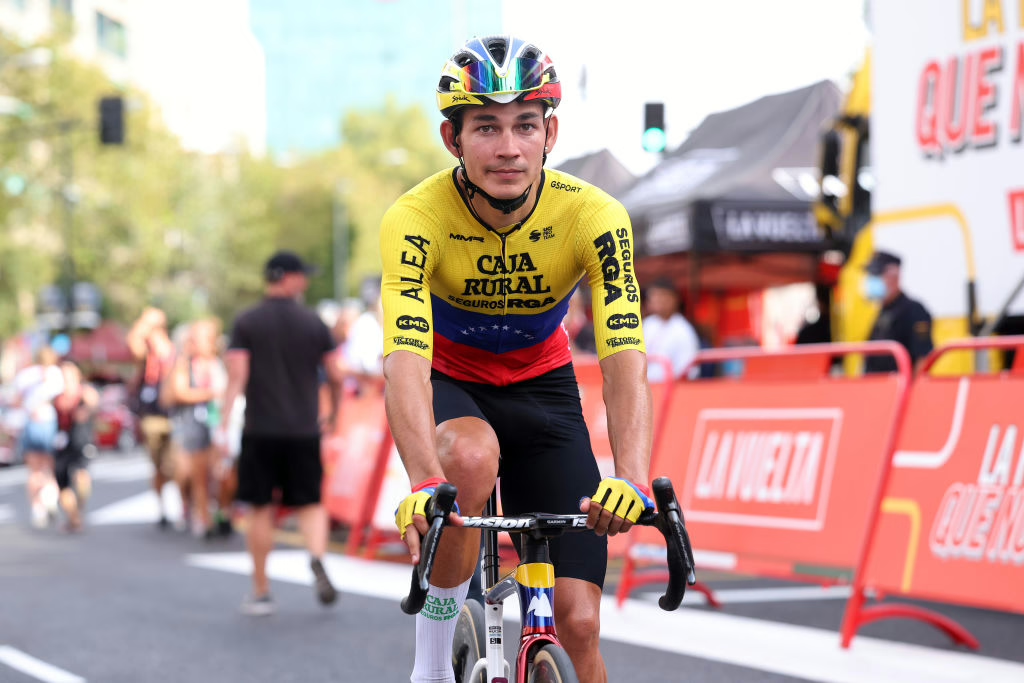 Photo Credit: Getty
Movistar Team
Orluis Aular is the most obvious fast finisher in this line-up, while Ivan Garcia Cortina gives the team another rider who can matter if the race is harder than expected. Carlos Canal, Filip Maciejuk, Gonzalo Serrano, Lorenzo Milesi and Albert Torres make this a rounded group, but not one that looks fully built around a dominant sprint train.
That makes Movistar more of an opportunist team here. Aular has the speed to contend, but the race probably needs to become slightly less controlled for the team to move from outside threat to genuine winning chance.
NSN Cycling Team
Hugo Hofstetter is the clear focal point here, with Itamar Einhorn as another rider who can handle a fast finish. Ryan Mullen and Floris Van Tricht in particular add useful support and experience, but this feels like a team looking to surf wheels late rather than one expected to set the terms of the finale.
That is not necessarily a weakness. On days when the biggest teams become too rigid, riders from this kind of squad can sneak into the podium fight simply by reading the final better.
Soudal Quick-Step
This is not the old Quick-Step sprint train version of this race, but the team still has plenty of Belgian know-how for a day like this. Dries Van Gestel, Yves Lampaert, Jonathan Vervenne, Laurenz Rex, Fabio Van den Bossche, Bert Van Lerberghe and Warre Vangheluwe make this a hard team to ignore, even if there is no single pure top-tier sprinter in the line-up.
What Soudal Quick-Step do have is race craft. On a nervous flat Belgian one-day race, that can still turn them into one of the most visible teams on the road, even without the clearest finishing favourite.
Team Jayco AlUla
Luka Mezgec is the most established finisher here, while Amaury Capiot gives Jayco another useful option if the race does not stay perfectly clean. Luke Durbridge, Robert Donaldson, Dries De Pooter, Jelte Krijnsen and Kelland O’Brien give the team enough strength to stay visible all day.
This looks more like a squad that could place well than one that clearly owns the sprint narrative. But Mezgec remains a rider who can profit if the race gets awkward and the more obvious sprint trains hesitate.
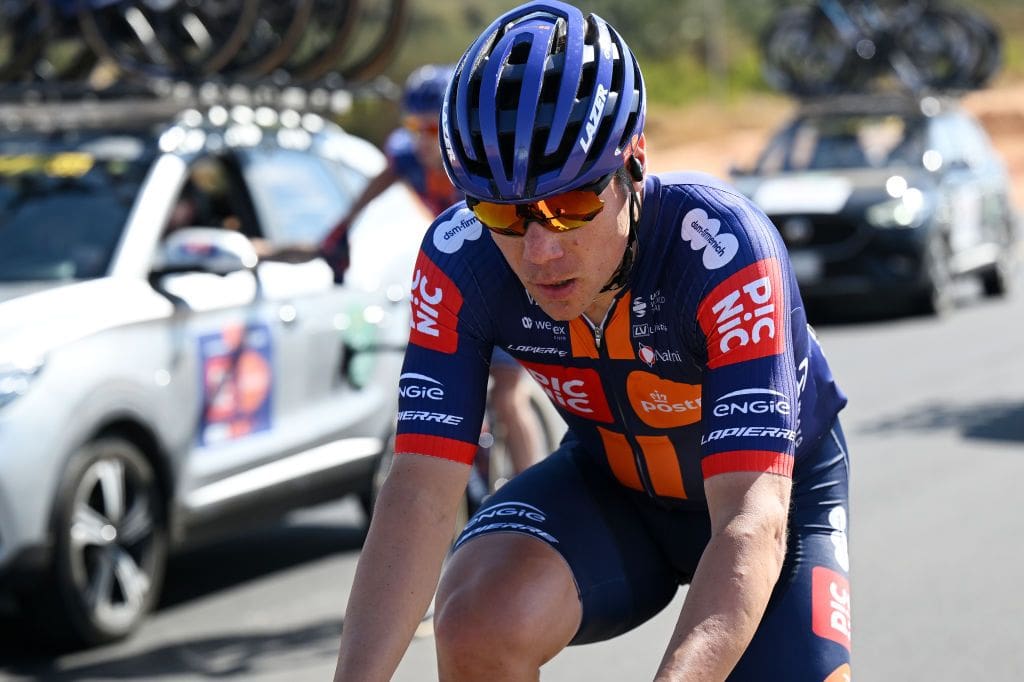
Team Picnic PostNL
Fabio Jakobsen is the obvious centrepiece, and Pavel Bittner gives Team Picnic PostNL a strong second option if the race unfolds in a slightly less straightforward way. Henri-François Renard-Haquin, Niklas Märkl, Tim Naberman, Timo Roosen and Julius van den Berg give the team enough structure that it should still be among the more important sprint squads on the day.
Jakobsen is one of the riders most naturally suited to this finish. The question is less about the route and more about whether the team can put him exactly where he needs to be against rivals with slightly more settled sprint structures.
Uno-X Mobility
Søren Wærenskjold is the rider most likely to deliver a big result here, though Erlend Blikra gives Uno-X another useful finishing option. Carl-Frederik Bévort, Stian Fredheim, Storm Ingebrigtsen, Breiner Henrik Pedersen and Erik Resell make this a strong team for a slightly harder sprint, especially if fatigue becomes a bigger factor than pure top-end speed.
That is where Uno-X can become dangerous. If the race is not fully straightforward, Wærenskjold moves closer to the very top names rather than further away.
XDS Astana Team
Davide Ballerini, Max Kanter and Gleb Syritsa give XDS Astana several different sprint possibilities, which makes this one of the more tactically interesting line-ups in the race. Aaron Gate, Arjen Livyns, Yevgeniy Fedorov and Davide Toneatti add enough support that the team could still be a factor if the finale becomes complicated.
The strength here is optionality. Astana do not need to commit everything to one script from a long way out. If the race changes shape, they have enough different rider types to adjust.
-
 Photo Credit: Getty


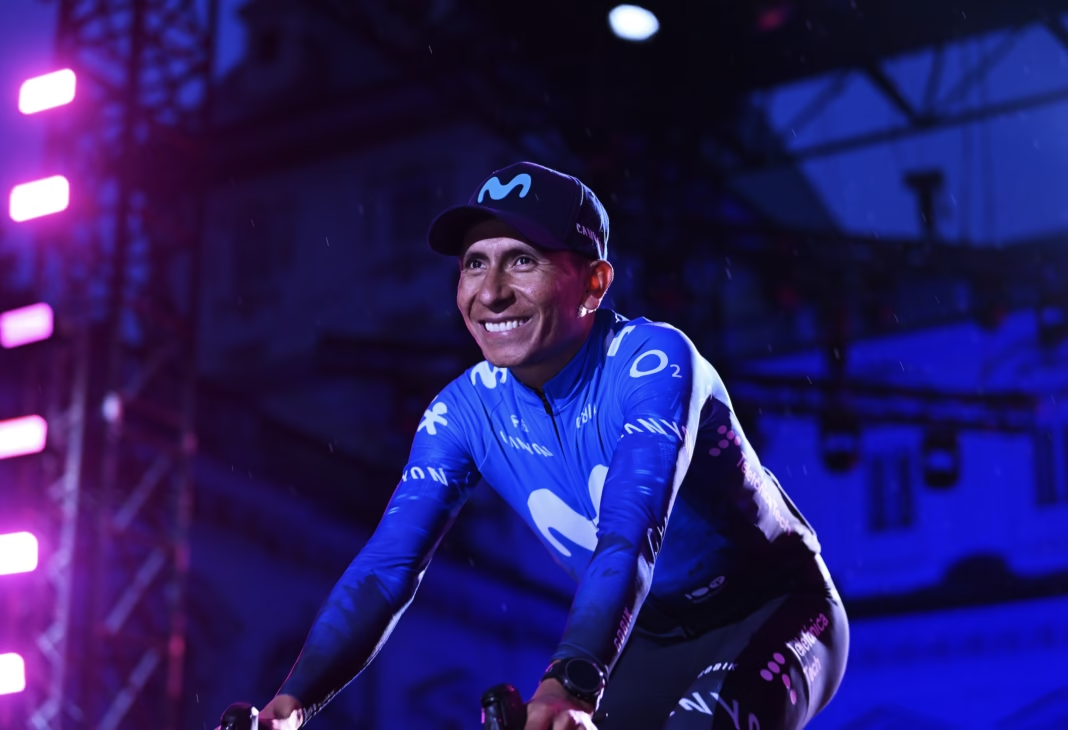
Cofidis
Milan Fretin and Stanislaw Aniolkowski are the names that stand out most here, with Jenthe Biermans and Alex Kirsch adding useful support on a nervous flat day. This is a team with the depth to get involved in the sprint fight, but it probably needs the bigger teams to lose shape slightly if it wants a podium rather than just a placing.
Fretin in particular is the kind of rider who can surprise in a race like this if the expected hierarchy starts to wobble.
Tudor Pro Cycling Team
Arvid de Kleijn is the clear sprint leader, and Luca Mozzato adds another rider who could matter if the race becomes more selective or tactical. Robin Froidevaux, Petr Kelemen, Sebastian Kolze Changizi, Aivaras Mikutis and Joel Suter make this a capable team, and De Kleijn is good enough to keep them relevant if the run-in is delivered well.
Tudor are one of the teams who could quietly build a strong result without attracting too much attention beforehand. On flat one-day races, that can be a very useful place to be.
Burgos-Burpellet-BH
This looks like one of the less obvious teams in the race, with Tomoya Koyama, Rodrigo Alvarez Rodriguez, Georgios Bouglas, Daniel Cavia Sanz, Vojtech Kminek, Cesar Macias Estrada and Henri Alexandre Mayer.
There is no standout top-level sprint favourite here, so a result would likely need to come from opportunism or from the race becoming much less straightforward than expected. That does not make them irrelevant, but it does make them one of the more difficult teams to place in the overall sprint hierarchy.
Team Flanders-Baloise
Tom Crabbe is the name most likely to draw attention, with Jules Hesters, Ferre Geeraerts, Nolan Huysmans, Artuur Torney, Milan Van Den Haute and Noah Vandenbranden alongside him.
This is the kind of Belgian ProTeam that can animate the race and benefit from local knowledge, but a win would still count as a real upset. Their most realistic route to influence is likely through aggression and visibility rather than through controlling the sprint.
TotalEnergies
Emilien Jeanniere is the most obvious finisher here, with Florian Dauphin, Samuel Leroux, Lorrenzo Manzin, Nicola Marcerou, Jason Tesson and Pierre Thierry around him.
Jeanniere is fast enough to deserve attention, and this is one of the teams just below the top line that could convert a slightly disrupted sprint into a big result. They are not among the headline sprint squads, but they are close enough to matter if the final becomes awkward.
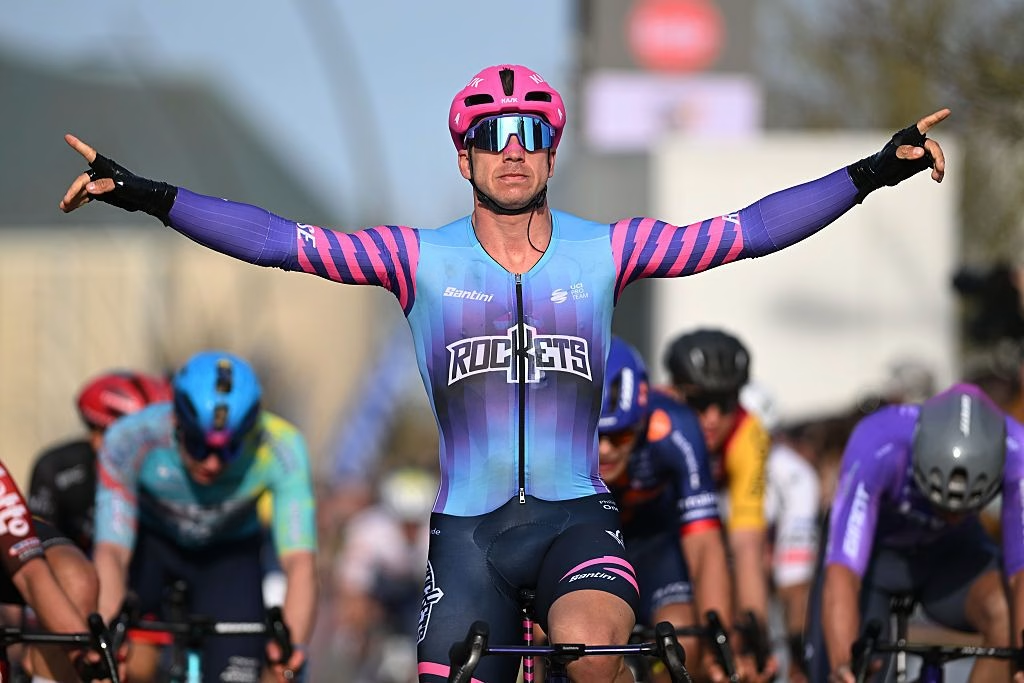
Unibet Rose Rockets
Dylan Groenewegen is the headline name, and his presence immediately gives Unibet Rose Rockets real weight in the race. Karsten Larsen Feldmann, Niklas Larsen, Wessel Mouris, Tobias Müller, Elmar Reinders and Abram Stockman make up the rest of the squad.
While it may not be the deepest train in the field, Groenewegen’s speed alone makes this one of the most important teams on the day. If the race becomes a straight contest of sprint confidence and top-end speed, he is one of the few riders who can realistically look Philipsen in the eye.
Which teams look strongest on paper?
Alpecin-Premier Tech still look the most complete team for the race because they combine the most natural favourite in Jasper Philipsen with one of the cleanest support structures. UAE Team Emirates XRG, INEOS Grenadiers, Team Picnic PostNL and Unibet Rose Rockets also stand out because they bring a clear sprint leader with enough help to matter.
On a flatter version of this race, that clarity is likely to count for a lot.
The teams to watch most closely
If you want the shortest shortlist, it is this:
- Alpecin-Premier Tech
- UAE Team Emirates XRG
- INEOS Grenadiers
- Team Picnic PostNL
- Unibet Rose Rockets
- Lidl-Trek
That group has the strongest mix of outright speed, sprint depth and support to shape how the race is run. If you are following the wider week as well, this piece also sits naturally alongside your how to watch Ronde Van Brugge – Tour of Bruges 2026 in the UK guide and the men’s contenders preview.

