The 2026 Ronde van Brugge – Tour of Bruges Women opens a new chapter for one of the fastest races on the Women’s WorldTour calendar. Formerly known as Classic Brugge-De Panne, the event has been rebranded and reshaped for 2026, with both start and finish now in Bruges rather than the traditional run to De Panne. That shift changes the race’s identity as much as its geography. Where the old route was often defined by the exposed roads of De Moeren and the ever-present threat of crosswinds, the new version looks flatter, safer, and even more explicitly built around the sprint.
Even before the name change, the women’s race had already developed a clear reputation. Since its launch in 2018, it has consistently rewarded riders who can survive nervous positioning battles and still deliver a top-end finish after a long day on largely flat terrain. Six of the first eight editions ended in some form of sprint, and the winners’ list reflects that bias, with Lorena Wiebes and Elisa Balsamo both winning multiple editions. This has become one of the purest speed tests in the spring, but never a simple one, because bunch control and sprint execution still have to survive hours of stress before the final kilometre.

Last year’s edition underlined that identity perfectly. Lorena Wiebes won again in 2025, reaffirming both her own dominance in the race and the event’s natural drift towards the fastest finishers when the field stays together. In previous years, however, the route has still left enough room for disruption, whether through crosswinds, crashes, or late chaos in the approach to the line. That uncertainty remains central to the race, even if the 2026 redesign appears to reduce some of the old selective features.
The biggest sporting question this year is whether the new Bruges finish makes the race even more controlled than before. Early analysis of the revised route suggests the only major challenge is the cobbled Brieversweg, with the rest of the course offering fewer natural flashpoints than the old De Panne finale. If that proves true, the Ronde van Brugge – Tour of Bruges Women may now sit even more firmly in the hands of the teams with the strongest sprint trains, unless wind or crashes create the selection that the route itself no longer guarantees.
Previous Winners
2025
Lorena Wiebes
2024
Elisa Balsamo
2023
Pfeiffer Georgi
2026 Ronde van Brugge – Tour of Bruges Women route
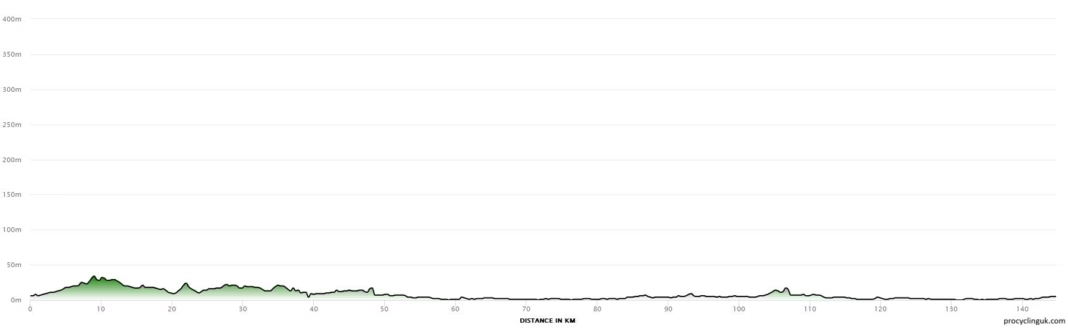
The new course keeps the race in and around Bruges and strips away some of the features that once made the old Brugge-De Panne route so nervy. Most notably, the exposed De Moeren sector is no longer part of the race, removing the section most associated with brutal echelon racing and late collapses for sprinters caught out of position. In its place is a flatter route that looks more straightforward on paper, even if the stress of a Belgian WorldTour sprint race should never be underestimated.
The Brieversweg cobbled sector remains the key feature, but it is unlikely on its own to deliver the kind of repeated selection that came naturally on the old route. Instead, the race is more likely to be shaped by speed, control, and the ability of the strongest sprint teams to manage the approach to Bruges. That should make positioning even more important in the final kilometres, because if the course no longer creates the selection, the bunch itself almost certainly will.
2026 Ronde van Brugge – Tour of Bruges Women live TV coverage
Race Date: Thursday 26th March 2026
United Kingdom
Live coverage is available via Discovery+, Max and TNT Sports (switch-over from Discovery to HBO Max is due 26th March)
International broadcasters
In Europe, coverage is available via Discovery+ and Max. In Belgium, the race is typically broadcast via Sporza. In the United States, coverage is available via FloBikes.
2026 Ronde van Brugge – Tour of Bruges Women startlist

2026 Ronde van Brugge – Tour of Bruges Women Contenders
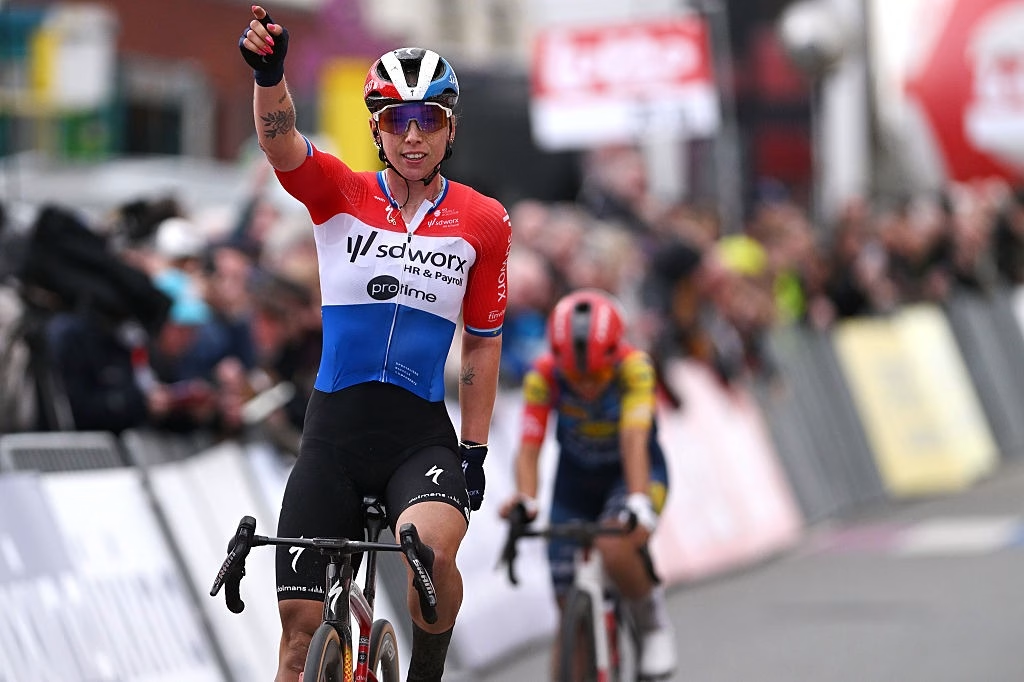
The clearest top-end reference remains Lorena Wiebes, because when she is delivered into the final 200 metres with a clean run, she is still the hardest rider to beat. Her early 2026 form has already been sharp, highlighted by that attacking win at IXINA Leeuw Oetingen where she went clear on the Zavelberg and still finished it off, which is exactly the kind of signal you want ahead of a sprint-focused WorldTour day. Team SD Worx Protime also have the depth to make the sprint feel controlled rather than chaotic. Femke Gerritse and Barbara Guarischi are the type of riders who keep the train in the right place when the bunch is strung out, while Marta Lach gives a second finishing option if the sprint is reduced or if Wiebes is boxed in. If it becomes a messy run-in, that second card matters more than people expect.
If the finish comes down to a slightly reduced bunch sprint rather than a clean full peloton drag race, Elisa Balsamo is one of the riders best suited to exploit it. Lidl Trek do not need a perfect lead-out to win with her, because she can read openings well and still launch strongly from imperfect wheels. Their other key asset is Emma Norsgaard, who gives them flexibility when the race does not unfold neatly, either as a second sprint card or as the rider who can keep the team calm and positioned before the finale. The supporting cast is also important here. Fleur Moors is exactly the kind of rider who can sneak a big result if the sprint trains fragment and the winner comes from timing rather than structure, and Clara Copponi is another useful name when the run-in becomes a fight for wheels rather than a clean lead-out.
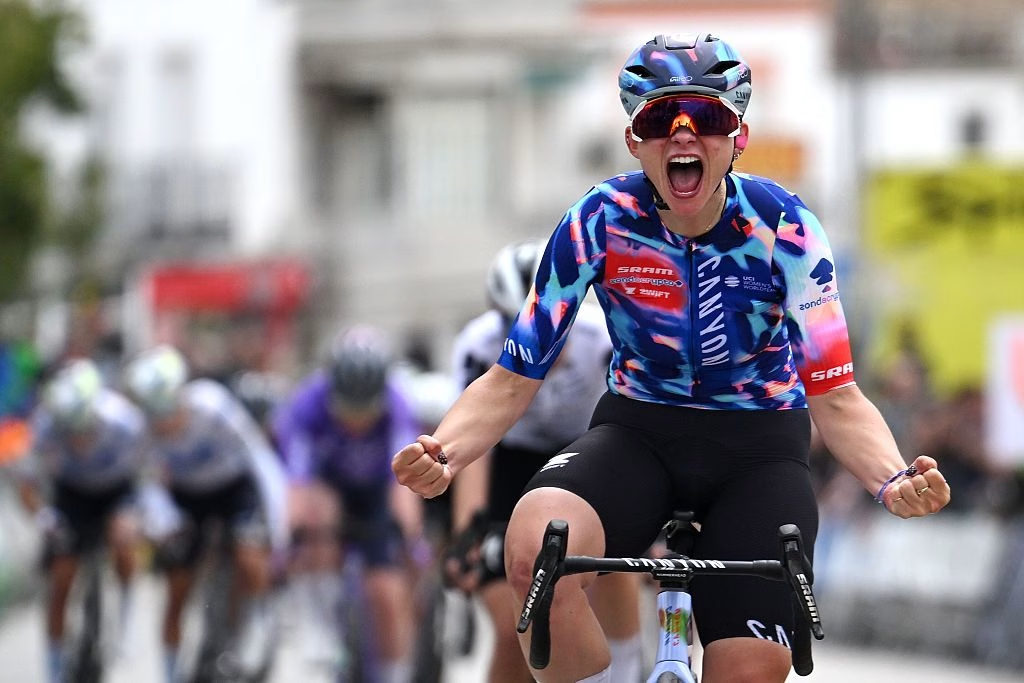
A sprint that becomes tactical rather than textbook is where Canyon SRAM can really matter, because Chiara Consonni does not need the cleanest set-up to win. If she reaches the final kilometre in the right lanes, she can surf wheels and launch late, which is often the winning skill in Bruges when the lead outs collapse. The other benefit for Canyon is that they have riders who can help them survive the chaos without burning Consonni too early. Zoe Backstedt is a genuine positioning and resilience asset in races like this, and Maike van der Duin gives them another rider who can still be relevant if the sprint group is reduced and the finish becomes scrappy. If the wind stretches the bunch into one long line, riders like Backstedt are often the difference between contesting the sprint and arriving too far back to matter.
A strong sprint card that should not be underestimated is Ally Wollaston, because she has already started 2026 in winning mode, taking the Cadel Evans Great Ocean Road Race and winning a stage of the Tour Down Under. That profile fits a Bruges sprint perfectly, sharp finishing speed combined with the durability to handle a hard day. FDJ United SUEZ also have useful depth behind her. Sofia Bertizzolo can still sprint well from a reduced group if the finale becomes messy, and Marie Le Net is exactly the type of rider who can stay in the front selection when the race becomes stressful and physical. If Wollaston is dropped or badly positioned, FDJ can still salvage a big result from the same front group rather than watching the sprint go without them.

Fenix Premier Tech bring the most straightforward sprint argument outside the biggest teams, because Charlotte Kool is always a winning-level finisher if she arrives in position with enough support. The question is not her speed, it is what the day costs her before the final two kilometres. That is where the rest of the line-up matters. Christina Schweinberger is valuable because she tends to survive the chaos and keep the team organised, while Marthe Truyen can help keep Kool protected through the most nervous sections. Millie Couzens adds another angle if the sprint is reduced and the finish becomes more about who still has legs left than who has the cleanest top speed.
A slightly different sprint threat comes from UAE Team ADQ because they have multiple riders who can profit from different versions of the finale. Lara Gillespie is the obvious finisher if the bunch is reduced and the sprint is launched from imperfect positions, while Megan Jastrab gives them another option if the group is larger and the sprint is closer to traditional. The other key name is Sofie van Rooijen, because she can survive and still sprint well when the race is hard enough to thin the field. If the wind splits the race, UAE are the sort of team that can have more than one rider in the first group, which gives them far more tactical freedom than teams built around a single sprinter.

If the sprint becomes improvised rather than controlled, Liv AlUla Jayco are well placed to steal it. Georgia Baker does not need the cleanest lead-out to win when the finale is chaotic, and that is exactly the kind of finish Bruges can produce when teams are fighting for the same space. The other reason to take them seriously is their depth for selective racing. Quinty Ton has already shown early 2026 form with 5th at Le Samyn and 7th at GP Oetingen, which suggests she can handle hard one-day racing when the pace is high, and if the sprint group is reduced, she becomes more relevant. Riders like Mackenzie Coupland and Noa Jansen also help keep the team in the right place when the bunch stretches, and riders start being dropped out of position rather than out of the race.
A classic chaotic sprint is where Team Picnic PostNL can be at their best, because Rachele Barbieri thrives when the lead is fractured, and the winner is the rider who finds space late rather than the rider with the cleanest train. They also have enough depth to stay present through the final build-up. Ella Heremans can still finish well if the group is reduced, and Robyn Clay is a useful rider when the race is nervous and physical. If the sprint teams start watching each other and the run-in becomes messy, Barbieri is the kind of rider who can turn that disorder into a podium.
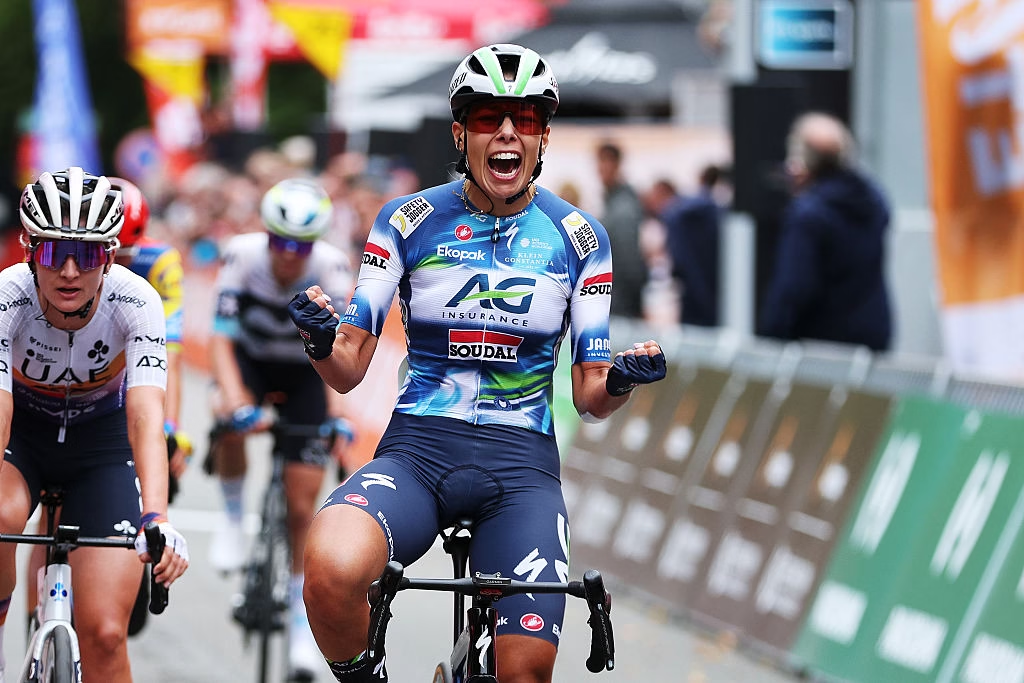
AG Insurance Soudal have a sprint card that suits this sort of race because it is often won from a reduced bunch rather than a pristine train. Shari Bossuyt should be treated as the main finisher here, particularly if the finale is chaotic and timing matters more than a long lead-out. Gladys Verhulst Wild gives them another fast option if the group is still large, while Ilse Pluimers adds resilience if the day becomes more selective and the sprint is fought out by riders who have survived a harder rhythm. Having more than one finishing option is not a luxury in Bruges, it is often the difference between being boxed in and still having a rider free to launch.
There are also a few proper outsider sprint threats worth keeping on the radar because Bruges can produce a result for riders who stay calm and simply arrive in the right place. Lea Lin Teutenberg has the speed to contest a fast sprint if Lotto Intermarché can keep her well-positioned. Alison Jackson is the type of rider who can land a big finish for St Michel Preference Home Auber 93 if the sprint becomes messy and physical. From Uno X, Susanne Andersen is another rider who can profit if the finale is reduced and disorganised.
Top 3 Prediction
⦿ Lorena Wiebes
⦿ Elisa Balsamo
⦿ Chiara Consonni