

Men’s Ronde van Vlaanderen 2026 returns to its familiar Monument logic, but with one important change at the start. The race begins again in Antwerp, finishes in Oudenaarde, and covers 278km. The route back into the Flemish Ardennes changes because of that Antwerp start, but the decisive late sequence still revolves around the climbs and cobbles that define the modern race, especially Oude Kwaremont and Paterberg.
That is what makes the route so effective. Ronde van Vlaanderen does not need a radical redesign every year to produce a major race. It works because the opening half gradually drains energy and options, then the final third keeps forcing the favourites onto the same famous roads until only the strongest and smartest riders are left.
The race starts in Antwerp again
The 2026 men’s edition starts from Antwerp before heading south-east towards the Flemish Ardennes. That means the route into the hillier terrain changes compared with some recent editions, even if the decisive structure in the finale remains familiar.
That early phase matters more than it sometimes gets credit for. The race may not be won there, but position, stress and energy use in the opening half can shape how much support a contender still has once the route starts asking real questions later on. On a 278km Monument, wasted effort accumulates long before the famous climbs arrive.
If you are following the full Flemish week, this race also sits naturally after Dwars door Vlaanderen and before the rest of the cobbled spring reaches its final peak.
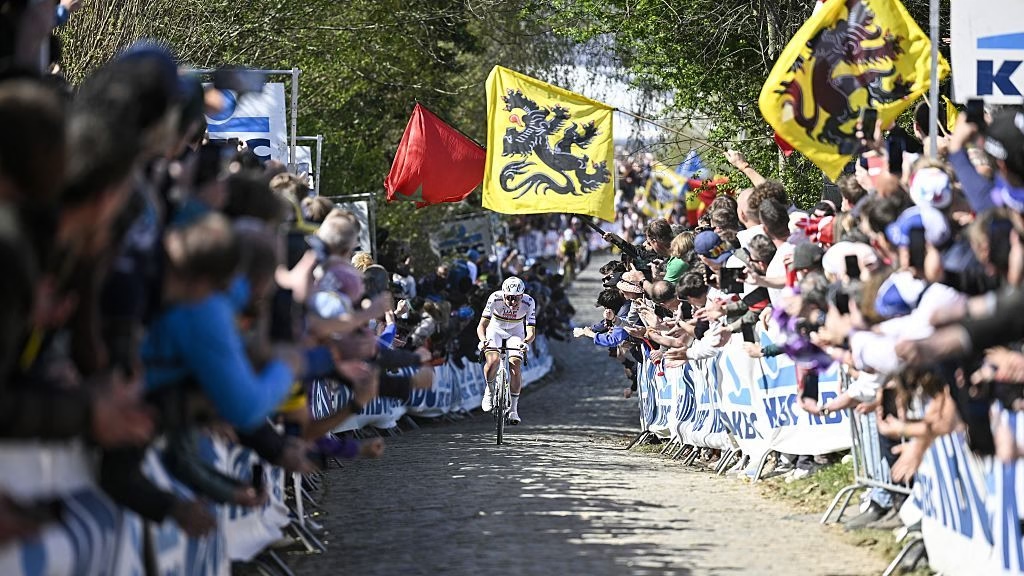
The route still builds towards the Flemish Ardennes
The road from Antwerp changes the approach, but once the riders hit the decisive zone, the route is built around the sectors and climbs that define Ronde van Vlaanderen as a race.
That is important because the race is not just a collection of famous names. It is a sequence. The roads and sectors matter because they come one after another, with less and less recovery between them. By the time the favourites reach the final rounds of climbing, the route is not asking who can produce one best effort. It is asking who can still do it after hours of pressure.
That is one reason Tour of Flanders remains such a useful race for understanding one-day cycling at its hardest. It is not a route built around one dramatic point. It is a route built around accumulation.
Oude Kwaremont and Paterberg remain the heart of the finale
The defining duo of Oude Kwaremont and Paterberg once again serves as the major obstacle in the finale. That is the key to understanding the whole race. However the opening half shifts, the final selection is still likely to be made on those roads.
Oude Kwaremont is where strength can be sustained and differences start to open properly. It is long enough and irregular enough to expose fading riders and stretch elite groups into something much more selective. Paterberg then changes the demand completely. It is shorter, steeper and more explosive, which means riders already close to their limit can be cracked very quickly. Together, they remain the most decisive pairing in the race.
If you want the women’s equivalent route structure for comparison, the Tour of Flanders Women 2026 route guide shows how the same late pairing works slightly differently in the shorter race.
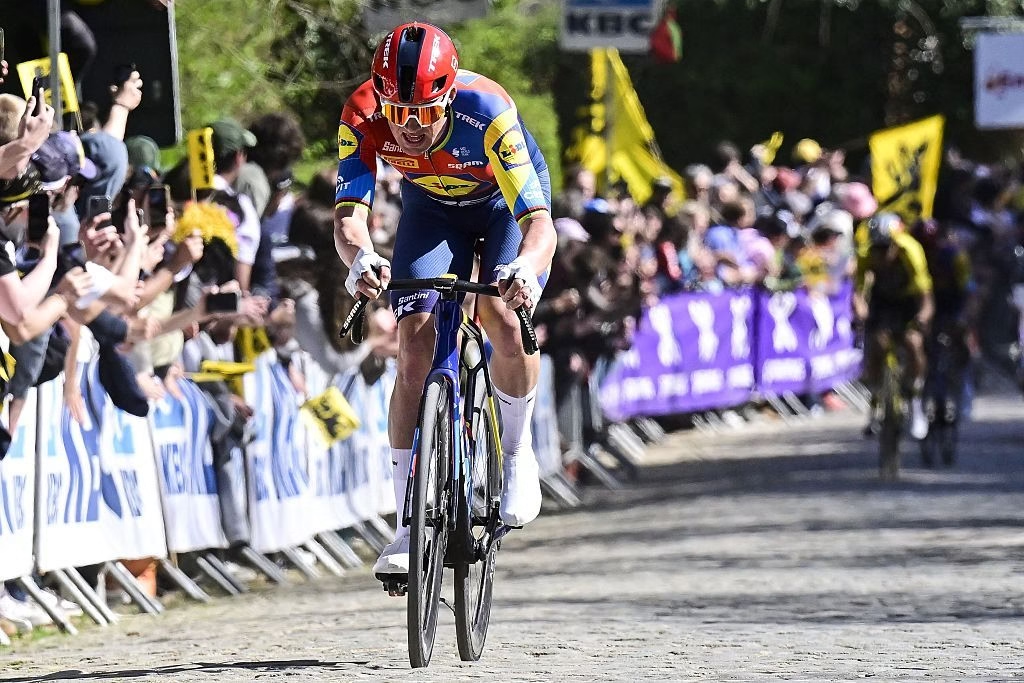
The route still uses repeated passages of the key climbs
Repeated passages remain central to the shape of the men’s race. Oude Kwaremont comes multiple times, and Paterberg is also used more than once, which helps create the race’s distinctive rhythm.
That repeated structure is central to how Ronde van Vlaanderen works. The first passage of a famous climb often shapes position and chips away at support riders. The next one turns the screw. The final one is where the race can properly split. The climbs are not just landmarks, they are recurring tests, and the cumulative effect is one of the defining features of the route.
That is also why the race is so exhausting to follow from inside the bunch. Riders are not simply dealing with iconic sectors, they are dealing with the same pressure points returning at moments when their reserves are already much lower.
Tour of Flanders climbs
| Hill | Length | Ave. Grade | Max | Km raced | Km to go |
|---|---|---|---|---|---|
| Oude Kwaremont | 2200m | 4% | 11.60% | 135 | 136 |
| Eikenberg | 1200m | 5.20% | 10% | 150.9 | 120.1 |
| Wolvenberg | 645m | 7.90% | 17.30% | 155 | 116 |
| Molenberg | 463m | 7% | 14.20% | 167.5 | 103.5 |
| Marlboroughstraat | 900m | 4.8% | 7% | 171.5 | 99.5 |
| Berendries | 940m | 7% | 12.30% | 175.5 | 95.5 |
| Valkenberg | 540m | 8.10% | 12.80% | 184.1 | 86.9 |
| Berg Ten Houte | 1100m | 6% | 21% | 196.6 | 74.4 |
| Nieuwe Kruisberg/Hotond | 2700m | 4% | 8.50% | 206.1 | 64.9 |
| Oude Kwaremont | 2200m | 4% | 11.60% | 215.9 | 55.1 |
| Paterberg | 360m | 12.90% | 20.30% | 219.4 | 51.6 |
| Koppenberg | 600m | 11.60% | 22% | 225.7 | 45.3 |
| Taaienberg | 530m | 6.60% | 15.80% | 234.2 | 36.8 |
| Oude Kruisberg/Hotond | 2700m | 4.10% | 9.40% | 244.5 | 26.5 |
| Oude Kwaremont | 2200m | 4% | 11.60% | 254.3 | 16.7 |
| Paterberg | 360m | 12.90% | 20.30% | 257.8 | 13.3 |
Koppenberg is still one of the key break points
Koppenberg remains one of the roads that can fundamentally change the race.
It is important for obvious reasons. The climb is steep, narrow and cobbled, and if riders hit it in poor position they can lose the race very quickly. But it is also important because it comes at a point where the route is already tightening. Teams are running out of domestiques, the bunch is smaller, and the race is moving from broad control into real selection.
Koppenberg often acts as the point where the finale stops being theoretical and becomes immediate. It is one of the places where the race begins to feel less like a long Monument and more like a direct contest between the few riders who still have full control of their legs.
Oude Kruisberg and Hotond remain meaningful in the late race
Oude Kruisberg and Hotond still matter because they sit in the part of the route where teams still have choices to make. Attack too early and you may pay for it later. Wait too long and the race can already be gone.
Those roads often shape the race tactically before the most famous final blows land on Kwaremont and Paterberg. They may not carry quite the same public recognition, but they remain crucial in softening the race and forcing riders to show their hand before the final sequence.
That is one of the things that makes Ronde van Vlaanderen such a complete route. Even the sectors that sit slightly outside the biggest spotlight still carry real tactical weight.
Tour of Flanders cobbled sections
| Cobble sector | Distance | Km raced | Km to go |
|---|---|---|---|
| Lippenhovestraat | 1130m | 102.4 | 168.6 |
| Paddestraat | 2300m | 103.9 | 167.1 |
| Holleweg | 1100m | 152.4 | 118.6 |
| Kerkgate | 2650m | 158.6 | 112.4 |
| Jagerij | 800m | 161.6 | 109.4 |
| Mariaborrestraat | 400m | 229.8 | 41.2 |
The finish remains in Oudenaarde
The race finishes once again on Minderbroedersstraat in Oudenaarde.
That matters because the finish comes after the route has already done almost all of its damage. The decisive climbing usually happens before the last straight, which means the final kilometres into Oudenaarde are about converting advantage into victory. A solo rider needs enough left to hold off any chasers. A small group needs cooperation, which is never guaranteed in a Monument.
The route tends to identify the strongest contenders before the finish, but it still leaves just enough room for tactics in the run back to town. That final stretch is one reason the race can still stay alive even after the last major climb.
-
 Photo Credit: Getty
What kind of rider does this route suit?
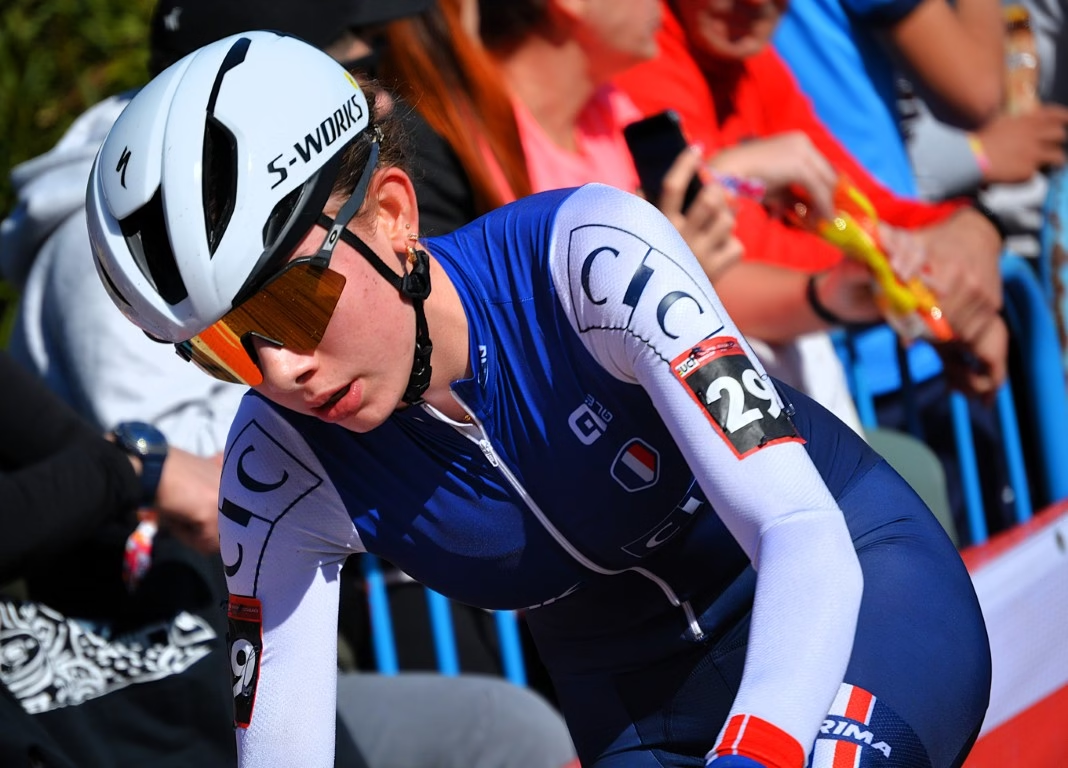
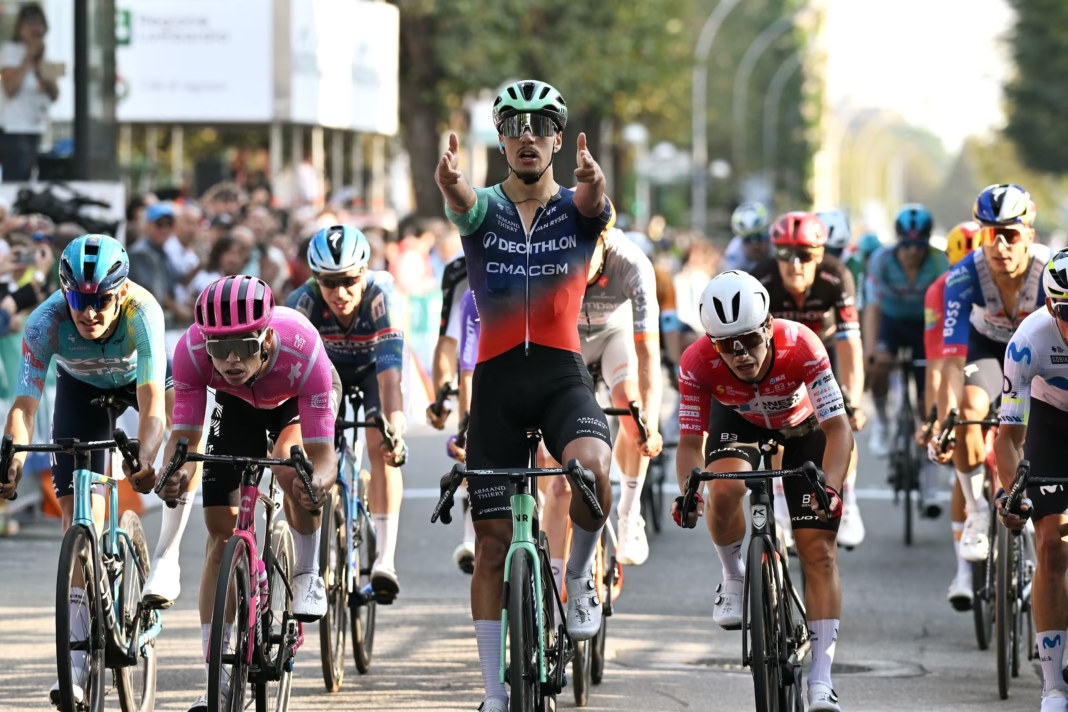
This route still suits the classic Ronde van Vlaanderen profile: riders who can handle cobbles, produce repeated hard efforts on short climbs, and keep making good decisions after more than six hours of racing.
It is not enough to be the strongest rider on one steep sector. The route asks for endurance, positioning, timing and the ability to go again after every major effort. That is why Ronde van Vlaanderen so often rewards the most complete one-day riders of their generation.
If a rider wins here, it usually says something significant about the full breadth of their one-day ability. That is also why the race pairs so well with Paris-Roubaix in the wider spring narrative. They are both Monuments, but they ask slightly different questions of the same elite riders.
What the 2026 route really promises
Men’s Ronde van Vlaanderen 2026 is not a race that needs gimmicks. The return to Antwerp changes the opening geography, but the race still builds towards the same late core that makes modern Flanders so compelling: repeated pressure, famous climbs used more than once, and a final duel between Oude Kwaremont and Paterberg before the road back to Oudenaarde.
In practical terms, that means the 2026 route promises what the best editions of the race usually do. It should favour riders who can survive a long-wearing day and still produce their best effort right at the point where everyone else is running short of answers.
If you are building out the wider spring picture on ProCyclingUK, this route guide also sits naturally alongside the men’s Ronde Van Brugge – Tour of Bruges 2026 team-by-team guide, the men’s contenders preview for Ronde Van Brugge – Tour of Bruges and the broader Tour of Flanders archive.

