

Men’s Flèche Wallonne 2026 takes place on Wednesday 22nd April and remains one of the most distinctive one-day races in cycling because everyone knows where the race is likely to be decided. It sits in the middle of the Ardennes week between Amstel Gold Race 2026 and Liège-Bastogne-Liège 2026, and its identity is built around one famous finish – the Mur de Huy.
For newer fans, that makes it one of the easiest major Classics to understand. Unlike races where the route offers several equally plausible outcomes, Men’s Flèche Wallonne 2026 builds towards one defining climb. The hard part is not working out where the decisive moment will come. The hard part is surviving long enough, and arriving fresh enough, to be at the front when it does.
What is Men’s Flèche Wallonne 2026?
Men’s Flèche Wallonne 2026 is a one-day WorldTour race in Belgium and one of the three Ardennes Classics. In calendar terms, it forms the middle act of that trio, coming after Amstel Gold Race and before Liège-Bastogne-Liège. It is shorter and usually more concentrated than Liège, but more climbing-focused and selective than the flatter spring races that dominate March and early April.
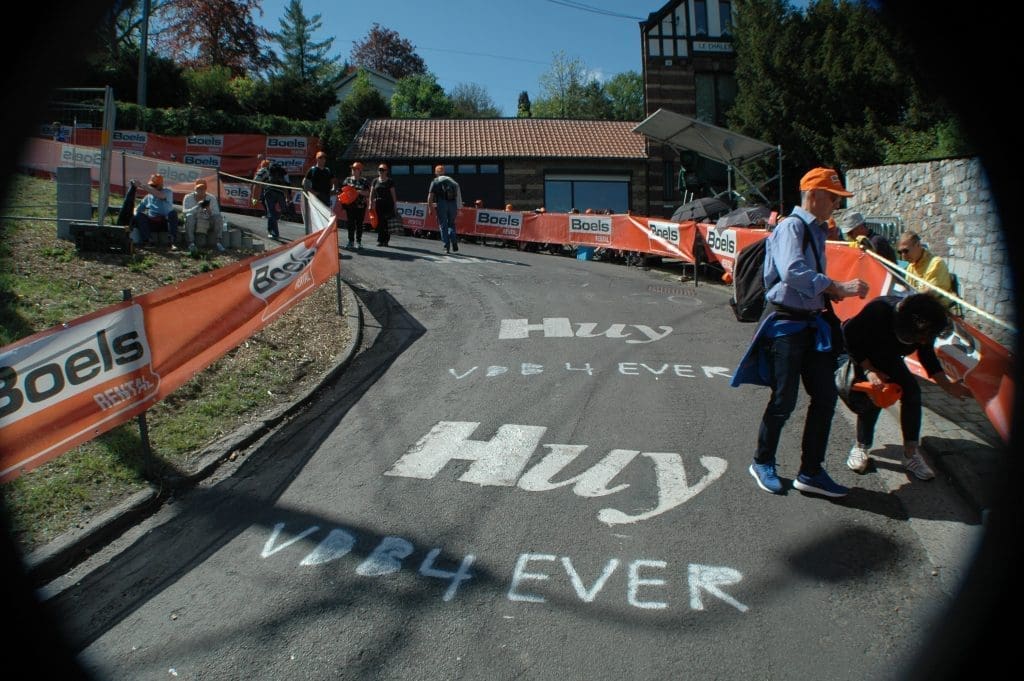
The race is best known for the Mur de Huy, a brutally steep finishing climb in the town of Huy. That ascent has become so central to the event’s identity that it shapes the entire day. Teams spend hours trying to position their leaders for one final effort that often lasts only a few minutes, but decides everything.
If you are following the wider spring season on ProCyclingUK, this race also works as a natural bridge between the cobbled campaign and the hillier one-day races that define the Ardennes. It pairs particularly well with a beginner’s guide to La Flèche Wallonne Femmes 2026 and broader women’s and men’s spring Classics coverage.
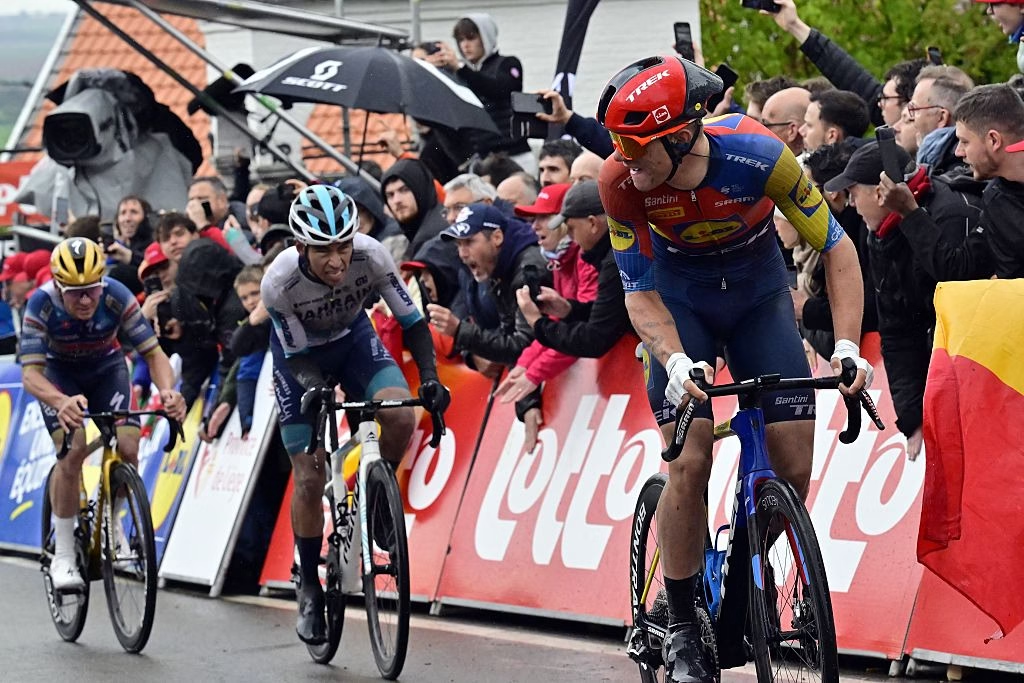
Why is the Mur de Huy so important?
Because it is the finish. Riders do not just have to climb the Mur de Huy well, they have to climb it at the precise moment when the race reaches its absolute peak intensity.
For beginners, the simplest way to think about it is this: many races reward repeated long efforts over hours of racing, but Men’s Flèche Wallonne 2026 often comes down to one explosive uphill finish after a hard, attritional day. Riders who are strongest on short, steep climbs – usually called puncheurs – tend to thrive here. That is why the race has a different feel from Paris-Roubaix, Ronde van Vlaanderen or even Liège-Bastogne-Liège.
What does the 2026 route look like?
The 2026 race starts in Liège and finishes in Huy over 208.8km. The essential point for beginners is that this is a hilly Classic built around repeated fatigue and one iconic finishing climb.
That basic route structure matters because it tells you what kind of race this is. This is not a summit-finish mountain race in the Grand Tour sense, and it is not a cobbled slog where the road surface is the main enemy. It is a race designed to wear riders down before the final ascent of the Mur de Huy brings the strongest puncheurs to the front.
That is also why Men’s Flèche Wallonne 2026 is a useful race to watch alongside a stage-race guide such as the beginner’s guide to Men’s Tour de Romandie 2026. The contrast helps show how different route design creates very different types of winners.
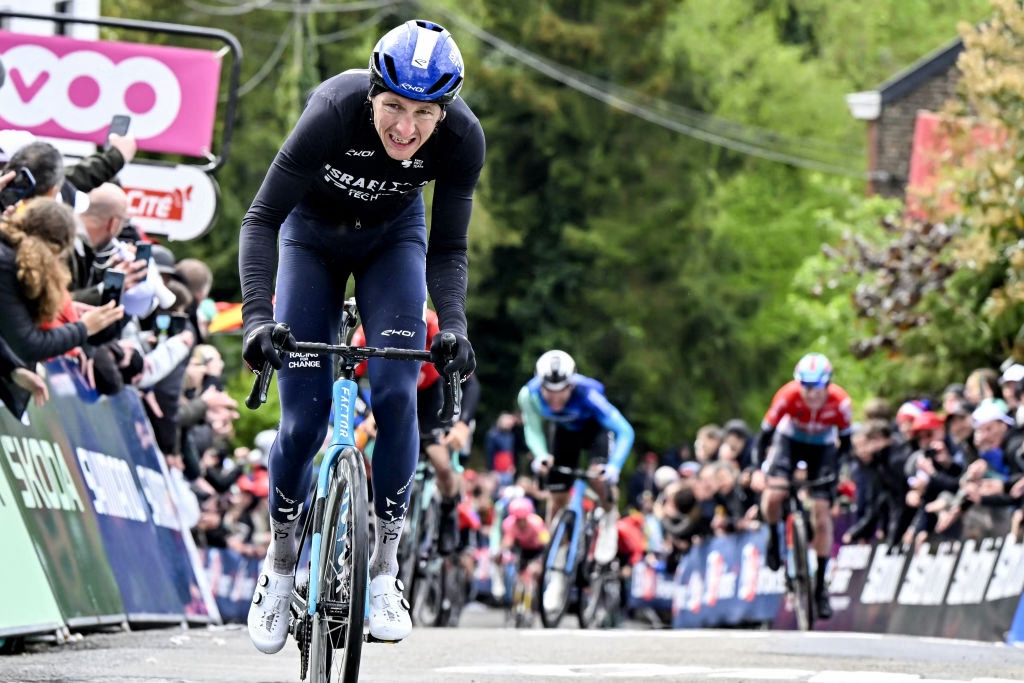
Is it always decided in the final kilometre?
Very often, yes. That is one of the defining features of Men’s Flèche Wallonne. Although attacks can happen earlier and the field can be thinned across the day, the race usually stays controlled enough that the final ascent of the Mur de Huy remains decisive.
For a new viewer, that creates a useful tension. Much of the race is about energy management, team control and positioning. Then, in the final minutes, all of that patience gives way to a very direct contest between the strongest uphill finishers.
In practical terms, it means the run-in to the Mur matters enormously. A rider can be in ideal form and still lose because they start the climb too far back. That is one of the reasons the finale is so compelling. It looks simple, but it is unforgiving.
What kind of rider usually wins Men’s Flèche Wallonne 2026?
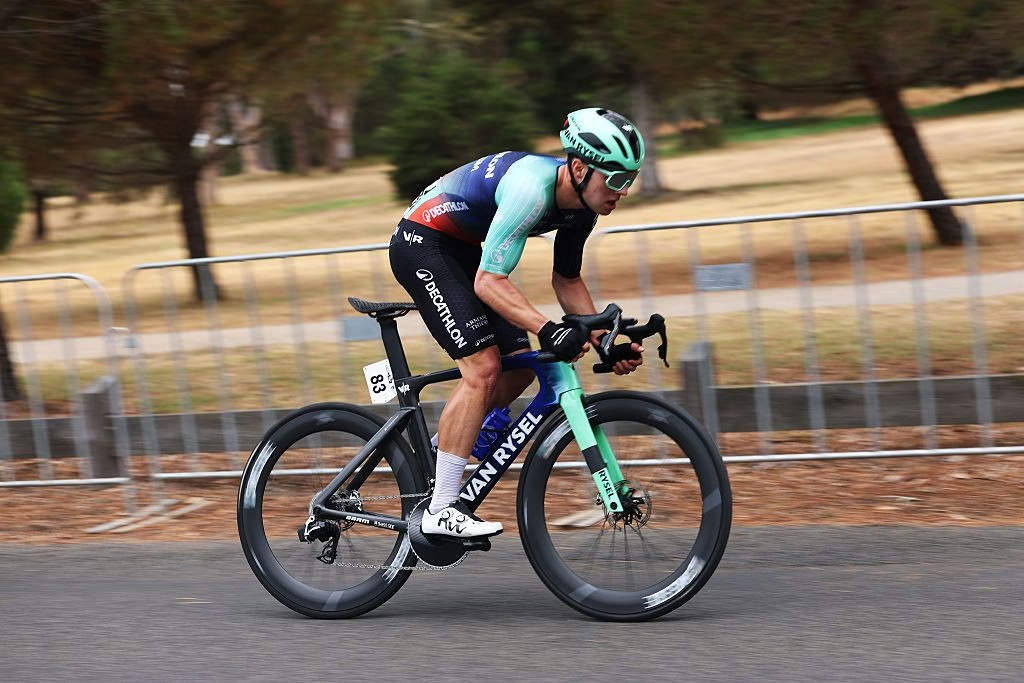
The classic Flèche Wallonne winner is a puncheur – a rider with the explosiveness to produce a very sharp effort on a steep climb after a hard day of racing.
That does not mean only one rider profile can succeed, but it does mean the race has a recognisable logic. Pure sprinters generally do not survive with enough freshness to win. Pure climbers are not always explosive enough for the finish. The ideal rider is someone who can handle a hilly Classic and then unleash one fierce acceleration on the Mur.
For newer fans, that makes the race very readable. Once you understand the type of rider it favours, the finale becomes easier to follow and the tactical choices make more sense.
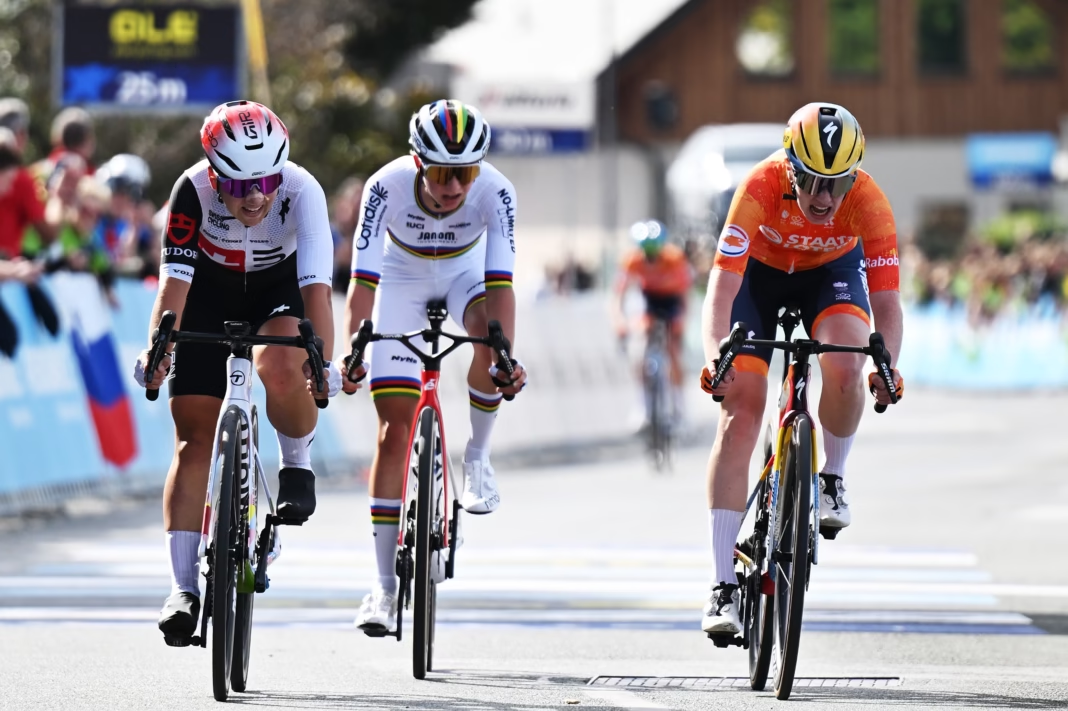
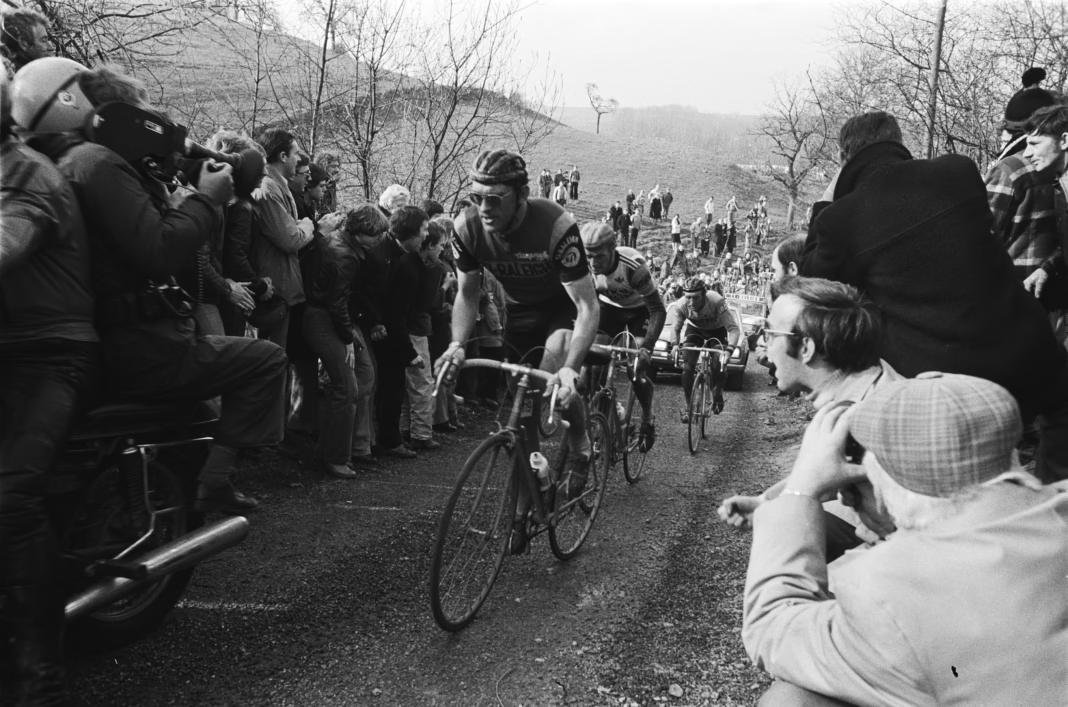
Why does the race matter in the season?
Men’s Flèche Wallonne 2026 matters because it sits at the heart of Ardennes week and rewards a very specific kind of rider. It is also one of the clearest examples of how a route can shape a race’s identity.
It acts as a revealing contrast within the Ardennes sequence. Amstel Gold Race is often more open and tactically messy. Liège-Bastogne-Liège is longer and broader in the range of riders who can win. Men’s Flèche Wallonne is more concentrated, more compressed, and more tied to one final uphill effort.
Watching the three races together is one of the best ways for a newer fan to understand how route design shapes the racing. On that front, this guide works naturally alongside Amstel Gold Race Women 2026 coverage and La Flèche Wallonne Femmes 2026 coverage.
What should beginners watch for during the race?
The first thing is how teams protect their leaders before the finale. Because so much depends on the final climb, positioning into the closing kilometres is crucial.
The second is whether anyone tries to force a harder race earlier. Even though the Mur dominates the story, some teams will try to make the race more selective before Huy so that fewer rivals are left for the final uphill fight.
The third is timing on the Mur itself. Go too early and a rider can fade in the final metres. Wait too long and the winning move may already have gone. That is one of the reasons this finish is so memorable. It is steep enough to punish mistakes immediately.
A quick history of Men’s Flèche Wallonne
Flèche Wallonne is one of the established races of the spring calendar and one of the defining events of the Ardennes week. That history matters because the Mur de Huy has given the race a very stable identity over time.
Even as route details change and rider generations move on, the same basic question keeps returning: who can produce the best uphill sprint when the race reaches Huy? That continuity makes Men’s Flèche Wallonne 2026 one of the easier major Classics for new fans to come back to year after year.
If you want the broader historical frame around the spring one-day season, it also sits well with ProCyclingUK’s growing archive of race explainers and history pieces, including pages on Paris-Roubaix Femmes history and the wider women’s cycling history hub.
Why beginners often enjoy Men’s Flèche Wallonne 2026
Men’s Flèche Wallonne 2026 is a good beginner race because the central drama is easy to grasp. You do not need to know every climb by heart to understand what matters. The race builds to the Mur de Huy, and the strongest rider on that final ascent usually wins.
That clarity gives the race real appeal. It is tactical without being impossible to follow, prestigious without being overlong, and explosive in a way that makes the finish memorable even for newer viewers.
If you are trying to understand the Ardennes Classics for the first time, Men’s Flèche Wallonne 2026 is one of the best entry points on the calendar.

