
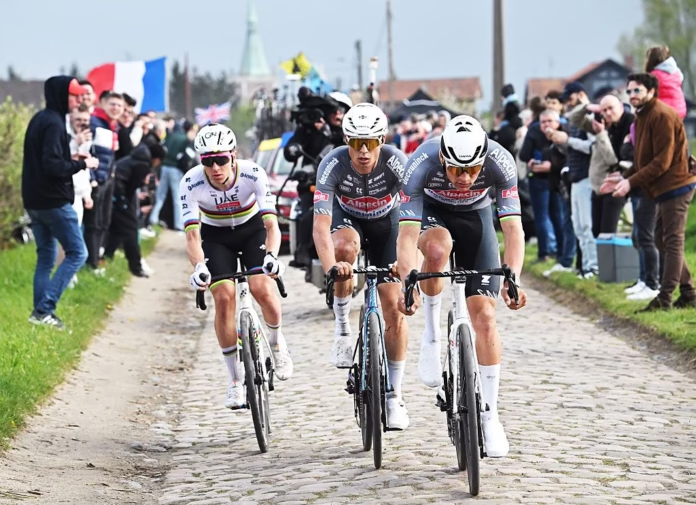
Paris-Roubaix 2026 keeps the same broad identity as ever – a long run from Compiègne to the Roubaix velodrome, 30 cobbled sectors and 54.8km of pavé spread across 258.3km of racing. Yet this year’s route has been adjusted in a way that could make the race harder, and more selective, much earlier in the day.
What has changed on the 2026 route?
The key change comes before the race reaches its most famous sectors. Organisers have reworked the opening cobbled sequence by shifting slightly east towards Briastre, creating a denser early run of sectors with less road in between. That should make the opening part of the pavé feel more relentless than in some recent editions.
There is another important twist too. Sector 26 is back on the route, a more rarely used stretch that includes an 800m climb. On paper, that may not look like much compared with the race’s most iconic sectors, but placed early in the cobbled sequence, it adds another point of stress, another place for riders to be caught out, and another reason why the race may start thinning earlier than usual.
That is the main difference in 2026. The finish remains familiar, but the road into the heart of the race looks more aggressive.
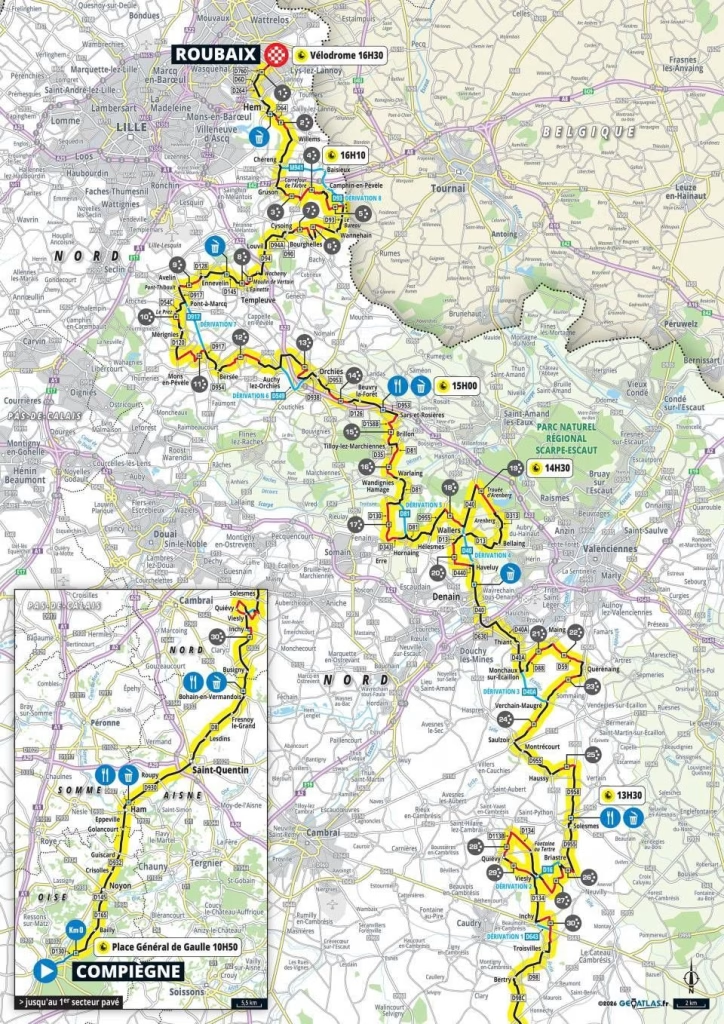
How the route is structured
As always, the men’s race begins in Compiègne and heads north towards Roubaix. The opening kilometres are about tension and positioning rather than outright selection, but once the first cobbles arrive in Troisvilles, the character of the race changes completely.
From there, Paris-Roubaix follows its usual logic. The early sectors soften and sort the field. The middle phase increases the pressure and forces teams to start making harder choices. The final sequence then decides whether the winner comes from a solo move, a tiny surviving group or one last split among the strongest favourites.
That structure is still intact in 2026. What has changed is that the early cobbled phase now looks less forgiving, which should make the journey to the famous late sectors even more demanding.
Why the early changes could be significant
Paris-Roubaix is always a race where positioning matters almost as much as strength. When sectors arrive in quicker succession, there is less time to reset, less time to move back up, and fewer chances for dropped riders or isolated leaders to repair the damage.
That could shape the race in several ways. Teams may feel pressure to commit earlier rather than treating the first half of the cobbles as a holding pattern before Arenberg. Riders who are even slightly out of position may find themselves spending far more energy just trying to stay in touch. Stronger teams with depth may also be able to apply pressure sooner, knowing the route gives fewer recovery windows.
So while Paris-Roubaix 2026 is not a complete redesign, it does look like a version of the race that invites earlier selection.
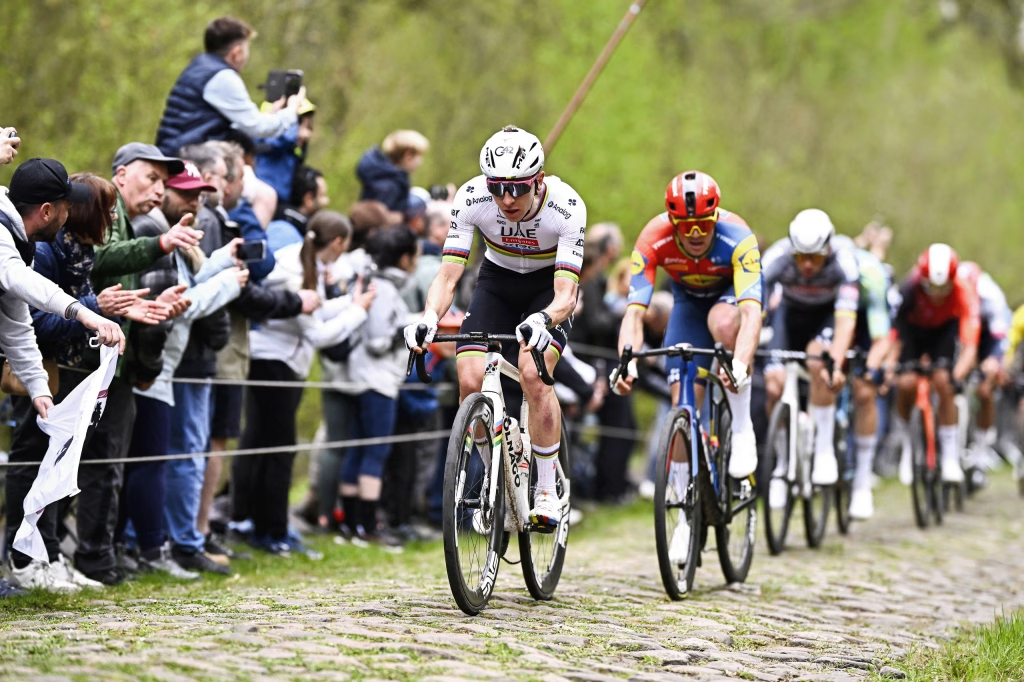 Photo Credit: Getty
The sectors that still define Paris-Roubaix
Even with those changes, the decisive landmarks remain the same. Trouée d’Arenberg is still the first of the three five-star sectors and remains the point where the race usually shifts from very hard to genuinely destructive. It is not always where the winning move goes, but it is often where the number of realistic contenders drops sharply.
Mons-en-Pévèle remains another central point in the race. Coming late enough that fatigue is already everywhere, but early enough that there is still room to attack and force a selection, it is one of the places where the strongest riders can start to separate themselves from those who have simply survived.
Then comes Carrefour de l’Arbre, still the final five-star sector and still one of the most important stretches of road in the entire spring. By the time the race reaches it, the winner is usually already among a very small group. If there is still more than one contender left together, Carrefour often becomes the last proper chance to win the race on strength before tactics, survival and the velodrome finish take over.
How the finale still works
For all the route changes earlier in the day, the final architecture of Paris-Roubaix remains one of the most recognisable in cycling. The last 20 sectors are unchanged from last year, which means the famous late-race sequence still carries the same rhythm and the same pressure points.
That continuity matters because Paris-Roubaix is a race with its own geography of expectation. Riders, teams and fans all know what Arenberg means. They know the significance of Mons-en-Pévèle. They know how often Carrefour de l’Arbre acts as the final major launchpad before Roubaix. Keeping that closing shape intact preserves the core identity of the race, even as the organisers make the lead-in more severe.
-
 Photo Credit: Flavia Ossola
What sort of race should this create?
The most likely effect of the 2026 route is not that Paris-Roubaix becomes a different race, but that it becomes a harsher version of itself. The famous sectors are still where the race will probably be won, but the road to those sectors now looks tighter, more draining and more likely to fracture the bunch earlier.
That should suit teams willing to race aggressively before the obvious flashpoints, especially squads with multiple strong cobbled riders who can keep the pressure on from one sector to the next. It may also make the race feel less controllable overall, because every earlier split increases the chance of key riders becoming isolated sooner than expected.
For viewers, that should make the race more tense even before it reaches its most famous roads. The selection may already be underway long before Arenberg.
 Photo Credit: Getty
Why the route still feels like Paris-Roubaix
Even with the new early sequence, this is still unmistakably Paris-Roubaix. The route still builds from long approach roads into a brutal chain of pavé. It still revolves around survival, timing, positioning and bike handling as much as pure legs. And it still ends where every rider dreams of arriving first, on the Roubaix velodrome.
That is the real strength of the 2026 route. It sharpens the race without changing its soul.
If you are following the wider cobbled season on ProCyclingUK, this guide sits naturally alongside the Paris-Roubaix Femmes 2026 route and cobbled sectors guide, the How to watch Ronde van Vlaanderen 2026 in the UK, the E3 Saxo Classic 2026 team-by-team guide, and the Men’s Dwars door Vlaanderen 2026 team-by-team guide.

