
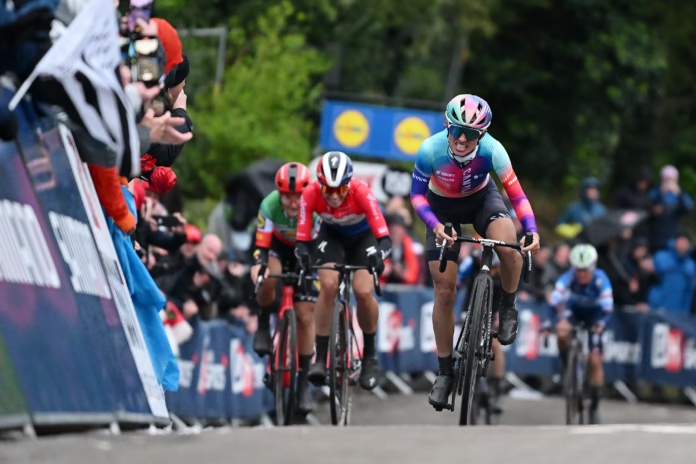
La Flèche Wallonne Femmes has become one of the defining races of the women’s spring, even if it arrived later than some of the sport’s other major one-day events. First held in 1998, it is the longest-running women’s Ardennes Classic and, for many years, it carried that entire part of the calendar on its own. Long before women had a full modern Ardennes week to race, La Flèche Wallonne Femmes was already there, giving climbers, puncheurs and explosive all-rounders a major target in the Belgian spring. That is why it still holds an important place in women’s cycling history.
For a long time, the race occupied a slightly unusual place in the calendar. It was important in its own right, but it did not yet sit inside the kind of fully developed women’s Ardennes block that now feels familiar. That only really changed in 2017, when Liège-Bastogne-Liège Femmes returned and women’s Amstel Gold Race also came back, finally creating a true Ardennes sequence around La Flèche Wallonne Féminine. By that stage, Flèche had already built nearly two decades of history of its own.
How the race began
The inaugural edition was won by Fabiana Luperini in 1998, and that first result set an early tone. This was a race that would favour riders with real climbing punch rather than pure sprinters or riders relying only on endurance. In those early years, La Flèche Wallonne Femmes stood out partly because it existed at all. It gave the women’s peloton a version of one of the men’s most recognisable spring races and helped establish a high-level benchmark for uphill one-day racing.
That role matters in historical terms. Before the women’s calendar gained more depth across the spring, races such as this were doing much of the work in building prestige and continuity. La Flèche Wallonne Femmes was not an accessory to the men’s race. It was one of the events helping to prove that women’s one-day racing could build its own identity around terrain, tradition and specialist skillsets.
 Photo Credit: Getty
How the race built its identity
More than most one-day races, La Flèche Wallonne Femmes became tied to one decisive location: the Mur de Huy. That final climb has shaped the race’s identity so strongly that the broader route often feels like a long prelude to one concentrated act of damage. Riders still need to survive the earlier climbs, stay well-positioned and read the race correctly, but the Mur has repeatedly turned the event into the purest test of explosive climbing strength in the women’s spring.
That is one reason the winners’ list is so revealing. This is not a race that flatters the merely durable. It tends to reward riders who can absorb repeated pressure and still produce one decisive acceleration at the steepest moment. Over time, that has made La Flèche Wallonne Femmes one of the clearest markers of who truly owns the Ardennes terrain in any given era.
The great champions of La Flèche Wallonne Femmes
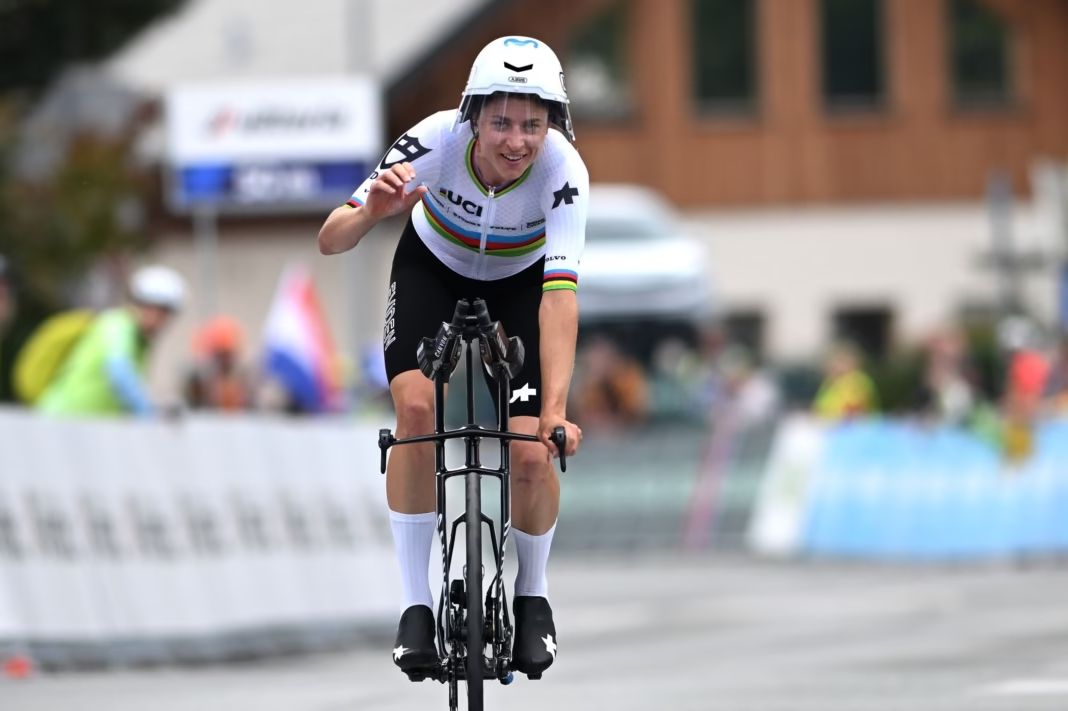
The race has been dominated by some of the strongest one-day riders in women’s cycling history. Marianne Vos won five times between 2007 and 2013, which for a while made her the defining rider in the event’s history. Her blend of climbing punch and finishing speed made her especially well-suited to the Mur de Huy finish, and her record helped establish the race as one of the major prizes of the spring.
Then came Anna van der Breggen, who took that dominance to another level. From 2015 to 2021, she won the race seven years in a row, which remains one of the most extraordinary streaks in any major one-day event. That run effectively made La Flèche Wallonne Femmes her race, and it also underlined just how completely she came to define the Ardennes in her prime.
Other major names have also left a clear mark. Nicole Cooke and Fabiana Luperini each won the race three times, while more recent winners such as Marta Cavalli, Demi Vollering, Kasia Niewiadoma and Puck Pieterse show how the race continues to sit at the centre of the women’s one-day spring. It remains one of the fastest ways to identify which riders can combine climbing explosiveness with the tactical control needed for the Ardennes.
-
 Photo Credit: A.S.O./Billy Ceusters

Why the race still matters
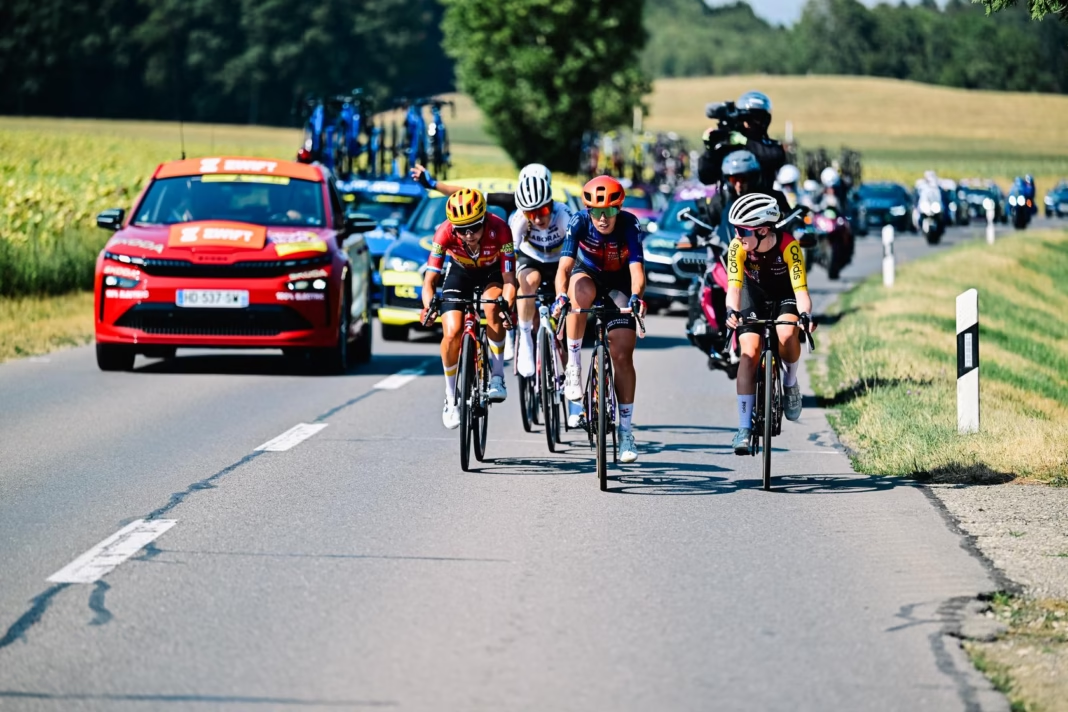
La Flèche Wallonne Femmes matters because it has managed to remain both traditional and highly specific. It is not the broadest test of the spring, because races such as Liège-Bastogne-Liège Femmes ask more complete questions over a longer day. But that is part of its strength. Flèche has a very clear character, and riders know exactly what is waiting for them. The challenge is simple to describe and very hard to master: arrive at the Mur de Huy with enough left to win.
It also matters historically because it was there before the women’s Ardennes week had fully taken shape. In that sense, La Flèche Wallonne Femmes helped hold open the door for the broader expansion of women’s spring racing. It gave the calendar continuity, built prestige gradually and became one of the races that later growth could build around rather than replace.
A race that defines the Ardennes
Today, La Flèche Wallonne Femmes sits as one of the most recognisable one-day races in women’s cycling. Its history is not as long as some of the sport’s oldest events, but its identity is unusually strong. From Luperini’s opening win in 1998 through the eras of Vos and Van der Breggen to the newer generation now fighting for the Mur, the race has consistently rewarded the riders best able to combine judgement, patience and one decisive act of climbing power.
That is why it still carries so much weight. It is not just another stop in the Ardennes week. It is one of the races that helped define what that week could mean in women’s cycling.

