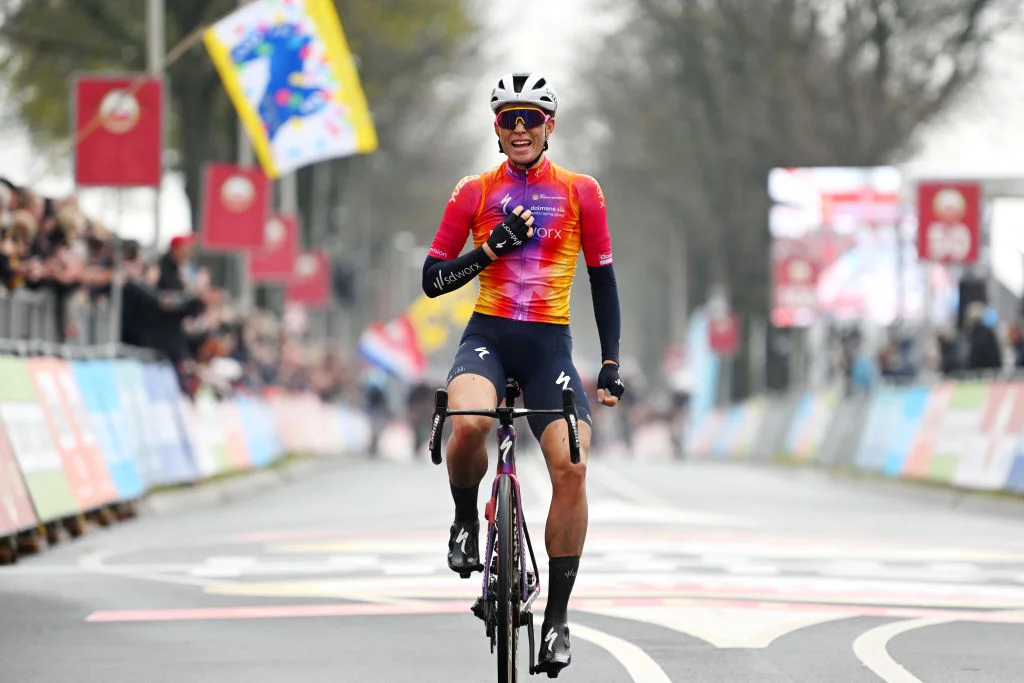
Amstel Gold Race Women 2026 takes place on Sunday 19th April and the route keeps the race rooted in the South Limburg terrain that has made it one of the sharpest tests of the women’s spring. At 158km with 22 climbs, it is not the longest race on the calendar, but it rarely feels short once the repeated hills and constant changes of rhythm start to take effect.
That is part of what makes Amstel Gold Race Women so distinctive. This is not a race built around one huge summit finish or one famous cobbled sector. Instead, it works through accumulation. The roads rise and fall almost constantly, positioning matters for most of the day, and the strongest riders are usually funnelled towards a selective finish around Valkenburg. For the wider context around where this race sits in the calendar, ProCyclingUK’s guide to the most important women’s cycling races and history of the Amstel Gold Race Women are the natural companion reads.
From Maastricht into the Limburg hills
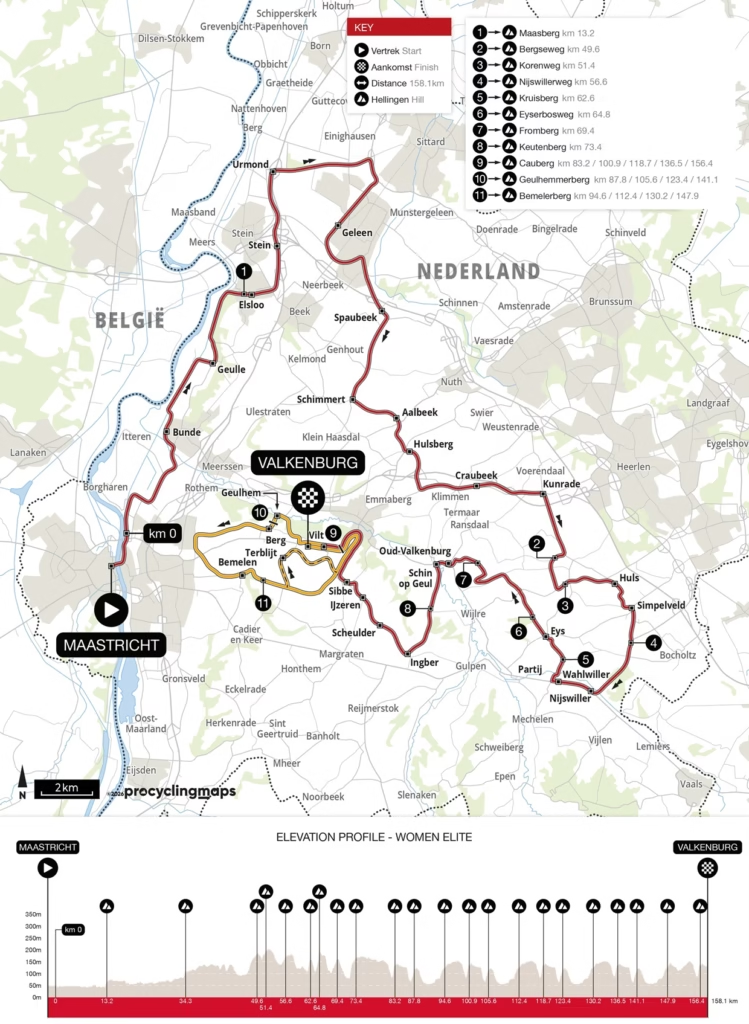
The race starts in Maastricht and heads into the rolling Limburg roads almost immediately. The opening climb is the Maasberg, and the first half of the route also includes familiar roads such as the Kruisberg, Eyserbosweg, Fromberg and Keutenberg.
None of those climbs alone is expected to decide the race, but together they do the important early work of thinning the bunch, wearing down support riders and making the peloton smaller and more fragile before the final circuits begin. That is often how Amstel works at its best. It does not reveal everything too early, but it never really lets the field settle either.
The early part of the route matters because it shapes the race before the television narrative fully locks onto the finishing circuit. Teams still need to protect their leaders, judge how much control they want, and decide whether to start forcing the pace before the final loop takes over.
The local circuit is where the race really takes shape
The key structural feature of the 2026 route is the local circuit around Valkenburg, which the women complete four times. On each lap they tackle Geulhemmerberg, Bemelerberg and the Cauberg, and that repeated sequence is what gives the finale its identity.
This is where Amstel Gold Race Women starts to separate itself from the other major one-day races of the spring. The route does not ask for one single perfect effort. It asks for repeated sharp efforts, all delivered under pressure, after a day that has already been steadily wearing the field down.
The final ascent of the Cauberg comes just 1.7km before the finish, and that is a crucial detail. It makes the route more direct and more selective, because riders who attack there do not have to survive a long chase afterwards. A strong move on the final Cauberg has a far better chance of becoming the winning move than it would on a route where the decisive climb sits much further from the line.
That should make the race more aggressive late on. There is still room for a small-group finish if several favourites cancel one another out, but the route no longer gives a larger chasing group much time to reorganise after the last major effort.

Why the Cauberg still matters so much
Amstel Gold Race has used different finish concepts over the years, but the Cauberg remains the climb that gives the race its clearest identity. In the women’s route it appears repeatedly within the final circuit and then returns one final time just before the finish.
That repeated exposure matters because the climb does not only reward one explosive effort. It gradually magnifies fatigue. Riders who look comfortable on the first or second passage may not have the same snap by the fourth or fifth encounter with that stretch of road.
This is one of the reasons the race tends to suit complete riders rather than one-dimensional specialists. Pure sprinters often struggle to survive the repeated climbing. Pure climbers do not always gain enough advantage because the efforts are short and violent rather than sustained. The sweet spot is usually riders who can handle sharp uphill efforts, descend and position well, and still think clearly when the race starts to fragment late on.
That is the classic Amstel profile, and it is one reason this race often works as such a good bridge between the cobbled classics and the harder Ardennes tests to come.
Geulhemmerberg and Bemelerberg matter more than they first seem
The Cauberg naturally takes most of the attention, but Geulhemmerberg and Bemelerberg are central to how the race actually unfolds. Because they are repeated within the final circuit, they soften the field before the final Cauberg and stop the finale from becoming too simple.
A rider who wastes too much energy before the last climb may still find herself in trouble even if the headline move comes later. That is one of the strengths of the route. The selection does not usually happen in one neat, obvious moment. Instead, the race chips away at the field until only the strongest and most resilient riders are left in realistic contention.
That is why Amstel Gold Race Women can often feel attritional rather than theatrical, and that is a good thing. The difficulty is layered. The route keeps asking questions until the riders who are best equipped to answer them remain.
Keutenberg as the early warning sign
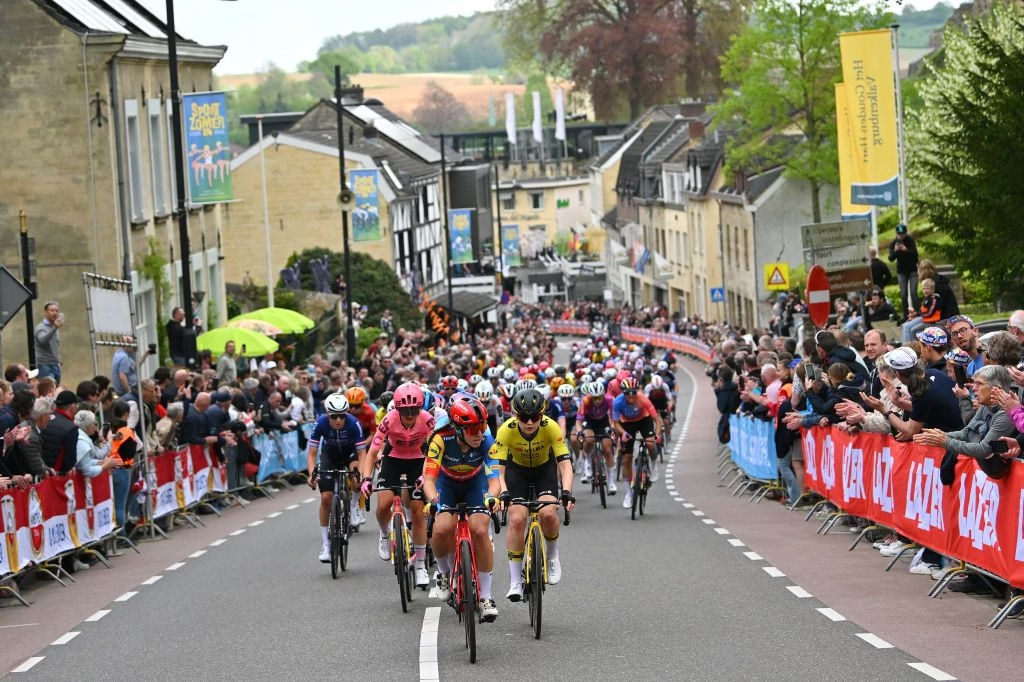
Among the earlier climbs, Keutenberg remains one of the most important markers on the route. It arrives well before the final laps fully take control of the race, but it is steep enough and awkward enough to reveal who is already under pressure.
In a race like this, that matters. A rider in difficulty on Keutenberg is usually not about to improve once the repeated circuit starts to apply even more pressure through Valkenburg. The climb often acts as an early signal of who is really comfortable and who is already riding on borrowed time.
That helps make the route feel progressive rather than sudden. The race builds. It does not simply explode from nowhere. There is normally a sequence where the strongest teams start increasing the tension, the support riders begin to disappear, the field grows thinner, and the closing circuit decides which of the surviving leaders can still finish the job.
What kind of race should this produce?
On paper, the 2026 route points towards either a late solo move or a reduced-group finish rather than a full bunch sprint. The repeated local laps, the 22 climbs overall, and the final Cauberg sitting so close to the line all favour riders who can attack or sustain a high pace late rather than riders hoping to be delivered to the finish from a large group.
That does not guarantee a solo winner. Amstel Gold Race Women still leaves room for tactical hesitation, and if several favourites are closely matched there is always the chance of a small lead group arriving together. But even that sort of finish is usually selective. The route is designed to reward toughness, punch and repeated accelerations rather than passive waiting.
This is why the race often produces such strong editions. The route can support several different race scenarios, but all of them still feel true to the same identity.
Why this route works so well for the women’s race
One of the strengths of the Amstel Gold Race Women route is that it feels demanding without becoming overcomplicated. The structure is easy enough to understand – an attritional opening half, then repeated laps around Valkenburg – but still hard enough to produce several plausible race scenarios.
Strong teams can apply pressure early. Puncheurs can wait for the circuit. Fast finishers who climb well can still believe in a reduced sprint. That flexibility is what makes the race so compelling. It sits between the northern Classics and the harder Ardennes races, and the route reflects that identity perfectly.
It is hillier and more technical than a cobbled sprint classic, but less about one final wall than La Flèche Wallonne. ProCyclingUK’s Brabantse Pijl Women 2026 route guide is a good companion read here because that race often works as a bridge into the same puncheur-heavy part of the season.

Final thoughts on the Amstel Gold Race Women 2026 route
The 2026 route keeps everything that usually makes Amstel Gold Race Women work. It starts in Maastricht, builds through the Limburg hills, and then sharpens through repeated laps featuring Geulhemmerberg, Bemelerberg and Cauberg, with the final Cauberg cresting just 1.7km before the finish.
That gives the race a very clear identity. It should reward riders who can handle constant changes of rhythm, stay well-positioned all day, and still produce one decisive effort when the race reaches its sharpest point.
In other words, exactly the type of rider Amstel Gold Race Women has always been best at revealing.