
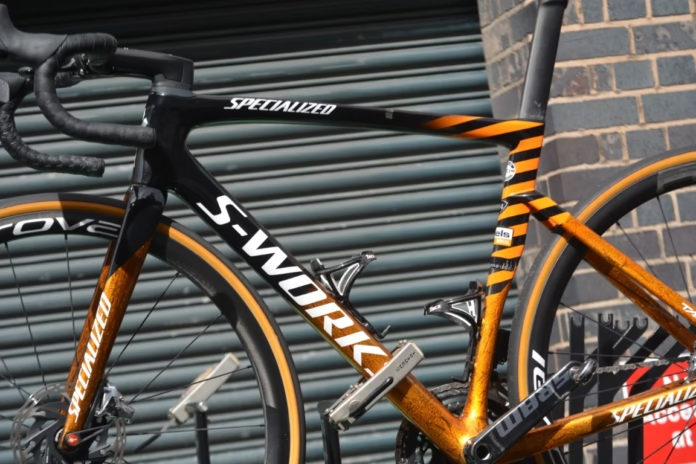
Boels-Dolmans did not just win races. It helped redefine what sustained excellence could look like in women’s cycling before the current SD Worx era ever began. Between 2012 and 2020, the Dutch squad grew from an ambitious project backed by Dolmans Landscaping and Boels Rental into the reference point for the women’s peloton, collecting many of the sport’s biggest one-day and stage-race results and setting the standards that others then had to chase.
That rise did not happen overnight. The team was founded in 2010 as Dolmans Landscaping Team, with Boels Rental joining as title sponsor from 2012. By the end of the decade, it had become the number one women’s team in the world, built around a Dutch core, clever recruitment, deep tactical discipline and an ability to turn individual stars into collective control. The later SD Worx chapter deserves to be treated separately, but the foundation of that modern powerhouse was laid during the Boels-Dolmans years.
For readers interested in the wider context around the races that helped shape the team’s legacy, ProCyclingUK’s history of the Tour of Flanders Women, history of La Flèche Wallonne Femmes and history of the Amstel Gold Race Women help show just how central Boels-Dolmans became to the biggest events on the calendar.

The early build – from Dutch project to serious contender
The roots of the team sat in a fairly modest place compared with what came later. Dolmans had backed the team from its inception, and Boels came in from the 2012 season. That matters because the identity of the team was already clear before the superteam label arrived – independent, Dutch-based, and built with long-term backing rather than short-lived sponsorship cycles.
The early breakthrough phase came in 2014. Ellen van Dijk joined after her years with Specialized-Lululemon, adding proven time trial power and leadership, while Lizzie Armitstead gave the squad a rider who could win the biggest one-day races. That season, Armitstead won Ronde van Drenthe and Van Dijk took the Tour of Flanders after a long solo attack, two results that gave Boels-Dolmans far more visibility on the sport’s biggest days.
This was the point where the team started to look less like a promising Dutch set-up and more like a squad capable of shaping the major races. It still was not yet the undisputed force it would become, but the framework was there – strong Classics riders, serious time trial depth, and a management structure under Danny Stam that increasingly knew exactly what sort of team it wanted to build.
-
 Photo Credit: Getty
2015 and 2016 – when the team moved from strong to dominant
If the early years established credibility, 2015 and especially 2016 turned Boels-Dolmans into the team everyone else had to race around. The symbolic moment of 2015 was Lizzie Armitstead winning the World Championships road race in Richmond after already taking the Women’s World Cup title, giving Boels-Dolmans its first women’s world road champion and a global headline rider in the one-day races.
Then came 2016, the season when the team’s dominance became difficult to argue against. This was the year Boels-Dolmans moved from being a top team to being the benchmark. Armitstead won Strade Bianche and the Tour of Flanders. Megan Guarnier took the Giro Rosa overall. The squad also claimed the team time trial world title in Doha.
That 2016 team had depth in every direction. It could win through climbing, sprinting, time trialling or pure one-day aggression. This is where the superteam reputation really began to stick, because rivals were no longer facing one exceptional rider. They were facing a roster built to control multiple race types across the season.
For readers wanting the broader setting of those races, ProCyclingUK’s brief history of the Giro d’Italia Women and history of Strade Bianche Women give useful background on two of the biggest events Boels-Dolmans conquered during that phase.

Anna van der Breggen changed the ceiling
Boels-Dolmans was already elite before Anna van der Breggen arrived for 2017, but her signing raised the team’s ceiling again. She joined after already winning the Giro Rosa, La Course and multiple editions of La Flèche Wallonne, and immediately became the rider through whom the team could dominate the toughest races on the calendar.
Her impact was immediate. In 2017 she produced one of the defining campaigns in modern women’s cycling, winning Amstel Gold Race, La Flèche Wallonne and Liège-Bastogne-Liège in the same week – the Ardennes triple. It remains one of the sport’s great one-week statements and one of the clearest examples of Boels-Dolmans turning a strong team into a ruthlessly effective one.
What made Boels-Dolmans so hard to beat in those years was not just that Van der Breggen won. It was how the team built races around her. They could soften the field before the decisive climbs, place multiple riders in key groups, and still leave Van der Breggen with the final, most dangerous move. The team did not simply collect stars. It learned how to turn those stars into structure.
That period also helps explain why Boels-Dolmans became so tightly associated with the Ardennes. The team’s ability to control races such as La Flèche Wallonne Femmes, Amstel Gold Race Women and Liège-Bastogne-Liège Femmes gave it a very particular identity – clinical, repeatable, and built for the hardest one-day terrain.
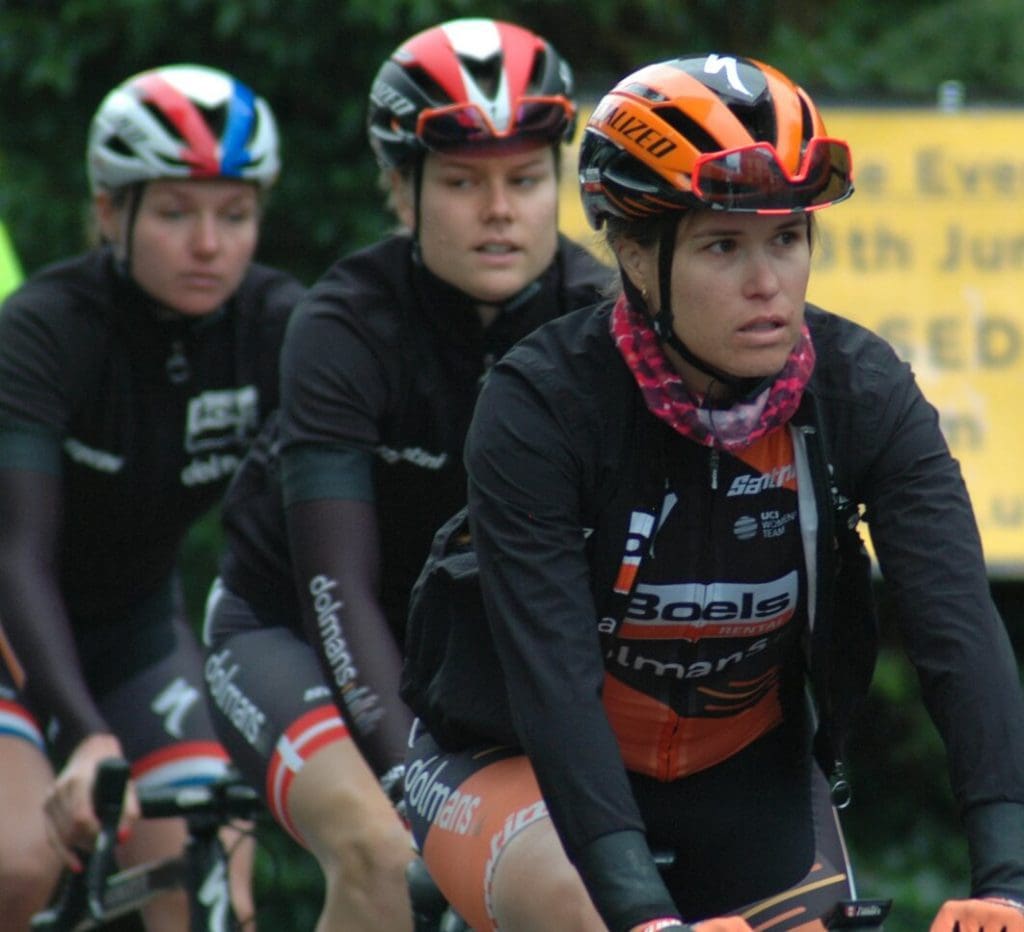
A team of stars, but also a team of roles
One reason the Boels-Dolmans era stands out is that it was never only about a single leader. Van der Breggen became the team’s most emblematic rider, but the roster around her mattered just as much. Chantal van den Broek-Blaak gave the squad another major Classics force and a world champion. Amy Pieters added tactical intelligence and speed. Christine Majerus became one of the most reliable road captains in the peloton. Jolien D’Hoore, Karol-Ann Canuel, Amalie Dideriksen and others all filled important winning or support roles across different phases of the decade.
That depth is easy to underestimate in retrospect because the team won so often through headline riders. But the real strength of Boels-Dolmans was that it could approach races in layers. It had leaders for the major targets, lieutenants who could also win if needed, and enough internal clarity that the team rarely seemed tactically confused on the biggest days.
This was especially important in women’s cycling at that time, because the budget gap between the best and worst teams was often stark. Boels-Dolmans used its financial and organisational advantage well. It did not merely assemble talent. It professionalised the use of that talent.
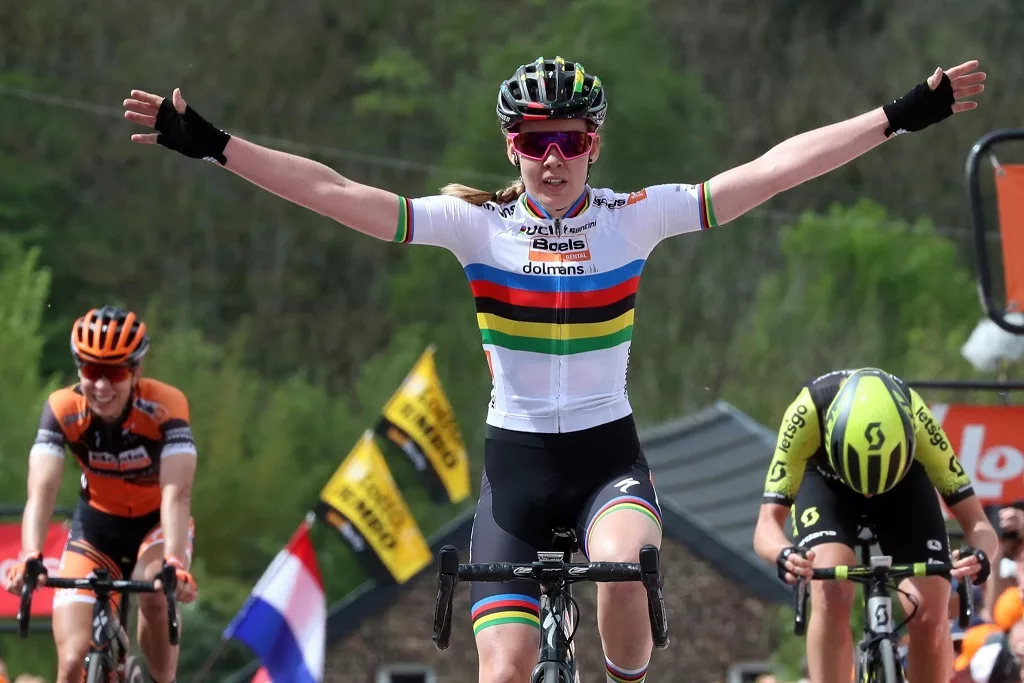
The run of WorldTour control
By the late 2010s, Boels-Dolmans had become the team that set the pace for the entire sport. It was not just winning often. It was winning across different terrains, different leaders and different parts of the calendar. That is what really turned a successful team into a superteam.
The word dominance gets overused in cycling, but it fits here. This was not simply a team with one great year. Boels-Dolmans sat at the top year after year, across changing calendars and evolving rivals. It won through Armitstead, Guarnier, Blaak and Van der Breggen, then kept adapting as the sport around it became more professional and more competitive.
That consistency is a major part of the team’s legacy. Plenty of women’s teams have had exceptional peaks. Boels-Dolmans had an era.
The defining wins of the era
A team history like this is really a chain of landmark victories. Armitstead’s Tour of Flanders win in 2016 was one. Guarnier’s Giro Rosa title that same year was another. Van der Breggen’s Ardennes triple in 2017 gave the team one of the sport’s great one-week statements. Her Tour of Flanders win in 2018 and Blaak’s in 2020 kept the team central to one of the biggest races on the calendar.
La Flèche Wallonne Féminine almost became the team’s private property in the late 2010s thanks to Van der Breggen. She won the race year after year in Boels-Dolmans colours, to the point where the team was no longer just collecting victories there but shaping the very history of the event.
There were also world titles that added to the aura. Armitstead’s 2015 road world title and the team time trial world championship in 2016 were especially important because they helped present Boels-Dolmans not just as a winning trade team, but as a squad that could define the elite level of the sport itself.
If you want the race-by-race backdrop to those successes, ProCyclingUK’s history features on Tour of Flanders Women, La Flèche Wallonne Femmes and Liège-Bastogne-Liège Femmes show just how often Boels-Dolmans were not just present but decisive.
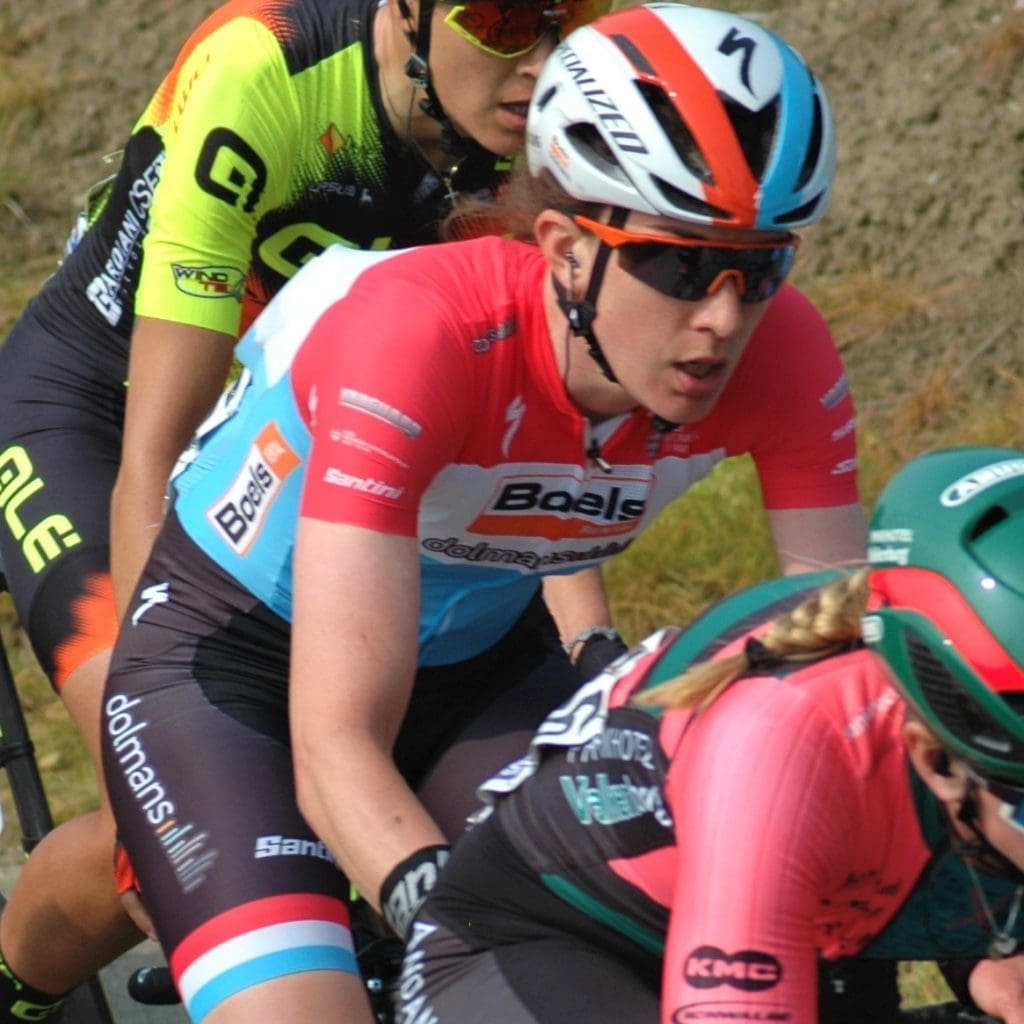
Why the team mattered beyond results
Boels-Dolmans rose in an era when women’s cycling still lacked much of the financial depth, media visibility and institutional support it now enjoys. In that context, the team mattered beyond its palmarès. It proved that an independent women’s team, not attached to a men’s WorldTour structure, could become the benchmark in the sport.
That independence was part of the team’s identity. Danny Stam repeatedly stressed the desire to keep the programme standing on its own terms, and when Boels Rental and Dolmans announced in 2019 that they would end their title sponsorship after 2020, Stam made it clear that he intended to continue building the project rather than folding it into someone else’s structure.
In other words, the Boels-Dolmans story is not only about domination. It is also about sustainability. The team showed that long-term backing, strong management and rider development could create something durable in women’s cycling at a time when that still felt far from guaranteed.
For a wider sense of how the sport around it was changing, ProCyclingUK’s guide to the Women’s WorldTour races, teams and points helps place Boels-Dolmans within the broader professionalisation of women’s cycling.
The end of the Boels-Dolmans name
The Boels-Dolmans era began to close in 2019, when it was announced that Boels Rental and Dolmans would end their title sponsorship at the end of 2020. That did not mean the end of the team, but it did mark the approaching end of the name that had become synonymous with women’s cycling excellence.
The key point is that the current powerhouse did not appear from nowhere once the next sponsor arrived. It inherited a structure, a culture and a set of competitive habits built painstakingly during the Boels-Dolmans years. That is why this period matters on its own. It was not merely a prelude. It was the rise.
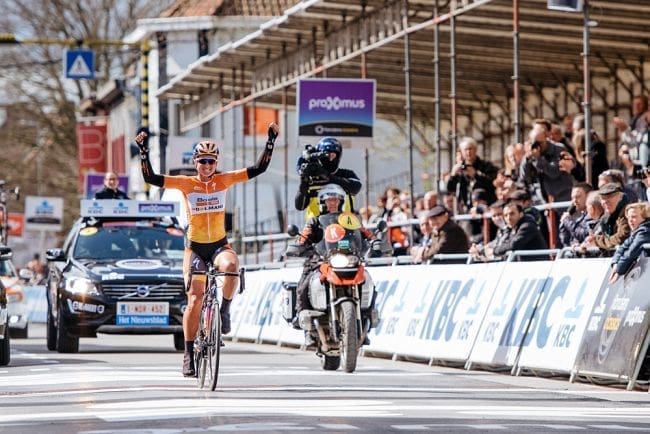
The Boels-Dolmans legacy
The simplest way to describe Boels-Dolmans is that it became the model others had to chase. It won the biggest one-day races, won stage races, topped the rankings, nurtured champions and stayed at the front for long enough that its dominance began to feel normal. That last part is perhaps the clearest sign of how strong it really was. By the end, seeing Boels-Dolmans control a race no longer surprised anyone.
That is why its history still matters now. The later era may have extended and modernised the dynasty, but the rise into a genuine women’s cycling superteam happened earlier. It happened when a Dutch independent team learned not only how to attract the sport’s best riders, but how to make winning repeatable.
In that sense, Boels-Dolmans was not just one of the great teams in women’s cycling history. It was the team that showed what a women’s cycling superteam could actually look like.

