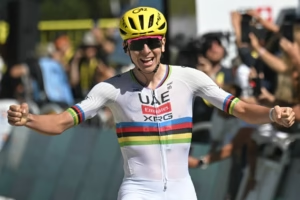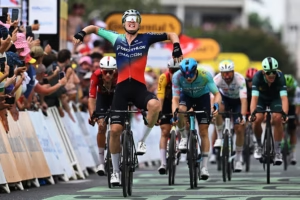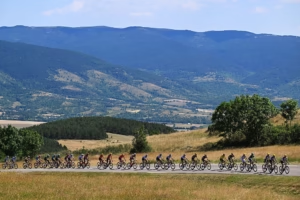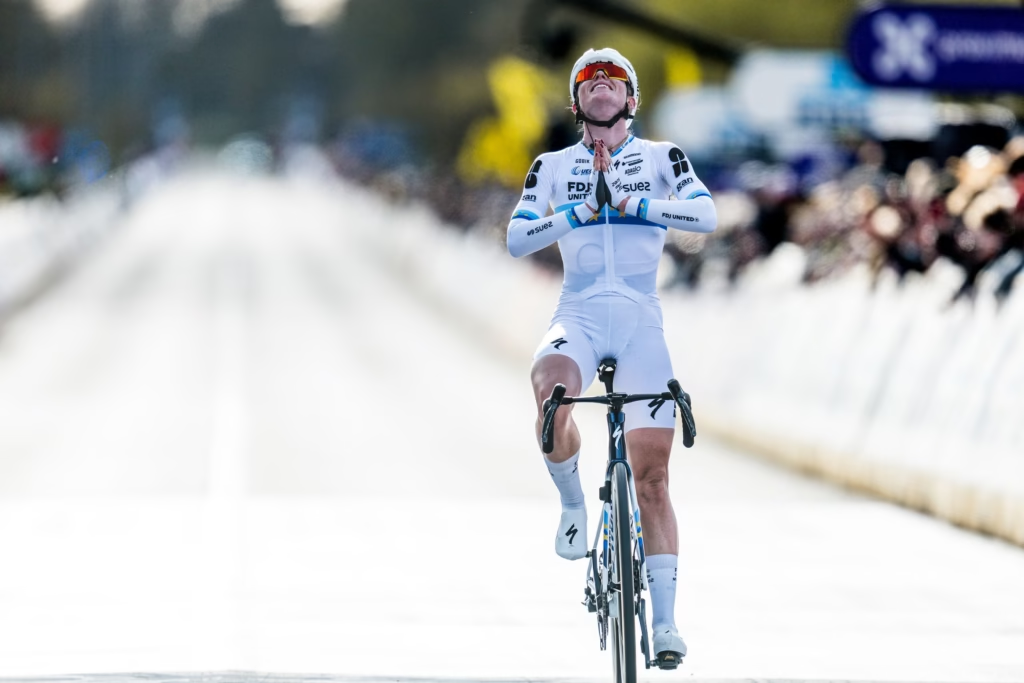
Tour of Flanders Women 2026 did more than give Demi Vollering her first win in Oudenaarde. It changed the tone of the spring again. Her solo move on the Oude Kwaremont with around 18km to go was decisive enough to settle the race, and the result left Pauline Ferrand-Prévot and Puck Pieterse chasing for the minor places while Lotte Kopecky was forced onto the back foot.
That matters because Tour of Flanders is never just another result on the calendar. It is one of the races that tells you whether a rider is merely in form or genuinely controlling the biggest part of the spring. Vollering now moves into that second category. She had already looked strong at Dwars door Vlaanderen, where she finished second to Marlen Reusser after an aggressive return from altitude, but in Flanders she turned that form into the sort of Monument-level statement that shifts how everyone else has to race her.
If you want the broader race context around the result itself, ProCyclingUK’s Tour of Flanders Women 2026 live viewing and start time update, Tour of Flanders Women 2026 contenders preview and Which big names aren’t racing the women’s Tour of Flanders, and why? are the natural companion reads.
Demi Vollering has re-established herself as the spring reference point
The clearest conclusion from Tour of Flanders Women 2026 is that Vollering is once again the rider setting the standard in the biggest one-day races. This was her first Tour of Flanders title, secured with a race-winning acceleration on the Oude Kwaremont, and it came after a week in which she had already shown top form at Dwars door Vlaanderen.
That combination is important. Winning Flanders is one thing. Winning it after already signalling your level a few days earlier is something else. It suggests this is not a single exceptional day but part of a wider block of form. In practical terms, it means the rest of the peloton now heads into the next major races with Vollering as the clearest rider to beat rather than simply one of several co-favourites.
It also says something about the way she is winning. This was not a messy sprint or a tactical gift. It was a clean, forceful, route-shaped win on the race’s most important climb. That gives the performance extra weight, because it shows she can still take control in the most traditional, most prestigious sort of spring finale.
Pauline Ferrand-Prévot is no longer a surprise contender
Ferrand-Prévot finishing second again matters almost as much as Vollering winning. Before the race, there was already plenty of attention on her despite a very light road programme in 2026, built around altitude training rather than repeated race days. After Flanders, that status looks fully justified rather than speculative.
What this means for the season is fairly clear. Ferrand-Prévot is not just a rider who can appear fresh and perform in one specific race. She is now established as a genuine threat in the biggest Classics, even without a traditional build-up. Finishing second again also suggests that the gap between contender and favourite has closed completely. She may not have matched Vollering’s Kwaremont acceleration, but she was still the strongest of the chasers and good enough to confirm that her 2025 return to the road’s biggest one-day races was not a one-off.
That has consequences for every major spring race still to come. Teams can no longer assume that Ferrand-Prévot needs racing into form. She is clearly capable of arriving with a lighter programme and still being decisive at the very top end of the sport.
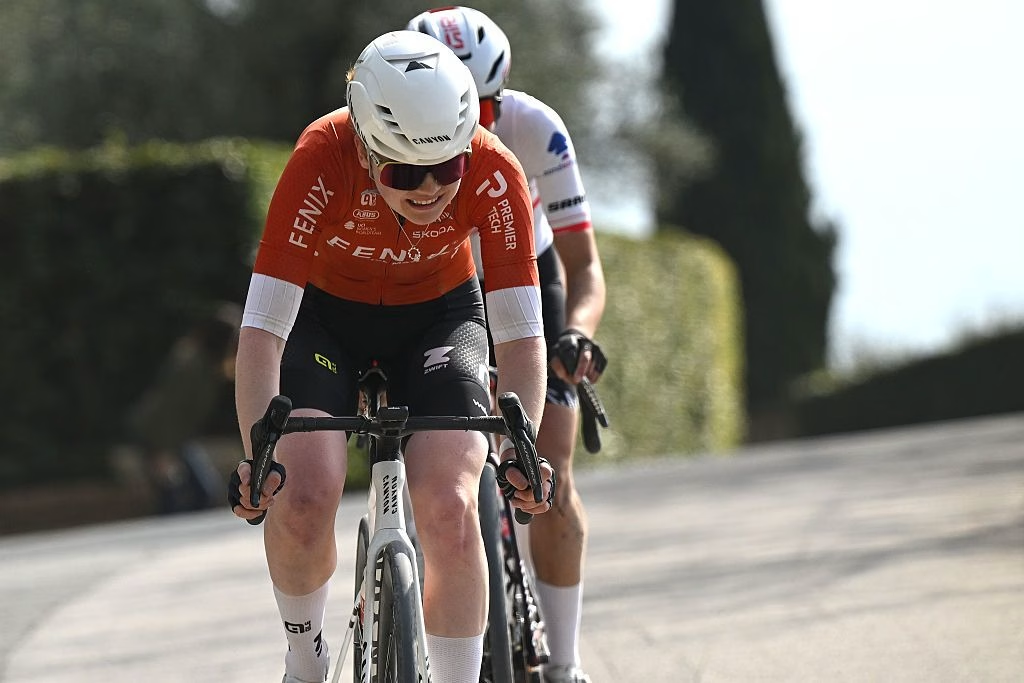 Photo Credit: Getty
Puck Pieterse has confirmed she belongs in this top bracket
Pieterse’s third place strengthens the sense that she is now fully embedded in the highest tier of spring contenders. She did not win, but she was still there in the decisive phase of one of the most selective races on the calendar and completed the podium behind only Vollering and Ferrand-Prévot.
That is significant because Flanders is not a race where a podium comes cheaply. It requires punch, positioning, composure and the ability to survive repeated race-shaping efforts. Pieterse being on the podium confirms that she is not merely a rider for one route type or one racing style. She is now a consistent danger in the biggest, hardest one-day races of the spring.
For the rest of the season, that means she increasingly belongs in any serious conversation about the hardest Classics and punchier stage-race finishes. She may not have had the decisive answer to Vollering, but she had more than enough to underline her place near the very top of the hierarchy.
Lotte Kopecky’s spring has become more complicated
Kopecky finishing fourth does not amount to a collapse, but it does alter the feel of her spring. She came into Flanders as the established queen of the cobbled races and a rider chasing another home-soil triumph. Instead, she was distanced from the podium battle and later pointed to the loss of Lorena Wiebes on the Koppenberg as a costly moment for the team.
The useful reading here is not that Kopecky is suddenly out of the picture. That would be too strong. The more accurate conclusion is that she no longer feels quite so inevitable in these races. Vollering has landed the bigger blow, Ferrand-Prévot has reinforced her level, and Kopecky now looks like a rider who still belongs in the elite group but no longer sits above it.
That could matter a great deal for the next races. Kopecky is still strong enough to win almost any Classic, but after Flanders the pressure shifts slightly. She is now the rider who has to answer rather than the rider everyone else is simply trying to contain.
FDJ United-SUEZ have strengthened their status in the biggest one-day races
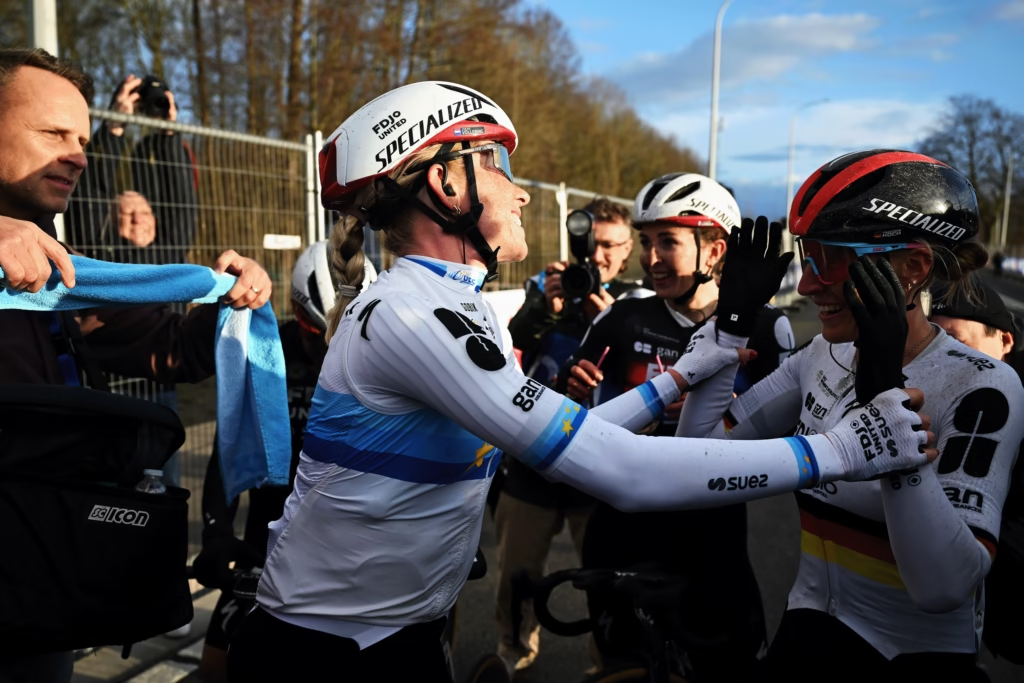
Vollering’s win also says something important about team power. Tour of Flanders was not won in isolation from the team around her. FDJ United-SUEZ helped drive the race harder before Vollering’s winning move, which points to a squad capable of shaping the race properly rather than simply protecting a favourite and hoping for the best.
That matters for the rest of the season because the strongest individual rider does not always win the biggest one-day races. Team execution still plays a major role. FDJ United-SUEZ now look like a team that can do both: bring the strongest finishing card and still structure the race in a way that amplifies her strengths. That is a worrying combination for everyone else.
The spring is now sharper at the top, but not settled
One of the most useful things Flanders has told us is that the spring hierarchy has become clearer without becoming fixed. Vollering is now the reference point. Ferrand-Prévot is firmly established just behind, or at least close enough to keep the pressure real. Pieterse has confirmed she belongs in the conversation, and Kopecky remains too strong to be pushed out of it despite losing this round.
That is why Tour of Flanders Women 2026 feels important for the season beyond the result itself. It did not close the spring down to one name, but it did narrow the lens. The biggest races now look more like contests between a smaller group of truly elite contenders, and Vollering has emerged from this one with the clearest authority.
What it means for the next major races
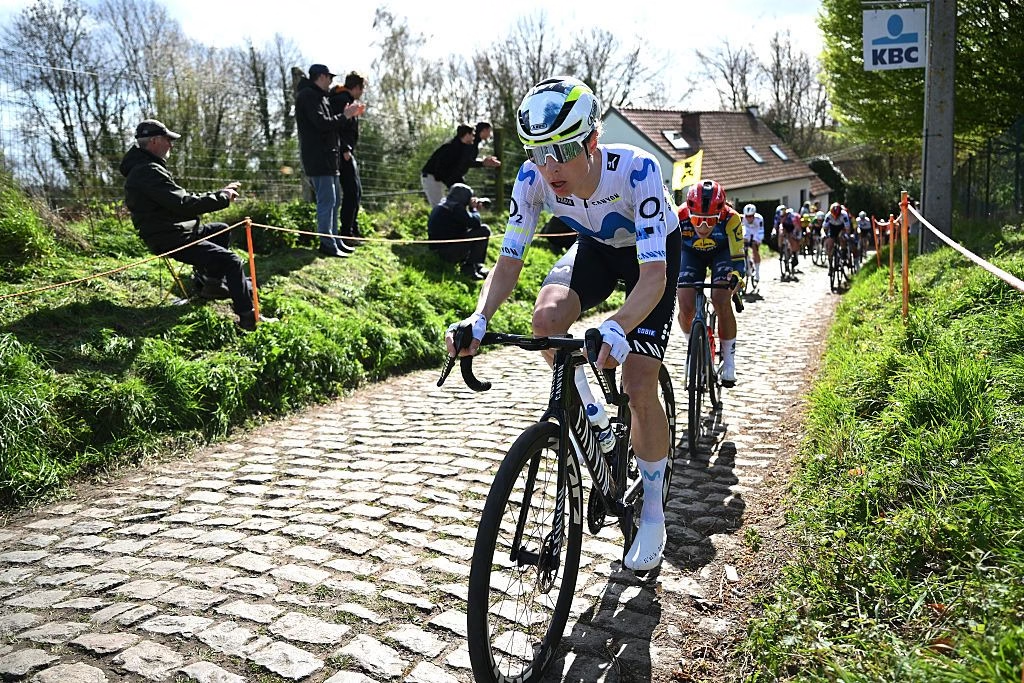
The immediate impact is on how the next block of Classics will be raced. Vollering now carries the strongest recent win in the sport’s hardest one-day terrain. Ferrand-Prévot has shown that she can match the biggest names deep into the final. Kopecky has reason to respond. Pieterse has every reason to keep racing aggressively. In other words, Flanders has made the next races harder to predict but easier to frame.
For readers following that progression through the spring, ProCyclingUK’s Brabantse Pijl Women 2026 route guide and Amstel Gold Race Women 2026 route guide are the natural next reads, because they help explain how the route demands now begin to shift even if the headline names remain similar.
Verdict
Tour of Flanders Women 2026 meant one thing more clearly than anything else: Demi Vollering is back in command of the spring’s biggest one-day conversation. Her solo win on the Oude Kwaremont gave her a first title in Oudenaarde and re-established her as the rider everyone else must now race around.
But the race also clarified the next layer beneath her. Ferrand-Prévot is fully established as a Monument-level threat, Pieterse continues to grow into one of the sport’s most reliable big-race performers, and Kopecky now has the task of answering rather than dictating. That does not settle the season. It sharpens it.