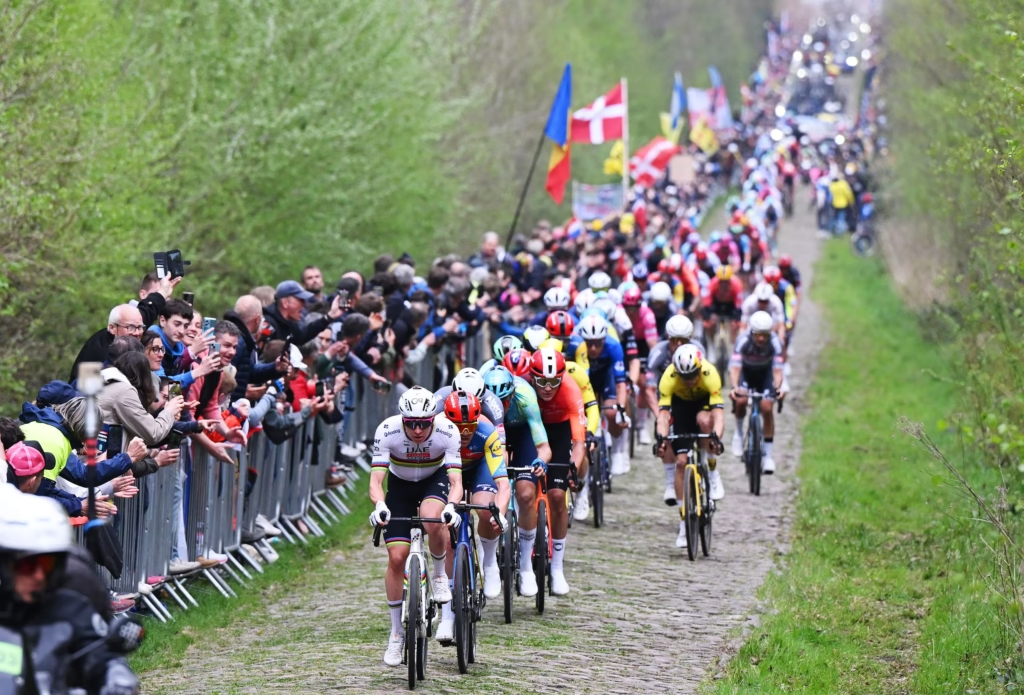
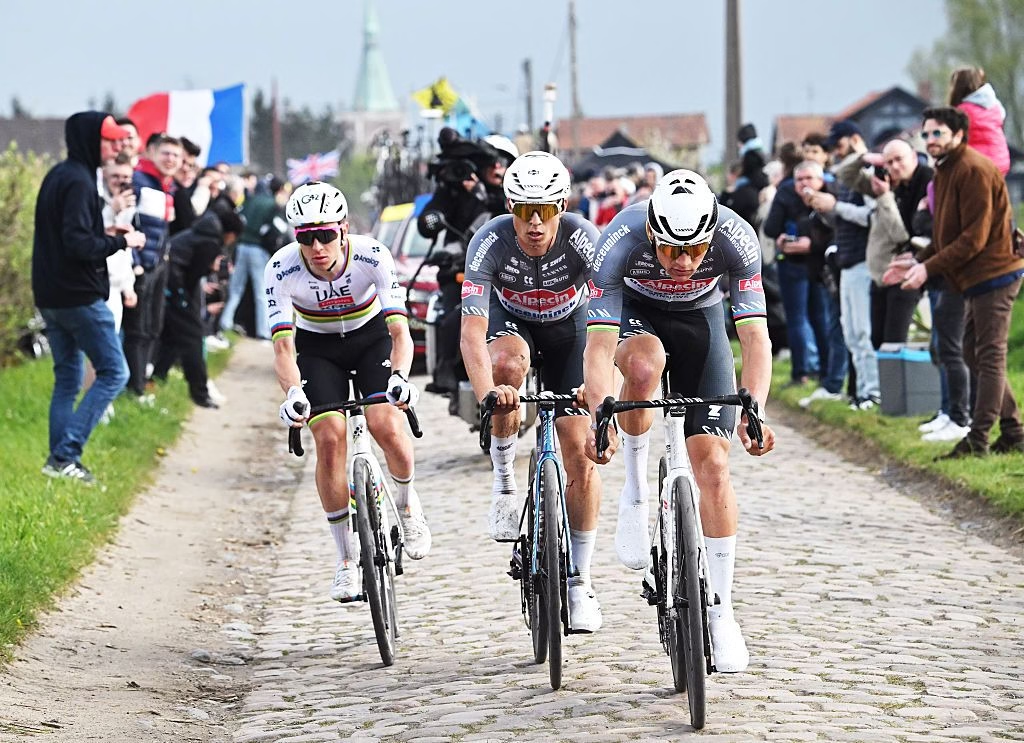
Paris-Roubaix always tempts people into over-simplifying the race. It is easy to frame it as Mathieu van der Poel versus Tadej Pogačar and stop there. That is understandable, because Van der Poel is chasing a fourth straight win and Pogačar arrives having already won Milano-Sanremo and the Tour of Flanders this spring. But Roubaix is rarely that neat. The 2026 route still runs 258.3km from Compiègne to Roubaix and includes 30 cobbled sectors totalling 54.8km, which means strength alone is never the full story. Positioning, punctures, timing and team depth all matter too.
For the wider race context, this sits naturally alongside ProCyclingUK’s Men’s Paris-Roubaix 2026 route and cobbled sectors guide, How to watch Paris-Roubaix 2026 in the UK, Men’s Paris-Roubaix 2026 team-by-team guide and A brief history of Paris-Roubaix.
 Photo Credit: Bernard Papon
Mathieu van der Poel starts as the obvious reference point
There is no sensible contenders preview that begins anywhere else. Van der Poel is the defending champion, he has won the last three editions, and he is trying to move level with the all-time record for victories in the race. He also has the most complete Paris-Roubaix skill set in the field: handling, power on flat cobbles, race instinct, and the kind of finishing speed that still matters if a small group somehow reaches the velodrome together.
What strengthens his case further is that Alpecin-Premier Tech do not need to race conservatively around him. Jasper Philipsen is on the start list again and has already finished runner-up here twice, which gives the team a second genuine winning card rather than just a back-up plan. That makes Van der Poel even harder to pin down tactically.
Tadej Pogačar is no longer an outsider experiment
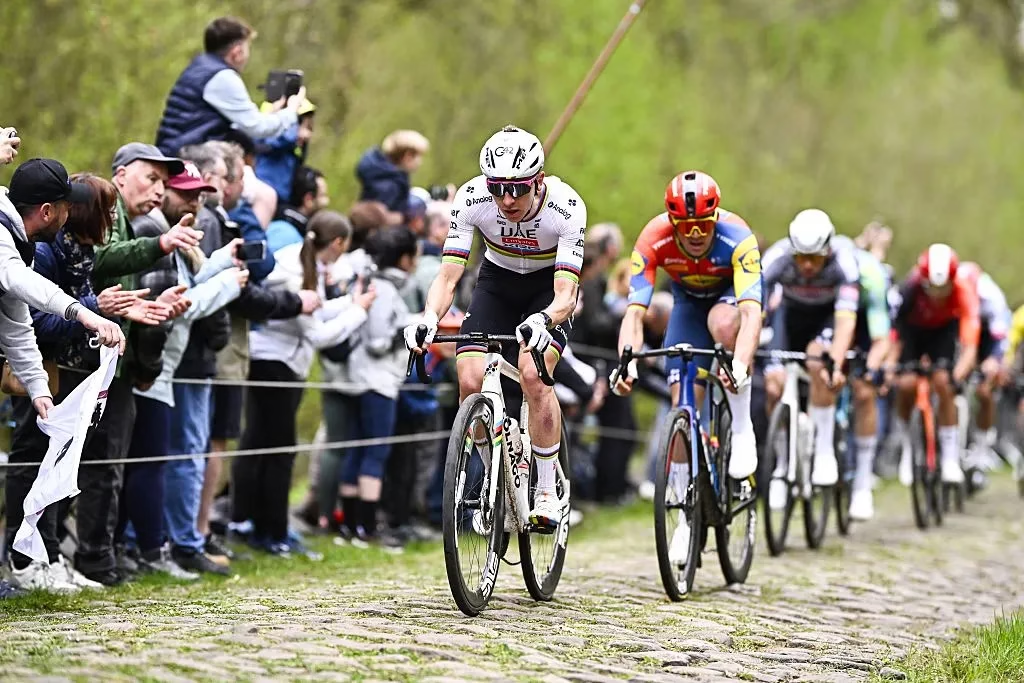
Last year’s debut settled that. Pogačar finished 2nd in 2025, and his 2026 spring has made the idea of him winning Paris-Roubaix feel even more realistic rather than less. He has already taken Milano-Sanremo and the Tour of Flanders this year, and Roubaix is now the only Monument missing from his palmarès.
The main question is not whether he belongs here. It is whether Roubaix gives enough value to his strengths to outweigh Van der Poel’s deeper familiarity with this exact challenge. Pogačar can clearly survive and attack on the cobbles, but this race is flatter, more mechanical, and often more rhythm-breaking than Flanders. If it becomes a pure test of stability and repeated positioning on sectors such as Mons-en-Pévèle and Carrefour de l’Arbre, Van der Poel still feels slightly more natural.
Even so, Pogačar has changed the terms of the debate. This is no longer a thought experiment or a novelty entry. He is one of the two defining men in the race. For more on how he has shaped the spring so far, What Men’s Ronde van Vlaanderen 2026 means for the season gives the broader picture.
Filippo Ganna looks like the strongest threat just behind the top two
If the race slips away from the headline duel, Ganna is the rider most likely to capitalise. Paris-Roubaix has always looked like the Monument best designed for his engine. The route is flat enough to reward sustained power, the cobbles do not punish his size, and if he gets a gap late he is one of the few riders in the field who can make it feel immediately terminal.
He also has the kind of recent spring evidence that matters. This is not just a theoretical fit. He has looked sharp on the cobbles and in hard one-day racing, and Roubaix does not require him to match the explosive uphill kick of Pogačar or Van der Poel in the way Flanders often does. If anything, this race flattens that difference slightly and brings Ganna closer to them.
Wout van Aert still belongs in the front rank
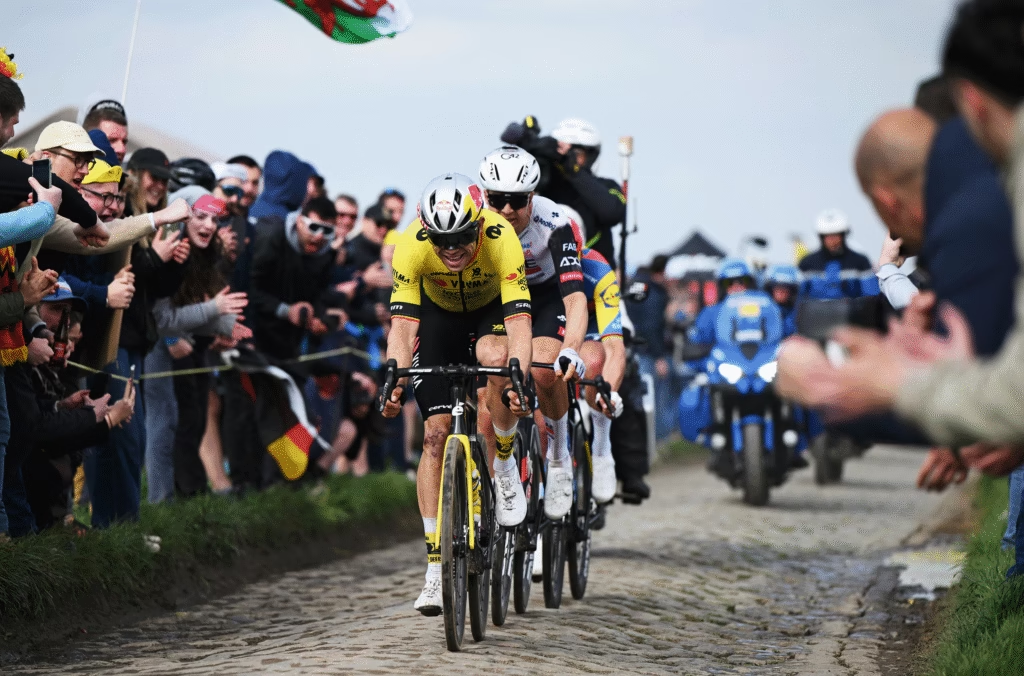
Van Aert has been close enough often enough in Paris-Roubaix that nobody sensible can move him out of the top tier. He has already finished 4th, 3rd and 2nd here, which tells its own story. The difficulty is that the race no longer seems to revolve around the question of whether he can win it before anyone else. It now revolves around whether he can beat both Van der Poel and Pogačar when they are at their best.
That sounds harsh, but it is also the reality of the current men’s peloton. Van Aert remains one of the very best Classics riders in the world. Roubaix still suits him. Team Visma | Lease a Bike still have the tools to help him. But this spring has kept reinforcing the same point: being among the strongest is not quite the same as being the rider who dictates the race. Paris-Roubaix might be the place where that changes, yet it is hard to put him above the top two on recent evidence alone.
Mads Pedersen is the contender who could make this look less predictable
Pedersen’s profile for Roubaix is easy to like. He has the durability, he can cope with chaos, and if he reaches the velodrome with the right company he has one of the better finishing kicks among the main contenders. He is also moving back in the right direction after injury.
That does not make him the favourite, but it does make him one of the likeliest riders to punish any hesitation among the bigger names. If the race becomes tactical rather than purely destructive, Pedersen’s stock rises quickly. Roubaix has long looked like the Monument that best matches his instincts, and that keeps him firmly in the conversation.
Jasper Philipsen is the most dangerous second card in the race
A lot of contenders previews treat Philipsen as an extension of Van der Poel, but that undersells him. Two consecutive runner-up finishes in Paris-Roubaix are not an accident. He handles the race well, survives deeper than most fast finishers, and benefits from being on the strongest team in the field.
If Van der Poel’s presence gives him tactical freedom, Philipsen becomes a serious threat rather than merely insurance. That is what makes Alpecin-Premier Tech so hard to race against. The strongest favourite is already difficult enough. Pairing him with a rider who can plausibly win from a smaller, more tactical finale changes the whole shape of the race for everyone else.
The next line of outsiders is unusually strong
Florian Vermeersch is the obvious first name here. He is not just UAE support. He already has a Roubaix podium from 2021, and his combination of proven affinity for the race and slightly less attention than his team leader makes him a dangerous rider to let go.
Gianni Vermeersch also deserves mention, because his spring has been steady and his off-road background makes him the sort of rider who can turn a messy race into a career result. Jasper Stuyven, Alec Segaert and a few others sit in the same broad bracket, dangerous enough that a mechanical, mistimed chase, or tactical stalemate could put them straight into the winning conversation.
That is the part of Roubaix people forget when they turn it into a two-man script. This race strips away certainty faster than most others. The favourites may still be obvious, but the list of riders capable of taking advantage if something goes wrong is much deeper than usual.
-
 Photo Credit: Sprint Cycling Agency
What the race is most likely to come down to
More than almost any other major one-day race, Paris-Roubaix asks two different questions at once. First, who is strongest? Second, who can still use that strength cleanly after 200km of attrition, cobbled sectors, and constant risk of bad luck?
That tends to favour the riders with the clearest combination of raw power, technical calm and tactical support. On that reading, Van der Poel still starts first, Pogačar is the biggest threat to him, and Ganna, Van Aert, Pedersen and Philipsen form the most credible chasing group. Behind them, the outsiders are good enough that nobody can afford a mistake.
Prediction
Van der Poel still looks like the most likely winner because Paris-Roubaix rewards exactly the things he does best, and because he arrives with the strongest team structure around him. But the gap is not comfortable anymore. Pogačar has turned this from a familiar Monument into something much more unstable, and that alone makes the 2026 men’s race one of the most compelling Roubaix editions in years.
If you are building out the full race-week package, this also pairs well with How to watch Paris-Roubaix 2026 in the UK, Men’s Paris-Roubaix 2026 route and cobbled sectors guide, Men’s Paris-Roubaix 2026 team-by-team guide and the broader Men’s cycling history, races, riders and teams hub.