
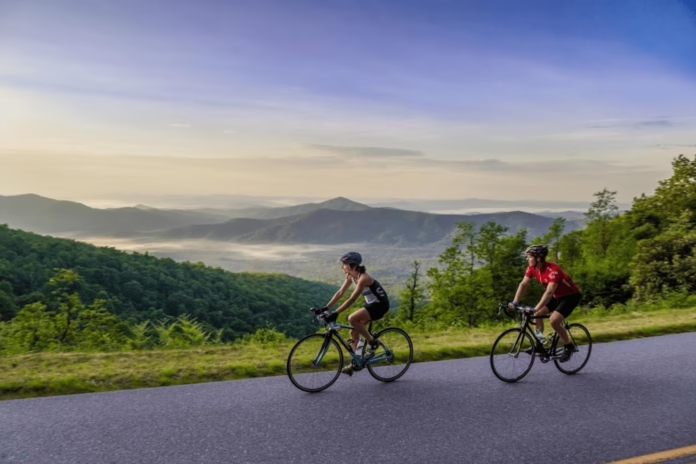
Some cycling destinations sell themselves through one climb, one pass or one famous road. Asheville and the Blue Ridge Parkway work differently. The appeal is not one single ascent, but the feeling of being folded into the landscape mile after mile, with the road rising and falling through southern Appalachian forest, long ridgelines and overlooks that seem to open just when your legs are beginning to settle into the rhythm.
Asheville gives the trip its human scale. The Blue Ridge Parkway gives it the sweep. Together, they make one of the most distinctive riding destinations in the United States: part mountain city, part cultural base, part long-form climbing road where the gradients often feel steady rather than vicious, but the accumulation can still leave you beautifully emptied by the end of the day.
For readers building a wider cycling travel list, this sits naturally alongside ProCyclingUK’s features on Cycling in Sierra Nevada and Granada, Cycling in Andermatt and central Swiss passes and Why Annecy and Lake Annecy area works so well for a cycling trip.
Why Asheville works as a cycling base
Asheville is not just a convenient place to sleep before riding the Parkway. It gives the whole trip a character that many mountain bases lack. The city has food, music, coffee, breweries, outdoor culture and enough energy to make the off-bike hours feel like part of the trip rather than dead time between rides.
That makes a difference. A lot of climbing destinations ask you to disappear into the mountains and accept a fairly simple routine: ride, eat, sleep, repeat. Asheville offers something richer. You can ride hard in the morning, come back tired and salt-streaked, then spend the evening somewhere that still feels alive. The atmosphere is relaxed, but not sleepy. It has that slightly creative mountain-town feel, where outdoor life and city life overlap without trying too hard.
The geography helps even more. The Parkway is not a distant objective. It is part of the riding culture around Asheville, with access points close enough that a ride can move from city streets into mountain rhythm quickly. That makes the destination feel practical as well as atmospheric. You are not building every ride around a transfer. You are starting from a city that already sits close to the roads you came to ride.
The Blue Ridge Parkway rhythm
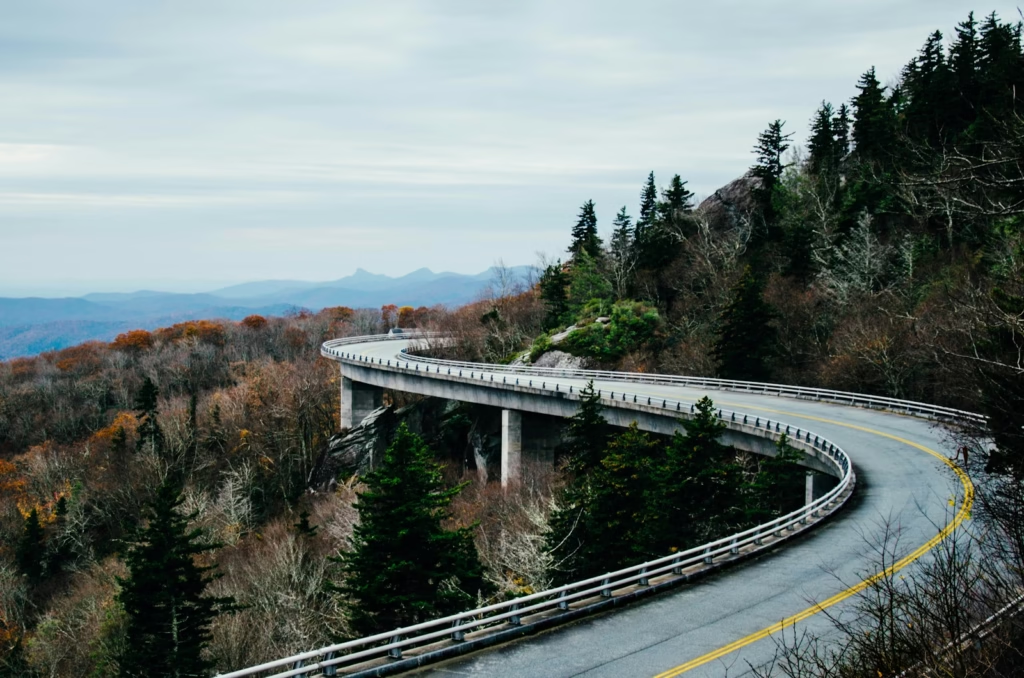
The Blue Ridge Parkway is the headline. It runs for 469 miles across Virginia and North Carolina, and around Asheville it becomes one of those roads that feels purpose-built for cycling, even though riders still need to treat it with respect. The road carries real elevation change, long distances between developed areas and mountain weather that can shift more quickly than the calm scenery first suggests.
That last point is important. This is not a café-to-café European climb where you can assume a village stop will arrive every few kilometres. The Parkway is scenic and accessible, but it can also feel remote in a quiet, steady way. Once you are out there, the road takes on a rhythm of its own: climb, bend, overlook, forest, descent, repeat.
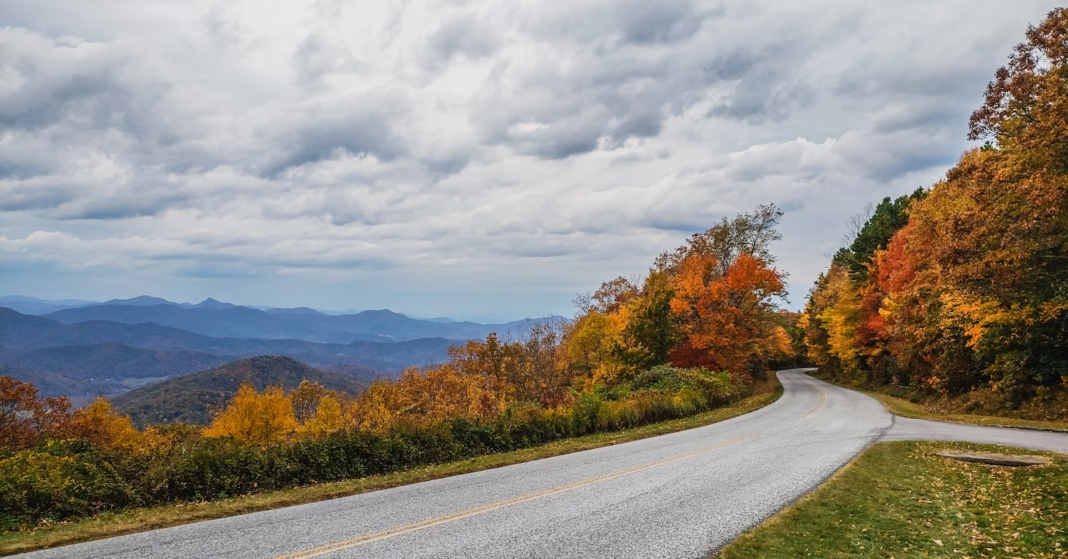
The gradients are rarely theatrical in the way Alpine passes can be. The road does not often rear up into savage ramps. Instead, it asks for patience. You climb for a long time. You descend without fully switching off. You look across one ridge, then another, then another behind it, each one fading a little more into blue. The name starts to make sense not as branding, but as atmosphere.
Why the Parkway feels different from European mountain roads
Coming from a European cycling mindset, the Blue Ridge Parkway can feel unusual at first. It is not a pass road in the classic sense. There is no single summit where the whole ride points. It is more like a line drawn through the mountains, holding elevation, crossing ridges and revealing the landscape gradually.
That changes how you ride it. In the Alps, Pyrenees or Sierra Nevada, the story often becomes one climb and one summit. Around Asheville, the story is more continuous. The effort is spread out. The scenery arrives in layers. A climb may not have the mythic name of a Tour de France col, but after two or three hours of constant rolling elevation, the ride can feel every bit as substantial.
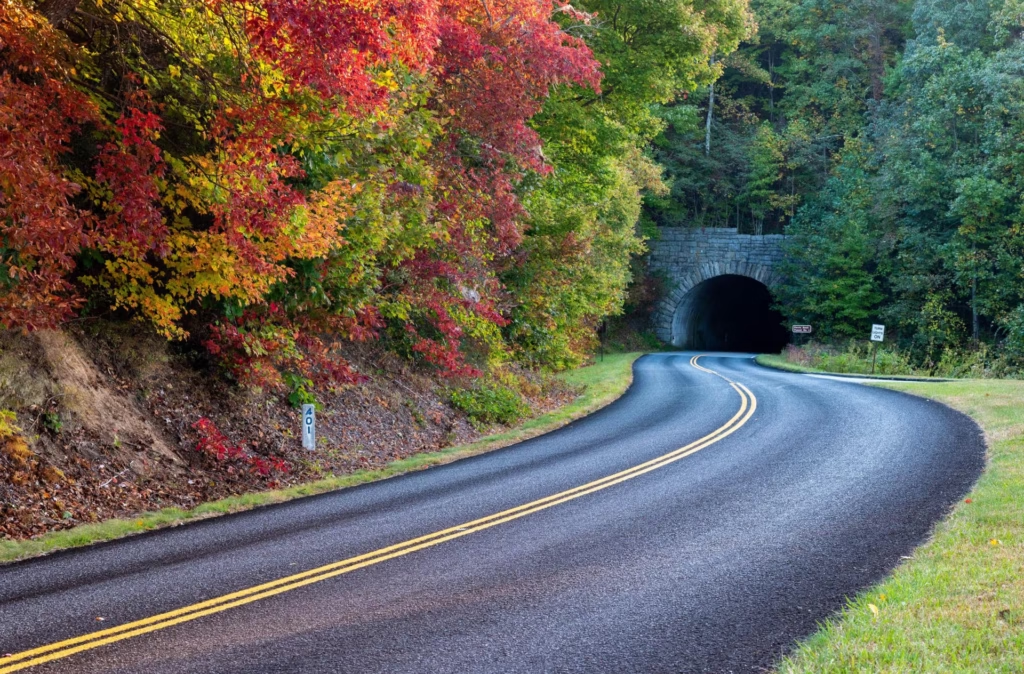
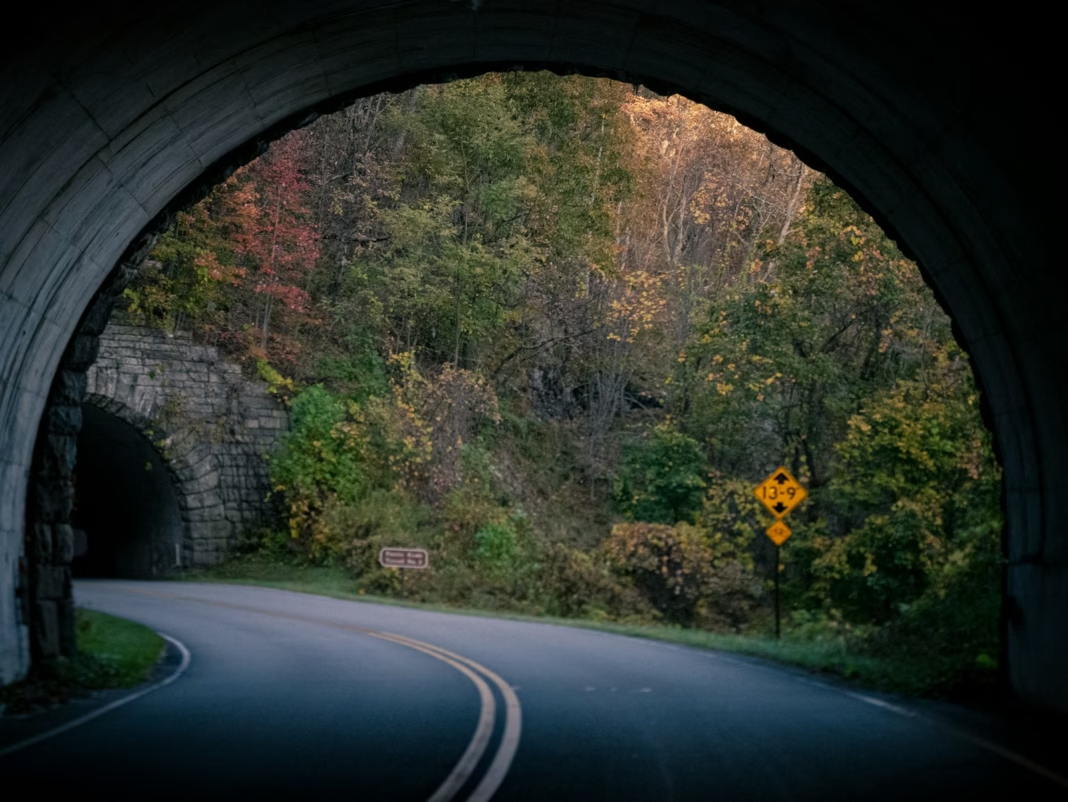
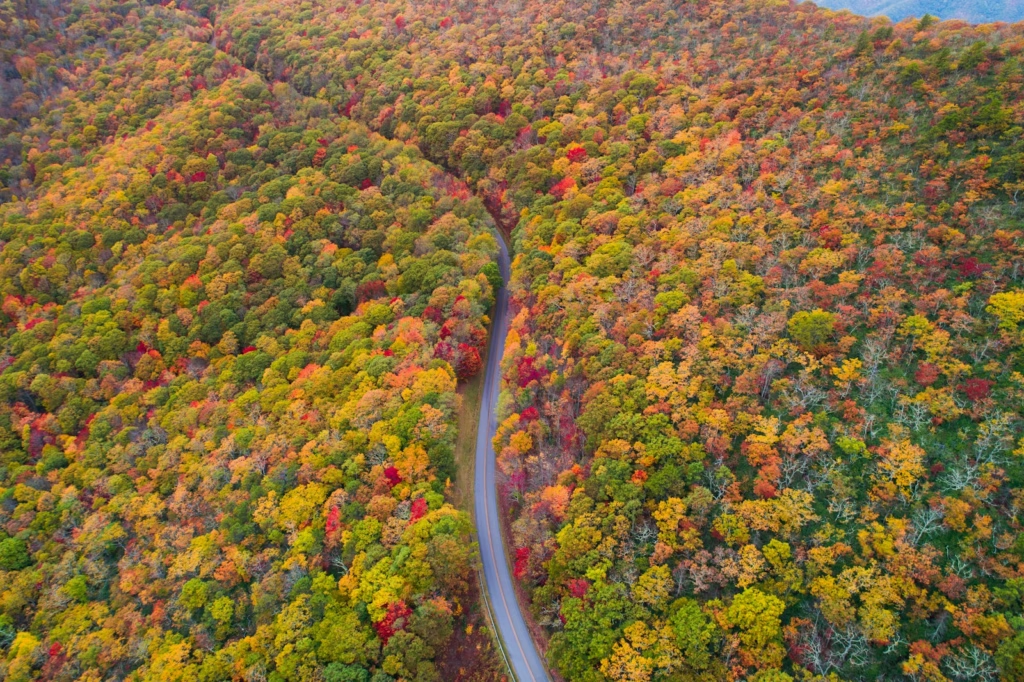
The surface and setting also give it a different mood. The road curves through forest, past tunnels, beside stone walls and out to overlooks where the mountains fall away in soft, repeated folds. In spring and summer, the green can feel almost excessive, with thick trees pressing close to the road. In autumn, the colour becomes the point of the trip for many visitors, though cyclists need to be more alert then because traffic can rise sharply during foliage season.
The climbs are steady, but the day can still be hard
One of the traps with Asheville is underestimating the difficulty because the climbs do not always look brutal on paper. The Parkway often climbs steadily rather than violently, but steady climbing has its own cost. It encourages you to ride a little too confidently early on, especially when the road surface is good, the bends are flowing and the views keep pulling your attention away from the numbers.
Then the accumulation arrives. The legs begin to feel that there has not really been much flat road. The descents are not long enough to erase the effort. The next rise begins before you have fully recovered from the last one. By the time you reach one of the higher overlooks, the ride has become much more serious than it first seemed.
That is part of the appeal. The Parkway does not bully you immediately. It invites you in, then slowly proves that it is a proper mountain road.
Asheville’s local road options add variety
The Parkway may be the main reason many road cyclists come to Asheville, but it should not be the only ride on the trip. The surrounding road network gives the destination more depth. Routes such as Elk Mountain Scenic Highway, Riverside Drive and roads around the French Broad River add different textures to a riding week.
That matters on a multi-day trip. Not every day needs to be a major Parkway effort. One ride can be a long climbing day. The next can be shorter and more exploratory, using the lower roads, river corridors or rolling approaches around town. That gives Asheville a useful flexibility. You can build the trip around ambition, but still leave space for recovery, food, weather and the simple pleasure of riding somewhere new.
It also makes Asheville more forgiving than a destination built around one heroic ascent. If the weather is poor higher up, or if road closures affect a planned Parkway section, there are still other ways to ride. That flexibility is not glamorous, but it is valuable.
The atmosphere of the southern Appalachians
The Blue Ridge Mountains do not feel like the Alps, the Dolomites or the Sierra Nevada. They have a softer, older, more wooded presence. The roads are often enclosed by trees, then suddenly open to wide views. The mountains layer into the distance rather than standing as sharp, exposed walls. There is less drama in the rock, but more depth in the colour and atmosphere.
That gives the riding a particular emotional tone. It is less about conquest and more about immersion. You do not feel as though you are fighting one great mountain. You feel as though you are moving through a whole region, carried along a road that keeps offering small changes: different light under the trees, cooler air near a tunnel, a warmer pocket on a south-facing slope, the smell of damp leaves, then the sudden space of an overlook.
Asheville adds its own layer to that. The city has enough personality that the ride does not exist in isolation. You return from the Parkway to somewhere with music, food and street life, rather than a purely functional mountain resort. That combination is what makes the destination feel complete.
Check road conditions before you ride
The practical side matters here more than it might in some destinations. The Blue Ridge Parkway is open year-round in principle, but sections can close because of weather, maintenance, construction or storm damage. That means route planning should always include a road-status check before you ride, especially if you are building a day around a specific stretch of the Parkway.
That is particularly relevant after major storms or during periods of repair work. Even when sections are open, construction traffic or partial closures can change the feel of a ride. Asheville remains a strong cycling destination, but the Parkway should be treated like a living mountain road rather than a fixed training loop.
Plan with flexibility, check conditions, and be ready to adapt. On a road this long and exposed, good planning is part of what makes the riding enjoyable rather than stressful.
When to go
Spring, early summer and autumn are the obvious windows, but each has a different feel. Spring brings fresh green, cooler air and a sense of the mountains waking up. Early summer is lush and full, with long days and a warmer city atmosphere. Autumn is spectacular, but also busier, especially on the Parkway when the fall colours bring drivers out in large numbers.
Winter is possible in the broader Asheville area, but the Parkway can be more complicated because higher sections may close due to ice, snow or weather conditions. Even outside winter, the elevation changes mean temperatures can vary more than expected between the city and the higher road.
For a cycling-first trip, late spring is probably the most balanced option if you want greenery, manageable temperatures and a little more flexibility. Early autumn can be wonderful too, especially if you want the colour, but it needs more careful timing around traffic and road conditions.
-
 Photo Credit: Gaetan Flamme

Why Asheville and the Blue Ridge Parkway deserve a place on your riding list
Asheville and the Blue Ridge Parkway deserve a place on your riding list because they offer something different from the standard European climbing template. This is not a destination built around one famous pass, one summit photo or one iconic gradient. It is a place built around road rhythm, mountain atmosphere and the pleasure of moving through a landscape that reveals itself slowly.
The riding can be hard without being savage. The city is lively without getting in the way of the trip. The scenery is expansive without feeling empty. There is enough variety to make a week interesting, and enough character to make even a short trip feel distinct.
For riders used to chasing Alpine names, Asheville asks for a slightly different mindset. Do not come looking for one climb to define the whole experience. Come for long ridgelines, steady elevation, forest shade, quiet overlooks, warm evenings and the sense that the road keeps carrying you deeper into the mountains.
That is why it stays with people. Not because it shouts louder than the famous European destinations, but because it offers a slower, wider kind of reward. The Blue Ridge Parkway gives the ride its shape. Asheville gives it somewhere to land afterwards. Together, they make one of the most appealing cycling trips in the eastern United States.

