
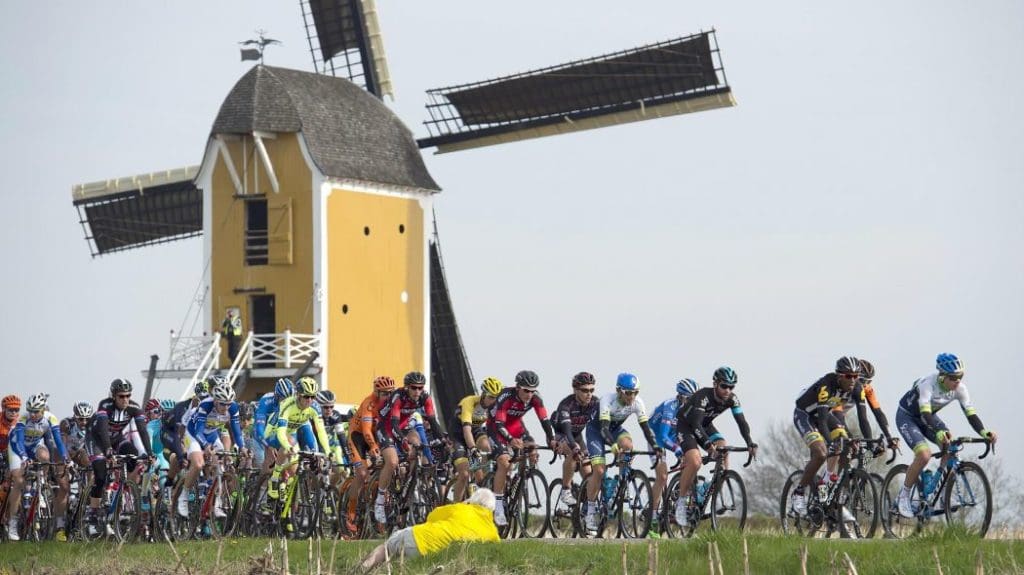
Limburg is not the Netherlands that most riders imagine first. There are no endless dead-flat polders here, no sense of the road simply disappearing into a grey horizon, no easy assumption that every ride will be governed only by wind and cadence. Around Valkenburg, Maastricht and the hills used by the Amstel Gold Race, the country folds into something sharper, smaller and more surprising.
The roads rise and fall constantly. Not for long, and rarely with the sustained weight of an Alpine pass, but with a rhythm that keeps a ride alive. A climb appears after a narrow village turn, kicks hard through trees or between brick houses, then releases you back onto a plateau where the view opens over fields, church towers and the next ridge. It is a cycling country built on repetition rather than altitude.
That is what makes the Limburg and Amstel Gold region such a good cycling trip. It gives you the feeling of riding somewhere with race history, varied roads and proper climbing texture, but without the scale, logistics or intimidation of a high-mountain destination. You can build a hard day here, certainly. But you can also stitch together two or three hours of lanes, climbs, cafés and viewpoints without ever feeling as though the ride has become a survival exercise.
For UK riders, it also sits in a sweet spot. It is close enough to feel realistic for a long weekend, different enough to feel like a proper trip, and familiar enough through Amstel Gold Race to give every climb a sense of context. The region works because it is compact, accessible and full of roads that reward curiosity.
A different side of Dutch cycling
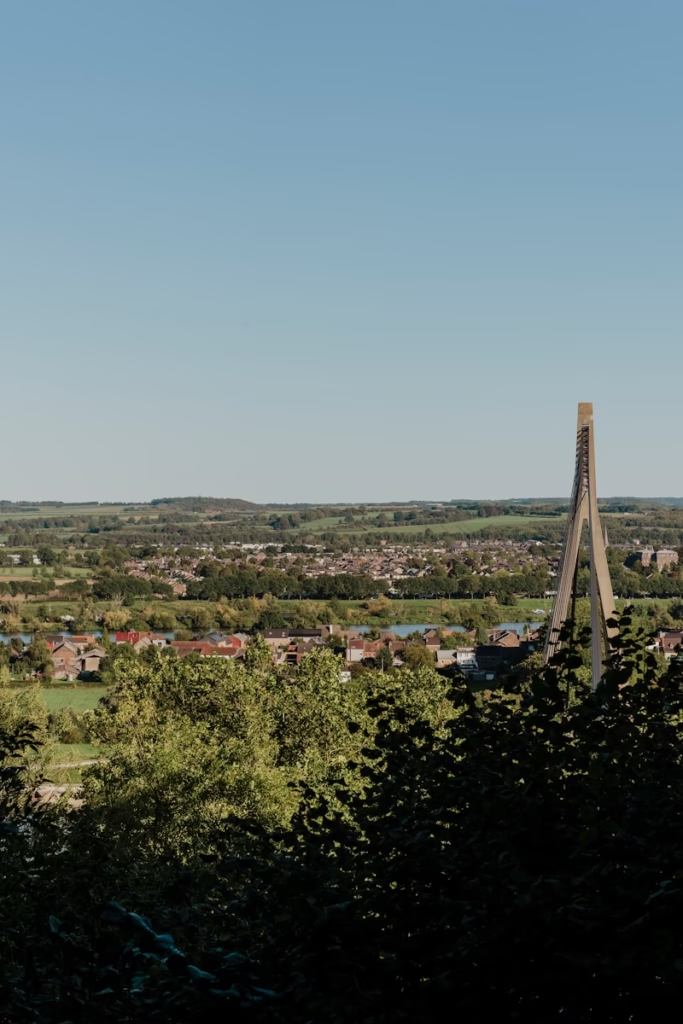
The first pleasure of riding in South Limburg is how quickly it upends the easy cliché of Dutch cycling. The Netherlands is rightly famous for everyday bike infrastructure, flat commuting routes and a culture where cycling is part of normal life. Limburg adds something else: gradients, narrow lanes, short ramps and the feeling that the road is constantly asking small questions.
That makes it especially rewarding for road riders. You still get the Dutch strengths: orderly towns, excellent surfaces, clear signposting and a general sense that bikes belong on the road. But the terrain has more bite. The climbs are short enough to repeat, steep enough to sting, and close enough together that a ride can become surprisingly hard without ever looking especially dramatic on a map.
It is not a place for riders who only want one famous climb and one summit photograph. Limburg is better than that. Its appeal sits in accumulation. One lane rolls into another. One village gives way to a wooded ramp. One ridge drops you into a quiet valley before the next climb begins. By the end of the day, the metres have added up almost without you noticing, until your legs remind you that every little rise counted.
Valkenburg gives the trip a natural base
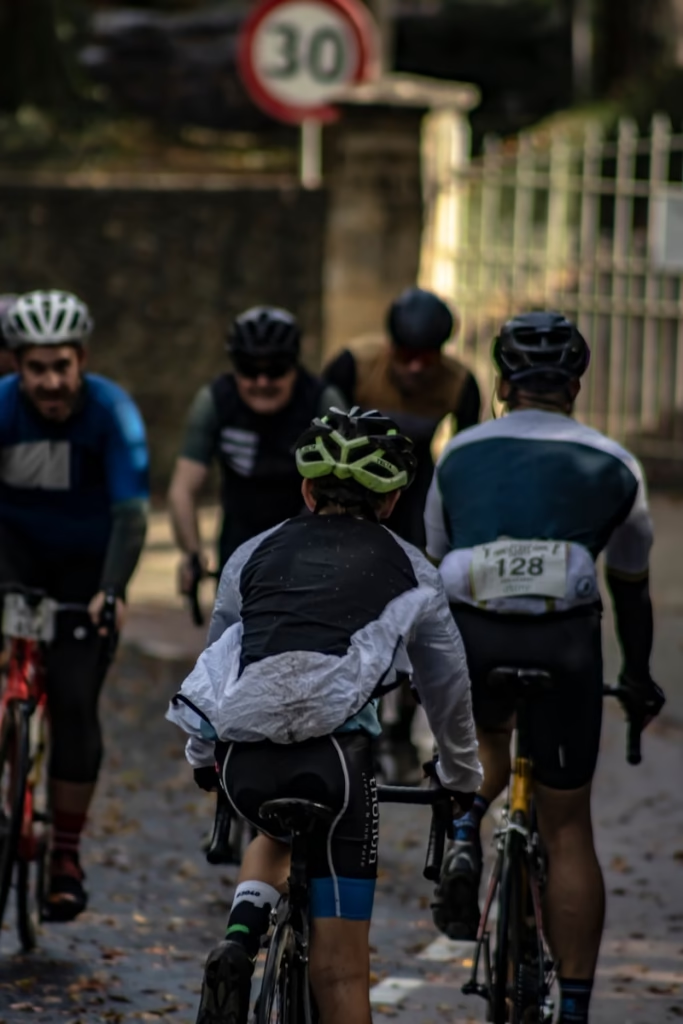
Valkenburg is the obvious base for a cycling trip to the Amstel Gold region, and for good reason. It places you close to the Cauberg, within easy reach of many of the race’s best-known climbs, and in a town that understands cycling as more than a passing visitor economy. Bikes are part of the place’s identity.
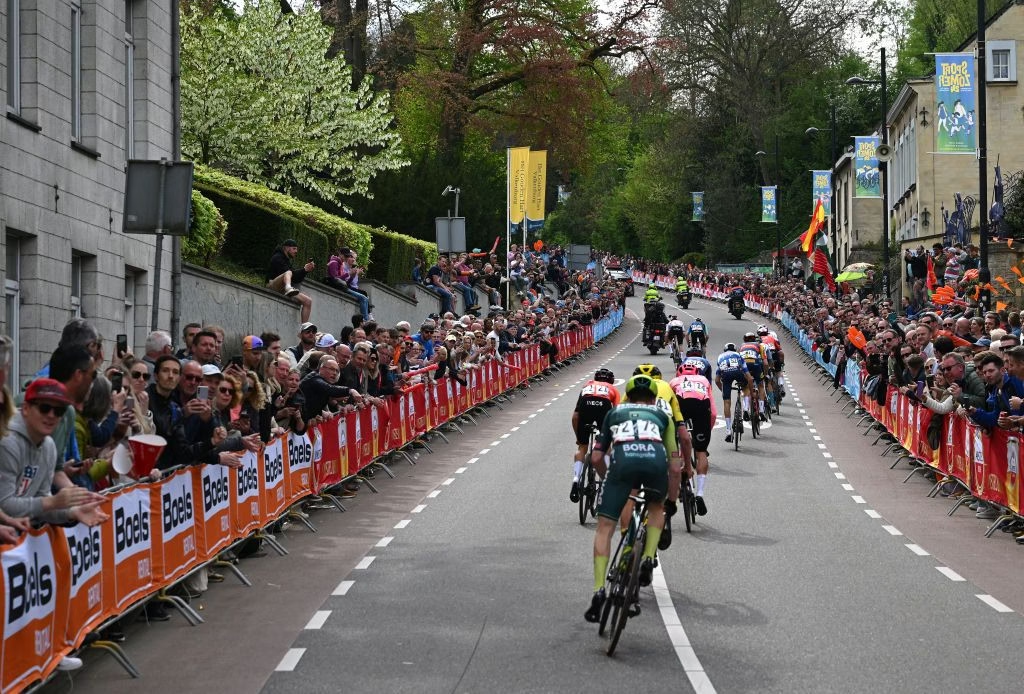
The Cauberg itself is not long, but it carries weight because of what has happened there. It has shaped editions of Amstel Gold Race, provided a decisive launchpad in the World Championships, and turned a modest-looking Dutch road into one of the most recognisable climbs in northern European cycling. Riding it is not physically overwhelming, but it does make the region click into place. You understand immediately why positioning matters, why repeated climbs hurt, and why the finale of Amstel has so often felt tactical rather than simply brutal.
Valkenburg also works practically. You can start rides without a long transfer, return easily for food or a relaxed evening, and build loops that suit different energy levels. A short day can still include famous climbs. A longer day can reach towards Maastricht, the Belgian border or the more open roads across the hills. That flexibility is one of the region’s biggest strengths.

The Amstel Gold Race climbs are better ridden as a network
The most famous climbs in the Amstel Gold Race region are not grand in isolation. That is the point. The Cauberg, Keutenberg, Eyserbosweg, Fromberg, Bemelerberg and Gulperberg are not Alpine names, and none of them will dominate a ride for half an hour. Instead, they work as a network of repeated efforts.
The Keutenberg is probably the climb that surprises most first-time visitors. It is short, but it bites quickly, with a steep section that can make even a sensible gear feel suddenly optimistic. The Eyserbosweg has a more sustained racing feel, rising with enough seriousness to explain why it has so often been used to thin the field. The Bemelerberg is gentler, more rolling and easier to include in a flowing ride.
What makes these climbs special is not simply their gradients. It is their placement. They come after corners, through villages, on roads where momentum matters and hesitation costs. They reward riders who carry speed, choose gears early and settle quickly into effort. In that sense, riding here teaches you something about the race itself. Amstel Gold Race is difficult not because one climb is impossible, but because the climbs keep arriving until every acceleration has a price.
For a cycling trip, that is ideal. You can make the ride as selective as you want. Link five climbs and you have a lively morning. Link fifteen and you have a serious day. The region lets you build difficulty through design rather than distance alone.
It is compact enough for a long weekend
Some cycling destinations demand time. They ask for a week, a hire car, careful weather planning and a proper commitment to the mountains. Limburg is much easier to fit around real life. That makes it especially useful for UK riders looking for a trip that feels distinct without becoming a major expedition.
A long weekend works well. One day can be built around Valkenburg and the classic Amstel climbs. Another can head towards Maastricht, using quieter roads and café stops to make the ride feel more relaxed. A third can cross towards Belgium or loop through the hillier lanes south and east of Valkenburg. You do not need to chase huge mileage for the trip to feel worthwhile.
The compactness also helps mixed groups. Stronger riders can add loops, repeat climbs or take on a more Amstel-style route. Others can keep the day shorter without feeling they have missed the essence of the region. Few cycling areas are so good at letting different ambitions coexist from the same base.
Maastricht adds culture beyond the bike
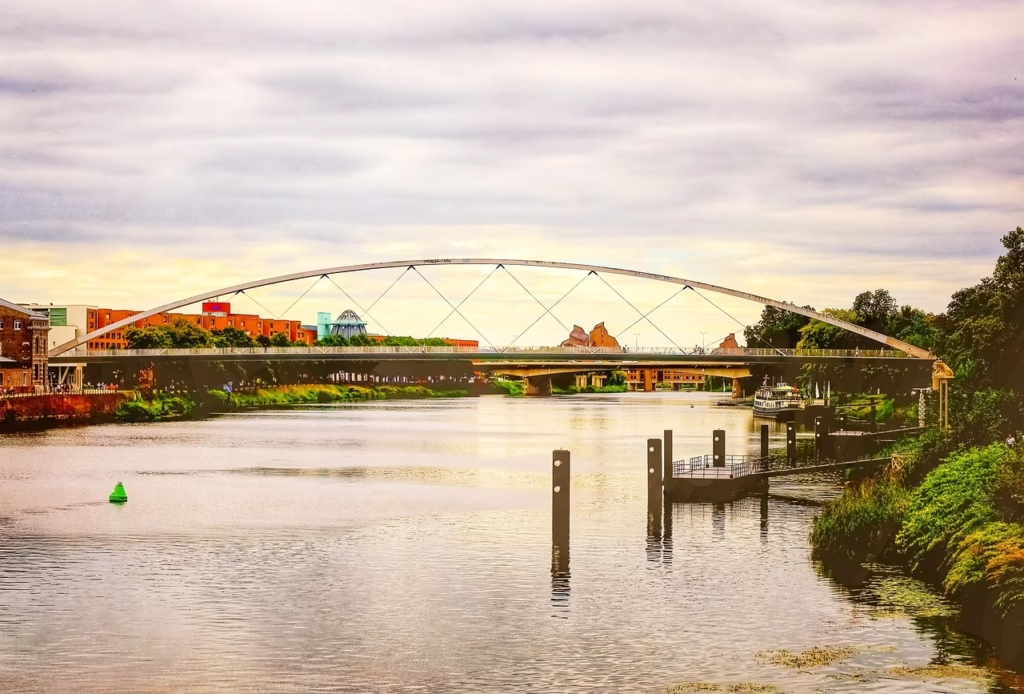
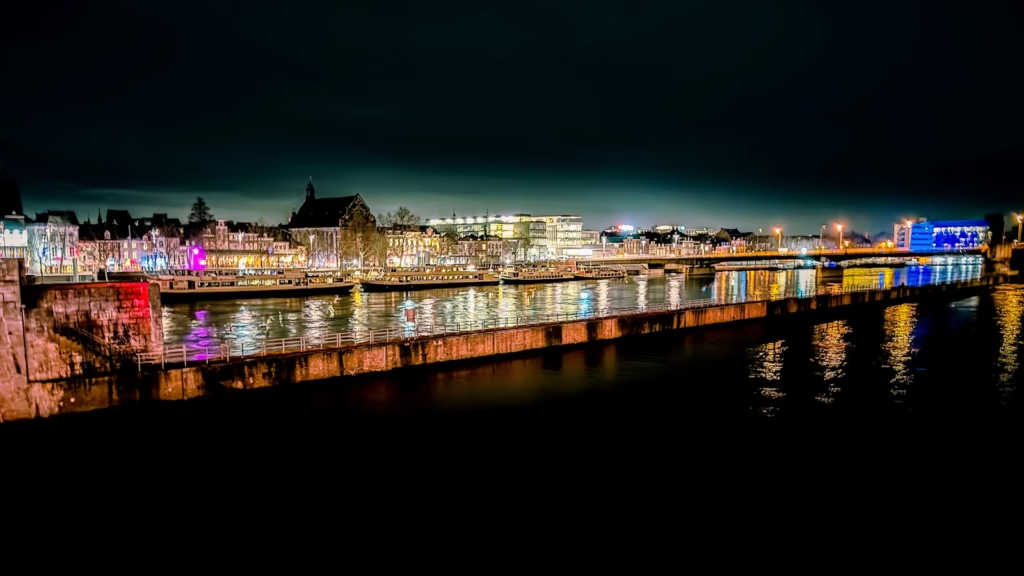
One of Limburg’s advantages is that the trip does not have to be entirely about riding. Maastricht gives the region a cultural anchor that many pure cycling bases lack. It is a handsome, layered city, with riverside streets, old squares, cafés, restaurants and enough history to make a rest afternoon feel like part of the trip rather than a compromise.
That matters more than cyclists sometimes admit. A good cycling trip is not only about the hours spent on the bike. It is also about where the ride ends, what the evening feels like, and whether the place has enough texture to reward slow time. Maastricht gives the Amstel region that extra dimension. You can ride hard in the morning, then spend the afternoon walking, eating or sitting by the Maas without feeling as though the day has gone flat.
For couples, groups with non-riders or anyone trying to make a trip feel less single-purpose, that is a major strength. Valkenburg is the cycling base. Maastricht is the broader travel base. Using both gives the region a more complete feel.
The roads reward rhythm rather than heroics
Limburg is not a place that asks you to prove yourself through one huge climb. It rewards rhythm. The best rides here often have a rolling, almost conversational quality: climb, crest, descend, settle, turn, climb again. The landscape never lets you drift for too long.
That makes it excellent training country, but also enjoyable holiday riding. The efforts are manageable. You can ride them hard if you want, or ease back and treat the day as a sequence of short tests. There is enough variation to keep the mind engaged without the pressure that comes with high-altitude roads or remote passes.
The riding also feels technically satisfying. Positioning before climbs, speed through corners, gear choice and pacing all matter. You are rarely just grinding. You are reading the road. That is why the region appeals to riders who like Classics-style terrain: not always beautiful in the obvious postcard sense, but constantly interesting under the tyres.
Spring gives the region its race-week atmosphere
The most atmospheric time to visit is spring, especially around Amstel Gold Race. The region takes on a race-week energy, with riders on the roads, cycling cafés busy, and the climbs carrying a sharper sense of purpose. If you enjoy watching racing as much as riding, it is hard to beat the feeling of seeing the professionals use roads you have just ridden yourself.
Spring weather can be variable, of course. It can be bright and clear, or damp, windy and colder than expected. That uncertainty is part of the northern European character. Pack properly and the riding is still rewarding. The climbs are short enough that bad weather rarely feels as serious as it would in the mountains, and there is nearly always a village, café or easy escape route nearby.
Late spring and early autumn may be the most comfortable times for a riding-focused trip. The roads are generally easier to enjoy when the weather is settled, the days are long enough for flexible routes, and the region still has plenty of life without the intensity of race week. Summer works too, particularly for relaxed riding, although the lanes and tourist areas can be busier.
It pairs well with Belgium and the Ardennes
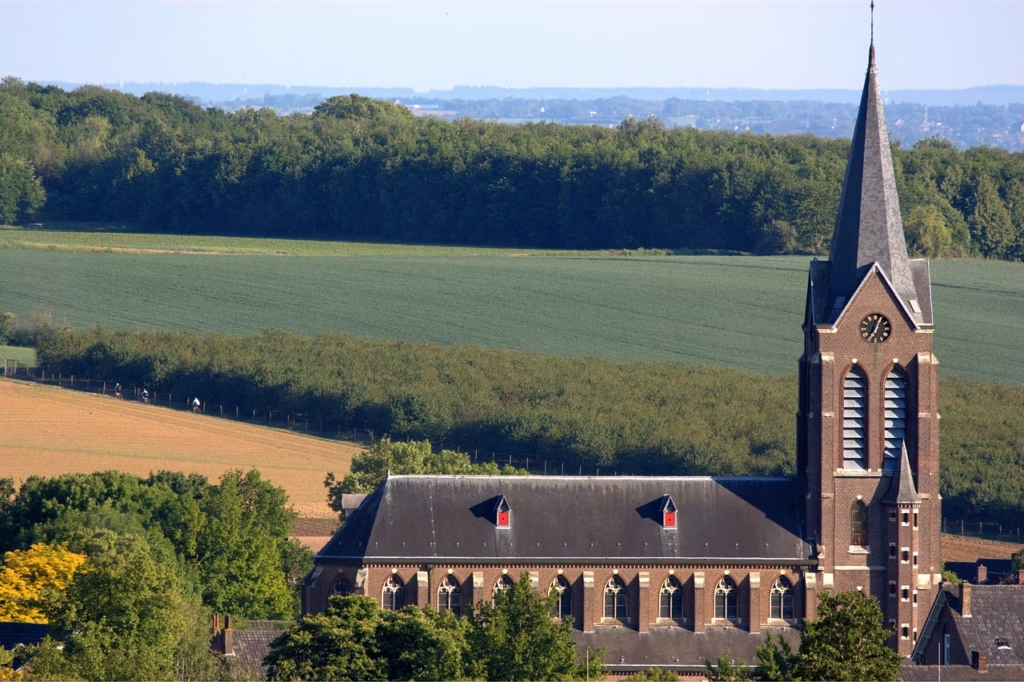
Another reason Limburg works so well is its position. This is a region that naturally connects with other cycling places. Belgium is close, the Ardennes are within reach, and Liège-Bastogne-Liège country is not far away. That makes Limburg a useful anchor for a broader northern European cycling trip.
You could spend a weekend entirely around Valkenburg and Maastricht and feel satisfied. But you could also combine it with the Belgian Ardennes, the Liège and Spa area, or a wider Classics-themed trip that links Amstel-style hills with the terrain of Liège-Bastogne-Liège. The character changes quickly once you cross into Belgium: the climbs often feel longer, heavier and more wooded. Limburg is tighter and more rhythmic by comparison.
That contrast is useful. Ride Limburg first and you get sharp, repeated Dutch climbs. Move south and the roads grow more muscular. Together, they create a trip that captures much of what makes the Ardennes and low-country Classics so distinctive.
Who Limburg works best for
Limburg works best for riders who enjoy rolling, punchy terrain rather than long, steady climbs. If your ideal day is a single mountain pass followed by a long descent, this may not be the first place on your list. If you enjoy short efforts, technical roads, race history and the feeling of constantly changing rhythm, it makes far more sense.
It is also a good destination for riders who want a trip that does not require elite fitness. The climbs can be steep, but they are rarely long enough to become intimidating. You can ride slowly, stop often, shorten the loop and still experience the best parts of the region. At the same time, fit riders can make the same roads brutally hard by linking more climbs and riding them with intent.
That range is what gives the region its charm. Limburg is not only for riders trying to copy Amstel Gold Race. It is for anyone who likes the idea of a cycling trip built around good roads, race heritage, short climbs, cafés, easy logistics and a landscape that keeps changing just enough to pull you onwards.
-
 Photo Credit: Getty
 -
 Photo Credit: Zac Williams/AusCycling


Practical information
Location
The Amstel Gold region sits in South Limburg, in the southern Netherlands, close to Maastricht, Valkenburg and the Belgian border. Valkenburg is the most obvious cycling base, while Maastricht works well for riders who want a larger city with more restaurants, hotels and non-cycling options.
Riding
The riding is defined by short, steep climbs, rolling lanes, village roads and repeated changes of rhythm. Key climbs include the Cauberg, Keutenberg, Eyserbosweg, Fromberg, Bemelerberg and Gulperberg. Routes can be kept short and punchy or extended into longer Classics-style days with a high number of climbing efforts.
When to go
Spring is the most atmospheric time, especially around Amstel Gold Race weekend. Late spring and early autumn are often the best options for comfortable riding conditions, while summer can work well for a more relaxed trip with longer evenings.
Accommodation
Valkenburg is the best choice for riders who want to be close to the famous climbs and the race atmosphere. Maastricht is better for a broader city break, with more restaurants and cultural options. Both can work well, and the decision depends on whether the trip is built primarily around riding or around a mix of cycling and travel.
Getting there
For UK riders, Limburg is realistic for a long weekend by rail, car or a flight into nearby regional airports. Travelling via the Eurostar network and onward trains can work well for riders who prefer not to fly, while driving gives more flexibility for carrying bikes and extending the trip into Belgium or the Ardennes.
Why Limburg deserves a place on your riding list
Limburg works because it gives you a version of Dutch cycling with edges. It has the infrastructure and order you expect, but also the climbs, road texture and tactical rhythm that make a ride feel alive. It is compact, accessible and deeply connected to one of the most distinctive races in the spring calendar.
The Amstel Gold region is not about epic scale. It is about density. So many good cycling roads sit close together that a single weekend can feel surprisingly full: the Cauberg before breakfast, the Keutenberg in the legs by lunchtime, Maastricht in the evening, and the sense that every lane still has another small climb hidden around the corner.
That is why it deserves a place on a cycling travel list. It is not the loudest destination in Europe, and it does not need to be. Limburg is quieter, tighter and more subtle than the Alps or the Dolomites, but for riders who love Classics terrain, race history and roads that reward rhythm, it works beautifully.

