GP Immo Zone sits in that useful part of the women’s calendar where opportunity matters. Coming just after the Ardennes block and on the edge of the early-May stage races, it gives sprinters, classics riders and ambitious Continental teams a realistic chance to chase a UCI 1.1 result without the same concentration of WorldTour firepower found in the biggest spring races.
The race is held in Belgium on Friday, 1st May 2026, with the route again built around the Schellebelle and Wetteren area. It is not a day for pure climbers. The profile points towards a fast race, with limited climbing, local roads that can keep the bunch stretched, and a final that should suit a sprint or a reduced sprint if the race becomes more selective late on.
A short history of GP Immo Zone
The race has quickly built a clear identity as a sprinter-friendly Belgian one-day event. It has been organised annually in the Schellebelle/Wichelen area since 2020 and has already produced a strong winners’ list for a relatively young race. Lorena Wiebes won the first two editions, Charlotte Kool took the 2022 race, Amalie Dideriksen followed in 2023, Chiara Consonni won in 2024, and Julie Stockman added her name in 2025.
That roll of honour tells the story neatly. This is not a race that usually rewards pure climbers or riders waiting for a long attritional selection. It tends to suit those who can survive Belgian positioning, stay calm when the bunch stretches through local roads, and still produce a fast finish after more than three hours of racing. Stockman’s 2025 win came ahead of Jesse Vandenbulcke and Puck Langenbarg, another reminder that a well-timed sprint from a strong domestic-level rider can be enough when the bigger WorldTour sprint trains are absent.
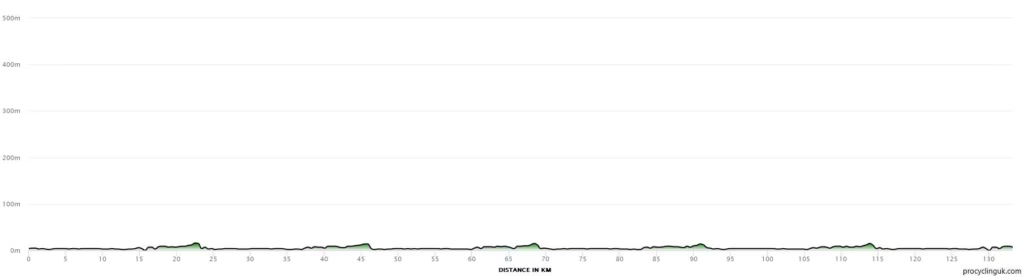
Race shape and likely tactics
The strongest team on the start list looks to be VolkerWessels. They have several options, which is important in a race where control can be awkward. Lonneke Uneken gives them the obvious fast-finishing card, while Florien Bolks and Amber van der Hulst offer alternatives if the race becomes more chaotic or if a reduced group forms late.
Hitec Products-Fluid Control also have numbers and variety. Kaja Rysz and Laura Lizette Sander both showed their level at the Midwest Cycling Classic, while Aidi Gerde Tuisk and Nora Tveit added depth for a race where positioning, repeated accelerations and staying present late on can make a major difference. If Hitec can avoid being isolated against VolkerWessels, they have enough cards to make the race more complicated than a straightforward sprint.
The most likely scenario remains a sprint, but not necessarily a clean one. Belgian 1.1 races at this level often produce a final where the strongest riders are not always the ones with the neatest lead-out. Road furniture, narrow sections, team depth and late hesitation can all change the finish. That leaves room for a late attacker, but the history of GP Immo Zone still points heavily towards a fast finisher.
The contenders for the 2026 GP Immo Zone
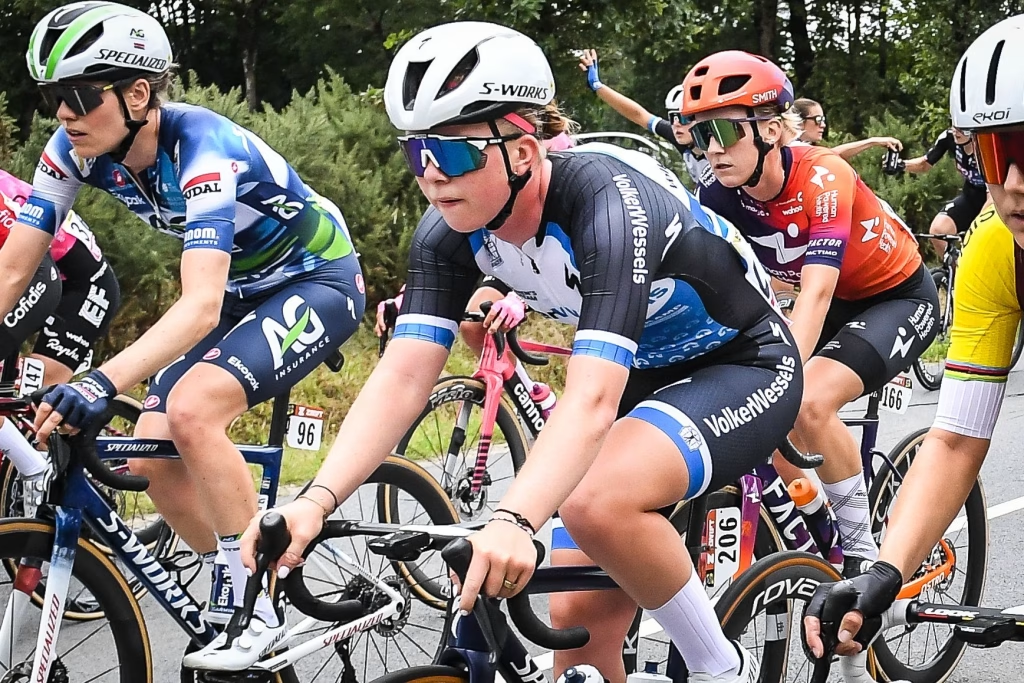
VolkerWessels have the standout favourite in Lonneke Uneken, whose 2026 form already includes two wins. Her victory at the Midwest Cycling Classic came in a photo finish after a flat Belgian race ended in a bunch sprint, making it one of the most relevant reference points for GP Immo Zone. Similar terrain, similar pressure, and a finish likely to be decided by timing rather than brute dominance all suit her well. Uneken has also shown she can win at this level without needing everything to be perfectly controlled, which makes her the safest pick if the race comes down to a sprint.
The Dutch team also have useful cover through Florien Bolks and Amber van der Hulst. Bolks has quietly built a strong 2026 spring, with 4th at Région Pays de la Loire Tour – Féminin, 8th at the Midwest Cycling Classic and 13th at Ronde Van Brugge – Tour of Bruges. That gives VolkerWessels more than one route to the podium, particularly if a late move goes clear rather than a full bunch sprint. Van der Hulst brings even more consistency, with 7th at the Midwest Cycling Classic, 10th at Beobank Samyn Ladies, 6th at NXT Classic and 4th at Ronde de Mouscron already this season. She was also 3rd in this race back in 2021, so if the final becomes scrappy, she has the experience and positioning skills to take advantage.
Hitec Products-Fluid Control look like the team most capable of unsettling that VolkerWessels plan. Kaja Rysz has the strongest claim, with 4th at the Midwest Cycling Classic and 8th at Omloop van het Hageland in 2026, suggesting she has both the speed and the resilience for this sort of Belgian racing. She is not just a rider waiting for a drag-strip sprint either. Rysz can handle a more unsettled final, and that could be useful if Hitec decide they do not want to take Uneken to the line in ideal conditions.
There is another strong sprint option in the same line-up through Laura Lizette Sander. She was 5th at the Midwest Cycling Classic and also came through the UAE Tour Women earlier in the season, including 15th on stage 3. Her profile is interesting because she combines sprint ability with enough toughness to stay involved if the race is made slightly harder than expected. If Rysz is watched more closely, Sander could become the rider who benefits from Hitec’s numbers.

Further depth comes from Aidi Gerde Tuisk and Nora Tveit. Tuisk’s best 2026 result so far is 8th at EPZ Omloop van Borsele Women, and she has a strong Estonian national championship record behind her. She is unlikely to be the outright sprint favourite, but she adds another useful card if Hitec race aggressively. Tveit brings past consistency at GP Immo Zone, having finished 7th in 2022 and 11th in both 2023 and 2024. That kind of course relevance is worth noting in a race where local knowledge and final-lap positioning can matter as much as headline form.
Lotto-Intermarché Ladies will look towards Katrijn De Clercq, whose 2026 results have been quieter than some of the other main names here. Her 22nd at the Midwest Cycling Classic keeps her in the frame for a top result if the race becomes more attritional than expected. Lotto-Intermarché will also know this type of Belgian racing well, which can matter as much as raw sprint speed in the final 20km.
For De Ceuster-Acrog, Jesse Vandenbulcke brings one of the more experienced profiles in the field. She was Belgian road race champion in 2019 and finished 2nd in this race in 2025 behind Julie Stockman, giving her proven course relevance as well as local race craft. She may not be the fastest pure sprinter on the start list now, but if the race splits or becomes a tactical final, Vandenbulcke has the experience to read it better than many.
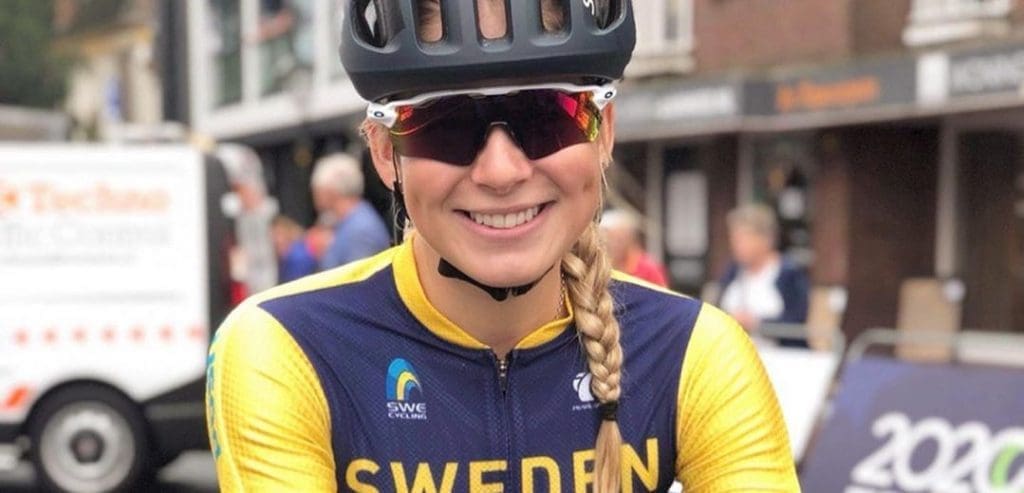
Minimax Cycling Team have Clara Lundmark as an outsider with enough Belgian spring racing in the legs to be a factor if the race opens up. She looks more like a top-10 candidate than an outright favourite, but that still makes her relevant in a race where the final can become untidy and teams without a dominant sprint train can slip into the result.
There is also an interesting card for Révvi-EGS Group-Velopro through Teniel Campbell. Her recent road results are limited, but her background and speed make her dangerous if she is close to full race rhythm. The question is less about raw ability and more about whether the race gives her the platform to use it in a controlled sprint.
O’SHEA Red Chilli Bikes have Maurène Trégouët among the longer shots. Her 2026 results include 67th at the Midwest Cycling Classic, so she is not an obvious podium pick here, but a Belgian 1.1 race can still reward riders who stay switched on deep into the final hour. If the race fragments late, a top-20 or better would be a realistic target.
-
 Photo Credit: LaPresse
Prediction
The race history, route and start list all point towards a sprint, and that makes Lonneke Uneken the obvious favourite. She has the strongest recent win in a comparable Belgian one-day race, and VolkerWessels has enough depth around her to cover the main alternatives. Kaja Rysz and Laura Lizette Sander look like the main Hitec threats, while Amber van der Hulst and Florien Bolks give VolkerWessels a useful safety net if the final does not unfold cleanly.
Main photo credit: Sophie Richez