
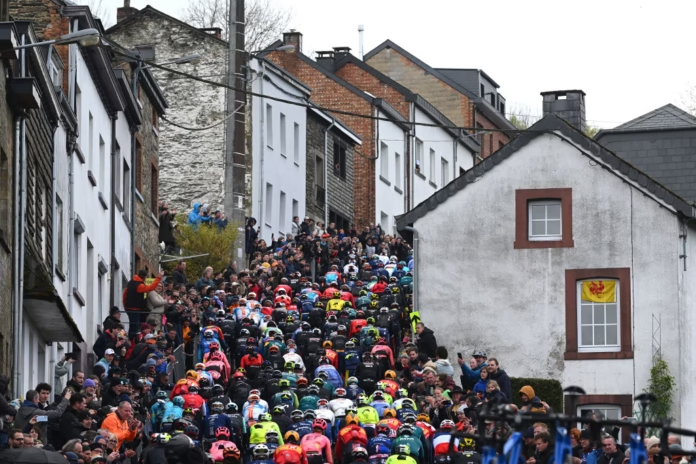
Few regions in cycling earn their reputation as quickly as the Ardennes. Around Liège and Spa, the roads feel as if they were designed for the sport: short climbs that hide sharper pitches than you expect, long rural stretches where you can settle into a rhythm, and villages that seem built for a coffee stop and a conversation about how the last hill really felt. If you are drawn here by Liège-Bastogne-Liège, the area works both as a training base and as a pilgrimage site.
That is part of what makes this corner of Belgium so appealing. Cycling in Liège and Spa is not only about ticking off famous climbs. It is about atmosphere as much as effort. The landscape keeps changing, the route options are plentiful, and the racing culture is hard to miss. Even riding alone, you still get that sense of being connected to something bigger, from the memory of spring classics on these roads to the quiet shift in the air as you climb away from town and into open country.
What makes the region special is the combination of terrain and feel. You get climbs that test positioning and power, descents that reward confidence, and roads that demand your attention without ever feeling repetitive. This is not a place built around one giant mountain. It is a place built around sequences, where one effort bleeds into the next and where fatigue matters just as much as raw numbers.
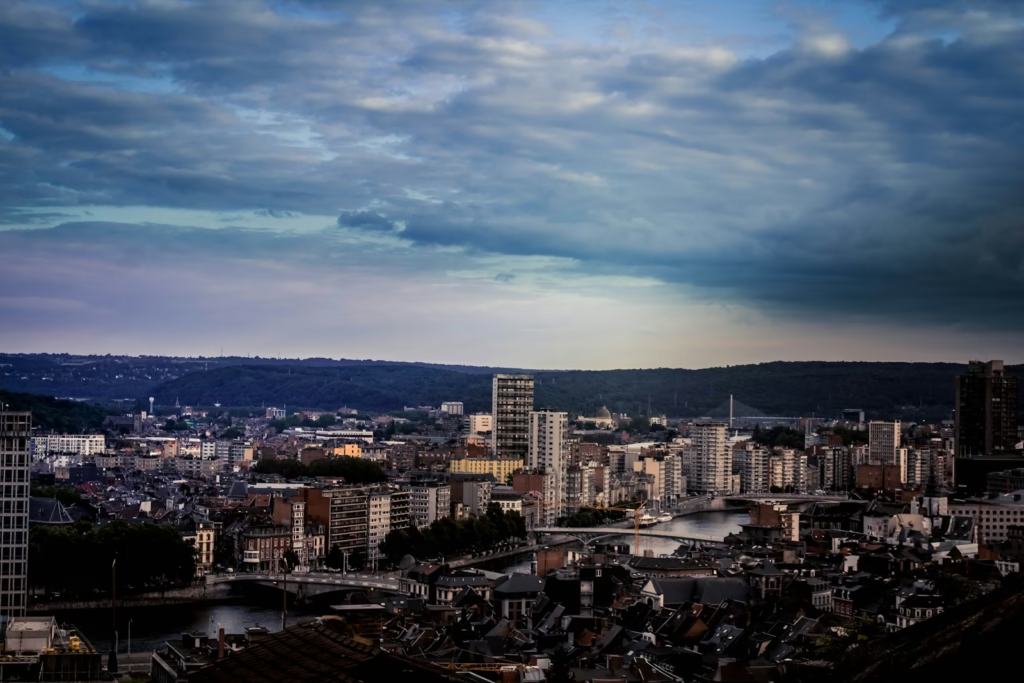
Why Liège and Spa work so well on a bike
The Ardennes are at their best when the road never quite lets you settle for too long. Around Liège and Spa, that is exactly what happens. You get rollers that look manageable from a distance and then kick up more steeply than you hoped, valley roads that offer recovery without ever really giving you a rest, and climb sequences that make the whole ride feel harder than the profile first suggests.
That is why these roads remain so popular with riders who want more than scenery. They are useful. You can ride them for threshold work, for repeatability, for race-specific training, or simply for the pleasure of roads that force you to stay engaged. Even when the gradients are not enormous, the rhythm of the terrain keeps asking questions.
It also helps that the region has real character beyond the riding itself. Liège brings history, racing memory and the sense of cycling always being close by. Spa gives you a slightly different tone, calmer in places, but no less tied to the sport. Together, they create the sort of destination where the roads and the culture reinforce each other rather than competing for attention.
The climbs are about accumulation, not myth
The Ardennes are often misunderstood by riders who arrive expecting one mythical mountain after another. That is not really how this terrain works. The best rides here are built through repetition. One climb leads to a descent, then a valley road, then another effort that feels harder because the previous one is still in your legs. The stress builds quietly, which is why the region suits riders who want specific, repeatable work rather than one heroic effort and a long freewheel home.
That layered difficulty is exactly what gives the area its spring-classics feel. In a race such as Liège-Bastogne-Liège, the biggest issue is rarely one climb in isolation. It is how many efforts the riders have already made before they reach the next one. Riding in this region teaches that lesson quickly.
 Photo Credit: Geoff Waugh
La Redoute is the climb that changes the mood of a ride
Côte de La Redoute is one of those climbs that has long since moved beyond being just another section of road. It carries the weight of the race with it, and when you ride it you understand why. The climb is short, steep and unforgiving, the kind of effort where any loss of rhythm is felt immediately.
What makes La Redoute so useful is that it tests more than power. It also tests composure. If you rush the opening section, the climb bites back. If you stay smooth and measured, you give yourself a better chance of carrying speed into the steepest ramps without falling apart. That makes it a very good benchmark climb as well as an iconic one.
In route terms, it fits naturally into a Liège-based day. It works early if you want quality efforts while the legs are still fresh, but it arguably makes more sense later, when a little fatigue has already crept in and the climb starts to feel more like the race it belongs to.
Wanne rewards rhythm more than impulse
Côte de Wanne has a different character. It is not only about producing a big number for a short period. It is about settling into an effort and then realising the road wants just a little more than you first intended to give. That is what makes it so good for training. You can overcook it early and pay for that mistake, or you can pace it properly and finish strongly.
This is the sort of climb that suits controlled surges rather than one dramatic acceleration. Start slightly below the effort you think you can hold, let the climb come to you, and then build as the gradient demands more. Done well, it feels purposeful rather than ragged. Done badly, it reminds you very quickly how poor pacing becomes magnified on Ardennes roads.
For riders training around threshold, Wanne makes a great deal of sense. It encourages control, rewards consistency and gives you the sort of sustained pressure that fits this region so well.
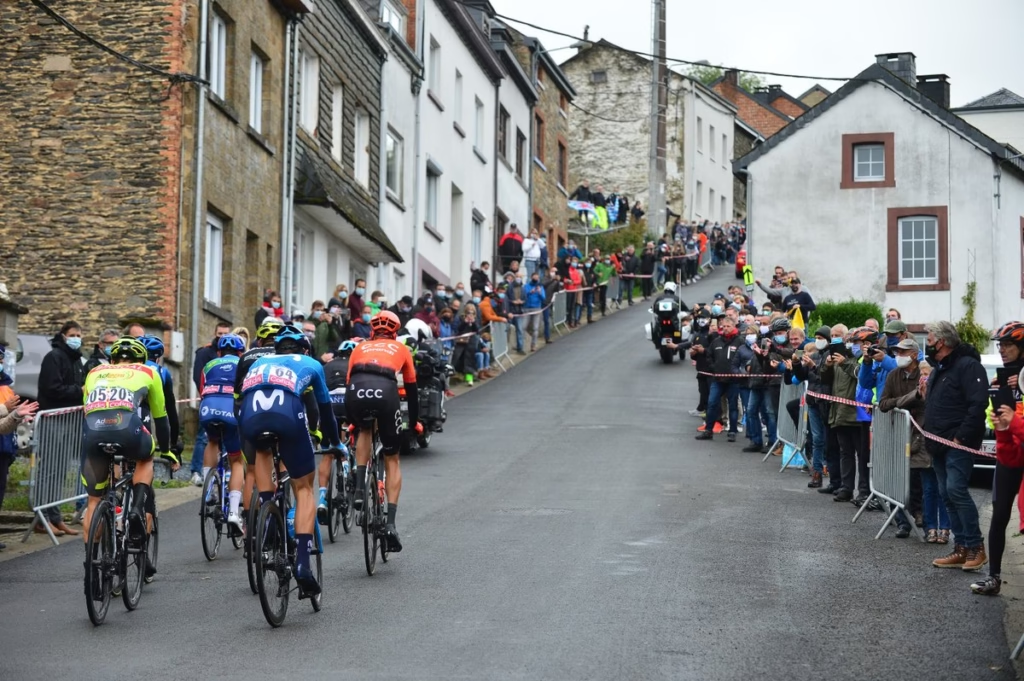
Saint-Roch and the wider Liège pattern matter too
The appeal of Liège-area riding is not only about the most famous names on the route card. Côte de Saint-Roch and the wider pattern of short, repeating climbs are just as important because they show what this region really does best. You are constantly having to reset your body and your breathing, going from effort to recovery and back again before you have fully settled.
That is the sort of riding that builds race-specific condition. Link a sequence of these climbs together, and the day starts to feel much longer than the distance suggests. Not because any one effort is overwhelming, but because the gaps between them never feel generous enough.
If you want a ride that feels closest to the spirit of Liège-Bastogne-Liège, this is the pattern to chase. Repeated efforts, slightly incomplete recovery, and the constant need to make good pacing decisions while carrying more fatigue than you would like.
Spa gives you a smoother, deeper Ardennes feel
Spa changes the texture of the riding. The roads there often feel more flowing, even when they are hard. The climbs tend to stretch out a little more, the roads arc more gently, and the whole day can feel less punchy but no less demanding. That suits riders who prefer sustained effort to repeated explosive surges.
This is also where the destination starts to feel broader than a simple classics training base. Spa is not only a place to suffer well. It is a place to settle into long efforts, rehearse fuelling and pacing, and ride with more structure. A Spa-centred route often gives you that sense of riding into the day rather than attacking it from the first kilometre.
That makes it particularly useful for riders preparing for longer sportives, stage-race style training blocks or simply a more measured cycling holiday. If Liège sharpens the day, Spa stretches it.
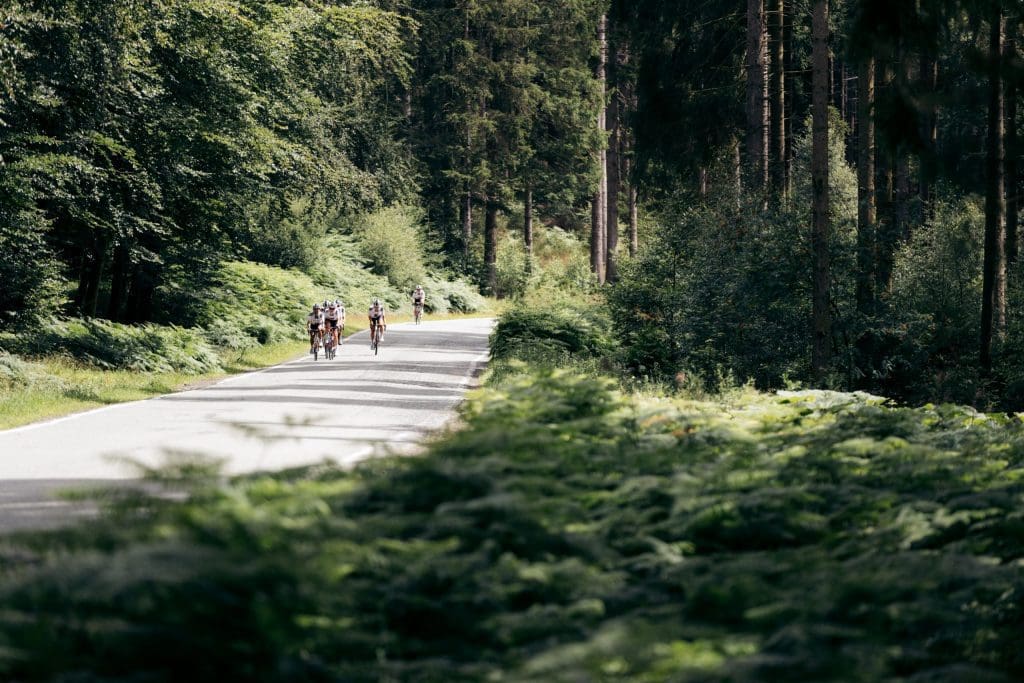 Photo Credit: Patrick Brunt
Building a route is about rhythm as much as distance
Choosing the right roads matters here because route design changes the whole experience. A good Ardennes loop is not simply a list of famous climbs stitched together. It needs transitions that make sense, enough valley road to recover without going cold, and a sequence that builds naturally rather than feeling clumsy.
A Liège-based loop works well when it starts with shorter efforts, lets the legs wake up, then gradually builds towards harder sequence riding later in the day. That sort of design gives you both atmosphere and specificity. You get the famous roads, but also the logic that makes the whole ride feel like more than sightseeing.
A Spa-based loop often suits riders who want a smoother day. You can ride out from town, let the terrain build more gradually, and use the surrounding roads to hold a stronger, steadier effort. That structure is especially useful if your goal is consistency rather than repeated maximal work.
Descending is part of the training, not dead time
The descents in the Ardennes matter because they shape what comes next. Road texture can change, visibility can tighten and steep sections can appear quickly. Descending well here is not about bravado. It is about precision and preparation.
A good descent gives you more than free speed. It lowers the heart rate slightly, lets the legs reset and prepares you for the next effort. That is why smoothness matters so much. Look ahead, hold a clean line, and avoid making every bend feel more dramatic than it is. If the roads are unfamiliar, the first descent should be read as much as ridden.
That also makes the whole day more enjoyable. Riders who descend with intent rather than panic often finish Ardennes loops feeling stronger and more in control, because they have used the downhills as part of the ride rather than as interruptions to it.
The atmosphere is why people keep coming back
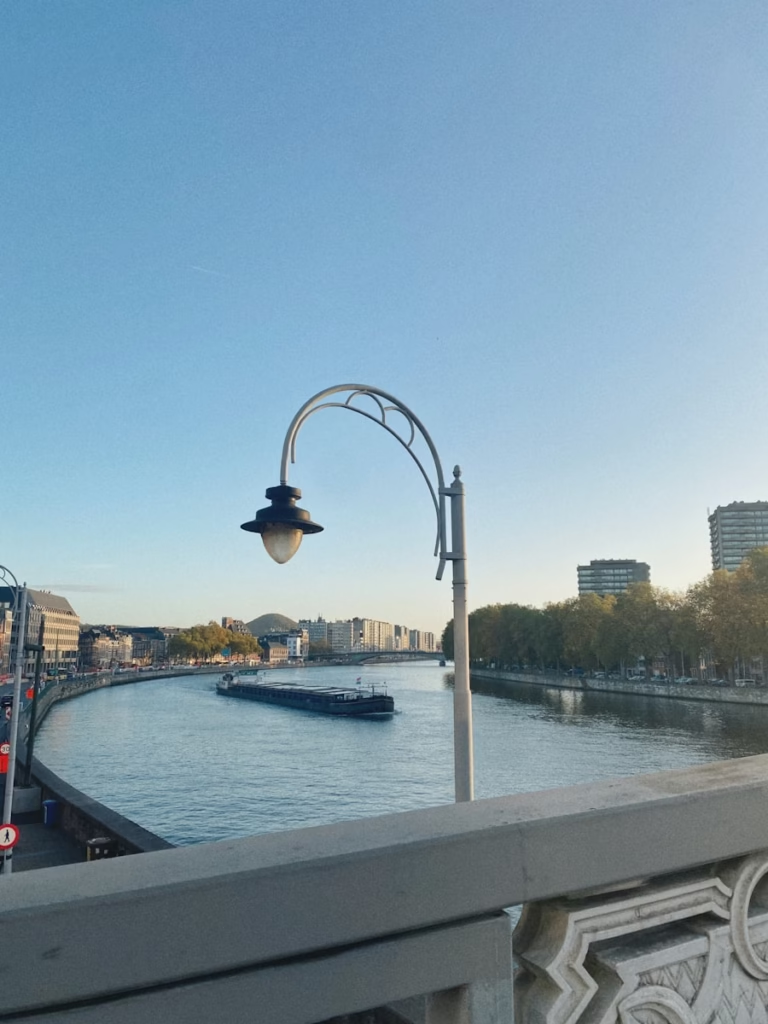
The atmosphere in Liège and Spa is not built only by the climbs. It comes from the details. Villages where you hear freewheels early in the morning. Roads that feel known even when you are on them for the first time because you have seen them in the race so many times. The way the air sharpens slightly as you gain height. The way a café stop after a hard loop feels completely earned.
That is why the region works so well as a cycling destination rather than just a famous race backdrop. It has the same deeper pull that makes destinations such as Limburg and the Amstel Gold region or Annecy and Lake Annecy feel so satisfying on a bike. The road and the place tell the same story.
Here, that story just happens to be told in the language of spring classics, repeated efforts and roads that always seem to have one more rise still waiting.
Early starts and late descents suit the region best
If there is an ideal way to ride this area, it probably begins early. The roads are calmer, the light is better, and the first climbs feel more open before the day fills out. It also gives you room to finish without rushing, which matters in a place where the best rides are usually built through sequences rather than a single objective.
Late in the day, the region changes tone again. Descents soften into evening light, cafés and villages feel more inviting, and the whole ride starts to feel as though it unfolded rather than simply happened. That is one of the understated pleasures of cycling here. A good Ardennes day rarely feels abrupt. It builds and then eases away.
If you can, finish on a route that gives you one rewarding descent near the end. It changes the emotional shape of the day completely, turning the last hard effort into a build-up rather than a final punishment.
-
 Photo Credit: quentinphotographiebe
 -
 Photo Credit: Getty


Practical information
Best base
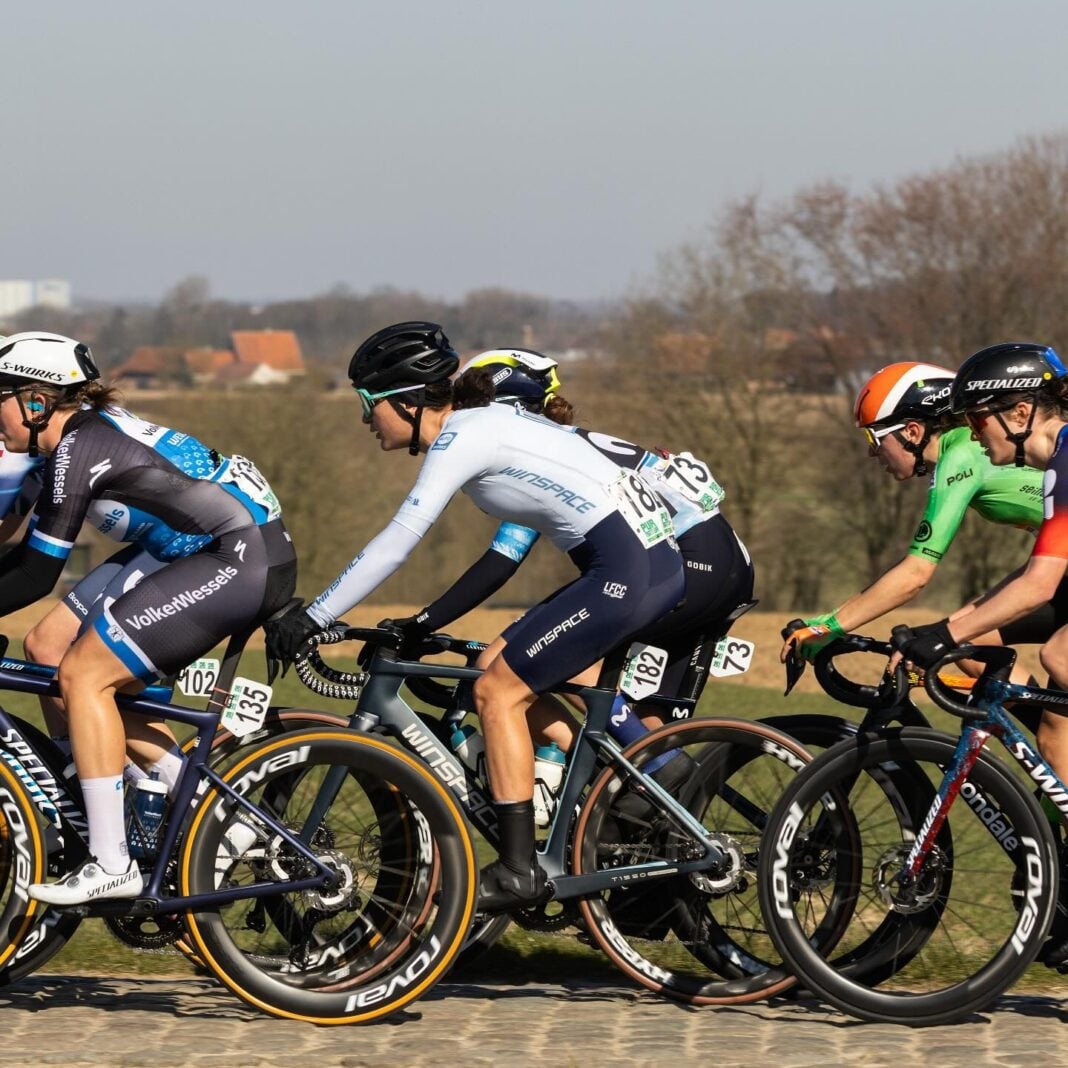
Liège works best if you want direct access to the most famous Liège-Bastogne-Liège roads and a stronger sense of cycling history around you. Spa makes more sense if you want a smoother, slightly calmer base with longer-feeling efforts and an easier flow into the wider Ardennes.
Best for
This area suits riders who enjoy repeated climbing, structured threshold work, race-specific classics training and route days built around rhythm rather than one giant summit. It also suits travelling cyclists who value atmosphere as much as statistics.
Ride style
Build loops around climb sequences, not just individual names. Liège rides often work best when they sharpen through the day. Spa routes usually reward a steadier approach, with longer efforts and more flowing roads.
Watch-outs
The roads demand attention. Descents can tighten quickly, gradients change without much warning, and the fatigue from repeated climbs can make a route feel much harder than the raw distance suggests.
Why Liège and Spa belong on a rider’s list
Liège and Spa belong on a rider’s list because they offer something more enduring than a single famous climb. They offer a complete Ardennes experience: repeated efforts, roads that reward good judgement, villages that feel connected to the sport, and the quiet satisfaction of a ride that gets harder and more meaningful as it goes on.
This is not a destination that overwhelms with altitude. It wins through structure, atmosphere and the feeling that every road is part of a larger cycling language. If you want to understand why the Ardennes matter, and not just admire them from a race broadcast, this is where that understanding starts to feel physical.
That is the real appeal. Around Liège and Spa, the Ardennes stop being a place you have watched on television and become a place you can measure through your own breathing, your own pacing and your own memory of the road once the ride is done.

