
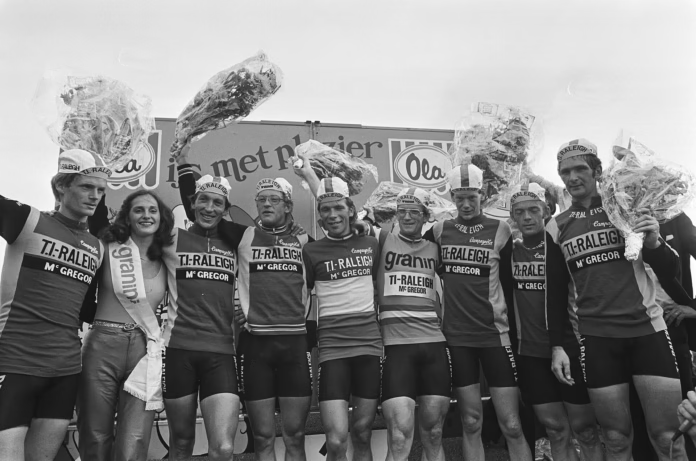
TI-Raleigh was one of those teams that became bigger than a sponsor title. It started as a British-backed project, was registered in the Netherlands, and under Peter Post grew into something far more formidable than a normal trade team. Between 1972 and 1983, TI-Raleigh became one of the defining powers of professional cycling, winning across the road and track, dominating team time trials, collecting Classics, stages and major stage-race results, and building a culture of control that many rivals found suffocating.
That combination is what makes the team so interesting historically. TI-Raleigh was not simply a successful squad. It was an empire in the way it imposed itself on races. The riders were strong, certainly, but the larger force was structure. Peter Post created a team that prized order, discipline and repeatability, and in an era when cycling could still feel chaotic and individualistic, that gave TI-Raleigh a ruthless edge.
It also mattered symbolically. Raleigh was a British bicycle manufacturer, backed by Tube Investments, but the team itself became most closely associated with Dutch cycling power. That gave TI-Raleigh a slightly unusual identity from the start: British money, Dutch management, and a roster that came to define a very northern, highly organised model of professional racing.
Peter Post built the machine
If TI-Raleigh had a central force, it was Peter Post. He had already been a major rider in his own right, winning Paris-Roubaix in 1964 and building a reputation on the track as the “Six Days Emperor”. But his larger historical importance came after his racing career, when he became the architect of one of the most successful teams of the modern era.
Post’s methods were strict and famously demanding. TI-Raleigh riders were expected to race with discipline, understand their role, and fit themselves into a collective rhythm. That sounds routine now, because elite cycling teams are built on those assumptions. In the 1970s, though, TI-Raleigh helped make that style of management feel sharper, more systematic and more relentless. The team’s success in road and track events was not separate from that culture. It was the result of it.
A British sponsor backed a Dutch superteam
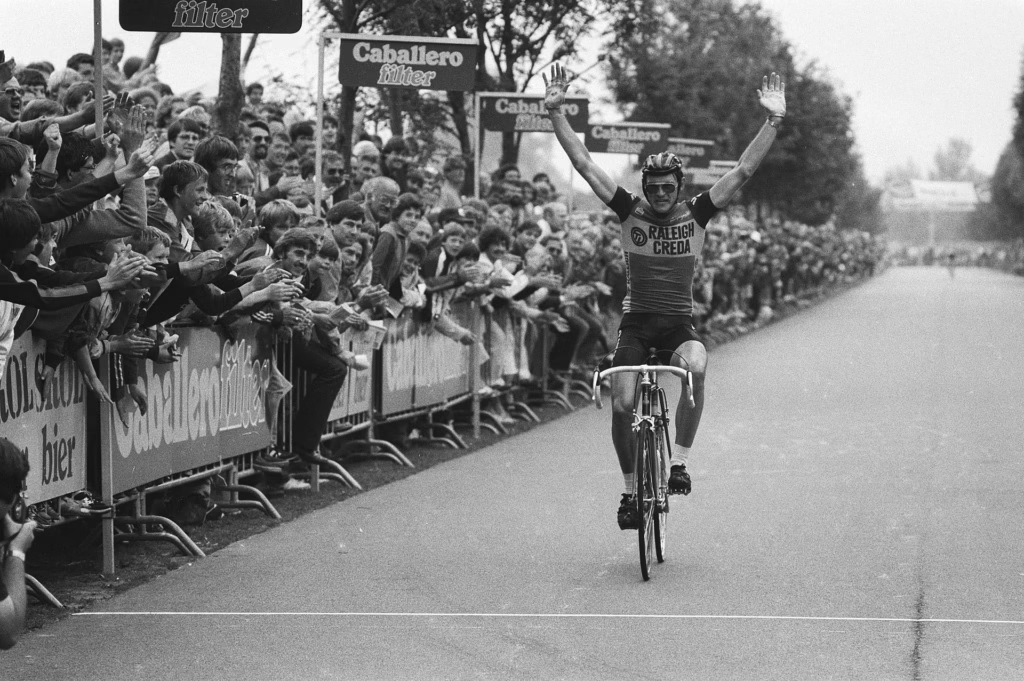
The team was founded in 1972 and ran until 1983. Its main sponsor was Raleigh, the British bicycle manufacturer, together with Raleigh’s holding company, Tube Investments. But although the financial identity was British, the team was registered in the Netherlands and quickly became one of the major expressions of Dutch cycling strength in the 1970s and early 1980s.
That dual identity matters because it helped TI-Raleigh occupy a slightly different position from many of its rivals. It could draw on Raleigh’s industrial and marketing weight while also sitting inside the dense culture of Dutch road and track cycling. In practice, that meant a team that felt both corporate and deeply embedded in the racing life of northern Europe.
It also helped that Raleigh was not merely attaching its name to the project. The bicycles themselves were part of the story, with frame-building linked to Raleigh’s Special Bicycle Development Unit in Ilkeston under Jan le Grand. TI-Raleigh was a sponsor-backed team, but it was also a bike-maker’s team in a very literal sense.
Winning became the team’s normal condition
The scale of TI-Raleigh’s success is one reason the team still looms so large. The squad won more than 900 races during its existence. That number matters not simply because it is large, but because it reflects how broad the team’s success was. TI-Raleigh did not specialise narrowly and dominate one corner of the sport. It won in stage races, one-day races, team events and on the track.
This is also why the word empire feels appropriate. TI-Raleigh was not built around one transcendent rider carrying everything else. It was built around a rotating cast of elite names, including Joop Zoetemelk, Jan Raas, Gerrie Knetemann, Hennie Kuiper, Henk Lubberding, Johan van der Velde and others who could win major races in different ways.
The Tour de France gave TI-Raleigh its grandest stage
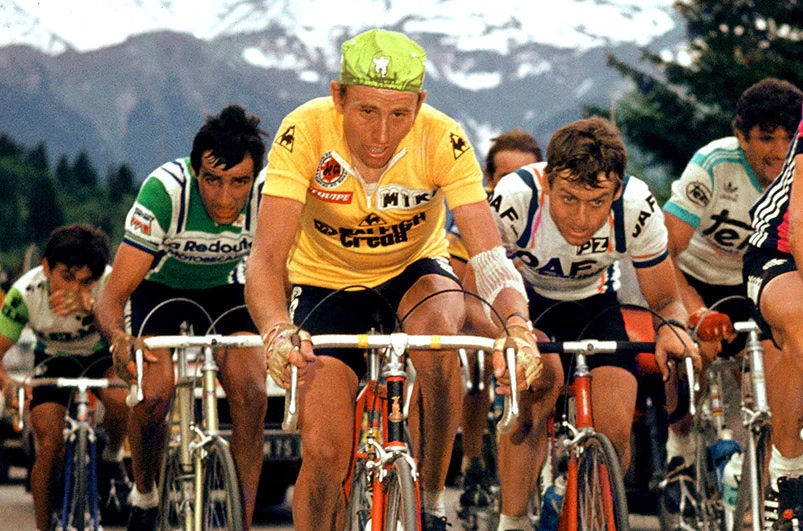
For all the team’s breadth, the Tour de France is still the cleanest place to see how powerful TI-Raleigh became. The squad won stages repeatedly and, in 1980, Joop Zoetemelk won the Tour overall on a Raleigh bike. That was the most obvious statement of the team’s stature: the British-backed sponsor name attached to the biggest prize in road cycling through one of the most complete Dutch riders of the era.
The team had already shown its quality earlier. In the 1976 Tour de France, TI-Raleigh won a team time trial and multiple stages, with Hennie Kuiper and Gerben Karstens among the winners, offering an early glimpse of the force the team was becoming.
But it was the team time trial dominance of the late 1970s and early 1980s that perhaps best captured TI-Raleigh’s character. From 1978 to 1982, the team won eight Tour de France team time trials. That was not merely a statistic. It was a declaration of method. TI-Raleigh did not just have strong riders. It had a system strong enough to turn collective effort into a recurring weapon.
The team time trial was where the philosophy became visible
TI-Raleigh’s greatness in the team time trial was not incidental. It was one of the clearest expressions of Peter Post’s approach to cycling. The team became famous for its formation changes, including a move away from the traditional double paceline towards a single paceline structure in certain situations, especially for very long team time trials.
That detail matters because it shows TI-Raleigh was not only disciplined but also willing to rethink how races should be ridden. The team time trial became a site of innovation, not just strength. Riders such as Jan Raas and Gerrie Knetemann helped drive tactics during those events, organising pace, order and effort in a way that reflected the team’s broader culture of collective control.
In many ways, this was the team at its purest. A one-day classic can still be won by a moment of individual brilliance. A team time trial exposes organisation. TI-Raleigh kept winning them because organisation was exactly what it did best.
Jan Raas, Joop Zoetemelk and the luxury of multiple leaders
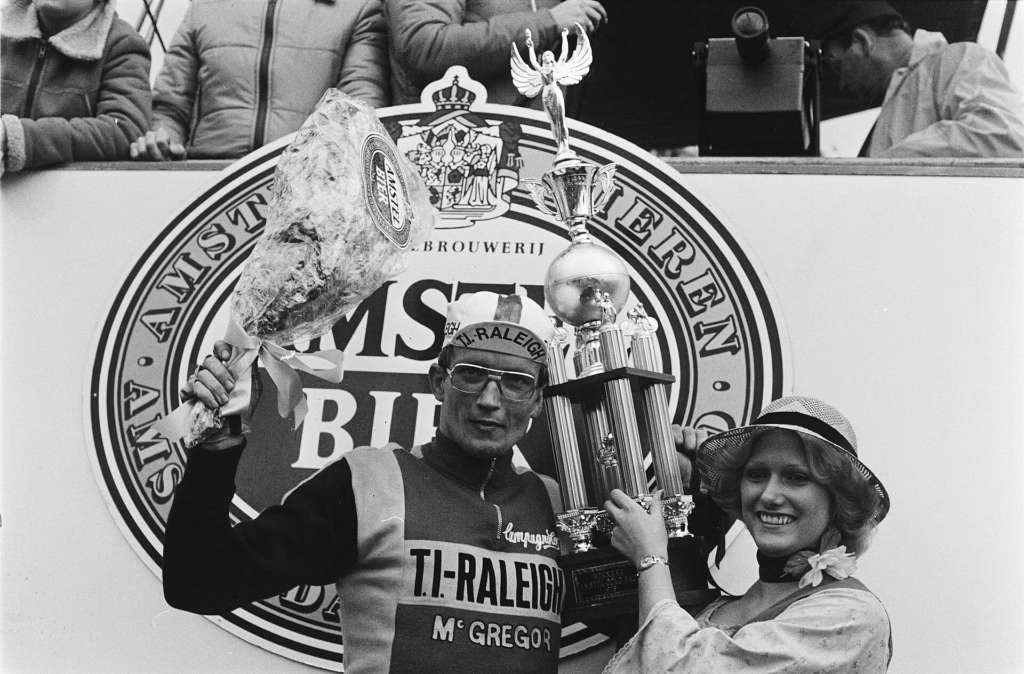
One reason the team could dominate so broadly was that it did not have to force every race through one rider. Jan Raas became one of the key faces of the project, especially in the Classics and sprints, while Joop Zoetemelk gave the team an elite Grand Tour figure. Gerrie Knetemann brought enormous value on the road and in time trials, Hennie Kuiper offered further depth, and younger or supporting riders such as Henk Lubberding strengthened the structure further.
That breadth is essential to understanding the team. TI-Raleigh did not merely have star riders. It had enough high-level riders to keep winning as the race types changed. A sponsor-backed empire in cycling is rarely built on one champion alone. It is built on giving the director enough options that almost every important race begins with several routes to victory rather than one. TI-Raleigh had that luxury for years.
Road and track success fed each other
Another reason TI-Raleigh felt so formidable was that it operated successfully across both road and track. Peter Post himself came from a deep track background, and the team’s broader record includes major six-day and pursuit success alongside its road dominance. The team was never purely a road construct. It was part of a wider northern European racing culture where the track and road still informed each other strongly.
That matters because it helps explain the team’s feel. There was something slightly mechanical, slightly precise, about TI-Raleigh at its best. It raced like a team that understood rhythm, pacing and repeated effort not only from road cycling, but from the traditions of track competition too. That quality is one reason the squad still feels modern in hindsight, even though its peak years sit in the 1970s and early 1980s.
The split at the end showed how much power had been concentrated
Teams that become this successful often carry strain within them, and TI-Raleigh was no exception. By the time Raleigh withdrew from sponsorship in 1983, the project had reached the point where its breakup shaped the next phase of professional cycling as much as its victories had shaped the previous one. Peter Post moved into the new Panasonic project in 1984, while Jan Raas went on to form Kwantum.
That split is historically revealing. It suggests that TI-Raleigh had accumulated so much authority, so much talent and so much organisational identity that its ending could not simply be an ordinary sponsor withdrawal. It created successor powers. That is another sign of an empire rather than just a successful team. When TI-Raleigh ended, it did not leave a vacuum. It broke into pieces large enough to matter on their own.
-
 Photo Credit: Canyon SRAM (supplied media release)
 -
 Photo Credit: Park Tool
How TI-Raleigh should be remembered
TI-Raleigh should be remembered as one of the decisive trade teams of the 1970s and early 1980s, and as a project that helped show what a fully organised, sponsor-backed cycling machine could look like. It was British-backed, Dutch-shaped and European in its reach. It won constantly, but more importantly, it won in a way that made success feel systematic rather than accidental.
It should also be remembered as a team that made collective strength visible. The eight Tour team time trial wins between 1978 and 1982, the 1980 Tour de France victory with Zoetemelk, the long list of major riders, and the team’s wider cross-discipline record all point to the same conclusion: TI-Raleigh did not just win races. It imposed a model.
That is why the team still matters. In the history of professional road cycling, there are squads that feel like collections of champions, and then there are squads that feel like eras in themselves. TI-Raleigh belongs in the second category. It was not merely a British-sponsored team that happened to do well abroad. For a decade, it became one of the defining powers of the sport.
For readers interested in the wider evolution of dominant sponsor-backed teams, TI-Raleigh also sits naturally alongside later projects that reshaped the sport in different ways, whether through the industrial might of Boels-Dolmans in women’s racing or the highly structured sprint and Classics systems of later men’s teams. TI-Raleigh was not the first great team in cycling history, but it was one of the clearest early examples of how organisation, talent and sponsor power could be fused into something that felt close to total.

