
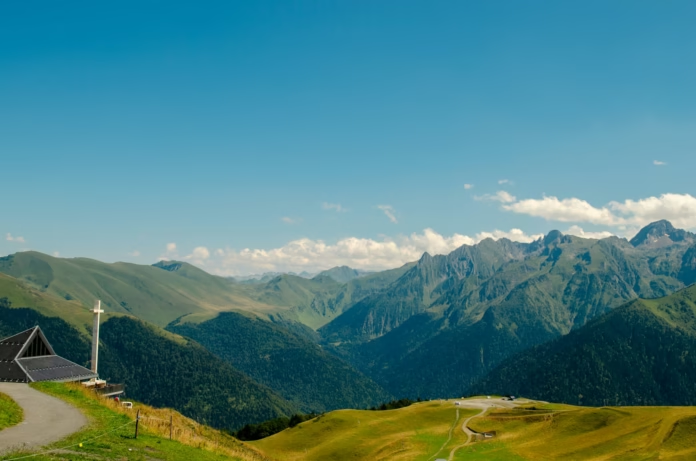
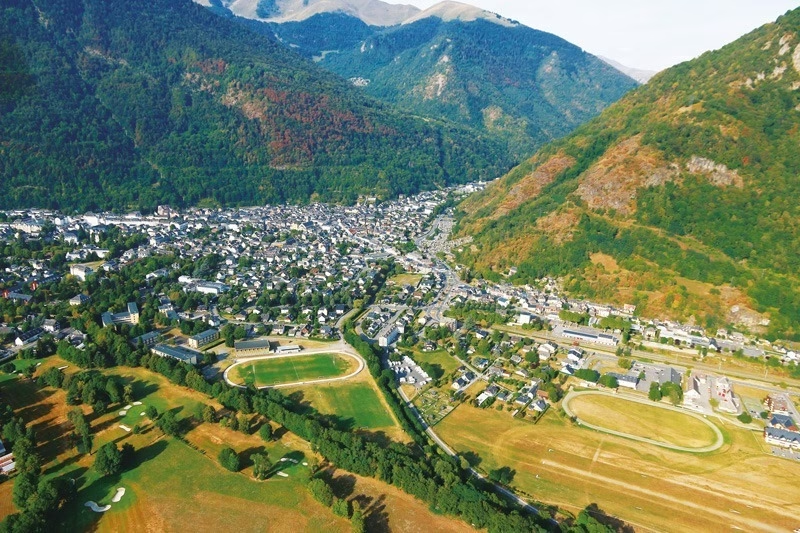
Bagnères-de-Luchon sits like a hinge between valleys in the eastern Pyrenees, where the road network tightens and the scenery changes by the kilometre. One moment you are rolling through spa-town streets and flatter valley roads, the next the mountains start to lean in and the road begins asking sharper questions. For cyclists, that shift is part of the appeal. Luchon gives you direct access to proper mountain riding without the long, forgettable approach roads that can make other destinations feel diluted before the real work even starts.
This corner of the range rewards attentive riding. The roads here are not defined only by altitude gain, but by how the gradients gather and how the tarmac behaves as the climb unfolds. Many ascents feel long because of their rhythm rather than their absolute length. They encourage a smooth cadence, a little patience, and the kind of pacing that keeps you honest. Valley-floor traffic is lighter than in some of the better-known Pyrenean centres, yet the riding culture still feels alive, helped by the town’s heritage and the steady stream of cyclists heading towards the passes.
Luchon also works because it has route logic. You can link major climbs in a single outing, use the valleys as reset roads, and return to town without ever losing the sense that you are in proper mountain country. There is also something about the atmosphere of the place that suits cycling. The spa-town calm settles you before the first serious switchback, and by the time the road pitches upward, the day already feels focused. In the same way that Sierra Nevada and Granada work because the city and the mountain complement each other, Luchon manages to make its base town part of the ride rather than just the place where you parked the bike.
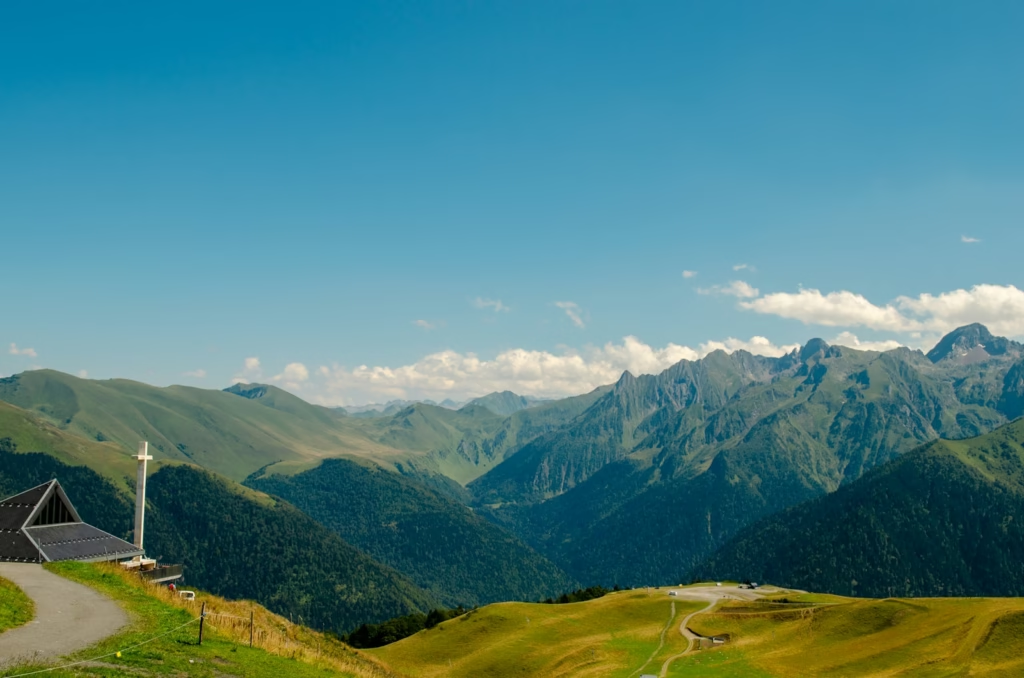
Why Luchon matters as a cycling base
Bagnères-de-Luchon matters because it is both practical and atmospheric. Practically, the roads radiate from a basin, letting you choose between shorter, sharper efforts and longer, more continuous ascents depending on the day and the legs you have brought with you. Atmospherically, the eastern Pyrenees feel slightly tighter and more textured than the broader, more open stereotypes many riders carry about mountain riding. You move between ridgelines, forest and exposed upper slopes quickly, and the descents often feel like releases from pressure rather than simple free speed.
It is also a good destination for riders who like roads that feel lived in rather than staged. These are not mountains that only come alive on race day. You notice patched sections of tarmac, farm traffic, changing road texture, and small villages that make the ride feel connected to the place rather than laid across it for sport. That gives each route its own tone, and it encourages an approach based on feel as much as numbers.
If your wider Pyrenees plan includes more famous climbs elsewhere, Luchon also works very well as a contrast. The region does not have to compete directly with the drama of the Tourmalet or the long pull of the Col d’Aubisque. Instead, it offers a quieter, more layered sort of mountain riding, where route construction and climb rhythm matter just as much as the headline altitude.
The roads around Bagnères-de-Luchon feel personal rather than theatrical
Start from town and you understand quickly why the Pyrenees can feel more personal than the Alps. The first kilometres are often about getting organised rather than showing off. You find your cadence, settle into your gears, and begin reading the road surface. Many of the valley approaches are predictable and well-surfaced, with a steady camber through bends and enough width to let you relax before the climb asks for more.
Once the road rises, texture becomes part of the experience. Lower sections are often smooth enough to encourage controlled, seated climbing even when gradients sit in the mid-single figures. Higher up, the story changes. Switchbacks bring you onto rougher patches, especially where weather exposure and mountain runoff have forced repeated repairs. The best way to ride roads like these is not to fight them. Brake early, hold a clean line, and let the surface tell you how ambitious to be rather than arriving with a fixed plan and trying to impose it.
Traffic is usually manageable, though not absent. Expect farm vehicles on some of the approach roads, local traffic around the town itself, and more cyclists on the best-known passes in high season. Even so, the overall feel is calmer than on some more famous Pyrenean corridors. That gives the riding a welcome steadiness, especially if you prefer to climb on your own pace rather than being dragged into someone else’s effort too early.
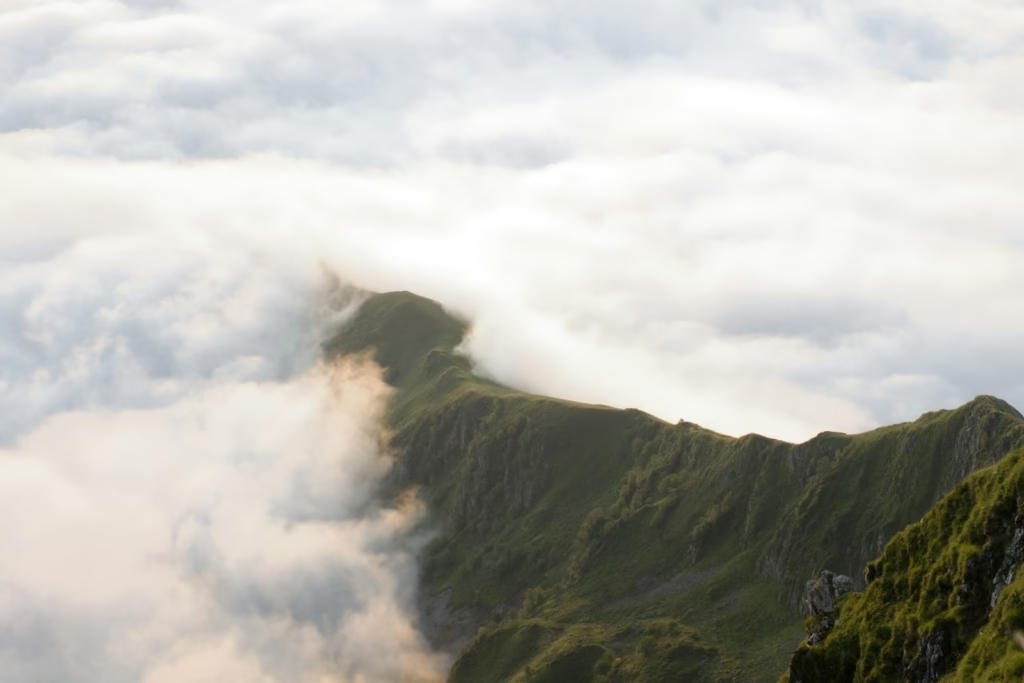
Climb style in the eastern Pyrenees is built on rhythm, then pressure
The eastern Pyrenees are not defined by one single climb type. Instead, routes tend to mix styles within the same day. A climb might open with reassuring gradients, then tighten slowly enough that you only fully register the change once your breathing has shifted and your cadence starts needing more thought. That is one reason these mountains suit riders who enjoy pacing as much as raw climbing. You are constantly reading the road ahead rather than only reacting to what is directly under the front wheel.
Several of the Luchon-area ascents begin with long, steady ramps that allow you to settle into a sustainable effort. They are not soft, but they are honest. You can ride them smoothly if you keep your discipline. The turning points come as the road bends around a shoulder or into a more enclosed section, where the gradient tilts just enough to make the effort feel more concentrated. Those shifts stop the climb feeling monotonous, even when the pace remains steady.
Higher up, the atmosphere changes the effort as much as the gradient does. Under the trees, the air can feel cool and dense. Above them, the light opens out and the climb begins to feel more exposed. On some days, that makes the effort feel freeing. On others, especially with wind moving through the valley, it turns the last section into a more psychological test. The best approach is usually restraint rather than ambition. If you arrive at the final kilometres with enough left to keep the effort smooth, the climb feels like a build rather than a collapse.
The descents ask for respect, not heroics
Descending is one of the reasons riding around Luchon feels complete. The roads do not always give you the polished, race-like run all the way back to the valley. Instead, they combine broad sections of confidence with tighter parts that make you think carefully about braking points and road position.
In the valley floors, you can often let the legs spin and begin the recovery process properly. Once the descent narrows into switchbacks or shaded tree sections, you need to be a little more measured. Debris can gather against the inside of bends, and darker patches of road can hide more variation than they first suggest. The best riders down these roads are not necessarily the ones taking the biggest risks, but the ones who remain patient enough to learn the rhythm of the descent before trying to exploit it.
A good rule here is to use the opening bends as reconnaissance rather than as a test of nerve. Establish where the tarmac is cleanest, where the corners tighten, and where you can release the brakes confidently. That tends to make the whole day more enjoyable. You finish feeling as if the descent prepared you for the next climb, not as if you survived it by accident.
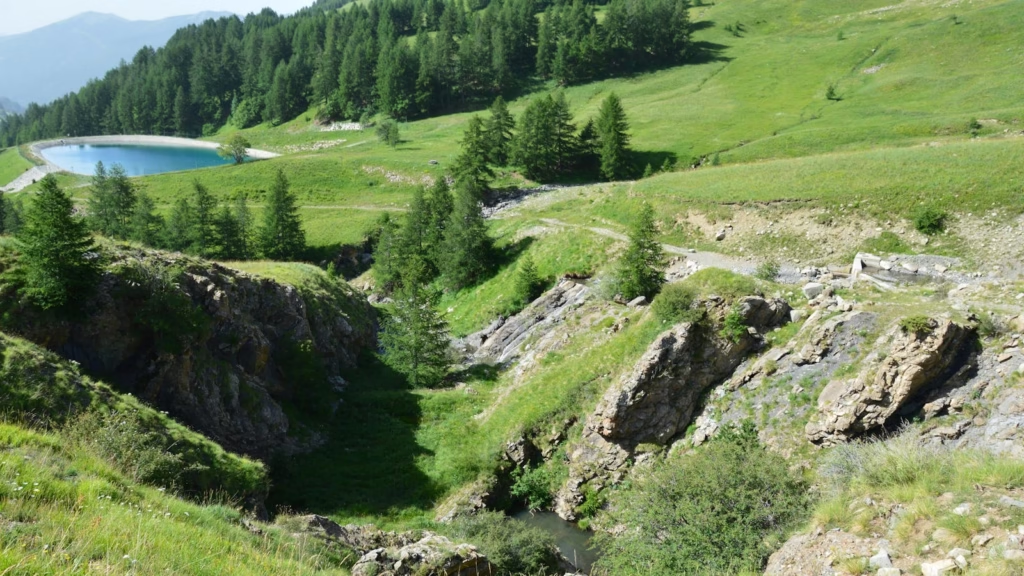
Route-building from Luchon is where the destination really starts to shine
The smartest Pyrenean days are rarely the ones with the biggest number at the bottom of the ride file. They are the ones built with some thought. Luchon is especially good for that because the valley network lets you link climbs without losing the mountain feel in between. You can use connector roads to recover and refuel while still feeling fully inside the day, rather than dropping into dead kilometres that interrupt the ride’s shape.
A single-pass day works well if you want one major effort and then a calmer spin home. A two-pass ride is often the sweet spot, giving you enough climbing to make the day meaningful without turning the final hour into damage control. A three-pass outing is entirely possible, but it suits riders who are willing to open conservatively and treat the day as a sequence rather than a challenge to be attacked from the start.
This is also where Luchon compares well with other classic climbing destinations. In places such as Andermatt or Lake Como, you often ride for a specific climb first and let the rest of the day follow from there. Around Luchon, the sequencing is more fluid. The whole area encourages you to think in loops and combinations, which makes it particularly rewarding for cyclists who enjoy shaping their own day rather than simply riding the most famous ascent available.
The scenery changes the mood of the ride more than you expect
One of the quiet pleasures of this region is how quickly the visual character changes. Early valley roads often carry greenery, river noise and softer air. Mid-climb sections can move into darker woodland where the sound dampens and the effort feels more contained. Higher up, the road becomes more exposed and the day opens out, sometimes with a suddenness that makes the ride feel as if it has stepped into a different mountain system entirely.
Light matters here too. Even on days that look stable on the forecast, clouds can move quickly across the slopes and change how the road feels under you. In the sun, the tarmac warms and climbs often feel smoother. Under passing clouds or in shaded corners, the road can feel tighter and cooler, which subtly changes how you descend and how you judge effort. That constant adjustment is part of the mountain atmosphere rather than an inconvenience.
The human rhythm of the place adds to that feeling. You notice farm vehicles, other riders, small roadside pauses, and the sense that the route is being used rather than admired from a distance. It gives the destination a low-key intensity that suits cycling very well. Nothing feels over-arranged. The roads just happen to work.
Who Bagnères-de-Luchon suits best
Cycling in and around Bagnères-de-Luchon suits riders who like mountain riding that feels varied and lived in. You do not need to be chasing only the highest summit or the most famous climb to enjoy it. In many ways, the destination is strongest for riders who appreciate rhythm and route craft.
It works especially well for all-round climbers who prefer steady ascents to constant violent gradient changes, for gran fondo riders who want multiple climbs with enough route quality to make a full day enjoyable, and for technique-minded cyclists who like reading surface changes, braking points and turn radius rather than only measuring success through climbing speed. It is also a very good destination for riders building endurance for bigger mountain trips later in the year, because the range of gradients and route combinations lets you scale the stress of the day intelligently.
If your only interest is the single most famous Pyrenean summit, there may be more obvious bases. But if you want a destination that gives you several strong days, a calmer atmosphere, and roads that feel better the more closely you pay attention to them, Luchon makes a very convincing case.
-
 Photo Credit: quentinphotographiebe
 -
 Photo Credit: Getty


Practical information
Location
Bagnères-de-Luchon sits in the French Pyrenees near the Spanish border, in a basin that gives fast access to several surrounding valleys and pass roads. It works best as a central base rather than as a stop on a point-to-point route.
Riding
The best riding comes from building loops that combine one or two major climbs with valley connectors and a controlled descent back towards town. The area suits road riding first and foremost, especially for cyclists who want repeated mountain efforts without the dead kilometres that sometimes come with larger alpine valleys.
When to go
Late spring to early autumn is the obvious window, with the height of summer bringing the best access to the higher roads. Even then, mountain weather can shift quickly, so it helps to treat the forecast as guidance rather than certainty.
Accommodation
Luchon works well because it already feels like a base town. Staying there makes the logistics simple, keeps café and food options close at hand, and allows you to ride straight from the door without needing to drive to the start of every climb.
Watch-outs
Be ready for changing road texture, shaded corners on descents, and effort patterns that feel harder than the ride profile first suggests. This region rewards riders who fuel early, descend patiently and build the day gradually rather than trying to win it in the first climb.
Why Luchon and the eastern Pyrenees belong on a rider’s list
Bagnères-de-Luchon and the eastern Pyrenees belong on a rider’s list because they offer more than one famous road or one heroic climb. They offer a complete mountain riding experience built around rhythm, route logic and atmosphere. The terrain is serious without becoming theatrical, the roads reward attention, and the town itself gives the whole trip a calm centre.
That is what makes the destination memorable. You leave not only remembering one pass, but remembering how the whole day fit together: the early valley calm, the slow tightening of the first climb, the change in light higher up, the descent that demanded more patience than pride, and the feeling of rolling back into town as if the ride had unfolded naturally rather than been forced into shape.
For cyclists who want mountain riding with depth rather than noise, that is a very strong reason to come here.

