The Topeak D-Torq Wrench is a digital torque wrench designed for cyclists who want workshop-level accuracy without moving into full professional tool-board territory. At around £169.99 in the UK, with an RRP closer to £230, it is an expensive home mechanic tool, but one that makes more sense once carbon bars, seatposts, stems, cranks and delicate small bolts enter the picture.
This Topeak D-Torq Wrench review looks at whether digital torque control is worth the extra spend over a simpler click-type wrench. The short answer is that it is a very good tool for careful home mechanics who regularly work on modern bikes, but it is overkill if you only need to adjust a saddle height twice a year.
Check Topeak D-Torq Wrench availability on Amazon UK
Topeak D-Torq Wrench review
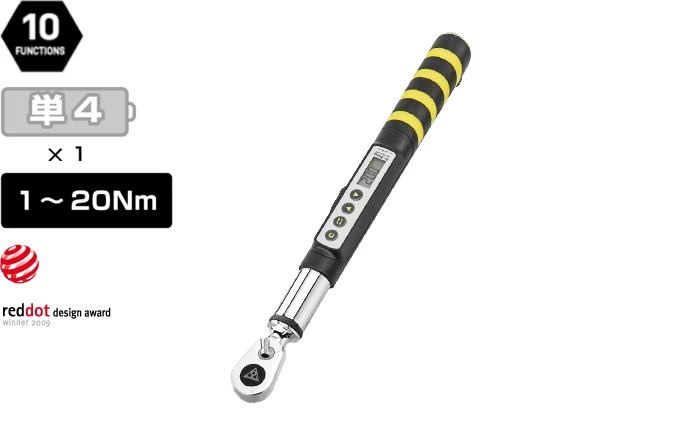
The Topeak D-Torq Wrench sits in the serious home workshop category. It covers the 1-20Nm torque range, which is exactly where most sensitive bicycle fasteners live. Stem bolts, seatpost clamps, saddle rail clamps, brake lever clamps, bottle cage bolts, accessory mounts and many cockpit components all sit in this low-to-mid torque range.
That makes it a more cycling-specific tool than the larger Topeak D-Torq DX, which covers 4-80Nm and is better suited to bottom brackets, pedals and crank bolts. The standard D-Torq Wrench is the one that makes most sense for road cyclists, gravel riders and home mechanics working around expensive frames and finishing kit.
Quick verdict
Overall verdict: The Topeak D-Torq Wrench is a precise, easy-to-read and confidence-inspiring digital torque wrench for home mechanics who regularly work on modern bikes. It is expensive, and a good click-type wrench will be enough for many riders, but the clear display, audible warning and low-torque accuracy make it a very useful workshop upgrade.
Best for: careful home mechanics, carbon bike owners, regular fettlers and riders who want accurate torque control for cockpit, seatpost and small component bolts.
Not ideal for: occasional users, riders on a tight budget, mechanics who need higher torque for bottom brackets and crank fittings, or anyone who prefers a simple mechanical click wrench.
Price: around £169.99 in the UK, with RRP usually around £230
Weight: 173g with battery
Key specs: 1-20Nm torque range, clockwise accuracy of ±3 per cent, counter-clockwise accuracy of ±4 per cent, LCD display, audible pre-set and over-torque warnings, four measurement units, AAA battery, hard shell case and included bits.
Reasons to buy
- Accurate 1-20Nm range suits most delicate bicycle fasteners
- Digital display makes torque values easy to read and control
- Audible warning helps avoid over-tightening expensive components
- Included bits cover common road and gravel bike bolts
- Hard shell case keeps the tool and bits organised
- Reversible ratchet head is practical for regular workshop use
Reasons to avoid
- Expensive compared with good click-type torque wrenches
- Does not cover higher-torque jobs such as many crank or bottom bracket fittings
- Digital interface is slower than a simple preset wrench for quick jobs
- Requires battery power
- Bulkier than compact ride-pack torque tools
Product overview
The Topeak D-Torq Wrench is a digital torque tool aimed at riders who work on their own bikes and want more control than a basic preset key can offer. Its 1-20Nm range is well chosen for cycling. Many of the bolts most likely to cause expensive damage if over-tightened sit inside this window, particularly on carbon road and gravel bikes.
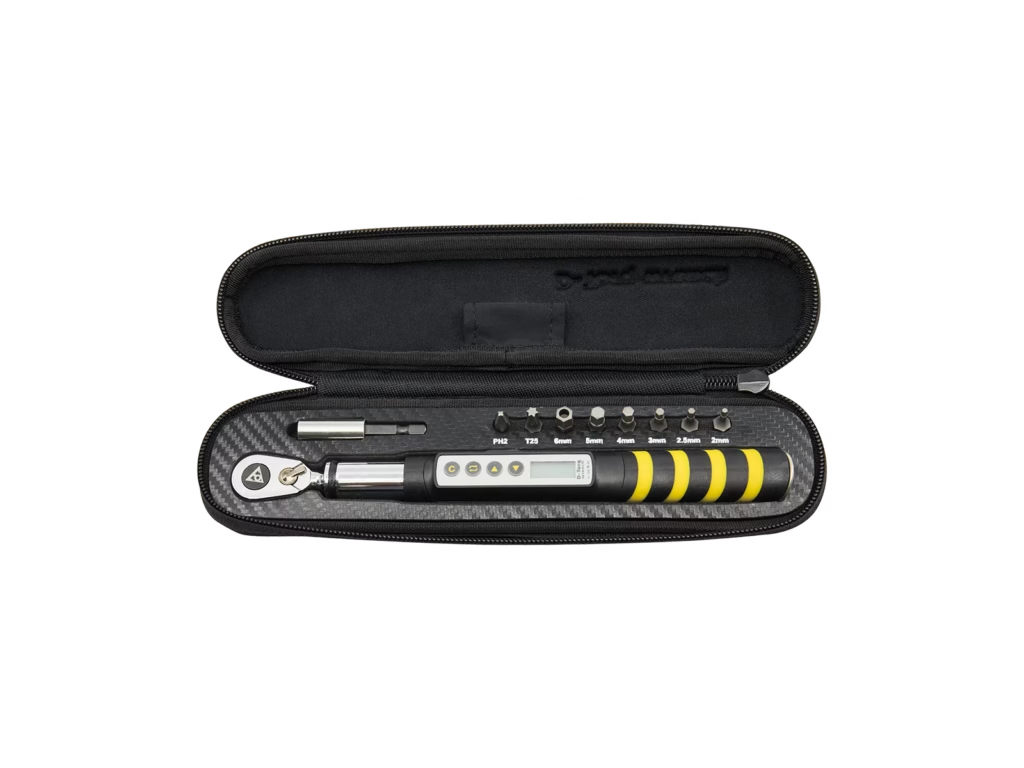
The tool comes with 2, 2.5, 3, 4, 5 and 6mm Allen bits, a T25 Torx bit and a #2 Phillips bit. That covers the everyday jobs most riders will do at home: adjusting cockpit position, fitting bottle cages, swapping stems, changing saddles, setting seatpost height and working around brake controls.
The obvious rivals include the Park Tool TW-5.2, Park Tool ATD-1.2, Effetto Mariposa Giustaforza, Pro Bike Tool adjustable torque wrench, Silca T-Ratchet + Ti-Torque kit, Wera torque screwdrivers and Topeak’s own Torq Stick Pro. The Topeak D-Torq Wrench digital torque tool stands out because it offers live digital feedback rather than relying only on a mechanical click.
For UK cyclists building a home workshop, this is the sort of tool that becomes more valuable as bikes get more expensive. A rounded bolt, crushed carbon seatpost or over-tightened stem clamp can easily cost more than the tool itself. That is the strongest argument for spending properly here.
Design and construction
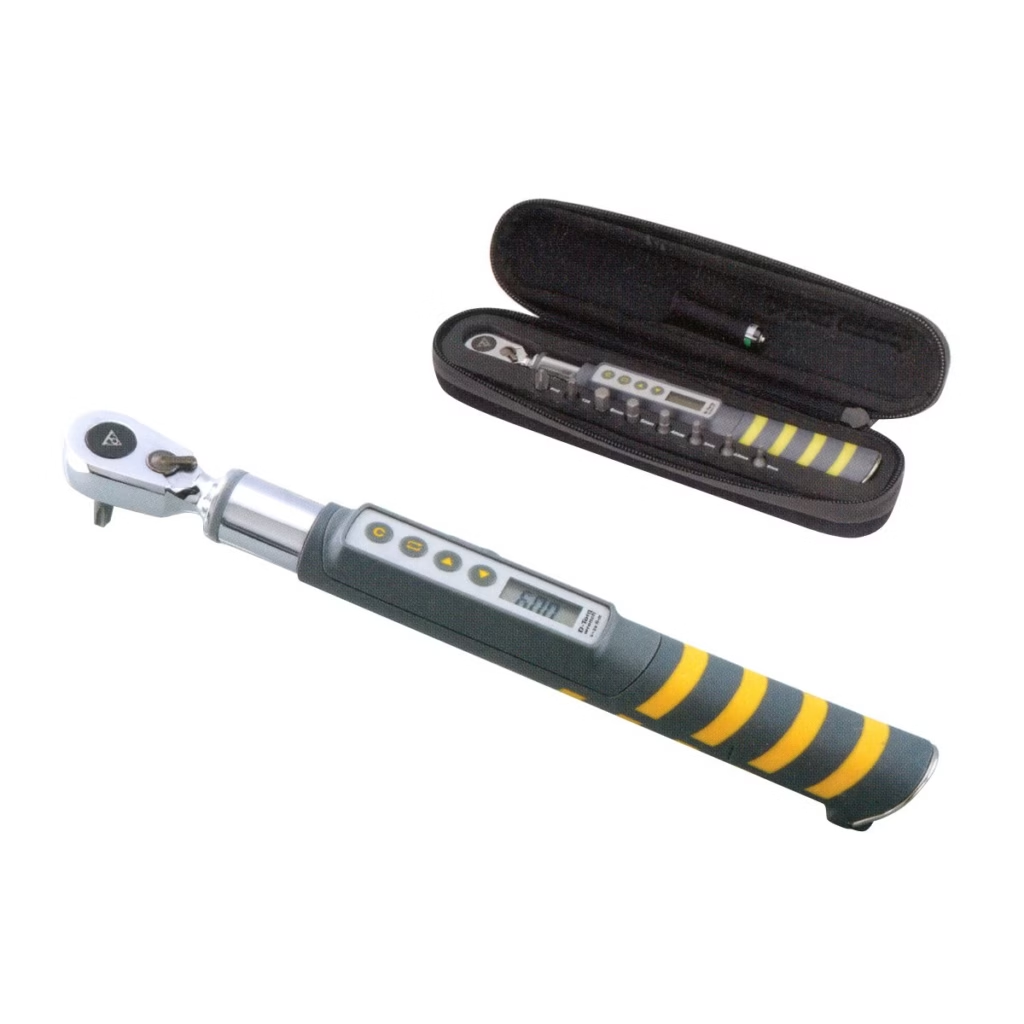
The Topeak D-Torq Wrench has a slim, slightly technical look, with a reversible ratcheting head at one end, an LCD display and control buttons built into the handle. The striped yellow-and-black grip is distinctive, and while it will not appeal to everyone visually, it gives the tool a clear workshop identity.
At 21.6cm long and 173g with the battery fitted, it feels substantial without being unwieldy. It is not a pocket tool, and it is not designed to disappear into a saddle bag. It belongs in a home workshop, toolbox or travel case for events where accurate set-up matters.
The construction combines hardened steel with engineering-grade polymer. The ratchet head feels reassuringly positive, while the handle is shaped well enough for controlled tightening rather than brute force. That matters with low-torque fasteners because the aim is not to lean on the tool, it is to build pressure smoothly until the target value is reached.
The LCD display is the defining feature. It can measure in Nm, kg-cm, in-lb and ft-lb, although most cyclists will simply leave it in Newton metres. The readout is clear enough for bench use and the audible warning system adds a second layer of protection when approaching or exceeding the selected torque value.
The included hard shell case is more useful than it might sound. Torque tools need to be kept clean, protected and complete. Loose bits rolling around in a toolbox are a nuisance, and a digital wrench is not something to leave knocking against cassette tools and pedal spanners. The case keeps the wrench, bits and battery neatly stored.
Topeak D-Torq Wrench setup and ease of use
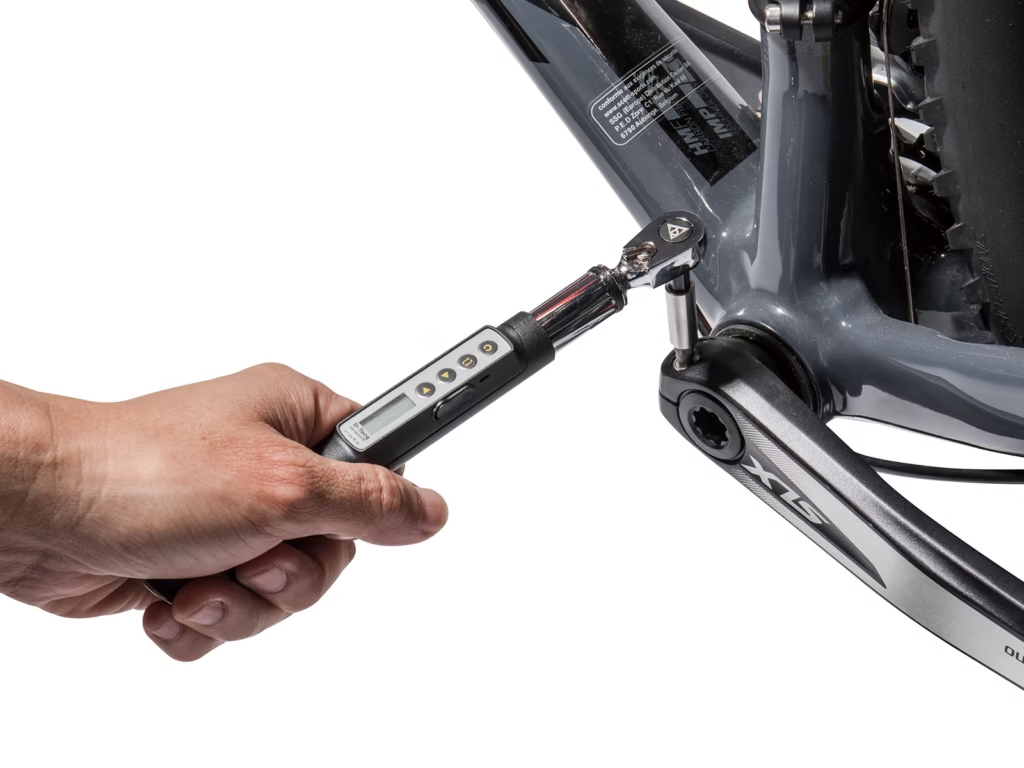
Using the D-Torq Wrench is straightforward once you understand the buttons. Fit the right bit, turn the tool on, select the torque unit, set the desired torque value, then tighten slowly until the warning tells you that you are approaching the target. It is more involved than grabbing a preset 5Nm key, but it also gives more control.
The digital display is most useful when working around sensitive components. On a stem faceplate, for example, it lets you build torque evenly across the bolts rather than simply waiting for a click. That encourages better habits. You tighten gradually, move between bolts and avoid loading one side too aggressively.
The audible warning is a real advantage. When working in a slightly awkward position, such as under a saddle clamp or around an integrated cockpit, you cannot always look directly at the screen. The sound gives you a clear cue that you are reaching the target and helps prevent that final unnecessary quarter-turn.
The reversible ratchet head works well for normal bike maintenance, and the supplied bit range covers most common jobs. There will still be situations where you need additional bits, especially on modern bikes with proprietary fittings or deeper access points, but the included set is enough for day-to-day use.
The AAA battery keeps things simple. Some riders will prefer rechargeable workshop tools, but a replaceable battery is hardly a problem here. Topeak quotes around 20 hours of battery life, which is a lot of home mechanic time. The auto-off function also helps avoid unnecessary drain.
Real-world performance
The Topeak D-Torq Wrench feels most valuable when working on expensive parts where guessing is not acceptable. Seatpost clamps, carbon bar stems, saddle rail clamps and brake lever collars are all small jobs that can become costly if rushed. The D-Torq slows the process down in a good way.
On cockpit bolts, the live display is useful because it shows how torque builds rather than simply announcing the end point. This is especially helpful on four-bolt stem faceplates, where even tension matters. It becomes easier to work in small steps, moving diagonally between bolts and watching the numbers rise predictably.
The same applies to seatposts. Carbon posts and frames often use low torque values, sometimes with assembly paste, and the margin between secure and overdone can feel narrow. The Topeak gives enough feedback to make that process calmer. You are not relying on feel, and you are not trying to interpret a vague click from a cheap wrench.
The audible warning is more useful than expected during awkward jobs. Under-saddle clamps, integrated cockpit hardware and brake lever bands can put the display at an inconvenient angle. In those situations, the sound becomes the main guide. It gives a clear warning before you go too far, which is exactly what a digital torque wrench should do.
Accuracy feels consistent across repeated use, provided the tool is handled properly and pressure is applied smoothly. Like any torque wrench, it rewards patience. If you yank at the handle or use it like a normal ratchet, you lose much of the benefit. Used slowly, the D-Torq gives controlled, repeatable tightening.
The grip is comfortable enough for home workshop use. It is not as refined as some premium workshop tools, but it gives enough purchase without encouraging excessive force. The tool’s length also feels right for the 1-20Nm range. There is enough leverage to reach the higher end without effort, but not so much that low-torque bolts become too easy to overdo.
The 1-20Nm range is ideal for most road and gravel maintenance, but it is also the key limitation. It will not cover every job on a bike. Pedals, some crank bolts, bottom bracket fittings and cassette lockrings can sit outside its useful range. For those, you need a larger torque wrench, such as the Topeak D-Torq DX or a dedicated workshop model.
For delicate jobs, though, the range is better than a broader tool that starts too high. A wrench that covers 4-80Nm can be versatile, but it is not always the nicest thing to use on small 3, 4 or 5Nm bolts. The standard D-Torq feels more appropriate around stems, bars and seatposts because it was clearly designed for that lower-torque environment.
The hard case also improves day-to-day use. It keeps the bits organised, protects the display and makes the tool easy to find. That sounds basic, but home workshops often become cluttered quickly. A torque wrench should not be buried under tyre levers and chain whips.
The main frustration is speed. For a quick adjustment, a preset torque key is faster. If you regularly make the same small adjustment, such as setting a 5Nm seatpost clamp, the D-Torq can feel like more tool than the job needs. It shines when precision matters across varied components, not when you want the fastest possible solution.
Torque accuracy and workshop use
A torque wrench is there to protect components, not just satisfy neat workshop habits. Modern bikes use more carbon, lighter clamps and smaller hardware than ever, and many parts now have the recommended torque value printed directly beside the bolt. Ignoring those numbers is a risk.
The Topeak’s ±3 per cent clockwise accuracy is strong enough for serious home use. It is guaranteed for 5,000 cycles, with Topeak recommending recalibration after that point or yearly. That recalibration guidance is worth taking seriously if the tool is used regularly. A torque wrench is only valuable if it remains accurate.
The 1-20Nm range is especially useful for road bikes. Stems often sit around 4-6Nm, seatpost clamps commonly sit in a similar area, bottle cage bolts can be lower, and saddle clamps may need more depending on design. The D-Torq covers those jobs neatly.
The digital format also helps prevent one of the most common home mechanic mistakes: treating all bolts the same. A tiny M4 bolt on a carbon cockpit does not want the same approach as a sturdy steel bolt on a workstand. The live readout makes the differences clearer and encourages a more measured technique.
For repeated workshop use, the D-Torq feels like a proper home mechanic tool rather than a gadget. The bits engage cleanly, the ratchet action is useful, and the display avoids the guesswork that comes with cheaper beam-style or basic preset tools. It will not turn a careless mechanic into a good one, but it does reward careful work.
How it compares
The Park Tool TW-5.2 is one of the most obvious alternatives. It is a mechanical click-type torque wrench with a 2-14Nm range, and it has the advantage of Park Tool’s workshop reputation. It is a better choice for riders who prefer a traditional tool with no battery or digital interface. The Topeak wins on live readout and audible warning, while the Park Tool wins on simplicity.
The Park Tool ATD-1.2 is quicker for common home jobs because it is a preset adjustable driver covering 4, 4.5, 5, 5.5 and 6Nm. It is excellent for stem and seatpost work, but far less versatile than the Topeak. If your main need is a reliable 5Nm tool, the Park is neater. If you want a wider spread of torque values, the Topeak is more capable.
The Effetto Mariposa Giustaforza is a premium mechanical option with a strong reputation for precision and feel. It is elegant, slim and very workshop-friendly, especially around awkward bolts. It lacks the Topeak’s digital display and audible warning, but it has a more traditional high-end mechanic feel.
The Silca T-Ratchet + Ti-Torque kit is the better travel and ride-pack option. It is compact, beautifully made and easier to take to events or trips. The Topeak is better as a home workshop tool because the digital display and ratchet handle make it more controlled for regular bench use.
Topeak’s own Torq Stick Pro is a strong alternative if you want a more compact adjustable torque wrench without the digital interface. It is simpler, lighter and easier to carry. The Topeak D-Torq Wrench alternative question comes down to whether you want digital feedback or a simpler mechanical tool.
Value
The Topeak D-Torq Wrench is expensive for a home mechanic tool. At around £169.99, it costs much more than entry-level torque kits and more than many riders will want to spend for occasional maintenance. If you only adjust your saddle once a year and leave major jobs to a bike shop, it is hard to justify.
The value becomes clearer if you regularly work on carbon bikes or expensive components. A crushed seatpost, damaged carbon bar or stripped clamp bolt can quickly cost more than a proper torque wrench. In that context, the D-Torq is not just a luxury. It is a protective tool.
Compared with cheaper torque wrenches, the extra spend buys a clearer display, audible warnings, good included bits, a protective case and a more controlled user experience. Compared with premium mechanical tools, it trades some traditional workshop feel for more visible feedback.
The best value case is for riders with more than one bike, or those who regularly change components, travel with bikes, fit new cockpits, adjust saddles or maintain bikes for family members. Used often, the Topeak D-Torq Wrench for home mechanics starts to feel like a sensible investment rather than an indulgence.
Verdict
The Topeak D-Torq Wrench is a very good digital torque wrench for cyclists who take home maintenance seriously. Its 1-20Nm range is well matched to modern road and gravel bikes, the digital display is clear, and the audible warning system gives useful protection against over-tightening.
It is especially easy to recommend for riders working around carbon components. Stems, handlebars, seatposts, saddle clamps and brake lever fittings all benefit from controlled tightening, and the D-Torq gives the kind of feedback that makes careful work easier.
It is not the right tool for everyone. Occasional users will be better served by a cheaper click-type wrench or a compact preset driver. Mechanics who need to work on bottom brackets, pedals and higher-torque fittings will need a wider-range tool as well. The D-Torq is precise, but it is not a complete workshop torque solution on its own.
The single biggest reason to buy the Topeak D-Torq Wrench digital torque wrench is the confidence it gives when tightening expensive, easy-to-damage components. The single biggest reason to hesitate is the price, especially when simpler mechanical torque tools can handle basic jobs for less.
Rating: 4/5