
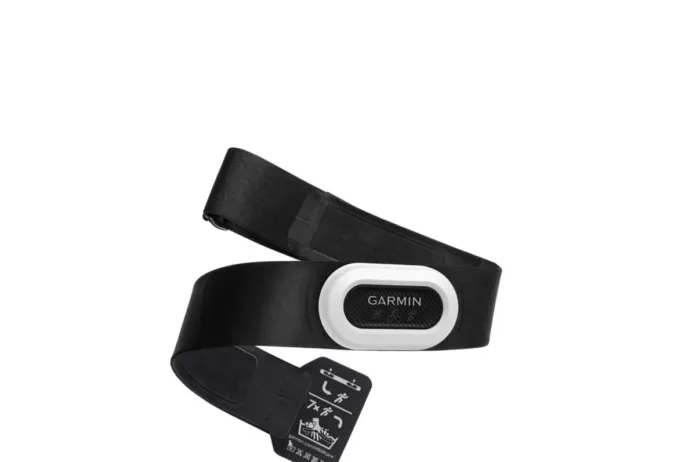
Heart-rate data is still one of the most useful training tools for cyclists, even in a world of power meters, smart trainers and increasingly clever GPS computers. It shows how the body is responding to effort, fatigue, heat, fuelling, illness and recovery in a way that power alone cannot fully explain.
The choice usually comes down to optical heart rate vs chest strap for cycling. Optical sensors, whether worn on the wrist or arm, are more convenient. Chest straps are usually more accurate, especially during harder efforts. The right answer depends on how seriously you use the data, how much comfort matters, and whether your riding is mostly steady endurance work, structured training, racing or indoor sessions.
Check heart-rate monitors for cycling on Amazon UK
Optical heart rate vs chest strap for cycling
For most cyclists doing structured training, a chest strap remains the better choice. It responds faster to changes in effort, copes better with vibration and handlebar pressure, and gives cleaner data during intervals, racing and indoor sessions. If you are using heart rate to guide training zones or analyse performance properly, a good chest strap is still the standard to beat.
Optical heart-rate sensors have improved a lot, and the best armband sensors can be very good. They are often more comfortable than chest straps and easier to wear for commuting, gym work or casual riding. Wrist-based optical sensors are the most convenient, but they are also the most vulnerable to cycling-specific problems such as grip pressure, cold hands, road vibration and watch movement.
Quick verdict
Best for accuracy: chest strap
Best for comfort: optical armband
Best for convenience: wrist-based optical sensor
Best for structured cycling training: chest strap
Best for casual riding and commuting: optical heart rate
Best compromise: optical armband such as the Polar Verity Sense, Wahoo Trackr Fit or Coros Heart Rate Monitor
Reasons to choose a chest strap
- More accurate during hard intervals and rapid changes in effort
- Better response time than most optical sensors
- Less affected by handlebar grip, road vibration and wrist movement
- More reliable for heart-rate zones and training analysis
- Strong compatibility with Garmin, Wahoo, Hammerhead, Zwift and smart trainers
- Better choice for HRV and recovery-focused data
Reasons to choose optical heart rate
- More comfortable for riders who dislike chest straps
- No need to wet electrodes before riding
- Works well for steady endurance rides and commuting
- Optical armbands are often more stable than wrist sensors on the bike
- Useful for all-day health tracking from a watch
- Less kit to remember if your watch already records heart rate
How chest-strap heart-rate monitors work
A chest strap measures the electrical activity associated with each heartbeat. In cycling terms, that gives it a major advantage: it is reading the heartbeat directly rather than trying to infer it from changes in blood flow through the skin.
That direct measurement is why chest straps tend to perform better when effort changes quickly. During short climbs, over-under intervals, sprints, threshold efforts or repeated accelerations, a good strap tracks the rise and fall in heart rate cleanly. It usually responds faster than an optical sensor and produces fewer strange spikes or dropouts.
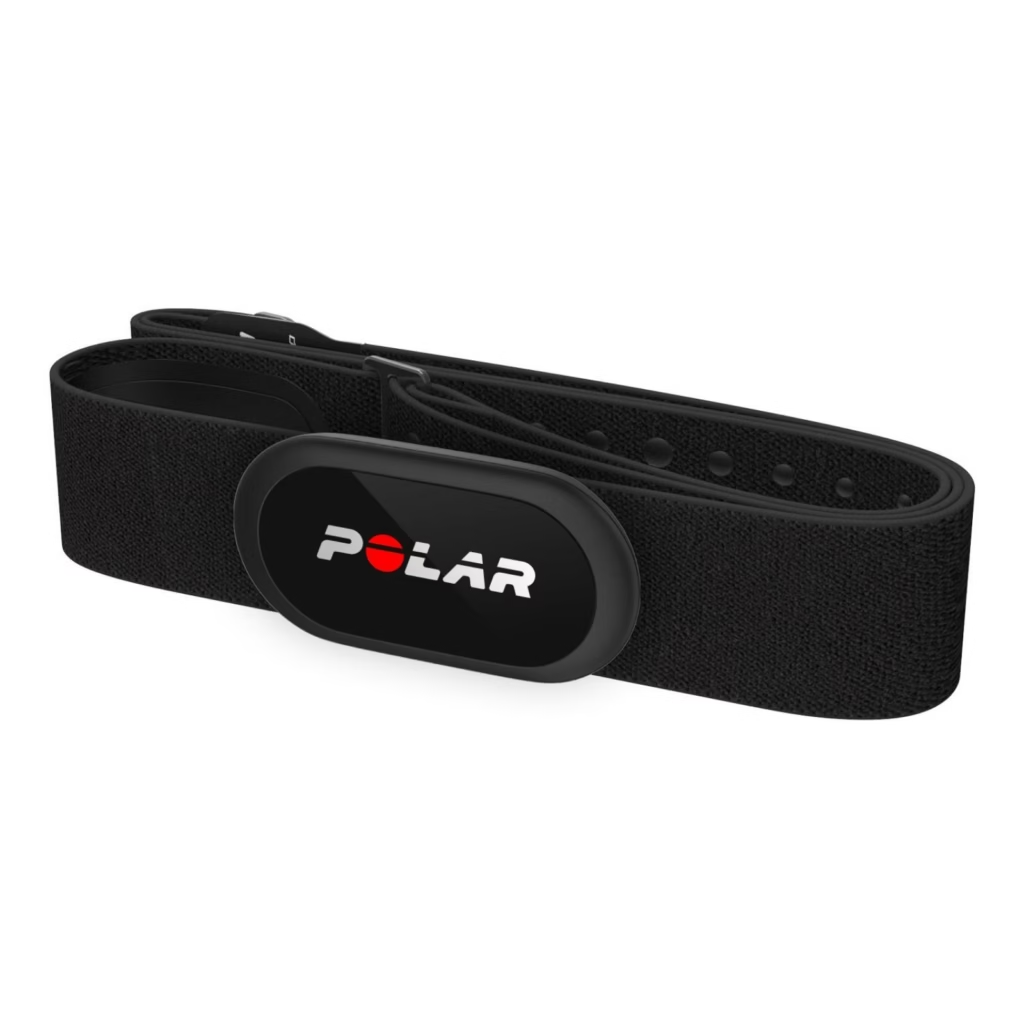
The best chest straps for cycling, such as the Polar H10, Garmin HRM-Dual, Garmin HRM-Pro Plus and Wahoo Trackr Heart Rate, pair with cycling computers using Bluetooth and ANT+. That makes them easy to use with Garmin Edge, Wahoo Elemnt, Hammerhead Karoo, Zwift, smart trainers and training apps.
The trade-off is comfort. Some riders dislike the feeling of a strap around the chest, especially in hot weather or during indoor training. Fit also matters. A strap that is too loose will move, while one that is too tight can become distracting. The electrodes need moisture too, which is why chest straps often behave better after a few minutes of riding or when the contact pads are wetted before use.
How optical heart-rate sensors work
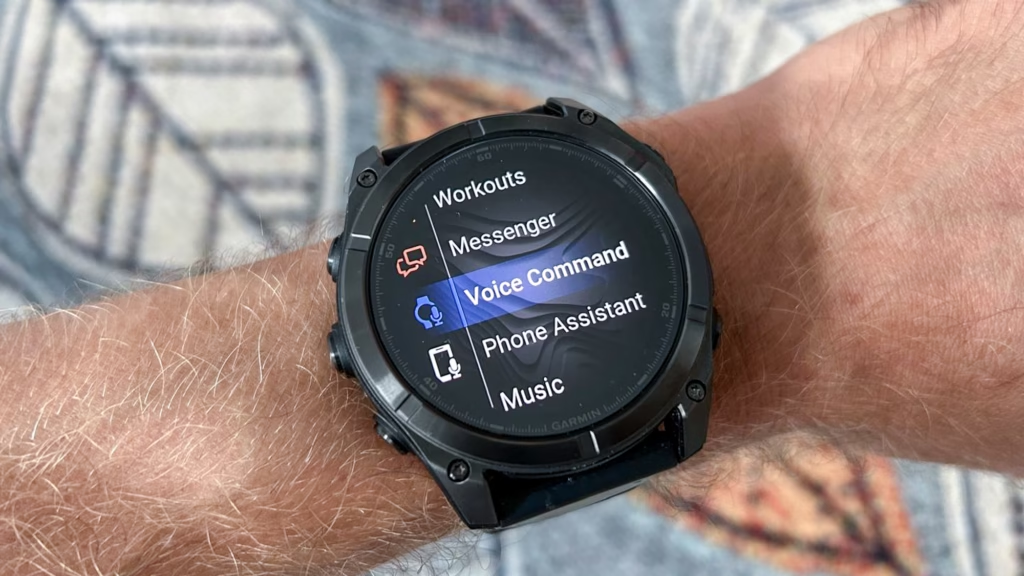
Optical heart-rate sensors use light to detect changes in blood flow under the skin. This is the technology used in most sports watches, smartwatches and optical armbands. It is convenient, comfortable and well suited to general health tracking.
For cycling, the location of the sensor makes a big difference. Wrist-based optical sensors are the easiest to use because they are built into the watch you may already wear. The problem is that the wrist is not always a friendly place for accurate readings on the bike. Grip pressure, cold hands, flexed wrists, sweat, vibration and watch movement can all interfere.
Optical armbands are usually better for cycling because they move the sensor away from the wrist. The upper forearm or upper arm tends to be more stable, with better blood flow and less direct vibration from the bars. That is why devices such as the Polar Verity Sense, Wahoo Trackr Fit, Scosche Rhythm and Coros Heart Rate Monitor can be good alternatives for riders who do not like chest straps.
The limitation is response time. Even a good optical sensor may lag behind a chest strap when effort changes quickly. For steady endurance riding, that often does not matter much. For interval training, racing and short efforts, it can make the data less useful.
Accuracy during steady rides
During steady endurance rides, the gap between optical heart rate and chest straps is often smaller than riders expect. If you are riding at a consistent zone two pace, with warm hands and a well-fitted watch or armband, optical heart rate can be good enough.
This is especially true for riders using heart rate in a broad way. If you only want to know whether you are riding easily, moderately or too hard, a good optical sensor can give useful guidance. It may not be perfect beat for beat, but it can still show the overall trend.
A chest strap remains cleaner, but its advantage is less dramatic on smooth, steady rides. For commuting, recovery rides, general fitness tracking or relaxed weekend miles, optical heart rate is often acceptable.
The problem appears when conditions become less tidy. Cold weather, rough roads, loose watch fit, heavy gloves, low blood flow to the hands and gripping the bars tightly can all make wrist-based readings unreliable. On those rides, a chest strap or optical armband becomes the safer choice.
Accuracy during intervals and hard efforts
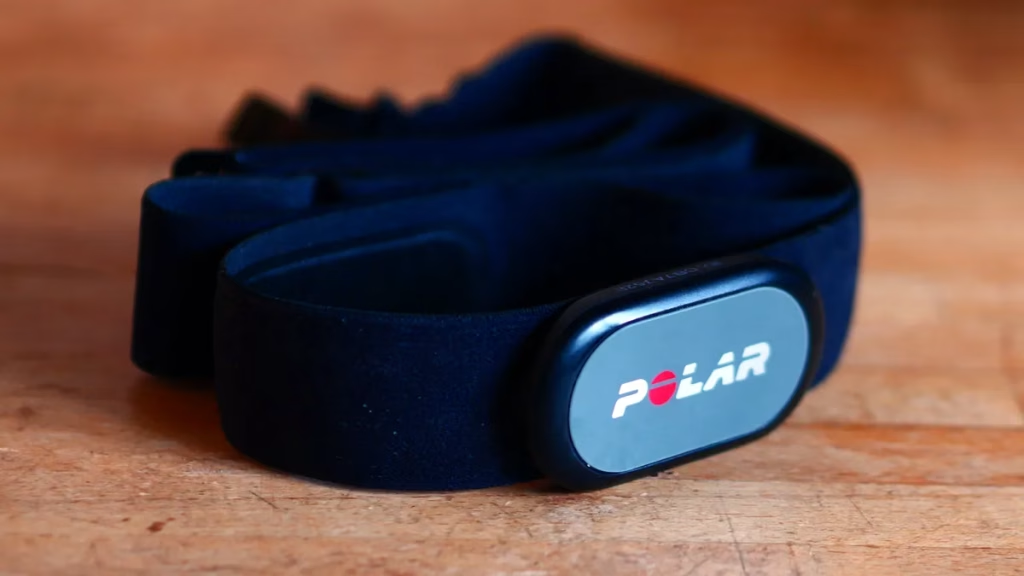
Intervals expose the weakness of optical sensors. When effort rises sharply, heart rate does not rise instantly, but the device still needs to track the change cleanly. Chest straps usually do this better because they are measuring the heart’s electrical signal directly.
During short VO2 max efforts, repeated hill surges or sprint sessions, a wrist sensor can lag behind the actual effort. By the time it catches up, the interval may already be nearly finished. That makes it less useful for pacing and less accurate for post-ride analysis.
Optical armbands are better than wrist sensors here, but a chest strap still has the edge. For cyclists using structured workouts, heart-rate zones, threshold testing or coach-prescribed sessions, that difference is important.
There is also the question of trust. Bad heart-rate data can lead a rider to make poor decisions. If the sensor under-reads during a hard effort, you may push too hard. If it over-reads, you may back off unnecessarily. For serious training, reliable data matters more than convenience.
Indoor cycling and turbo training
Indoor cycling is one of the best arguments for a chest strap. Turbo training is controlled, repetitive and often based around structured intervals, which makes clean data valuable. It is also hot, sweaty and intense, so heart rate becomes a useful measure of internal load.
A chest strap works well indoors because there is no road vibration, no windchill and fewer external variables. Once the strap is fitted and the electrodes are moist, it usually gives stable readings throughout the session.
Optical wrist sensors can work indoors, especially during steady rides, but they can still struggle when holding the bars for long periods. Wrist angle and grip pressure can reduce accuracy. A fan, sweat, watch tightness and changes in position can also affect readings.
An optical armband is a strong alternative indoors. It is more comfortable than a chest strap for some riders and usually more reliable than a watch. For Zwift, TrainerRoad, Wahoo SYSTM or Garmin workouts, it can be a sensible middle ground.
Check optical armband heart-rate monitors for cycling on Amazon UK
Racing and group riding
In a race or fast group ride, most cyclists are not making constant decisions based on heart rate. Positioning, power, terrain, tactics and effort feel usually take over. Heart rate becomes more useful afterwards, when analysing how hard the ride really was.
For that post-ride analysis, a chest strap is still the best option. It gives cleaner data during surges, attacks, climbs and changes in pace. That makes it easier to see how much time was spent near threshold, how hard the repeated accelerations were, and whether fatigue affected the second half of the ride.
Optical heart rate can be less reliable in race conditions because the rider is moving more dynamically on the bike. Sprinting out of the saddle, braking, changing grip, riding rough roads and wearing tight clothing can all affect the sensor.
If heart-rate data is only a rough reference, optical may be fine. If the file will be used for proper analysis, a chest strap is the better tool.

Comfort and practicality
Comfort is where optical heart rate wins. A watch or armband is easier to live with than a chest strap, especially for riders who dislike tight kit around the torso. There is no need to wet contact pads, no strap under bibs, and no elastic band soaking up sweat.
For commuting, gym sessions and general riding, that convenience is powerful. If a rider is more likely to wear an optical sensor consistently, it may be the better real-world choice, even if the data is slightly less accurate.
Chest straps are still comfortable enough for many riders. A good strap such as the Polar H10 or Garmin HRM-Pro Plus can disappear once fitted correctly, especially outdoors. The discomfort tends to appear more indoors, in hot weather, or on very long rides where pressure points become more noticeable.
There is also the hygiene point. Chest straps need rinsing, drying and occasional washing. If you ride indoors often, this becomes part of the routine. Optical sensors are usually easier to wipe down, although straps still need cleaning over time.
Battery life and maintenance
Chest straps usually use a coin-cell battery, often lasting hundreds of hours or many months. That makes them low-maintenance, but it also means you need a spare battery at some point. If the strap starts dropping out or behaving strangely, the battery is usually the first thing to check.
Rechargeable optical armbands are convenient if you already charge lights, computers and headphones regularly. The downside is that they become one more item to manage. Forget to charge it before an early ride and the convenience advantage disappears quickly.
Wrist-based optical sensors rely on the watch battery. That is convenient for short rides, but longer GPS rides can become a battery-management issue, especially if the watch is older or using navigation and music at the same time.
For most cyclists, battery life should not decide the issue alone. Accuracy, comfort and compatibility matter more. Still, a heart-rate monitor has to be ready when you ride, so the simpler the routine, the better.
Compatibility with cycling computers and apps
For cycling, compatibility is crucial. A heart-rate sensor needs to work with your head unit, watch, smart trainer app or phone. The safest options support both Bluetooth and ANT+, which covers most modern devices.
Chest straps usually perform well here. Polar H10, Garmin HRM-Dual, Garmin HRM-Pro Plus and Wahoo straps all pair cleanly with popular cycling computers and indoor platforms. That makes them easy to move between outdoor and indoor riding.
Optical armbands can also be very compatible, especially models designed as dedicated sports sensors rather than general smartwatches. The Polar Verity Sense, for example, is built to broadcast heart rate to external devices.
Wrist-based watches are more variable. Some broadcast heart rate easily to bike computers. Others do it less smoothly or work best inside their own app ecosystem. Before relying on a watch for cycling heart rate, check whether it can broadcast to your bike computer and training app.
Check chest-strap heart-rate monitors for cycling on Amazon UK
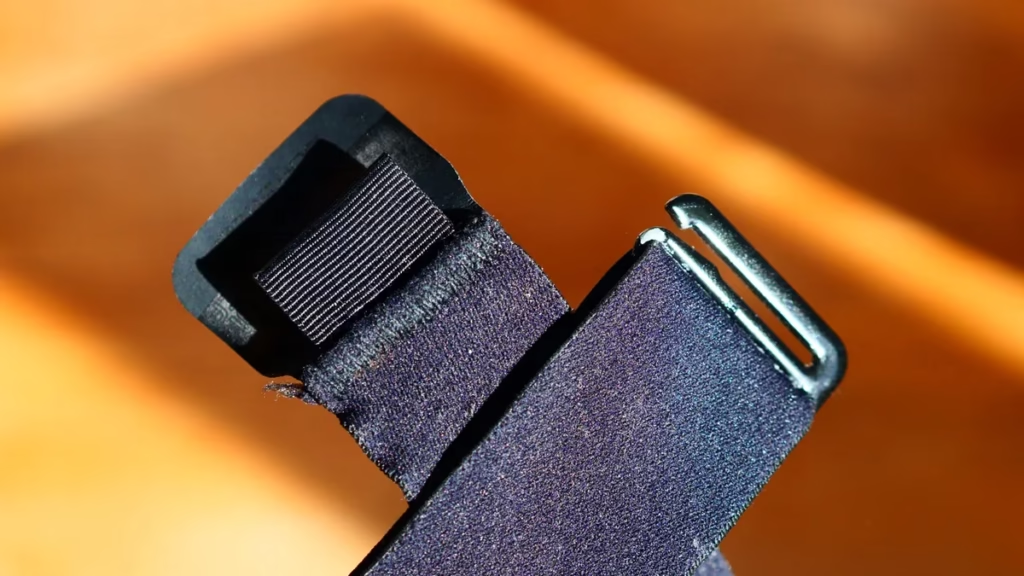
Optical armband vs wrist optical sensor
It is important not to treat all optical heart-rate sensors the same. A wrist sensor and an upper-arm sensor may use similar underlying technology, but they perform differently on the bike.
The wrist is a difficult location for cycling. Blood flow can be reduced in cold conditions, the wrist bends while gripping the bars, and watch movement can affect readings. The watch may also sit under gloves, cuffs or winter layers, making fit less consistent.
An optical armband usually avoids many of those problems. The upper arm or forearm is more stable, less affected by grip pressure and often gives the sensor a better surface to read from. That makes armbands a much better choice for cyclists who want optical comfort but still care about data quality.
For many riders, the real comparison is not chest strap vs watch. It is chest strap vs optical armband. In that contest, the chest strap still wins for maximum accuracy, but the armband becomes a credible compromise.
Heart rate vs power for cycling training
Power is the cleanest way to measure the work being done by the rider. Heart rate measures the body’s response to that work. Both are useful, but they tell different stories.
A power meter tells you whether you are riding at 200 watts. Heart rate tells you how your body is coping with that 200 watts. On a hot day, when tired, dehydrated or under-fuelled, the same power can produce a higher heart-rate response. That information is useful.
This is why accurate heart-rate data still matters. It helps explain drift during long rides, fatigue during training blocks and whether an easy ride was genuinely easy. It is also useful for riders who do not own a power meter.
If you train only with heart rate, accuracy matters even more. A poor sensor can distort zones, make intervals harder to manage and reduce confidence in the training file. In that situation, a chest strap is the best investment.
Best heart-rate option for different cyclists
Best for structured training: chest strap
Best for indoor cycling: chest strap or optical armband
Best for racing data: chest strap
Best for commuting: wrist optical or optical armband
Best for comfort: optical armband
Best for casual riders: wrist optical sensor
Best for riders who hate chest straps: optical armband
Best for HRV and recovery checks: chest strap
Best chest straps for cycling
The Polar H10 remains one of the safest recommendations. It is accurate, widely compatible and comfortable enough for long rides. It works well with Garmin, Wahoo, Polar, Zwift and most training platforms, which makes it a strong choice for cyclists who want reliable data without getting locked into one ecosystem.
The Garmin HRM-Dual is a good simpler option. It does the basic job well, broadcasts over ANT+ and Bluetooth, and is often cheaper than the more advanced Garmin straps. For many cyclists, that is enough.
The Garmin HRM-Pro Plus makes more sense for runners, triathletes and riders already deep in the Garmin ecosystem. It adds extra metrics and activity recording, but those features are less essential for pure cycling.
The Wahoo Trackr Heart Rate is a useful modern option for riders who want a rechargeable chest strap and already use Wahoo head units. It is not as established as the Polar H10, but it fits neatly into the Wahoo training environment.
Best optical heart-rate options for cycling
The Polar Verity Sense is one of the strongest optical armbands for cyclists. It is comfortable, widely compatible and much better suited to cycling than relying on wrist-based optical heart rate alone.
The Coros Heart Rate Monitor is another good armband-style option, particularly for riders who already use Coros watches. It is designed to sit on the upper arm and give a more stable reading than a wrist sensor.
The Wahoo Trackr Fit is a natural choice for riders already using Wahoo computers and apps. It offers optical heart rate in an armband format, giving a more comfortable alternative to a chest strap.
Smartwatches from Garmin, Apple, Polar, Coros and Suunto can all be useful for general tracking, but they are better treated as convenience tools rather than the most accurate option for cycling training. They are fine for casual use, less ideal for serious intervals.
-
 Photo Credit: Getty

Common heart-rate mistakes cyclists make
The first mistake is wearing a wrist watch too loosely. Optical sensors need stable contact with the skin. If the watch moves, the reading suffers.
The second mistake is expecting wrist heart rate to perform perfectly in cold weather. Cold hands and reduced blood flow can make readings erratic, especially early in a ride.
The third mistake is using heart-rate zones without updating them. If zones are based on an old maximum heart rate estimate or generic formula, even a perfect sensor will not make the training accurate.
The fourth mistake is ignoring fuelling, heat and fatigue. Heart rate is not just a measure of effort. It is affected by hydration, sleep, caffeine, stress, illness and temperature. That is not a weakness, it is part of why the data is useful.
The fifth mistake is assuming expensive always means better. A good chest strap at a sensible price can outperform a very expensive watch when it comes to cycling heart-rate accuracy.
Verdict
For serious cycling training, a chest strap is still the best choice. It gives the most reliable data during intervals, indoor sessions, racing and hard group rides. If you use heart rate to guide zones, analyse fatigue or support structured training, the extra accuracy is worth the small inconvenience.
Optical heart rate is better for comfort and convenience. A wrist sensor is fine for casual riding, commuting and general health tracking, while an optical armband is the better option for cyclists who dislike chest straps but still want useful training data.
The best compromise for many riders is to use both. Wear a watch for everyday tracking and easy rides, then use a chest strap for structured sessions, testing, racing and turbo work. That gives you convenience when precision is less important and cleaner data when the session demands it.
The single biggest reason to choose a chest strap is accuracy under pressure. The single biggest reason to choose optical heart rate is comfort. For cyclists who care about training quality, the chest strap remains the benchmark.

