A good handlebar camera mount has to do more than simply hold an action camera in place. It needs to stay secure over rough roads, resist vibration, keep the camera angle stable, avoid cluttering the cockpit and make the footage usable afterwards. A cheap mount that wobbles, slips or points the camera at the front tyre is not a bargain.
The best handlebar camera mounts for cycling depend on what you are filming. A GoPro or DJI action camera needs a stable low-profile mount. An Insta360 camera may need more clearance or a third-person arm. A commuter using a camera for incident recording needs reliability and easy removal, while a road rider filming race-style footage needs clean cockpit integration.
Check handlebar camera mounts for cycling on Amazon UK
Best handlebar camera mounts
For most road cyclists using a GoPro-style camera, the K-Edge Go Big Pro Handlebar Mount is the best premium choice. It is strong, neatly machined and far more secure than the cheap plastic mounts that often come bundled with action cameras. It is not the cheapest option, but it is the sort of mount that makes sense when the camera attached to it costs several hundred pounds.
The GoPro Handlebar / Seatpost / Pole Mount is the best official GoPro option and the easiest recommendation for riders who want broad compatibility without overthinking the setup. Insta360’s own bike mounts are better for 360-degree filming, especially if you want third-person road cycling footage. Topeak’s Sport Camera Multi-Mount is a practical alternative for riders who want a cycling-specific mount that can also work with lights and accessories.
Quick verdict
Best overall: K-Edge Go Big Pro Handlebar Mount
Best official GoPro option: GoPro Handlebar / Seatpost / Pole Mount
Best for Insta360 cameras: Insta360 Bike Computer Mount or Insta360 Third-Person Bike Handlebar Mount
Best multi-purpose cycling mount: Topeak Sport Camera Multi-Mount
Best for light and camera compatibility: Exposure action-camera bracket options
Best budget option: aluminium GoPro / Insta360-compatible handlebar mount from a reputable retailer
Best for 360-degree footage: Insta360 Third-Person Bike Handlebar Mount
Reasons to buy a proper handlebar camera mount
- Keeps footage more stable than cheap strap or plastic clamp mounts
- Reduces vibration and camera movement on rough roads
- Protects expensive GoPro, Insta360 and DJI cameras from insecure mounting
- Improves camera angle for road, gravel and commuting footage
- Can free up pocket space on rides where the camera is used regularly
- Works well for incident recording, ride filming and social content
Reasons to be careful
- Poor mounts can slip, vibrate or rotate mid-ride
- Handlebar space is limited on modern road bikes
- Integrated cockpits may need specific mounting hardware
- 360-degree cameras need more clearance than standard action cameras
- Large camera setups can clutter the front end and affect handling slightly
- Cheap alloy mounts can still be poorly machined or awkward to adjust
What makes a good cycling camera mount?
The best cycling camera mounts are secure, stiff and easy to position. Camera shake is the enemy. A mount can look neat on the workstand, but if it vibrates on rough tarmac or rotates when the road gets choppy, the footage becomes harder to use.
Material choice helps. CNC-machined aluminium mounts usually feel more secure than basic plastic clamps, especially when used with heavier cameras. Plastic is not automatically bad, and official GoPro mounts can work well, but cheap copies often flex more than riders expect.
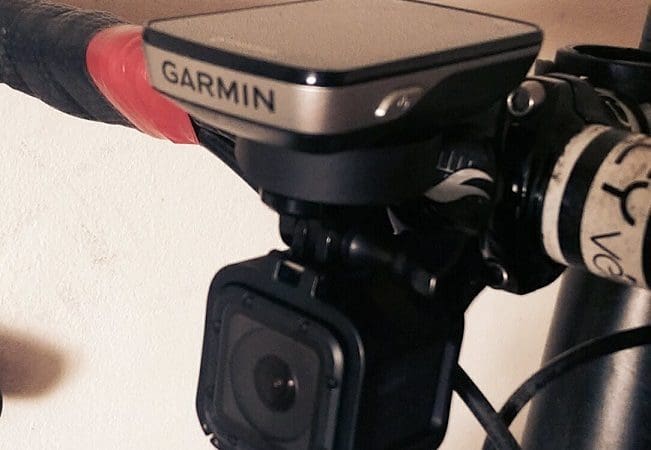
Position also matters. A camera mounted directly on the bar gives a stable forward view, but it can be blocked by cables, hands or GPS mounts. An out-front or underneath-GPS position can be cleaner, but it needs enough clearance from the front tyre and brake hoses.
For safety, the mount should not interfere with braking, shifting or hand position. Any camera setup that blocks the tops, crowds the drops or catches cables is a poor choice, however good the footage looks.
K-Edge Go Big Pro Handlebar Mount review: best overall
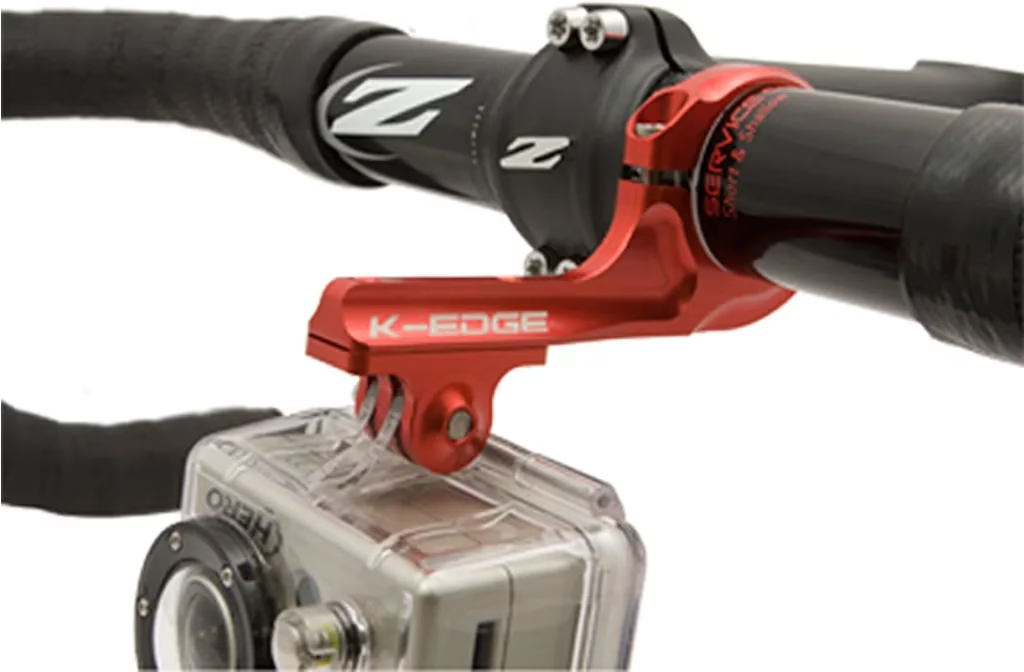
The K-Edge Go Big Pro Handlebar Mount is the premium choice for riders who want a secure, alloy, GoPro-style camera mount. K-Edge has a strong reputation in cycling computer and accessory mounts, and that experience shows here. The Go Big Pro feels like a proper bike component rather than a camera accessory adapted for cycling.
The 31.8mm handlebar fit suits standard road and gravel bars, while the two-position design allows the camera to sit above or below the bar depending on setup. Mounting underneath the bar can give a cleaner cockpit and a more discreet camera position, while an above-bar setup can be easier to adjust and frame.
The key strength is stability. The CNC aluminium construction resists flex much better than cheap plastic mounts, and the twin-bolt clamp gives a secure hold when fitted correctly. That makes it a strong choice for GoPro, DJI Osmo Action and other GoPro-compatible cameras.
It is not the best choice for integrated one-piece cockpits unless the bar shape and clamp space allow it. It also costs more than simple camera mounts. The value comes from trust. If you are putting an expensive action camera on the front of the bike, a solid mount is worth paying for.
Check K-Edge Go Big style camera mounts on Amazon UK
Best for: road cyclists, gravel riders and content creators using GoPro-style cameras.
Not ideal for: integrated aero cockpits without round 31.8mm clamp space or riders wanting the cheapest mount.
GoPro Handlebar / Seatpost / Pole Mount review: best official GoPro option
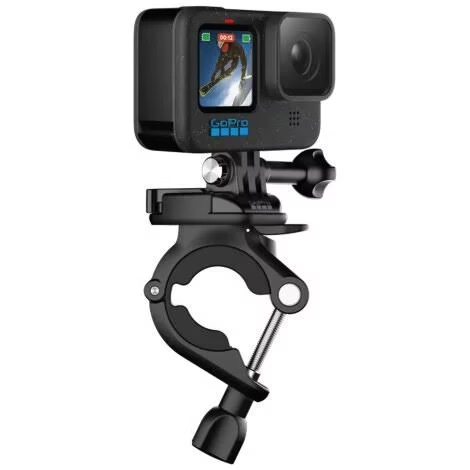
The GoPro Handlebar / Seatpost / Pole Mount is the safest official option for riders using a GoPro. It fits tubes from 9mm to 35mm, which gives it more versatility than a dedicated 31.8mm-only cycling mount. It can be used on handlebars, seatposts and other round tubes, making it useful across bikes and sports.
The 360-degree rotating base is the main practical advantage. It allows quick angle changes without fully rebuilding the mount, which is useful when switching between forward-facing footage, rider-facing clips or seatpost shots. For riders who film different angles on the same ride, that flexibility is valuable.
On the bike, it works best for steady road, commuting and general action-camera use. It is not as sleek or cycling-specific as a K-Edge alloy mount, and it can look bulkier on a tidy road cockpit. The trade-off is convenience and compatibility.
Because it is an official GoPro product, it is also easier to trust than many low-cost copies. The camera interface is secure, the adjustment is straightforward, and the mount can be moved between bikes without much fuss.
Choose this if you want one reliable mount that can work on bars, seatposts and poles. Choose a cycling-specific alloy mount if you want the cleanest cockpit setup.
Check GoPro handlebar camera mounts on Amazon UK
Best for: GoPro users who want official compatibility and flexible mounting across handlebars and seatposts.
Not ideal for: riders wanting the neatest road-bike cockpit or the lowest-profile race setup.
Insta360 Bike Computer Mount review: best integrated Insta360 option
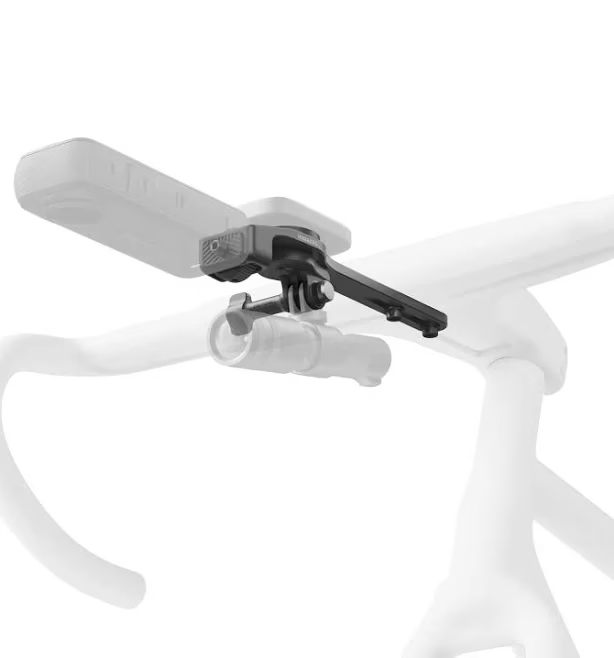
The Insta360 Bike Computer Mount is a neat option for riders using Insta360 cameras alongside modern road or gravel cockpits. It is designed to work more like a bike computer mount, keeping the accessory positioned centrally and cleanly rather than clamped awkwardly to the bar.
This makes sense for riders who want action-camera footage without turning the front of the bike into a mess of clamps. It can be particularly useful with integrated handlebars or modern out-front setups, depending on the exact mount version and cockpit compatibility.
For Insta360 users, the brand-specific approach is reassuring. 360-degree cameras can be more sensitive to mount position because the camera captures everything around it. A badly placed mount, cable loop or handlebar obstruction can ruin the shot.
The limitation is that compatibility needs checking carefully. Insta360’s range includes several mounts for different handlebar and camera setups, including versions for integrated and independent handlebars. It is worth matching the exact mount to your cockpit rather than assuming one will fit everything.
This is the right choice if you are already inside the Insta360 ecosystem and want a clean, purpose-made mount. It is less compelling if you use a standard GoPro or DJI action camera.
Best for: Insta360 users, modern road cockpits and riders wanting a cleaner integrated front setup.
Not ideal for: riders using GoPro-style cameras or unsure about cockpit compatibility.
Insta360 Third-Person Bike Handlebar Mount review: best for 360-degree footage
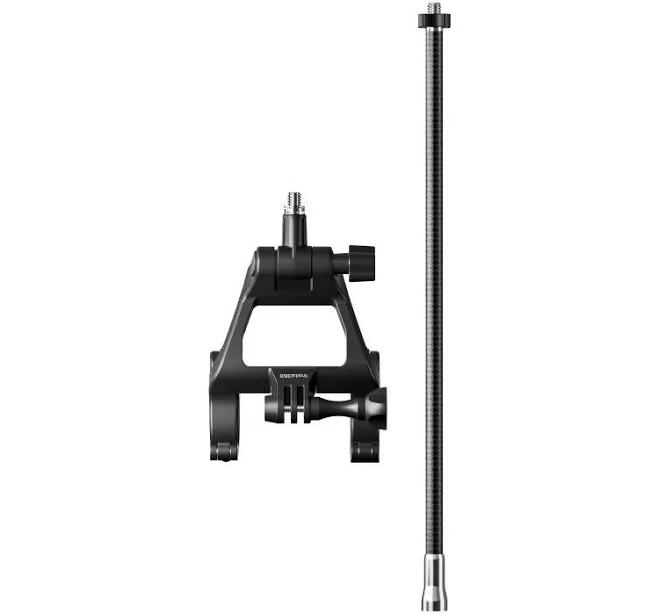
The Insta360 Third-Person Bike Handlebar Mount is the specialist option in this guide. It is designed to create a floating, third-person camera angle when paired with a 360-degree camera. That makes it far more interesting for content creators than for riders who simply want a forward-facing safety camera.
Used correctly, the footage can look much more dynamic than a standard bar-mounted camera. A 360-degree camera mounted out from the handlebar can capture rider position, bike movement, road context and scenery in one shot. For travel content, gravel films and social video, it is a powerful tool.
There are clear limits. Insta360 states that this mount is designed for road cycling and is not suitable for off-road or mountain biking. That warning is important. A long camera arm adds leverage, and rough terrain increases stress on both mount and camera.
It also changes the feel of the bike more than a compact action-camera mount. You need to be aware of clearance, steering movement, rider position and wind. It is not something to fit casually before a fast group ride.
For creative road footage, it is one of the most interesting handlebar camera mounts available. For everyday commuting or incident recording, it is the wrong tool.
Check Insta360 bike camera mounts on Amazon UK
Best for: 360-degree road cycling footage, travel videos and content creators.
Not ideal for: mountain biking, rough gravel, commuting safety footage or minimalist cockpits.
Topeak Sport Camera Multi-Mount review: best multi-purpose cycling mount
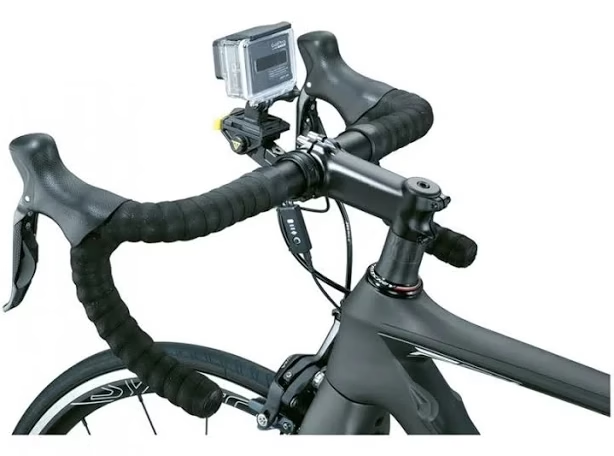
The Topeak Sport Camera Multi-Mount is a practical option for riders who want cycling-specific versatility rather than a pure camera-only mount. Topeak’s strength is usually in functional accessories, and this mount fits that pattern.
It is especially useful if you swap between cameras, lights and other GoPro-style accessories. That can be useful on commuter bikes, gravel bikes and long-distance setups where the front end needs to carry more than one device across the year.
The main appeal is flexibility. It is not as premium-feeling as a K-Edge alloy mount, and it is not as brand-specific as an official GoPro or Insta360 mount. Instead, it gives riders a practical way to put a camera where they need it without committing to a single ecosystem.
For occasional camera use, that makes sense. Not every cyclist needs a high-end aluminium mount for a camera that only comes out on holidays, audaxes or specific content rides.
Choose the Topeak if you want a sensible cycling accessory mount that can cover several jobs. Choose K-Edge if you want the most secure dedicated performance-road option.
Best for: riders swapping between lights, cameras and accessories.
Not ideal for: riders wanting the most premium camera-specific mount.
Exposure action-camera bracket review: best for light and camera setups
Exposure’s action-camera bracket options are slightly different because they are often used to attach Exposure lights to GoPro-style mounts. That makes them relevant for cyclists building a clean cockpit around the GoPro three-prong standard.
The advantage is compatibility. Many modern out-front mounts include a GoPro-style underside fitting. That can be used for a light, camera or adapter, depending on setup. Exposure’s bracket allows riders using Exposure lights with cleat fittings to make use of those positions.
This is particularly useful for riders who want a front light underneath a GPS computer but also occasionally mount a camera. It keeps the cockpit neater and makes better use of the hardware already on the bike.
It is not a complete handlebar camera mount by itself in every setup. It is more of a system component, but for riders already using Exposure lights, it can be the missing piece.
The main warning is to check exact compatibility. Exposure has several light models, mount standards and brackets, so matching the correct adapter matters.
Best for: riders using Exposure lights and GoPro-style out-front mount systems.
Not ideal for: riders wanting a simple standalone camera mount.
Best budget handlebar camera mounts
Budget handlebar camera mounts can work, especially for occasional filming, but this is one category where going too cheap can be false economy. The camera attached to the mount is usually far more expensive than the mount itself.
Look for aluminium construction, a secure clamp, stainless hardware and clear compatibility with GoPro, DJI or Insta360 mounts. Avoid vague listings with poor product images, flimsy plastic clamps or no clear tube diameter information.
A budget aluminium GoPro-compatible mount can be fine for steady road footage, commuting and occasional use. It is less convincing for gravel, poor road surfaces or heavy cameras. Any movement at the clamp becomes camera shake in the footage.
For safety recording, stability is especially important. A cheap mount that vibrates badly can make number plates, road signs and vehicle movements harder to read. If the footage may need to be useful, not just interesting, a better mount is worth buying.
Check budget GoPro and Insta360 handlebar mounts on Amazon UK
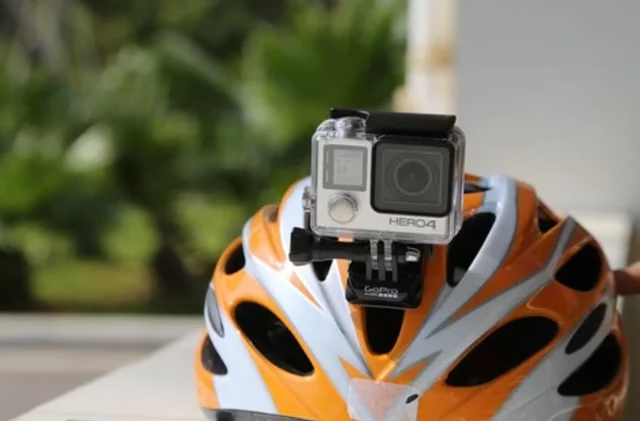
Handlebar camera mounts vs helmet mounts
Handlebar mounts give a stable, bike-centred view. They are good for road footage, commuting evidence and showing the bike’s line through corners. They also keep the camera away from the rider’s head, which some cyclists prefer for comfort and safety.
Helmet mounts follow the rider’s view. That can be useful for incident recording because the camera captures where the rider is looking. It can also create more movement, because every head turn moves the footage. On long rides, wearing a camera on the helmet can become annoying.
For road cycling, a handlebar mount is usually the better starting point. It is cleaner, more stable and less intrusive. Helmet mounts make more sense for mountain biking, commuting evidence where head movement is useful, or riders who want the camera to capture interactions at junctions and side roads.
Some riders use both, but that increases cost, charging and editing time. For most cyclists, one well-positioned handlebar camera is enough.
Handlebar mount vs out-front underside mount
A standard handlebar mount clamps directly to the bar. It is easy to fit, easy to move between bikes and works well on round 31.8mm bars. The downside is cockpit clutter, especially if you already use a GPS computer, front light and cables.
An out-front underside mount places the camera beneath a bike computer mount using a GoPro-style fitting. This is often the cleanest road-bike solution. It keeps the camera central, low and out of the way. It can also look much neater than a separate handlebar clamp.
The downside is load. Not every plastic computer mount is designed to carry a camera underneath, especially a heavier one. Check the mount’s weight limit and construction before hanging a GoPro, Insta360 or DJI camera below it.
For road bikes, the underside option is often best. For commuters, touring bikes and bikes where the cockpit changes regularly, a separate handlebar clamp may be simpler.
What to check before buying a handlebar camera mount
First, check handlebar diameter. Many premium road and gravel mounts fit 31.8mm round bars. That does not automatically mean they will fit aero tops, integrated cockpits or ovalised sections.
Second, check camera compatibility. GoPro-style three-prong mounts are common, but Insta360, DJI and other cameras may need adapters or different mounting positions.
Third, check clearance. A camera mounted under the bar can sit close to the front tyre, brake hose or cables. This is especially important on small frames, short head tubes and bikes with front bags.
Fourth, think about vibration. Aluminium mounts are usually better for stability, but the camera’s own stabilisation also matters. Rough gravel footage places much higher demands on the mount than smooth-road filming.
Finally, check access to buttons and battery doors. A mount that blocks the camera door or makes it hard to change batteries can quickly become frustrating on long rides.
Best handlebar camera mounts for different riders
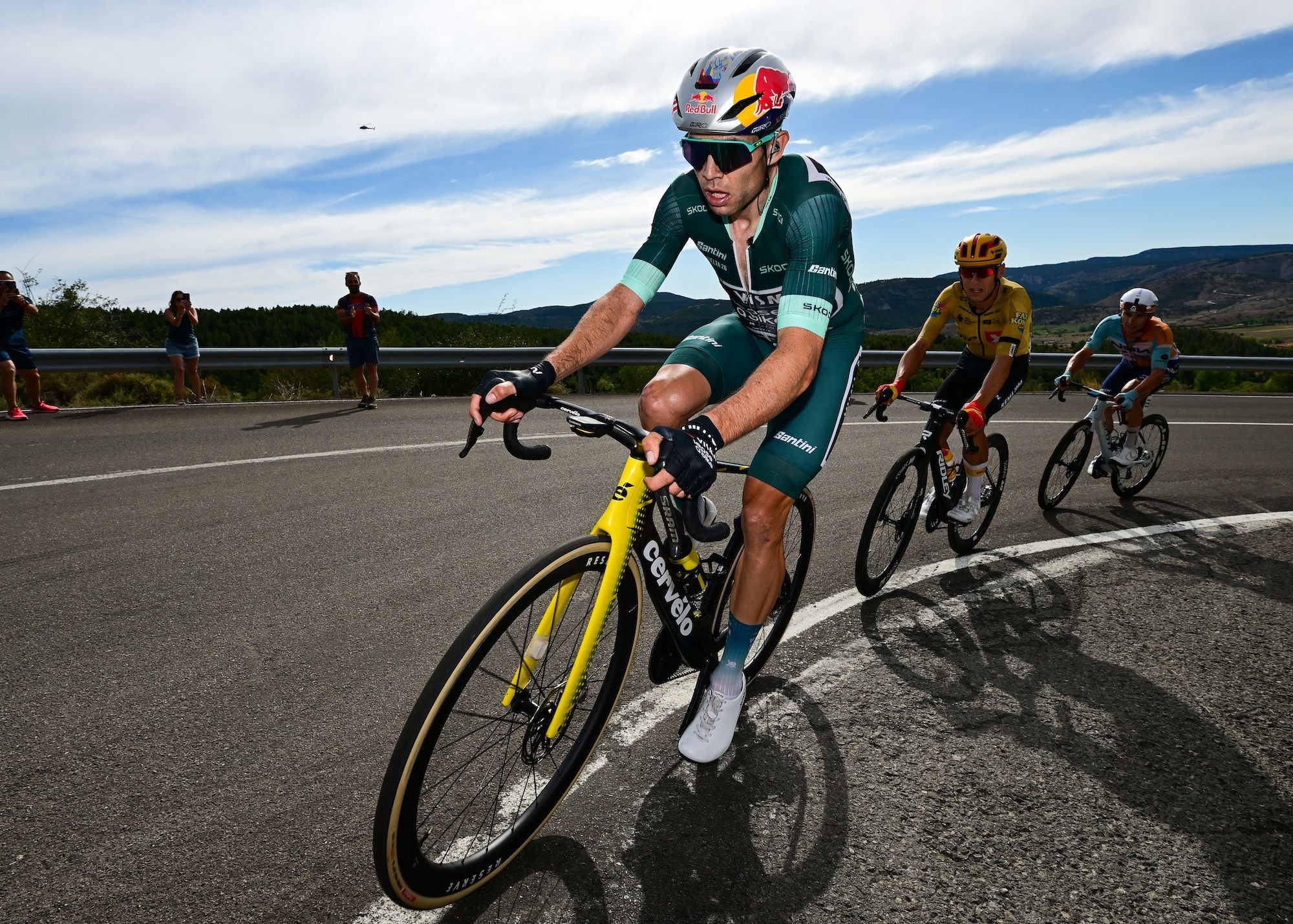
Best for most road cyclists: K-Edge Go Big Pro Handlebar Mount
Best for GoPro users: GoPro Handlebar / Seatpost / Pole Mount
Best for Insta360 users: Insta360 Bike Computer Mount
Best for 360-degree creative footage: Insta360 Third-Person Bike Handlebar Mount
Best multi-purpose cycling mount: Topeak Sport Camera Multi-Mount
Best for Exposure light users: Exposure action-camera bracket setup
Best budget option: aluminium GoPro / Insta360-compatible handlebar mount from a reputable retailer
Best for clean road cockpits: GoPro-style underside mount beneath a quality out-front computer mount
Verdict
The best handlebar camera mount for cycling depends on whether you want security footage, social content, 360-degree shots or simple ride recording. For most road cyclists using a GoPro-style camera, the K-Edge Go Big Pro is the strongest overall choice because it is secure, well made and designed around real cycling use.
GoPro’s own Handlebar / Seatpost / Pole Mount is the best official all-round option, especially if you want one mount that can move between bikes and positions. Insta360’s own mounts are better for 360-degree footage, particularly if you want creative third-person road cycling shots rather than simple forward-facing video.
Topeak and Exposure options make sense for riders building more flexible accessory setups, while budget aluminium mounts can work if chosen carefully. What is worth avoiding is the very cheapest plastic mount attached to an expensive camera, because poor stability can ruin both footage and peace of mind.
The single biggest reason to buy a proper handlebar camera mount is security. The single biggest reason to spend more is stability. If the camera is worth protecting, the mount should not be the weakest part of the setup.