
Irina Kalentieva was one of the defining cross-country mountain bikers of the 2000s and early 2010s. A two-time elite world champion, Olympic bronze medallist and long-term World Cup contender, she built her career on consistency rather than a short peak. For more than a decade, the Russian rider was a regular presence in the front group at the sport’s biggest events.
Born on 10 November 1977 in what is now Chuvashia, Kalentieva specialised in cross-country Olympic mountain biking. Her best years coincided with an exceptionally strong era that included Gunn-Rita Dahle Flesjå, Sabine Spitz, Maja Włoszczowska, Catharine Pendrel and later Pauline Ferrand-Prévot. Staying competitive across that span required technical ability, climbing strength and unusually reliable form.
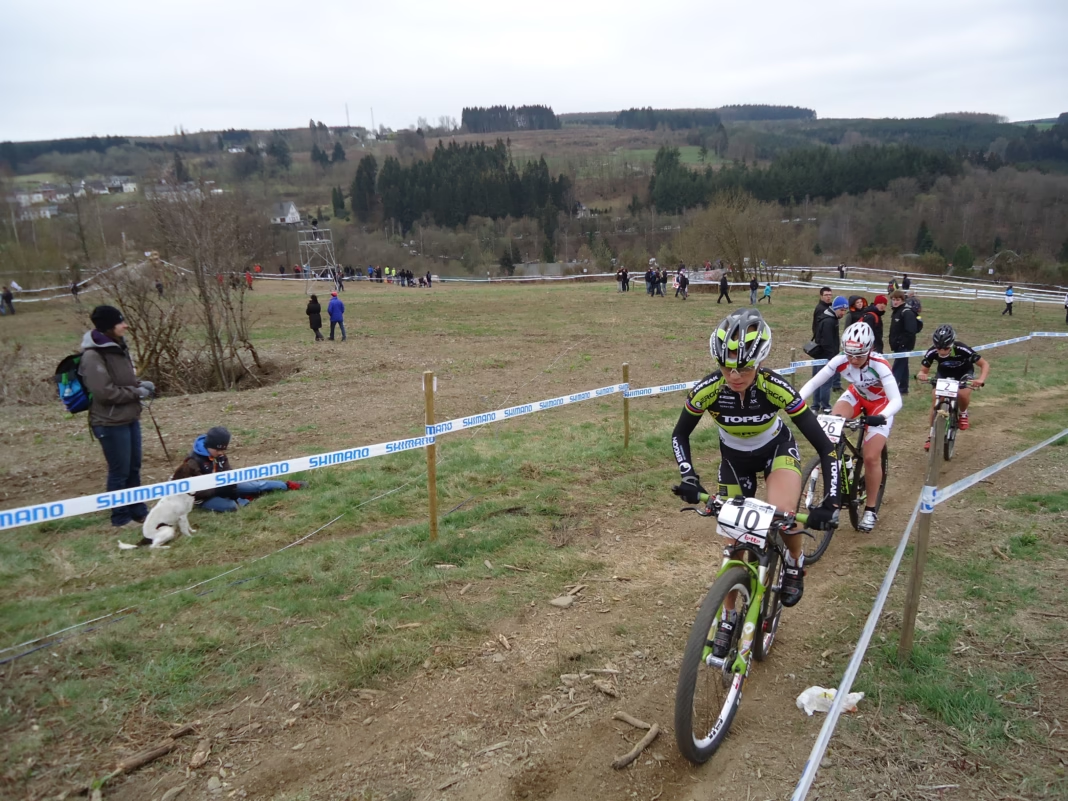
World champion at Fort William and Canberra
Kalentieva won her first elite cross-country world title at Fort William in 2007. The Scottish course was a severe test of both handling and endurance, with long climbing efforts balanced by technical descending. Winning there immediately placed her among the leading riders of her generation.
Two years later she won the rainbow jersey again, this time at Canberra in 2009. The second title confirmed that 2007 had not been a one-off. The courses were different, the conditions were different and the competitive landscape had moved on, yet Kalentieva was still able to peak for the championship race.
Olympic bronze in Beijing
Between those two world titles came another defining result: bronze in the women’s cross-country race at the 2008 Beijing Olympic Games. Olympic mountain biking offers little room for recovery from mistakes, mechanical issues or a poor start, making a medal particularly valuable in a discipline where small losses can quickly become decisive.
Kalentieva represented Russia at four Olympic Games, racing in 2004, 2008, 2012 and 2016. That sequence illustrates the length of her elite career as clearly as any single result. Few riders remain internationally competitive across four Olympic cycles, particularly in cross-country where technical standards and race speeds changed rapidly through the period.
Consistency beyond the rainbow jerseys
The world titles and Olympic medal are the headline achievements, but Kalentieva’s wider record gives a better sense of her level. She repeatedly finished on World Championship podiums and remained a threat in the UCI World Cup long after her first major victories.
At the 2014 World Championships in Hafjell, for example, she finished second behind Catharine Pendrel. A year later she again took silver at Vallnord, this time behind Pauline Ferrand-Prévot. Those results came seven and eight years after her first world title, showing how effectively she adapted as the sport became faster and more technically demanding.
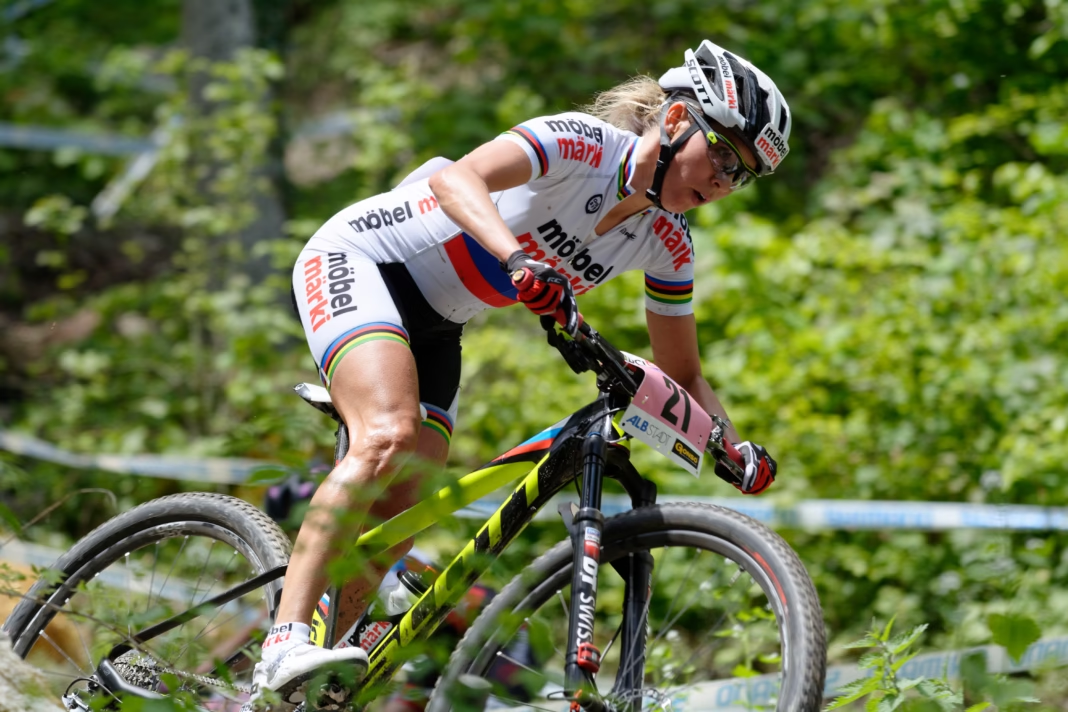
Why Kalentieva was so difficult to dislodge
Kalentieva’s strength came from having very few obvious weaknesses. She could climb at championship pace, descend cleanly under pressure and sustain effort across races where the technical sections repeatedly interrupted rhythm. Cross-country rewards riders who can move between those demands without wasting energy, and Kalentieva was unusually good at maintaining that balance.
Her racing also carried a measured quality. She did not need to dominate every opening lap to remain dangerous. On demanding courses, she was often able to hold position while rivals faded and then move forward as the race settled. That made her especially effective at championships, where pacing and composure can matter as much as outright speed.
A career that stretched across eras
Kalentieva’s longevity is one of the strongest reasons to include her in any serious history of women’s mountain biking. She won her first world title in 2007, remained on World Championship podiums in the middle of the next decade and was still racing at Olympic level in 2016.
That period covered major changes in equipment, course design and racing style. Cross-country became shorter, sharper and increasingly technical, yet Kalentieva continued to produce results. The riders around her changed, but her name remained near the front.
Her place in cycling history
Irina Kalentieva’s career deserves to be remembered on its own terms rather than framed as a road-cycling story. She was a mountain biker of the highest level: two elite world titles, an Olympic bronze medal, repeated World Championship podiums and four Olympic appearances.
Her record also broadens the picture of women’s cycling history. The development of the sport did not happen only on the road. Mountain biking produced its own generation of long-term champions, and Kalentieva was one of the riders who defined that era.

