
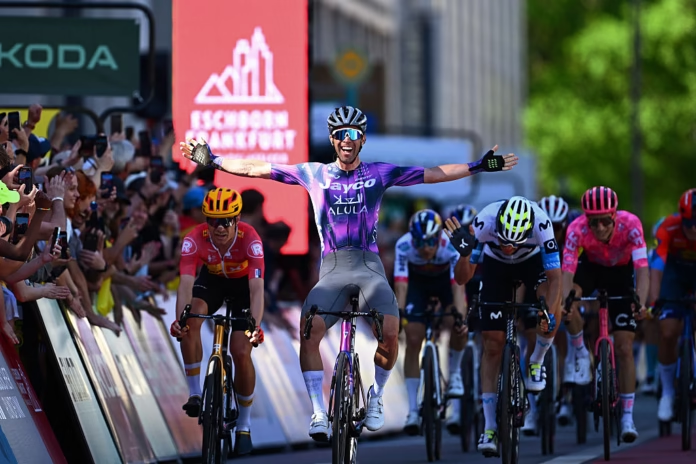
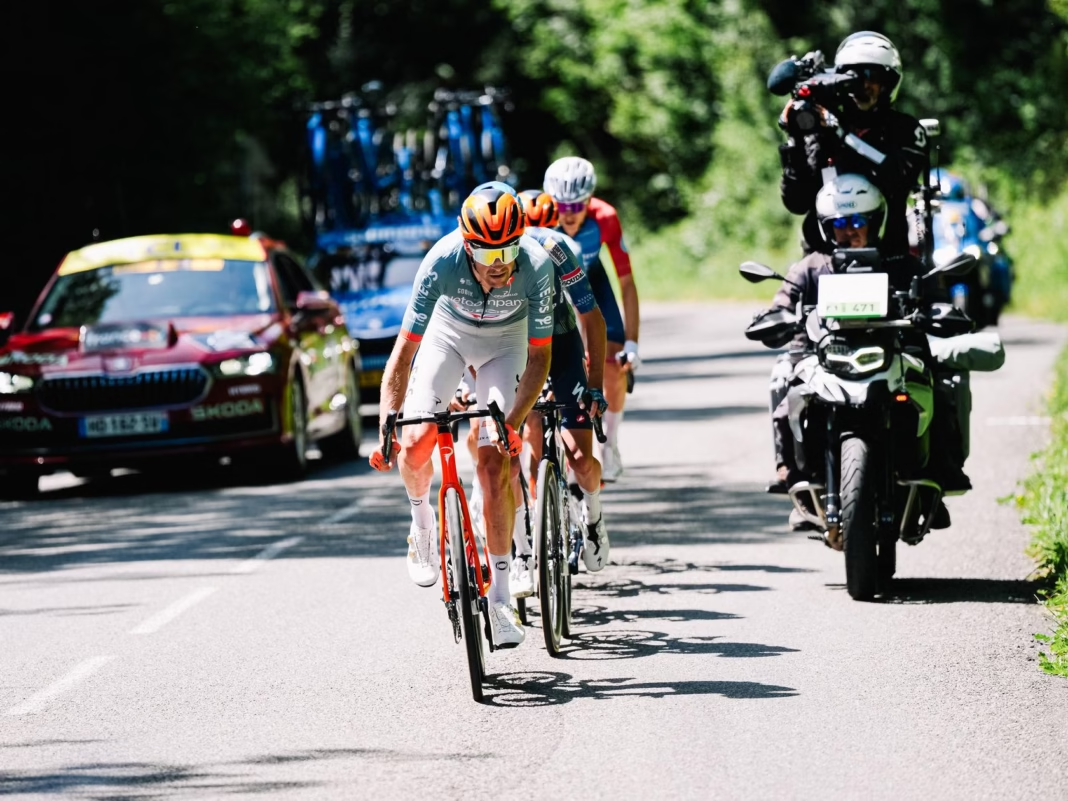
Eschborn-Frankfurt has a different shape in 2026. The route is harder, the climbing load is bigger and the race should be more selective than the editions that naturally drift towards a straightforward sprint. With the Feldberg climbed twice, the Mammolshainer Stich tackled twice and the steep Burgweg added into the decisive section, this looks much more like a race for durable puncheurs, hardier sprinters and one-day all-rounders than a pure speed contest.
That changes how the contenders should be read. This is no longer simply about the fastest sprinter who can survive a few hills. It is much more about who can absorb repeated climbing, stay well-positioned through the harder middle section and still finish strongly once the race opens up. The Eschborn-Frankfurt 2026 route guide and the team-by-team guide both point in that direction.
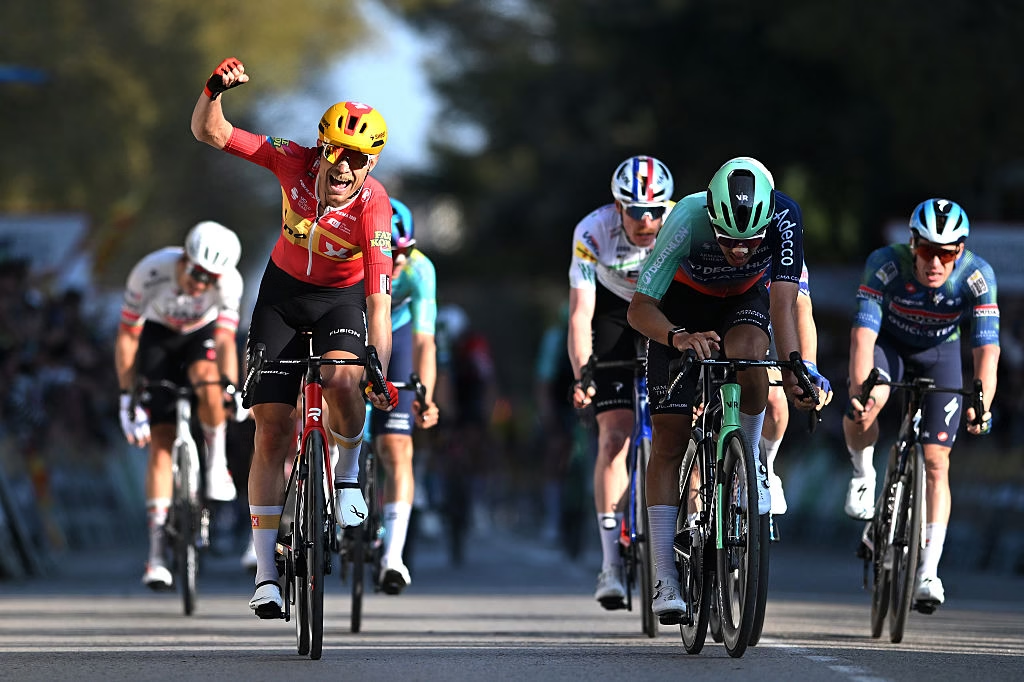
Magnus Cort now becomes the clearest reference point
With Michael Matthews out due to broken wrists, Magnus Cort looks like the most obvious benchmark for the race. He was 2nd here in 2025, and the harder 2026 route still suits him if the race is selective enough to remove the pure sprinters without turning fully into a climbers’ contest.
He does not need the race to become completely chaotic. He just needs it to be hard enough. If a reduced group reaches Frankfurt, he is one of the strongest finishers left in the field. That makes him the cleanest contender on the current start list.
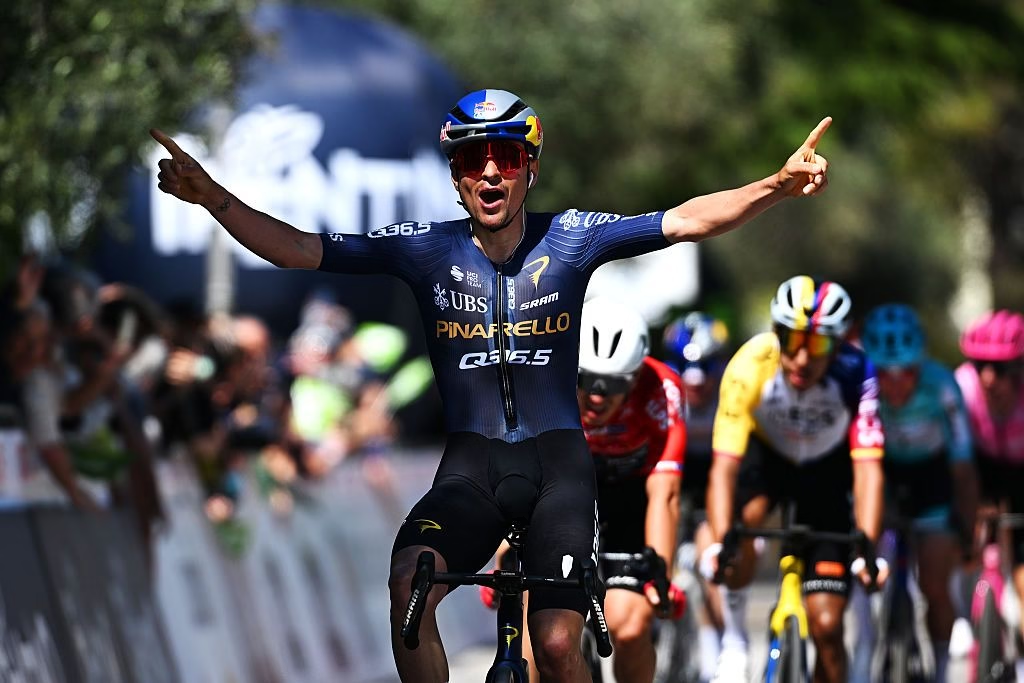 Photo Credit: Getty
Tom Pidcock has more ways to win than almost anyone else
A flatter Eschborn-Frankfurt would have asked Tom Pidcock for a very specific race shape. This route does not. The tougher 2026 edition gives him several possible paths, whether through attacking on the harder climbs, helping force a smaller front group, or backing himself in a selective finish if enough riders have already been distanced.
That is what makes him one of the most intriguing contenders in the race. He may not be the safest pick in the same way Cort is, but he is arguably the rider most capable of changing the race’s entire logic if he decides to be aggressive before the run back to Frankfurt.
Jon Barrenetxea should be taken seriously again
Last year’s 3rd place already showed that Jon Barrenetxea can handle the specific demands of this race, and the 2026 course still suits the sort of rider he is: punchy, durable and comfortable on one-day terrain shaped by repeated efforts rather than one overwhelming summit.
He does not have the same finishing speed as Cort, but if the race becomes more attritional that gap starts to matter less. On a harder route, that makes him one of the more credible names just behind the top line of favourites.
Stronger one-day riders should thrive on this course
A harder Eschborn-Frankfurt naturally brings in riders who might have felt slightly out of place on the more sprint-leaning versions of the race. Nils Politt is one of the clearest examples. He may not be the fastest rider left if a group sprint develops, but he is exactly the sort of rider who can help create the selective final that makes that sprint smaller and much less predictable.
There is a similar logic around Søren Kragh Andersen. He already knows how to win this race, and the route still suits a rider of his shape: strong enough for the climbs, fast enough from a reduced group, and tactically solid in the kind of broken finale Eschborn-Frankfurt often produces when it is raced hard.
Corbin Strong also looks well placed. He is fast enough to win from a smaller group and strong enough to survive a harder day than many pure sprinters. Andrea Bagioli belongs in the same conversation, while riders such as Laurence Pithie, Ben Tulett, Alex Aranburu and Pello Bilbao all make sense if the race is opened early enough and the biggest teams hesitate at the wrong time.
-
 Photo Credit: Gaetan Flamme
Why Matthews being out changes the race
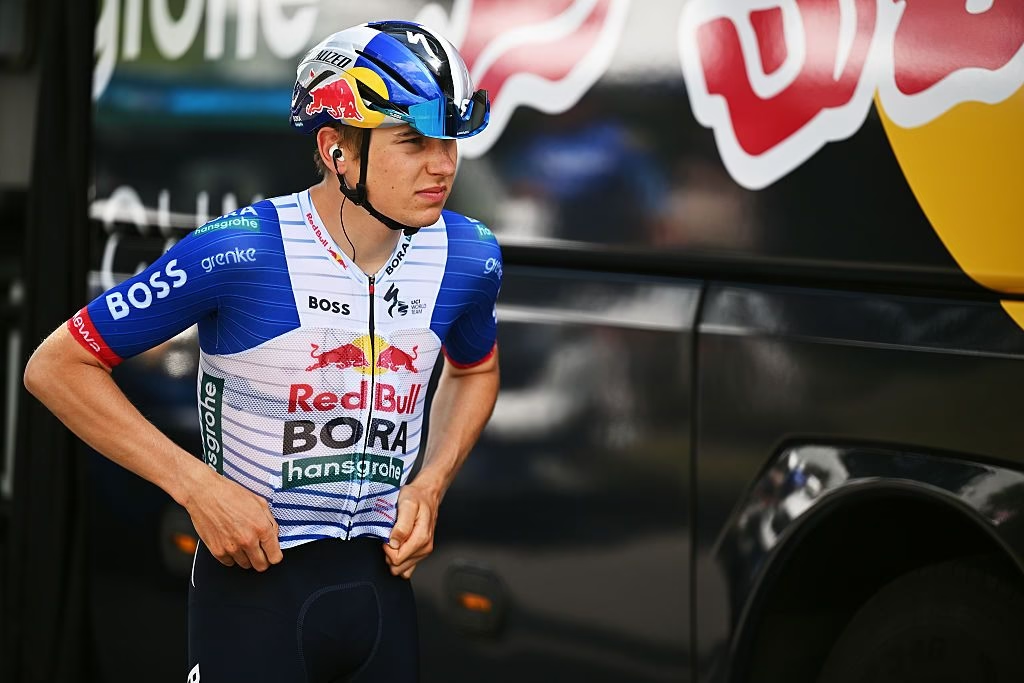
What Matthews’ absence really changes is the type of favourite you should prioritise. Without the defending champion, the race leans a little further away from the fast-but-resilient sprinter model and a little more towards tougher all-rounders and puncheurs who can still finish.
That does not mean a reduced sprint is off the table. It means the reduced sprint now looks more likely to be contested by riders like Cort, Strong or Bagioli than by the rider who won here last year.
Contenders verdict
With Matthews out, Magnus Cort looks like the safest pick on the current start list. Tom Pidcock is the rider most capable of forcing the race into a much harder shape, while Jon Barrenetxea, Nils Politt and Søren Kragh Andersen all look especially well placed if the climbs turn the day into something more attritional and less controlled.
That is what makes this edition more interesting than usual. The route is hard enough to force a real selection, but not so hard that the finish becomes obvious. The best contender is not simply the fastest rider in the race. It is the rider who can survive the most demanding version of the course and still arrive in Frankfurt with enough left to finish the job.
For the wider race picture, the full start list, the route guide and the team-by-team guide all help frame how the race should unfold.

