Women’s cycling has never had a deeper sprint field. A few years ago, most flat finishes could be framed around one or two obvious names. Now the picture is more layered. There are pure drag-strip sprinters, classics sprinters, track-influenced finishers, reduced-group specialists and riders who are increasingly difficult to define because they can survive hills, handle chaos and still finish faster than almost everyone else.
The answer still begins with Lorena Wiebes. She remains the benchmark for speed, positioning and repeatability. But the gap behind her is not empty. Charlotte Kool, Elisa Balsamo, Chiara Consonni and Lotte Kopecky all bring different sprint profiles, while riders such as Noemi Rüegg, Shari Bossuyt, Letizia Paternoster, Nienke Veenhoven and Daria Pikulik have made the conversation more interesting because they can win when the finish is not clean or predictable.
This is not simply a ranking of who is fastest in a straight line. In modern women’s racing, the best sprinters are the riders who can still be there after crosswinds, climbs, crashes, poor positioning, technical run-ins and reduced bunches. That is why the list is more nuanced than a basic speed chart.
For wider context on how these riders fit into the season, our women’s cycling race guides track the events where the sprint hierarchy is often tested most clearly, while our 2026 women’s cycling calendar highlights the races where the fast finishers are likely to shape the year.
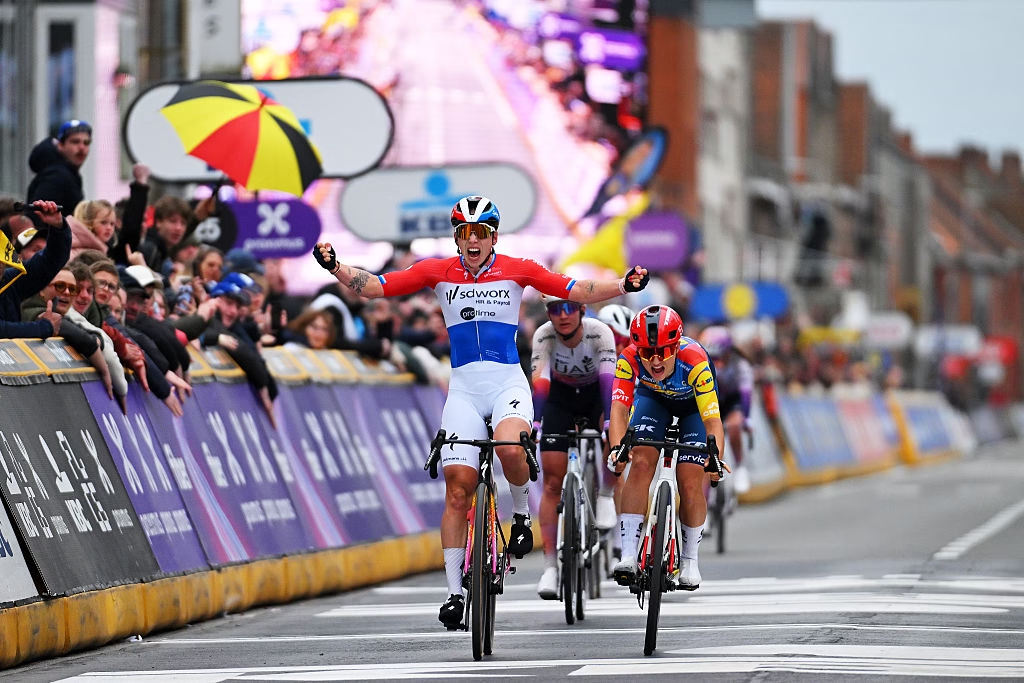 Photo Credit: Getty
1. Lorena Wiebes
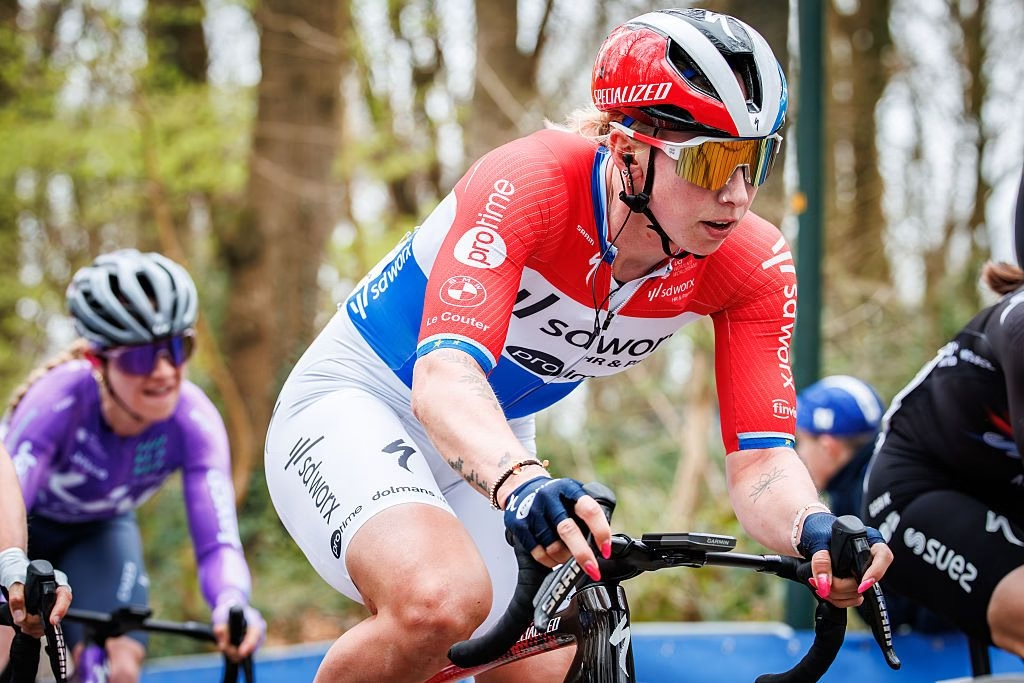
Lorena Wiebes remains the best sprinter in women’s cycling right now. The reason is not only that she is probably still the fastest rider in a clean sprint. It is that her winning range has expanded.
At her peak, Wiebes is almost impossible to beat when SD Worx-Protime give her a clear run. She launches with enough speed to create immediate separation, and she has the strength to hold that acceleration rather than fading late. That makes her dangerous in classic bunch sprints, but her 2026 wins have also reinforced something more important: she is no longer just a flat-finish specialist.
Winning from reduced groups on harder terrain has become a major part of her profile. When Wiebes survives selective classics-style racing and still reaches the finish with a sprint, the rest are often racing for 2nd. That is what separates her from most of the pure sprinters. She can win the obvious sprint stages, but she can also take races that should, in theory, be too hard for a conventional fast finisher.
Her only slight weakness is tactical exposure when the race becomes very chaotic. If her team loses shape or she is forced to sprint from poor position, she can be beaten. But judged across speed, consistency, race intelligence and versatility, Wiebes is still the clear number one.
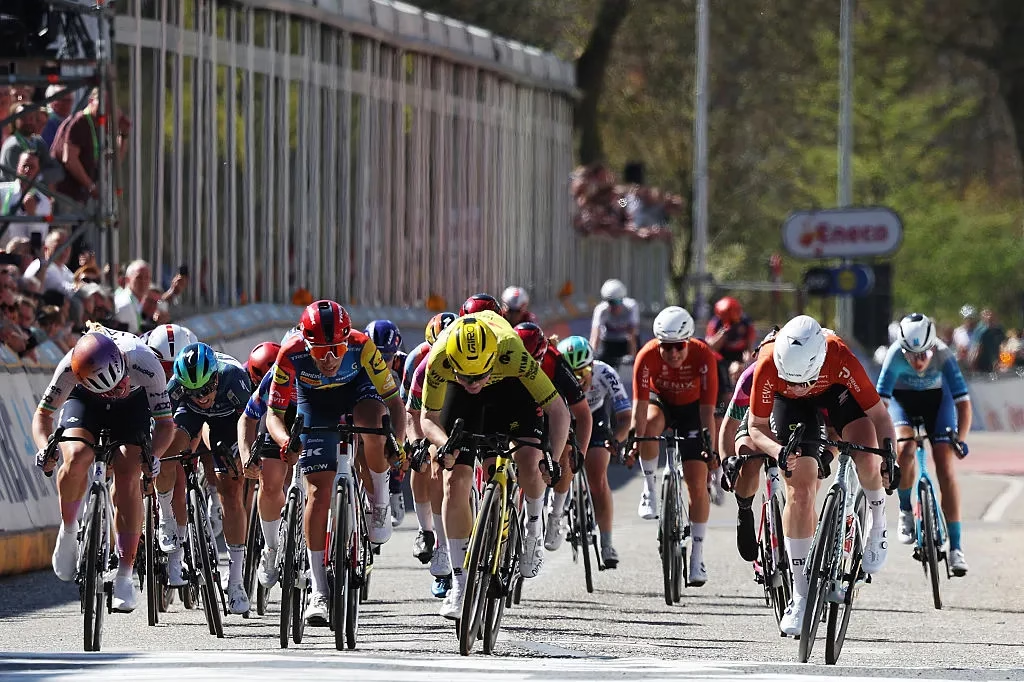
2. Charlotte Kool
Charlotte Kool is the closest thing to a pure sprint rival for Wiebes. When the race is flat, fast and controlled, Kool has the speed to beat almost anyone. She is explosive, direct and at her best when her lead-out drops her into the final 200 metres with space to accelerate.
Her Scheldeprijs Women victory in 2026 was a useful reminder of that quality. It came after a frustrating run of near misses, but the performance showed why she remains one of the most dangerous finishers in the sport. When her team controls the final kilometre properly, she can still look brutally efficient.
The question with Kool is not top speed. It is repeatability across different types of finishes. On flatter sprint days she is right at the top of the sport, but she can be more vulnerable when the race has been selective, when the run-in is chaotic, or when she has to improvise without a full lead-out.
That still makes her one of the very best. If the finish is flat and the peloton is largely together, she is one of the first names every team has to mark.
 Photo Credit: Getty
3. Elisa Balsamo
Elisa Balsamo remains one of the most complete sprint finishers in women’s cycling. She does not always look as overwhelmingly fast as Wiebes or as purely explosive as Kool, but her range is excellent. She can survive harder races, position herself well, and still produce a high-level sprint at the end of long, attritional days.
That versatility is her biggest strength. Balsamo is dangerous in bunch sprints, reduced bunches and classics-style finales. She also has the track background and technical calm to handle messy finishes, which matters in women’s racing where sprint finales are often less controlled than the men’s equivalent.
Her 2026 has included several close results rather than a run of dominant wins, but the underlying level remains high. She is still regularly there when the sprint field is strong, and that consistency keeps her among the best.
Balsamo is not always the rider with the absolute fastest final kick, but she is one of the riders most likely to be in the right place when the sprint starts. That makes her dangerous even when she is not the obvious favourite.
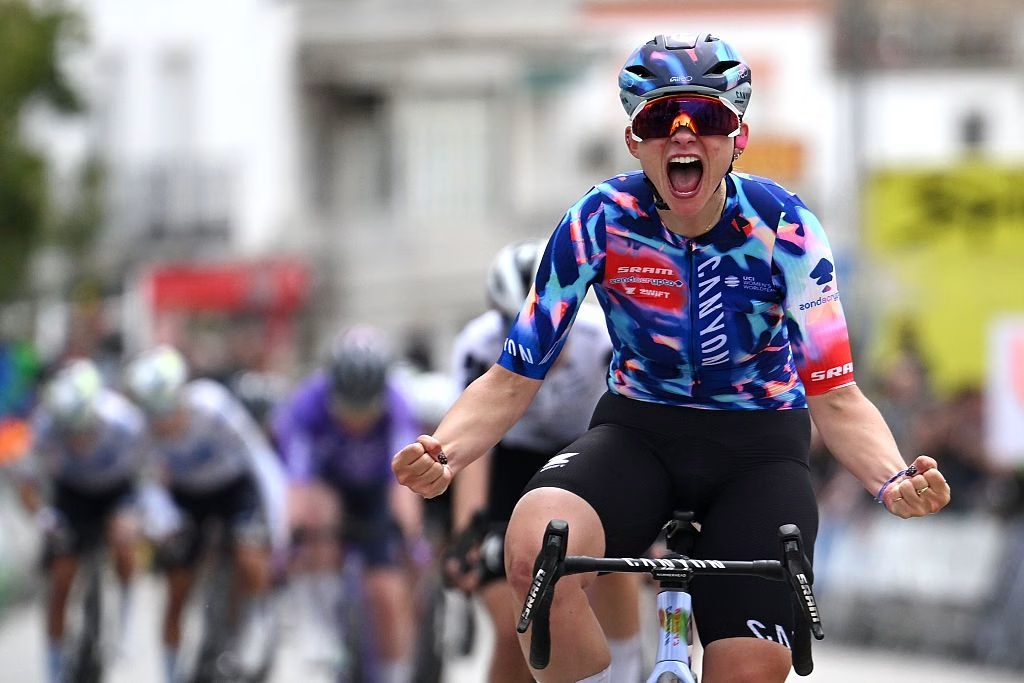
4. Chiara Consonni
Chiara Consonni is one of the sharpest pure sprinters in the peloton and still feels slightly underrated because her best work can look deceptively simple. She is smooth, technically good, and rarely wastes too much energy before the launch.
Her win at Vuelta a Extremadura Femenina in 2026 showed the value of that timing. Consonni does not need a wildly selective race to come into her own. She is at her best when the final kilometres are fast and she can use a lead-out, but she is also capable of finding space independently when the sprint is less structured.
The difference between Consonni and the very top of the list is that Wiebes and Kool generally carry more obvious finishing power in a drag race, while Balsamo has a slightly broader classics-winning profile. But Consonni’s ceiling is still extremely high. Give her a clean final 200 metres and she is a genuine threat to anyone.
She also has a valuable quality for stage races: she can repeatedly contest finishes without needing the whole race to be built around her. That makes her especially useful in fields where no single team fully controls the sprint.
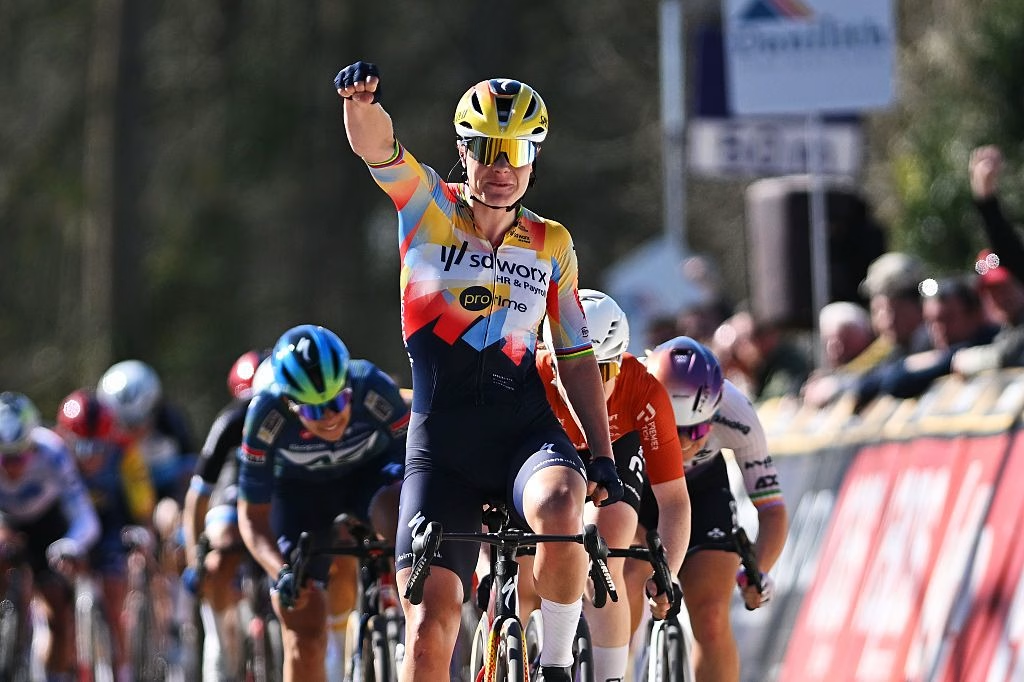
5. Lotte Kopecky
Lotte Kopecky is not a pure sprinter in the traditional sense, but leaving her out of this conversation would make no sense. In many of the biggest women’s races, she is one of the riders most likely to win from a reduced group, a hard sprint, or a finale where the pure sprinters have already been dropped.
Her sprint is different from Wiebes or Kool. It is less about flat-out speed from a full bunch and more about power after attrition. Kopecky can survive the climbs, handle the technical pressure, and still produce a finish that most riders cannot match after a hard race.
That makes her especially dangerous in Classics, hilly stages and Grand Tour days that sit between sprint and GC terrain. She may not be the first pick for a completely flat sprint stage, but if the race is hard enough to remove the purest sprinters, she often becomes the rider everyone fears.
Her ranking depends on how broadly “sprinter” is defined. As a pure fast finisher, she is not number one. As a hard-race finisher, she is one of the best in the world.
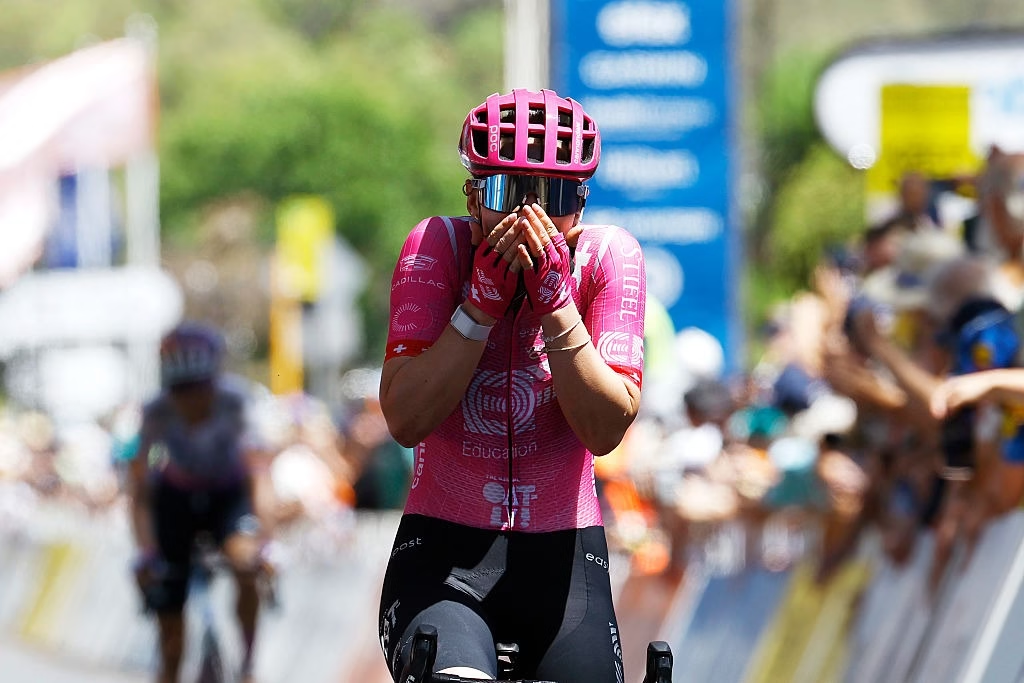
6. Noemi Rüegg
Noemi Rüegg has pushed herself higher in the sprint conversation because she is not just quick, she is strong enough to win difficult finishes. Her Stage 1 victory at La Vuelta Femenina 2026 was a good example: an uphill sprint, poor conditions, pressure, and a finish that required timing as much as speed.
That is where Rüegg’s value lies. She is not a pure sprinter in the Kool mould, but she is becoming one of the most dangerous riders when the finish comes after a hard day. She can cope with rolling terrain, stay well positioned, and still launch a decisive sprint when the group is reduced.
Her current injury setback from La Vuelta Femenina complicates the immediate picture, but in terms of ability and recent evidence, she belongs in the upper tier of fast-finishing all-rounders.
Rüegg is the kind of rider who becomes more dangerous as the race gets harder. That is a valuable profile in modern women’s cycling.
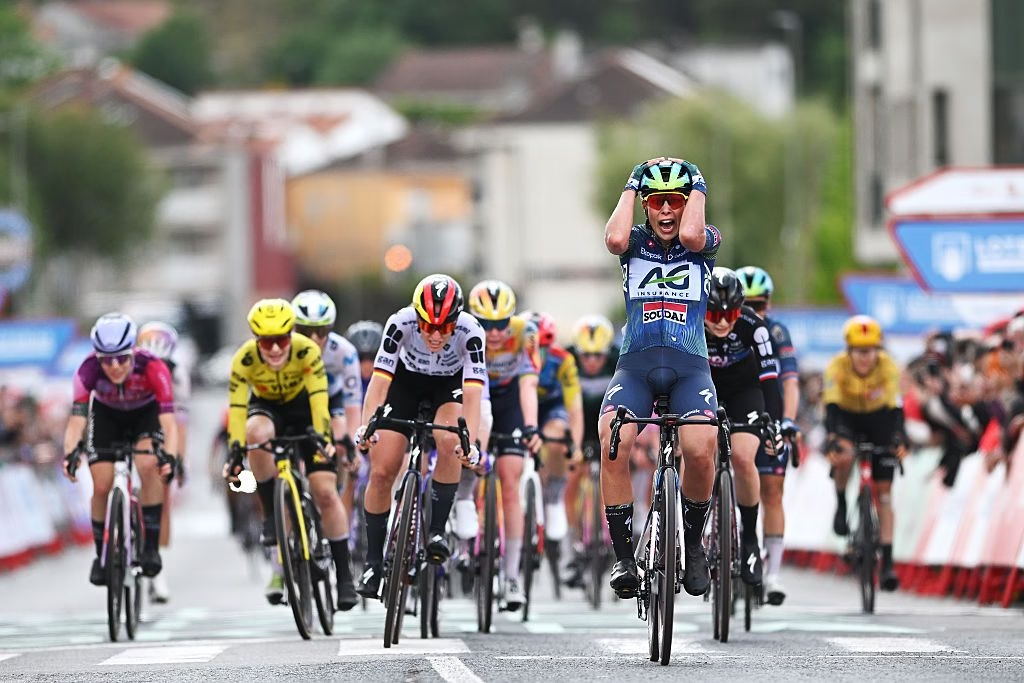 Photo Credit: Getty
7. Shari Bossuyt
Shari Bossuyt’s Stage 2 win at La Vuelta Femenina 2026 was a reminder that she has the speed and racing instinct to win big finishes when the race becomes messy. It was not a simple sprint day. It came after rolling terrain, crashes, pressure and a reduced group, which makes it more meaningful than a routine bunch finish.
Bossuyt is not yet in the Wiebes-Kool-Balsamo tier for repeat sprint dominance, but she has the tools to win at the highest level when the circumstances suit her. She is quick, durable and tactically alert, which matters in races where a clean lead-out is not guaranteed.
Her track background also gives her a useful finishing sharpness. She can accelerate well from a smaller group and does not need a perfect drag-strip sprint to be competitive.
For now, she sits just outside the very top bracket, but her recent form suggests she is moving closer.
 Photo Credit: Olly Hassell/SWpix.com
8. Letizia Paternoster
Letizia Paternoster is one of the best options for finishes that are too hard for pure sprinters but not hard enough for climbers. That makes her especially valuable in stage races, where many sprint opportunities come after rolling or technical days rather than flat, predictable routes.
Her strengths are speed, positioning and resilience. She can survive a selective stage and still contest the sprint, which gives her a different route to victory from the bigger pure sprinters. When the finish is reduced and the lead-outs are imperfect, Paternoster becomes a serious threat.
The question is whether she can consistently beat the very best in a clean sprint. Against Wiebes, Kool, Balsamo or Consonni on a flat finish, she is not usually the first pick. But in a reduced group after a difficult day, she deserves far more attention.
That makes her one of the most useful sprinters in the peloton, even if she is not always one of the most obvious.
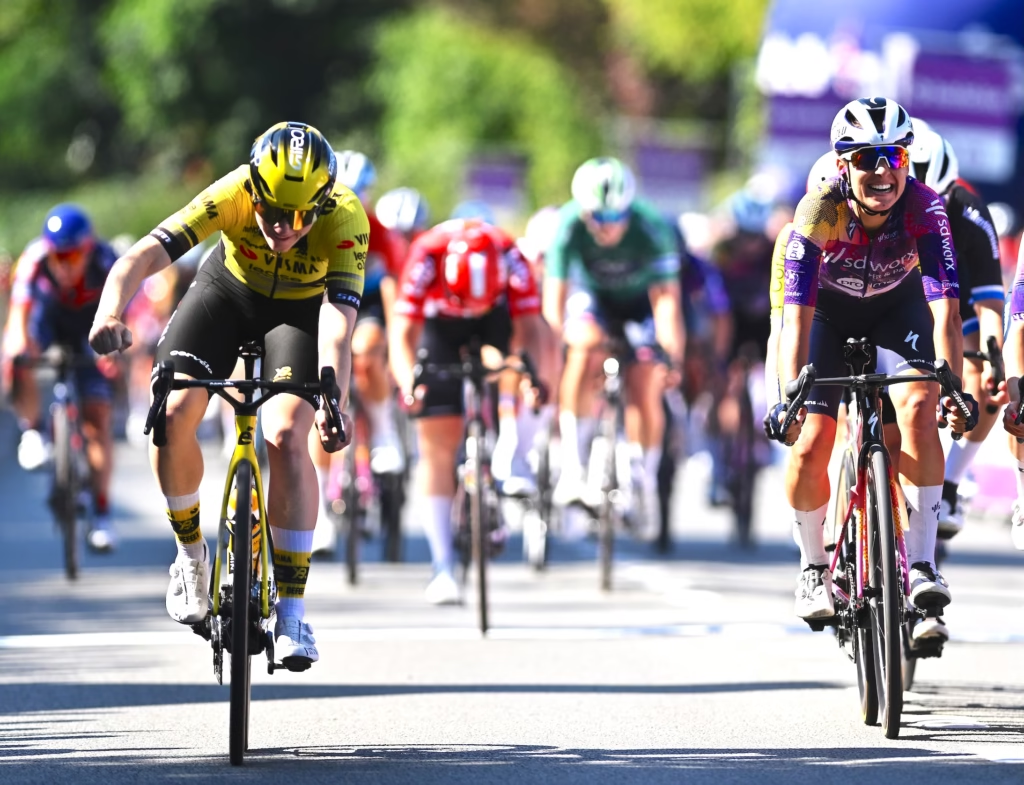
9. Nienke Veenhoven
Nienke Veenhoven has been building a strong case as one of the next riders to watch in the sprint field. Her 2nd place at Scheldeprijs Women 2026 was particularly notable because that race remains one of the clearest tests for the fast finishers.
She is not yet a proven serial winner at WorldTour level, but the direction is clear. Veenhoven has the speed to place highly against more established sprinters, and she is gaining the kind of experience that matters in technical finales.
Her ceiling is still being defined. At this stage, she belongs more in the “emerging sprint threat” category than the established elite. But she is already strong enough that teams cannot ignore her in a flat or semi-controlled finish.
If she continues this trajectory, she could move quickly into the top group.

10. Daria Pikulik
Daria Pikulik remains one of the better pure sprint names outside the very top bracket. Her track speed is obvious, and on flatter finishes she can still be a serious contender.
Her best route to victory is a finish that stays relatively controlled. Pikulik is quick enough to punish hesitation if the lead-outs fracture, and she has the acceleration to contest the final 200 metres against strong opposition when she reaches the sprint in good position.
The challenge is that the women’s sprint field has become so deep that winning regularly now requires more than speed. Positioning, lead-out quality and the ability to cope with harder terrain all matter, especially in the WorldTour races where few sprint stages are completely simple.
Pikulik is not as versatile as Kopecky, Rüegg or Paternoster on selective terrain, but in a flatter, faster finish she remains one of the names worth watching.
-
 Photo Credit: A.S.O./Thomas Maheux
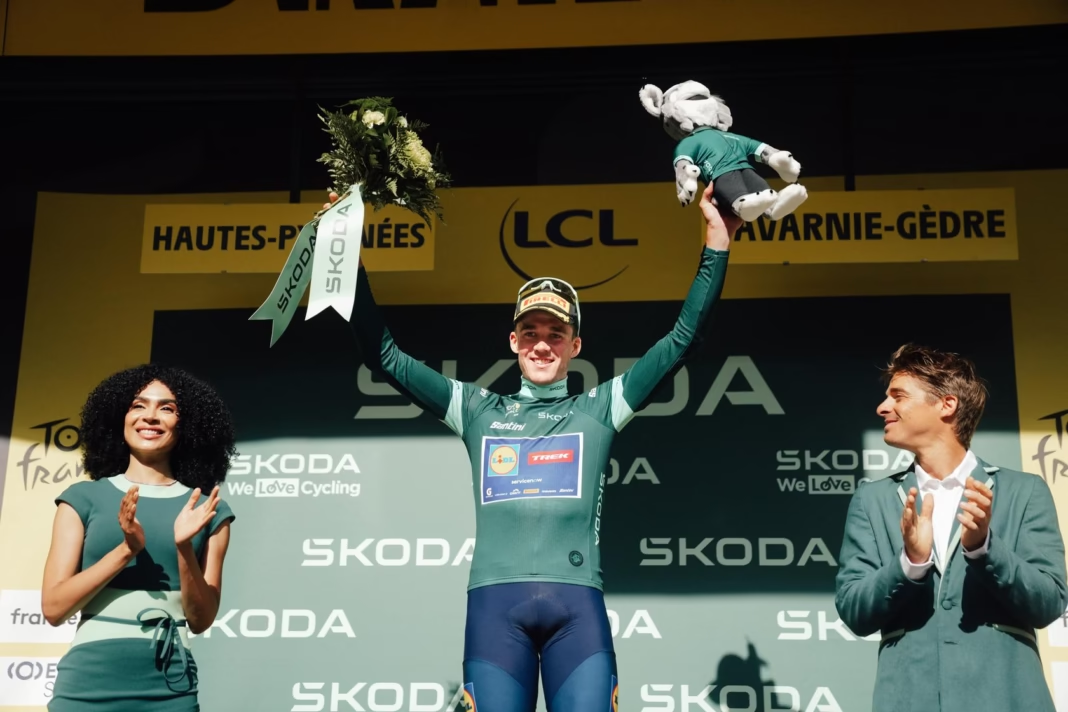
Best of the rest
Ally Wollaston is another rider who sits just outside the pure sprint hierarchy but remains extremely dangerous when the finish comes from a reduced or slightly disorganised group. She has the track speed to finish quickly, the strength to survive harder days, and the race craft to stay involved when the finale is not perfectly controlled. Her best opportunities usually come on rolling stages, technical finishes or races where the obvious sprint teams have been weakened before the final kilometres. In that kind of scenario, Wollaston is fast enough to punish hesitation and versatile enough to make the front group in the first place.
Arlenis Sierra has been a high-level fast finisher for years, and while she is not always framed as a pure sprinter, she remains dangerous from reduced groups. Her sprint comes with experience, strength and tactical awareness. She is especially effective when the race has been hard enough to remove some of the fastest sprinters, making her a strong option for days that sit between sprint and classics terrain.
Megan Jastrab deserves mention as a fast finisher with room to grow. She has the speed to win from groups and is part of a UAE Team ADQ squad that can place riders into different race situations rather than relying on one fixed sprint plan.
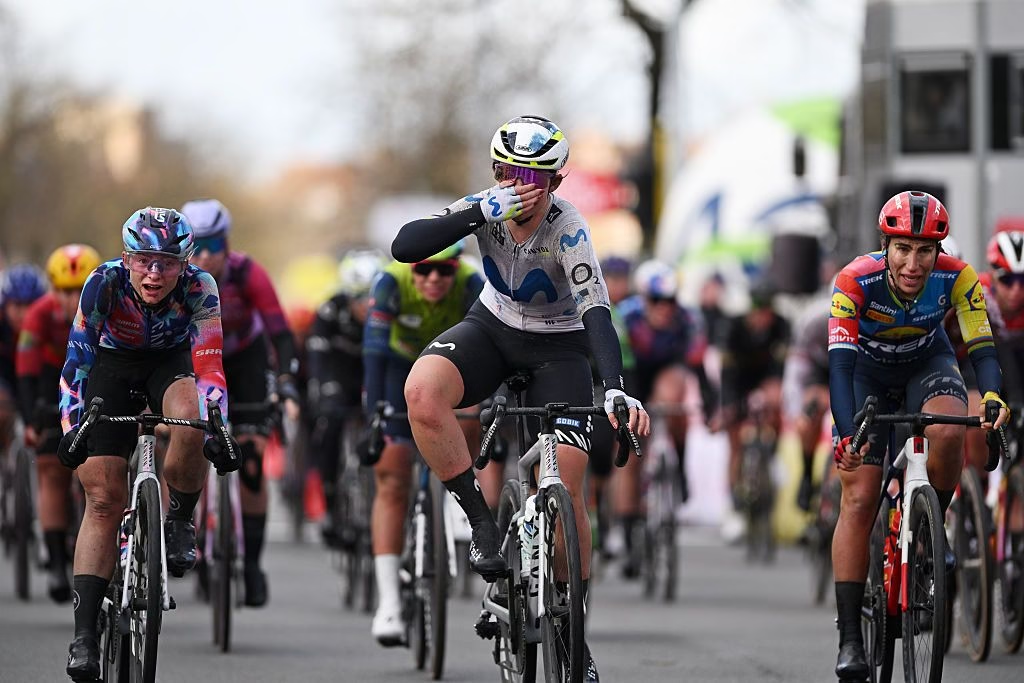
Carys Lloyd is the interesting new name after her Ronde van Brugge Women win. It is too early to place her among the best sprinters in the world, but beating established names in a chaotic reduced sprint is a strong signal. She now needs repeat results to turn a breakthrough into a pattern.
Marta Lach also belongs in the conversation for harder finishes, while riders such as Blanka Vas and Cédrine Kerbaol can sprint well from selective groups even if they are not pure sprint specialists.
So who is the best sprinter in women’s cycling?
Wiebes is still the best sprinter in women’s cycling right now. Kool is probably the closest pure-speed rival, while Balsamo and Consonni remain the most reliable high-level sprint finishers behind them. Kopecky belongs in the conversation because so many elite women’s races do not end in clean bunch sprints, and in hard reduced finishes she is one of the most dangerous riders in the sport.
The modern sprint hierarchy is not one straight line. On a flat, fully controlled finish, the top tier is Wiebes, Kool, Balsamo and Consonni. On a harder, more selective day, Kopecky, Rüegg, Bossuyt, Paternoster and Sierra become much more dangerous.
That is what makes the current era so strong. Women’s cycling no longer has one type of sprinter. It has specialists for different race shapes, and the best of them are now expected to survive far more than a smooth run to the final 200 metres.