

The Tour Auvergne – Rhône-Alpes 2026 is the new name for one of the most important men’s stage races before the Tour de France. For years, cycling fans knew this slot in the calendar as the Critérium du Dauphiné. In 2026, the race has been renamed, but its sporting role remains very similar: a demanding eight-day WorldTour race in France, held in June, with major Tour de France contenders testing their form before July.
That makes it a race worth understanding even if the name feels unfamiliar. The Tour Auvergne – Rhône-Alpes is not just another week-long stage race. It is a high-level rehearsal for the Tour de France, with mountains, a time trial element, strong WorldTour teams and a route designed to expose any weakness before the biggest race of the season.
The 2026 edition runs from Sunday, 7th June to Sunday, 14th June. It includes hilly stages, a team time trial, one flatter day for the sprinters and a brutal final weekend in the mountains. By the end of the race, the winner will almost certainly be a rider with genuine Tour de France climbing and recovery credentials.
For wider context on the season, our men’s cycling race guides cover the key WorldTour events that shape the build-up to the Grand Tours, while our 2026 men’s cycling calendar tracks the major races across the year.
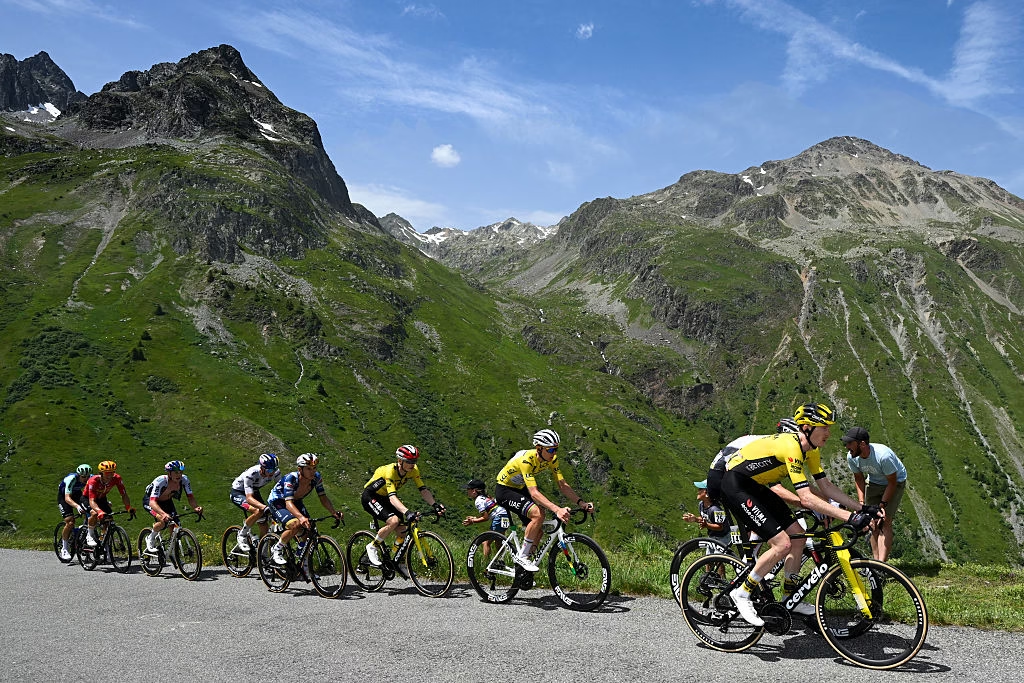
What is the Tour Auvergne – Rhône-Alpes?
The Tour Auvergne – Rhône-Alpes is an eight-stage men’s WorldTour race held in France. It takes place in early June and sits in the same calendar position traditionally occupied by the Critérium du Dauphiné.
That matters because the Dauphiné has long been one of the clearest Tour de France form guides. Riders do not always need to win it to go well at the Tour, but the race usually reveals who is climbing well, which teams have depth, and who still has work to do before July.
The new name reflects the region where much of the race’s identity sits. Auvergne – Rhône-Alpes is one of the great cycling regions of France, with terrain that can include rolling roads, steep climbs, Alpine passes and high-altitude finishes. It gives organisers the chance to create a route that feels like a compressed version of a Grand Tour: varied, difficult and tactically revealing.
Why has the Critérium du Dauphiné changed name?
For 2026, the race is being presented as the Tour Auvergne – Rhône-Alpes. In practical sporting terms, it remains the successor to the Critérium du Dauphiné, keeping the same broad place in the calendar and the same reputation as a major Tour de France preparation race.
For newer fans, the simplest way to think of it is this: the name has changed, but the race’s purpose is still familiar. It is still the June stage race in France where the big general classification riders test themselves before the Tour de France.
That makes the rebrand slightly confusing at first, especially for anyone used to seeing “Dauphiné” as one of the key Tour warm-up races. But once the racing begins, the identity should feel familiar. It is still a race for climbers, stage-race leaders, time trial specialists and teams trying to sharpen their Tour de France systems.
When is the Tour Auvergne – Rhône-Alpes 2026?
The Tour Auvergne – Rhône-Alpes 2026 takes place from Sunday, 7th June to Sunday, 14th June.
That timing is important. It comes after the Giro d’Italia and before the Tour de France, making it a natural bridge between the first and second Grand Tours of the men’s season. Some riders use it as their final major race before the Tour. Others arrive after the Giro to test what they still have left. Teams also use it to decide selection, roles and tactics before July.
The race is short enough to stay intense, but long enough to test recovery. Over eight days, riders have to handle different types of stages, manage fatigue and perform again on the final weekend. That is why it is such a useful measure of Grand Tour readiness.
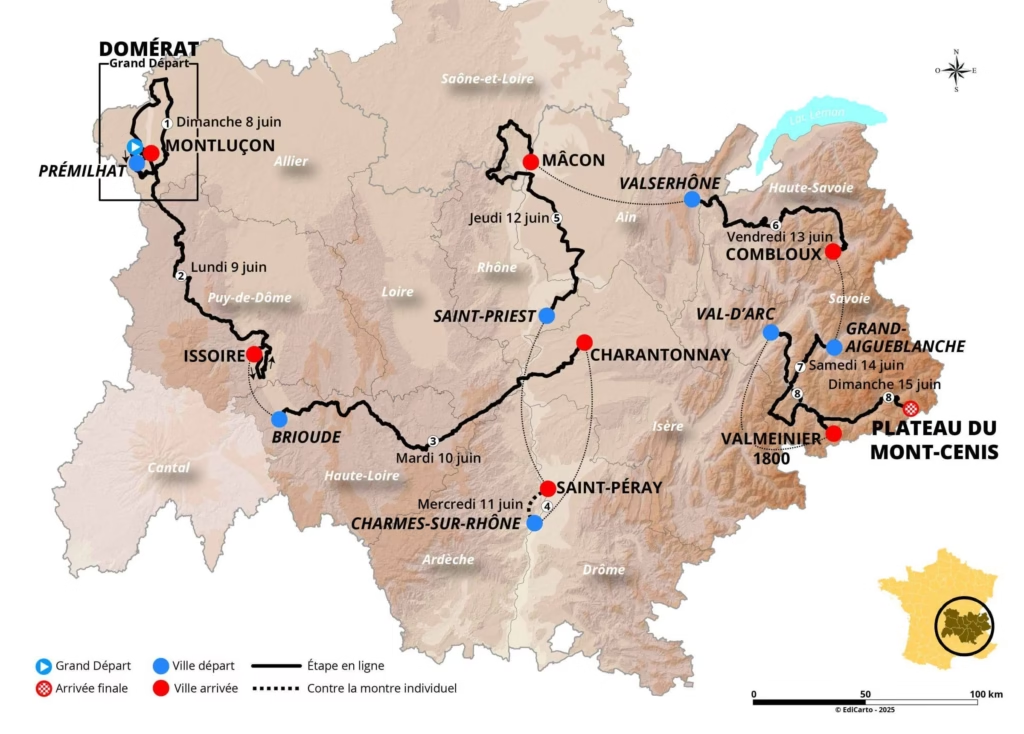
What is the 2026 route?
The 2026 route has eight stages, beginning in Vizille and finishing at Plateau de Solaison. It is a mountainous edition, especially in the final three days, and includes a team time trial earlier in the race.
The stage list is:
- Stage 1, Sunday, 7th June: Vizille to Saint-Ismier, 140.1km
- Stage 2, Monday, 8th June: Saint-Martin-le-Vinoux to Le Puy-en-Velay, 237.3km
- Stage 3, Tuesday, 9th June: Le Perreux to Le Perreux, 28.4km team time trial
- Stage 4, Wednesday, 10th June: Le Puy-en-Velay to Montrond-les-Bains, 165.8km
- Stage 5, Thursday, 11th June: Saint-Chamond to Villars-les-Dombes, 198.0km
- Stage 6, Friday, 12th June: Saint-Vulbas to Crest-Voland, 181.4km
- Stage 7, Saturday, 13th June: Le Bridoire to Grand Colombier, 133.3km
- Stage 8, Sunday, 14th June: Beaufort to Plateau de Solaison, 120.0km
The structure is clear. The opening stages are not flat enough to be harmless, the team time trial will test organisation, and the final three stages all finish uphill. That means the race should become progressively harder rather than being decided by one isolated mountain day.
Why is the team time trial important?
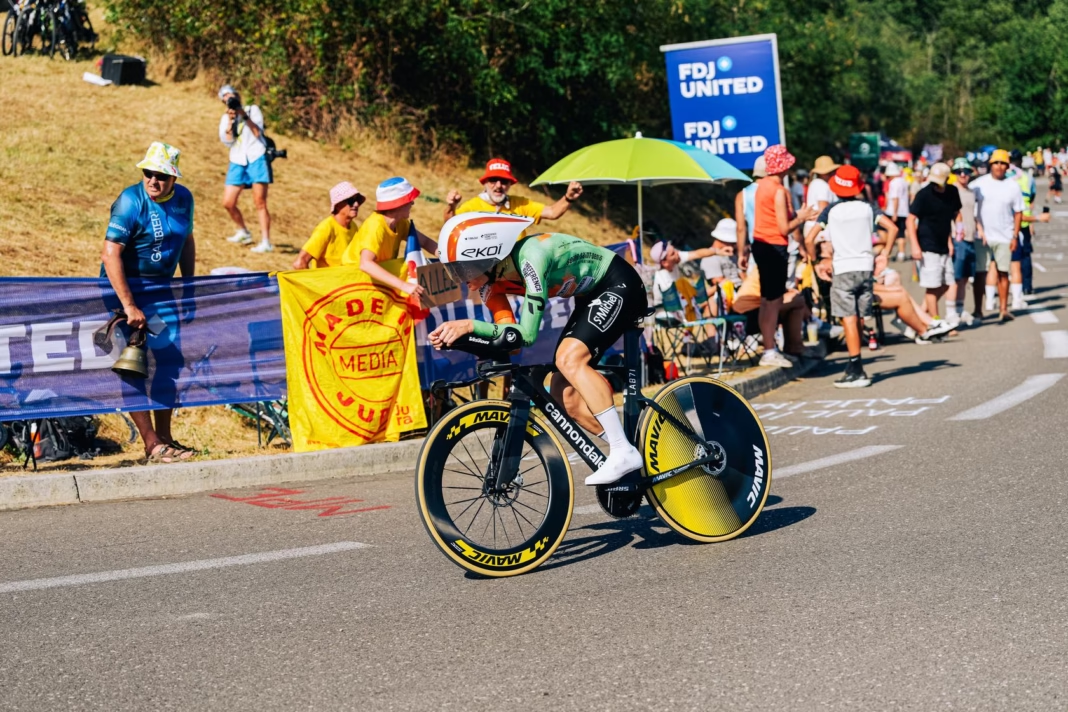
Stage 3 is a 28.4km team time trial around Le Perreux. That gives the race a different tactical shape from a standard week-long climbing contest.
Team time trials are not only about individual power. They test structure, discipline and depth. A team with one strong leader but several weaker support riders can lose time quickly. A balanced squad with good pacing can protect its GC rider and even take time on stronger climbers before the mountains arrive.
That matters before the Tour de France because team systems are a major part of Grand Tour racing. The best squads do not simply have a strong leader. They have riders who can position, pace, rotate, protect and make decisions under pressure. A team time trial exposes whether that structure is ready.
It also means the GC could already have meaningful gaps before the final mountain block. Climbers who lose time on Stage 3 will have to attack later. Riders backed by strong time trial teams may be able to race more defensively in the mountains.
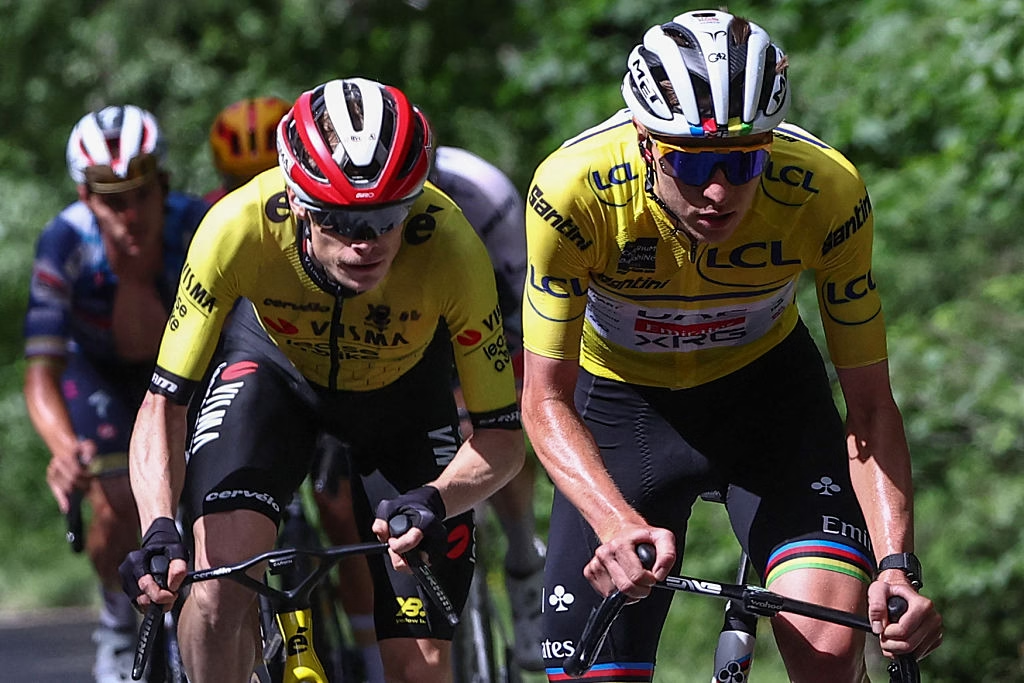 Photo Credit: Getty
Where will the race be decided?
The final three stages should decide the Tour Auvergne – Rhône-Alpes 2026. Stage 6 finishes at Crest-Voland, Stage 7 finishes on the Grand Colombier, and Stage 8 ends at Plateau de Solaison.
That is a demanding sequence. It does not give riders much time to recover between climbing tests, and it should reward those who can back up one hard effort with another. The winner will need more than one good day.
The Grand Colombier is likely to be the headline climb. It is one of the more recognisable mountain finishes in French cycling and has often been used as a serious test of climbing strength. Plateau de Solaison then gives the race a final-day summit finish, which means the general classification should remain alive until the very end.
For beginners, that is the key point: this is not a race where the GC contenders can relax after one mountain stage. The final weekend is stacked, and the last climb of the race could still change the overall winner.
What type of rider wins this race?
The Tour Auvergne – Rhône-Alpes is usually won by a complete stage racer. In 2026, that should be even more true because the route combines team time trial demands with repeated summit finishes.
A pure climber can go well, but they may need support from a strong team in the time trial. A time trial specialist can gain time early, but they still need to survive three uphill finishes. The ideal winner is a rider who climbs at an elite level, recovers well, has a strong team and can avoid bad days across the full week.
That is why the race often attracts Tour de France contenders. It asks many of the same questions as the Tour, just in a shorter format. Can a rider handle repeated mountain days? Can their team control the race? Are they sharp enough in time trial conditions? Can they respond when rivals attack late in the week?
The answer to those questions will usually point towards the eventual winner.

How does it compare with the Tour de France?
The Tour Auvergne – Rhône-Alpes is much shorter than the Tour de France, but it works as a useful preview. It has mountains, GC pressure, high-quality teams and several riders who will be aiming for July.
The difference is scale. The Tour de France lasts three weeks and includes a wider range of terrain, greater media pressure and a much deeper strategic challenge. The Tour Auvergne – Rhône-Alpes lasts eight days, so mistakes are harder to repair, but the endurance demand is not the same as a Grand Tour.
That makes it a sharper, more concentrated test. A rider can win here and still fall short at the Tour. A rider can also lose here and still improve by July. But if someone climbs well, time trials well and finishes strongly in this race, it is usually a sign that their Tour de France preparation is on track.
For more background on the race it is designed to feed into, our Tour de France coverage follows the route, contenders, stage previews and wider build-up to July.
Which teams and riders should beginners watch?
The easiest way to follow the race is to watch the GC teams first. Team Visma | Lease a Bike, UAE Team Emirates XRG, Red Bull-Bora-Hansgrohe, Decathlon CMA CGM Team, Netcompany Ineos Cycling Team and Lidl-Trek are usually among the squads expected to shape this kind of race.
The names on the final start list will decide the exact hierarchy, but the rider types are predictable. Look for Tour de France leaders, elite climbers, strong time trial riders and teams with depth in the mountains. Those are the riders most likely to matter on the final three stages.
The sprinters should have fewer chances, but Stage 5 to Villars-les-Dombes looks like the clearest day for a faster finish. Breakaway riders may also target the hilly stages before the final mountain block, especially if the GC teams want to conserve energy.
For more on how stage races are shaped tactically, our beginner’s guide to men’s road cycling offers wider context on how teams balance leaders, domestiques, breakaways and sprint opportunities.
-
 Photo Credit: A.S.O./Gaëtan Flamme
How should new fans watch the race?
New fans should focus on three things: the team time trial, the first uphill finish and the final weekend.
The team time trial will show which squads are organised and which leaders may already be under pressure. The first uphill finish at Crest-Voland should reveal who has climbing form. The Grand Colombier and Plateau de Solaison should then decide the race properly.
It is also worth watching how teams behave before the final climbs. Strong teams will try to place their leaders near the front without wasting too much energy. Weaker teams may have to chase, gamble or send riders into breakaways. Those small decisions often explain why a rider is isolated later in the stage.
The race is also a good way to learn how Tour de France preparation works. Some riders will arrive close to peak form. Others may still be building. The strongest performance in June does not always guarantee the strongest performance in July, but the warning signs are often visible.
Why the Tour Auvergne – Rhône-Alpes matters
The Tour Auvergne – Rhône-Alpes matters because it sits at a crucial point in the men’s cycling season. By early June, the spring Classics are finished, the Giro d’Italia has ended, and the Tour de France is approaching quickly. Teams are no longer experimenting in the same way. They are testing race plans, leaders and support structures.
The 2026 route makes that especially clear. A team time trial will expose organisation, the hilly stages will test control, and the final three uphill finishes should reveal who can handle serious climbing pressure. It is exactly the type of race that can change perceptions before July.
For beginners, the simplest summary is this: the Tour Auvergne – Rhône-Alpes is the renamed Dauphiné, and it remains one of the best races for understanding who is ready for the Tour de France. The name may be new, but the purpose is familiar. It is a hard, revealing, high-level French stage race where Grand Tour contenders cannot hide.

