
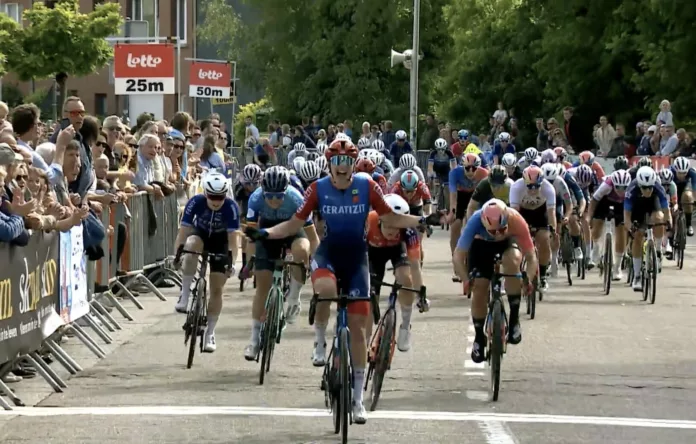
GP Mazda Schelkens 2026 brings a strong sprint and Classics-leaning field to Belgium, with a start list that points towards a fast finish if the main teams can keep the race under control. It is the kind of race where positioning, road furniture, late attacks and team depth can matter almost as much as raw speed, but the rider list still makes one thing clear: the sprinters and durable fast finishers should be central.
Live coverage is available via Pickx, with the broadcast scheduled from 14:30 to 17:00 BST. That should cover the decisive phase of the race, including the final chase, any late attacks and the sprint or reduced-group finish.
The field has a useful mix of WorldTour-level speed, Belgian race craft and riders who have already shown consistency in this event. Marthe Truyen, Kathrin Schweinberger, Daria Pikulik, Katrijn De Clercq and Scarlett Souren all bring previous results at GP Mazda Schelkens, while Charlotte Kool, Amalie Dideriksen, Letizia Borghesi, Maggie Coles-Lyster and Valentine Fortin add more proven finishing strength.
Why the race should suit fast finishers
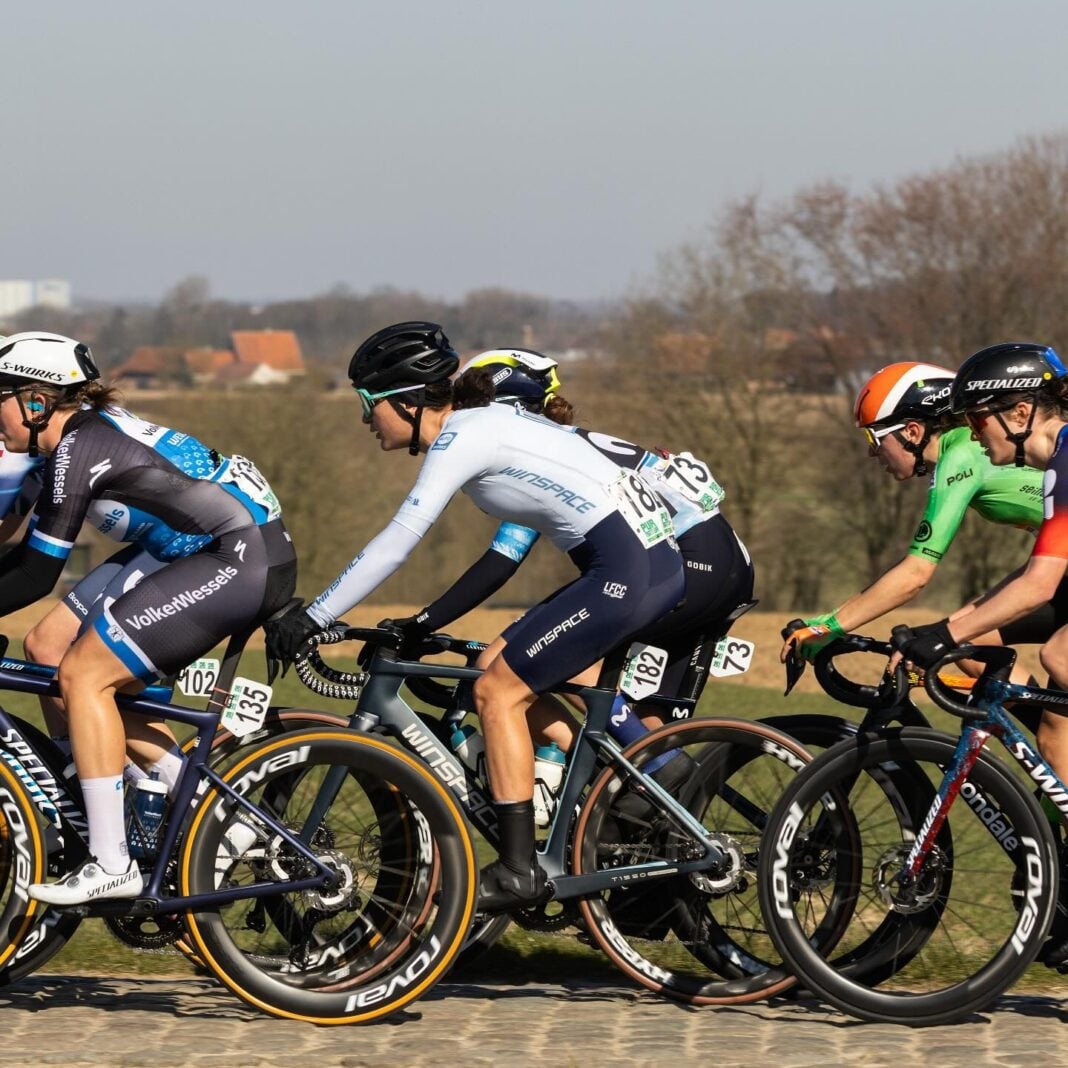
GP Mazda Schelkens is not a race that automatically guarantees a full bunch sprint, but the start list heavily points in that direction. There are too many teams with strong sprint options for the race to be allowed to drift too far away from the peloton. Human Powered Health, Cofidis, Fenix-Premier Tech, AG Insurance-Soudal and VolkerWessels all have reasons to keep the race together, even if their preferred versions of a sprint are slightly different.
The key difference is what kind of sprint they want. Charlotte Kool and Daria Pikulik would prefer the cleanest possible bunch finish. Riders such as Marthe Truyen, Kathrin Schweinberger, Letizia Borghesi, Amalie Dideriksen and Scarlett Souren will not be worried if the race becomes more selective. That makes the final difficult to control, because the same teams chasing for a sprint may also have riders who can attack if the bunch hesitates.
A late move is still possible, especially if the bigger sprint teams start watching each other. But with several strong fast finishers present, the most likely scenario is a reduced sprint or bunch sprint rather than a solo winner.
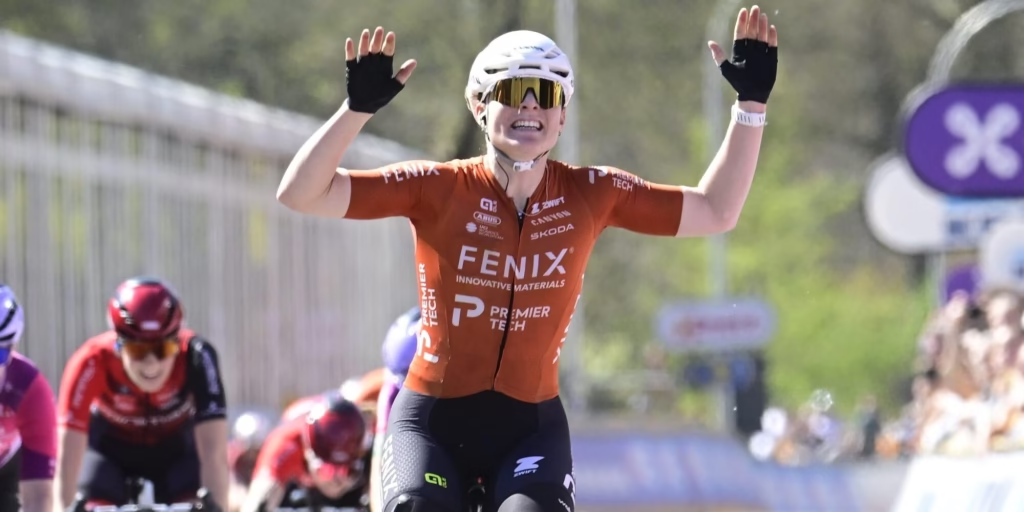
Charlotte Kool
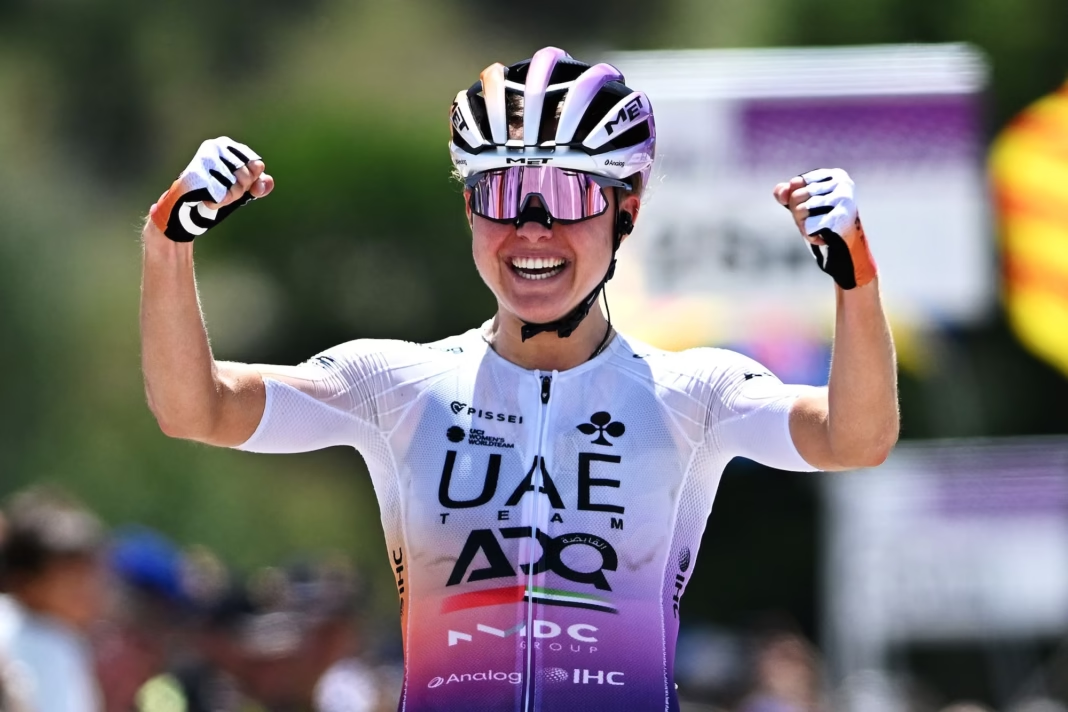
Charlotte Kool is the obvious headline sprinter if the race comes down to a fast finish. She has the top-end speed to win against almost anyone in this field and does not need a particularly selective race to make her case. The cleaner and more controlled the final becomes, the better her chances should be.
Her challenge is that she will be heavily marked. Every team with a sprint option knows that allowing Kool to arrive fresh and well-positioned into the final few hundred metres is a dangerous plan. That may encourage attacks in the final phase, particularly from teams that know they cannot beat her in a straight sprint.
Even so, Kool remains the rider others have to plan around. If her team controls the final properly and she reaches the sprint near the front, she is one of the clearest favourites for victory.
Human Powered Health
Human Powered Health have one of the strongest tactical hands in the race with Kathrin Schweinberger, Daria Pikulik, Maggie Coles-Lyster, Lily Williams and Sandrine Tas all giving the team different routes to the final.
Kathrin Schweinberger has a useful record at this race, with two starts, one podium and two top-10 finishes. That consistency matters in a Belgian one-day race where the final is not always about pure sprint speed. She can handle a messy run-in, follow late moves and still finish strongly if the front group is reduced.
Daria Pikulik brings another proven option, also with two starts, one podium and two top-10 finishes at GP Mazda Schelkens. Her sprint is dangerous if the race stays together, and she gives Human Powered Health a more direct fast-finish card. If the team can keep her sheltered and well-positioned, she has a real chance to convert that race consistency into a win.
Maggie Coles-Lyster adds another layer. With one previous start and one top-10 finish here, she has already shown she can be relevant in this event, and her track speed makes her dangerous if the final becomes a drag race from a reduced group. Lily Williams brings similar track-based power and the ability to cope with a stop-start race, while Sandrine Tas gives the team another experienced Belgian option for positioning and support.
Human Powered Health may not need to choose one leader too early. If the race is controlled, Pikulik and Coles-Lyster look like strong sprint options. If it becomes more selective, Schweinberger and Williams may be the more useful cards.

Fenix-Premier Tech
Marthe Truyen gives Fenix-Premier Tech a serious chance, especially if the race becomes slightly harder than a pure bunch sprint. Her record at GP Mazda Schelkens is excellent: three starts, two podiums and three top-10 finishes. That is the profile of a rider who understands the rhythm of the race and consistently places herself in the right part of the final.
Truyen does not need the race to be perfectly controlled. In fact, a more chaotic finale may suit her better. She has the strength for Belgian roads, the positioning sense to survive the late fight and enough speed to finish from a reduced group. If the pure sprinters lose organisation or support, she becomes one of the most dangerous riders in the race.
Fenix-Premier Tech also have the kind of squad that can make the final uncomfortable rather than simply wait. If Truyen is joined near the front by aggressive teammates, the team can force others to chase and still keep a strong finisher for the line.
Cofidis
Cofidis arrive with a strong sprint group built around Amalie Dideriksen, Valentine Fortin and Martina Alzini. That trio gives them one of the best collective fast-finish units in the race, and it should allow them to stay flexible depending on how the final develops.
Amalie Dideriksen is a natural contender for this kind of race. She combines sprint speed, track power and road experience, which makes her effective when the finish is fast but not necessarily clean. If the final becomes a reduced sprint after a hard day, she is one of the best options in the field.
Valentine Fortin gives Cofidis another rider with enough speed to win from a bunch or a reduced group. She can be used as a protected finisher or as part of a two-pronged final with Dideriksen. That matters because if one rider is boxed in or caught behind, the team still has another way to contest the result.
Martina Alzini adds more strength and experience. She can help position the team, follow dangerous moves and still be a factor if the sprint becomes less organised. Cofidis have enough depth to control parts of the race, but their bigger strength may be having multiple riders who can still win if the final gets messy.
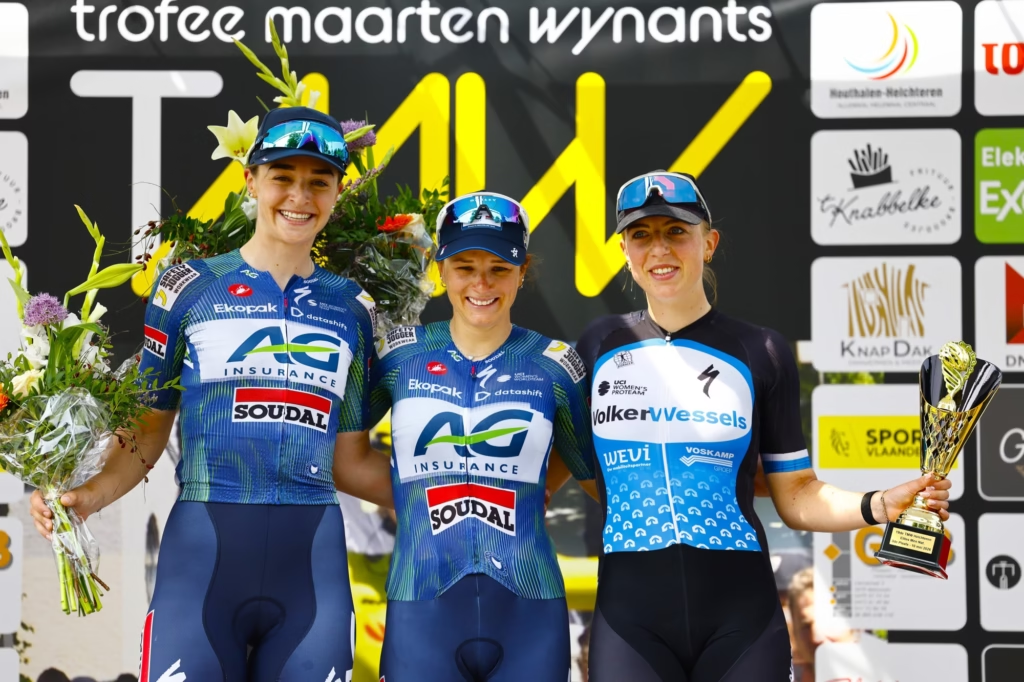 Photo Credit: Cor Vos
AG Insurance-Soudal
Letizia Borghesi and Marith Vanhove give AG Insurance-Soudal a strong blend of senior experience and development-team speed. Borghesi is the obvious contender if the race becomes selective. She is quick from a reduced group, handles hard one-day racing well and does not need a perfect lead-out to be dangerous.
That makes Borghesi especially interesting here. Against the pure sprinters, she may want the race to become more wearing, with repeated accelerations and a thinned-down front group. If the final is reduced to 20 or 30 riders rather than a full bunch, her winning chances rise.
Marith Vanhove also deserves attention. She has three previous starts at GP Mazda Schelkens, with one podium and one top-10 finish. That shows she can already read this race well, and she gives AG Insurance-Soudal another option if the team wants to race aggressively or if the final opens up before the sprint.
Lotto-Intermarché Ladies
Katrijn De Clercq is one of the riders with the best previous GP Mazda Schelkens records on the start list. Across three starts, she has one podium and two top-10 finishes, which makes her a genuine contender rather than simply an outside name.
De Clercq’s route to victory probably depends on a harder or more tactical finish. In a clean sprint against Kool, Pikulik or Dideriksen, she may find it difficult. But if the race becomes more selective, if attacks thin the group, or if the biggest sprint teams lose organisation, she has the consistency and race-specific record to capitalise.
Anna Van Wersch also gives Lotto-Intermarché another rider with useful previous results, having taken one top-10 finish from three starts. That depth matters because the team can place more than one rider into the decisive phase rather than relying entirely on De Clercq.

VolkerWessels Cycling Team
Scarlett Souren is a strong contender if the race is decided from a reduced group. She has three previous starts and two top-10 finishes at GP Mazda Schelkens, and her profile fits a race where the final can become fast, nervous and slightly selective.
Souren has enough finishing speed to be a threat, but she is also at her best when the race is not completely controlled by the biggest teams. If VolkerWessels can get her into the right position late on, she can take advantage of hesitation between WorldTour squads.
Florien Bolks gives the team another useful card. She can help shape the final, follow moves and make sure VolkerWessels are not forced to chase everything from behind. The team’s best chance may be to stay aggressive but selective, making the race hard enough to reduce the pure sprint trains without burning Souren too early.
Carbonbike Giordana Sofré
Dina Scavone has one of the most interesting race-specific records here. She has four starts, one win, one podium and one top-10 finish, which means she is a former winner and clearly knows how to get a result at GP Mazda Schelkens.
That previous victory makes her impossible to ignore, even if the field contains several bigger sprint names. Scavone’s best chance is probably not a perfectly controlled bunch sprint. She may need the race to become tactical, with bigger teams looking at each other and a smaller group arriving together.
Carmen van der Veen also has a previous top-10 from two starts, giving Carbonbike Giordana Sofré another rider with evidence of race suitability. The team may not be expected to control the race, but they have enough race-specific quality to be dangerous if the final becomes unpredictable.
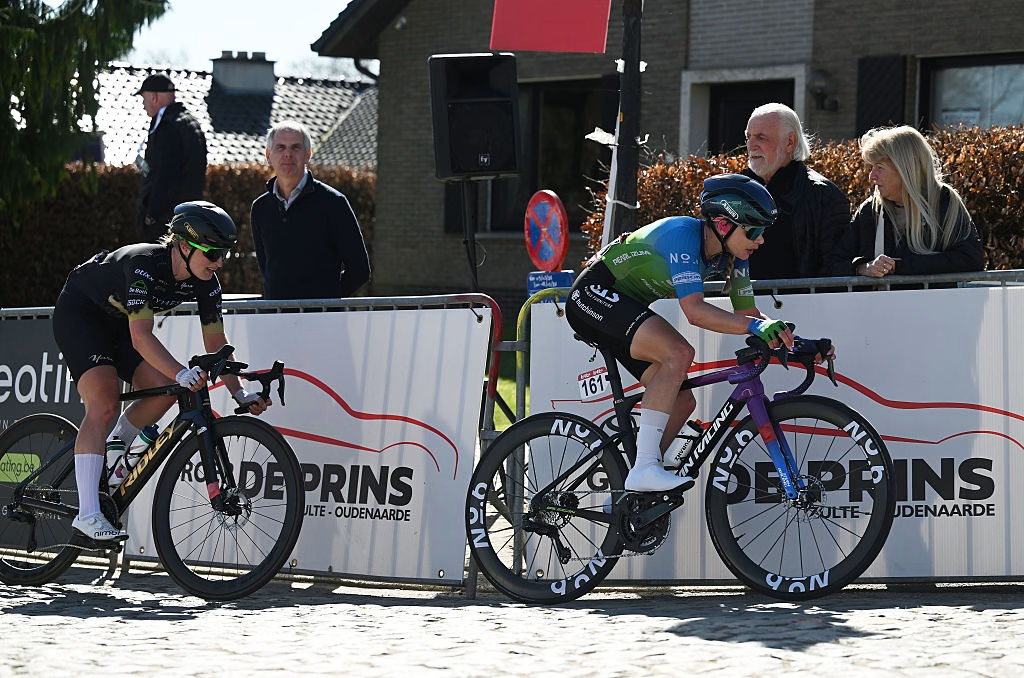 Photo Credit: Getty
Citymesh-Customm PCT and Minimax Cycling Team
Julie Stockman gives Citymesh-Customm PCT a realistic outside chance, having taken one top-10 finish from three previous starts. In a race where Belgian positioning and local racing instincts can matter, that experience is useful.
Camilla Rånes Bye is another outside name worth noting. She has two previous starts and one top-10 finish, and for Minimax Cycling Team, a race like this offers a chance to target a strong result against bigger squads. Her challenge will be staying close enough to the front when the major teams begin fighting for position.
These riders may need a more open final to challenge for the podium, but they are exactly the type of names who can benefit if the race becomes fragmented and the sprint teams lose control.
Other riders to watch
Jasmin Liechti is another strong all-round option. She should be suited to a race where the final is not guaranteed to be a clean sprint, and she can benefit if the bunch begins to split before the last few kilometres.
Clara Lundmark is a rider to watch if the race becomes a reduced sprint. She has shown enough speed and resilience to be dangerous in this type of field, particularly if the pure sprinters are forced to spend energy earlier than planned.
Eilidh Shaw is another interesting name for a harder final. She is the kind of rider who can profit from a selective race, especially if the bigger teams focus too much on the obvious sprint favourites.
Nika Bobnar adds another outside option. Her best chance may come from anticipating the sprint or being part of a late move that forces the faster teams to chase.
-
 Photo Credit: quentinphotographiebe
 -
 Photo Credit: Getty
How the race could unfold
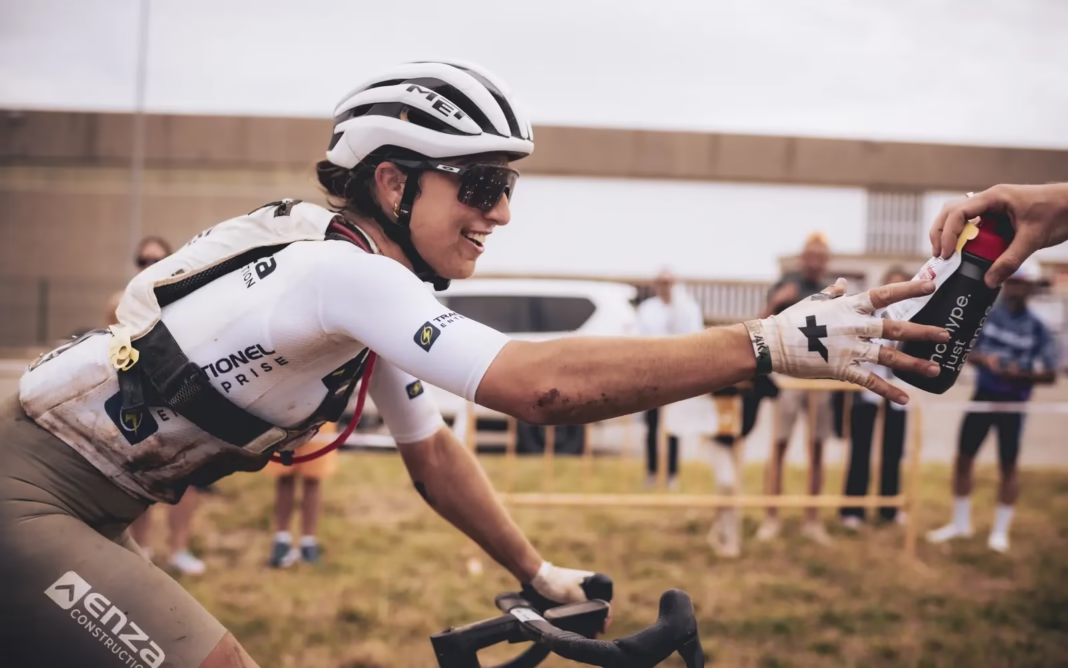
The early phase should bring attacks from riders and teams that do not want to wait for a sprint. With so many fast finishers present, smaller teams will know they need to disrupt the race before the final kilometres.
The middle of the race is likely to be about control. Human Powered Health, Cofidis, Fenix-Premier Tech and any team backing Kool will have reasons to keep the breakaway within reach. But because several teams have more than one option, the chase may not be as straightforward as it looks.
The final phase should decide whether this is a clean sprint or a reduced-group finish. If the bunch remains large and organised, Kool, Pikulik, Dideriksen, Fortin and Coles-Lyster become central. If the race becomes harder, Truyen, Schweinberger, Borghesi, De Clercq and Souren look increasingly dangerous.
Prediction
GP Mazda Schelkens 2026 has enough sprint quality to suggest a fast finish, but not necessarily a full bunch sprint. The rider list is packed with fast finishers who can handle a hard Belgian race, which should make the final more tactical than a simple lead-out contest.
Kool is the fastest rider on paper, but Truyen’s record in the race is difficult to ignore. Human Powered Health have the deepest hand through Schweinberger, Pikulik, Coles-Lyster and Williams, while Cofidis bring a dangerous combination of Dideriksen, Fortin and Alzini.
Prediction: a reduced sprint, with Marthe Truyen using her race consistency and Belgian one-day strength to challenge the pure sprinters. Kool remains the fastest if the race is fully controlled, but Truyen looks like the best pick if the final is harder and less predictable.

